




Abstract

As the authorities in Kashmir crack down on critical writing,
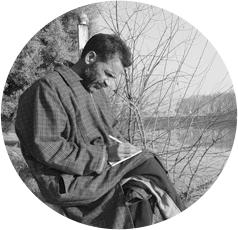
LOSING BOTH PARENTS at an early age was extremely painful for Madhosh Balhami, who took to writing to vent his pain and suffering. Born in 1966 in Balhama, a village 12km from Srinagar, in Kashmir, he was named Ghulam Mohammad Bhat but writes under his pen name of Balhami.
He has worn many hats; a saffron cultivator, a former press secretary and a poet who started writing poetry inspired by love and grief, and soon moved to pen political themes in the 1990s.
“Mass rigging in the 1987 elections in Kashmir and subsequent political events in the late-1980s shook my faith in the elections and the democratic process. That proved to be a turning point for me,” he lamented in an interview with Index.
Balhami is known in the Kashmir valley for his recitation of elegies, which he used to write for the funerals of slain militants. As the number of militants who were killed grew, he wrote a poem dedicated to them as a group. It was written from the perspective of a victim’s mother and became a sort of anthem, turning Balhami into a household name.
As a result of this, he spent nearly three years in jail.
“I was sent to jail in 1993 for a couple of years on the ruse that I was an upper ground worker for militants; however, in reality, I was taken into custody for my political poetry,” said Balhami, adding: “I was picked up by the Indian army again and sent to jail in 1998 for 11 months.”
The detentions did not deter Balhami, who kept writing during his confinement. “I wrote huge volumes inside the jails of the valley. The authorities could confine me physically but not my thoughts,” he said.
In fact, prison helped him develop as a poet.
“I started critically looking at everything, including militancy,” he said.
Throughout his 30-year career as a poet, Balhami has stayed impartial. Today he has two books of poetry to his name: Sadaye Abu Zar and Dard-e-Furqat.
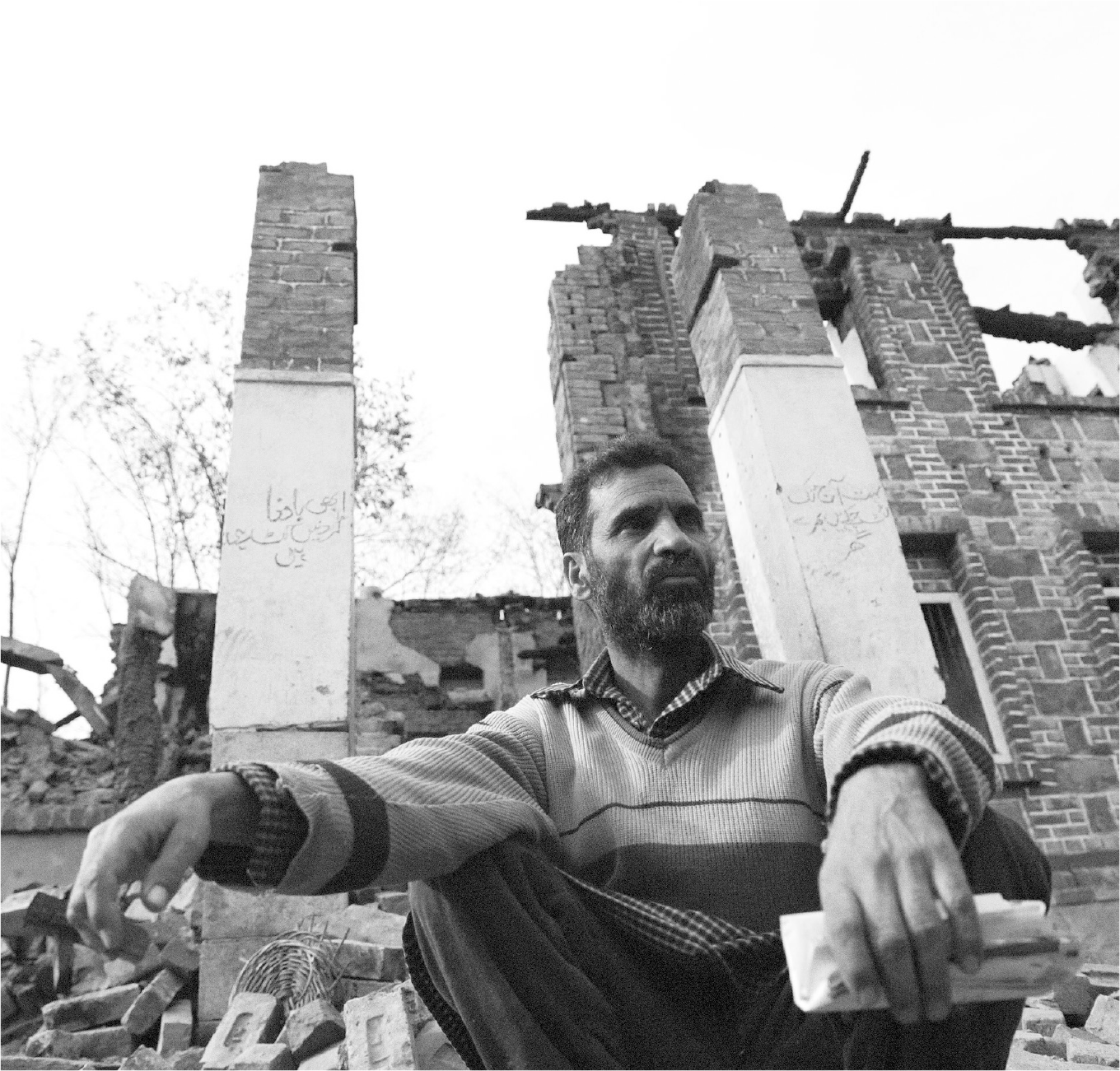
But his troubles have not ended. On 15 March 2018, Balhami’s home, which was built by his father in 1967 and was home to his collection of poetry, was destroyed in a fire during a gun battle between the Indian army and rebels.
“I can rebuild my home brick by brick but I lost most of my work,” Balhami said. He recited two powerful lines about his loss:
Tell me what crime I commit if I demanded my rights
In a flash of a moment this paradise-like city was reduced to rubble
Balhami’s experience is part of a wider trend of writers losing their work in Kashmir.
Kashmir poet Madhosh Balhami outside his house that was bombed in 2018, which resulted in the loss of his work
CREDIT: (top) Bilal Ahmad Pandow; (left) Syed Shahriyar
The poet Madhosh Balhami continues to write despite the harassment he faces in Kashmir
Local reporters have spent years recording the daily hardships of living in the Kashmir conflict with unprecedented detail. Their work contributes to a vital record of widespread human rights atrocities involving the Indian military, including rape, torture, killings and the disappearance of hundreds of political activists and civilians.
The work of these journalists has started disappearing from the archives of local media outlets, which many believe the Indian government is attempting to erase. Along with the digital archives of regional newspapers such as Greater Kashmir, Rising Kashmir, and Kashmir Reader, many Urdu language journals have been either partially or entirely destroyed, especially since 2019.
Broadly speaking, the state heavily censors writers in Indian-administered Kashmir. The situation is alarming and has become worse since the abrogation of the quasi-autonomy of the region in August 2019.
The physical assaults of writers, especially journalists, have become the norm. The list of recent abuses feels endless.
One example was when Obaid Dar, a photojournalist, was assaulted at work in October. A security guard at a university hit him and he had to have stitches.
Meanwhile, the authorities are forcing editors to make changes to their style sheets. The editors claim the government is compelling them to change their terminology, such as using “terrorists” in place of “militants”, which has been used for decades.
Staff in newsrooms find it challenging to use such a loaded word, especially in a conflict zone such as Kashmir where it can have serious repercussions. It is the first time that a word such as “terror” has appeared in local newspaper front-page headlines.
While journalists are particular targets, no critical writers are spared. In an interview with The New York Times, more than a dozen poets said that increased surveillance had left them with no choice but to stop writing.
“We are not allowed to breathe until and unless we breathe as per the rules and the wishes of the government. The silencing of voices, the freedom to speak and vent grievances, all is gone, and it is suffocating,” said Zabireh, a Kashmiri poet who uses only one name.
Balhami still has enough poetry to complete a third volume, but he is frightened to publish it as it takes aim at the Indian state.
He told Index: “I’ve written the stuff that can get me killed. Also, because of the current political situation in Kashmir, no one will publish it.” He added that he was old enough now to be afraid of these threats, but said: “I have toned down my language to some extent but will never stop writing.”
On an optimistic note, Balhami believes that his writings will live on after his death because what he writes is for people and not for himself. “My writings will bear witness to historical occurrences in Kashmir.”
The dark age
The dark age of freedom of expression Through an extreme stone-hearted approach, Delhi has rendered Kashmiris helpless through reproach; Remediless! And full of pain, That is what people have to confront and sustain; To speak is a crime and so’tis to write Even a whisper is punishable; The dark age of freedom of expression The heart consuming and enduring suppression; No one moans even under extreme pain And death keeps guard at every door; The massacre of humanity if one might witness Must know to act blind and not to express; Must turn his gaze away from daylight murders That constitutes the art of living on bloody Kashmir shores; Labelling stark darkness as broad daylight May help one survive the wrath of the kingly might.