Abstract

Index’s first editor,
THE LIFE OF an Index editor isn’t normally exciting, but there are occasional exceptions to the rule. Early in my tenure, a year after founding Index, I set off for Moscow with two goals in mind.
One was to meet and interview the renowned author Aleksandr Solzhenitsyn, who had suffered repression and censorship his whole life; the other to meet the banned sculptor and painter Vadim Sidur, whose work had never been shown in his native country, and discuss the possibility of exhibiting it in London.
I called on Sidur first, because I knew him from an earlier visit and had published an article about his sculptures in The Observer. After a suffocating Russian bear-hug, he showed me his latest work and we talked about a possible exhibition. With Index behind me, I thought I had a better chance of arranging something than when I was alone.
As it happened, Sidur’s basement studio was a popular meeting place and we went out to meet another guest, Klara, whom I also knew from my earlier visit. She offered to take me to Peredelkino, an authors’ dacha retreat on the edge of Moscow, to show me [author Boris] Pasternak’s famous house and introduce me to his neighbour, the novelist Lydia Chukovskaya, who had once harboured Solzhenitsyn when he was hiding from the police.
Before going to see Chukovskaya, I met many
well-known dissidents - including the writers Andrei Sinyavsky, Yuli Daniel and Evgenia Ginzburg, and Pavel Litvinov and Larisa Bogoraz, the pair who composed and distributed Appeal to World Public Opinion, the article which resulted in the foundation of Index.
In Peredelkino, I also met Lev Kopelev, a friend of Solzhenitsyn from their time together in a prison camp and the prototype of Rubin in Solzhenitsyn’s novel The First Circle. Kopelev told me Solzhenitsyn was being sheltered by the cellist Mstislav Rostropovich in the Moscow suburb of Zhukovka, not far away, and if I took a local train there he would introduce me to Solzhenitsyn.
This seemed too good to be true and, in high spirits, I went to the Belorussky station the next day and bought my ticket. Four suspicious-looking men lingered on the platform, but I told myself not to be foolish: they couldn’t possibly know who I was and were looking for someone else.
At the last stop before Zhukovka, however, I was disabused. A policeman boarded
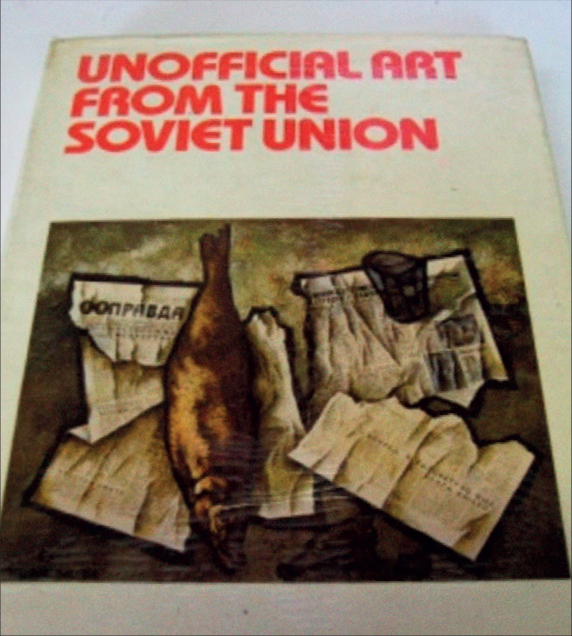
The book associated with the exhibition that Scammell organised at the ICA in London
CREDIT: Martin Secker & Warburg
the train and ordered me to get off. As a foreigner, I wasn’t allowed to travel more than 15km from Moscow’s centre and was breaking the law. Crushed and afraid, I returned to Moscow and immediately contacted my friends to tell them what had happened.
Two days later, my time was up and I left for Sheremetyevo airport. Before I could even reach the ticket counter I was surrounded by border guards and whisked away to a private room. I was told to strip naked while the guards painstakingly searched my clothes and emptied my suitcase. They carefully confiscated a roll of photos I had taken and my diary of the visit, then one of them let out a triumphal cry. Chukovskaya had given me a note to take to Soviet biologist and dissident Zhores Mevedev, which I had had tucked into a packet of tea for safety. I didn’t know what was in it, but learned much later that she was sending him power of attorney over her royalties in the West so he could buy her medicine that was unavailable in the Soviet Union. The search was followed by an interrogation lasting almost three hours, and I had to wait three more hours to catch a plane to Prague, my next stop.
A couple of months later, a Soviet newspaper published a scurrilous article asserting that I was a “sinister criminal” and “an agent of anti-Soviet groups abroad”. My 16 pages of handwritten notes were said to be coded, which wasn’t true, and a small brass icon given to me as a gift was deemed “contraband”. The story was taken up by the British and American press and I was interviewed by the BBC and wrote articles for The Guardian and Index analysing the methods of Soviet propaganda and their influence in the West.
Luckily, I also had my revenge. Later that year, I got permission from Solzhenitsyn’s Swiss lawyer to
co-publish in Index - with Harper & Row - Solzhenitsyn’s Letter to the Soviet Leaders, translated by one of our contributors, Hilary Sternberg. Solzhenitsyn was expelled to the West soon afterwards and I met him for the first time at his lawyer’s office in Switzerland. Later still, after extended negotiations, he agreed with my plan to write his biography and even to help to a limited extent, although he would not endorse it.
My work at Index continued, and in the next few years I became acquainted with more and more artists whose work was banned in the Soviet Union. Many of them had been expelled or had managed to move to the West voluntarily. In 1976, with the help of two Russian art specialists as judges, Index was able to stage a major exhibition, Unofficial Art from
the Soviet Union, at the Institute of Contemporary Art in London. Nearly half the artists represented were there, but here comes the sad part. The artist who had first alerted me to the calamitous situation of painters and sculptors in the Soviet Union, Sidur, was not there, nor were his sculptures.
The sculptures, even maquettes, were too heavy to smuggle, and even the lithographs that I already possessed had to be withheld, owing to a tragic misunderstanding between us that I didn’t learn about for many years and wasn’t fully resolved until the Soviet Union collapsed.
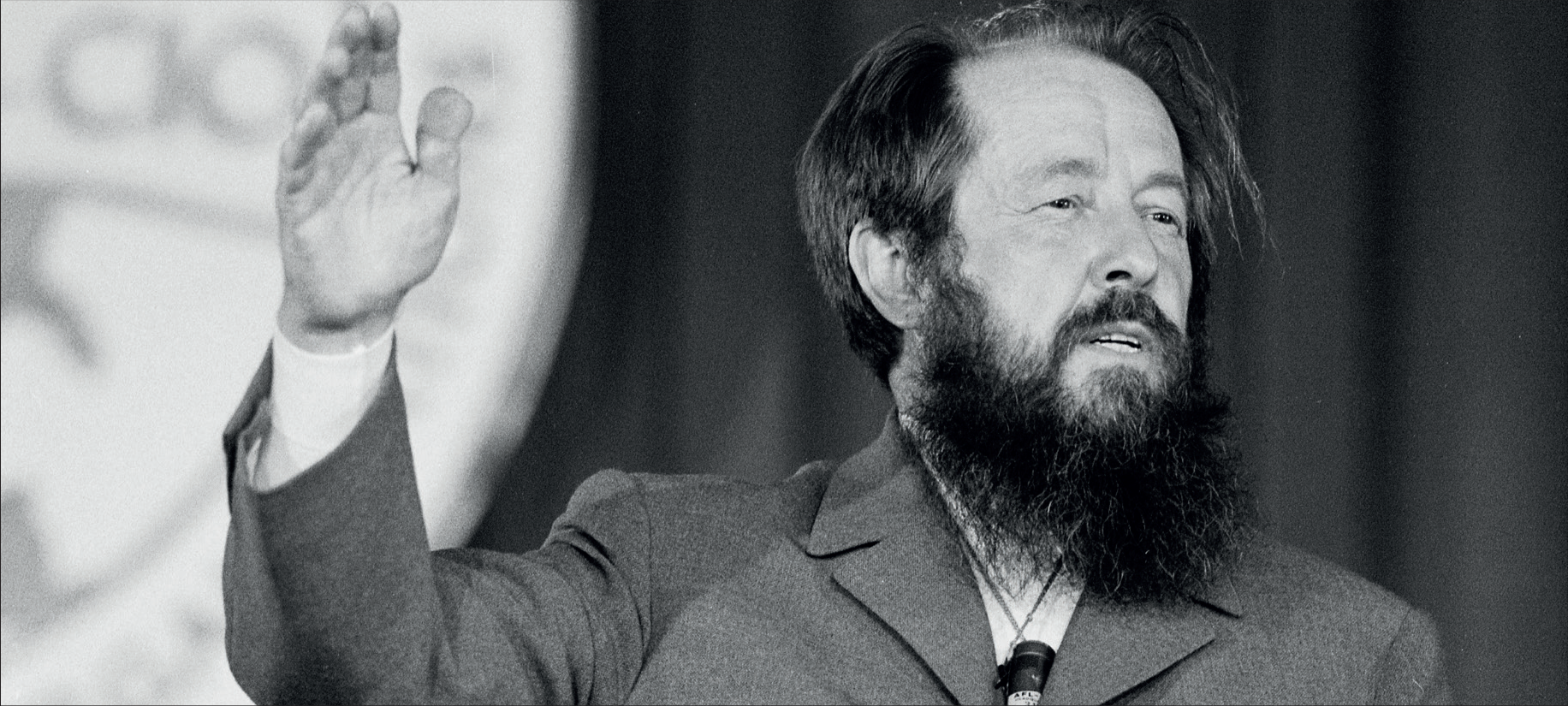
Aleksandr Solzhenitsyn, writer and outspoken dissident who exposed the horrors of the gulag, lost his Soviet citizenship in 1974
CREDIT: Marion S Trikosko/Alamy