




Abstract
In October 1975 the high-profile journalist Vladimir Herzog was murdered in Brazil. His family are still waiting for an apology and for the treatment of journalists to change, writes
VLADIMIR HERZOG, BORN in Yugoslavia, arrived in Brazil with his parents on 24 December 1946. He established himself as a journalist and worked for TV Cultura where he became editor in chief. On 24 October 1975 he went to the DOICODI headquarters of the political police to be interrogated. There, he was tortured to death. The police made it look like suicide, with Herzog found hanged in his cell. It took decades for the cause of his death to be revised on his death certificate.
When Herzog, known to his friends and family as Vlado, was killed Brazil was in the grips of a bloody military dictatorship that had begun in March 1964 and would only end in 1985. Index wrote about it from the start of publication in 1972. In the first issue of the magazine, Christopher George wrote an article entitled Press Freedom in Brazil. He reflected on the government of Getúlio Vargas, between 1930 and 1945, when the media was kept under close supervision, and which he believed had left its mark on the Brazil of the 1970s. A law passed in 1967, the “law to regulate the liberty of expression of thought and information’ he described as “extremely restrictive”. He wrote: “The present law, apart from providing more than sufficient scope for restrictive interpretation, offers no protection at all to journalists in cases where they seem genuinely to be on the right side of it. For critics of an army-dominated government that equates opposition with insubordination, not even its own law is protection against the jackboot.”
Herzog’s tragic and unjust fate altered Brazilian society, leading to a series of protests that helped end the dictatorship. Ivo Herzog, Vlado’s eldest son, was only nine years old when his father was killed. Now chairman of the board of the Vladimir Herzog Institute, an organisation created to celebrate his father’s life and legacy, Herzog told Index he believes that justice in relation to Vlado’s murder has not yet been achieved.
“We continue to fight for international justice. There was a decision by the Inter-American Court [of Human Rights] in 2018 and Brazil has not yet complied with the recommendations,” he said. “The two main points that have not yet been accomplished are that the circumstances of my father’s death and of others who have died in a similar way be investigated. And the second part that has not yet been carried out by the Brazilian state is a public apology with the presence of the armed forces to ask for forgiveness for what happened at that time.”
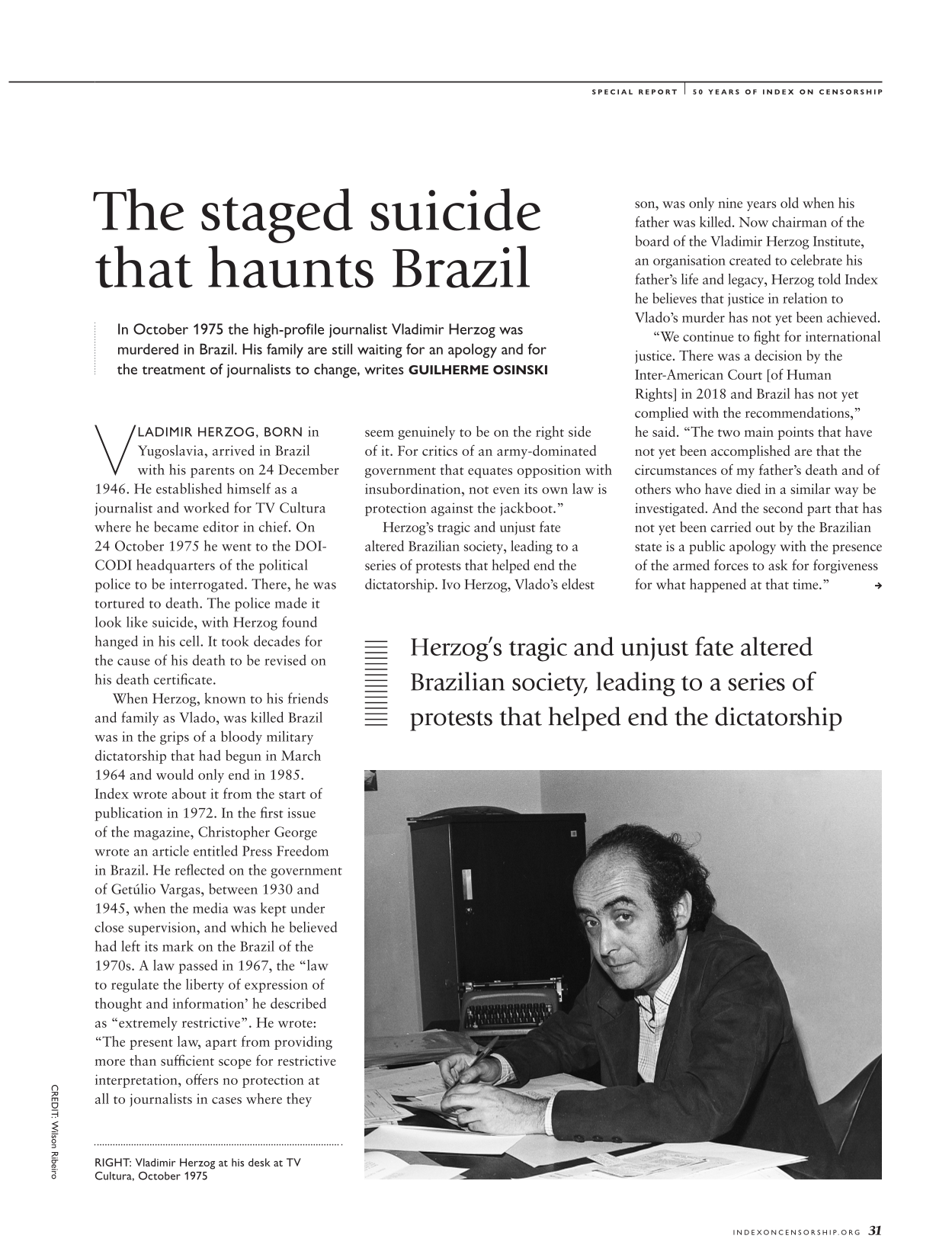
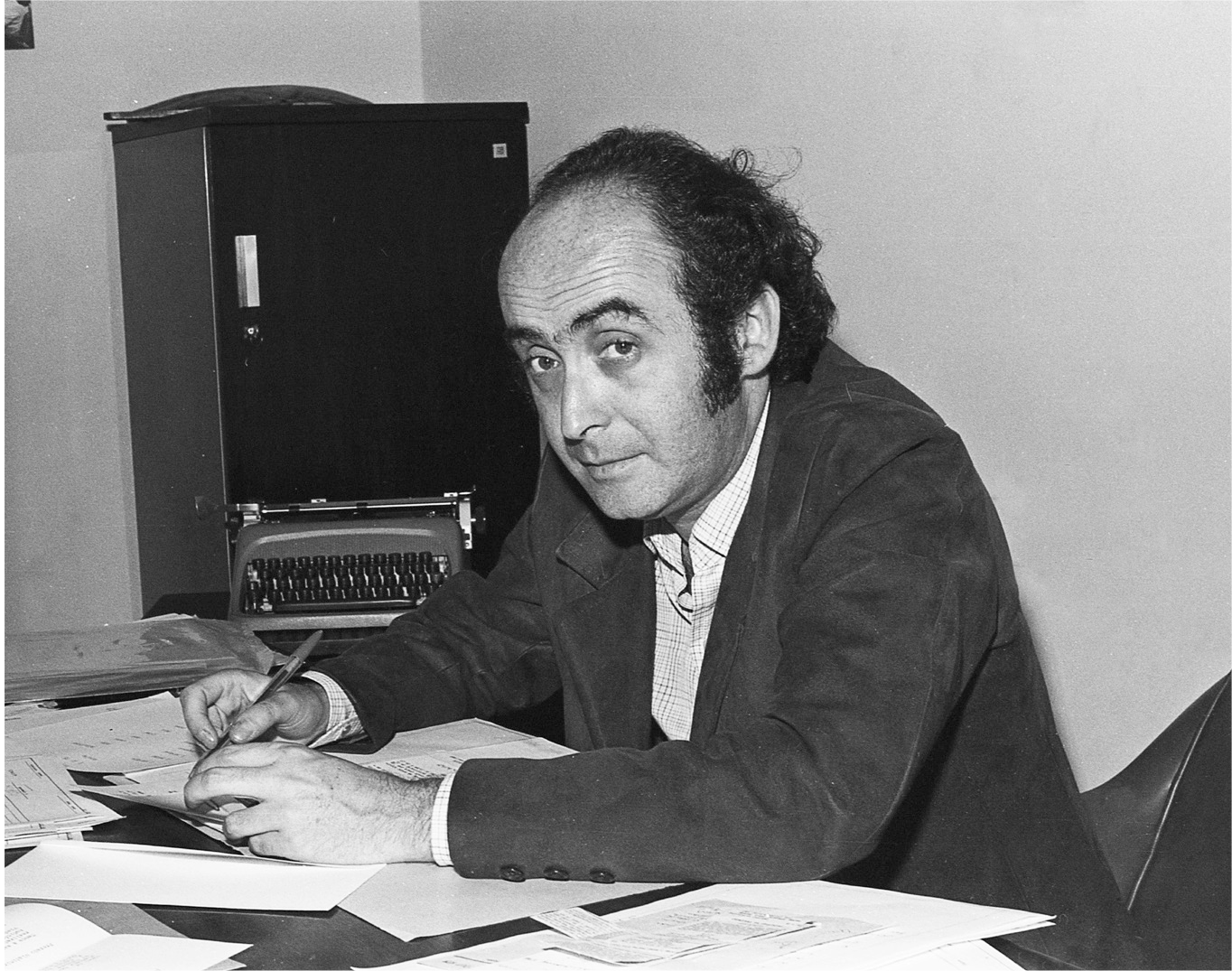
Vladimir Herzog at his desk at TV Cultura, October 1975
CREDIT: Wilson Ribeiro
For Herzog, the Brazil of today has not changed in relation to the one he knew in the military regime. He remembers neighbouring Argentina, which also faced a dictatorship between 1966 and 1973.
“There was a rupture there, crimes were investigated, and those responsible were judged and arrested. There are dozens of monuments. Brazil did not have this rupture and perpetuates a culture of violence with origins dating back to the colonial period.”
Many of the events that happened during the dictatorship are still frequent in the country today, especially when it comes to journalistic freedom.
“Press freedom in Brazil has always been an unresolved issue,” said Herzog. He added that the country is so disparate that there is more than one Brazil.
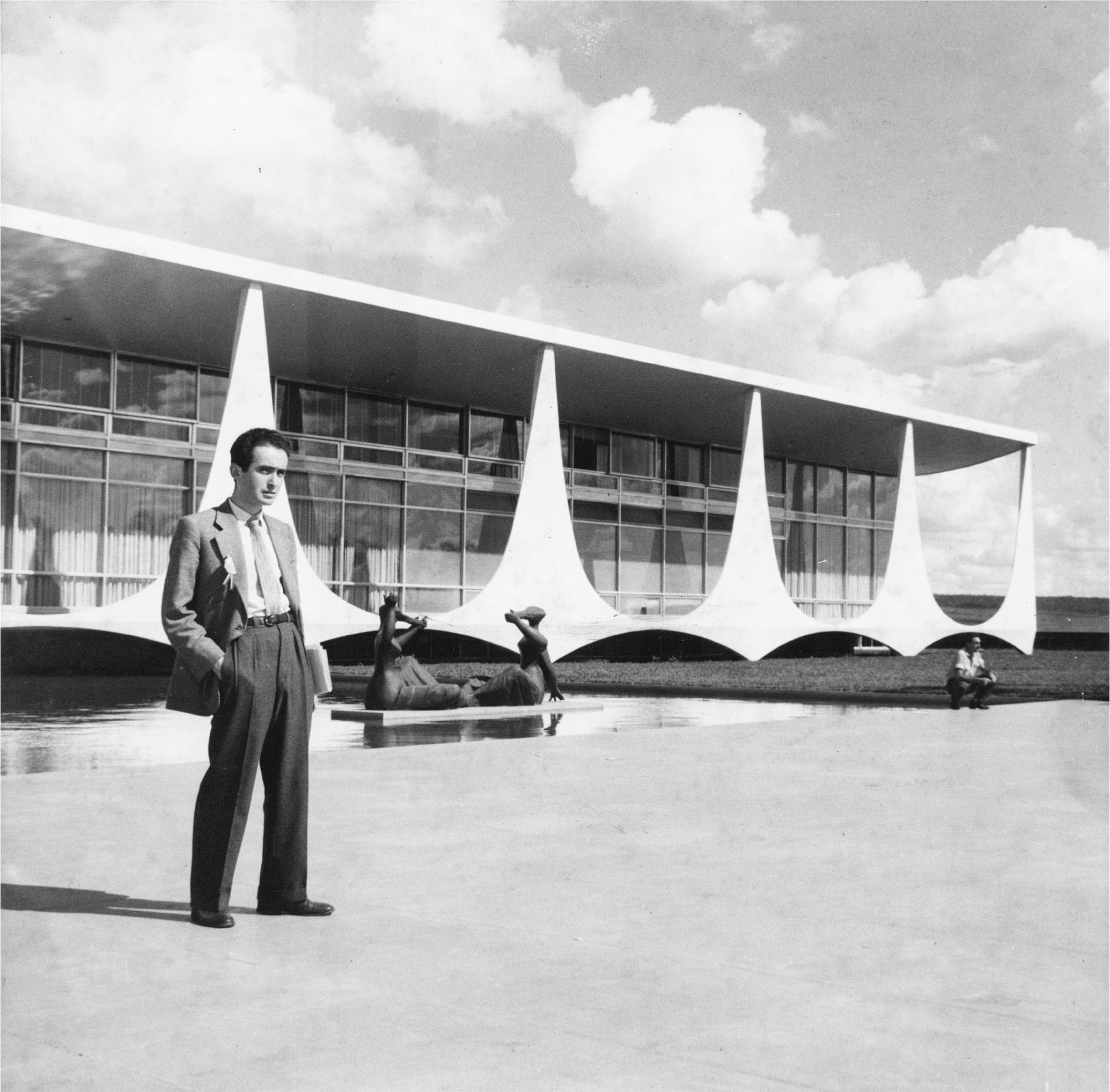
Vladimir Herzog pictured in April 1960 in front of the Alvorada Palace, the official residence of Brazilian presidents
“I am here in São Paulo, in theory a city as cosmopolitan as London. But when you go to the countryside of the North, Northeast, it’s really lawless land. So you have journalists who try to denounce issues of land grabbing, mining, and they are threatened and often murdered.”
Index has reported on the dangers that those covering deforestation, for example, have experienced over the past few years. Herzog himself recalls the murder of journalist Tim Lopes in 2002, who was tortured and whose charred body was found in a Rio de Janeiro favela while he was reporting on child abuse and drug trafficking.
Stories of torture and pain towards journalists feel like a never-ending cycle and are present in the minds of many Brazilians. One of them is Amelinha Teles, who worked in the underground press during the dictatorship.
“I was a press activist in Rio de Janeiro and São Paulo. We did everything from cleaning the photolith [equipment used for photos] to doing a [page] layout,” she told Index. She also regularly tuned into the radio. “I listened to radio from Moscow, the BBC from London,” she added, remembering just how difficult it was to hear what was said as the military would interfere with radio transmissions.
Teles, who was arrested and tortured in 1972, never forgot the anguish she felt day-to-day while carrying out routine tasks.
“It was a daily strain. News of deaths, arrests, heated ideological and political debates. You had to work in a clandestine office with your fellow press mates.”
Despite the risks, Amelinha still bought the printing materials herself.
“I couldn’t buy everything in one place. [I’d use] false documentation, false address. I couldn’t give any clues that I was from the press. I had to lie and it was very difficult, but it was the only way to survive,” she said.
She echoes many of the things Herzog told Index, saying that Brazilian journalists today continue to face censorship and lack of freedom, despite very different political and historical contexts.
“Journalists are threatened, attacked. There is a lot of fake news, distortions. To practise journalism today you have to have a lot of courage. President Jair Bolsonaro himself threatens and offends female journalists in a humiliating and cruel way.”
José Ferreira Lopes, popularly known as Dr Zequinha in the city of Curitiba, adds that Brazil’s president doesn’t need to arrest or kill journalists to intimidate them.
“He undermines their work and is aggressive with them, protecting only those journalists who defend him,” the politician told Index. Ferreira Lopes was also arrested and tortured during the dictatorship and had to live in hiding.He still vividly recalls his days in prison.
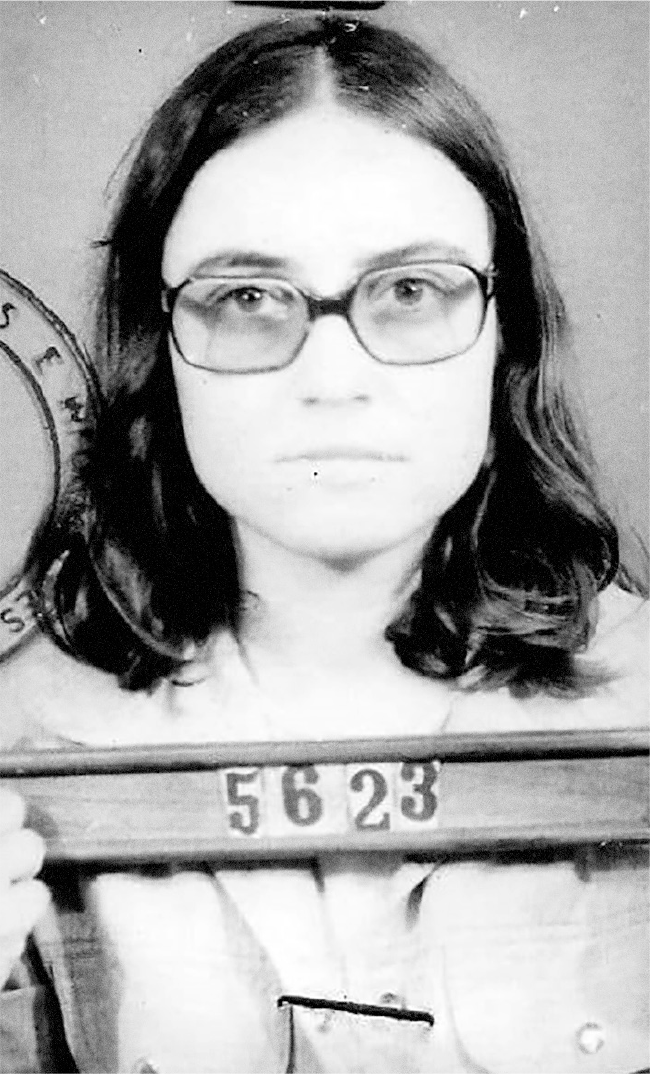
Amelinha Teles at the police station when she was arrested in São Paulo, February 1973
CREDIT: (left) Ivo Herzog personal collection; (right) Amelinha Teles personal collection
“I was put in a closed cubicle where intense sounds were alternated with absolute silence. So you ran out of memory.” Ferreira Lopes likened it to an MRI scan and said that when he recently had an MRI he automatically remembered those days in prison.
How can Brazil leave this past behind and improve its treatment of the press? For Vladimir Herzog’s son Ivo, the Institute named after his father is instrumental. It currently works on three fronts. One of them is the Vlado Proteção coalition, whose function is to give visibility to crimes against journalists and provide legal advice and protection. In addition, the institute has run the Vladimir Herzog award since 1979 and the Young Journalist award since 2009, to fulfill the goal of strengthening journalists who cover human rights issues.
“The threat of murder is as serious as the murder itself, because the threatened journalist ends up not doing the story. He censors himself,” said Herzog.
Teles believes it is important for Brazil to use the press to remember its history and to help alleviate the pain of the past. She said she made a proposal to the National Truth Commission in 2013 (which investigates human rights violations that happened between 1946 and 1988) for newspapers to commemorate Vlado on the anniversary of his death every year.
“His case is known, but there are others that no one talks about,” she added.