




Abstract
2012-2021
The faces of the powerful have changed since he wrote that, but their desire never will. Look around you. Consult the history books. There are plenty of lessons there.
Graham-Yooll reported from Buenos Aires in the 1970s. Despite getting badly beaten up, he kept working and smuggled documents out to Index and the Telegraph to tell the world what terrifying things were happening there. He kept a list of the disappeared - something that official forces tried desperately to stop anyone knowing. He went on to become editor at Index and, decades later, his legacy is still with us.
The struggle continues today for the families of those murdered men and women. They are still trying to find out what happened to their sons and daughters and to the children that were taken away from them. Now DNA tests are helping those grandparents find them.
After Graham-Yooll died in 2019, playwright Ariel Dorfman - another friend of Index - wrote to me about him: “For a man on such a serious mission, of such vast courage, always so close to horror and death and sorrow, Andrew was vitality itself, with a wonderful smile and sense of humour.”
Looking back on my seven years at the helm of Index, I saw that same seriousness and dark humour in other contributors who kept on reporting even when their lives were under threat.
The struggle to get important words out of prison has been part of Index’s work since its first issue and this continued during my editorship. We published poems written by Nazanin Zaghari-Ratcliffe, the Iranian-British citizen who was arrested and imprisoned in 2015 before boarding a plane in Tehran. These were smuggled out of jail alongside poems from her inmate, Golrokh Ebrahimi Iraee.
Zaghari-Ratcliffe’s husband, Richard, told me later how important it felt to Nazanin at the time that her work was being published professionally.
In 2019, the magazine was able to interview imprisoned Turkish journalist Ahmet Altan and publish an extract of his forthcoming book in English for the first time. He let us know why it mattered.”Tell readers that their existence gives thousands of people in prison like me the strength to go on,” he said.
It’s impossible to forget the day we heard of the murder of staff at the French magazine Charlie Hebdo. Index had to react to this attack on freedom of expression just over 200 miles away. We contacted reporters and editors all over the world, from Dublin to Brazil to Johannesburg, that day and they all wanted to join Index in making statements about the essential role of the freedom of the media and the need to protect it.
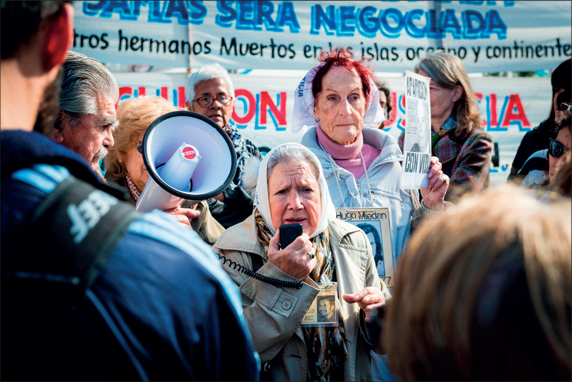
A demonstration of the Mothers of the Plaza de Mayo in Buenos Aires in 2013. To this day, people are still trying to find out what happened to their relatives who disappeared in Argentina in the 1970s
In the next issue, we ran a special section with essays from Dorfman, playwright David Edgar, TV writer Arthur Matthews and journalists Richard Sambrook, Raymond Louw and Hannah Leung. These important pieces were later turned into a book.
In the week that I write this, in early 2022, a defender of human rights has been killed in Mexico - Veronica Guerrero, a lawyer who led local opposition to an unauthorised rubbish dump in Tonala, Jalisco. And we are starting to read of more murders - of at least 20 human rights defenders and four journalists in Latin America in January 2022.
The threats are not going away. They are local and global. Some journalists I commissioned just a few years ago would now not dare to write under their own names. Writers disappear or are frightened into stopping their work, but the brave and the determined don’t stop hoping for better days.