




Abstract

What was once thought of as unreasonable is now seen as common sense and vice versa.
FOR YEARS NOW, the debate about free speech in academic settings has raged on. Concern is often expressed around the rise of a hyper-sensitive generation who demand trigger warnings, “no platforms” for those with offensive views and “safe spaces” which protect them against “micro-aggressions”.
The chilling effect of these tendencies is, understandably, a cause for concern.
Universities should be enabling of debate and disagreement, of course. But this concern can have unintended consequences – especially when expressed by those with more power than the typical student.
Last year, the UK government decided to intervene with more legislative teeth and is providing for a free speech champion to sit on the board of the Office for Students. Their remit will be “to champion freedom of speech and academic freedom on campus, and responsibility for investigations of infringements of freedom of speech duties in higher education which may result in sanctions or individual redress via a new complaints scheme”.
But which infringements will count? Commentators and legislators aspiring to objectivity, neutrality, reason and balance are prone to an illusion of transparency that is leaving something important out of the picture – they can forget to “check their privilege”, as the woke might put it.
Dominant voices have long established the “reasonable-sounding” positions of their time on the grounds that they are rational, dispassionate and preserving common sense in the face of the irrational and unreasonable.
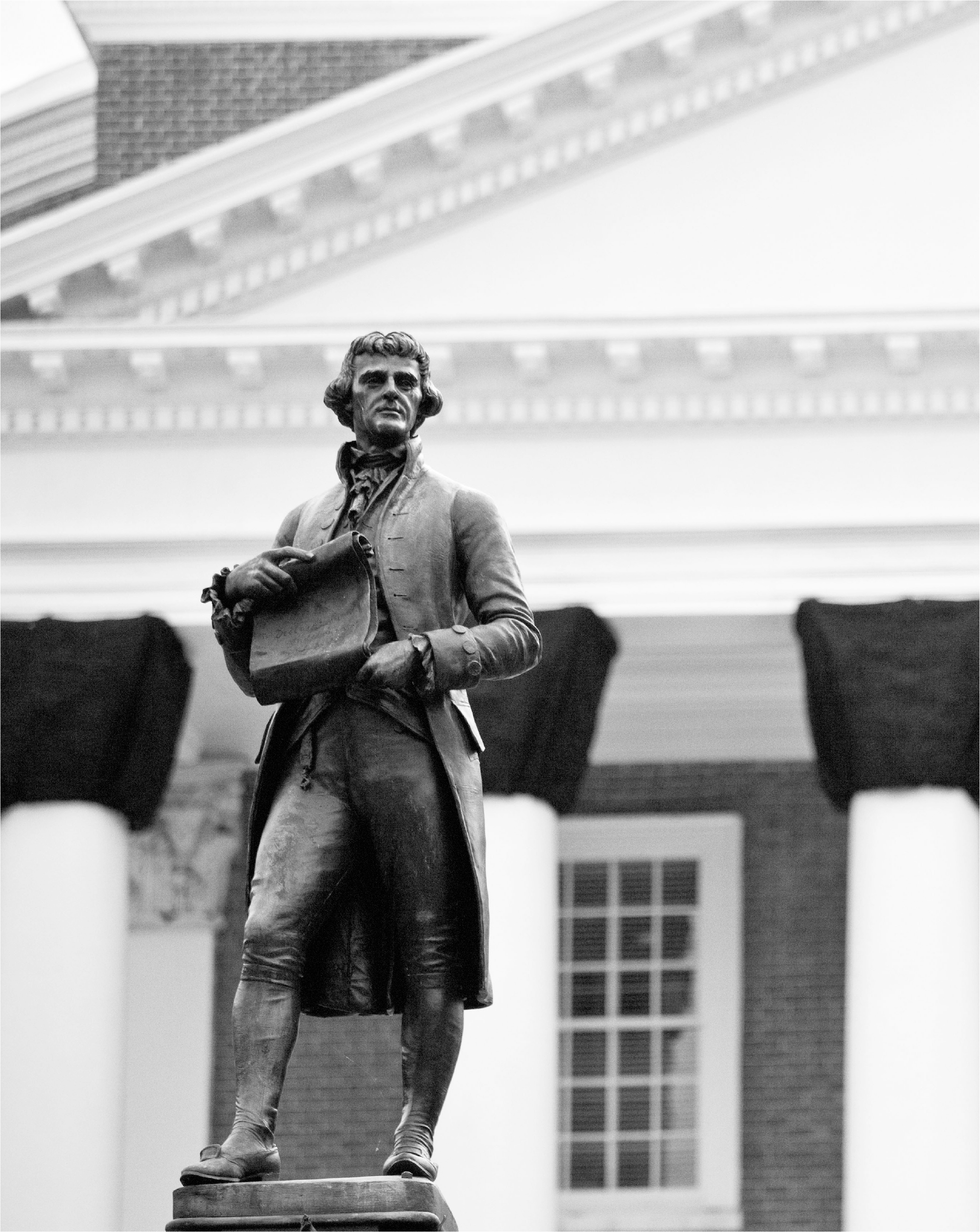
Thomas Jefferson’s statement at the founding of the University of Virginia goes like this:
“This institution will be based on the illimitable freedom of the human mind. For here we are not afraid to follow truth wherever it may lead, nor to tolerate any error so long as reason is left free to combat it.”
But it is easy to forget that the reason of one age was another age’s unreason. And that the content of rational-seeming positions (including truths held to be self-evident to the slave-owning Jefferson) can change dramatically thanks to those who have struggled (usually unreasonably) against those who have more power.
To see tensions on campus in contrasting terms of enlightened versus unenlightened thinking is to take an ahistorical stance that obscures from view the political conflicts that have resulted in achieving the seemingly neutral ground on which we stand. And that process continues even now.
Power operates less visibly than those who have it would like to admit, which is why victors think like rational, neutral scientists and why victims have long memories, littered with grievances.
The irrational, the unreasonable and the uncomfortable are often the only weapons available to the powerless. This is not to laud all unreasonable ideas, but it is to say we would do better to ask “who has the power?” before judging too quickly. Without this perspective in mind, we can drift towards a thinned out and misleading transparency with the ironic consequence that the free speech of those who oppose mainstream views, unreasonably, discourteously, can be seriously curbed. Meanwhile, as Jennifer Richeson, a social psychologist at Yale, has commented, a lot of what we are witnessing now is the “democratisation of discomfort”. The elites are feeling as precarious as those who have long lived in the uncomfortable margins.
Students of today will be the opinion formers of the future. And some of what is derided as “political correctness gone mad” today will become common sense tomorrow. Not all of it, but some of it. As George Bernard Shaw very nearly said: “The reasonable person adapts herself to the world: the unreasonable person persists in trying to adapt the world to herself. Therefore, all progress depends on the unreasonable person.”
Let’s not forget that this italicised revision of Shaw’s original owes much to generations of “unreasonable” women. Informed by Dale Spender’s Man-Made Language they rejected the universal use of the word “he” as “non-PC” language in a way that “reasonable” people can now agree is mere common sense.