




Abstract

WHEN RUSSIA INVADED Ukraine, I received a call from my mum, ‘The TV is showing us something… How to react to this, tell me?’ ‘Russia invaded Ukraine,’ I said. ‘Got you,’ she replied. ‘This is madness.’ My mother knows her daughter can be emotional but would never speculate with facts or manipulate someone’s opinion. It’s a choice, and she chooses to trust me.” These were the words of a friend of mine, a London-based journalist with Belarusian roots, whose parents live in Estonia. When she told me this, I felt grateful to her mother for listening and being open to the truth. For most Belarusians, who have experienced decades of living under a dictator, talking about the war in Ukraine has been a source of familial conflict, torn as they are between truth and an avalanche of lies.
On 2 March 2022, a week into the Russian war in Ukraine, I talked to my own mum, telling her I was going to demonstrations in support of Ukraine in London every day. “Why do you support Ukraine and not Russia?” Her question felt like a bomb exploding.
One of the things I’ve heard from my mother over the years has been, “I don’t understand anything about politics.” I’ve been through the stages of how to deal with this comment of hers: denial, anger, depression, bargaining. So much work has been done on my side to understand her, and to never say that thing myself, to never return to the “there’s-nothing-I-can-do” mindset. And I’ve been part of movements to stop other people in Belarus changing their mindsets. The election campaign that started in Belarus in the spring of 2020 had a huge educational element to it. The Honest People initiative, who developed a tool “Golos” (Voice) to count the real number of votes for the single alternative candidate, Sviatlana Tsikhanouskaya, encouraged Belarusians to become independent election observers, to see with their own eyes what the government was doing. But also, it encouraged us to bring the information about the real state of affairs to the traditionally pro-Lukashenka electorate, those who “didn’t understand anything about politics” or believed “there was nothing we could do”. We basically went and talked to our parents and grandparents, our neighbours, explaining why it was so important to vote for Tsikhanouskaya, who would enable a fair, democratic election in Belarus. We helped the older generations familiarise themselves with technology, follow independent media and use the encrypted app Telegram in order to receive objective information.
Friends for all the wrong reasons
Hanna Komar at a protest in Belarus with a sign reading “Murderers must face jail”. She was detained despite protesting peacefully
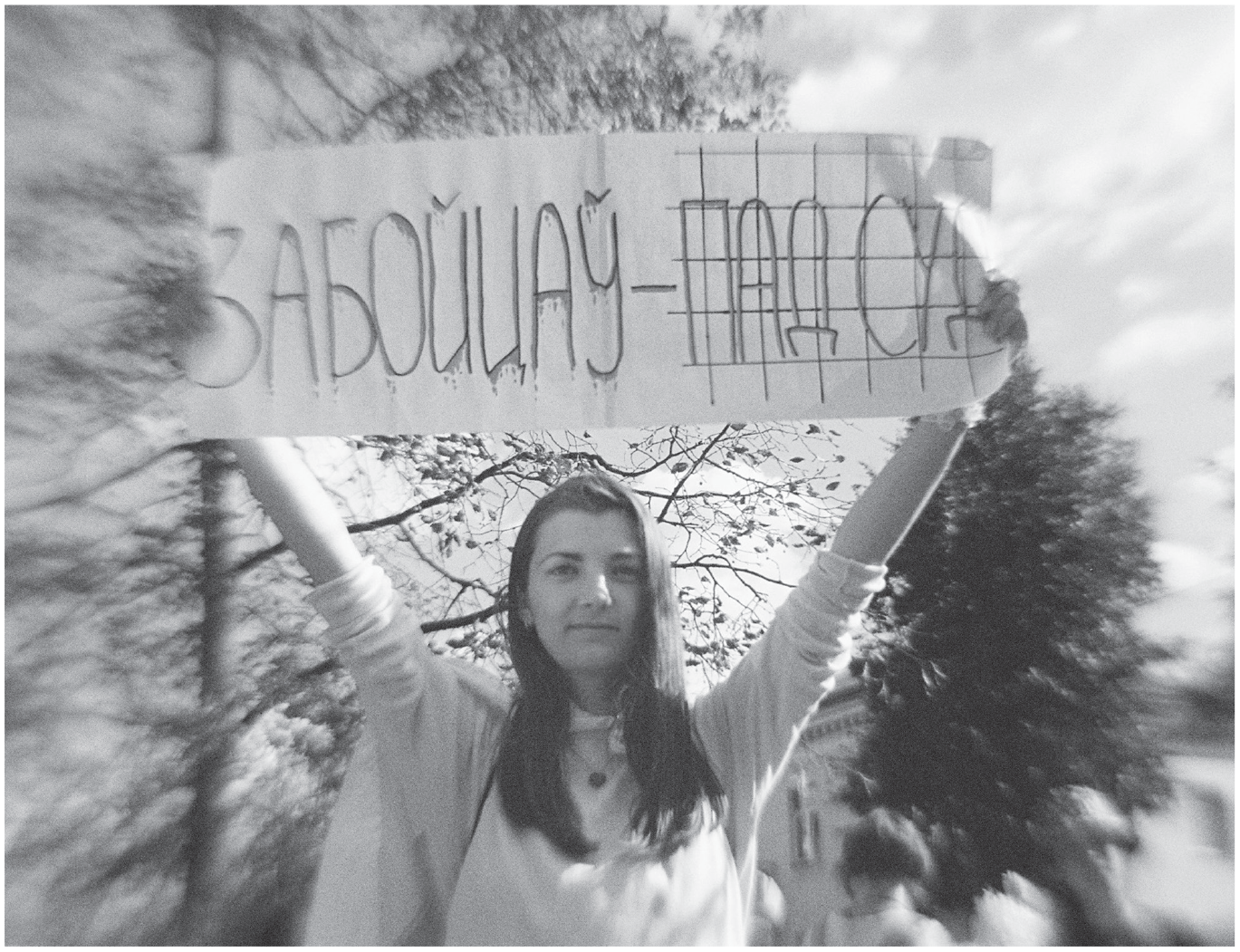
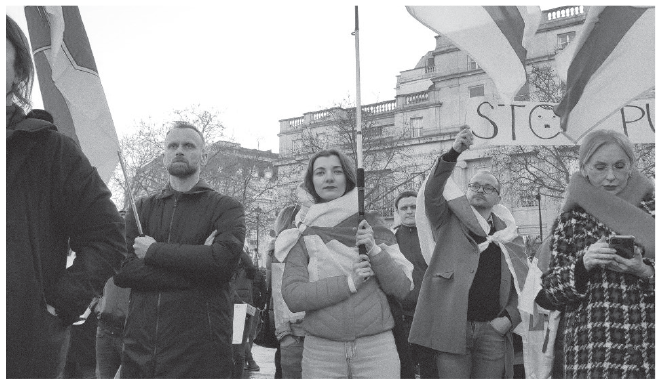
Komar continues to protest, this time in London against the war in Ukraine
CREDIT: Hanna Komar
I talked to my mum and explained to her what was going on in the country and what we could do to improve our lives. I was certain that I did a good job, because she voted for Tsikhanouskaya, took a photo of her ballot paper and sent it to Honest People’s bot, so it could be counted. A lot of things happened afterwards. I was detained and spent nine days in jail in September 2020. Mum has been worried about me many times. Every now and then she would regress to her usual ignorance – one step forward, two steps back – but once, I couldn’t handle it anymore, I couldn’t understand why I had to explain these things again and again, when I needed support so much.
“But what can I do?” she asked me. “Even if I am on the right side, what can I do?”
“Just believe in us, at least that, you can at least believe in us, can’t you?” I almost begged her.
I knew I couldn’t ask much from my mother who herself has been living under an abusive dictatorship for decades. She lost hope for a better life long ago, and she has honed her ability to shut off from the difficult reality because her survival depends on it. But I couldn’t lose her to complete ignorance. I needed a mother, not a zombie.
On 2 March she shocked me again. I had neither patience nor compassion to listen to her talking about “Ukrainian Nazis attacking Russia”. I ended up yelling. “Because of such stupids like you, people are dying in Ukraine!” I hung up, shaking, affected by my own anger and desperation. Then I pulled myself together and sent her recommendations on what to watch and read to understand where the truth was. She did. She apologised and told me she understood everything. “I know people are dying, but what can I do?” she asked me. “What can I do for them?”
“I just don’t know who to believe,” she said. In the spring of 2020, when out of the blue there appeared a number of men wanting to run for president, I told a friend, “Look, I don’t know who to trust,” to which she replied, “Well, we definitely know who not to trust, right?”
I told my mum that knowing the truth and understanding something about politics was what she needed to do for herself. “All your life you’ve been told that you have to be this and you can’t be that, you can’t go without a man, you are incapable. But what they don’t tell you on TV is that everything you have in life you’ve accomplished yourself, because you’re strong. Don’t trust the TV that tells you there’s nothing you can do, trust other women and men who are doing something.”
I feel proud of my mother and other parents who find inner strength to face the truth. My father, just like my friend’s who I mentioned at the start, has drinking problems and is not able to perceive the harsh reality. When I was detained, his reaction was, “Well, she had it coming”. I interviewed him about that episode later for my book only to find out that he was certain that I had got what I deserved because I was against the government. So I don’t want to talk to him about the war and get even more distressed. And I have friends from Russia whose parents refuse to see Russia’s atrocities and crimes against humanity. Both parents and their children are deprived of an emotional closeness and bond. Orphaned while their family is alive.