




Abstract

Russia is trying to stir up bad blood between Poland and Ukraine.
AS UKRAINIAN REFUGEES started to enter Poland, the news took a dark turn. “During the first days of the war, around a million Poles gave shelter to Ukrainians. And suddenly, there were posts about how ungrateful Ukrainians are,” said Piotr Jaworski, who is a journalist at the Polish TV station Belsat TV.
Poland and Ukraine are allies and neighbours. But they also share a complicated and at times difficult past. Historical traumas lurk beneath the surface, rising up at times like this. In 2014, for example, a Polish Facebook page emerged called “A Ukrainian is NOT my brother”. It asked people to remember the Ukrainian massacres of Poles in the 1940s. After the latest invasion, posts have called out Polish authorities for their strong support for Ukraine.
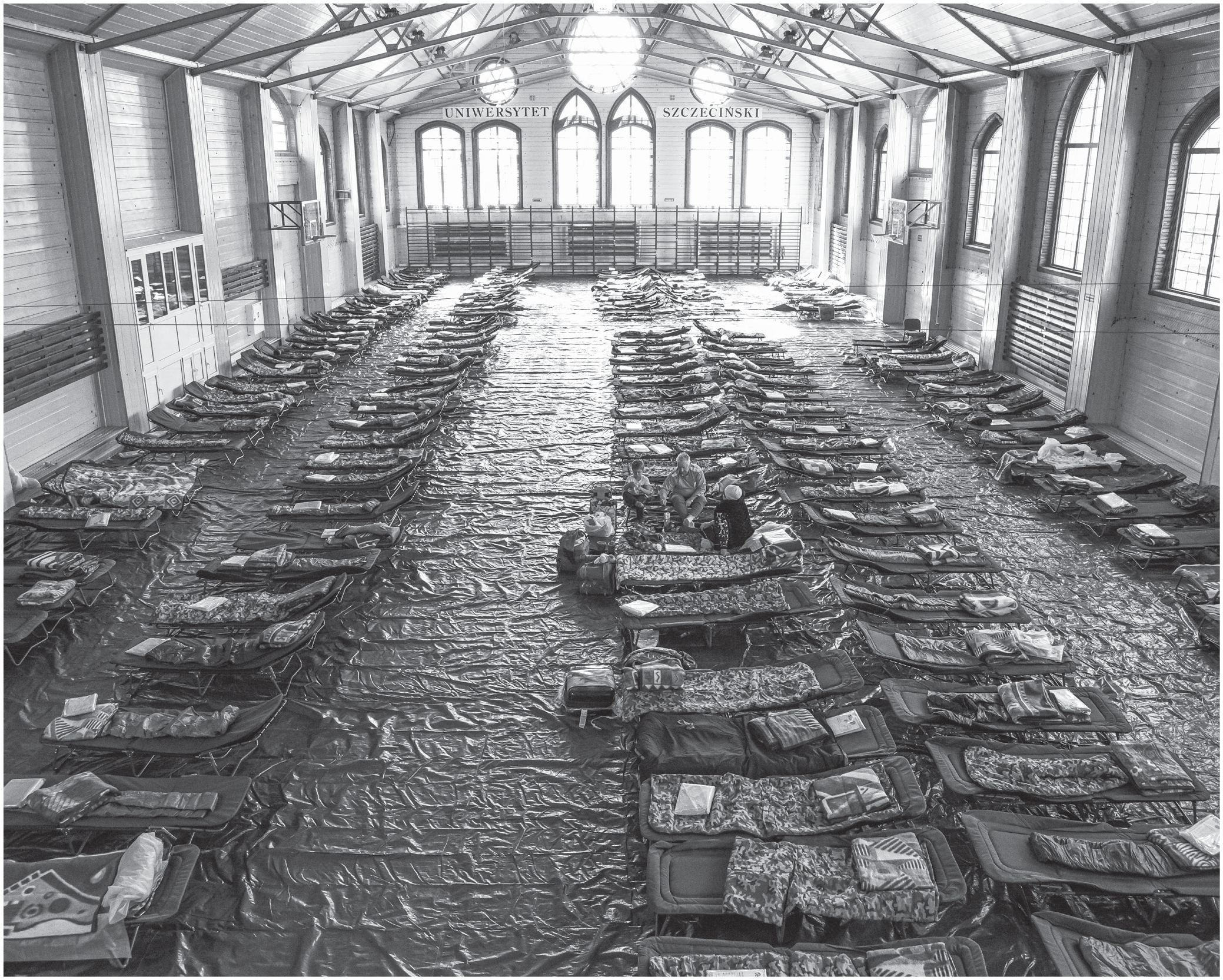
A temporary shelter for refugees from Ukraine in Szczenin, Poland, in March 2022. Poland is home to the largest influx of Ukrainian refugees so far
CREDIT: Kamila Koziol/Alamy
These negative stories often link back to the Kremlin. Many believe the Facebook page is run by a woman with ties to a pro-Kremlin party, Zmiana, in Poland. Certainly traumas are being exploited by Russia, which is using fake social media profiles and pro-Russian media to provoke anti-Ukrainian sentiment.
Another false claim Polish authorities say Russians are spreading is that Poland wants to reclaim Lviv and other territory in Ukraine that once was Polish. “Those claims are untrue,” the Polish Foreign Ministry said in a series of tweets. “Poland will never accept the annexation of any territory belonging to an independent state.”
To complicate issues further, Poland has a long and challenging history with Russia, with memories still fresh of atrocities carried out in the 20th Century by Soviet forces. Polish journalists must also contend with attacks that come from within Poland by their own government. Media freedom has been restricted in Poland for several years now. According to the latest RSF report, Poland is ranked 66th of 180 countries in terms of media freedom. This is the worst result Poland ever received. Before the ruling party PiS came to power in 2015, Poland was ranked in 20th place.
Add all this together and you have a perfect storm when it comes to media freedom.
“We need to be attentive all the time because our government can easily adopt new restrictive laws. That was happening all the time before the war,” Violetta Szostak, journalist and editor of Gazeta Wyborcza, told Index.
The war has been used as a pretext to further close in on the media. Bartosz Zelinski, Gazeta Wyborcza’s vice editor-in-chief, explains that the Polish government has closed a few pro-Russian media since it started.
“Far-right TV broadcaster wRealu24 was closed because of Russian propaganda spreading. Of course, you need to fight Russian propaganda. But we should be worried that this media was closed in a very indirect way. I am afraid that our state could do the same with the other media that the government doesn’t like,” he said.
Another case is that of Spanish journalist Pablo Gonzalez who was arrested on 28 February in Rzeswow, the largest city in southeast Poland. An expert in the post-Soviet world, he was working on the refugee crisis from Ukraine when Polish authorities detained him under the accusation of being a Russian agent. Despite an outcry from the International and European Federations of Journalists, Gonzalez remains in pre-trial detention at the time of going to press and faces up to 10 years in jail if convicted.
But Jaworski also says there have been positive aspects of the media story in Poland. “All in all, public opinion is saying that we need to help Ukrainians because it’s the good and moral thing to do,” Jaworski said.
And many stories have run on all aspects of the war, with some critical ones too in terms of the Polish government.
From the very first day, Gazeta Wyborcza has spotlighted the war.
“We were covering almost every solidarity event that took place. Also, we featured stories of refugees. We were not silent if we saw that the governmental aid system could be improved. The other media, who are state-controlled, cannot be critical of any authorities,” said Szostak.
Today Poland has the highest number of Ukrainian refugees globally and the disinformation campaign appears limited in its reach.
“We didn’t even think about whether we should provide support or not,” Przemek Prasnowski, the president of Barak Kultury Foundation, said. “It was something like a reflex, a quick reaction to events in Ukraine, to this tragedy that affected that many Ukrainians.”
But how long can the goodwill continue? Prasnowski is afraid that the end of solidarity could be near.
“It’s a tough question. Most of the volunteer work was done by simple people without financial support. The inflation rate in Poland is getting higher and higher, so people need to choose how they will spend their money”.
Economic issues could potentially lead to conflict between the two nations, doctor of political philosophy Marcin Chmielowski thinks.
“Poland has limited resources, and our population grew by a few million people in a month. But there are still the same amount of houses, public transportation, schools and medical workers. There are going to be conflicts between Poles and Ukrainians, it’s impossible to avoid them. A refugee got a job and a Polish citizen didn’t. A Ukrainian kid got enrolled in the kindergarten and a Polish kid didn’t,” he told Index.
Footnotes
Additional research by