




Abstract

Writers in Ukraine are at risk once again.
UKRAINE HAS A history of silenced writers, with a legacy that sheds light on the current war. In The Executed Renaissance, a 1959 anthology published in Paris by Ukrainian literary critic Yurii Lavrinenko, their voices live on. The 20th century saw a generation of Ukrainian authors destroyed by Joseph Stalin, but through this anthology some of the country’s most prominent work has been salvaged.
There is a complex story of censorship behind this collection. Ukrainian literature was subject to severe legal restrictions under the Tsars, with one minister of the interior notoriously saying: “There is no Ukrainian language.” After the Russian empire fell, Ukraine was briefly independent – from 1917 until 1921 – before being incorporated into the Soviet Union following its conquest by the Bolsheviks.
During the 1920s, the Soviets sought to embed their regime in the republics they had created across the ruined empire, by using their native languages. Ukraine, however, was different. Russians had always struggled with the idea that Ukraine was not part of Russia.
After the fall of the empire, Ukrainians embraced the opportunity to write in a language that had for so long been largely forbidden. Their writing was naturally radical, because to write in Ukrainian was, by definition, to oppose imperial orthodoxy and colonisation.
Under imperial Russian rule, most Ukrainians had been serfs, including their brilliant national poet Taras Shevchenko. His poems, such as Caucasus, attacked the subjugation of people under Russian rule.
Another Ukrainian poet, Lesya Ukrainka, was a radical feminist whose plays featured strong female heroines and patriarchy.
The writers of the 1920s embraced futurism and symbolism, and – while notionally loyal to communist ideology – a dangerous new autonomy was in the air. The Bolsheviks were as imperialist as their Tsarist predecessors. From 1929 onwards, the machinery of mass executions, deportations, gulags and a genocidal forced famine known as the Holodomor, were unleashed on Ukraine. The mass executions would ultimately merge with the Soviet-wide Great Terror, but their Ukrainian dimension is crucial to understanding both Soviet history and Russia’s current assault on Ukraine.
Lavrinenko barely survived the destruction himself, but managed to escape the Soviet Union in World War II. He pieced together as much work of silenced Ukrainian authors as he could, using material published between 1917 and 1933, which was subsequently censored. The Executed Renaissance was born.
Maik Yohansen, one of the poets Lavrinenko anthologised, celebrates the small, fleeting moments of life, such as the piece published here, where a voice calls through the fog. The second poem is both a bizarre moment of imagination and a call for a genuine global revolution, completely alien to the regime that would ultimately murder him.
Lavrinenko’s anthology could not capture all the authors the Soviets destroyed. One notable writer, the poet Lidiya Mohylianska, also known as Lada, was not included. She was born in Chernihiv and arrested in 1929 for criticising collectivisation, and executed by firing squad in 1937. The first of her poems published here is a beautiful meditation on the passing of summer into autumn, ahead of its time technically.
However, the second poem is extraordinarily modern, a foreshadowing of Ted Hughes’s Crow in terms of metaphor and freedom of form. It is an anguished appeal for compassion that speaks to the events in Ukraine today.
According to one estimate, of the 259 writers active in Ukraine at the beginning of the 1930s, only 36 were still writing by the end of the decade. The Soviets subsequently rekindled Ukrainian patriotism in World War II to motivate the 4.5 million Ukrainian soldiers in the Red Army, but then crushed the literary revival which followed in the 1960s.
However, glasnost – an attempt to galvanise the economy via political liberalisation while retaining control – would ultimately reignite Ukrainian nationhood.
Further attempts to suppress it culminated in the current war. Russia is destroying Ukrainian books in occupied areas, and Ukrainian author Volodymyr Vakulenko and his son were abducted from Izium by Russian forces in March.
When we look at the authors of The Executed Renaissance now, we can see they are not simply a lesson from the past. They are part of a historical process we are watching unfold in the massacres perpetrated across central and eastern Ukraine.
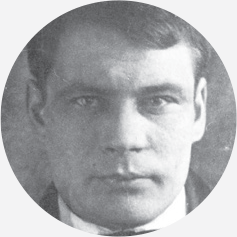
Portrait of Ukrainian poet Maik Yohansen, who in 1934 joined the Soviet Writer’s Union of Ukraine
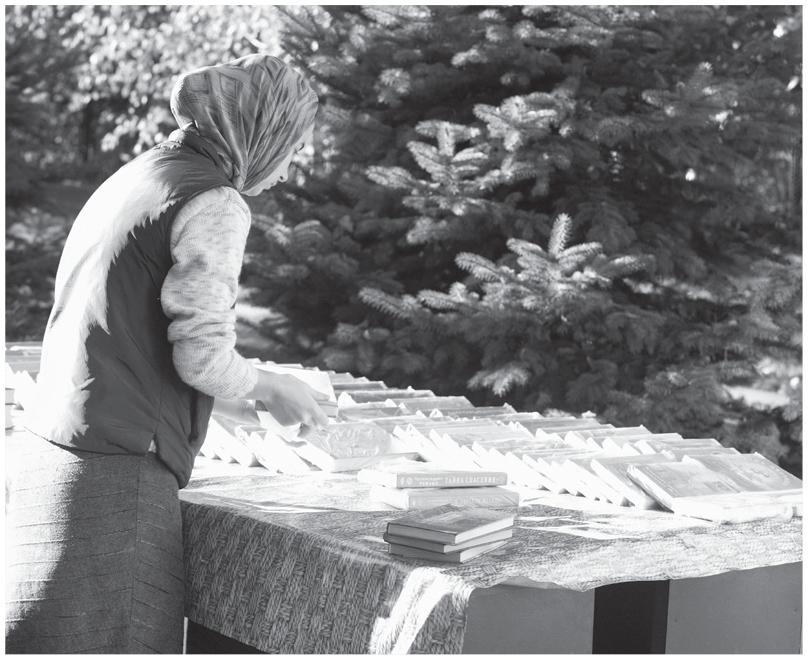
CREDIT: (Yohansen) Wikimedia Commons; (right) Agencja Fotograficzna Caro/Alamy
The voice came from the fog Like a bird
My heart leapt, my hands lowered into the past, A tram broke the silence then tore into view. I heard how the day burned, how the grass grew, Hey, higher than the groves and skylarks so That the birds angrily tore and pecked it.
And again Return!
Lower
And less audible than the distant murmur Of the capital, The word died in its countless pavements.
We have birthed so many words me and you,
That you could populate the moon with them
Dreamed out so many dreams so blue
That our children frolic on all the planets.
We have sailed all round the sea you and me
And the Pacific, all of its bays
The moon peered from clouds a jackal’s eye
Above our heads Lianas dreamed.
We worked in the rice field too and were beaten
By white people and all the wounds
Of the world were on your hands and all
Its pain and anger in my broad breast.
So we will build the last barricades
And you will shoot the very last king
And on the Earth great councils will come,
And you will die, my darling.
A woman visits a book market stand in Odessa, Ukraine. Ukrainian writers have a long history of being silenced in the country
Here is Autumn… cheerful horse clop…
The garden dreams its dog rose, only
Yesterday we unlocked summer’s treasury
With a gold key.
Only yesterday the lightning cockily
Fine as a spider web in the sky…
Today the wind has scattered bundles
Of yellow leaves on the canal.
When they died they saw the eyes of rifles
Like the dead eyeholes of skulls…
And then laid… face up in the grass…
And the wind plucked the strings of the cold night.
When they died they passed, unnoticed and quietly,
Their pale lips whispered innocent prayers.
The morning sun shone on a mound of earth
And the guard’s dark shadow that was their cross.
Cornflowers laughed nearby, at the boundary
And morning bustled with its wild festivity…
He is crucified! Do you see! Hear! Come! Help!
Crucified!
Translated by