




Abstract

One of the translators behind a new project to get anti-war Russian poetry out,
“MANY RUSSIANS HAVE voiced concerns that this war may have rendered a fatal blow to Russian culture as an idea,” said poet and translator Yulia Fridman. A mother of four, she is a physicist by training, works as a research scientist and was recently fined for taking part in a demonstration protesting the war in Ukraine. Born in Novosibirsk, Siberia, in 1970, she had long been based in Moscow but is currently out of the country.
Fridman’s poems are closely connected to Russian counterculture and, like the one featured below and published exclusively for Index, prove that dissent still exists in the country – you just have to know where to look.
In this case it’s the Kopilka Project. I discovered Fridman’s poem, with its apocalyptic yet unnervingly plausible vision of the Kremlin’s war against Ukraine – and then against the entire world – in the Kopilka Project. It’s a new, extraordinary repository of antiwar poetry by Russian speakers from around the world, today numbering more than 600 pages, with more than 100 poets involved, and growing.
It was founded by poets and translators based in the USA – Julia Nemirovskaya, Dmitry Manin, Anya Krushelnitskaya, Irina Mashinsky and Andrei Burago – and its aim is to collect Russophone poems that speak out against the war in Ukraine and to make them accessible to translators and publishers worldwide. “Kopilka” translates from Russian as “piggy bank” and, speaking to Index, Nemirovskaya said they consider their “effort as throwing a tiny copper coin into a bigger Kopilka, the collective effort to defeat Putin.” In many ways it’s as close to the Cold War idea of samizdat – the clandestine distribution of works banned by the state – as you get today.
“We began to collect wartime poetry at the onset of Putin’s war. Since our small volunteer group is based in the US and cannot be persecuted by the Russian government, we collected anti-war works of the poets who lived in Russia. It was a way to keep those poems safe,” said Nemirovskaya, adding:
“The mere fact that so many anti-war poems are being written by so many good poets is a strong statement on the war’s impact on artistic expression. I remember in his lecture on Vladimir Vernardsky, V. V. Ivanov said that large-scale tragedies created voids in “noosfera”; the voids were then filled by works of poets, artists, musicians and philosophers. This explanation is probably a bit simplistic. Still, there is some universal order that provides for a more intense intellectual activity during wars and revolutions. Our Kopilka is a testimony to that.”
Nemirovskaya describes poetry as “a soldier fighting for the right cause”.
When I asked Fridman to comment on what it’s like to be part of this cause and to be writing poems in Russian within the Russian cultural space during the war against Ukraine, she said she’d “rather see those poets who do not consider themselves Russian poets any more alive and well, reunited with their loved ones, living in a free country taken back from the occupiers. If anything can benefit Russian culture at this point, I feel it’s that one thing”.
CREDIT: Rosie Hunter/Ikon Images
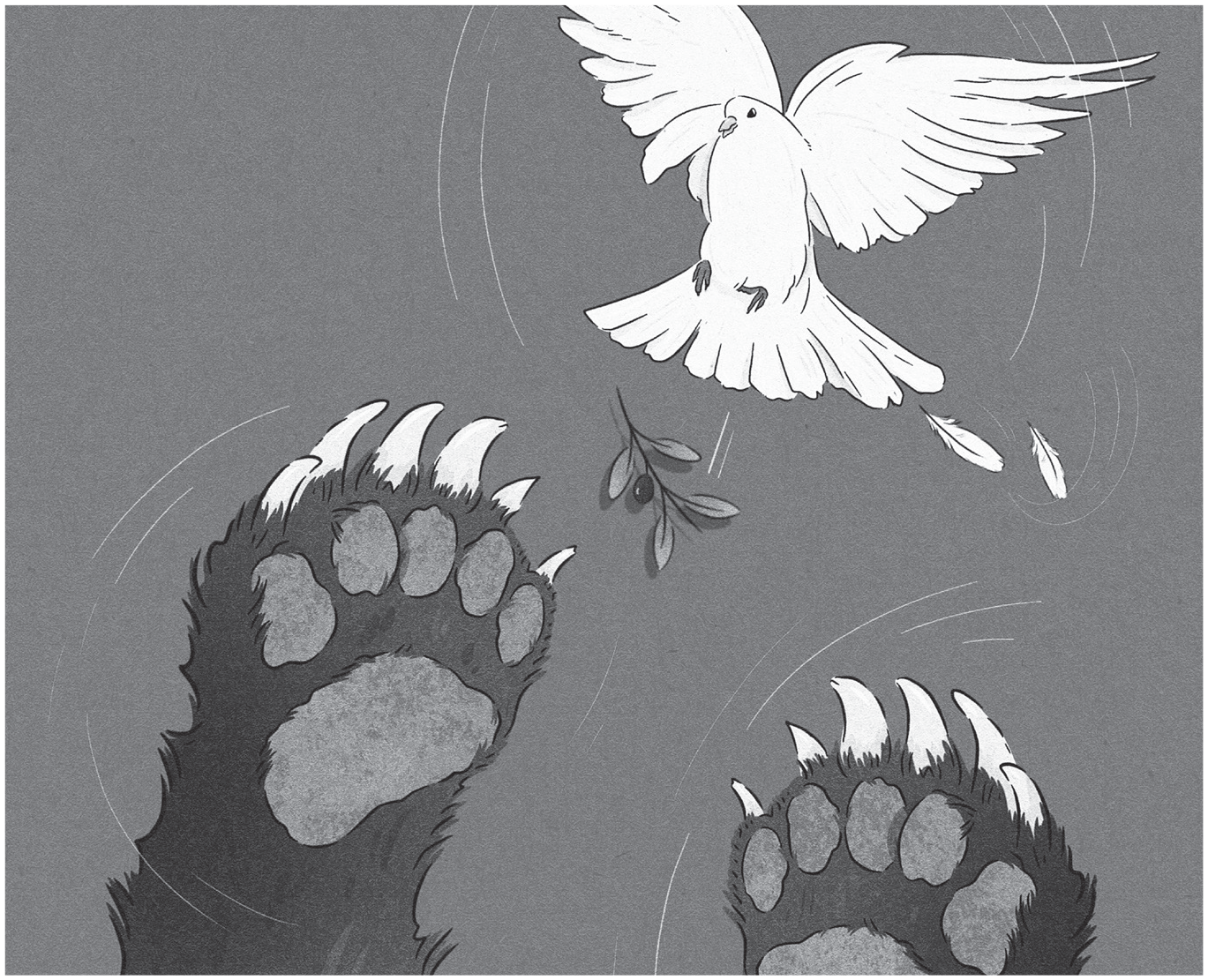
She also spoke of the Russian poets who live in Ukraine and its changing, difficult landscape. One has serious health problems.
“When the sirens sound, he cannot go down to the shelter himself and is always trying to make his mother, daughter and cat go to the shelter without him … he occasionally succeeds. There was a time when, judging by his occasional remarks, I used to think of him as pro-Russian, but that was before the war began. Now he calls himself a Martian poet,” she said.
Fridman, who questions the future of the Russian language, speaks of another poet, also in Ukraine, who has not written in Russian since 2014.
“That year he was forced to leave his home to the new regime and settle in the town of Sumy, in north-eastern Ukraine with his family. On February 24 of this year everything changed. He helped his wife and kids get safely to Poland, gave whatever food he had in storage to his neighbours and joined the Ukrainian military forces. Sometimes I hear from him – he sounds almost happy and hates everything Russian. He is a Ukrainian poet.”
When we had liberated Ukraine from the Nazis
When we had liberated Ukraine from the Nazis, Poland from Martians, Finland from dog-headed men, the Earth sprouted fragrant cocaine-smelling blossoms, and our tankmen got high on their magical scent.
Lithuania became a hotbed for galactic snails from Epsilon of Andromeda, that cold crimson star; they hid among salad greens and other plants, we bombed it flat – no choice but go that far.
We were compelled to raze Estonia from the map, since the ichthyosaurs took over step by step, they arrived from Alfa Centaurus, on an orbital lap, all of them devotees of Astarte’s gory sect.
In Latvia too, we destroyed all signs of life, we had no choice – the West forced our hand! It propagated noxious microbes there, as the crypto-science gurus let us understand.
Now all nations are free, they write us from Eden, and all sundry creatures, both furred and feathered – and Moscow extends from horizon to distant horizon, from sandstorm to sandstorm in the new global desert.
Translated by
Footnotes
Additional research by