




Abstract

Romanian politicians have been faking PhDs.
ROMANIA, AMONG THE most totalitarian of the communist states in the post-war period under president Nicolae Ceausescu, has – over the three decades since his death – developed a remarkable cadre of investigative journalists. That’s true, to different degrees, in all post-communist societies – though in Russia and the Central Asian states they operate at their peril. In Romania, which can be described as “partially democratic”, business moguls control most of the country’s media and are tightly integrated with the political parties. Investigation is possible, but it quickly becomes a series of struggles to publish and to highlight abuse and corruption.
It has a champion in the Ratiu Family Charitable Foundation, named after Ion Ratiu, a liberal politician and presidential candidate, which annually presents awards for hard-driving, independent journalism – but cannot protect its awardees.
Ovidiu Vanghele, among the most audaciously probing of the investigators, calls the relationship with the state “tormented” and “crooked”.
Along with Diana Ocioiu and Vlad Stoicescu, he unearthed widespread abuse of minors by a bishop of the Romanian Orthodox Church at a Christian high school – an investigation which continues and is being bitterly fought through the courts.
LEFT: Romanian reporter Emilia Şercan found out that powerful people in politics, the military and the secret services claimed to have doctorates in fields in which they had no knowledge
CREDIT: (Șercan) Press One/Article: Emilia Șercan: “State authorities have orchestrated a kompromat operation against me. Now they’re trying to cover it up”, published on Press One website on 04/04/2022; (Oprea) Wiktor Dabkows/Alamy
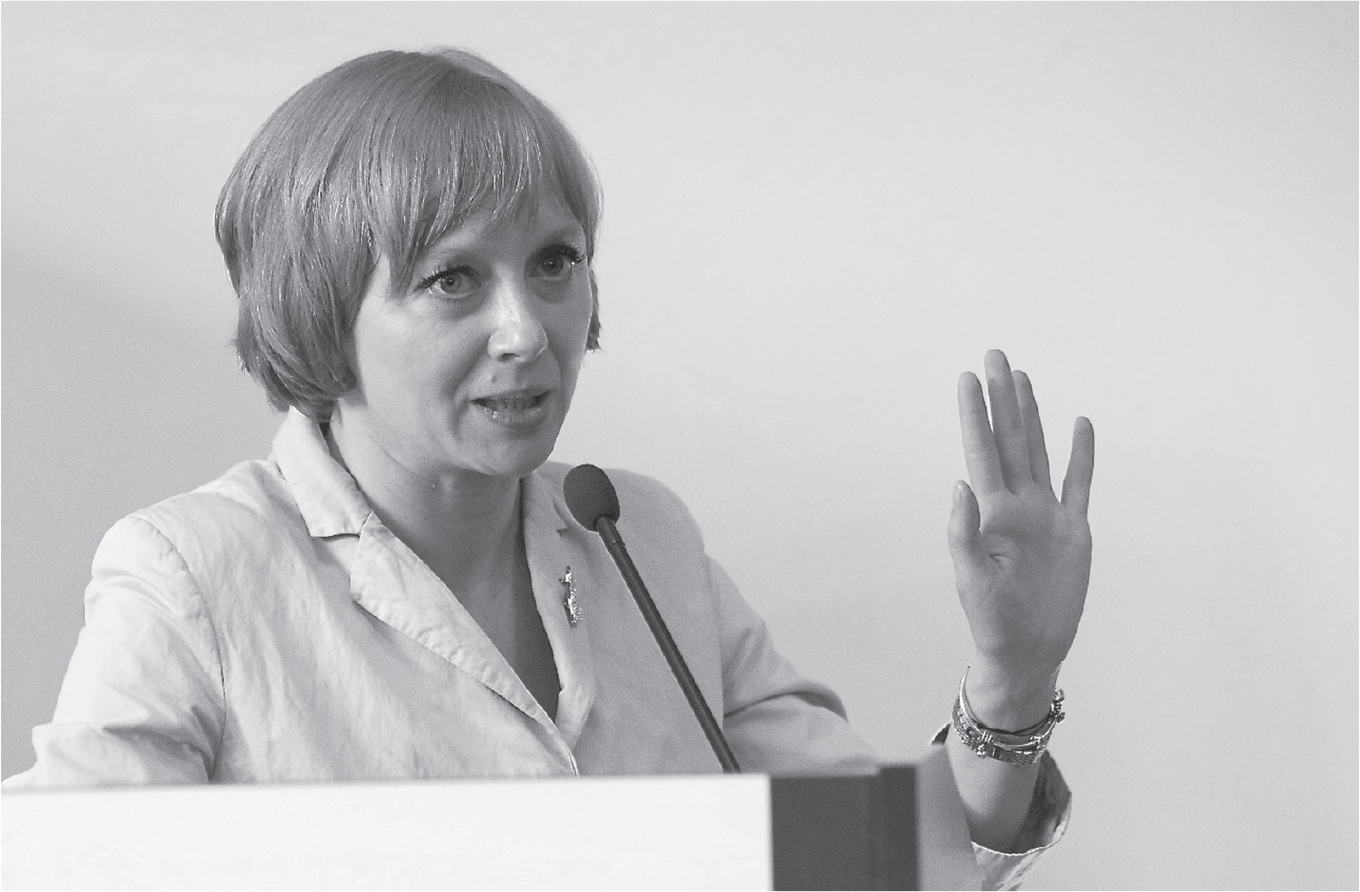
Among the most “tormented” of the investigations is that mounted – again, still with more to unearth – by Emilia Şercan. Şercan, born in Vatra Dornei, in the north-eastern corner of Romania, has in a 25-year career reported, or led investigative teams to report, on the many darker corners of Romanian politics and business. In the course of that career, she frequently found her weeks or months of work discarded for being too uncomfortable to business or political interests, or published in small circulation media with the larger media refusing to pick up the story.
Slight and courteous, she has, in pursuit of a story which reached into the very top of her country’s politics, shown a stubborn and bold spirit which shames the subjects of her story and a swathe of the Romanian establishment. A part-time academic – she teaches journalism technique at the University of Bucharest – she became aware that senior figures in politics, the military and the secret services were acquiring doctorates (PhDs) in areas of study where they had no expertise or history.
She began digging and learned that universities affiliated to the Ministry of Defence, the Interior Ministry and the Romanian Intelligence Service all had doctoral programmes and were awarding doctorates to politicians, judges, police officers and high-ranking civil servants. Why, she asked, go there when they could go to civil universities with a larger choice of disciplines and more highly qualified scholars?
When, with difficulty, she found content in many of the theses had been plagiarised it became clear what was happening.
She said: “These military universities were, practically speaking, a production line for the development of the plagiarism phenomenon in Romania. They always operated in a hermetic system, there was never any real civilian control over these universities, as there is, in fact, none over the Romanian Intelligence Service or even over the entire intelligence system in Romania.”
Her investigations reached the top of politics. In 2015, she published evidence that Gabriel Oprea, the interior minister and a former army general – and, briefly, prime minister in that year – had, when a university professor and doctoral supervisor, plagiarised wildly for his own doctoral thesis.
She also uncovered a network of politicians, magistrates and senior state officials, all supervised by Oprea, who had plagiarised the content of their doctoral theses. Oprea protested that the allegation was false and that he was the victim of a political vendetta. An inquiry found this to be false, further scandals relating to decisions he had made erupted and, bit by bit, he was forced out.
A doctorate isn’t required to get to the top, but it attracts a higher salary and it confers status. There’s even a malign example from the past: Elena Ceausescu, the dictator’s wife and a power in her own right, had a PhD in chemistry faked for her, and was lauded for it in the communist-era media. Universities and institutes abroad were pressed to entertain her as a distinguished scholar.
Drawn into a world of deception which has proven hydra-headed, Şercan reported on the fake PhD theses of several high-ranking police officers – and was rewarded by death threats from a police academy official named Adrian Barbulescu. As the prosecutors discovered, Barbulescu had been directed to issue the threats by Adrian Iacob, rector of the Police Academy, and his pro-rector Petrica Mihail Marcoci. Iacob and Marcoci were found guilty of blackmailing Şercan and were sentenced by the Supreme Court to three-year suspended sentences, losing the right to be police officers and university professors.
RIGHT: Gabriel Oprea, the Interior Minister of Romania and a former army general, plagiarised his own doctoral thesis in university, according to journalist Emilia Şercan

Her latest, and highest, quarry is the present prime minister, Nicolae Ciucă – also a former army general – who took office in November last year. Şercan discovered that almost one-third of his thesis had been plagiarised. Ciucă excused himself by saying that the doctorate was “drawn up in accordance with the legal requirements of the time”.
Ciucă remains in post, and Şercan continues to probe – but at a cost. Accustomed to working quietly and without fanfare, earlier this year she decided to speak out about the campaigns of defamation and intimidation that she faced – which became more severe after she revealed Ciucă’s PhD plagiarism.
More serious, and seriously intimidating, is that her complaints appear to have been followed by leaks from the police themselves, including photographs taken by her then-fiance of her emerging from a shower.
In a detailed document, she wrote: “The key player is the Romanian state itself. A piece of evidence I provided to the Romanian police, with the end goal of identifying someone who had perpetrated a violation of privacy, was leaked from the criminal file that very same day and became the basis of an extensive kompromat operation.”
Investigative reporters work under periodically intense pressure. They cannot continue to work, however, if the forces of law take the sides of those who wish to shut them down, or wish themselves to do so. Şercan’s stubborn courage has done much to illuminate dark spaces, but she will need support from within Romania and outside to continue.