




Abstract

IN GREEK MYTHOLOGY, the gods’ intentions to destroy a village were preceded by an orgy organised for those who, later, would discover they would perish. It was an unprecedented feast that would last for days with wine, music and dancing. In Brazil, recent history chimes with mythology.
In 2023, the country will mark 10 years since the first of the mega sporting events was hosted in the country and, with it, an unexpected turnaround in the country’s destiny.
In 2013, Brazil hosted the Fifa Confederations Cup, an event that would serve as a rehearsal for the World Cup in 2014. Two years later, it would be the Olympics hosted by the Cariocas (as people in Rio de Janeiro are known). The sequence of events caused envy around the world, while many claimed the Brazilian Decade could catapult the nation into a new level of development.
But these events led to seismic shifts in Brazilian politics and society – shifts that are still being very much felt today.
For the government, the tournaments would be used as a shortcut for the country to become a protagonist on the world stage, confirming a transformation in its foreign policy and the desire to sit at the table with the big powers. For mayors, governors and many other authorities operating at a local level, they would be a political springboard as well as a financial one.
But the events were marked by the corruption of values, resources and democracy itself.
The extreme right used their mismanagement as an opportunity to begin a process of questioning the entire power structure and, thus, pave the way to overthrow those who were in charge.
Media freedom started to suffer from the get-go. Uncovering corruption in sports meant challenges for me and my fellow journalists.
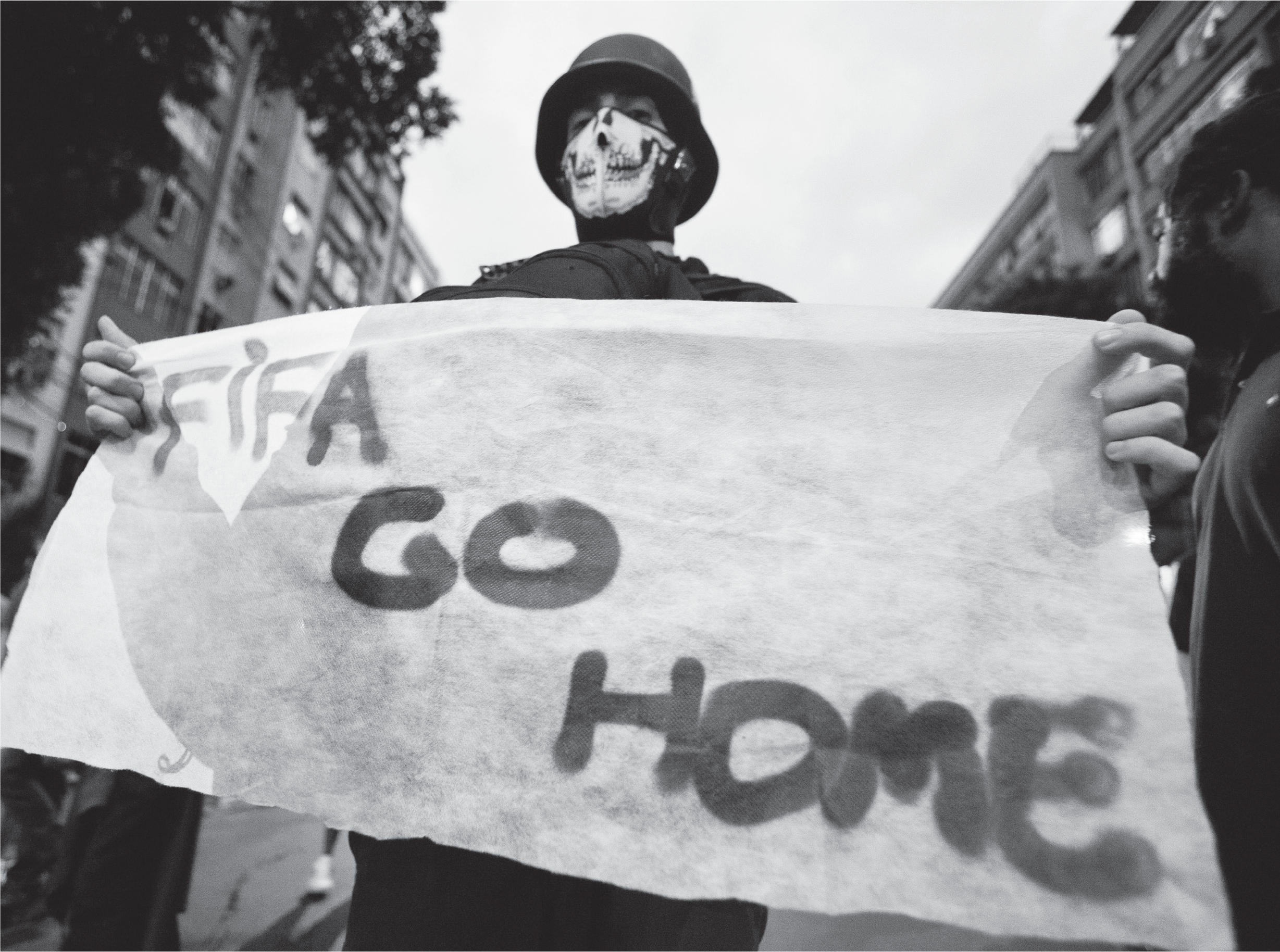
ABOVE: Demonstration in Rio de Janeiro against the hosting of the 2014 Fifa World Cup in Brazil, June 2013
CREDIT: Brazil Photos/Alamy
Media professionals who would "play the game" with the organisers of the Olympic Games or the World Cup had access to the sports stars. They’d be able to line up exclusive interviews and would be rewarded, either with a scoop or other favours.
On the flipside, those opting to question and fulfil their duties as journalists were barred from certain places, ignored by the media department and bullied and discredited by the event organisers.
With an army of legal advisers, sports officials would not hesitate to engage in “lawfare” in order to block a story from being published.
Initially, the Brazilian Football Confederation had promised it would not ask for a single cent of public money to erect the new stadiums the country would need for the World Cup. Less than a decade later, of every $9 spent on the event, $8 had been borrowed, donated or financed by taxpayers.
There was an explosion in construction costs and it was clear the organisers had no plan to use the games in a sustainable way, neither for the cities that hosted them nor for the development of a competitive sports culture. Months after the World Cup final, the lack of games at the Mane Garrincha stadium in Brasilia obliged the government to transfer part of its bureaucracy to the stadium, using the rooms for various departments. The outside area was turned into a garage for city buses. It was a similar fate for many of the other stadiums built for the tournament. The World Cup in Brazil became an extravagant mirror of an illusion, and the white elephants and their stench became monuments of a failed adventure.
Two years later, the Olympics in Rio were another tribute to obscenity. Months after the Olympic circus closed, the state of Rio de Janeiro showed clear evidence that it was bankrupt. Pensions started to be taxed, social programmes were cut and salary increases were cancelled. The national economy entered its worst recession, with unemployment affecting 13 million people.
As politicians and businessmen were put in jail for corruption and the economy was ruined, a statement by International Olympic Committee president Thomas Bach at the closing ceremony in Rio still resonates in the country. According to him, holding the Games in such a difficult political climate was a “miracle”. A miracle for whom, one could ask.
The chaos, however, was not limited to financial collapse or corruption scandals. In 2013, in the midst of the protests, the seeds of the extreme right were planted. While millions of Brazilians took to the streets to demand that the funds for the World Cup be allocated to health and education, far-right groups infiltrated these demonstrations and they turned violent. Posters calling for the return of the military dictatorship were a sign that public fury was being kidnapped.
Authoritarian radicalism took a new dimension, benefiting from a political vacuum and an orchestrated parliamentary coup against then-president Dilma Rousseff, who was impeached in 2016. It was all covered up by the cloak of the need to fight corruption.
Less than five years later, the far right won the 2018 election. Jair Bolsonaro rose to power and immediately implemented his project to dismantle democracy. Ten years after Brazil started hosting the most coveted sporting events on the planet, the ground continues to shake in the country. Not because of the celebration of a goal or a medal but due to the political and social earthquakes they triggered.