




Abstract

Rushdie’s attack warns of a less tolerant world, but hope is coming from an unlikely corner, writes
THE ATTACK ON Salman Rushdie is a grim reminder of a sad contemporary reality. If a writer can be assaulted and stabbed, in full public view, in the pleasant surroundings of Chautauqua in bucolic upstate New York, is anywhere safe for the free exchange of ideas? Rushdie’s satirical novel The Satanic Verses, based on a story that the devil had tried to insert an idolatrous passage into the Koran, the sacred text of Islam, caused outrage throughout the Muslim world when it appeared in 1988. The culprit in the recent New York attack may have acted independently but there can be no doubt that he was inspired by the 1989 fatwa issued by Iranian leader Ayatollah Khomeini, which demanded Rushdie’s execution as an apostate following the publication of his book.
Rushdie’s survival since 1989 is a glimmer of hope in a darkening scene. A Pew Research Centre survey found that in 2019, 79 countries – 40% of the 198 studied – had blasphemy laws, outlawing anything thought to slight religion. A survey in 2013 found that 62% of people in Malaysia, 86% in Egypt and 76% in Pakistan favoured the execution of apostates who desert the Islamic faith.
In Iran, members of the minority Bahá’i Faith, who are accused of being apostates, are now being rendered homeless, with their houses bulldozed by the regime. Even where laws against blasphemy do not exist, lampooning religion can lead to death at the hands of those who see themselves as executing God’s will, as was seen with the Charlie Hebdo attack in France.
In an era of multiculturalism, populism and heightened sensitivities about sexuality, belief and identity, the road to tolerance and reason is becoming ever more perilous.
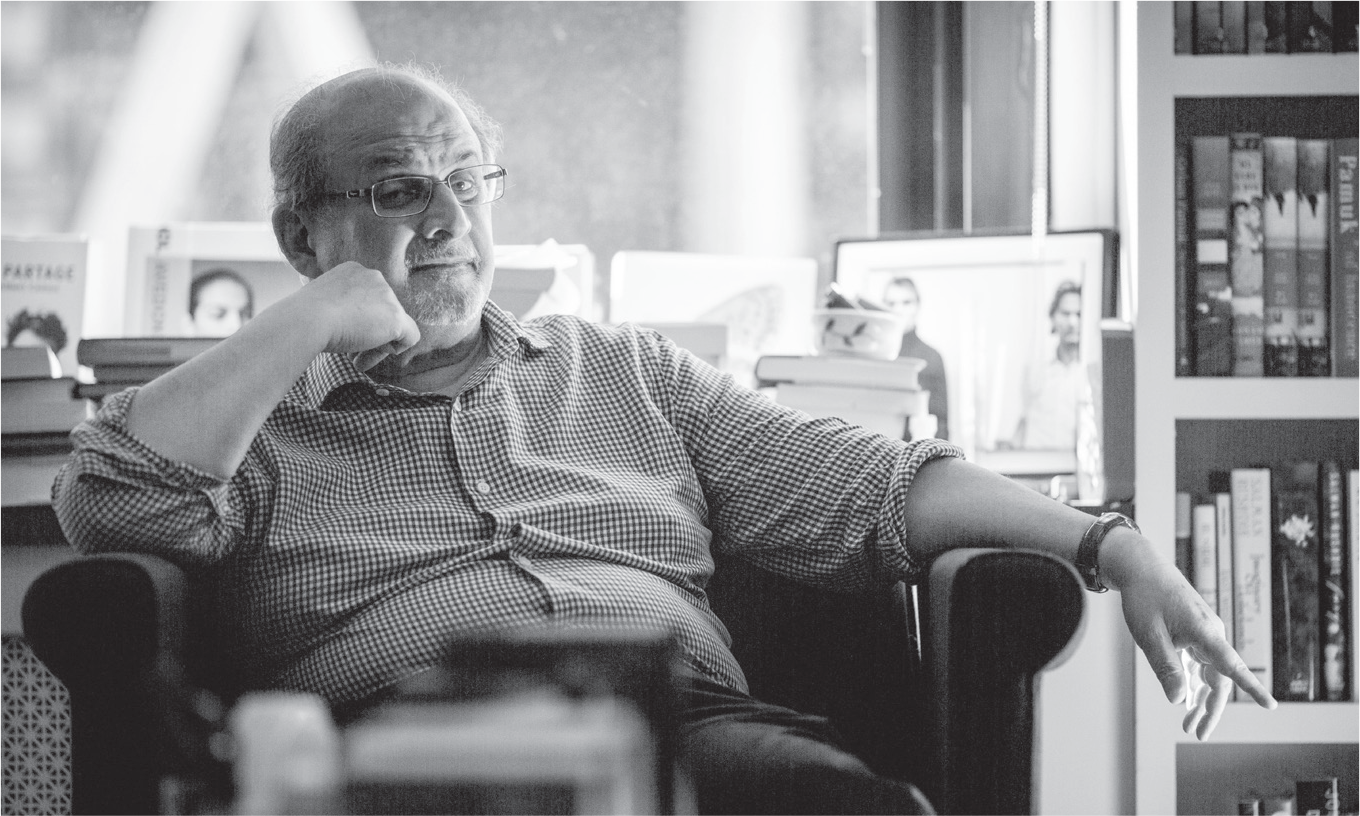
BELOW: Award-winning author Salman Rushdie in New York in 2016
CREDIT: Orjan Ellingvag/Alamy
There remain, however, small filaments of hope. The Pew survey suggested that the younger generation were less religiously observant and less judgmental than their parents.
Societies long exposed to secular regimes show much lower levels of approval for laws against blasphemy and apostasy, despite signs of growing intolerance in online culture wars where activists seek to cancel their opponents. There may also be a small and stony footpath to reason in the work of Muslim scholars in Western universities, such as Ahab Bdaiwi of Leiden and the late Shahab Ahmed of Harvard.
Ahmed, who died in 2015 aged 48, showed in Before Orthodoxy – The Satanic Verses in Early Islam how painstaking academic research can unpack the myths that sustain populist feeling. After examining the earliest sources, Ahmed found a widespread and untroubled consensus on the historical authenticity of The Satanic Verses episode, which stood in marked contrast to the doctrinally orthodox rejection of the story that emerged in later centuries. His work provides an abundance of data that could be deployed to challenge Rushdie’s caricature of a divine emissary who instructs the faithful in the mundane details of life, by spouting “rules, rules, rules”.
Ahmed and Bdaiwi’s research is consistent with the work of other Muslim intellectuals such as Turkish writer Mustafa Aykol, who laments the closing of Muslim minds via the dominance of legal proscriptions.
Such work may take time to reach the inner recesses of a piety constructed around outdated gender distinctions and rigid behavioural norms. But the signposts are clearly marked.