




Abstract
Leaving the Commonwealth isn’t just a matter of preference, it’s a matter of freedom, writes
IN THE WAKE of Queen Elizabeth II’s death, Jamaicans became more aware of the absurdity of having a foreign monarch as head of state. The official 12 days of mourning and the imposition of King Charles III as the new head sparked further debates about the relevance of Jamaica’s constitutional monarchy. More than ever before, the costs and benefits were open to scrutiny.
The voice of republican advocacy had grown louder when the Duke and Duchess of Cambridge (now the Prince and Princess of Wales) visited Jamaica in March 2022. In the context of the Covid-19 pandemic and its economic impact, many were concerned about bread-and-butter issues and viewed government spending on the royal visit as misplaced.
Among them were parents who had lost their jobs or their businesses and consequently struggled to send their children back to school. One young mother expressed the view of many: “If a republic will improve how I live, I’m all for it.”
Republican values of liberty, freedom and inalienable human rights have had a long history in Jamaica, dating back to 1494 when Indigenous people faced genocide with the arrival of Christopher Columbus. From the mid-1600s, British imperial domination meant people suffered the atrocities and inhumanity of slavery and colonisation. Centuries of resistance followed.
Even after emancipation in 1838, when the system of slavery was abolished there, the dream of freedom quickly became a nightmare. The institutional legacies of slavery persisted, fostering decades of resistance. With independence in 1962 came the promise of self-government. But so, too, came constitutional provisions which deeply entrenched the monarch as head of state, giving centralised executive powers, largely exercised by the cabinet under the control of the prime minister.
Jamaica’s constitutional monarchy persists 60 years later. The centuries-old dreams of freedom and the aspirations for self-determination remain unfulfilled. But a new era might be on the horizon.
After Barbados became a republic in November 2021, the republican debate was reignited in Jamaica. There has been no move to establish a republic since 1995, when the Joint Select Committee on Constitutional and Electoral Reform had agreed, among other things, to create a republic by removing the monarch as head of state. They also agreed to “Jamaicanising” the constitution, making it a “product of the Jamaican people”.
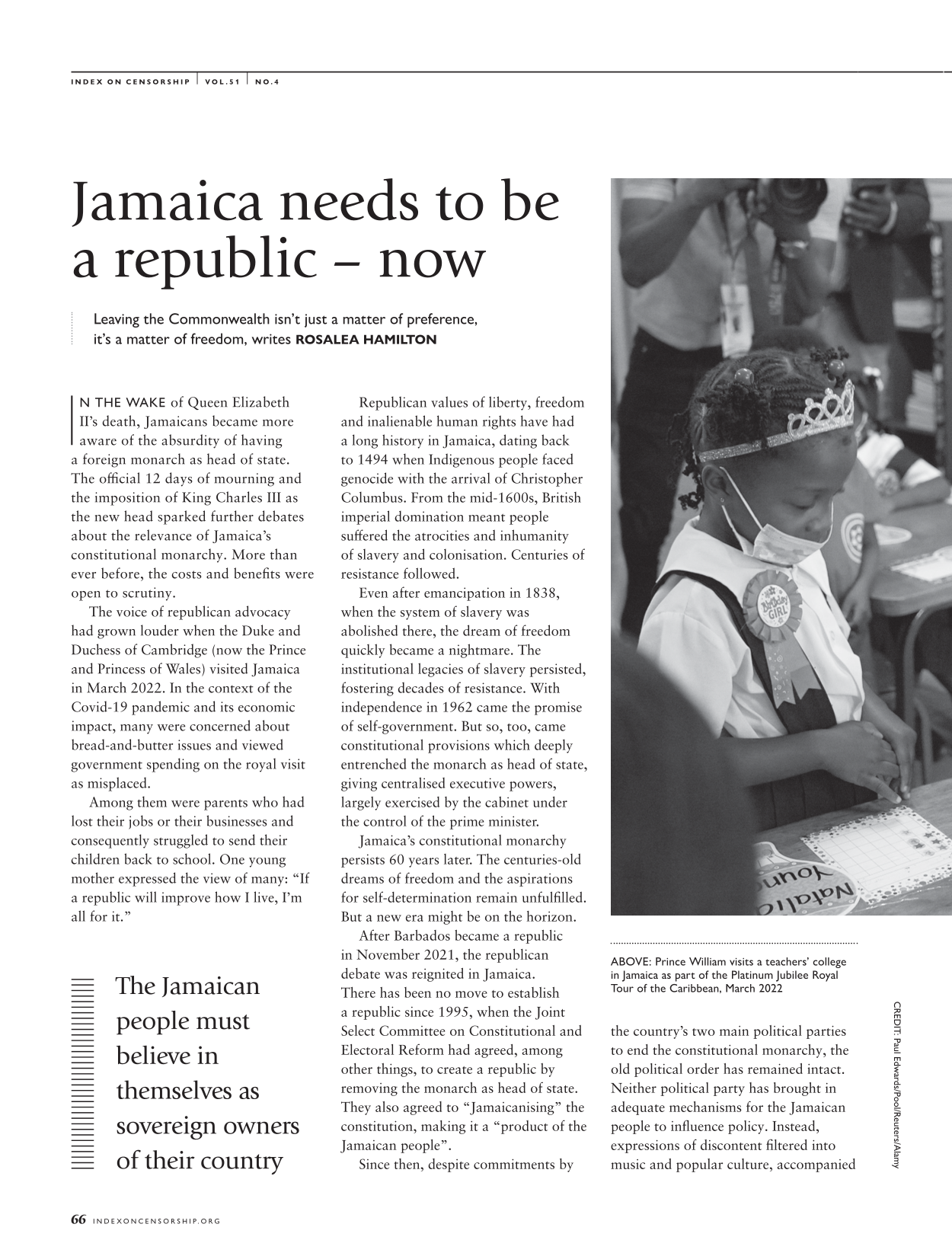
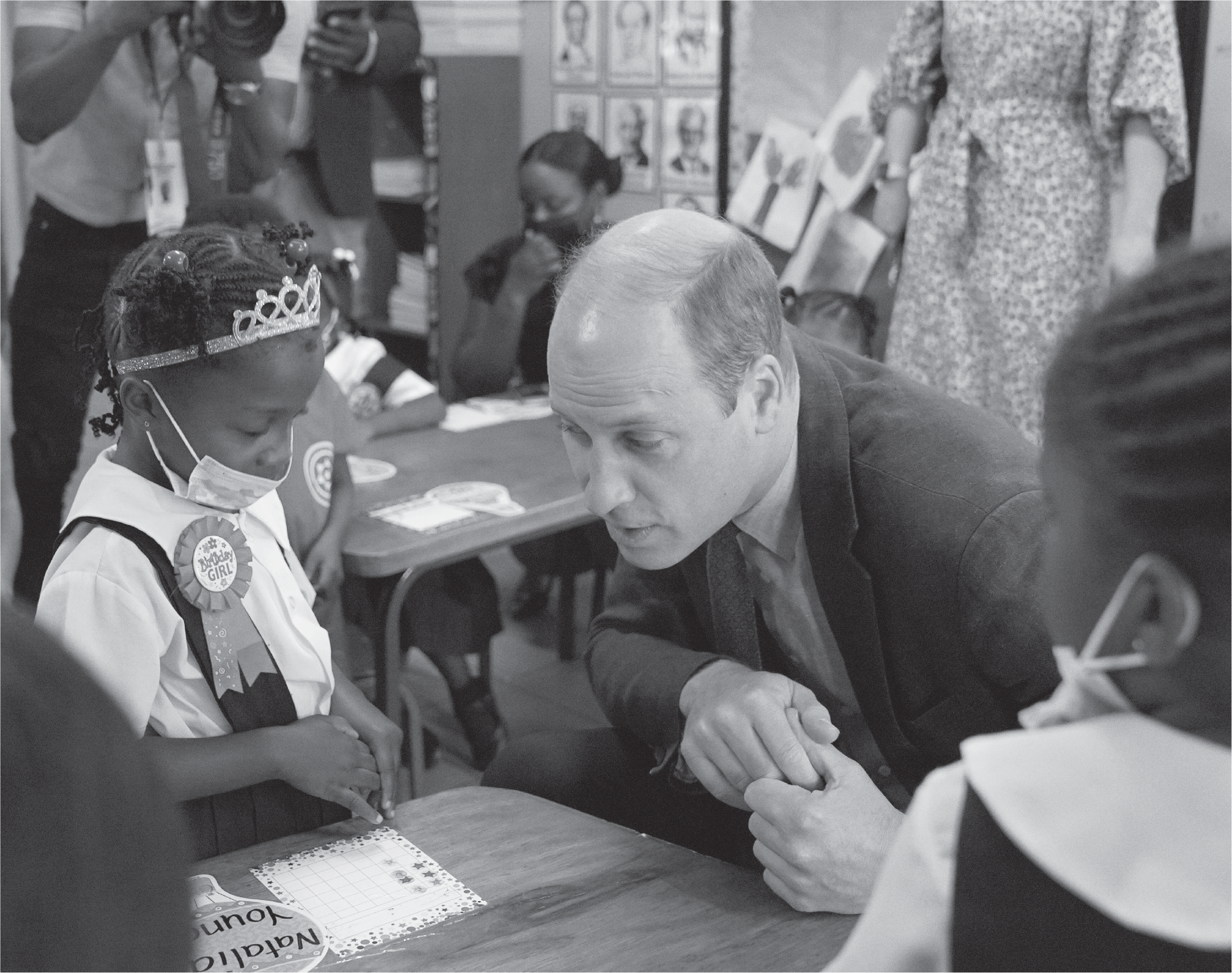
Prince William visits a teachers’ college in Jamaica as part of the Platinum Jubilee Royal Tour of the Caribbean, March 2022
CREDIT: Paul Edwards/Pool/Reuters/Alamy
Since then, despite commitments by the country’s two main political parties to end the constitutional monarchy, the old political order has remained intact. Neither political party has brought in adequate mechanisms for the Jamaican people to influence policy. Instead, expressions of discontent filtered into music and popular culture, accompanied by demands for change from civil society advocacy. These demands have been largely ignored or inadequately addressed. Today, Jamaica’s 1962 independence constitution remains as a British “Order in Council” and not a product of the Jamaican people.
It’s also possible that Jamaicans have so far lacked the self-confidence to do anything. In 2012, 40% of Jamaicans supported the monarchy, but things are changing. A poll in July 2022 revealed that only 27% supported the monarchy, with 56% in favour of Jamaica stepping away from the crown.
If we want a Jamaican republic, there are two key issues we must address. First, we need mechanisms that enable politicians to hear the voice of the people. This is essential not only in addressing the will of the people but also in unleashing Jamaica’s creative potential and enhancing competitiveness. We need to embrace opportunities such as participatory budgeting, which allows creative entrepreneurs to champion their ideas for financing products that are innovative and can compete globally.
Next, we must replace the monarch as Jamaica’s head of state. We need a local leader who signs laws on behalf of the people and exercises additional powers defined by the people.
For any meaningful change, the Jamaican people must believe in themselves as sovereign owners of their country and they need to be willing to undertake the responsibility of self-government. Republicanism must lead to improved institutions – ones that empower people to address the issues of today and improve living standards. If we have this, communities can be involved in local decision-making and deal with persistent inter-generational problems. Criminality, landlessness and poverty can then be properly addressed.
To get to that point, it’s vital we have effective public education that deepens the understanding of republicanism in Jamaica as part of our long road to freedom. The Jamaican people must speak up and, most importantly, be heard.
Footnotes
Rosalea Hamilton is the founding director of the Institute of Law and Economics in Kingston, Jamaica. She is part of The Advocates Network, which is a non-partisan alliance of individuals and organisations advocating for human rights and good governance in Jamaica