




Abstract

In the USA, the medium hit record sales in 2021 and, as their popularity continues to grow, censors are increasingly agitated by their subject matter, seeking to pull seminal graphic novels and newer works alike from the shelves. In the wider landscape for book bans across the USA, books by queer creators made up a whopping 41% of the challenged materials between July 2021 and July 2022. Comics are at the centre of the conversation, with Maia Kobabe’s graphic memoir Gender Queer cited by PEN as the most commonly banned book in the last school year.
CREDIT: Sara Century
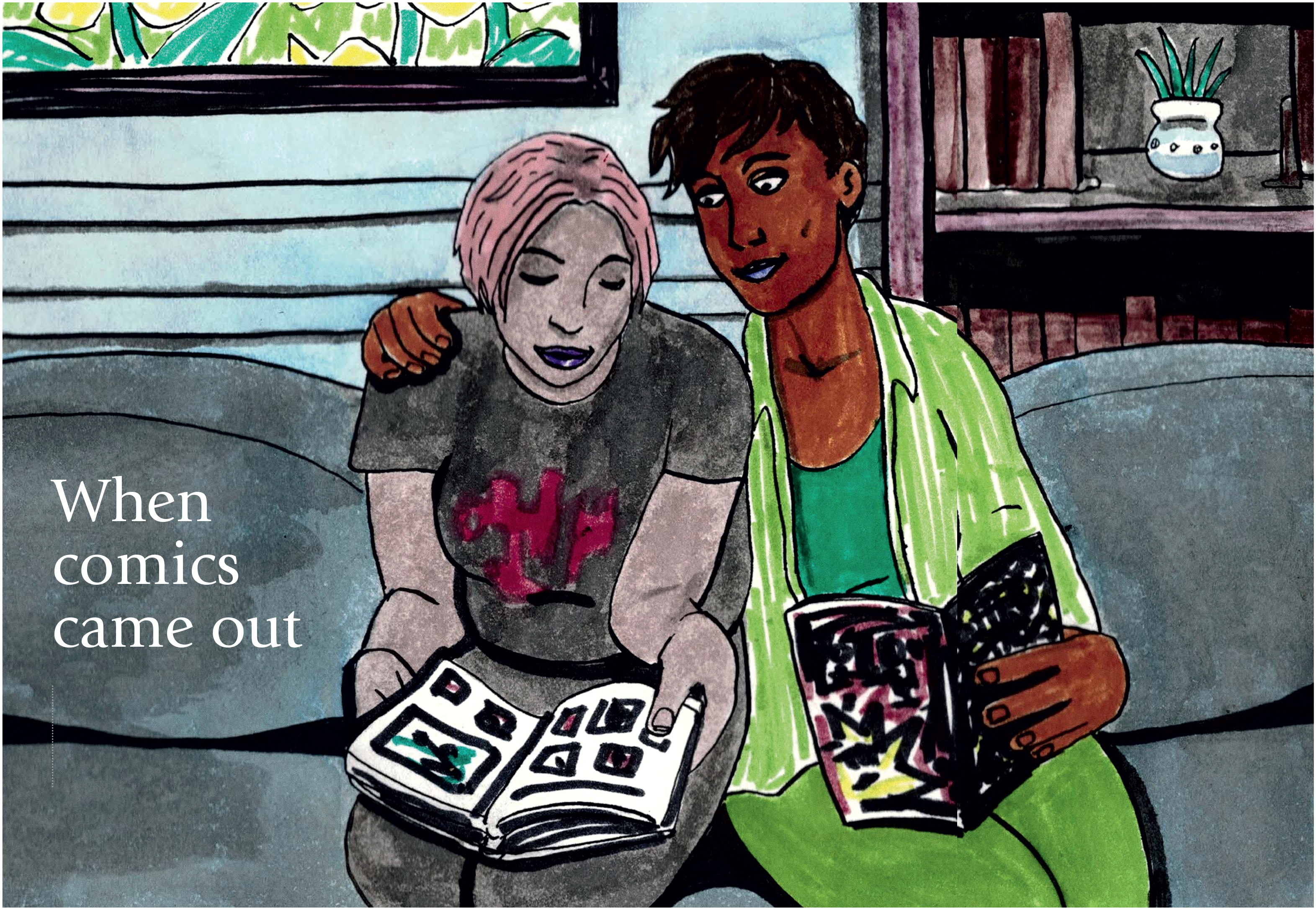
Before, a creator being out was potentially career-ending
First appearing on the cover of Action Comics #1, some may think the root of the character lay in Friedrich Nietzsche’s conceiving of the Ubermensch, distorted later into the Nazi belief of an Aryan master race. However, creators Jerry Siegel and Joe Shuster, who turned to the comic book industry after facing anti-Semitism as writers and artists, chose Moses as the basis for Superman. With his birth name Kal-El, the suffix El meaning “God” in Hebrew, Superman’s later importance as an inspiring symbol beating Nazi agents led to Joseph Goebbels angrily denouncing him.
Created by Jewish artists Joe Simon and Jack Kirby in 1940, Captain America is defiantly anti-fascist. The Anglo-named Steve Rogers was initially frail and weak, with the serum injected to create his famed alter-ego created by Dr Joseph Reinstein. The Jewish character pounded Adolf Hitler on the cover of his first comic and had the Nazi agent Red Skull as his enduring archenemy. In an imaginary world, at least, Jewish people were successfully fighting back.
Arguably the biggest superhero of all, Batman debuted in 1939’s Detective Comics #27. Artist Bob Kane and writer Bill Finger were both of Ashkenazi Jewish descent, and Detective Comics was owned by two Jewish entrepreneurs, Harry Donenfeld and Jack Liebowitz. While Batman failed to have the same overt Jewish influence as Superman and Captain America, the push of Jewish artists, writers and entrepreneurs to the US comic books sector in the 1930s ensured a truly iconic character was born.
Jennifer Camper, a long-time comic creator and founding director of the Queers & Comics conference, believes that the censors’ focus on queer comics is no accident, and that with increased visibility comes a backlash.
“Conservatives are still trying to censor queer content, and queer cartoonists, especially trans cartoonists, are threatened with violence and online harassment," she said.
According to Camper, the fact that the medium is often considered a lower art form by both the general public and critics may be a major part of why conservatives find comics especially threatening.
“Censors attack comics because words and pictures hit the reader in an intimate and visceral way,” Camper said. “Comics are very open and accessible to readers, and people approach comics easily. The same narrative that’s presented in a comics format might be overlooked if it were presented in prose, in a film or in a painting.”
Cartoonist MariNaomi has long been a fixture in indie and underground comics and zines, but last year they came under fire for their book Losing the Girl from the Life on Earth series. These books were called into question in Texas for queer subject matter and removed from the shelves.
MariNaomi told Index: “I used to joke that I wanted my books to be banned, for the cred, but when it happened I just felt sad. I was lucky that my banned book made the Los Angeles Times, and essentially revitalised my book sales. Most books get banned quietly. Presumably the careers of the quiet-banned authors just fade away.”
In the USA, comics and censors have been at odds with one another for as long as the medium has existed. Fredric Wertham’s 1954 book Seduction of the Innocent – a psychological study of anecdotal evidence of the mental toll reading comics might have on children – is widely derided today for its role in causing nationwide moral panic, covered extensively in David Hajdu’s book The Ten-Cent Plague.
Wertham was fixated on homoerotic subtext in superhero comics. In the decades since, many have wholeheartedly agreed with his assertions, but have found them a cause for celebration rather than censorship. Jill Lepore’s The Secret History of Wonder Woman reveals that Wertham’s accusations of lesbian subtext in the series were likely intentional on the part of the creator, though the implication that this was a potentially civilisation-wrecking travesty is perhaps over-reactive.
Even today, book bans are compared to the mass hysteria that followed Seduction of the Innocent, which resulted in two days of hearings by the Senate Judiciary Committee to Investigate Juvenile Delinquency in 1954. In the immediate aftermath of the Senate Comic Book Hearings that put publishers on trial and saw nationwide comic book burnings came a complicated, self-imposed code of conduct known as the Comics Code Authority. It began stamping its seal on the covers of most comics, continuing to do so for decades.
The Underground Comix scene of the 1960s, subverting the mainstream press with X-rated content, rose to challenge the restrictive code – but it was criticised for its overt sexism and racism. In response, a further movement came hot on its heels and is often forgotten by history: the Wimmen’s Comix series by Trina Robbins and others, working to establish women creators as equally talented and worthy of notice.
“Most of the early underground work was by het-cis [heterosexual cis-gendered] whiteboys — hell, mostly all the arts and media were created by het-cis whiteboys," Camper explained. “People of colour, queers and women were frustrated by that, and that need to tell our own stories launched new comics.”
Wimmen’s Comix featured Robbins’s story Sandy Comes Out, often regarded as the first story about a lesbian to appear in a North American comic. In 1973, creator Mary Wings released Come Out Comix, wanting to offer a similar narrative but from the perspective of an out lesbian rather than an ally such as Robbins. Other queer underground comix followed, such as Roberta Gregory’s Dynamite Damsels.
However, perhaps no comic was more influential than the long-running Gay Comix. It was launched in 1980, first through Kitchen Sink Press and then through Bob Ross, initially helmed by the late Howard Cruse (who was succeeded by Robert Triptow and Andy Mangels). According to Camper, Cruse – also a cartoonist – is rightfully regarded as the godfather of queer comics.
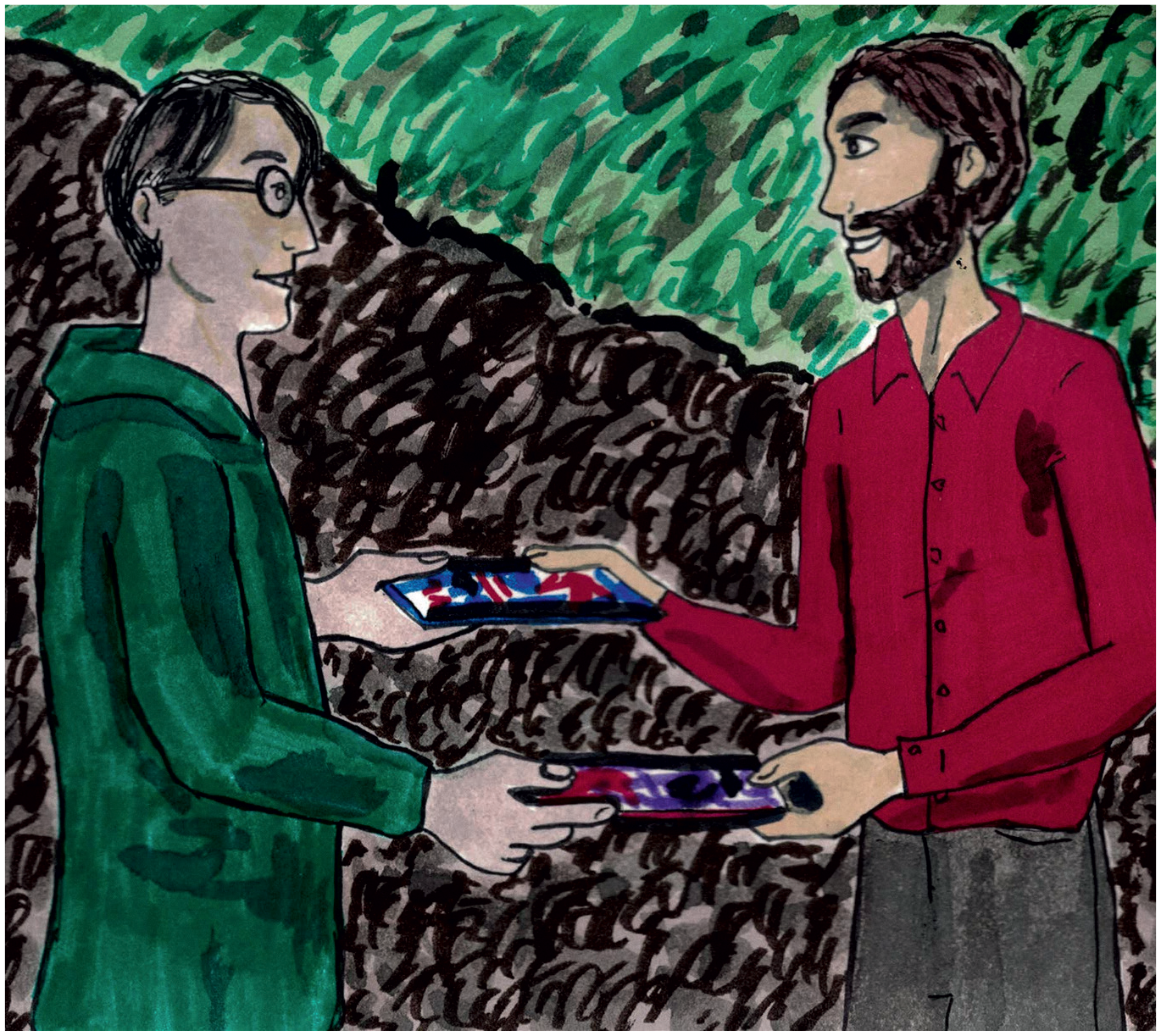
“He created a community for many LGBTQ cartoonists, including myself. The comics published in Gay Comix were new and exciting because they were queer, truthful and unapologetic,” she said. “These were comics made by LGBTQ cartoonists for the queer community, comics that did not cater to mainstream heterosexual opinion.”
Though Gay Comix ran for only 25 issues until 1998, it featured a number of the era’s most important queer creators, including Alison Bechdel, who was at the time best known for the syndicated comic strip Dykes to Watch Out For. This period saw queer comics undergo a revolution towards visibility. Before, a creator being out was potentially career-ending. By the end of the Gay Comix run, major strides had been made, with openly LGBTQ+ creators such as Phil Jimenez helming high-profile books for DC. The era might not have eradicated the stigma around hiring queer creators but it certainly challenged it.
The last two decades have seen explosive growth in terms of diversity of readership and subject matter in comics. Though major queer superheroes such as Iceman and Batwoman often dominate the news cycle, more personal works such as George Takei’s They Called Us Enemy and Trung Le Nguyen’s The Magic Fish have topped bestseller charts.
Book bans challenge this newfound access. After Losing the Girl came under attack, MariNaomi noted that the increased sales were a double-edged sword. The people showing support generally already had access to their books, rather than making new discoveries in libraries. During a recent panel, they said: “What I really want is for some kid who’s going through a hard time to be able to go into the school library and pick up the book and see that other people might have gone through what they’re going through and not feel so alone.”
CREDIT: Sara Century
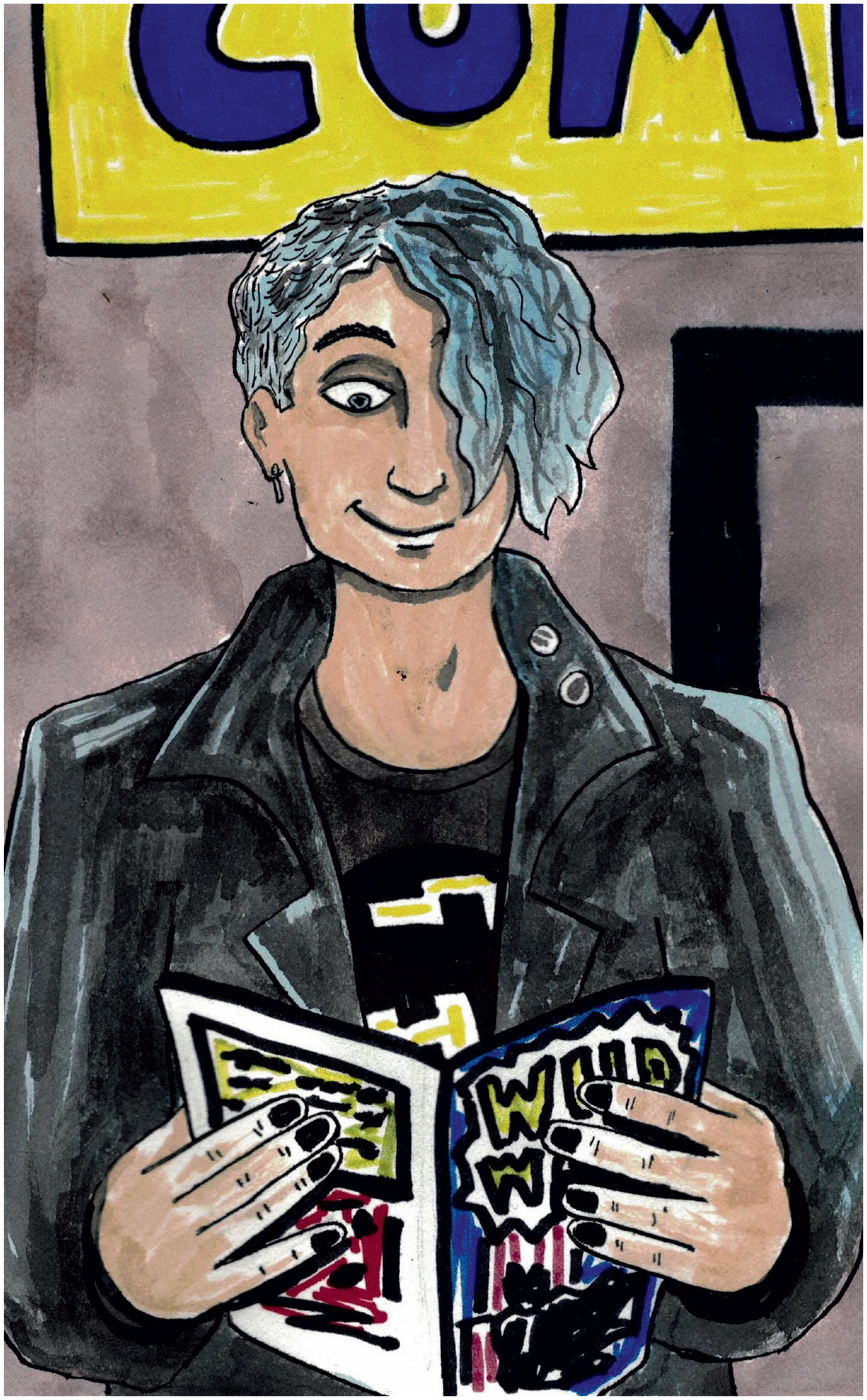
MariNaomi believes that US culture and media around queerness is shifting, particularly amongst young people. They told Index: “I believe that the folks who are intent on censoring queer works are motivated as a pushback to that, but that’s obviously not going to fly.”
In the end, perhaps the targeting of queer comics by conservatives is a response to the same thing that draws so many queer readers and creators to the medium – the sense that just by reading they become a part of the larger history and community of queer comics.