Abstract
The audiences, it seems, have followed them out of the door as this government-controlled media has unprecedented low ratings and circulation figures. In their place, there is now a flurry of new digital journalism platforms. Media such as Medyascope, Gazete Oksijen, GAIN and FluTV now cater to millions of Turkish citizens hungry for reliable content. None of these existed a decade ago.
Nevşin Mengü, a former anchor of CNN Türk, has half a million subscribers on YouTube, and her rant on the government’s U-turns over the past two decades has garnered more than 3.5 million views.
Another CNN Türk anchor, Cuneyt Özdemir (who has 1.35 million YouTube subscribers), speaks out each time a new scandal rocks the government and the mainstream media remains muted.
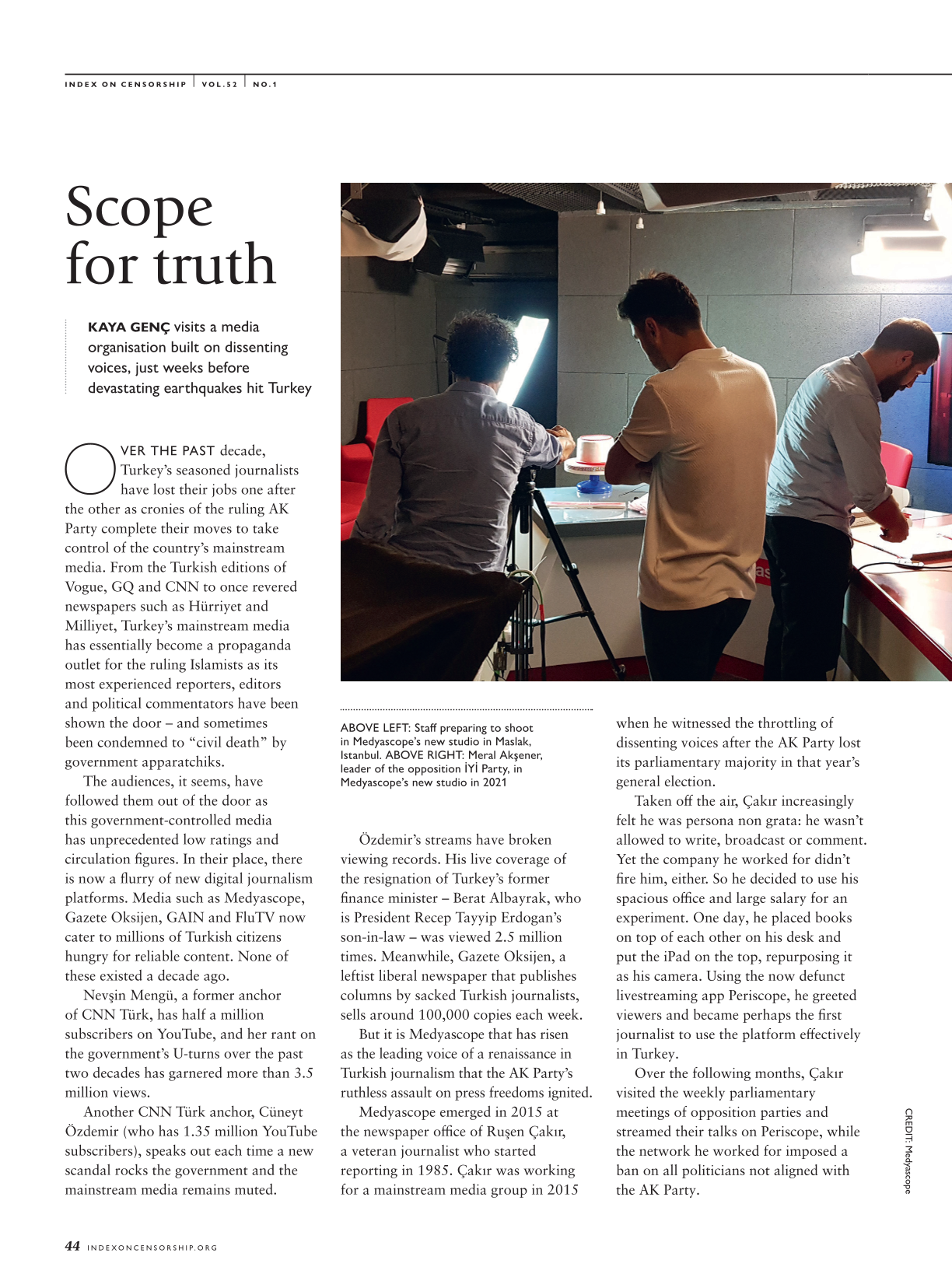
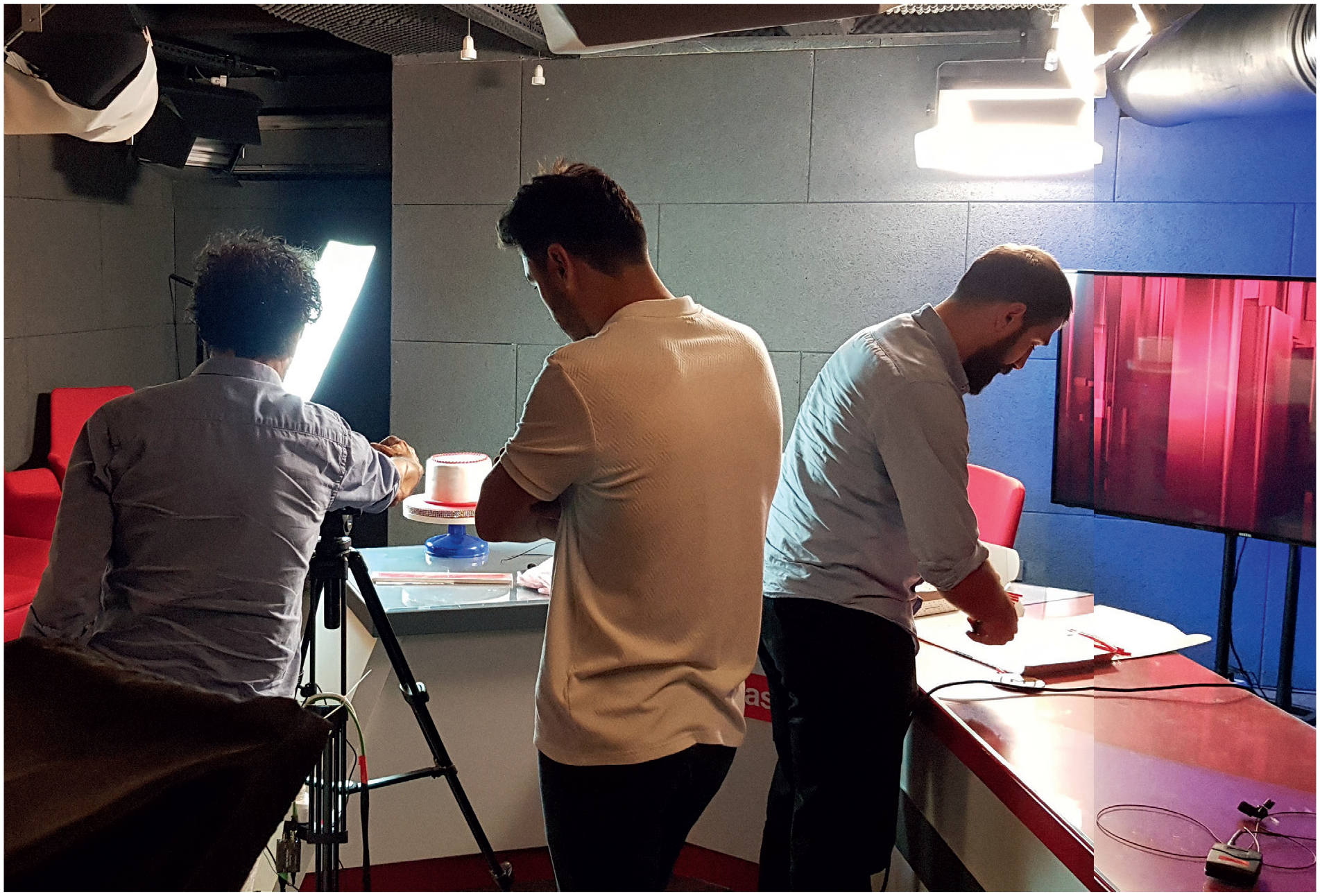
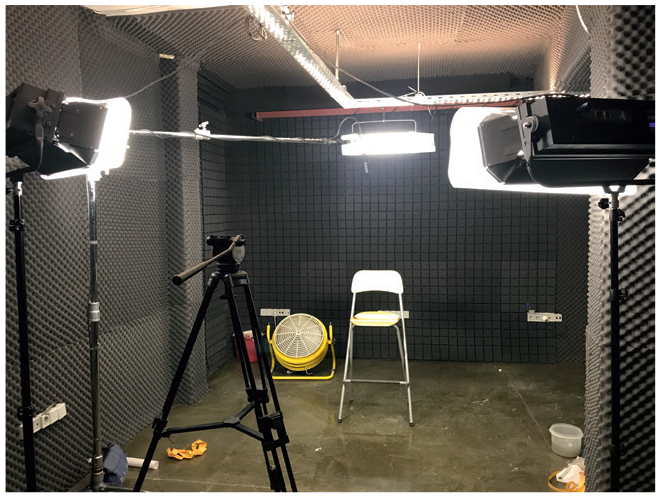
Staff preparing to shoot in Medyascope’s new studio in Maslak, Istanbul.
CREDIT: Medyascope
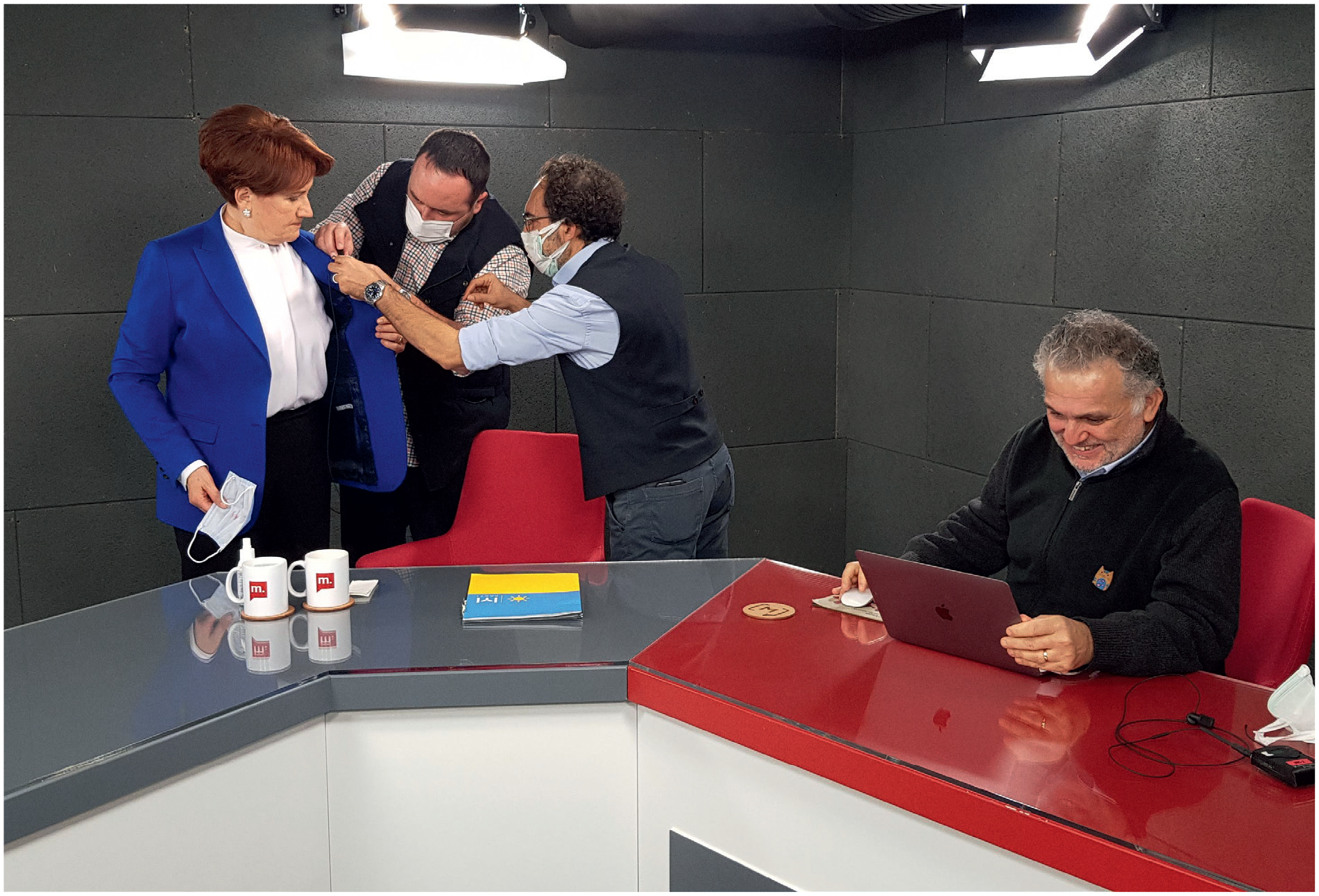
Meral Akşener, leader of the opposition İYİ Party, in Medyascope’s new studio in 2021
Özdemir’s streams have broken viewing records. His live coverage of the resignation of Turkey’s former finance minister – Berat Albayrak, who is President Recep Tayyip Erdogan’s son-in-law – was viewed 2.5 million times. Meanwhile, Gazete Oksijen, a leftist liberal newspaper that publishes columns by sacked Turkish journalists, sells around 100,000 copies each week.
But it is Medyascope that has risen as the leading voice of a renaissance in Turkish journalism that the AK Party’s ruthless assault on press freedoms ignited.
Medyascope emerged in 2015 at the newspaper office of Rusen Çakır, a veteran journalist who started reporting in 1985. Çakır was working for a mainstream media group in 2015 when he witnessed the throttling of dissenting voices after the AK Party lost its parliamentary majority in that year’s general election.
Taken off the air, Çakır increasingly felt he was persona non grata: he wasn’t allowed to write, broadcast or comment. Yet the company he worked for didn’t fire him, either. So he decided to use his spacious office and large salary for an experiment. One day, he placed books on top of each other on his desk and put the iPad on the top, repurposing it as his camera. Using the now defunct livestreaming app Periscope, he greeted viewers and became perhaps the first journalist to use the platform effectively in Turkey.
Over the following months, Çakır visited the weekly parliamentary meetings of opposition parties and streamed their talks on Periscope, while the network he worked for imposed a ban on all politicians not aligned with the AK Party.
Çakır travelled through Anatolia interviewing opposition figures. In his broadcasts, he commented on the latest political developments and reached hundreds of thousands of viewers. In July 2015, an entrepreneur approached him offering to help to build a platform with a broader reach. They agreed on creating a company that would employ other journalists sacked by the Islamist regime.
Çakır’s photographer friend Manuel Çıtak offered a two-floor workshop he had inherited from his family and his photography studio became Medyascope’s headquarters. Young reporters got involved after emailing offering their help, Çakır used his monthly wage to invest in the studio, and soon cameras replaced iPads. Then his team came up with the name Medyascope – “a mixture of Turkish and English that reflected the platform’s global ambitions” – and it launched officially on 15 August 2015.
Seasoned reporter Hidir Göktaş joined as its Ankara representative, opening a bureau in the Turkish capital. Representatives were appointed in Diyarbakir, Antalya, Izmir, Artvin and other Anatolian cities. Barbaros Devecioglu, in London, became part of the team as its first foreign correspondent.
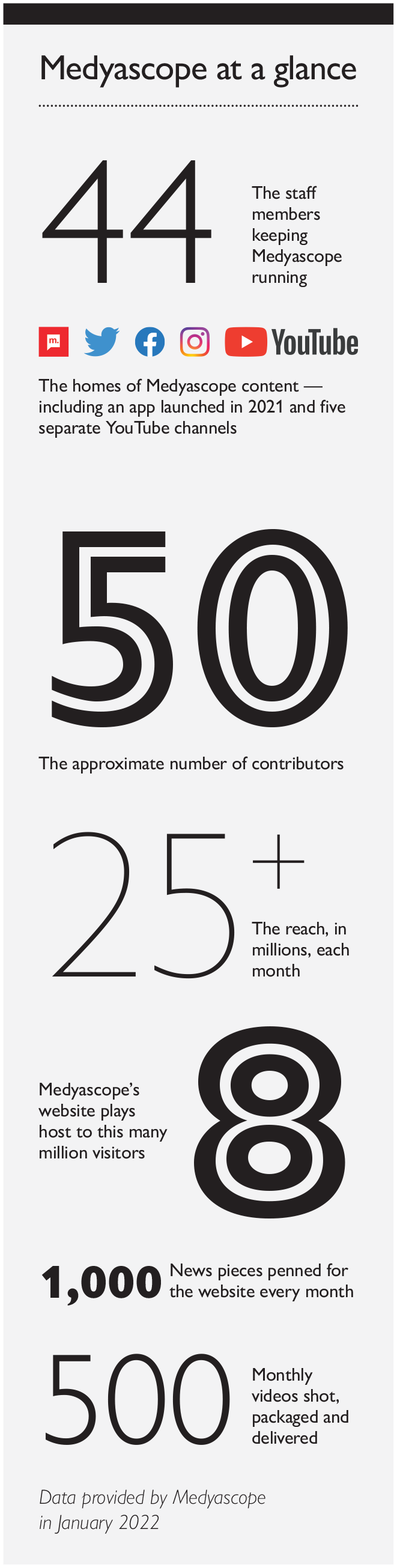
But getting funding for Medyascope proved difficult. Nobody in Turkey seemed willing to give money to a company that opposed the ruling regime. So it applied for funds from the Open Society, Chrest, Heinrich B6ll and Friedrich Ebert foundations and, thanks to their support, Medyascope today employs 48 people, including technicians, reporters and editors. There are 50 freelancers producing work and dedicated podcast and social media teams. Nobody works for free.
Initially, Medyascope streamed content a few days each week. Then it began streaming each weekday. Now it streams programmes at the weekends, too. Starting at 10am and closing at 10pm, it has become indistinguishable from a television network. There are programmes on politics and shows on sports, culture and education, as well as special English-language broadcasts.
In 2016, the International Press Institute announced Medyascope would receive its 2016 Free Media Pioneer Award. In 2017, it was awarded the Reporters Without Borders Press Freedom Prize. In September 2019, the Financial Times picked Medyascope for its FT Future 25: Middle East list as one of the 25 innovative start-ups from that area.
Despite its success, though, advertisers and investors in Turkey refused to support Medyascope, fearing repercussions. In 2021, its studio moved to a new building in an upper-middle-class business district of Maslak. When I paid a visit recently, Çakır and other Medyascope personnel were running around corridors, preparing to host interviews with several opposition leaders in the coming days.
Kaya Heyse, Medyascope’s news co-ordinator, reported from Iraq and Afghanistan as a war reporter in the 1990s and worked for outlets including CNN Türk.
“There are parallels between today and the 1990s in how the media serves governmental interests, but Turkey has never had an era this authoritarian,” he told Index. “This is the first time the mainstream media has been completely decimated in Turkey. Yet while the government’s policies destroyed the mainstream, they also brought a solution in the form of institutions like Medyascope.”
Medyascope’s policy, Heyse said, is to be pluralist and leave no political view uncovered. He emphasised that Medyascope was not an opposition platform. “We’re not activists. We’re just journalists,” he said. “We’re the new mainstream. We don’t accept the tags of alternative, opposition or activist media.”
Aside from funding difficulties, Medyascope faced two significant backlashes. First, its website became unreachable for 17 hours the day after the attempted coup on 15 July 2016. Then, in the summer of 2021, the government began using the term “foreign-funded media” to discredit Medyascope, accusing it of being a nefarious tool of Western democracies against Turkey.
“We thought these coordinated attacks would go away in two days,” Heyse recalled. “They didn’t.”
It was decided that the best course was to continue to do their job correctly.
“In authoritarian systems, they may close down your institution and detain you. But we believed that as long as you do journalism properly, nothing would happen,” he said.
Over the weeks following February’s earthquakes, Medyascope journalists offered a window into the earthquake zone, even as other journalists were arrested for their reporting. In the village of Sogutlu, Medyascope reported that “Citizens died waiting because no help came”, and produced a special broadcast discussing the responsibilities of the administration.
The construction of an additional studio in Medyascope’s old premises
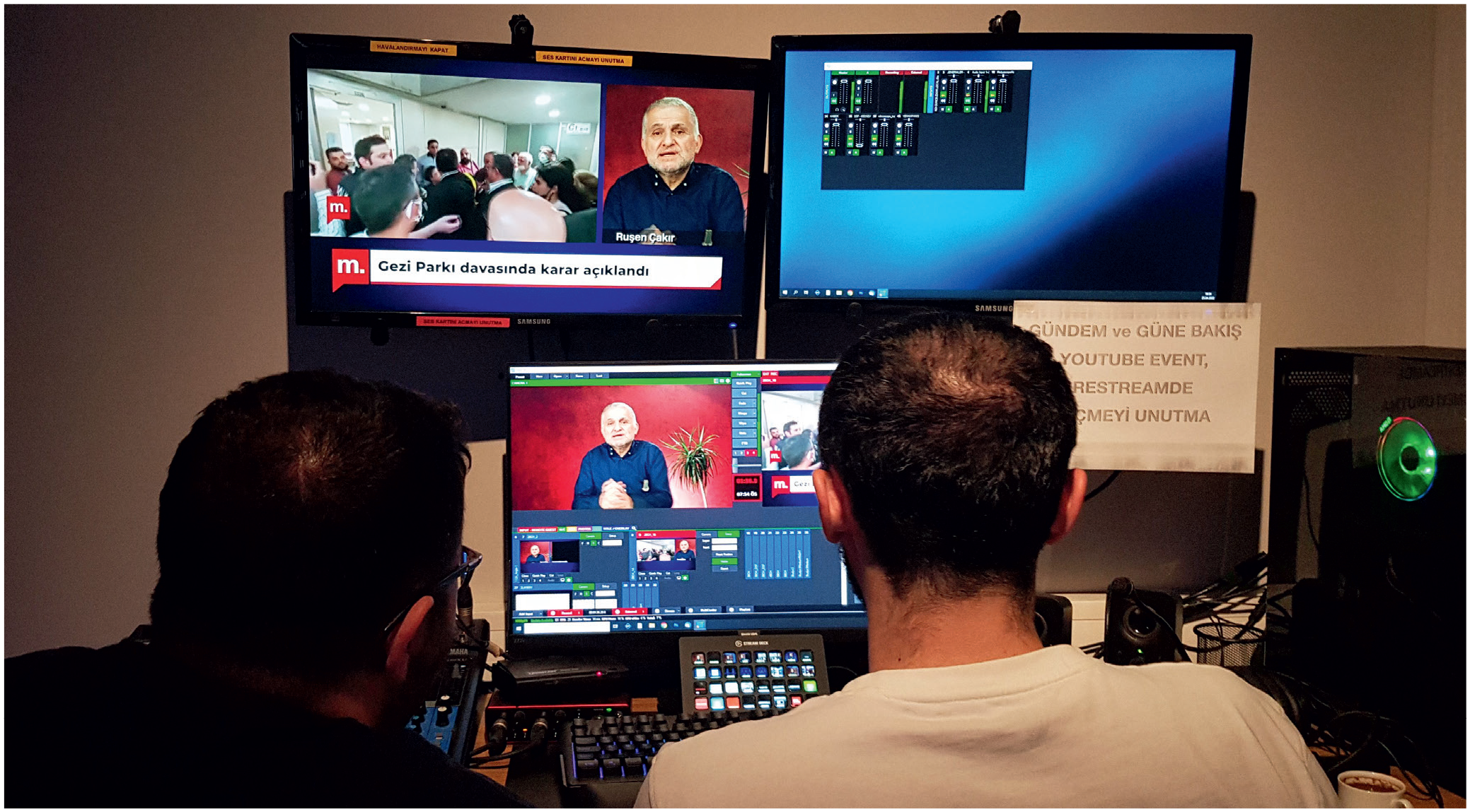
A production suite in Medyascope’s new studio in 2020
Medyascope’s peak moment, in terms of its popularity, came after the 2019 local elections – between March 2019, when the opposition won and the AK Party annulled the results of the election (accusing Istanbul’s progressive mayor of being a “thief” and a “terrorist”), and the re-elections in June 2019, when the opposition candidate won with a massive margin.
“We had incredible numbers in those days with a limited staff,” said Heyse, recalling a real sense of satisfaction at a job done well. A recent Medyascope expose about child brides in Ismailaga, a government-supported Islamic sect, broke viewing records, and they have ambitious plans for the upcoming elections.
But does he expect trouble on election night, as many do? “I’m optimistic. I think Turkey has still not turned into a Russia or an Azerbaijan—even if there’s potential for that,” he said. If the AK Party falls into opposition, he added, Medyascope would open its doors to its members for interviews.
“We’d welcome Erdogan, too, of course, but he should be willing to let us interview him properly,” said Heyse. “It won’t be like a CNN Türk show where the anchor says: ’Sir, speak. We’re listening to whatever you want to tell us.’”
As for Çakır, the platform’s founder, Medyascope’s success story is enough reason to be optimistic about Turkey. He told Index: “In a country that is utterly polarised, where there are multiple assaults on the freedom of the press, we’ve set out to create a platform for free, original and independent journalism that refuses to polarise. We did so by trying to weave traditional journalism with new technologies. We largely succeeded, thanks to contributions from so many people from Turkey and abroad, and with a crew made mostly of young, female journalists.
“We’ve come much further than we imagined when we set out. This makes me happy. We were realistic, and we demanded the impossible. We saw and showed others a platform like Medyascope wasn’t impossible in the first place.”
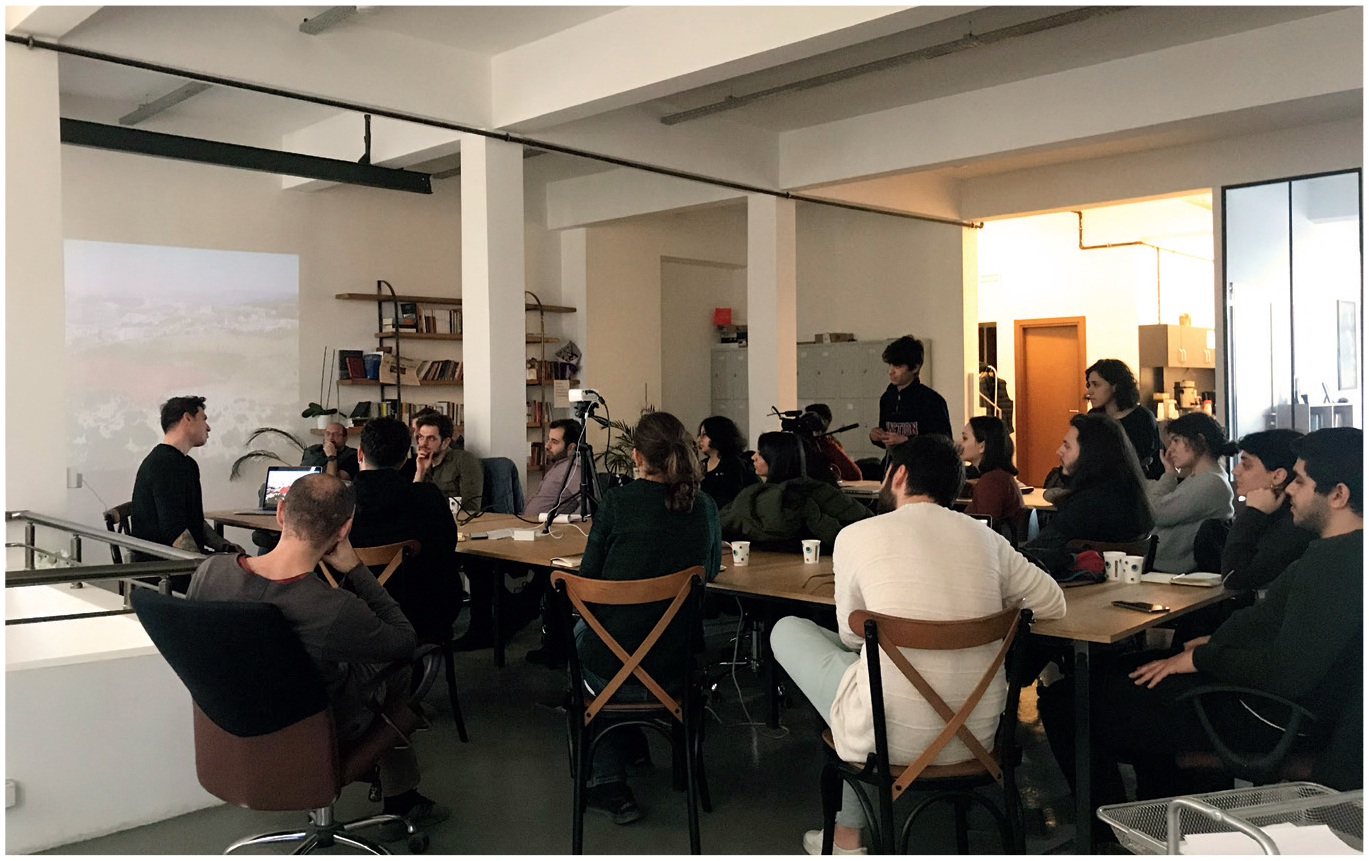
Staff gathered in Medyascope’s old newsroom