




Abstract
A new play, excerpted below, takes audiences inside the home and families of Crimean Tatars as they are rounded up.
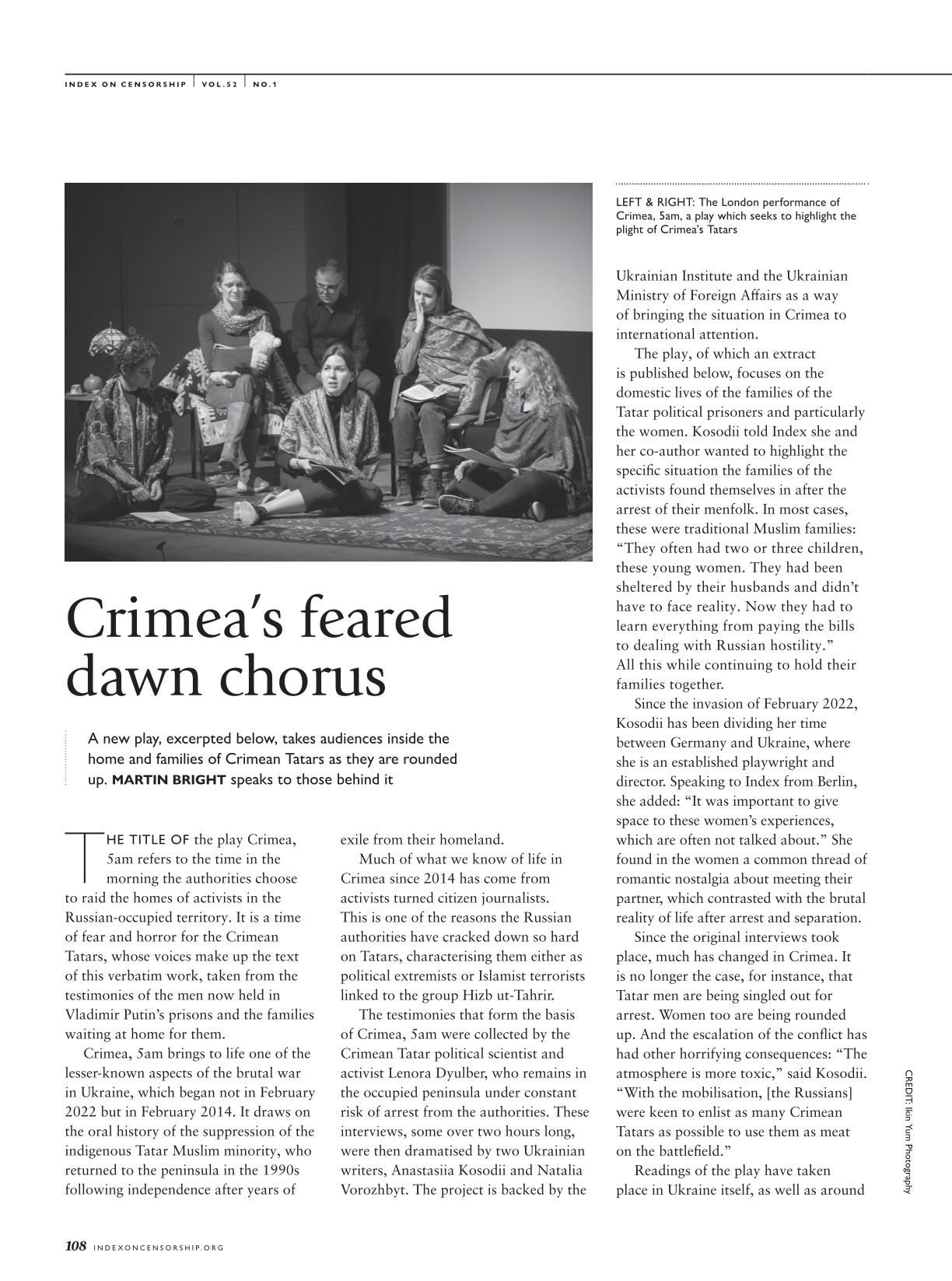
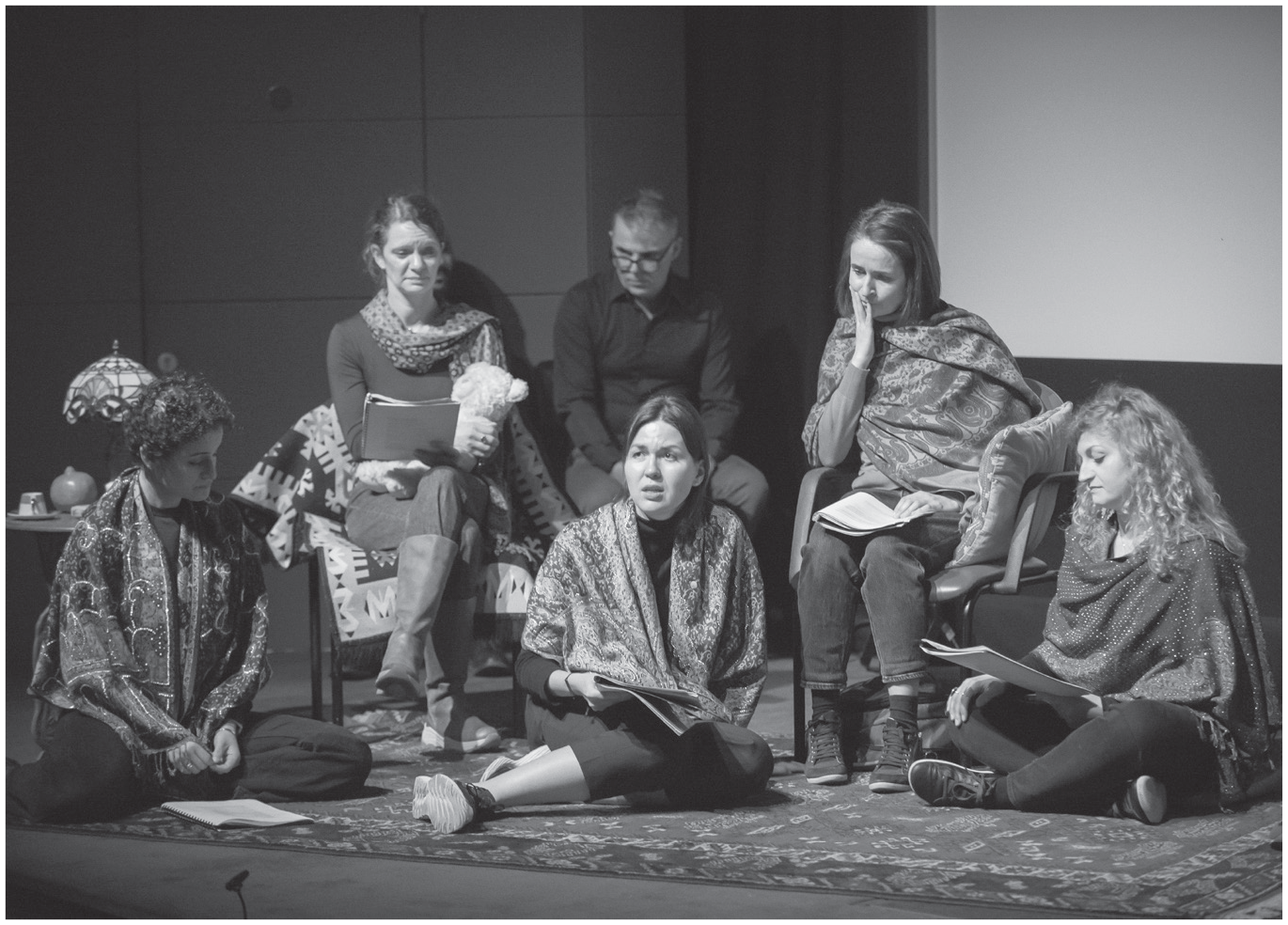
The London performance of Crimea, 5am, a play which seeks to highlight the plight of Crimea’s Tatars
CREDIT: Ikin Yum Photography
Crimea, 5am brings to life one of the lesser-known aspects of the brutal war in Ukraine, which began not in February 2022 but in February 2014. It draws on the oral history of the suppression of the indigenous Tatar Muslim minority, who returned to the peninsula in the 1990s following independence after years of exile from their homeland.
Much of what we know of life in Crimea since 2014 has come from activists turned citizen journalists. This is one of the reasons the Russian authorities have cracked down so hard on Tatars, characterising them either as political extremists or Islamist terrorists linked to the group Hizb ut-Tahrir.
The testimonies that form the basis of Crimea, 5am were collected by the Crimean Tatar political scientist and activist Lenora Dyulber, who remains in the occupied peninsula under constant risk of arrest from the authorities. These interviews, some over two hours long, were then dramatised by two Ukrainian writers, Anastasiia Kosodii and Natalia Vorozhbyt. The project is backed by the Ukrainian Institute and the Ukrainian Ministry of Foreign Affairs as a way of bringing the situation in Crimea to international attention.
The play, of which an extract is published below, focuses on the domestic lives of the families of the Tatar political prisoners and particularly the women. Kosodii told Index she and her co-author wanted to highlight the specific situation the families of the activists found themselves in after the arrest of their menfolk. In most cases, these were traditional Muslim families: “They often had two or three children, these young women. They had been sheltered by their husbands and didn’t have to face reality. Now they had to learn everything from paying the bills to dealing with Russian hostility.” All this while continuing to hold their families together.
Since the invasion of February 2022, Kosodii has been dividing her time between Germany and Ukraine, where she is an established playwright and director. Speaking to Index from Berlin, she added: “It was important to give space to these women’s experiences, which are often not talked about.” She found in the women a common thread of romantic nostalgia about meeting their partner, which contrasted with the brutal reality of life after arrest and separation.
Since the original interviews took place, much has changed in Crimea. It is no longer the case, for instance, that Tatar men are being singled out for arrest. Women too are being rounded up. And the escalation of the conflict has had other horrifying consequences: “The atmosphere is more toxic,” said Kosodii. “With the mobilisation, [the Russians] were keen to enlist as many Crimean Tatars as possible to use them as meat on the battlefield.”
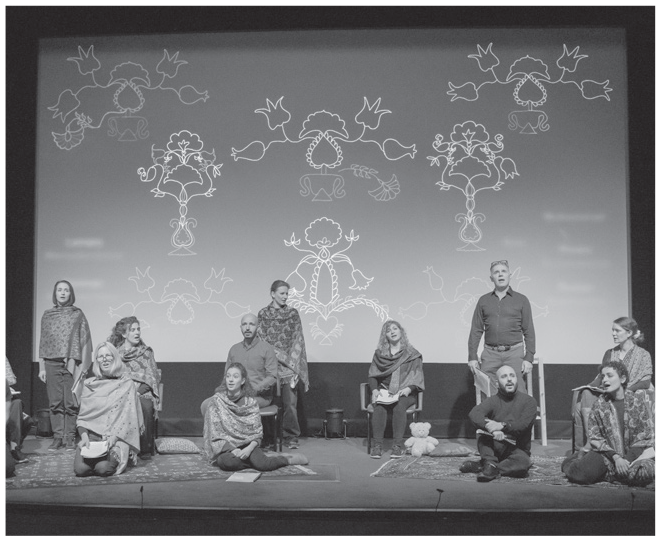
Readings of the play have taken place in Ukraine itself, as well as around Europe. One such performance was in January at the Kiln Theatre, Kilburn in London with professional actors working alongside non-professional activists and supporters. The English adaptation was directed by Josephine Burton and produced by Dash Arts. Burton told Index that until the 2022 Russian invasion of Ukraine, Crimea had drifted from international attention. “Helped by a media blackout, we forgot that the peninsula has been occupied by Russians for almost nine years now and its Tatar community oppressed,” she said. “Determined to fight this silence, the community has relentlessly documented this oppression – filming and uploading searches, arrests and court cases of its people by the Russian security forces. And for this act, these citizen journalists have been arrested themselves and given insanely long sentences, some for up to 20 years in penal colonies.”
She felt the focus on the families helped bring the struggle of the Tatars to life.
“It builds a beautiful and powerful portrait of a community, ripped apart by this tragedy, but also woven with stories of love and resilience through the prism of the wives left behind. It is this mix of tenderness and humour, alongside the unfathomable darkness, which enables its impact. We the audience become invested in their lives and feel the impact of their tragedy deeply.”
Burton and Dash Arts are looking for further opportunities to perform Crimea, 5am in the UK and Europe. Meanwhile, the Ukrainian team behind Crimea, 5am is developing a documentary based on the play with director Dmytro Kostiumynskyi. This will have to wait, however, until Kostiumynskyi himself returns from the front.
From Crimea, 5 am
DILIARA IBRAHIMOVA: FIFTEEN people entered at once, they showed the warrant straight away, which said… well, namely, that he was facing from 20 years to a life sentence in prison. And so they began searching the living room here, examined our computer top to bottom, then took his phone and afterwards they slowly, step by step, moved to the hall, the kitchen, rummaged through the freezer of all things, the microwave, they got their hands on every mug, every bowl… When asked what on earth it was they were looking for, they said it was about literature, weapons and so on… When they finally reached the bedroom, they turned their attention to the children’s backpacks, investigating every page of the record books and the notebooks.
INVESTIGATOR: Aren’t the children supposed to be leaving for school? You usually send them to school at this hour, right?
DILIARA IBRAHIMOVA: And it so happened that he looked through her record book and said:
INVESTIGATOR: So what, your daughter is an A-student, isn’t she?
Investigator turns to the children.
INVESTIGATOR: What study groups did you attend?
CHILD: Gymnastics.
INVESTIGATOR: Any others? You study Arabic, don’t you?
CHILD: Yes.
INVESTIGATOR: Do you like gymnastics?
CHILD 2: I have one Arabic class. The one where we study Sirah …
INVESTIGATOR: Could you perhaps tell us more about the difference? Just in case somebody doesn’t know what it all means.
CHILD: Well, we study Sirah, we learn about the different prophets, their deeds, for example, their dominions.
INVESTIGATOR: Who’s your favourite prophet?
CHILD 2: My favourite prophet is Suleiman.
INVESTIGATOR: Hm, Suleiman. And why is that so?
CHILD 2: Because he loves animals.
INVESTIGATOR: Loves animals…
CHILD: I like Mohammed, because he was truthful, that’s why they called him Al Amin.
INVESTIGATOR: And what kind of animals do you like?
CHILD 2: Tigers.
INVESTIGATOR: Tigers? Is that because they are strong? Or because of their luscious fur?
CHILD: And I like rabbits, they are cute and fluffy.
INVESTIGATOR: They are also very fast runners.
CHILD: Yes, and very high jumpers.
INVESTIGATOR: High jumpers, indeed. Now, do you like school? What’s your favourite subject?
CHILD 2: I like all the subjects. I am the best at tables in my class.
INVESTIGATOR: Oh, you are, aren’t you?
CHILD 2: Well, we are A-students.
INVESTIGATOR: I see, yeah, I can see that you’re A-students, right…
DILIARA IBRAHIMOVA: They went on to empty the bags and scattered the toys around on the floor, and I wondered, “Now, what do you expect to find there? Inside the toys?” And they said:
THEY: What if you hid something inside, who knows, what if you thought we wouldn’t check there?
SURIA SHEIKHALIEVA: Well, they didn’t make a complete mess, didn’t check everything. Just took those books over there and, well, he also had that CD… He had performed Hajj twice, and he kept all the pictures on that CD. Well, there were also these two books, namely, “The History of the Prophets” and “The Meadows of the Righteous,” and it was, namely, all about these, they are sort of considered extremist materials and, that said, illegal. Just like that
TYMUR IBRAHIMOV: I need to call my lawyer.
INVESTIGATOR: Now, take it easy, call whoever you want. I couldn’t care less.
DILIARA IBRAHIMOVA: And so he called Emil Kurbedinov, who told Tymur:
EMIL KURBEDINOV: If nothing was retrieved, like, if they found nothing, you can sign it without problems.
DILIARA IBRAHIMOVA: There was no real hostility, no, toward the end the investigator himself came up to me and said:
INVESTIGATOR: Go pack him some food and water, sandwiches or whatnot, all the necessary things, comfortable clothes, because he is not coming back soon. No, he is not coming back, mind you, so he’ll need some food, water, etc. It’s very important.
DILIARA IBRAHIMOVA: I packed him sandwiches, a bottle of water, a change of clothes, even slippers… But they didn’t take it, the package, they just left it… Some days later we managed to send it over, after all.
TYMUR IBRAHIMOV: I’ve been happy with you.
Like, we’ve lived together for all these years, and I have no bone to pick, no.
DILIARA IBRAHIMOVA: You see, the truth is, we have no idea, if it’s the end or just the beginning, or… In such moments one cannot tell for sure, and what is left for a wife? All she wants to hear is her husband’s razlikh, those crucial words.
MUMINE SALIEVA: It came to me that the only possible way to more or less maintain one’s health in those circumstances would be to work out. So I said to him, “Hey, don’t forget to exercise.” And he said, “Okay.” He was about to leave, when I added, “If something was wrong, you know, like, ever, I am very sorry, forgive me,” but he replied, “What are you talking about? I am happy with you.”
ELZARA SULEIMANOVA: When mother asked to let her say goodbye to her own son, they assured her, “Yes, yes, of course, you’ll have time for that,” but then, we missed the moment he was gone, had no idea when or where, and one of the officers told me, “They must have already taken him by now, the investigation goes on.”
LEMARA MEMEDEMINOVA: The little ones cried their eyes out. But then again, you see, it was the second search, I suppose, they must have expected him to come back… The scene would repeat itself again and again: every time the door opened, they would run to have a look… it lasted several months, that thing with the door… Even when someone came for a visit, like, relatives, I would always tell them to be quiet, “Don’t make any noise, otherwise the children will take off running.”
ZULFIE SHEIKHALIEVA: He told me he loved me and also ordered me not to cry. [The voice is soft and trembling]. Yeah, he would always bring me dolls, sweets, you know, these very pretty L.O.L. dolls, he would always bring them. He also brought home a cake every Friday, either a raspberry or a caramel one.
ELZARA SULEIMANOVA: Our eldest son remained calm throughout the whole thing. It was only later, after the search, that he seemed, like, hostile, or rather nervous… He later said, “They took him away, and with babaka they took away all our joy.”
ALL WOMEN TOGETHER, AS IF IT WERE A SPELL:
Every burden brings alleviation.
NARIMAN MEMEDEMINOV: They wrenched the door, got inside, threw me on the ground, handcuffed – and that was it. The rest of it went smoothly, nobody raised hell, it was all civilised… Let’s say, they were, like, really insistent about the warrant, the search and so on. They spent a lot of time just writing things down, namely, there wasn’t much actual searching going on. And at long last they rejoiced, no, that’s the wrong word… they triumphed. They found my Ukrainian passport, right here, on the shelf.
SINGER (SURIA): And when they took him away… I… it was as if I knew that he was leaving, but at the same time knew that it all wouldn’t last, it would be over and he would be back, yes, so when they asked me to bid him farewell, I refused: “We won’t say farewells, you will be back.” And when the next morning, I was collecting things, because he left with empty hands, I gave him nothing, they told me, “Get his things! Only necessities!,” I refused: “I won’t, I won’t get him anything, won’t, he’ll come back, he is about to be back” — and I was so sure, it couldn’t be true, no… And when they were walking him, imagine, I didn’t cry, I haven’t shed a tear, no, only after they drove him away could I break down into tears, because I was attached, I was attached to him that much.
ALL WOMEN TOGETHER, AS IF IT WERE A SPELL:
Every burden brings alleviation.
Crimea, 5am tells the story of 10 political prisoners. Read Crimean Tatar Nariman Dzhelal’s essay on p.16