




Abstract

Hot on the heels of his latest book, Mikhail Shishkin tells
He is quoting from the verse play Boris Godunov, written by Alexander Pushkin in 1825, which features a feebleminded tsar in Russia’s Time of Troubles. Although this period ended in 1613, the situation is strikingly similar today, the 62-year-old Russian novelist insists.
“Most Russians stay silent and take the side of the aggressor in the war in Ukraine,” he said.
Shishkin’s prose has been translated into almost 30 languages and has won numerous international literary prizes. His novels include Taking Izmail and Maidenhair and he remains the only author to have won Russia’s three major literary prizes: the Russian Booker Prize, the Russian National Bestseller, and the Big Book Prize.
Shishkin’s latest book, exploring Russia’s past, present and future
CREDIT: Quercus; (portrait) Marco Destefanis / Alamy Stock Photo
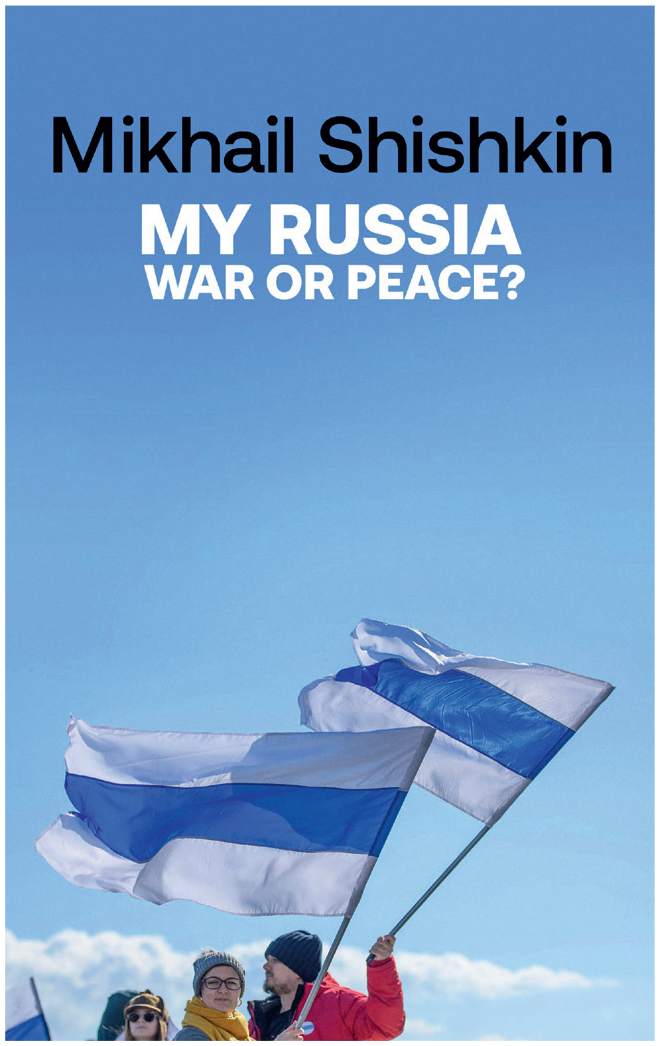
In late March 2023, Shishkin published My Russia: War or Peace? The book reads like an extended long-form essay and explains Russia’s past, present and future to a Western audience. The narrative begins in February 2022, when Vladimir Putin launched a so-called “special military operation” in Ukraine. The Russian president assured his population he was going to save Russians, Russian culture and the Russian language from Ukrainian fascists.
Shishkin, whose mother was born in Ukraine, points to the glaring irony: the worst atrocities of the war so far have been committed in Russian-speaking cities in the east of Ukraine such as Mariupol, where tens of thousands of Ukrainian citizens are said to have died at the hands of Russian forces.
“War crimes have been committed not only against Ukrainian people but against the Russian language, too, which Putin has removed dignity from,” Shishkin said.
“The language of Vladimir Nabokov, Sergei Rachmaninoff, Leo Tolstoy, Marina Tsvetaeva, Joseph Brodsky and Andrei Tarkovsky has now become the language of war criminals and murderers.”
Shishkin’s book examines Russia’s centuries-long relationship with Europe, including the mid-19th century debate that split the country’s intelligentsia into two camps. Slavophiles claimed Russia had always been defined by its Slav culture and Orthodox religion - with origins going back more than 1,000 years to Kyivan Rus, a political federation founded in Kyiv in the ninth century by Viking slave traders. Westerners, conversely, believed Russia needed to embrace its historical links with western Europe to progress and modernise.
That ideological argument continues today. But since Russia has no proper civic public forum, a debate isn’t taking place. Besides, the Slavophiles are inside the Kremlin and most of the Westerners continue to leave Russia.
“In Russia, you have two groups of people who speak the same language, share the same territory, but who have two very different views of the world,” Shishkin told Index. “The fall of Byzantium [in 1453] left Russia as the only remaining independent state governed by the Orthodox faith. Ever since, autocracy and victory over its enemies has been the country’s sole aim.”
That trend continued right up until the 20th century. The Bolsheviks banned religion and “thought they were saving the world from capitalism in 1917, in fact they merely [re-created] the Russian empire [in a new form]”.
Then “sham socialism replaced a sham democracy” when the Russian Federation replaced the Soviet Union in 1991, as Shishkin put it. The writer left his native Moscow for Switzerland not long after that event, partly for family reasons.
“My wife, a Swiss citizen, became pregnant in 1995 and did not want to raise our son in Russia,” he explained.
The author has lived a peripatetic existence over the past two decades, moving between Switzerland, the UK, Germany and the USA. Occasionally, he has returned to Moscow.
He moved back temporarily in 2011, during the Snow Revolution, which saw the biggest political protests in Russia since the fall of the Soviet Union. By February 2013, however, he could see that the Putin regime wasn’t going anywhere. This inspired him to pen an open letter explaining how he would not be representing his country at BookExpo America, an international literary event in New York. His invitation had come directly from the Kremlin’s Federal Agency for Press and Mass Media.
“I told them I want to represent another Russia, a free Russia,” he said. Shishkin’s open letter described his country’s political system as akin to “a pyramid of thieves, where elections have become a farce, and courts serve the authorities”.
The Kremlin responded accordingly. Shishkin was declared a Russophobe foreign agent and traitor. “It’s impossible for me now to go to Russia today,” he said. “I would be put in prison immediately.”
It’s all reminiscent of the past - during the Soviet era, Shishkin’s brother, uncle and grandfather (who died in Siberia) were all locked up as political dissidents.
The author describes Russian society since the turn of the century as “a hybrid dictatorship with alternative sources of information”.
Then, in February 2022, the situation drastically altered. Shishkin highlights two media institutions that refused to follow a pro-Kremlin agenda: Echo of Moscow, a liberal radio station, and TV Rain, an independent TV channel. Last year, when the war began, both were forced to halt operations inside Russia and have since moved their operations abroad, broadcasting in exile from western European cities.
Shishkin said that while state television continued to brainwash most Russian citizens, it’s still possible to access unbiased reliable sources of information inside Russia, via Telegram channels.
“For the Russian people it’s about choosing between two truths,” he said. “Imagine you are the father of a young Russian soldier who was killed in Ukraine. One truth says: Ukraine wants to build an independent state and democracy and your son is a fascist and came to kill Ukrainians. The other truth says: your son, like his grandfather, is a hero, and died defending his home country against fascists.”
As for the war in Ukraine, Shishkin believes it will continue to drag on while Putin remains in the Kremlin. “That could be [for] two months or two years, nobody knows really,” he said.
Once Putin goes, though, events will move quickly and chaotically, the author predicts. “Ukraine will win the war, but of course not with American tanks on Red Square in Moscow, so inside Russia there will be a struggle for power, culminating in a lawless society with a criminal war between different gangs.”
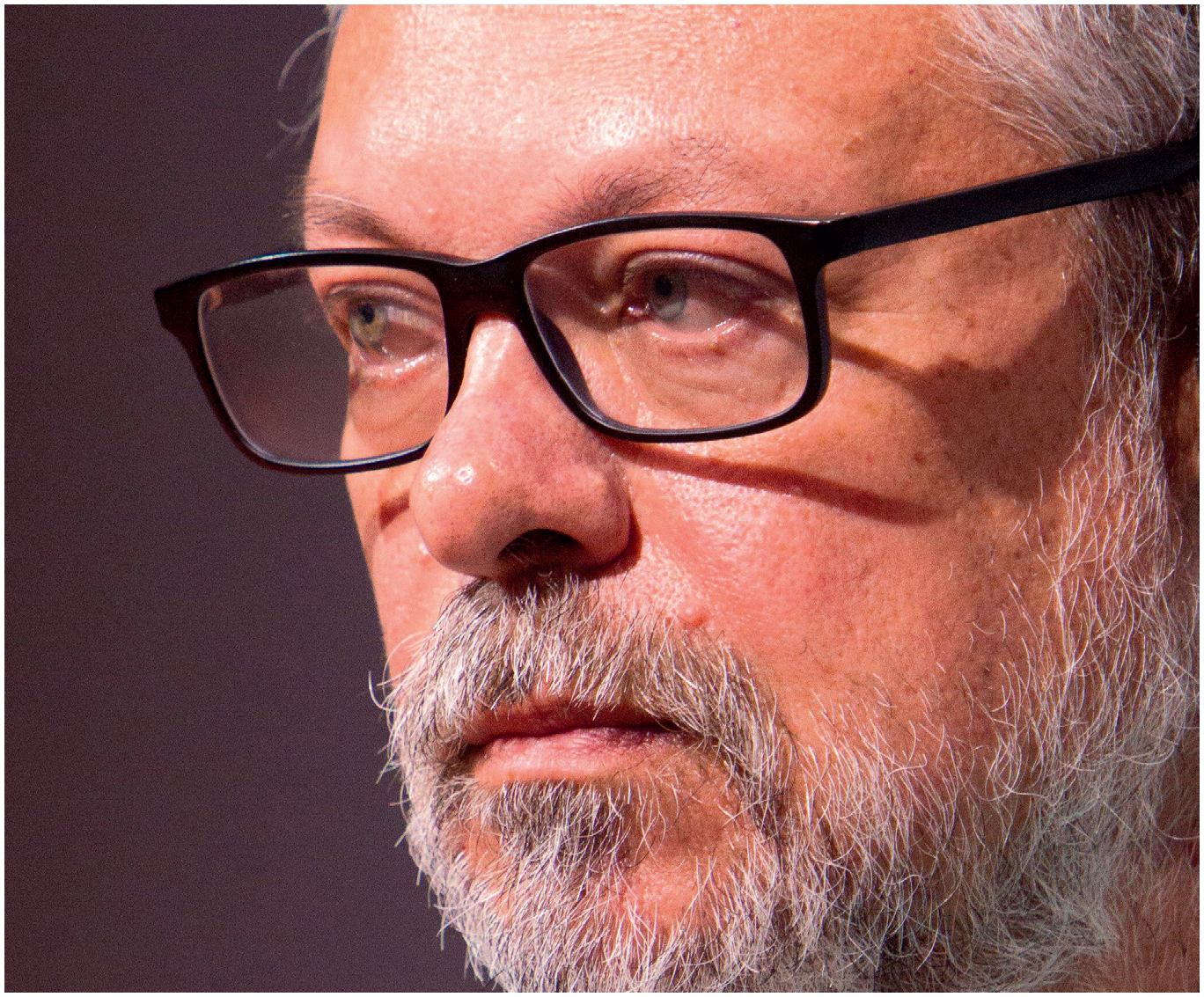
Russian writer Mikhail Shishkin, who now lives in Zurich
Shishkin believes that “without complete de-Putinisation, Russia has no future”.
But he remains cautiously sceptical about the future of his homeland, explaining that it is inextricably linked to the collective trauma of Russian history which, crucially, most Russians don’t want to honestly assess in the public domain.
“To introduce democracy in a potential new independent Russian state, we would need the critical mass of citizens,” Shishkin concludes. “But in Russia today, the people who were put in charge for establishing a democratic society all come from the KGB. In Russia, we don’t have citizens. We have slaves with a medieval mentality.”