




Abstract
Girls have historically been overlooked in autism diagnoses. This has led to many hiding their true selves.
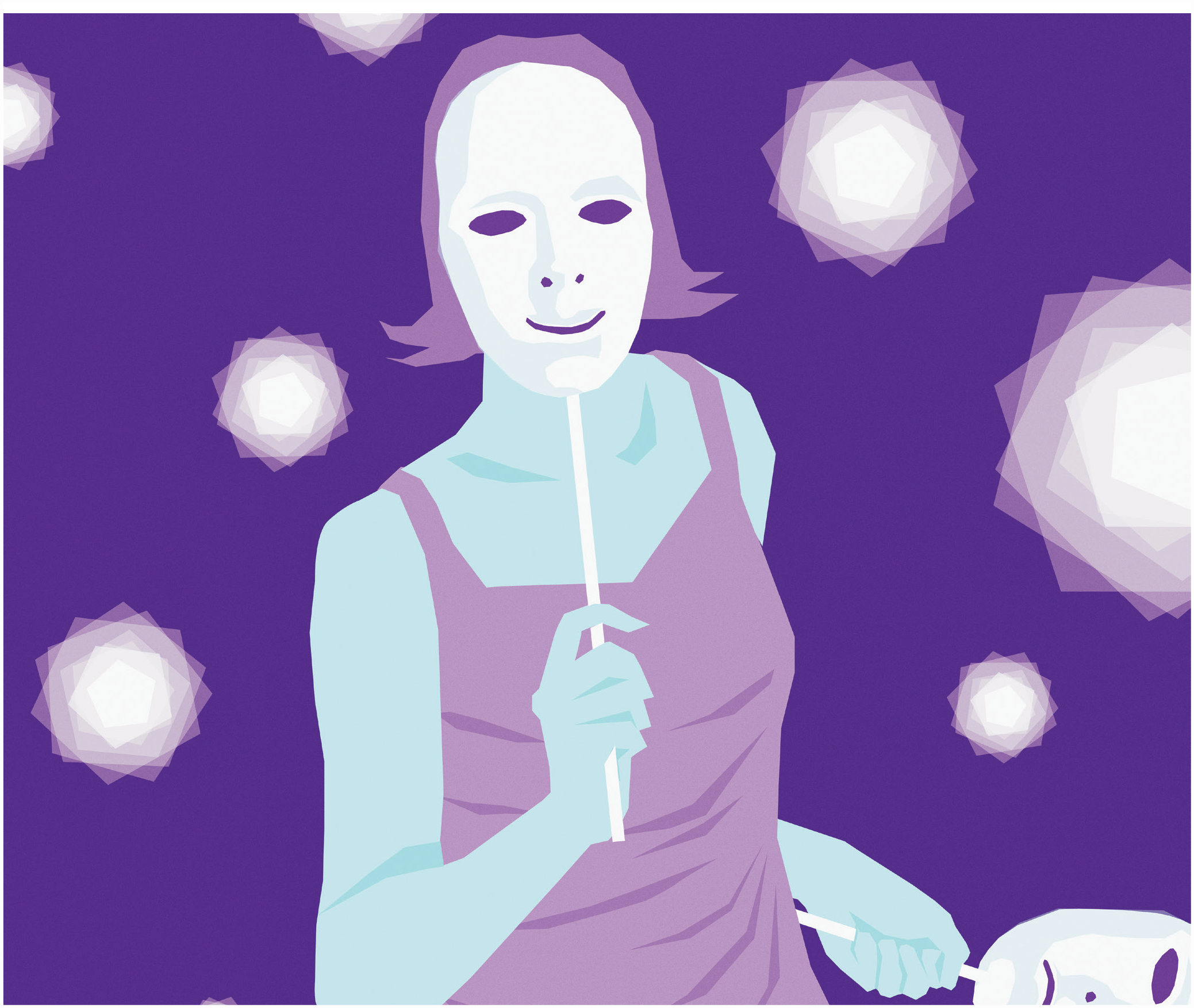
That was the earliest I remember “camouflaging” - a term used to describe a range of behaviours used by autistic people attempting to disguise their autism and pretend they are neurotypical. This masking can include forcing eye contact, preparing pre-rehearsed lines for small talk, denying strange hobbies and stopping oneself before fully articulating a thought to satisfaction.
I escaped special-ed and also manoeuvred my way into the gifted programmes. “They’ll never find me here!” I thought. Yet my report cards from primary school reflect what one may expect - I struggled with fine motor skills and coordination; social complaints focused around my lack of patience and cooperation, lack of interest in group activity participation, and refusal to ask for help. I also fell into a known category of environmental factors significantly correlated with autism - there were numerous complications during my birth.
Circumstances led to two adult autistic women confronting me with my autism last year. “You know you’re autistic, right?” they asked. I paused…and they insisted. “You are.” I sat down for the first time to confront that difference in me, the deviation those administrators saw in primary school and these women saw now. I gathered resources on the condition, and after weeks of reading I, too, was sure I was autistic.
I have managed to create a life that is rare for an autistic person. I have established a successful career in senior positions at large corporations. I have travelled the world by myself. I graduated from law school. But I can also find myself in a nervous breakdown if the lights are too bright or if there are loud noises around me. I was never able to learn to drive. I struggle to sustain relationships or to feel part of a community. I become distressed at social events and decline most invitations.
I am a stereotypical woman with autism who was undiagnosed until adulthood, even then not formally. Despite many signals to the condition, I could splendidly fake my way through much of my life.
Autism is a heritable neurodevelopment condition with genetic and biological factors that impacts roughly 1-2% of people. Traditionally, autism was thought to impact men predominantly, and thus the diagnosis was modelled for young boys. It is now understood that women are also affected by autism, though emerging research argues that women may be less severely impacted and more equipped to camouflage. Today, the diagnosis of autism is still dominated by male-focused criteria. Based on current research, up to 75% of women with autism may be undiagnosed.
Most autism screening occurs in childhood, so if girls can mask their way through that time, as I did, no one may be looking for the condition in their adulthood. There is then difficulty with adult diagnoses, as even medical professionals can be dismissive due to women’s adept camouflage ability combined with the historically severe stigma around the condition.
The stigma has reduced recently due to expanded education and social training, research on the ‘spectrum’ of autism, inclusive representation in media, and the neurodiversity movement. However, even in a seemingly more open-minded society, many autistic adults have experienced years of traumatic discrimination and bullying; thus, they may continue camouflaging to conceal their disability.
The double-edged sword of camouflaging is that while obfuscating the condition may increase employment and educational opportunity, it also increases the suffering. It requires substantial cognitive effort, deep self-reflection and emotional discipline. Thus, it can be exhausting and create severe stress.
I considered a formal diagnosis but decided against it. The process can be expensive and time-consuming. Diagnostic criteria still do not formally incorporate camouflaging. There is no treatment for autism. The critical use for formal diagnosis is requesting disability accommodations; however, there is no guarantee of proper accommodations due to the lack of understanding about the condition. Requesting accommodations may also trigger stigma. While autism is more accepted than it used to be - in part due to the progress of characterising autistic people as “neurodivergent” - neurotypical people might discriminate against the neurodivergent on the basis that they can’t do some activities that they’d view as “basic functioning”.
Indeed, following self-diagnosis, I was excited for the first opportunity where someone questioned why I do not drive, and instead of concocting excuses and creating diversions, I could finally explain: “I can’t - I am autistic!” But unlike the panacea I hoped the diagnosis could provide, I was looked at like I was an extraterrestrial. I was ashamed and again wanted to hide my differences and pretend I conformed. I saw that sharing I am “neurodiverse” is quite different from disclosing that my autism includes disabling fine-motor-skill impairments.
CREDITS: Neil Webb / Ikon
The lack of understanding about autism also often leads to discriminatory comments or insensitive questions. When I shared my self-diagnosis with non-autistic friends, many denied it or settled with: “Well, you’re clearly high functioning.” The response was painful, as I realised their rejection was due to how much effort I invested in camouflage to appear like I was operating as most people do naturally. I realised that if I want to talk about how the syndrome impacts me, I will have to invest time and effort in helping others understand, again making me feel isolated and exhausted.
Today - as a recently self-diagnosed adult woman with autism - I prefer not to talk about my autism due to the challenging conversations that often follow. This agency was a benefit of the diagnosis; I realised how much I had over-extended myself and have started to establish healthier boundaries. However, I worry that my silence is another form of self-censorship and may help to perpetuate the stigma. So, I am here, talking about not wanting to talk about being an autistic woman.