




Abstract

There is minimal documentation in Nigeria on those who are neurodivergent. While part of the reason is limited public awareness and a lack of focus on the issue by both the media and the public health sector, misconceptions and misinformation are also rife, taking the incorrect conflation between mental health and autism as one example.
In terms of mental health though, according to a 2019 poll conducted by the Africa Polling Institute about the poor perception of mental illness in Nigeria, it was revealed that 70% believed mental health problems were “when someone starts running around naked”, and 63% believed they were “when someone starts talking to himself or herself”.
While this isn’t about neurodiversity per se, it highlights the lack of awareness of anyone who doesn’t fit into a neurotypical box.
Take the case of epilepsy, which is one of the most known neurological conditions in Nigeria. It is widely believed to be a contagious illness, and some even determine it to be the result of witchcraft. This is the landscape within which conversations around neurodiversity are taking place.
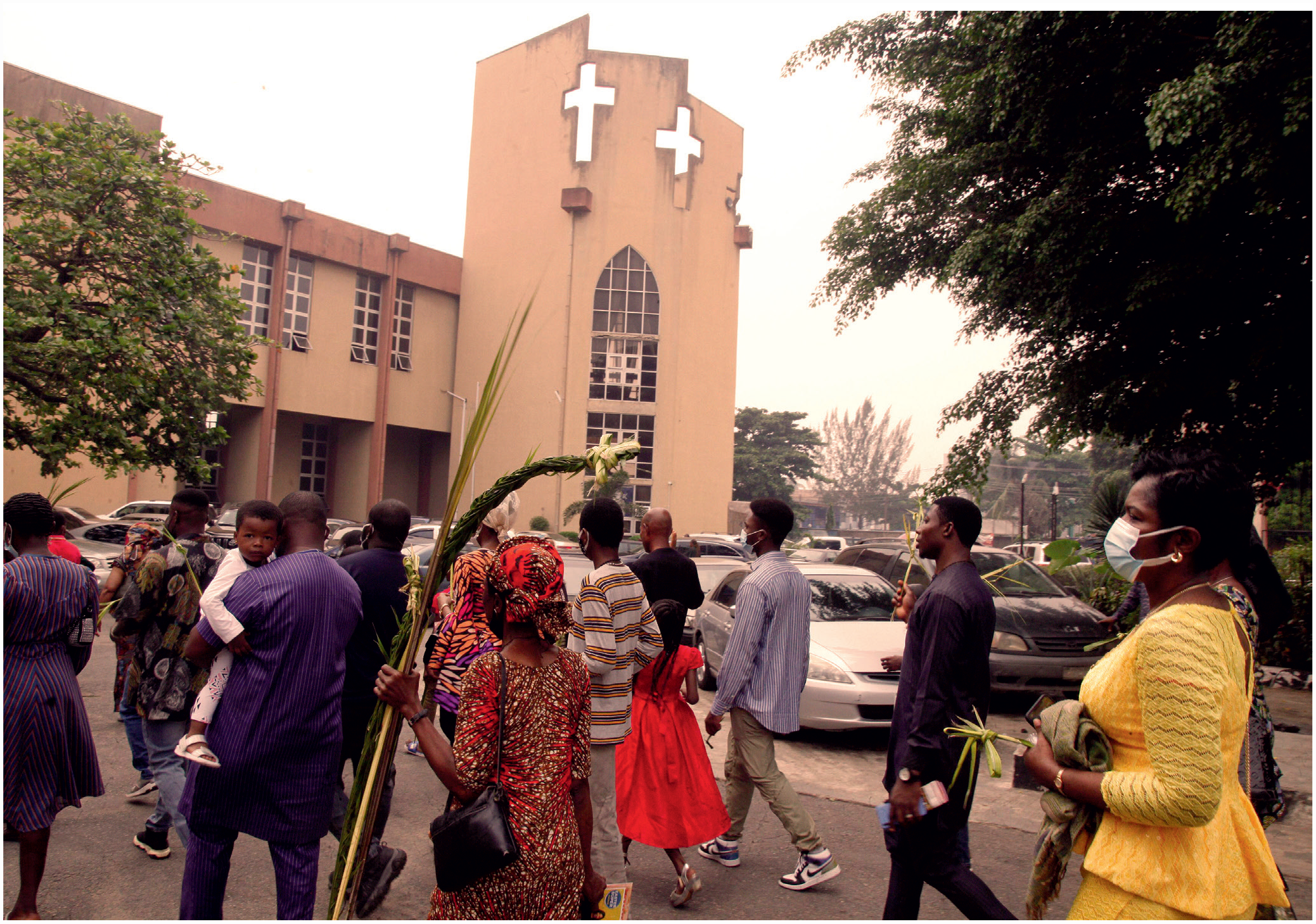
Catholics celebrate Palm Sunday at a church in Lagos. Nigeria is a deeply religious place, with many people seeking help from pastors over doctors
CREDIT: Adekunle Ajayi/NurPhoto/Alamy
Over the years, social media has become a place for neurodivergent individuals to find a community and safe space to express themselves and share stories of their experiences, free from some of these damaging misconceptions. This, in turn, is improving information on neurodivergence and mental health inclusivity.
Fatimah Zahrah is one of those telling her story. She is autistic and has ADHD but she only got diagnosed in 2021 at the age of 21. Most of her school days were filled with masking her neurodivergent traits. She recalls being constantly exhausted and burnt out in classes. In an interview with Index she said she made sure that her traits didn’t define who she was.
“I stretched myself way beyond my limits so I can fit in and survive,” she said. But the hardest part was trying to join the labour market, which she described as hell.
“Interaction was so hard for me because I didn’t understand social cues so I kept to myself most times at work, which was so lonely. It was hard to operate as a non-neurotypical person because my workplaces didn’t care to make accommodations for people like me,” she said.
What helped Zahrah the most was having a supportive mother who aided her in navigating the system. “My mum did not know about my autism and ADHD for a long time. It wasn’t until after university [that] I told her and she started doing her research. But ever since she has been very supportive. She listens to me and my needs and tries to meet most of them,” she said.
Zahrah found comfort in a tolerant family, but others do not. One of the biggest reasons most live in silence is because of the language that is used to put neurodivergent people down. This surfaces through the use of malevolent words or degrading descriptions.
Moses Ibeh grew up hearing curse words such as “olodo, itimkpataka”, meaning “illiterate and stupid”. This came from teachers, classmates and siblings, all because he was dyslexic. He recalls being academically set back and how each term, when he came second to last position in class, his parents would verbally abuse him until he cried.
“I hated primary school so much. It was one of the most difficult times of my life, being the joke of the class, being looked down on by the top pupils because of my grades… I think I resented them, especially the teachers who flogged me,” he said.
Because his parents worried about his grades, they made him take extra lessons after school. It was one of these teachers who spotted he might be dyslexic and told his parents to take him for a medical check-up. The results were positive and his parents withdrew him from his school, paying competent teachers who understood his condition to home-school him.
But there are people who are not as lucky as Ibeh - people who do not get the opportunity to be diagnosed or have parents who can afford home-schooling, people who go to public schools where their teachers and peers say harsh words to them because of their differences.
In 2018, Dyslexia Foundation Nigeria reported that 32 million Nigerians were living with dyslexia. The foundation also reported that 30% of teachers who attended training for working with children with dyslexia said they had never heard of dyslexia, and 65% couldn’t recognise the condition when met with a pupil or student who had it.
Religion is also responsible for fuelling silence around neurological differences. Nigeria is a deeply religious country. According to a 2021 Statista report, 90% of the population are believers, with Christians making up 35% of them and Muslims 53%.
For many people, the church or mosque is the first place they go when they want help in understanding something. Sadly, when it comes to neurodiversity many receive more hurt than help. It was like this for Ebere (who wishes to stay anonymous). Growing up with ADHD, she was called “clumsy, talkative and useless”.
“I was the black sheep amongst five kids,” she told Index. At school she would get in trouble and when her parents were told of this they would “whoop” her. When Ebere turned 12, her mother took her to the spiritual director of her ministry.
“He said I was possessed, and if my parents wanted to give me peace they would have to bring me in for deliverance. My mum brought me to the ministry a week later and I was put through a misery I would never wish for my enemy. They poured water on me and whooped me till I collapsed,” she recalled. The emotional pain of the experience returned when she was diagnosed with ADHD at 22. “I felt hurt. I remember coming back to my house and breaking down, because going through all that so young killed my confidence. I blamed my parents for everything, but now that I have grown I’d forgive them for misunderstanding my condition,” she said.
All of this is happening in an environment of an underfunded healthcare system. The writer LynAnn FireHeart has never had a formal diagnosis of either ADHD or autism due to how unaffordable it is but she is certain she has both conditions.
“The cost of getting a diagnosis in Nigeria is very expensive - and not just that, it’s very stressful,” she told Index. But in order to get free or subsidised medication, you have to have a diagnosis.
“I have learnt to take things slow and navigate life in a way that suits me. I reduce my interactions with people as much as I can,” said FireHeart.
Despite the negatives, social media combined with new charities are raising hopes that change is afoot. Can awareness improve amongst the Nigerian public enough that people know they have to both listen and accommodate? Let’s hope so. People’s lives depend on it.