




Abstract

The increased emphasis on first-person experience brings positives, but when it’s all that counts we encounter problems too, argues the philosopher
What is striking about this sentence is not that it references the importance of listening to people most affected by the fire. It is that their judgement is taken to be the “touchstone”, the measure of a fair judgement. This kind of deference to the authority of lived experience has become widespread. Lived experience is seen not only as an essential source of information, but the source of validity for the conclusions we reach.
For almost any given issue, it often seems that the judgement of someone with more lived experience trumps that of anyone without it, whatever else is true about their level of knowledge or expertise. A white person’s views about racism carry less weight than a black person’s; a trans person can speak more authoritatively about trans rights than a cisgender one; the welfare of the deaf is best served by following the views of the deaf community, and so on.
“Lived experience” has become so widely valorised that even hard-nosed businesses bend over backwards to show they respect it. It is no longer surprising to hear the management consultancy firm McKinsey & Company declare that “Listening and learning about employees’ lived experiences is the first step business leaders must take if they want to create fairer workplaces.”
It was not always thus. Analysing the largest corpus of English-language texts in the world, Google’s N-Gram viewer shows that the phrases “lived experience” is used more than twice as often as it was at the turn of the millennium, 11 times more than in 1980 and 60 times more than in 1960.
Some of the best arguments for paying more attention are rooted in the concept of “epistemic injustice”, developed by the philosopher Miranda Fricker. “Epistemic” simply means “relating to knowledge” and so epistemic injustice concerns the various ways in which the possession, transfer and recognition of knowledge are unfair. One form of this is what Fricker calls testimonial injustice. For example, when women are not treated as equals, their ideas and arguments are not given as much weight as those of equally qualified men and so their testimony counts for less. The same kind of epistemic injustice occurs when the statements of rape victims are not taken seriously.
Laura Bates talks at Hay Book Festival in 2022. The Everyday Sexism Project, which she founded, places women’s own experiences front and centre and has been invaluable
CREDIT: Sam Hardwick/SHP/Alamy
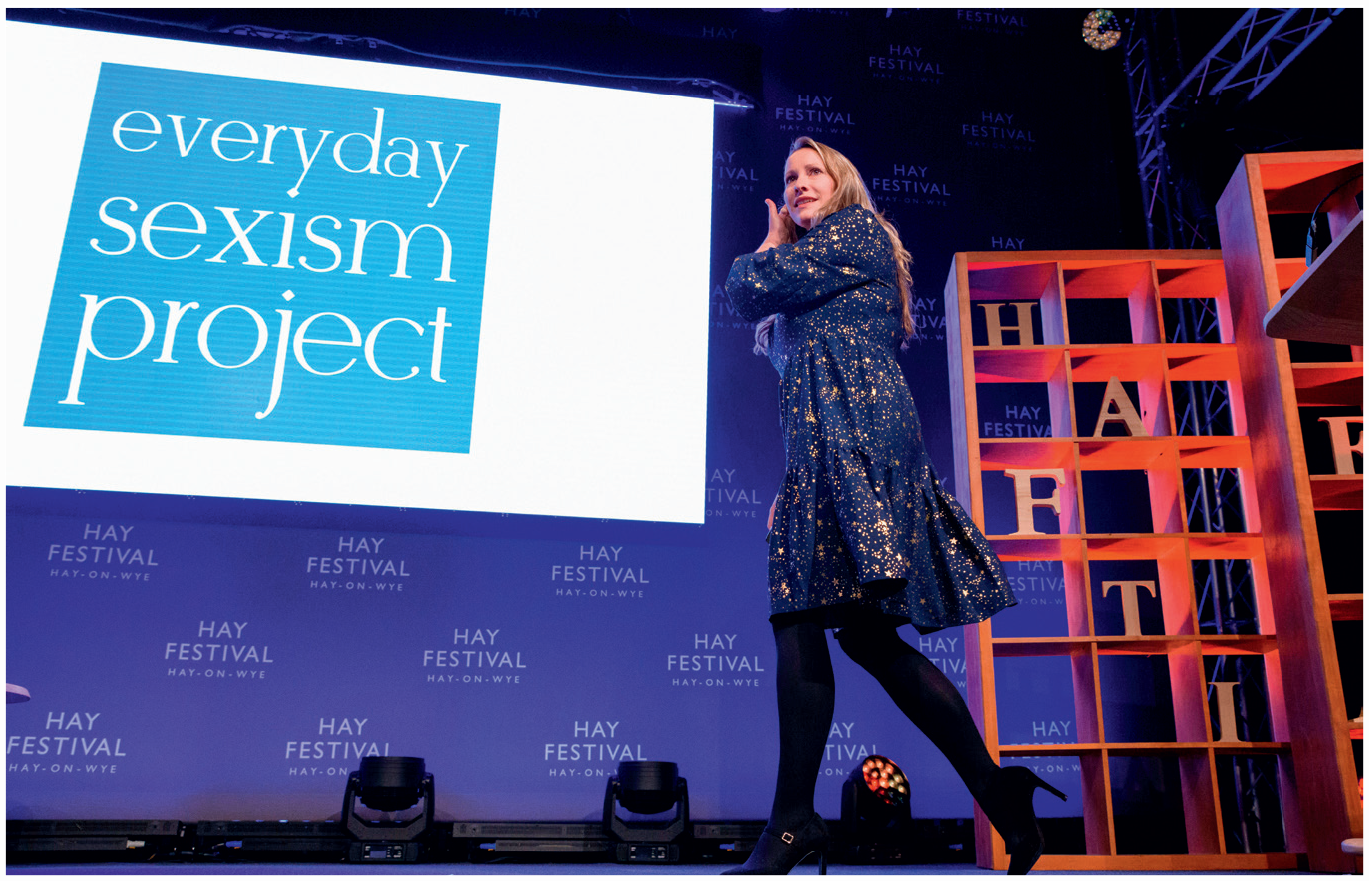
The increased emphasis on first-person experience can be seen as an attempt to rectify historical testimonial injustices. To that extent, it is to be warmly welcomed. The Everyday Sexism Project, founded in 2012 by Laura Bates, has made the reality of persistent misogyny undeniable by collecting first-person accounts. Patient advocacy groups give voice to people who were traditionally told to simply do what doctors told them was for the best. Accounts of wars would be incomplete without the perspectives of soldiers, civilians being bombed, refugees seeking sanctuary, women being subjugated, workers being exploited, dissidents being harassed or worse.
Standpoint theory goes further, arguing that lived experience gives an individual a privileged epistemic insight. As the pioneer of standpoint theory, Sandra Harding, argued, the insights of oppressed groups in hierarchical societies “are not available - or at least are not easily available - from the perspective of dominant group activity.”
To say that some people have a privileged perspective, however, is not the same as saying that they have the best all-round one, and are so automatically presumed to be the best judges. For example, a practising Catholic has a perspective on her faith that an outside observer can never have. But that does not mean she is right about the truth of Catholicism. Indeed, it could not mean this because if we granted her that authority, we would have to extend the same respect to the views of practising Muslims, Jains, Buddhists and so on. Since they all believe different things, obviously no more than one can be right.
The judgements of people with lived experiences often clashes. Of course we should listen to the lived experience of trans women, but also to the lived experience of cis women. If they reach different conclusions about the importance of single-sex spaces, for example, lived experience cannot adjudicate.
Indeed, grievance is often stoked by the perception, correct or not, that some people’s lived experiences are given more weight than others. Such asymmetries are inevitable if people believe in deferring to lived experience, because unless you pick and choose who to listen to, you can never get to a solution simply by accepting the testimony of everyone.
The problem of a plurality of perspectives goes deeper than this, however. Even within marginalised or disadvantaged groups, not everyone has the same point of view. For example, there were disagreements between Justice4Grenfell and Grenfell United, two groups formed in the aftermath of the Grenfell fire, as well as with the Grenfell Action Group, which already existed to advocate for tenants’ rights. Similarly, some trans people believe that trans women are women and trans men are men, period, while there are plenty of others who believe that being a trans person of one gender means that you are not biologically the corresponding sex. People with the same kind of lived experience routinely disagree with each other.
Perhaps the greatest test of people’s faith in the authority of lived experience is what Bertrand Russell called a naive belief in “the superior virtue of the oppressed”. People are not necessarily more morally upright in virtue of being marginalised. In Palestine, for example, there are Israelis who learned the wrong lessons from the persecution of Jews and are now persecuting others. Likewise, the resentment caused by decades of suffering have led some Palestinians to adopt antisemitic views and unjustifiable violent methods.
Academic Standpoint Theory is not so crude as to confuse privileged access with unquestionable authority. But in practice, the former easily slides to the latter. If we acknowledge that a person has privileged access, it is easy to think that respecting it requires in some way deferring to what they have to say. It doesn’t take much reflection to see that this doesn’t follow and to believe it does is gravely mistaken. Lived experience provides perspectives and information which it would be irrational and unjust to ignore. But it cannot be taken as a source of absolute authority.
Lived experience does not compete with the knowledge of impartial, detached experts. Rather it is something that should work with it. Take the example of Traditional Ecological Knowledge (TEK). This has been defined as “the knowledge and practice of indigenous people passed down from one generation to the next that draws upon cultural memories and sensitivity to change.” It is often unhelpfully contrasted with “western science”, which is doubly misleading as the kind of science referred to is not western but “modern”.
TEK has too often been ignored by arrogant scientists who believe that it captures no more than folklore and superstition. Now, however, many accept that TEK provides many communities with the knowledge to manage sustainable food systems. For example, the Indonesian practice of sasi laut is effectively a system of managing fishing with “no catch zones” avant la lettre. But that does not mean that sasi laut competes with science. The very reason we know it works is that scientific studies show it does. Science can learn from sasi laut but the Indonesian fishermen who practice it also have things to learn from science. To believe that TEK is infallible is as irrational as believing it is nothing but nonsense.
It is vitally important to give lived experience respect and to take its testimony seriously. But the judge of whether it has led people to the right conclusions is much more objective. It should not simply be blindly believed.