




Abstract

The UK government is spying on the nation’s historians as if they’re criminals, says
The monitoring by the Cabinet Office and the Foreign Office includes my social media accounts, a flyer for a talk I gave at a private club, details of a lecture at a Cambridge Alumni weekend, and a library talk with an internal heading by the Cabinet Office of “Not just any cook-along this week”.
I know this after submitting a series of subject access requests under data protection laws to the two departments. The Cabinet Office eventually admitted that it held so much material on me collected over the past five years - it estimated it would take more than 650 hours to collect the information - that my requests needed to be broken down into six-monthly periods.
What it released showed that my activities were brought to the attention of Alex Chisholm, the permanent secretary of the Cabinet Office, and the Cabinet Office “Copra team”; that my speaking engagements, newspaper articles and crowdfunding activities were monitored; and that information on other parts of my life was also collected. This included employment tribunal and defamation cases which I had successfully defended and which had nothing to do with my Freedom of Information requests or activities as an historian. The inference was that this information might be useful to smear me.
My crime? I’m an historian who pushes back against the censoring of our history by the government and highlights its failures to adhere to Public Records Acts and the Freedom of Information Act.
My concerns about historical curation go back to researching a biography of Guy Burgess more than a decade ago, where I found huge gaps in the record. There was nothing on his time in the Information Research Department, a secret unit set up at the beginning of 1948 to counter Russian propaganda which he betrayed months after it was set up.
Likewise, there was nothing on his time in the Foreign Office News Department, in the private office of foreign secretary Ernest Bevin’s deputy Hector McNeil or in the British embassy in Washington between 1950 and 1951 - although there were papers for the periods both sides of his time in Washington for diplomats doing the same job.
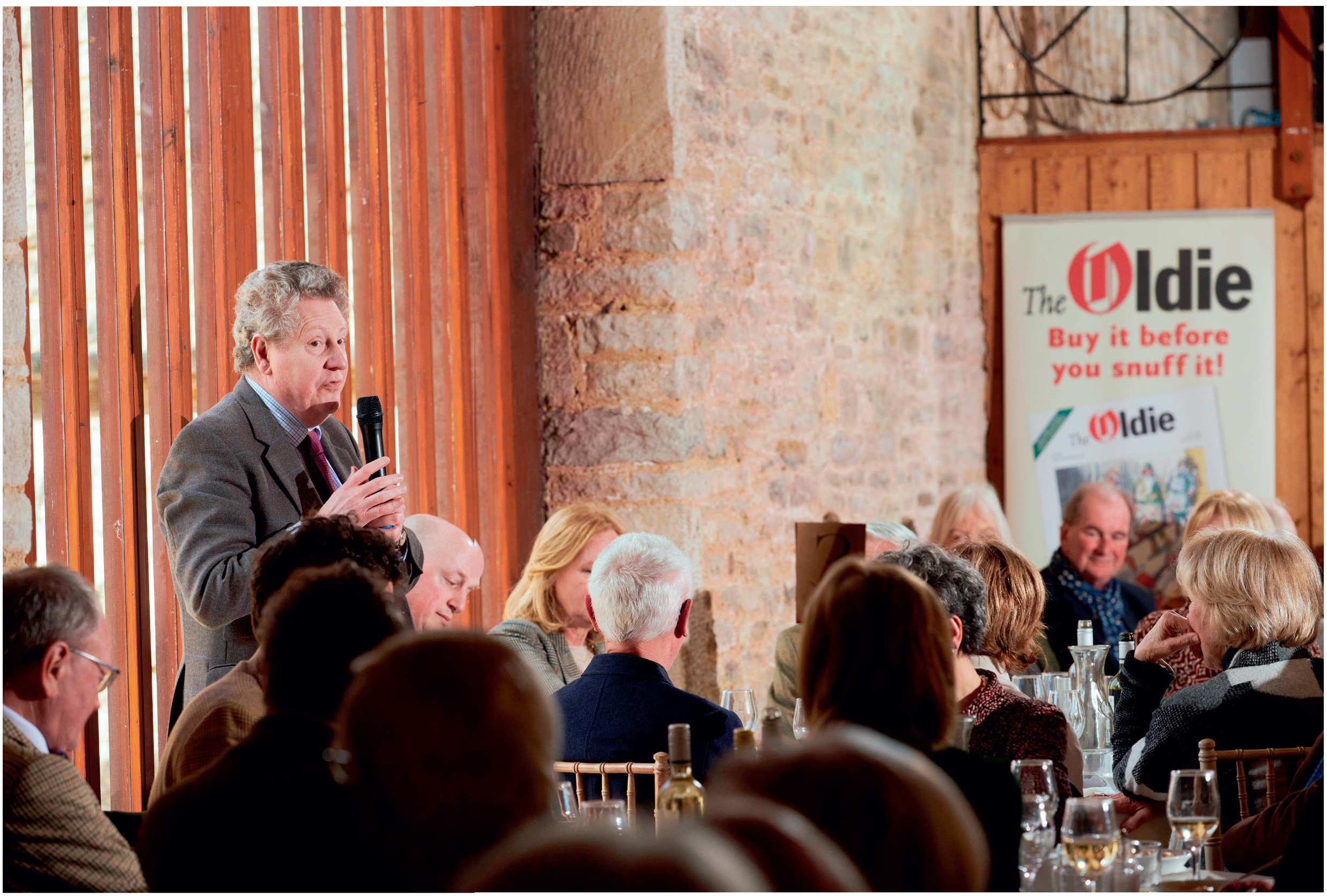
Andrew Lownie at The Oldie’s Literary Lunch, March 2023. The historian has been spied on by the British state for simply researching key political figures in British history
CREDIT: Neil Spence/Alamy
In historical parlance, this is known as “dry cleaning” the records.
This was only the start of my problems with officialdom. After I discovered a wartime FBI file which claimed Earl Mountbatten was “a homosexual with a perversion for young boys”, I requested other listed files held on him, only to be told they had been destroyed. When I asked when that destruction had taken place, the US authorities candidly admitted: “After you had asked for them.” Clearly this had been at the request of the British government, previously unaware that such damaging material existed.
The Irish police accepted that they had car logs for the visitors to Mountbatten’s holiday home in Ireland in August 1977, the month two 16-year-old boys claimed he had abused them, but they would not release them on the grounds that they were part of the investigation into Mountbatten’s murder - which took place two years later.
Even though we now have a 20-year rule for the deposit of historical records, I found that no files on Mountbatten’s 1979 murder had been deposited in archives, either in Ireland or the UK. The Irish police claimed it was still “an active investigation” - despite the fact the bomb-maker had been convicted, served a sentence and been released under the Good Friday Agreement in 1998.
Indeed, many of the files relating to Mountbatten’s funeral, seen by millions around the world on television, are closed because they reveal sensitive information about the procession route, who sat in which carriage and other similar details.
While I was researching my next book, which was on the Duke of Windsor’s time in the Bahamas during World War II, I discovered that although the Colonial Office Files in the National Archives were thin on him, there were mirror copies of the files in the Bahamas. These were much more extensive and full of revealing detail, such as the duke posting the commissioner of police to Trinidad after a murder which the duke wanted covered up.
Last year, I requested a 1932 police protection file relating to the Duke of Windsor. Dozens of similar files have been available at the National Archives for 20 years. They contain useful titbits on the then Prince of Wales’ movements but nothing remotely secret. The police in the UK refused to release the file on the grounds that it would jeopardise the current safety of the Royal Family.
The balance between accountability and transparency on the one hand and protecting national security and the mystique of the Royal Family on the other is difficult to strike. Once records are released, the genie is out of the bottle, but it’s hard to argue that records - which in many cases are more than 60 years old - should not be released.
If our history is to be written accurately, and this is especially true of royal history as evidenced in a recent issue of Index, we will have to have all the records made available - not just those a government department believes we should have - and historians should not be penalised for seeking to ensure that happens.