




Abstract

Index was founded following a call for help from Russian dissidents. Today we must not turn our back on those who also seek to challenge Moscow, writes
Samizdat was more than the publication and distribution of the work of political dissidents that was otherwise banned by the state. It was a statement in the defence and promotion of the global need for freedom of expression as a democratic right in a civilised society. From our first edition we sought to publish the work of those whose bravery was inspirational, as they used the only tools at their disposal to stand up to the tyrants in charge of the countries of their birth. They wrote, they painted, they drew. They provided factual testimony of events at home and creative works telling their stories and their hopes and aspirations for the future.
Their stories ensured that those who lived in democratic societies could not ignore their plight. Their work guaranteed that no one in the West had the excuse of ignorance about what was happening behind the Iron Curtain. Their bravery delivered change, at home and abroad. In democratic societies it reminded us of how lucky we were and the value of what we had to protect. And under the governments of despots it brought the promise of democracy and the hope of freedom under the law. Ultimately for many, the bravery of dissidents helped to deliver exactly that - democracy - as the Iron Curtain fell and one by one many of the Warsaw Pact countries sought to embrace a different type of society rooted in democratic values.
I do not apologise for having a romantic view of the role of dissidents in modern history. Given my position at Index it would be perverse if I didn’t revere the memory of former dissidents and celebrate the bravery of the current generation of activists, scholars, artists and journalists who seek to challenge the status quo and their political leaders. Indeed, Index wouldn’t be here were it not for those eight brave individuals who stood in Moscow’s Red Square in 1968 and rallied against tanks rolling into Prague. It was in the tradition of Russian dissidents that we grew.
But as much as I am daily inspired by the dissidents I meet and stand in awe of those of Index’s past, that doesn’t mean I don’t appreciate how difficult it can sometimes be to see beyond their association with a country that is currently doing great harm to others.
Since Russia’s latest illegal invasion of
Ukraine we have seen a backlash against Russian culture and Russian people. I can absolutely empathise with those Ukrainian nationals, whose homes are being bombed as I type, who cannot differentiate between the government of Russia and the Russian people. I can understand the need to use this moment to address historic wrongs and to challenge a narrative that places Russia at the top, as Marina Pesenti argued in Index last summer. I can understand why the Ukrainian Tennis pro, Martha Kostyuk, refused to shake the hand of a Belarussian player at the French Open. I can also appreciate the anger and hurt of the Ukrainian writers who didn’t want to share a platform with Russian writers at a recent Pen America conference in New York.
But this underplays the role of dissidents both within the country of their birth and in our global society. In Belarus there are 1,492 political prisoners incarcerated for challenging President Alexander Lukasehnka. In Russia 19,586 people have been arrested for protesting the war. Their voices need to be heard, their experiences known by the world and the families protected wherever they are.
If we underplay this role, we risk ignoring the personal sacrifice that individuals are making by standing up to dictators and tyrants at their peril. The risk that they place themselves and their families in by challenging an evil status quo is huge. When they find the strength to speak we have a moral responsibility to listen, to learn and to amplify, so their stories have an impact, so their tales are heard - both at home and abroad. Their bravery demands this from those of us who cherish the fundamental democratic freedoms that we are so lucky to have.
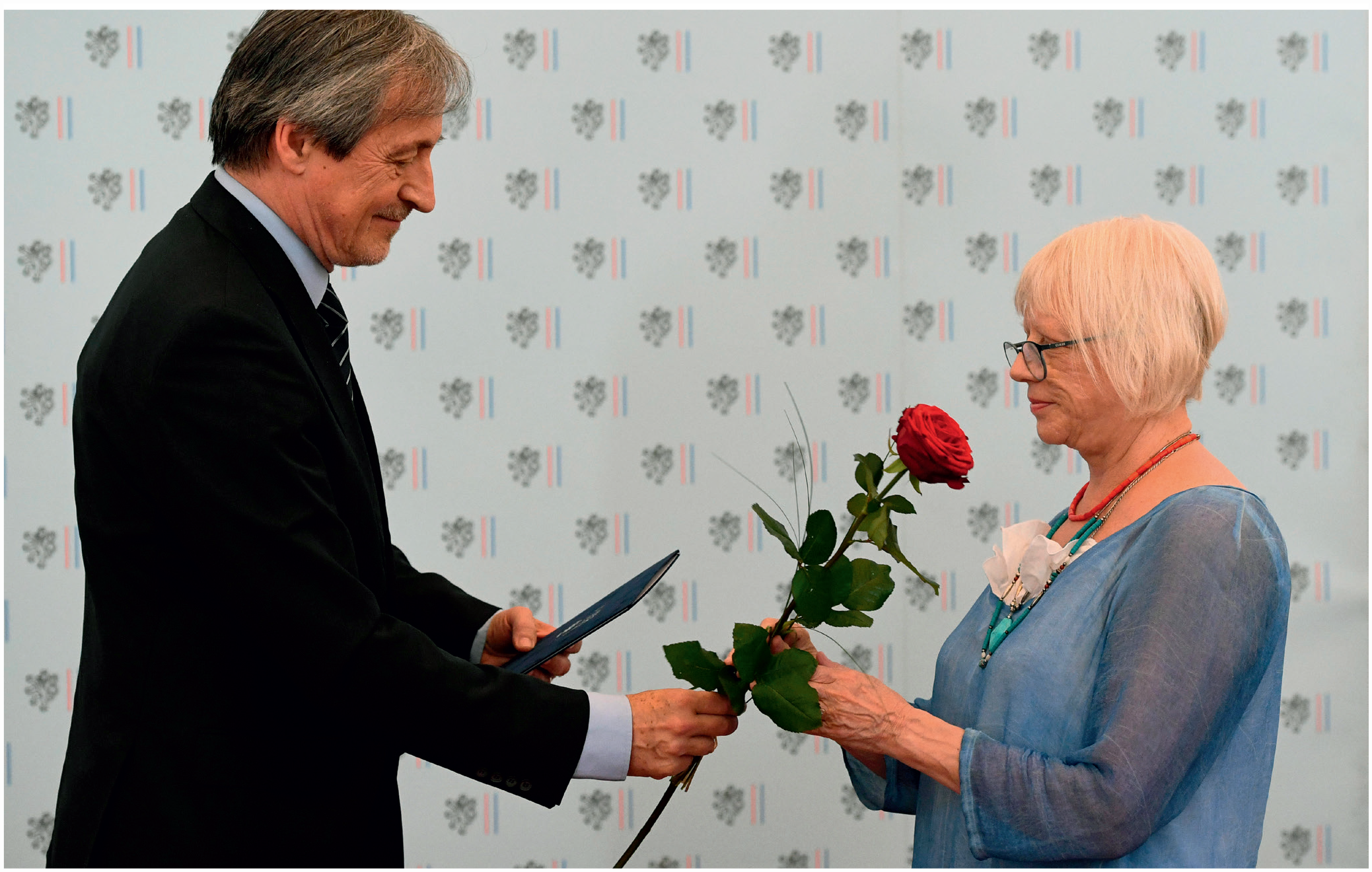
Czech Foreign Minister Martin Stropnicky (left) bestows the Gratias agit award to Russian dissident Tatiana Bayeva who protested against the Soviet-led occupation of Czechoslovakia in 1968, in Prague, Czech Republic, on June 2018
CREDIT: CTK Photo/Roman Vondrous/Alamy
It is in this tradition that Index was founded and it is how we operate today. As Putin’s army invaded Ukraine, Index rightly wanted to tell the stories of those people in Ukraine who were standing united against the tyranny of Putin’s regime. In the weeks that followed we found the dissidents, the people in Russia and those that were forced to flee. We wrote about them online and also last summer in the magazine. We revisited these people a year on in this current magazine (see Katie Dancey-Downs’ interview with Russian dissidents on page 34). We provided a platform for them to share their work and their experiences. These people did not vote for Putin and they have been finding all kinds of creative ways to resist anything in his name. They can’t help where they were born but they have tried to change how their country operates - through publishing anti-war poetry, through protesting on the streets, through campaigns to tackle disinformation. Their bravery in standing against their government is as inspirational as that shown by the Ukrainian forces, day-in, day-out, seeking to protect their homes and their country. The risks are high; many are in jail and some may never leave.
Political change can only happen within a country when people know that there is an alternative to a status-quo. In no small part that happens when people stand up and tell the truth and demonstrate that life can change and it can be so much better.
Index exists to provide a home for political dissidents who cherish freedom of expression as a democratic right. We have done that for over half a century and we will continue to do so for the next 50 years. That is our solidarity and it is our raison d’etre.