Abstract

Years of war have led to a mental health crisis in Yemen, but taboos abound.

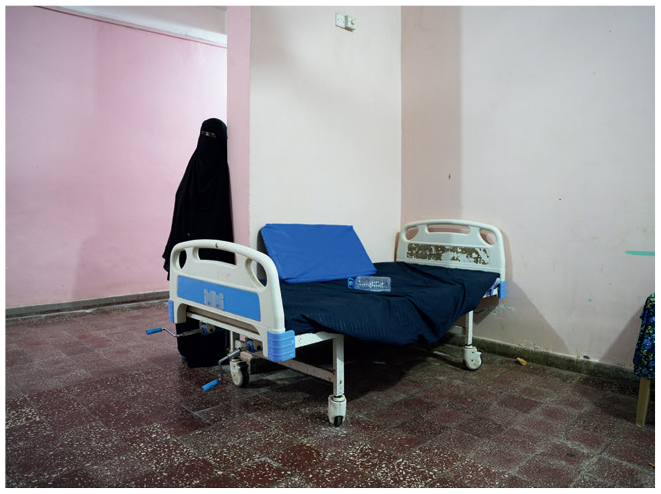
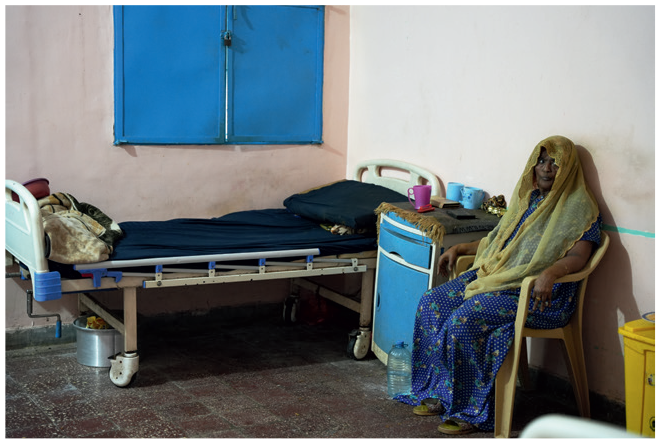
The walls of the dilapidated building, built in the 1970s in the capital of the south, Aden, are painted in two colours - white above a watery green. The colours promise relaxation but the difficulties of mental disorder show up in this place every day. The dream of every patient is to get out of here and never come back, but the reality, for Abdusamad and the other 150 patients, is the opposite: most of them have been forgotten by their families for months or even years. Some have been here for as long as the war in Yemen has lasted. It began in 2015 and has not finished, despite some attempts at peace.
If you want to understand the long-term effects of the conflict in Yemen and the hard price the survivors have paid, there is no better health institution to visit. People say that if the war does not kill you, it will destroy your brain. Years of studies and research by several groups of experts back that up - studies such as those at the Dart Centre for Journalism and Trauma, which show how permanent the damage of the war can be on humans. PTSD is just one pathology on a long list.
Abdusamad is a perfect example: stimulated and then calmed by anti-psychotic drugs, he was in the “restraint” cell for a week. He had become aggressive, dangerous to himself and to other patients. As soon as he came out, he looked for the doctor, Hassan, who put him in there.
“It is very difficult to be a psychiatrist in Yemen because we are trying to do our best with the few tools we have,” Hassan told Index.
“But the patient is still a human being and we know that drugs and other old methods are not the best possible. We know what the restraint room means: it is a prison. But what can we do? We have no other choices here.”
He continues to sweat in his shirt and obsessively checks the tie, removed due to the merciless heat. In his anxiety, I read the sense of guilt of all the Yemeni medical class deprived of the essential tools for care: while the world and science move on, in Yemen mental health continues to be seen as madness. According to the World Health Organisation, 20% of the Yemeni population is affected by anxiety and depressive disorders, to mention only the most common. As Hassan shows me the “restraint room” - a bare, dirty cell, with a green mattress thrown into a corner - outside the building stand about 40 people, wanting to be admitted.
The manager of the hospital, Khalid al-Mahdi, is in trouble.
“We are the only psychiatric hospital across the country: every day we receive 400 requests of hospitalisation between Aden and the other Yemeni provinces where we also run small clinics. In these provinces the total population is 10 million people. Therefore, nobody will be surprised if we cannot provide a sufficient service. Not to mention that our budget was stopped at just over three million Yemeni rial per month (equal to $27,000), and the funds are totally insufficient,” he said.
Al-Mahdi is a thin, well-dressed man in a suit. He knows the history of the hospital well. “From the 90s onwards there was a large decline of the structure,” he said. “We were forgotten by the institutions. And this certainly had a negative impact on patients. We would need to restore it, to expand it, to host a higher number of patients; we would need greater quality of food, better medicines, modern methods of care.”
The hospital was the first medical structure built in the south of the country - more open and progressive, but also more affected by poverty and marginalisation due to the politics of former president Ali Abdullah Saleh, who ruled Yemen for 33 years until 2011. Today the hospital is the physical proof that mental illness exists in Yemen, a country that denies its existence and has many who still believe that only spirits (jinnis) are responsible for any form of psychological or neurological distress, from depression to epilepsy.
Little wonder, then, that people suffering are still isolated in private homes or in “clinics”. In some, patients are known to be in chains, such as in a facility in the city of Taiz. The war has simply worsened problems already present in the country. The social stigma is strong. Women pay the highest price: they’re the least listened to by families, by doctors and in the hospital in Aden.
The hospital has beds for 125 men and only 25 women. Out of six departments, five are for males and only one is for females. Women typically stay in the hospital for a longer period: psychiatric disorders must be hidden, and a “crazy” woman is considered useless and unpresentable. Alisa, for example, is 41 and has been in and out of the hospital for 13 years. Kholood, a 40-year-old lawyer, is one of the few patients who agrees to speak. Her family lives in Aden but, for now, she prefers living here.
“I don’t practise the profession because of my disorder. My family members come to visit me once every two months. But I like the fact that they take care of me and I’m happy to stay here,” she said.
In addition to a lack of beds and money, thousands of others are unable to access care due to environmental and logistical factors. “Yemen is still a country in war, with blocks imposed by militias in the area,” al-Mahdi said.
Then there are secondary impacts of the war, such as inflation and the destruction of the infrastructure.
So who can help treat this collective trauma? Certainly not the government or the militias, who are interested only in a population of young fighters and the women who give birth to them.
The queue of men and women in need of treatment at this hospital is destined to get longer. Many are former soldiers who have survived captivity and torture. They’re traumatised and rejected by their families.
Behind a forced smile, 20-year-old Mohammad - destroyed by what he has witnessed - does not complain. “I collected with my own hands my comrade’s brain, in pieces. He was a brother to me. How could I be anywhere else but here?”
Inside the main psychiatric hospital in Yemen
CREDIT: Mohammed Khaled