




Abstract

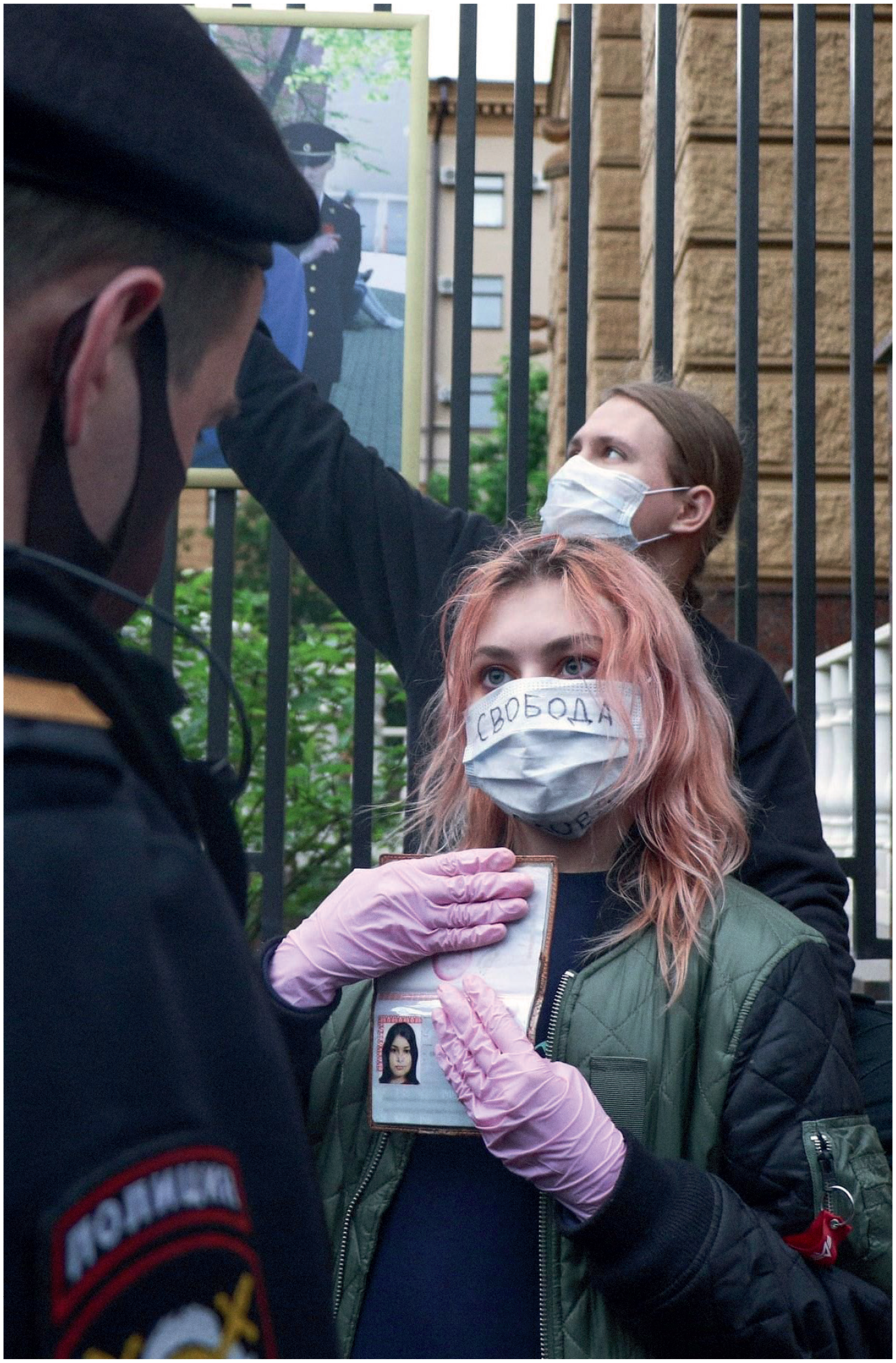
Alexandra Popova is arrested for wearing a mask reading “freedom” during protests supporting journalist Ilya Azar in 2020. Behind her is Dmitry Ivanov, since sentenced to eight years for speaking out
CREDIT: Provided by Alexandra Popova; (Popova and Kamardin) Andrey Trager
It was last September when police officers raided the couple’s apartment, sexually assaulted Kamardin, beat him up and forced him to apologise on camera. Meanwhile, Popova was held captive in the next room. The officers repeatedly punched her, put glue on her face and threatened her with rape.
They also showed her photographs they had taken of Kamardin’s injuries. “That was part of their plan, which was to humiliate us,” she said.
Kamardin was thrown into detention immediately afterwards, but Popova was released without charge.
The day before they were targeted, Kamardin recited a satirical poem about Russia invading Ukraine at the Mayakovsky Readings, a gathering of dissident poets in central Moscow which took place regularly during the Soviet era. Popova believes the authorities felt they needed to punish him for doing so.
“After what [the police] had done to him, they were expecting him to remain silent and plead guilty,” she said.
The poet is now on trial, charged with inciting hatred and actions against state security, and facing up to 10 years in prison. During his court appearances, Kamardin highlighted how the torment was affecting his physical and mental health, describing symptoms including persistent back pain, stomach aches and panic attacks.
But the couple did not give in. Popova filed a complaint with the Investigative Committee against those who were involved in torturing them, but it refused to open a criminal case despite the evidence.
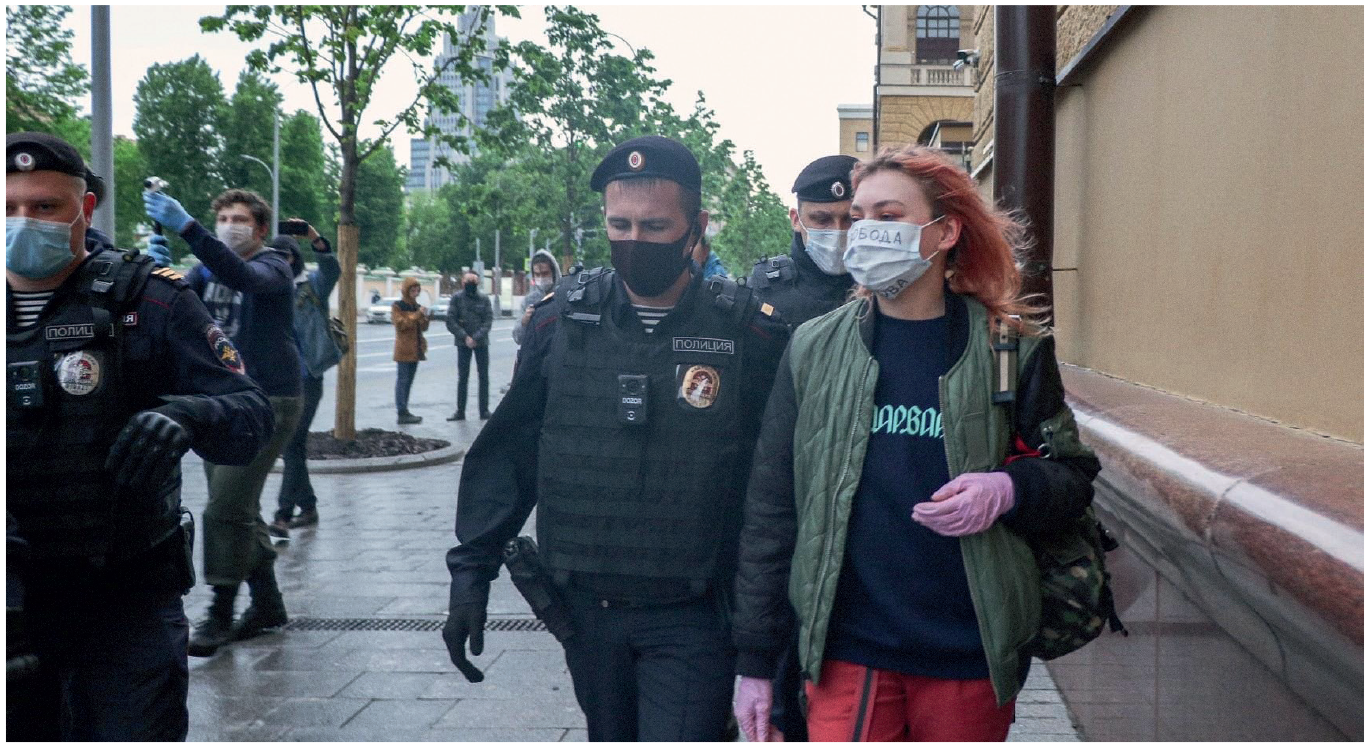
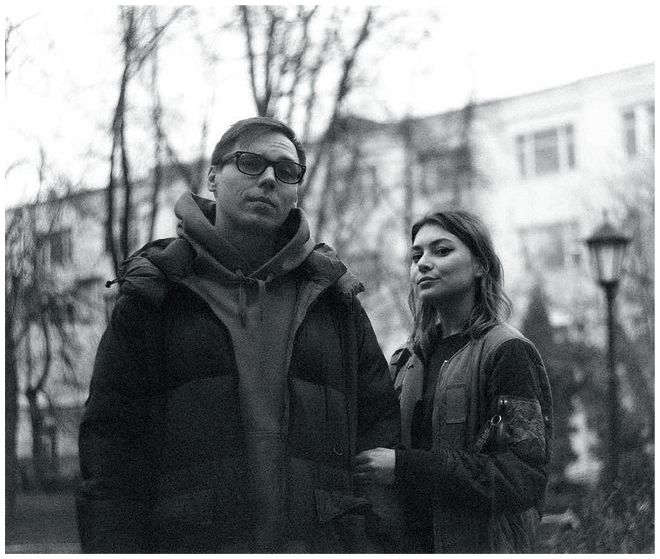
Alexandra Popova with police in 2020; Popova and her now husband, who is currently in jail
“The authorities would never betray their own people, especially those who are capable of murder,” she said, adding that she felt their tormentors “are capable of killing somebody”.
Popova has relentlessly drawn the public’s attention to the human rights violations that Kamardin suffered upon arrest and while in prison.
Despite “a brain concussion and multiple wounds”, she said he was deprived of medical treatment and Popova suspects the police exerted pressure on the doctors to refuse his admission to hospital.
Later, the poet was sent to a psychiatric facility for a month, held with a man charged with murder.
“It’s a common practice. Its purpose is to make the whole experience even more nerve-racking,” Popova said.
Since his arrest Kamardin has also not received proper psychiatric help. The prison doctor prescribed him only with what Popova described as a Soviet-era antidepressant with many serious side effects.
To make matters worse, books have not been allowed into the prison since February “because the [prison] governor decided so”. Popova said, “Artyom suffers a lot from the lack of literature.”
But she did win two battles against prison authorities by putting pressure on them. Today Kamardin can get time in the open air on a regular basis, which he was not allowed to do for many months. The couple also married in May, even though the prison authorities “repeatedly” lost their documents.
It was not the first time that Popova had dealt with a prison administration. She has been supporting political prisoners for five years, organising letter-writing events, co-ordinating the sending of parcels and observing court hearings.
She said the situation of political prisoners in Russia was depressing, explaining that “prolonged incarceration is killing many of them. Torture is becoming increasingly normalised. I have heard of multiple cases of electric-shock torture of political prisoners, especially anarchists.”
Did she ever feel that there would be a brighter future? She recalled that in 2018, when she took part in demonstrations supporting opposition leader Alexey Navalny, she felt “something was starting to shift”.
“We were fighting for a democratic society, where human life would matter and we would not be imprisoned for speaking up; where we would live in peace, without the police barging into our homes in the morning,” she said.
But in the following years the number of people imprisoned for joining protests grew rapidly, and “the free space shrank further and further”.
For Popova, there is not much hope left. She said: “In the future things could get even scarier.”
She added that she wished political prisoners could avoid serving their full sentences and be released early.
Despite constant surveillance by the authorities, Popova will stay in Moscow. “Artyom needs me. Other political prisoners need me, too. Who will take care of them if everyone leaves?”
And asked if she feared the consequences of speaking up, she responded: “I have already seen the worst that can happen.
“The only thing that terrifies me today is remaining silent.”