




Abstract

Under India’s far-right Bharatiya Janata Party, the definition of offence to Hindus has hugely expanded. The victims are numerous, says
In India, the film became controversial for an entirely different reason. During a scene of ritualistic love-making between the scientist J Robert Oppenheimer and his lover, Jean Tatlock, he tries to impress her saying something arcane, and she challenges him to read a passage from another book, in a script that’s foreign to her. She has picked the Bhagavad Gita, a long poem within the Sanskrit epic Mahabharata, where a reluctant Pandava prince Arjuna is encouraged by his charioteer, the Hindu god Krishna, to disregard his moral qualms and inhibitions, and plunge himself into the battle against evil, represented by Arjuna’s cousins, Kauravas. The verse Oppenheimer recites, while unclothed, as Tatlock has mounted him, is: I am Death, the destroyer of all worlds.
There is a fascinating debate to be had about whether the word in that verse is “death” or “time”, since in the original Sanskrit the word is, indeed, kaala or time. But the reason Hindu nationalists got apoplectic over the scene was not about the correct translation of that word; rather, they insisted, Hinduism was denigrated, since a holy phrase was uttered during a vulgar act. This was preposterous on several levels; Hindu philosophy does not consider sex to be dirty or vulgar - temples in Konarak and Khajuraho have erotic sculptures that would require parental guidance. Sanskrit literature abounds with voyeuristic passages and celebrations of love and sex. But Uday Mahurkar, the self-styled founder of the so-called Save Culture Save India Foundation (he also happens to have the distinctly Orwellian job title of information commissioner of the government of India), wrote a blistering letter criticising the filmmaker for “a scathing attack on Hinduism”.
He described the Gita as “a divine gift to human civilisation”, which has inspired countless people to live a life of self-control and perform selfless noble deeds. He asked how India’s Central Board of Film Certification approved the scene, which was “morally inappropriate, even disgusting”. Such puritanical disgust for sex is, arguably, a Victorian imposition on Indian civilisation, given the lavish descriptions of sex in ancient scriptures, but then Hindu nationalists are not known for having homegrown wisdom.
For me, the drama over Oppenheimer brought a sense of deja vu. In 1999, in Stanley Kubrick’s film Eyes Wide Shut, during an orgy scene Sanskrit hymns are played in the background. Then, too, Hindus had fulminated, shouting: “No sex please, we’re Hindus.”
From the mid-1990s, for nearly a decade, I wrote a few pieces for Index in which I noted the rise of Hindu nationalists, who had begun challenging representations of Hindu culture and society by Indian and Western artists and scholars, initially in a comical manner but, over time, more viciously.
In 2009, I published my first book, Offence: The Hindu Case, as part of the Seagull Books series Manifestos for the 21st Century, in association with Index. In the book I outlined the outrage Hindu nationalists had shown for high art (such as the canvases of the late MF Husain), serious literature (such as the works of historian Romila Thapar) and popular entertainment (such as the Kubrick film or the singer Madonna performing while sporting a bindi on her forehead). Hindu nationalists were objecting to all forms of representation of Hindu culture that they believed undermined or denigrated Hinduism, turning a lively, inclusive, polytheistic, vibrant faith which had room for many gods as well as for atheism into a humourless, straitlaced, strict order, which would impose the idea of a singular god (Rama), a single book (Ramayana) and a single place of worship (Ayodhya).
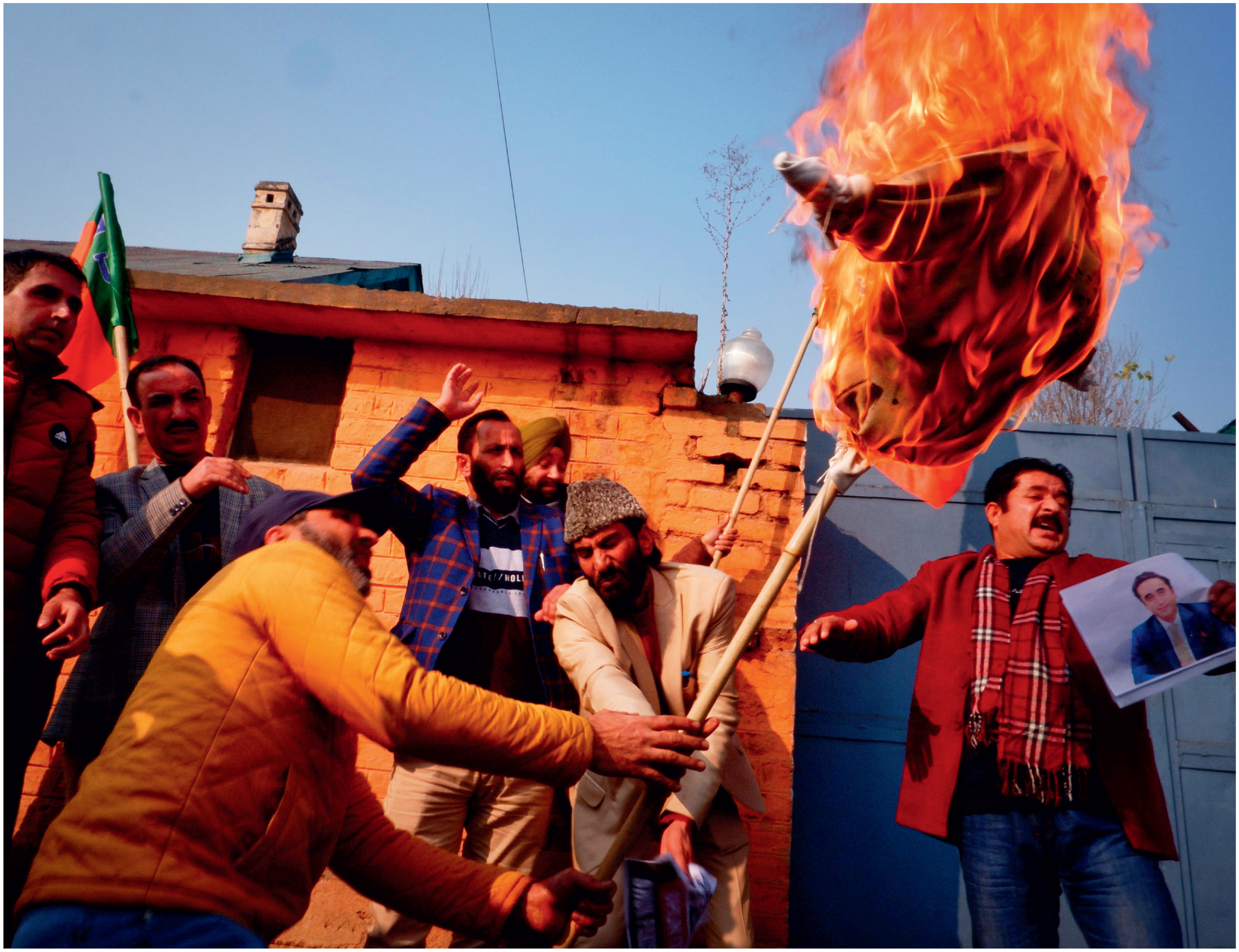
That was the rationale behind the razing of the 16th-century mosque Babri Masjid in Ayodhya in 1992. The nationalists burned effigies, if not books, but later they burned people in the worst carnage India had known since independence from Britain in 1947, the pogrom in Gujarat in 2002.
Claiming to be adherents of a tolerant faith, militant Hindus personified the worst traits of other faiths they claimed to abhor. They imitated their practices, including ostracising artists and calling for boycotts (as they have done to several Muslim movie stars in India in recent years); seeking bans on critical works (Bombay University removed Rohinton Mistry’s novel Such A Long Journey, and India’s ruling Bharatiya Janata Party’s youth wing successfully campaigned against Paula Richman’s book, Many Ramayanas, for carrying an essay offering alternative narratives of the Sanskrit epic that many Hindus revere, by vandalising a university campus); and murdering those who wrote critically of Hindu nationalism or Hindu superstition, including the rationalist Narendra Dabholkar in 2013, communist activist and writer Govind Pansare in 2015, Kannada scholar MM Kalburgi in 2015 and the Kannada journalist Gauri Lankesh in 2017.
Activists from Bharatiya Janata Yuva Morcha burn an effigy of Pakistani Foreign Minister Bilawal Bhutto Zardari following his remarks condemning treatment of Muslims under Modi, in Srinagar, Kashmir, December 2022
CREDIT: Pacific Press Media Production Corp./ Alamy
When Offence: The Hindu Case was published, a few liberal critics in India received it well, and a few Western academics engaged with it meaningfully, even when some of them were sceptical about my prognosis. My last paragraph read:
Whenever Hindu nationalists attack an art gallery, or tear down posters they consider obscene, or demand bans on books they don’t want others to read, or vandalize a research institute, or destroy the home of an editor, or threaten an academic, or run a campaign against a historian they disagree with, or force film studios to change scripts, alter lyrics, or extract apologies from artists, or hurl eggs at scholars, or destroy mosques, rape Muslim women or kill Muslim men and children, they take India into a deeper abyss; they push Hinduism into a darker age. They look and act like the Nazis and the Taliban. They plunge their country into an area of darkness, are untrue to the meaning of their faith and are disloyal to their nation’s constitution. They shame a great nation and belittle how Salman Rushdie saw India: “The dream we had all agreed to dream.”
One reviewer called my conclusions alarmist. Looking at the state of India now, I fear I might have underestimated what Hindu nationalists are capable of. Today, India is governed by its most out-and-out Hindu nationalist government, which has jailed more than 200 human rights defenders and activists, including scholars and writers. Most haven’t been charged (and some are getting bail only after unconscionably long periods of delay), with states in India burning with fury over sectarianism, mosques razed, Muslim homes bulldozed, Muslims suspected of carrying beef (or storing beef at home) lynched, Muslims not allowed to pray in public, Muslim women and girls prohibited from wearing the hijab in some states, interfaith marriages made more difficult, hundreds of churches being burned, the sale of meat banned arbitrarily.
During certain Hindu festivals, processions of trident and sword-wielding angry men wearing saffron scarves march through areas where Muslims live and loudly taunt Muslims, and Muslims find it hard to buy or rent property.
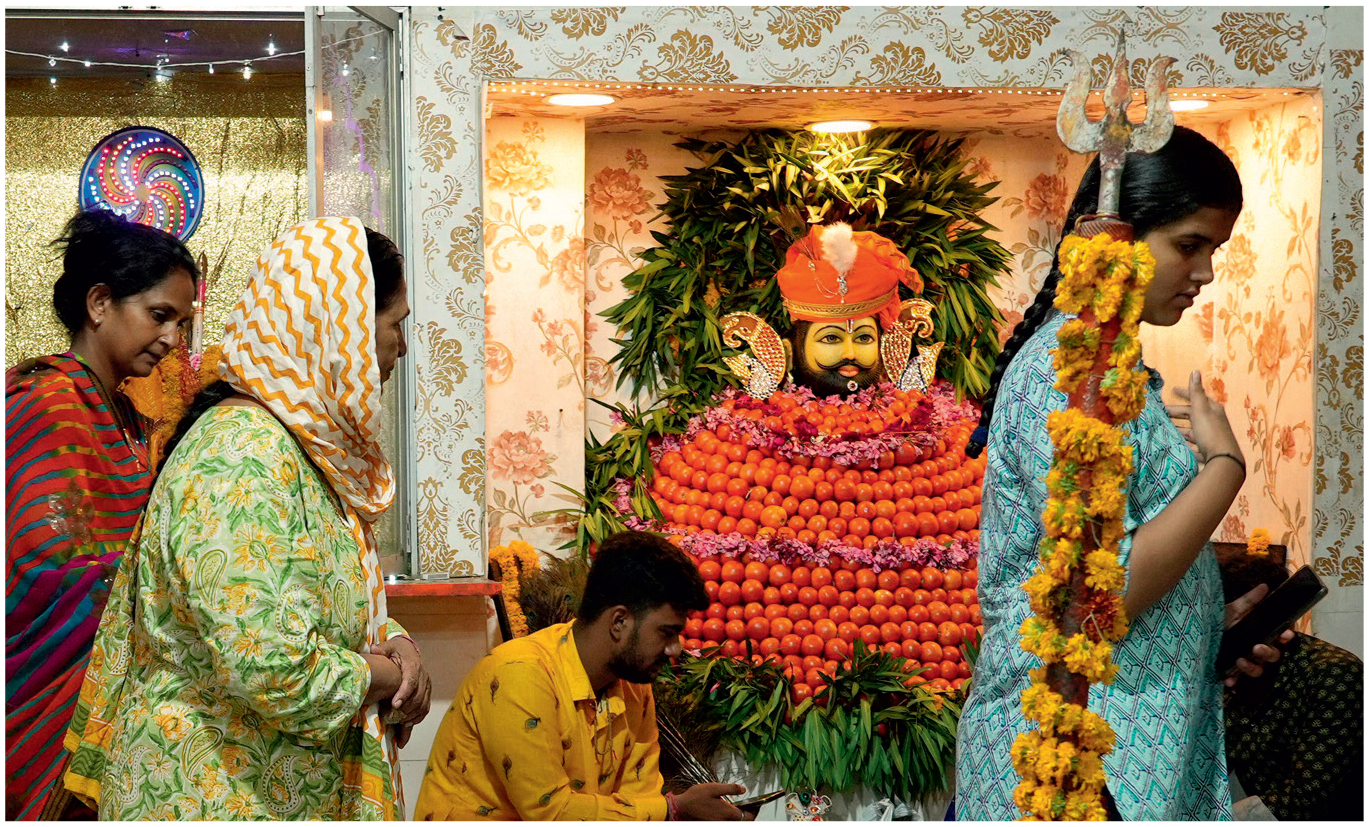
Devotees visit the idol of Hindu god Khatu Shyam Baba, in the form of Lord Krishna, decorated with red tomatoes at a temple in Beawar, India. Hinduism is being placed centre stage in the country under Modi
CREDIT: Sumit Saraswat / Alamy
India has violated the spirit of the UN Refugee Convention by declaring that from its immediate neighbourhood (Pakistan, Bangladesh and Afghanistan) it will let in only those asylum seekers as priority who are from minority faiths, essentially ruling out Muslims (see p.44 on the treatment of Rohingyas in Delhi). That means that Muslims in those countries who are LGBT+, women’s rights activists, trade union leaders, or Sufis, Shias, Ahmedis or other minorities within Islam would not qualify, even though those communities sometimes face greater threats than Sikhs, Buddhists or Jains. (As an aside, Hindus in those countries do face discrimination and their rights are often violated.)
But discriminating among refugees is not permitted under the Refugee Convention. True, India hasn’t signed the convention, but it had agreed to abide by its spirit in the past, in the years before Prime Minister Narendra Modi came to power, when India had taken in refugees from Tibet, Afghanistan, Sri Lanka, Myanmar and Bangladesh without checking their religion.
The US Commission on International Religious Freedom and the UK prime minister’s special envoy for freedom of religion and belief have raised concerns over the situation in India and over the treatment of its minorities. Soon after Modi left the USA after a triumphant visit to the White House, former US president Barack Obama expressed concern over how India was treating its minorities. Angry politicians from India’s ruling party harshly criticised Obama in turn.
Hinduism’s claim of being a positive, peaceful philosophy - thanks to the soft power of yoga, the outward charm of meditation, the fragrance of incense, the magnificent architecture of its temples, the evocative compassion for plants and animals in its literature, the beauty of the language of many of its scriptures and the popularity of some of its thinkers in the West, from Vivekananda in the 1890s to Maharishi Mahesh Yogi (who charmed The Beatles in the 1960s) - is getting diluted rapidly, as those claiming to speak in its name are imitating the worst traits of other religions over which they claim superiority.
When I completed Offence: The Hindu Case, I wanted to be optimistic, believing that this shall pass and, in what is now the world’s most populous country, that the majority faith will live up to its claims and respect the dignity of other faiths and those with no faith. If I were to write a sequel, it would be much darker in its tone, as vociferous adherents of the faith want to become Death, destroyer of the world.