




Abstract

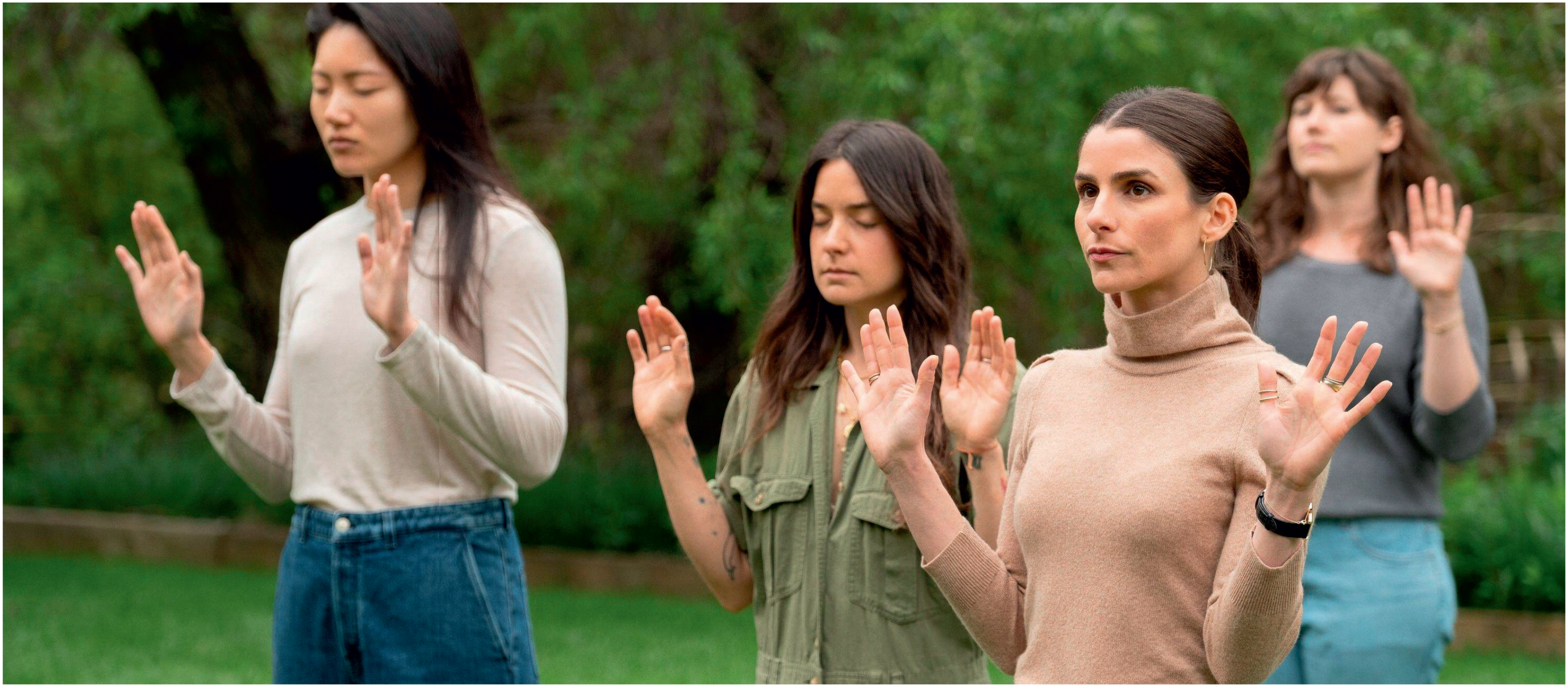
A scene from an episode of The Goop Lab, a documentary series about the lifestyle and wellness company Goop, founded by American actress Gwyneth Paltrow
CREDIT: Everett Collection Inc / Alamy
I’d been invited to give a lecture on a conference cruise called Summit at Sea. Most of the participants were drawn from the start-up, tech and wellness worlds. What they shared was a passion for combining the technological and the religious - “hacking” our brains and souls alike in the service of personal growth and human potential.
Panels on sexual-somatic healing and psychedelics for self-improvement alternated with more traditional talks on artificial intelligence and machine learning. Our cabin gift bags were replete with nootropics (or “smart drugs”), each claiming to better our cognitive, emotional or sexual health. Participants pitched one another (and sometimes me) ideas for start-ups that almost invariably involved paths towards what they saw as personal and spiritual self-actualisation. One woman intended to sell bath products associated with cleansing, purification and other elements of traditional African folk magic. Another planned a start-up connecting busy professionals with high-level spiritual practitioners in fields ranging from trauma healing to psychedelic coaching.
In an era when fewer Americans identify as traditionally religious — about a quarter of Americans and a third of millennials and members of generation Z identify as religiously unaffiliated — the religious landscape has shifted. Spirituality is increasingly not something we do in a church or synagogue but something we carefully customise, curate and remix in accordance with our own personal sense of self-being.
In the wake of this shift, a vast and diverse “spiritual marketplace” has arisen to help the spiritual consumer find the products, classes and bespoke gathering spaces that are right for them - from femme-coded wellness gurus such as Goop founder Gwyneth Paltrow to masculinity influencers including Andrew Tate, and from witch-influencers to stoicism bloggers.
Central to this new ethos is the idea that the most important thing we can do is live an “authentic” life - one where the practices and pursuits feel that they are in accordance with our values and desires. By attending a Soulcycle class, optimising our productivity patterns through “life-hacking” tips and consuming nootropics or psychedelics to expand our minds or consciousnesses, we are expected to spend our leisure time and money on highly individualised journeys of personal growth.
But we have absorbed, too, that idea’s troubling corollary that we have little or no obligation to those we do not choose - to our families, our communities or those vulnerable or marginalised people who, for whatever reason, have not managed to achieve the so-called “personal growth” we claim for ourselves.
The belief that we owe it to ourselves to “live our best lives”, to be our “best selves” and to purchase the supplements, fitness classes, bullet journals, scented candles and bath supplies, has become inextricably intertwined with the modern American dream. So, too, has the conviction that, by turning inwards and focusing on our own goals and our own desires rather than those of the collective society around us, we can somehow harness the universe’s “energy” to get what we want.
More than half of Americans now believe in manifesting: the quasi-magical notion that we can bring ourselves wealth, health or romantic success by believing hard enough in ourselves.
The gospel of “life-hacking” is largely an individualistic one - one that celebrates personal achievement and our focus on private feeling or experience at the expense of other elements of our humanity. There is little room in such an ideology to focus on the parts of human existence that we do not or cannot choose: the inevitability of our deaths, the proper way to respond to suffering or illness or loss, and the social relationships - familial and communal alike - that do not conform to our affinities or boundaries.
If there is a sense of blasphemy in this new religion, it is in the notion that sometimes our feelings, our perceptions and our desires are, in fact, invalid. The idea that something might feel authentic or meaningful to us but be morally or ethically wrong, or that our own innermost sense of self might diverge from obligations we have to other people or to the world at large, is virtually anathema.
During my time at the conference, I repeatedly found that self-denial - unless we were talking about intermittent fasting or other diet hacks - was looked on with suspicion. Almost unanimously, the wellness apps and start-up practices were designed to help users pursue the hyper-individualistic goals and desires they chose, rather than encouraging them to question what those goals and desires should be.
The liberating possibility of technology - which has allowed us to transcend so many of our physical and geographic limitations - has made us uncomfortable with the idea of limits at all. We are whoever we want to be.
But the human condition has always been one of balancing human freedom with human vulnerability - our ability to dream and desire with our status as social, animal beings who live in, and with, shared communities. It is a truth today’s new religions refuse to acknowledge.