




Abstract

One of the most banned authors in the USA,
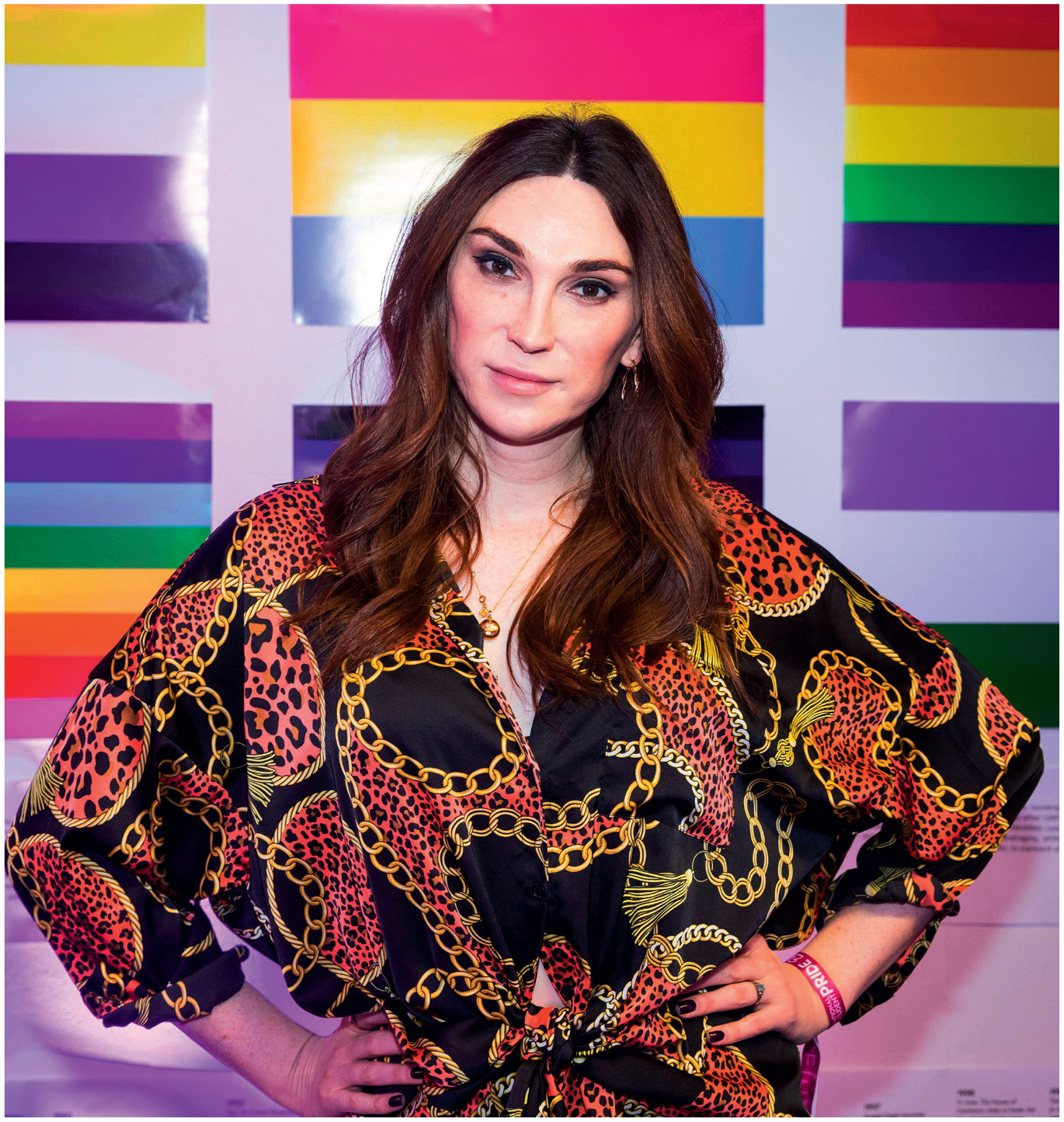
YA author and trans activist Juno Dawson
CREDIT: Zefrog/Alamy
“As it was, this poor security guard had the most blissed-out week of his life, given that it was just lovely children coming to hear me read a picture book,” Dawson told Index. “But how sad that my publisher had to even think about hiring plainclothes security officers. I felt very Whitney Houston, living my Bodyguard fantasy.”
She mocks her own gallows humour — ultimately, a children’s author needed a bodyguard. Being a trans writer, she said, there is an ever-present threat. When she had the honour of opening a bookshop in Brighton the event also needed a bouncer.
Dawson not only holds the unenviable position of tied 10th place in the American Library Association’s (ALA) top 10 most challenged books of 2022 with This Book is Gay, she’s also a trans woman, an intersection which puts her at increased risk. The tour went to bookshops and conferences only, not to those most dangerous of places — schools and libraries. The threat is all too real. In March 2023, the Hilton school district in New York State was evacuated after receiving bomb threats over particular books, specifically naming Dawson’s teen sex education book, This Book is Gay.
When the award-winning novelist, screenwriter and journalist faced her first book challenge, a censorship demand made to libraries and which can lead to a local ban, her friends in publishing told her she’d made it, that she’d arrived. But when Index asked her how it actually feels to be a banned author, she said: “The one-word answer is ‘bad.’“
“You want your work to be out there and you want it to reach an audience. While there is that ego boost seeing your name in the papers and seeing your book cause controversy, at the same time, all I was really left with is [sadness] — how can it possibly be that in 2023 we’re still having quite serious conversations about the existence of LGBTQ youth?”
Dawson went to school in the UK under the full force of Section 28, legislation brought in by the then Prime Minister Margaret Thatcher’s government in 1988 which banned “promoting homosexuality” in schools and included teaching about “the acceptability of homosexuality as a pretended family relationship”. Over three decades later and 20 years after the law was repealed, Dawson is astounded that “people are still trying to ban books about queer youth”.
This Book is Gay deals with sex, same-sex sex and faith, which Dawson describes as a “triple whammy” and makes it a prime target for book challenges. She is clear that it’s not just one faith group putting on pressure. The nonfiction book was first published in the USA in 2015, but has only recently made it onto the banned list.
“One of the key issues is people aren’t actually reading the book. And so what happens is actually they are protesting books which have appeared on other lists,” she said. “Vexatious people and groups who are trying to ban books are not going to books and reading books. They are just scouring the internet for books that they should be irate about.”
Now that This Book is Gay has appeared on the ALA list, Dawson expects it will continue appearing for years to come, with the current list acting like “a shopping list for the far right to get worked up about”.
Dawson’s book sits alongside 1,647 others recorded by PEN America as being targeted in the 2021-22 school year, with the highest number of bans coming from Texas and Florida. A huge proportion of the challenged books deal with LGBTQ+ issues, with Maia Kobabe’s Gender Queer and George M. Johnson’s All Boys Aren’t Blue topping the ALA list. Those discussing issues of race and racism are also targeted for bans.
The 2022 challenges are nearly double that of 2021 according to the ALA, and Dawson puts this down to the organisation of conservative groups. She highlights a new tactic which has sprung from the QAnon conspiracy theory movement: accusing those who support the teaching of LGBTQ+ issues in schools of being “groomers”.
“I’d like to think in 2023 we’ve moved past the notion that LGBTQ people are somehow predatory,” Dawson said.
She wants people to think about the consequences of banning books, particularly those people who attempt to score political points by doing so.
“Bigots never think they’re being bigots,” Dawson said. “They always say this is about concern: ‘We’re concerned about the children.’ And what I would say is that concern isn’t going to stop an LGBTQ+ child from being LGBTQ+. It’s not a choice. It’s not something anybody has any say over. But by removing these books, what you’re doing is you’re taking away support.”
When she wrote This Book is Gay, Dawson was thinking about her own experience in the 1990s, and how a lack of information left her unprepared, and even meant she got into dangerous situations.
“So when you come at me saying, ‘Won’t somebody think of the children?’ I say ‘Yeah, let’s!’ Let’s think about those young queer people who, whether you like it or not, regardless of your faith, those people are going to be gay or bi or trans or non-binary, and you are taking help away from them.”
In the UK, Dawson is a School Role Model for LGBTQ+ rights organisation Stonewall, and she has seen differences in how books like hers are treated in the two countries.
“We know you can go on 4chan or 8chan or Reddit and see a group discussing which book to challenge and how to go about challenging them. And I think that was particularly after [President] Trump lost the election, and the Maga crowd refocused their efforts on a much more local grassroots level,” she said. “I’m not sensing there is an appetite for that in the UK — yet. And that’s a really big yet, because actually, far right groups in the UK do look to what’s happening in America for inspiration.”
She describes the huge influence of far-right groups like Libs of TikTok, which have not taken hold in the UK. But with an election year coming up in the UK and “the culture war in full swing” nothing is certain. While the UK might currently be spared from official book challenges, Dawson highlights that there is no equivalent to the ALA monitoring in the UK.
“It could be that my book is being removed from libraries left, right and centre actually, but we just don’t know about it,” she said. Research by the Chartered Institute of Library and Information Professionals in April 2023 found that a third of librarians in the UK have been asked by members of the public to remove books, and that the phenomenon is increasing.
“I had an invitation to visit a school rescinded and they wouldn’t really provide an explanation, but it was all very mysterious. That was at a Catholic school,” Dawson said.
There was a similar story for children’s author Simon James Green in 2022, whose World Book Day visit to a Catholic school was cancelled, resulting in some of the teachers protesting. His book included gay characters.
When Dawson faces a book challenge in the USA, she is often the last to find out. Sometimes librarians ask for help directly when groups try to get her books removed from their schools, and at other times she hears from organisations like PEN America, the ALA and the National Coalition Against Censorship. On other occasions, Dawson finds out about book challenges when she embarks on a sporadic google of herself.
A 2019 graphic memoir written and illustrated by Kobabe. It recounts Kobabe’s journey from adolescence to adulthood and the author’s exploration of gender identity and sexuality, before identifying as non-binary.
A YA memoir that follows journalist and LGBTQ+ activist George M Johnson, it explores their childhood, adolescence and university years, growing up under the duality of being Black and queer.
First published in 1970, Morrison’s debut novel is an examination of the obsession with beauty and conformity, and asks questions about race, class and gender. The calls to ban the novel from schools and libraries started from the get-go.
Curato’s debut graphic novel draws on his own experiences about the struggle of dealing with sexuality, race and gender as a young mixed-race boy while going to summer camp.
A coming-of-age novel that touches on themes of grief, hope and youth-adult relationships. With complaints about language, sexual content and LGBTQ+ themes, it was 2015’s most banned book.
A story centred around the character Charlie, an introverted and observant child, through his freshman year of high school in a Pittsburgh suburb. The book has frequently been on the banned list since publication in 1999 due to its sexual content, and alcohol and drugs references.
A semi-autobiographical novel that tells the story of Mike Munoz, who is trying to find his way economically, socially and sexually. Like others on the list, it covers sexual activities and LGBTQ+ themes. Evison has stated his novel wasn’t meant for school libraries, and a spate of misinformation about paedophile content was spread regarding the book.
A novel that chronicles contemporary adolescence through the eyes of an Indigenous boy. It has been banned in some places in the past for references to masturbation and use of profanities.
A historical YA novel, Out of Darkness chronicles a love affair between a Mexican-American girl and an African-American boy in 1930s New London, Texas. It has been banned in numerous school districts across the country on the basis of having sexually explicit passages and depicting abuse.
A Court of Mist and Fury was the subject of court action when a Virginia legislator tried to prevent the book chain Barnes and Noble from stocking it. The book has been described as having graphic sexual content.
Based loosely on the real-life addictions of the author’s daughter to crystal meth, Crank has frequently been banned and challenged because of drugs, offensive language and sexually explicit content.
Described as a “weird little anti-romance about a teenage boy whose mom forces him to befriend a girl with cancer”, the book has frequently been challenged due to accusations of profanity and sexual depiction.
A non-fiction book described by Dawson as a “guidebook for young people discovering their sexual identity and how to navigate those uncomfortable waters,” This Book is Gay is frequently targeted by right-wing groups since publication.
“I feel much more strongly for the people who are on the front line, and that is usually librarians and educators,” she said. With a history as a primary school teacher, she understands what it’s like to stand at the school gate waving the class goodbye, only to see an incoming parent with a grievance. “It doesn’t feel entirely safe.”
Those people on the frontline often make it their mission to fight back.
“Almost as much as the books, it’s about them being visible role models for the young people in their communities. Because let’s be quite clear, when people challenge a book about race, or a book about being LGBTQ, really what they’re trying to ban is being queer, or they’re trying to restrict the lives of young Black people,” she said. “Every time somebody steps into this sort of battle as an ally, it’s to show those young people that there are still adults in their life who have got their back.”
That’s exactly why authors like Dawson are so vocal, why they speak up on social media and in interviews. She works with PEN America and has cheered on as some of her US contemporaries sue a Florida school district over book bans. She believes the fight can happen on a number of fronts, and that even from her base in Brighton, there’s an active role she can take: “I think there is a power in me remembering what my job is, which is to keep writing these books.”