




Abstract

"I thought, ‘OK, I have this one skill: sometimes I can organise things.’ I had this feeling that, brought together, these voices would sound much louder."
So it was that ROAR (Russian Oppositional Arts Review) was born. Launched in April 2022, its mission was ambitious: "To introduce its readers to the artefacts of the contemporary Russian-language culture - from poetry to music scores, from articles to fiction, from web design objects to art reproductions, graffiti and short videos - opposing the loyalist and servile official culture, which in extremes merges with the blatant propaganda serving the current criminal political regime in Russia."
Since then, ROAR has published 10 editions and stands as a testament to the vibrancy of Russian oppositional culture, precisely as its founding document promised. One video installation by the Bezliky Project - A Dialogue With a Birch Tree - included in the latest collection shows a winter landscape of birches, the Russian national symbol. These are intercut with shots of the words Mir (Peace), Svoboda (Freedom), Zakon (Law), Pravo (Rights) and Mozhno (Possibility) scribbled out with a marker. The blacked-out words are then stuck on the bodies of two anonymous female figures dressed in white bodysuits (bezliky is Russian for "faceless"). As they walk across a bridge to stand outside the Power Station 2 Arts Hub in Moscow, each figure throws away a birch log. The symbolism is heavy, but this is unquestionably a bold act of opposition.
Goralik has long been persona non grata in Russia. She left her home city of Dnipropetrovsk (now Dnipro in Ukraine) towards the end of the Soviet era when she was still a teenager. She and her parents settled in Israel, but Goralik split her life between Moscow and Tel Aviv from 2000 until just before Russia invaded Crimea in 2014.
By that time the writer had become the target of a campaign on Russian TV and newspapers, where she was labelled unpatriotic. And yet, despite her impeccable pedigree as a figure of the anti-Putin resistance, a dissident artist and founder of perhaps the most important post-invasion arts review, Goralnik has still found herself the subject of the boycott against Russian culture.
Earlier this year, the organisers of the Prima Vista literature festival in Tartu, Estonia, were forced to withdraw an invitation to Goralnik after objections from Ukrainian writers. These included Ukrainian poet Olena Huseinov, the writer-in-residence at Tartu in its capacity as Unesco City of Literature. In a tortuous statement, the festival said: "The Prima Vista organising team has had no reason to doubt Linor Goralik’s opposition to Putin and support for Ukraine, but given the tensions and reactions that have arisen, we currently see no other solution than to cancel her performances. We still consider it important to offer freedom of speech and opportunities for discussion, but in order to alleviate tensions, we must make difficult choices. Above all, we must show strong support for Ukraine in this war."
Goralik has chosen to stay silent about this cancellation, and provided no comment to Index about it. On the principle of boycotting Russian culture, she was more forthcoming. She said it was important to understand the context of pain and grief during wartime.
"I am not a sociologist or an anthropologist, but as a private person I always try to start with the human level. I always try to begin not just with what people say or write or demand or do. I try to put myself in their shoes and ask myself what they feel," she said.
The Hamas attacks of 7 October have given her a particular perspective.
"I can’t imagine what Ukrainian people may feel concerning everything Russian," she said. "But I talk to so many Israelis in these horrible days and we talk a lot about what we feel concerning people that many of us perceive as our enemies.
"I think that people who demand to boycott the culture of their enemies feel tremendous pain. It starts with pain. When somebody breaks you, hurts you, kills your children, does unbelievable things to your country, you don’t want to hear their language. Ever."
She added: "This might be the first thing that we have to realise. It hurts. It’s not about logic. It’s not about culture. First of all, it fucking hurts. This is not my attempt to say that we should ignore the logical discourses that stand behind the demands… not in any way. But I’m trying to say that on top of what they say, there are things they probably feel."
A Ukrainian protests Russian band Little Big, despite the band’s opposition to Putin
CREDIT: Artur Widak/NurPhoto/Getty
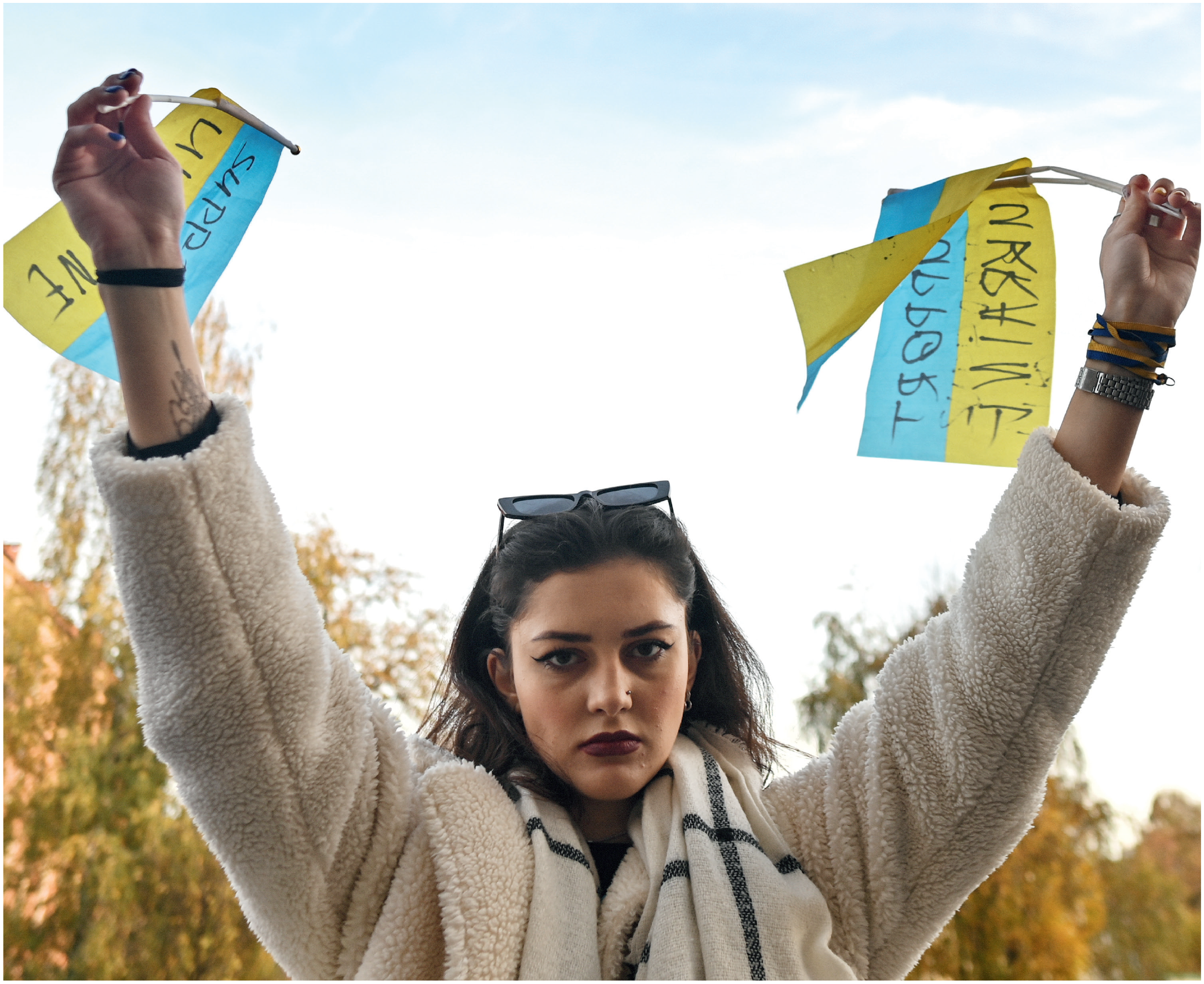
However, she said that it was important to distinguish between a boycott of compromised Russian institutions and the cancelling of individual Russians. "When they demand to cut connections with Russian institutions, they might be right because there are not many independent institutions in Russia right now. And you should look very closely at every institution in Russia to understand what specific people stand behind the initiatives and what are the roots of that. But when they say stop contacts with people, specific people, because they speak Russian, it’s very hard for me to hear because I’m Jewish. I don’t like this talk. We Jews have a very long memory."
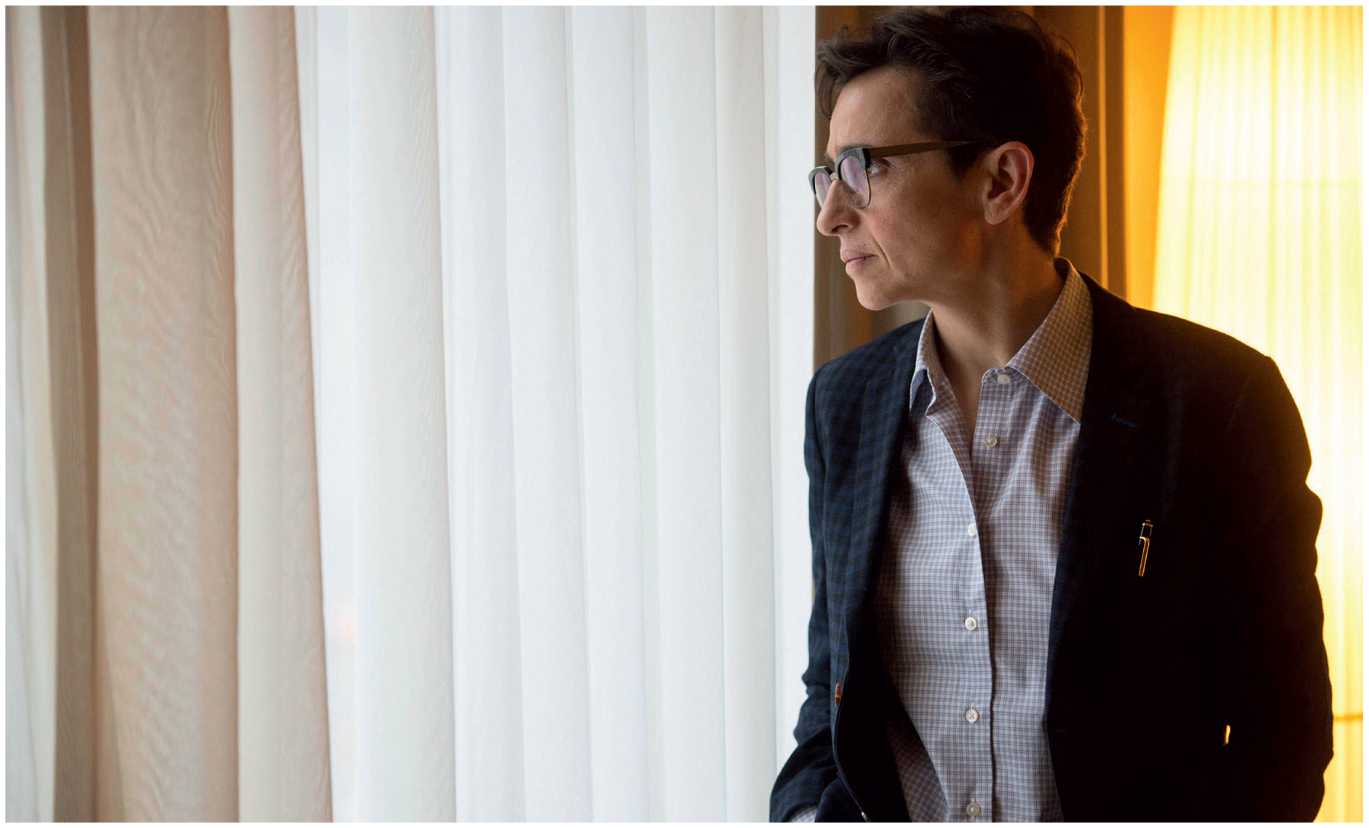
Goralik is not the only Putin opponent to face cancellation simply for being Russian. New Yorker journalist Masha Gessen has written widely about Putin’s authoritarian regime. Even so, earlier this year, celebrated novelist and Index award winner Andrey Kurkov had to face criticism from fellow Ukrainian writers when he agreed to appear on a platform at the Toronto International Festival of Authors with Gessen.
This was not Kurkov’s first brush with controversy. Last year, he shared a stage with Mikhail Shishkin, a bestselling Russian writer who is also a renowned critic of Putin. Kurkov told Index that he received hundreds of attacks. He was called a collaborator, a traitor and even a Russian agent.
Meanwhile, Russian-speaking Ukrainian filmmaker Sergei Loznitsa has found himself isolated for opposing the cancellation of Russian filmmakers. In March 2022, he was expelled from the Ukrainian Film Academy for refusing to support a boycott.
Ukrainian activists at the Cancel Russia movement argue that "Russian culture is expansionary and imperialistic in nature". Supporters can print off posters from the website cancelrussia.info with the slogan "There is no Russian Without Russian Tanks". A Cancel Russia statement reads: "For generations it has nurtured superiority over other nations which were first subjugated by the Russian Empire and later by the Soviet state. The Russian Federation has chosen to continue this unfortunate practice. Nearly all Russian culture continues the tradition of Russian imperialism - mainly due to the fact that Russia’s expansionist policies have never been condemned and publicly denounced. This is one of the key narratives supporting Russia’s invasion of Ukraine - an action supported by the majority of the country’s population."
Russian-US journalist Masha Gessen, a long-time critic of Putin
CREDIT: Hossein Salmanzadeh/TT News Agency/Alamy
Writing in Index last summer, Ukrainian Institute board member Marina Pesenti made the argument for cancellation: "Russia has used culture for the purposes of aggressive political propaganda internationally. Culture is a broad reflection of the society it represents, and currently Russian society stands largely united behind an ideology promoting violence and blatant untruths."
Belarusian writer Maria Sorensen responded: "While this reaction is humanly understandable, and can even be seen by some as a moral decision, we need to ask ourselves who ultimately benefits from silencing, cancelling, de-platforming and similar methods? It is never a viewer, a reader or an ordinary person. The power of art is in our shared humanity and not in division."
The reality is that cancellation is rife in Russia, where those perceived to be disloyal to the Putin regime are named and shamed. According to the Russian news site Noviy Prospekt the chair of the State Duma Culture Committee, Yelena Yampolskaya, has suggested removing public funding from "traitors" in the creative industries. Her colleague in the Duma, Yekaterina Stenyakina, said that "people should know who the traitors are", stressing "this is not censorship, it’s simply a logical reaction to behaviour that I find revolting".
But some cultural experts urge caution in rushing to the conclusion that Russian culture is being cancelled, however much some may wish for its demise and others fear for it. Art historian Denis Stolyarov, a curator at Pushkin House in London, pointed to the sold-out West End run of Anton Chekhov’s Vanya at the Duke of York’s Theatre this autumn and the slew of translations of the Russian novelist Vladimir Sorokin as evidence of a continued demand for Russian literature.
He recognised that the war in Ukraine meant major institutions were treading carefully and that Russia was toxic in certain contexts, but did that really constitute cancellation?
"It is sometimes a matter of decency rather than censorship. Russian decolonial activists are exploring the issue in a more nuanced, transparent way," he said.
Sometimes, cancellation and self-censorship take different, subtler forms. The war in Ukraine has forced many Russian speakers to reassess their identities. Some now choose to describe themselves in terms of their mixed parentage or their national origins, as Baltic Russians or Uzbeks or Ukrainians.
For Goralik, this new reality has expressed itself in a very particular way: through her language. She has two ongoing projects in Hebrew and one in English, but her creativity in Russian appears to have abandoned her.
"I haven’t written a single poem in Russian since the Russian-Ukrainian War started. This machine doesn’t work and I don’t know why, but it just doesn’t."
The Russian poetry of Linor Goralik, just the latest victim of Putin’s self-defeating war.