




Abstract

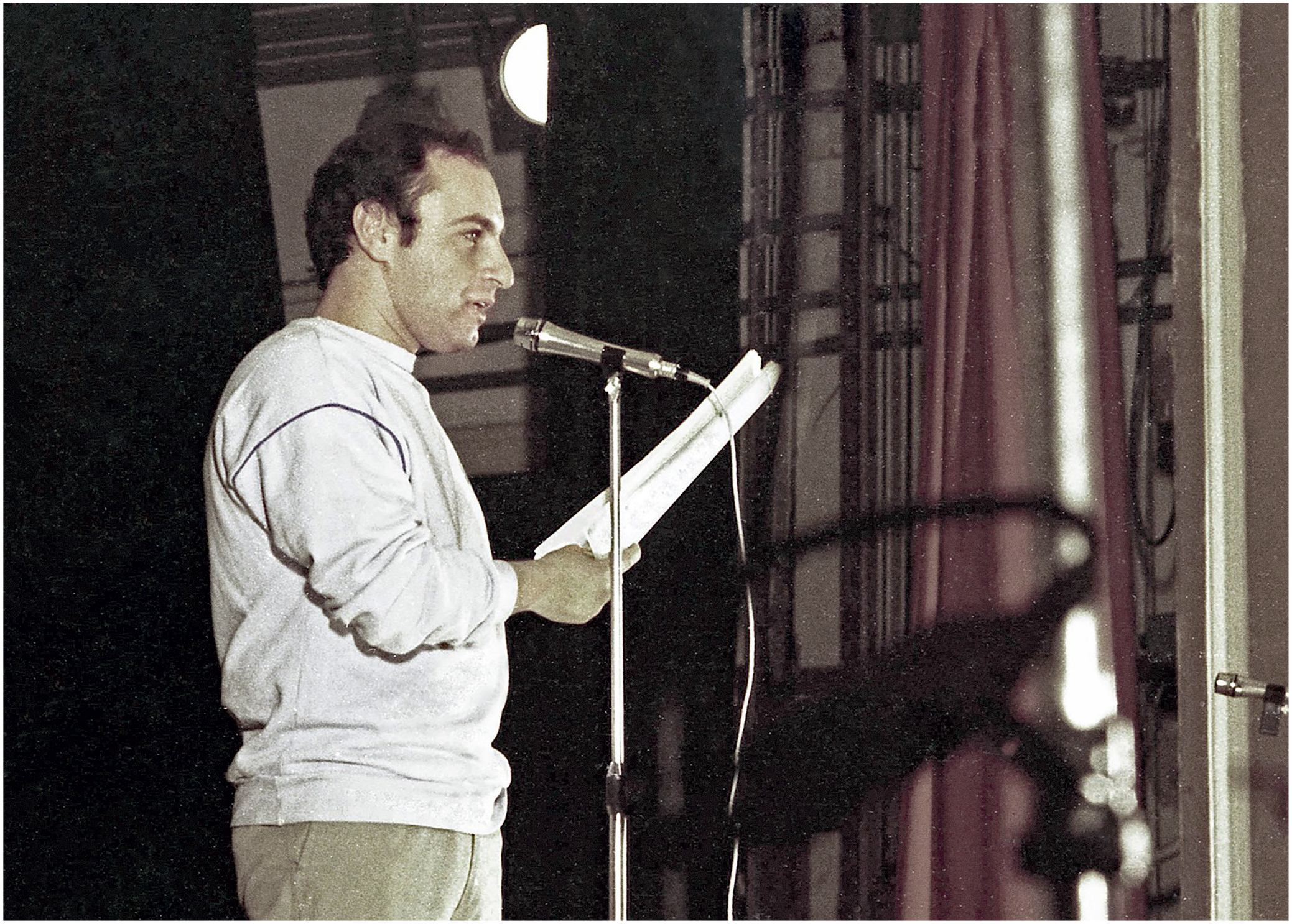
Katsov performing at the opening of the Poetry Club, Moscow, 12 October 1986
CREDIT: (all images) Gennady Katsov family archive
Katsov has spent the rest of his life testing this anti-cynical thesis. In 1989 he moved to the USA, where he has been working as a journalist for the past 34 years. He is one of the last survivors of the generation Index wrote about in 1987. His poems and essays have been published in leading literary magazines in the USA, Europe and Russia. Now living in New York, he is the anchor of various programmes on Russian-US television RTN/WMNB and is co-owner and editor-in-chief of the Russian-US news portal RUNYweb.com.
An outspoken critic of the Putin regime, Katsov has helped organise the anti-war opposition among Russian-Americans since the outbreak of war.
A man who chooses his words carefully, he asked Index editor-at-large Martin Bright to provide a series of questions, which he answered in the form of short essays.
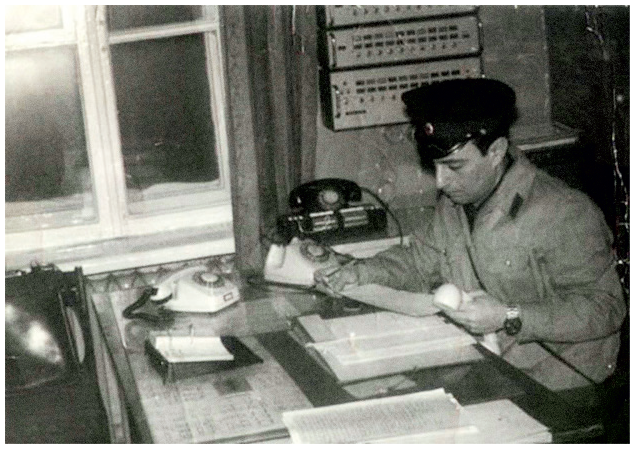
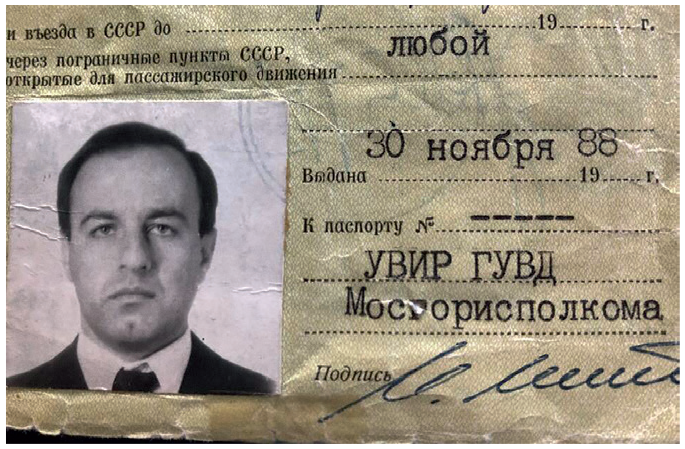
In the USSR, I knew dissidents, interacted with many of them, but I did not belong to the dissident movement. I couldn’t stand the meager socialist society from an early age. I belonged to the "generation of street cleaners and watchmen", praised by the rock bands and non-published writers of the 1980-1990s. I worked as a guard at Moscow’s CHP-16 (Combined Heat and Power station). The schedule was as follows: you work in shifts for a day, 24 hours straight, and then you rest for three days. This gave me free time and opportunity to write, and the authorities couldn’t charge me with the crime of idleness, for which one could be imprisoned. I despised Soviet authority and, as soon as the opportunity arose, emigrated to the USA in January 1989.
In aesthetics, of course, I was a dissident. In the sense that "dissidents" are people who assert their views, even if they differ from the generally accepted ones. In Moscow, I belonged to the circle of the samizdat literary magazine Epsilon-salon. My poems, stories and plays were published there. The magazine was edited by poets Nikolai Baitov and Alexander Barash. They mainly published writers from the circle of "Moscow Conceptualists" (Prigov, Rubinstein, Sorokin, Kibirov, Aizenberg, Sukhotin) and those who were part of the underground.
(left) Katsov as a watchman in Moscow; (right) the visa Katsov used to leave the USSR in 1989
Unlike unofficial literature, which still tried to get into official publications, the underground writers didn’t approach Soviet officialdom at all. They didn’t contact publishing houses and journal editorial boards about possible publications. They didn’t even think it was necessary to be published in them. At the same time, no one invited these writers there, their aesthetics were so alien.
Interestingly, we have come full circle, and today I have no desire to publish my poetry in Russian periodicals or to release my books through Russian publishers (as of 24 February 2022, four of my 11 books were published in Russia). For obvious reasons I am unlikely to be published today in Russian magazines, where ideological propagandistic discourse prevails over the aesthetic value of any text.
Almost 40 years later, once again I find myself a dissident for the Russian authorities. For instance, my latest poetry book Open Fracture was released at the end of 2022 by the popular, excellent Ukrainian publisher Drukarskyi dvir Olega Fedorova. However, it could not have been published in present-day Russia. In the book of over 400 pages, a quarter - 115 pages - are written after Russia’s invasion of Ukraine. These poems are dedicated to the theme of war, which still cannot be called a war in Russia. Mentioning "war" can land you in jail.
So it turns out, I’m a seasoned dissident - once again, I have "aesthetic disagreements" with Russian authority, which I didn’t expect from myself just a few years ago.
Incidentally, the Moscow City Court on 18 August shut down the Sakharov Centre (listed as a "foreign agent"). Before this, the centre was evicted from the building which had been rented out to them for free by the city before the centre was labeled a "foreign agent". It was established in 1996. In my opinion, it was the last place in Russia where the spirit of dissidence still resided.
However, there are still those in the country who internally disagree with what is happening in Russia. It’s important for them to know that they are not alone, despite their isolation: people outside Russia understand them, and there is a vast number of like-minded individuals here.
I realised this from my own experience. A few days after the outbreak of the war in Ukraine, in the first week of March last year, my wife Rika and I launched a literary portal NO WAR (nowarpoetry.com). It clearly stated that we publish war-themed poetry and support Ukraine. At the time of writing, the portal has featured over 120 poets from 12 countries around the world. It turns out that this initiative is necessary for writers living in Russia. They get published; something they couldn’t hope for in their homeland. This initiative, as it turns out, is also necessary for Ukrainian poets. They feel that they have solidarity in the US and many countries around the world. Their anti-war texts are needed in the West - for those who support Ukraine, and for those who are still in doubt of her victory.
Around the same time, a New York poet, Dmitry Garanin, founded the group When Cannons Speak, Muses Are Silent: Poets Supporting Ukraine (sites.google.com/view/musesandcannons), where anti-war poems from poets of various countries are published.
In Israel, since 24 April 2022, the online publication ROAR, Resistance and Opposition Arts Review, has been released in a full Russian version and in the format of an English-language digest (roar-review.com).
Several poetic anthologies dedicated to the tragedy in Ukraine are being published simultaneously in Ukraine and Russia. I’d particularly like to highlight the Ukrainian Artelen No. 12 in 2022 and 14 in 2023 (Kyiv, publishing house Drukarskyi dvir Olega Fedorova), and Poetry of the Last Time (Saint Petersburg, Russia, Ivan Limbakh Publishing, 2022). As mentioned in the annotation of the publication: "Poetry of the Last Time is a documentary testament to the current literary process at the breaking point of Russian culture… Poems written from February to July 2022 serve as a kind of chronicle of comprehending collective trauma through artistic means." The anthology features more than a hundred authors, 575 pages, and this seems to be the first and last publication of its kind in Russian wartime.
A significant event is the release in the USA this June of the poetry collection The Age of Vengeance: Wartime Verses from Kyiv by Aleksandr Kabanov in English. Kabanov lives in Kyiv, writes in Russian, and every poetic text he posts on Facebook provokes a flurry of comments. He has a broad readership, over 15 books in Russian and several European languages, but this is the first book intended for the English-speaking readers. It’s a pivotal moment when literary texts, which bear witness to the rupture of modern history, reach a reader far removed from the Ukrainian reality. They have the capacity to touch the reader, inviting them to reflect on the responsibility for what is happening, to ponder the paths nations are taking, and the fates of each one of us.
I was born in Crimea, in the city of Yevpatoria, and the annexation of Crimea in 2014 became an annexation of part of my soul. I graduated from the Shipbuilding Institute in Mykolaiv and the Russian missiles "scuds" and "grads" launched around the city are aimed at me. They wound and kill me. In Kherson, I finished high school, and the Russian APCs that moved down Ushakov Avenue towards the railway station in March 2022 rumbled past my family’s apartment. That’s where I lived during my childhood and youth with my parents and younger sister.
I used to vacation in the occupied areas of Henichesk and Arabat Spit (Sea of Azov), Skadovsk (Black Sea) with my parents in the summer, and my close friends and I would go to Lazurnoe (Black Sea) during our college years for a week or two, taking tents with us. Since the end of February 2022, troops under the Russian flag have been marauding, shooting and humiliating there.
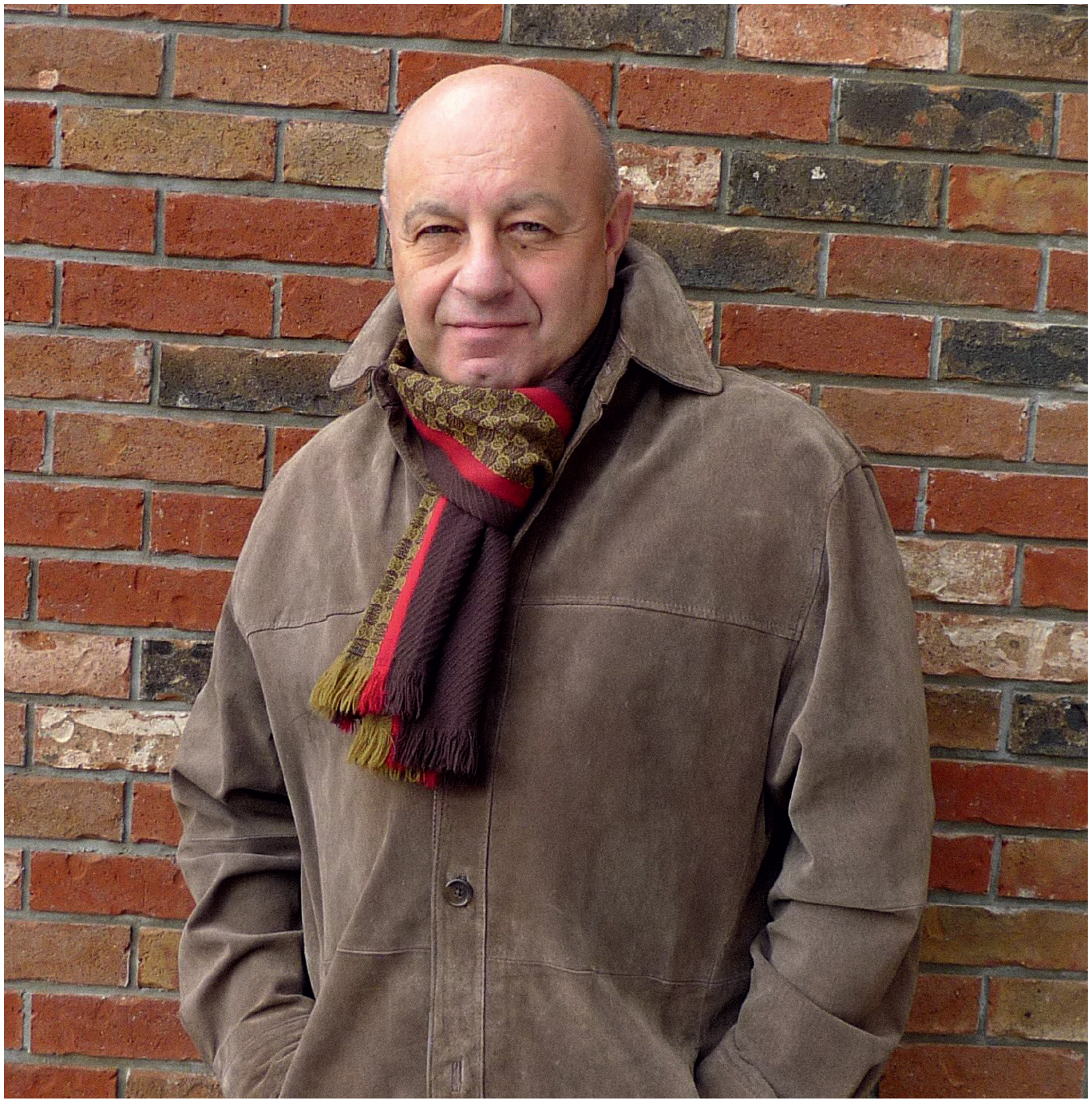
Russian dissident and writer Gennady Katsov pictured today in New York
CREDIT: Gennady Katsov
In other words, they are bringing the "Russian World" to Ukraine.
These are the difficulties I face today, in my homeland, and I’m not the only one. Before leaving the USSR in 1989, I lived in Moscow, fell in love, wrote poetry, was one of the creators of the legendary Moscow Poetry Club (1986), and befriended wonderful, kind, wise people. The fact that today the Russian language has become the language of the enemy and outcast, and Moscow has become the capital of an aggressor state - this is both my personal wound and pain.
I cannot help but write. All these parts of my biography, like a shattered puzzle, now live separately within me and bleed. They pour out into the lines. I can’t do otherwise. There’s little I can do to help Ukraine from here - the East Coast of the USA - the Eastern home front. This is another reason why my most recent book, published in Kyiv, is titled Open Fracture.
Among the poets who have left Russia, beginning with those who left recently, are Tatyana Voltskaya, Dmitry Bykov, Vera Pavlova, Dmitry Kolomensky, Vera Polozkova, Daria Serenko and many others. As for the Ukrainian poets, I don’t really know those who write in Ukrainian, but I know those who write in Russian, trying to comprehend the monstrous experience of living in a country that defends itself against an enemy that is many times stronger: Aleksandr Kabanov, Boris Khersonsky, Irina Evsa, Nikolai Lobanov, Irina Ivanchenko, Pavlo Ritsar, Dmitry Bliznyuk, Alexander Motsar…