




Abstract

Nigeria’s LGBTQ+ community has found a voice through drag queens, but the future is not straightforward.
Nigeria’s influential drag queens Oge Classic (left), WF Chante (middle) and Onyx Ogaga (right)
CREDIT: Oge Classic (left); WF Chante (middle); Onyx Ogaga (right top and bottom)
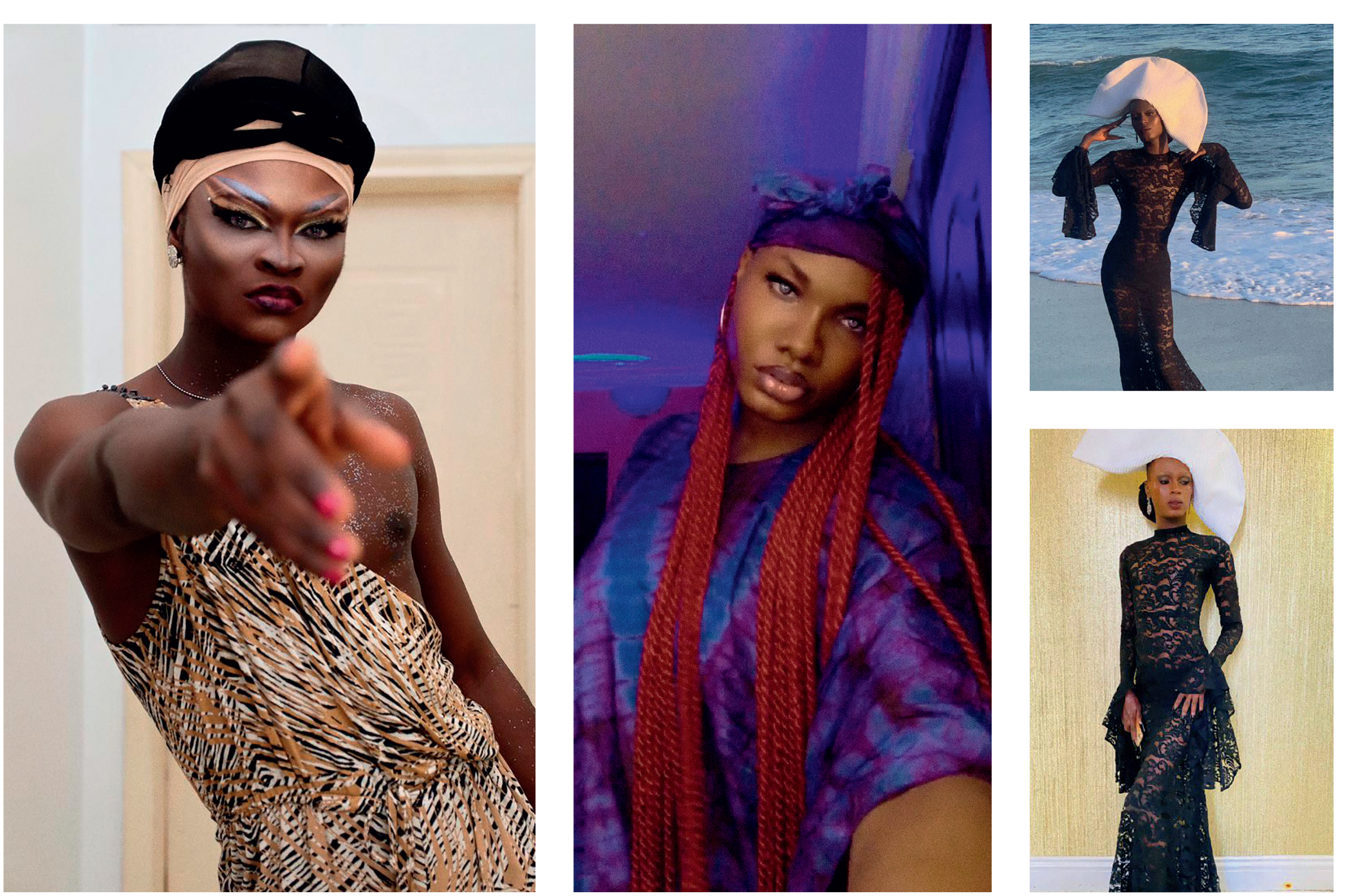
Nigeria is renowned for its vibrant artistry, cultural richness and diversity. At the same time it is a country of intolerance, with laws that cast a chilling shadow over the LGBTQ+ community, stifling expressions of identity and love. There are even attempts by legislators to extend this to drag. A draft bill was announced last year that would ban cross-dressing, with punishments of up to six months in jail, or a fine of $1,200. If passed the bill would make it illegal for a person to wear clothes in public that do not match their gender assigned at birth, as well as making it illegal to appear in photos or videos from a private event. The only exemptions proposed were for theatre productions "or in any bona fide public entertainment".
Today a small number of drag performers are fighting these prejudices. Comedy and social media are crucial. Macmillan is just one person involved in the battle, whether he wants to be or not.
The term "drag", with its roots tracing back to the 19th century, was used to describe male performers who dressed up as women and wore petticoats that dragged on the floor. These performers, often LGBTQ+ individuals, are known for using attire, cosmetics and exaggerated personas to challenge conventional gender norms. However, within the Nigerian context, entrenched cultural norms, rooted in religion, age-old traditions and conventional moral values influenced by colonial legacies, clash with the bold expressions of drag. The Same-Sex Marriage (Prohibition) Bill (SSMPA), which became law in 2013 under the presidency of Goodluck Jonathan, introduced stringent penalties for same sex marriage and criminalised acts of "carnal knowledge against the order of nature", "gross indecency", same-sex unions, and LGBTQ+ advocacy, including a 14-year prison sentence for same-sex relationships.
Onyx Godwin Ogaga, a prominent figure within the Nigerian drag community, says historical and societal homophobia has impeded the advancement and prominence of the LGBTQ+ community and drag culture. For Ogaga while drag may not be constitutionally illegal yet, the labyrinthine nature of Nigerian law, particularly the SSMPA, leaves room for legislation to be distorted and wielded against the drag community. Furthermore, drag artists go against prevailing societal norms, which frown upon men embracing clothing traditionally associated with women.
Despite this climate of adversity, figures such as Ogaga and Oge Classic have emerged as beacons of resilience and hope. Oge finds social media platforms, particularly TikTok, a sanctuary, "a place where I find happiness ‘cause I get to be myself and do what I love." TikTok’s vast user base encompasses diverse age groups and demographics, rendering it a versatile medium for drag queens not only to entertain but also to impart valuable insights and champion the cause of LGBTQ+ rights and inclusivity. For Oge, who first joined TikTok in 2020 and has since amassed a following of more than 24,000 users, the platform is perfect for her mission. She says her "purpose on TikTok is to cultivate a vibrant community, one where excellence thrives, and where aspiring drag queens discern the very essence of our art."
Despite the constant backlash Oge gets on TikTok, she still finds many positives. "I don’t chat much on TikTok nor reply to comments other than that of my partner. I feel that out of the 100% of people [that follow me] 40% like what I am doing and want to see more of me." Aside from "enjoying it there", she firmly believes it’s a platform that can make her reach her dream primarily because of the diversity of its users and the (drag) audience.
"It’s a platform that everyone wants to go into and keep themselves entertained and also, you don’t know who might be watching and all," Oge said.
Ogaga views social media platforms, including TikTok, as havens for the drag scene. She sees it as a way for the community to show solidarity and support one another. "Most of the queer community in Nigeria was formed through [social media, including] TikTok. It’s only natural that when I see someone there who does something similar to what I do, I follow them, and perhaps an acquaintance builds up from there."
The quote "we are only as strong as we are united, as weak as we are divided" serves as an eloquent encapsulation of the profound spirit, comradeship, fortitude and tenacity inherent within the marginalised drag community.
Oge said she faced many challenges when she first started dressing in drag.
"Initially, they [my parents] weren’t supportive and made numerous attempts to deter me. They discarded most of my costumes, even burning my wigs. However, when their efforts proved futile, and they realised my unwavering passion for it, they had no option but to accept and allow me to pursue my passion."
Another of the social media platforms that has played a pivotal role in the nascent drag culture is Instagram. This platform hosts two of Nigeria’s most prominent figures in the realms of transgender identity and drag artistry: Bobrisky and James Brown Obialor, the self-proclaimed Princess of Africa.
Bobrisky, originally Okuneye Idris Olanrewaju, burst onto the social media scene in 2016. Over the years, this controversial figure has become an internet sensation, influencing trends and contributing to viral sounds like; #Ballers, #goodgalnodeypay, #bobrisky dance, to name but a few. Between the end of October and the end of November 2016 Google said they were the most searched for individual on the platform.
But the relentless pursuit of amassing the highest number of comments, likes or reactions is not always positive. With many of these profiles being motivated by financial gain, the desire to actually improve the lot of those in the queer community is not front and centre. Bobrisky, for example, drove traffic to her Snapchat account when she claimed she had a male lover and had been arrested for cross-dressing. But she was less tolerant when a series of men were arrested this August for organising a same-sex marriage, commenting on her Instagram account that they deserved how they were treated for breaking the law.
Macmillan, who has over 800,000 followers, has also been keen to distance himself from LGBTQ+ issues. When asked by Index how his content and sartorial choices help the queer community, he retorted: "For me, I don’t know how the community works. I’m not in any, and I don’t see myself representing any ‘community’. Dressing like a woman doesn’t make one [queer]. It is TikTok content for me, and I’m good at it. I started [creating content], then I realised I’m good with my body. I got all the female features, and boom, I started, and I was getting paid."
Macmillan’s approach doesn’t sit well with other members of the drag community, particularly those who view drag as more than just a costume that can be donned or discarded at will. Farkos, who has over a decade of experience in drag artistry, thinks Macmillan’s attitude is an affront to the community’s identity and integrity. She said: "They’re the ones who criticise most of us and that’s a huge slap to the community."
Ogaga also has concerns with those who have huge influence but will not push for change in Nigeria. "Skit-making isn’t drag. Skit making is caricature and to an extent, misogynistic. They are not drag queens. They don’t advocate for or recognise queer rights, they’re simply comedians."
On the flipside some within this queer subculture suggest that skit comedians and cross-dressing content creators assist the queer community, albeit inadvertently. The internal struggle with gender identity often begins at a young age, questioning conventional norms and the desire for fluidity. Recognising cross-dressing as an option can be a positive starting point.
Oge agreed: "Well, I will say yes ‘cause they are giving the younger ones courage to be themselves."
Drag performer WF Chante told Index: "Many TikTok and Instagram cross-dressers help the queer community grow. They depend on dressing up for their livelihood. While not all are queer, a ban on cross dressing could harm content creators and spark cries of injustice. After all, dressing femininely isn’t and shouldn’t be a crime. In this sense, they foster the queer community’s growth."
Two TikTok stars were fined, sentenced to whipping and forced to clean court premises for 30 days in November 2022 after they posted a video on the site mocking an official in Nigeria. Mubarak Isa Muhammad and Muhammad Bala were arrested after the video joked about Abdullahi Ganduje, governor of the northern state of Kano, for alleged land-grabbing, corruption and "sleeping on the job".
Stand-up comedian Jiaoying Summers’ account was banned after she posted a video in 2021 joking about China’s one-child policy. Her joke went viral with more than one million likes, but she also received a barrage of angry comments. TikTok, owned by Chinese company ByteDance, banned her account, citing a violation of community guidelines. The account was reinstated three months later.
An influencer with millions of TikTok followers was arrested in Dubai in July after posting a video portraying a brash Emirati at a luxury car showroom. Hamdan Al Rind, a UAE resident, was poking fun at lavish lifestyles in the city. He was accused by authorities of "promoting an offensive mental image of Emirati citizens" under a cybercrime law enacted in 2022.
Jocelyn Chia, a US national who grew up in Singapore, had a TikTok clip removed in June 2023 due to its jokes about the historic rivalry between Singapore and Malaysia, including referencing Malaysia Airlines flight MH370, which went missing in March 2014. TikTok said it violated its hate-speech guidelines and Malaysian authorities said they’d request Interpol to track Chia down.
Indian comedian Saloni Gaur, popularly known as Nazma Aapi, vowed never to use TikTok again after the site took down a 2020 video in which she joked about the Line of Actual Control, the disputed border in the Himalayan region between China and India. The video was uploaded again a few hours later after a backlash from users. TikTok said it was temporarily taken down due to potential Covid misinformation in the video.