




Abstract
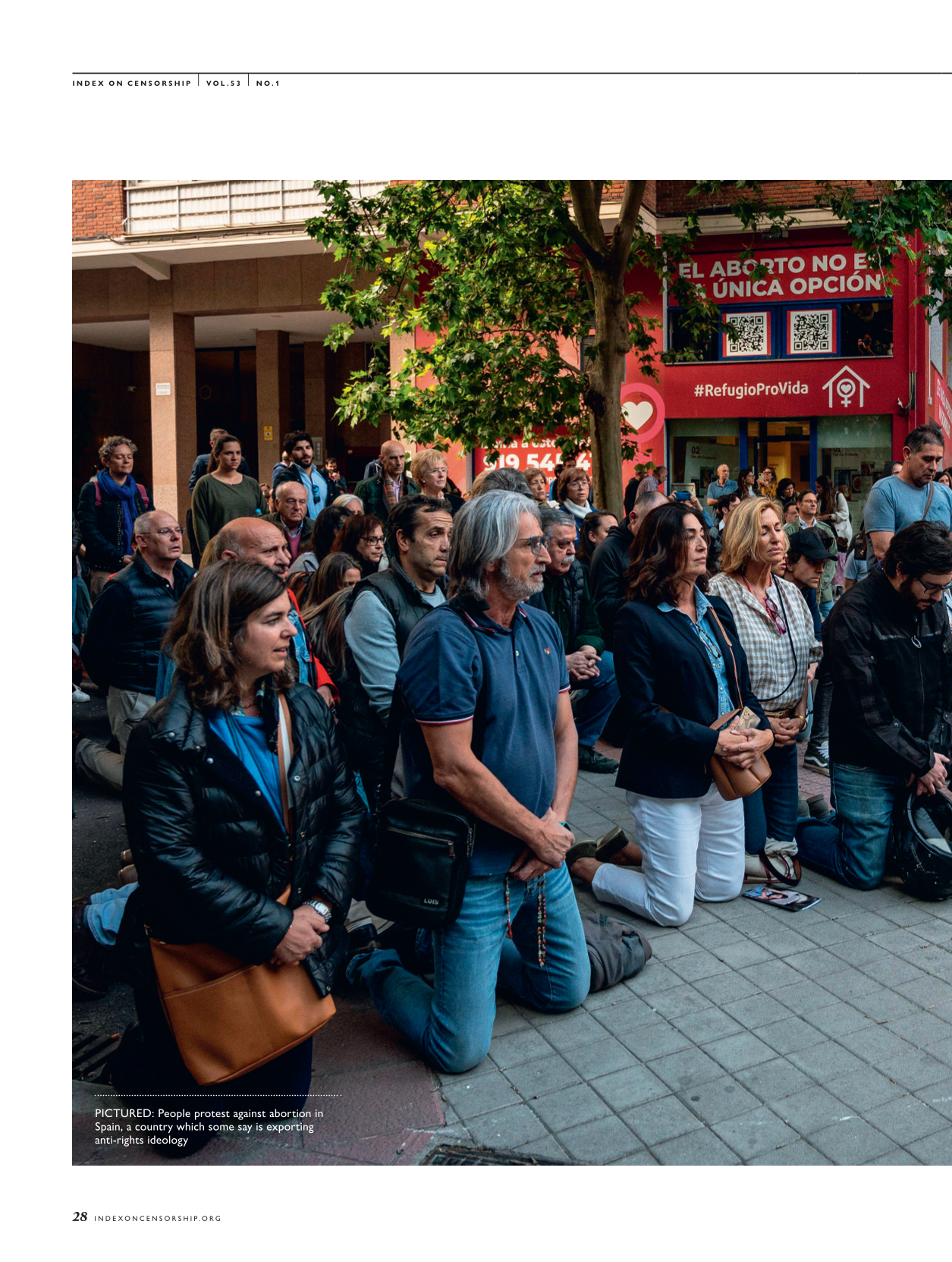
Conservative groups in the USA are taking the campaign against reproductive rights global, using money and influence to silence, writes
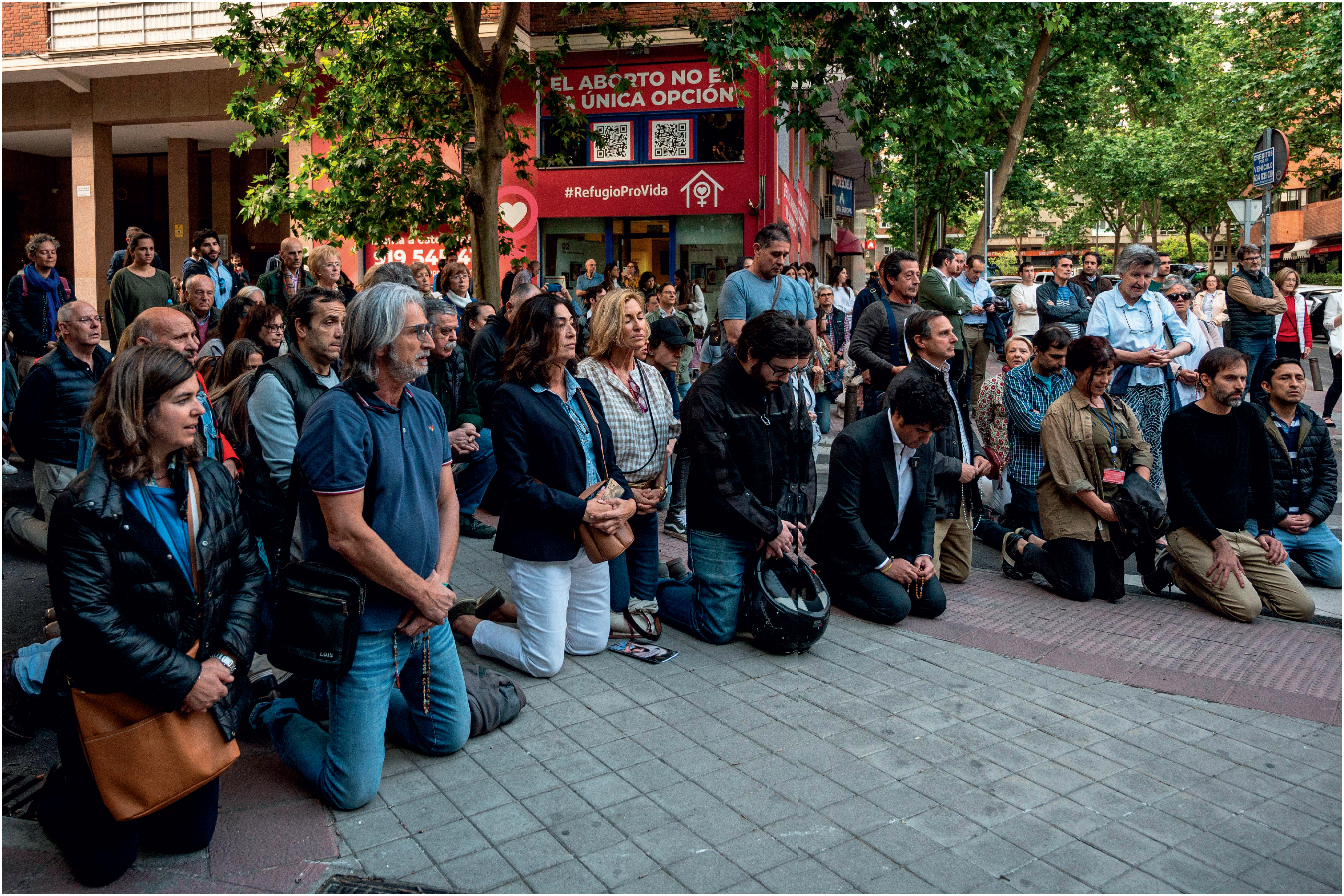
PICTURED: People protest against abortion in Spain, a country which some say is exporting anti-rights ideology
CREDIT: Marcos del Mazo / Alamy
“There’s always been a proliferation of anti-rights, anti-gender groups, especially under a Republican administration … but in the past five years, it has been mind-blowing because it seems like it’s getting more intense, more scaled up and more sophisticated,” said Fadekemi Akinfaderin, lead of global advocacy for change at Fos Feminista, an international alliance for sexual and reproductive health and rights.
“They definitely have gotten a bit more wind beneath their sail since Dobbs.”
US anti-rights groups claimed a victory when the landmark 1973 Supreme Court ruling of Roe v Wade, which ruled the right to abortion was protected under the constitution, was repealed with the Dobbs v Jackson decision in 2022. This now affords individual US states the right to regulate abortion as they see fit.
As a result, 14 states have criminalised abortion no matter the circumstances, six have “severely restricted" it and several others have imposed restrictions to some degree. In the 18 months since abortion access was repealed, women have faced criminal charges for trying to get abortions and had their health jeopardised, forced to continue with unsafe pregnancies.
Considering the battle somewhat won in the USA (although pro-choice groups continue to fight), several anti-rights groups are attempting to influence and support other countries in doing the same, experts told Index. Some of those groups include Family Watch International (FWI), Alliance Defending Freedom International (ADF) and Human Life International. Index has repeatedly approached Human Life International for comment and has not received a reply.
Both mifepristone and misoprostol, used for the medical management of abortions, are listed on the World Health Organisation’s essential medicine list. Member states are obligated to provide access to these drugs.
Without access to safe services, women may seek out other options which endanger them. Each year 39,000 women across the world die following unsafe abortions.
According to Katy Mayall, director of strategic initiatives at the Centre for Reproductive Rights, the trend over the last 30 years has been an increasing liberalisation of abortion laws. Only four countries - the USA, El Salvador, Poland and Nicaragua - have re-criminalised abortion compared with more than 60 that have made it easier to access.
But research conducted by a coalition of health advocacy groups has revealed that more than 50% of participants believed the situation in the USA has empowered anti-abortion movements in their countries, while a 2024 report by Fos Feminista found that there had been an increase in anti-rights groups’ use of disinformation campaigns since the Dobbs decision.
As a result in India, for example, there have been anti-rights protests across the country for the first time, alongside calls for the government to overturn the legislation allowing for medical abortions.
“[There have been] judicial appeals to ban abortion and restrict access within the Indian courts system by faith-based opposition groups,” one report participant is cited as saying. “This has never been an issue for India but is emerging [or] growing into one post- [the repealing of] Roe.”
In Africa, the East African Community Sexual and Reproductive Health Bill 2021, which would increase access to sexual and reproductive services in six countries, stalled following the Dobbs decision. Angela Akol, director of Ipas Africa Alliance, told Index that legislators who work to increase access to safe abortions and contraception began holding meetings with US anti-rights groups. Conversations around pushing the bill forward have since resumed, but the bill is yet to pass.
Since the US decision, the narrative, Akol explained, is that abortion is a Western concept and if the USA is no longer pursuing it, why should Africa?
In Nigeria, where abortion is permitted only when the mother’s life is at risk, abortion guidelines had been created to support healthcare providers. Following the Dobbs decision, a local opposition group - which Akinfaderin said had ties to pro-family, Christian NGO FWI - spread disinformation (which FWI denies), claiming that Nigeria was going to legalise abortion. Pressured by an upcoming election, politicians recalled the guidelines, which are yet to be re-disseminated.
And in Malawi, Emma Kaliya, a local pro-choice activist and director of the Malawi Human Rights Resource Centre, said such groups have “invaded" the country from the USA, at times holding conferences on the issue without including local activists.
“We are tired of this influence that comes from elsewhere. They want to manage a small country like Malawi,” she said. “It’s becoming an issue of religious fundamentalism, where now they are taking charge of everything and pushing back on everything - especially on the rights of women.”
She said politicians now won’t push for increased abortion access because they’re being threatened by faith groups, who will withdraw their support.
Aware of the threats, Akol said there had been talks on how to better protect what’s known as the Maputo Protocol, which promotes and protects reproductive rights for the 44 out of 55 member states across Africa which have ratified it.
“We’ve realised that if Maputo failed, a lot of us would be naked,” she said. But pushback against the anti-rights agenda has to come from countries themselves, she warned, adding that any foreign interference would only feed into the idea of abortion as a Western narrative and form of colonialism.
FWI denied opening new offices in Africa and told Index: “There is an individual spreading misinformation to various media outlets regarding the work of FWI in Africa. We do have a Family Watch team that has been working for several years on the continent.” They also said they “strongly promote the protection of life in the womb and at all stages, but that is not our main focus in Africa”.
Such influence isn’t being exerted only in Africa. A report produced by the European Parliamentary Forum for Sexual and Reproductive Rights (EPF) explored how religious extremists generate funding to restrict human rights, and found that $81.3 million of “anti-gender" (sometimes known as “pro-family") funding was sent from 10 US Christian-right NGOs or think tanks to European organisations between 2009 and 2018. That figure continues to grow and $120 million was estimated to flow into Europe in 2022 - a $40 million increase since 2018.
The same names and organisations keep coming up globally, Neil Datta, executive director of the EPF, said on the sidelines of the Women Deliver conference in Rwanda last year.
Such organisations, Datta said, are strategic - often setting up offices in key European locations with strong links to human rights such as Brussels, Geneva and Strasbourg. “They are intent on influencing,” he said.
ADF International and the European Centre for Law and Justice (ECLJ), in particular, are recorded in the EPF’s report as having played a role in more than 30 legal cases since 2013 that were said to undermine human rights in Europe. Datta explained that the groups were working with local lawyers to hunt down historical legal cases that can then be used in court to tackle legislation that currently allows for abortion access.
This strategy was legitimised by the rollback of Roe v Wade in the USA and now it’s being implemented globally, he explained - adding that these groups not only focus on abortion access but also the rights of the LGBTQ+ community.
Index has approached ECLJ for comment multiple times but the group has not responded.
ADF told Index: “Given the strong ideological bias of the European Parliamentary Forum for Sexual and Reproductive Rights against our organisation, the credibility of any of their allegations should be called into doubt … It is wholly inappropriate for them to be cited as a source commenting critically on our funding, when their reporting is both inaccurate and hypocritical.”
They added: “ADF International is committed to safeguarding everyone’s fundamental rights, including the right to life for every mother and baby. We are also committed to protecting the right of everyone to freely express their beliefs. That right only really means something if it protects the right to speak even when others disagree.”
Last year, Uganda criminalised identifying as homosexual which, according to Datta, was a direct result of such interference. Similar attempts to influence the law have been made in Kenya, Malawi and Tanzania, he added.
Both LGBTQ+ and reproductive rights are recognised as fundamental by the Universal Declaration of Human Rights. Yet pro-choice groups working to strengthen rights are being silenced by donor-imposed restrictions.
Akinfaderin explained that many large organisations don’t allow their donations to go towards lobbying, and with much of women’s health playing out in the hands of legislators that’s not helpful. In contrast, anti-rights groups rely more on individual donors, which tend to have less restrictive funding that allows them to lobby all they want.
“Take the shackles off funding. Remove these certifications [and] lobbying clauses, so that the resourcing is truly transformative and can help us to get to the goal that we want,” Akinfaderin said. “We know that we cannot sit on the sidelines in terms of issues related to policy and law-making. We know we can’t sit on the sidelines when it comes to elections.”
Elections are set to take place in 64 countries in 2024, and if more conservative governments come to power this could have a bearing on abortion access.
“Spain is one to continue to watch because we do know that there are a lot of anti-rights organisations from Spain that are now setting up offices and registering branches in Africa,” she said, citing conservative advocacy group Citizen Go as an example.
To ensure such groups’ impact is at a minimum, she called for more feminist groups and organisations to engage with electoral processes. “We can’t just sit and hope for the best [and] hope we get progressive governments.”