




Abstract

South Korea’s president is pushing the nation to the right and invoking fears about North Korea to silence his critics.
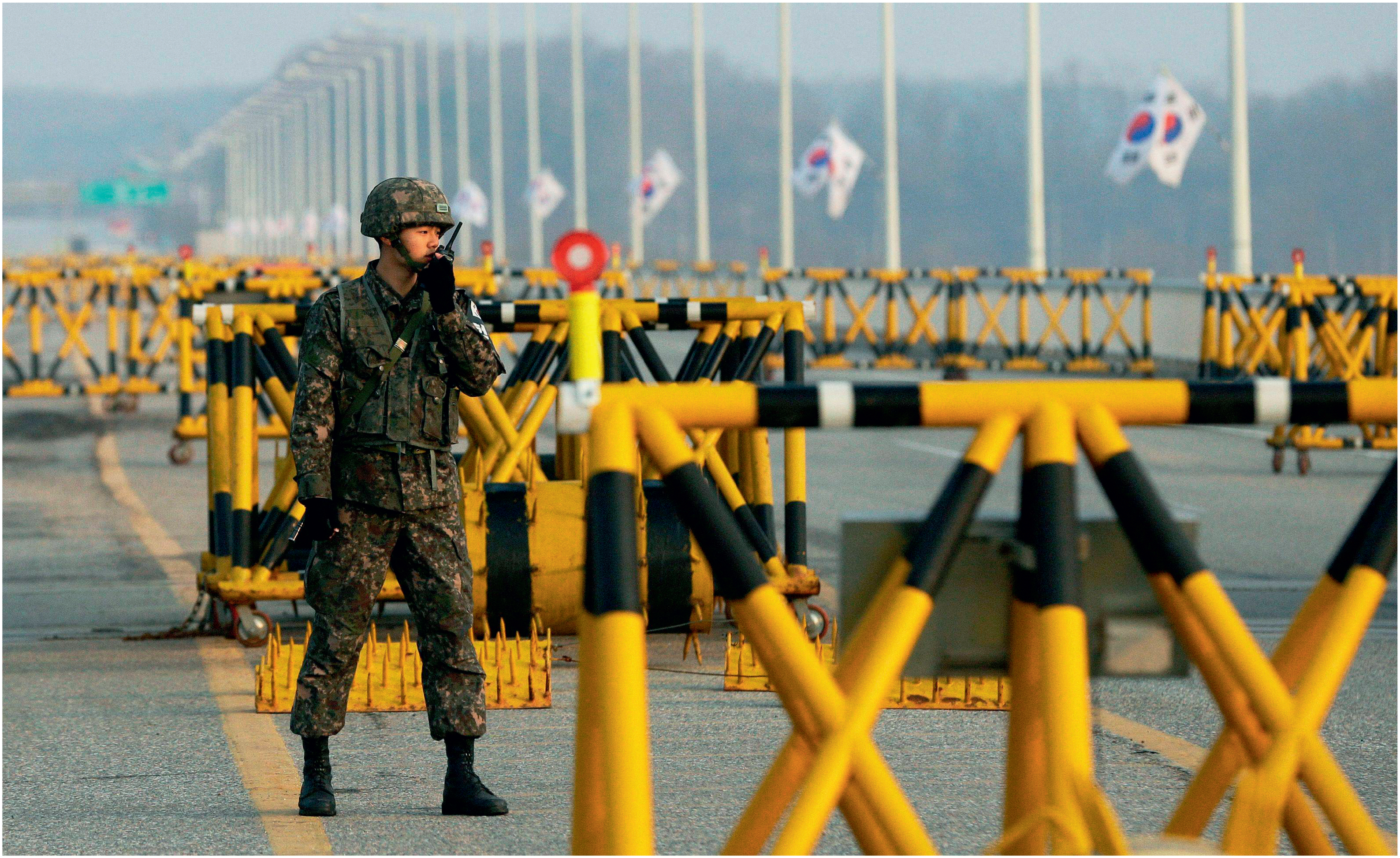
The scene at Unification Bridge, which has separated the two Koreas since the Korean War
CREDIT: AP Photo/Lee/Alamy
His case reignited the fiery debate: does the act stifle freedom of expression and promote censorship?
In 2016, Lee submitted his poem about a North Korean-style socialist, unified Korea to a North Korean state-run competition. Access to such sites is both not allowed and blocked in South Korea, accessible only from abroad or through a VPN connection. His entry, The Path to Unification (which you cannot access easily in South Korea as the link is blocked), was chosen as one of the winning works in the competition.
During the November 2023 sentencing of Lee, who had already served prison time for a similar offence, the court said that he had “produced and distributed a significant number of subversive expressions that represent North Korea’s position, glorify and praise it, and threaten the existence and security of the country or the basic liberal democratic order over a long period of time during the period of repeated offences, so it is inevitable that he will be severely punished”.
Human rights organisations slammed the ruling, calling for all charges against Lee to be dropped.
“Although there is a unique geopolitical situation in [South Korea], it does not justify unlawful restrictions on freedom of expression that violate international standards,” said Amnesty International’s East Asia researcher Boram Jang. “Writing a poem does not pose a threat to security.”
Cold War relic
The Cold War - and, in this instance, the Korean War that raged throughout the peninsula from 1950 to 1953 - cast a long shadow over this ruling. The National Security Act, established in 1948, was created in response to the existential threat posed by communism, embodied by the fledgling North Korean state, and was designed to protect against alleged subversion and infiltration.
The scope of the act extends beyond espionage. According to Article 7, people can be sentenced to up to seven years in prison for “praising”, “inciting” or “propagating” the actions of an “anti-government organisation”. This behaviour includes the manufacturing, importation, reproduction, possession, distribution or sale of “any [related] documents, drawings or other expression materials”. The term “anti-government organisation” is not explicitly defined, creating a vast legal grey area, ripe for potential misuse.
Not that the complexity of South Korea’s security landscape can be overlooked, as evidenced by decades of threats and provocations. In 1968, a North Korean commando team infiltrated Seoul, only just failing to assassinate president Park Chung-hee. In 1987, a bomb was planted by North Korean agents aboard a Korean Air passenger jet, killing 115 people. And in 2010, North Korea shelled Yeonpyeong Island, killing two South Korean civilians.
More recently, North Korea’s advances in nuclear and missile programmes, coupled with cyberattacks, have increased the potential of escalation, emphasising the need for laws protecting South Korea’s security.
But throughout its history, the application of the National Security Act has varied widely.
For example, in 2011, a court ruled that a man was guilty of violating the act for selling books related to North Korea and Marxism, despite the fact that such works were available to the public elsewhere. In 2012, a man received a suspended prison sentence for retweeting a North Korean account and satirising their propaganda (he was eventually acquitted). In 2015, a Korean-American woman was deported from South Korea for saying complimentary things about North Korea - a move denounced by NGOs and the US government. And in 2021, the South Korean publisher of a memoir of former North Korean leader Kim Il-sung was raided by police, and the book was removed from bookstore shelves.
The “anti-state” threat
The current Yoon Suk Yeol administration seems to be adopting a far-right rhetoric reminiscent of the Donald Trump playbook to rally his conservative supporters, stoking fears of ideological polarisation. Yoon has aggressively targeted the media, labelling it as the purveyor of “fake news”, and revoked press credentials of those critical of the government. There has been a surge in defamation cases against the media under his leadership.
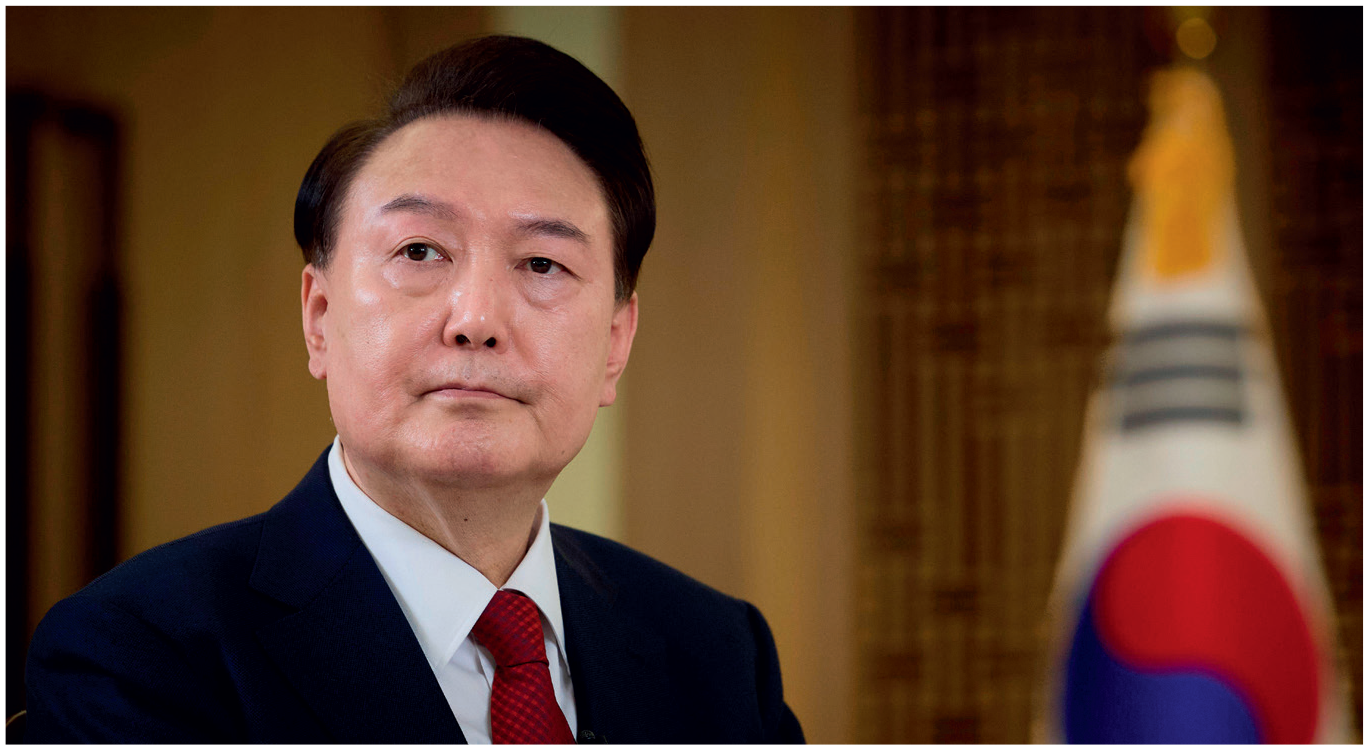
South Korean President Yoon Suk Yeol
CREDIT: Associated Press / Alamy
Against this backdrop, Yoon and the ruling People Power Party have used the perceived communist threat as a weapon to target political opponents and groups that the government does not favour.
In his August 2023 Liberation Day speech, Yoon referred to his domestic critics as “anti-state forces that blindly follow communist totalitarianism”, saying that they “disguised themselves as democracy activists, human rights advocates or progressive activists” - without further elaboration.
In September, Yoon branded those who opposed Seoul’s deepening ties with Japan and the USA as “communist totalitarian and anti-state forces”, a veiled jab at his opponents including the main opposition Democratic Party.
In October, the then leader of the People Power Party, Kim Gi-hyeon, suggested that North Korea was behind the campaign for accountability by parents of the victims of the deadly 2022 crowd crush in Seoul, which killed 159 people.
The rhetoric is stirring action, and not just against poets. This January, the National Intelligence Service (NIS) and the police raided the Korean Confederation of Trade Unions, alleging that some of its members had violated the National Security Act. The move raised concerns that the allegations were a politicised pretext to target unions.
Even before recent events, the act has a long history of being misapplied for political aims under the guise of countering a fictitious North Korean threat. Over several decades, South Korean authorities have arrested numerous people on charges of spying for North Korea, only to see them exonerated, but often after they have endured lengthy prison sentences.
In 2013, one particularly egregious and high-profile case involved Yu Woo-sung, a North Korean defector who was charged with violating the National Security Act while working as a civil servant in Seoul. He faced accusations of being a spy, orchestrated by the NIS through fabricated evidence. Yoo was eventually found innocent, and employees of the NIS and prosecutors involved in the forgery were punished.
NSA here to stay
The UN has expressed concern on multiple occasions regarding the application of the National Security Act, and Article 7 in particular. Prominent rights groups have advocated for substantial amendments or outright abolition of the law to bring it in line with established international legal standards. South Korea’s human rights watchdog recently called Article 7 unconstitutional and has advocated for the law to be abolished completely.
But such calls to abolish it fall on deaf ears. In October 2023, the government asserted that Article 7 was necessary for protecting national security. The government told the UN human rights committee that its actions were geared towards safeguarding freedom of expression for its citizens.
In a move that would have reflected a potential shift in attitudes, in 2022 the South Korean government announced plans to increase public access to North Korean media. However, it was recently reported that the plans had been halted.
Perhaps the starkest of contradictions can be found in the constitution, and the court that governs it. In September 2023, it ruled for the eighth time that the National Security Act was constitutional, suggesting that the law was here to stay in its full current form. Article 37 of the constitution states that “freedoms and rights of citizens may be restricted … only when necessary for national security”.
On the same day, the court made another judgment: that a ban on criticising the North Korean regime through leaflet campaigns was not constitutional, citing that it excessively infringed upon freedom of expression. This long-standing practice, which involves sending balloons carrying leaflets critical of the North Korean regime across the border, was prohibited under the previous Moon Jae-in government, and people were charged for defying the ban. Two proposals to revise the law and officially lift the ban on leaflet campaigns are currently under review by the National Assembly.
In South Korea, people have freedom of expression, but only as long as it adheres to the quite literal political correctness of the day.