




Abstract

The lives of nuns are at the centre of a string of bans in southern India, write
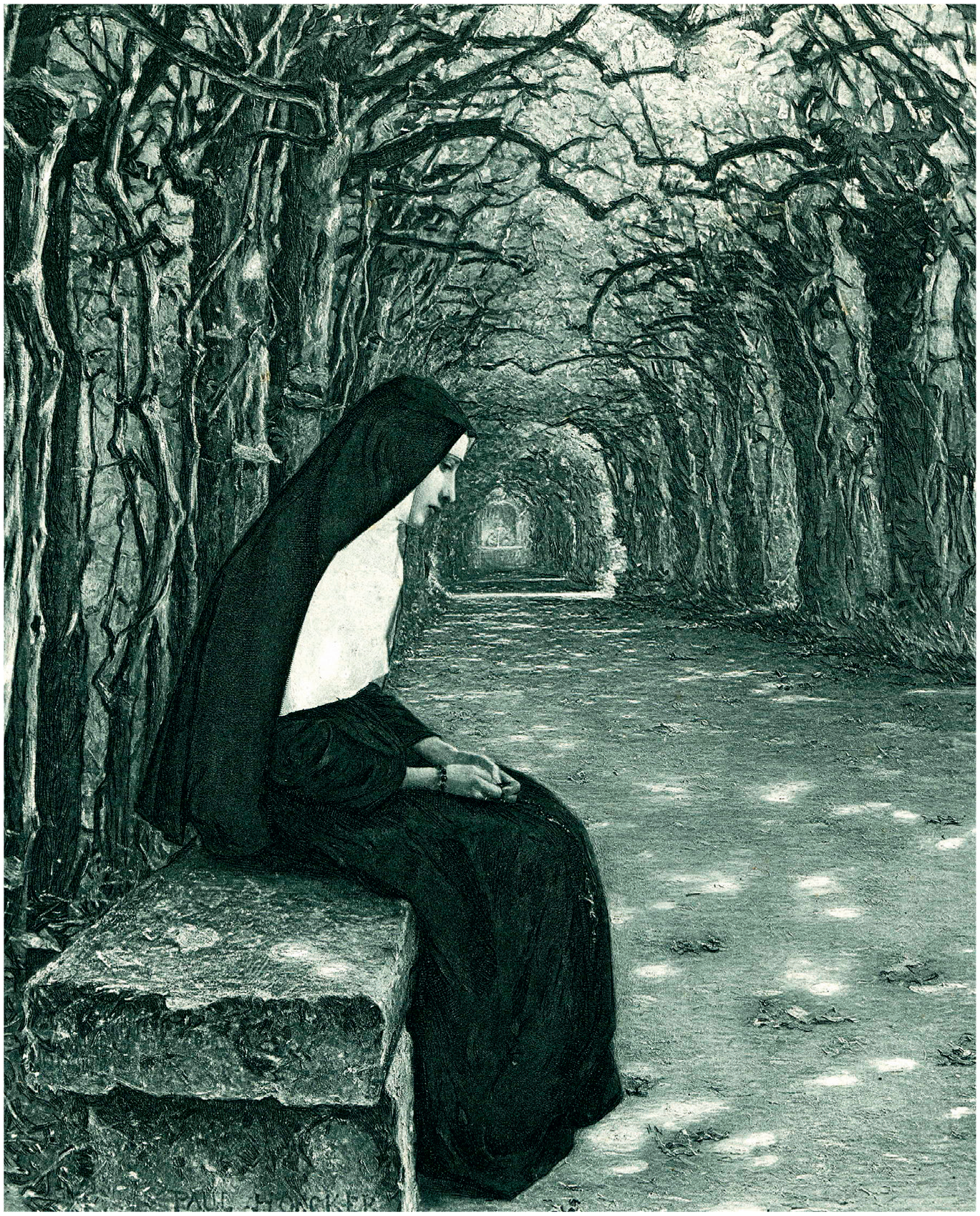
PICTURED: The story of Achamma centres around a nun who has deviated from the holy path
CREDIT: Paul Hoecker via Wikimedia commons
Francis Noronha, the author whose short story Kakkukali was based on, resigned from his government position in response to the controversy surrounding both this and his novel Masterpiece.
In another censorship attempt on the same theme in 1986, dramatist PM Antony’s play Christhuvinte Aaram Thirumurivu (The Sixth Sacred Wound of Christ) sparked controversy, with Christian groups’ demands prompting its prohibition.
This pattern of bans goes back almost as far as the inception of the state of Kerala itself, starting with a furore surrounding author Vallachira Madhavan’s work.
Below is a translated extract from the book which caused so much controversy - in English for the first time.
Madhavan’s 1960 novel Achamma is regarded as an important piece of Malayalam language literature, exposing the atrocities faced by a Catholic nun in a convent. It is considered to be the first prohibited book in Kerala after the country’s establishment in 1957, eliciting strong protest from the regional Catholic pontificate and its fervent supporters.
Achamma’s story unfolds as a moving and tragic portrayal of a nun who deviates from the intended holy path to embrace the harsh reality of street life, eventually leading to her death as a prostitute. Madhavan’s nephew, film critic Aravindan Vallachira, said that an ex-nun once confessed to Madhavan about the horrors she confronted in a convent, which made her run away and become a prostitute.
The novel’s 1963 ban, orchestrated by cabinet minister Pulloli Thomas Chacko, demonstrated the Church’s powerful influence. Since Kerala’s inception, the Church has played a prominent role in its politics, and the Catholic community provides a crucial voting bloc. This authority has traditionally been used to protect the Church’s interests, even if it means silencing dissenting voices such as Madhavan’s. Achamma comes from a poor Christian household facing financial and societal hardships. The story takes a devastating turn when her lover dies, leaving her with only one way to console her devastated parents - becoming a nun. The novel criticises institutionalised conventions that force financially disadvantaged women into the limited life of a nun, focusing on the coercive dynamics and challenges they endure. Despite being outlawed, it remains a daring literary work that addresses religious and societal issues that remain prevalent today.
Sebastian Adayantharath, the Syro-Malabar Catholic bishop, observed to the Economic Times (of India) that the influx of low-income nuns in Kerala peaked in the mid-1960s, a period coinciding with the publication of Achamma. Young women from economically-destitute households frequently chose a life in the convent, seeing it as a way to relieve the substantial financial pressures on their families.
During the 1960s and 1970s, it was common practice for destitute Christian families to commit one or two children to the Church, and allegations were made that parents were coercing their daughters into convent life. Moreover, difficulties such as male dominance and a lack of democracy frequently contributed to the distress endured by the nuns within the convent.
In parallel, the brave autobiographies of two nuns, Sister Jesme and Sister Lucy Kalapura - the 2009 book Amen: The Autobiography of a Nun, and 2019’s In the Name of God, respectively - amplify the voices of those speaking up about the atrocities committed against nuns, revealing the disturbing reality of sexual abuse within convents.
Jesme’s dismissal from the community was caused by authorities attempting to label her as mad, whilst Kalapura’s expulsion was caused by her support for five nuns protesting against Franco Mulakkal, the Bishop of Jalandhar who was accused of raping a nun 13 times. There was widespread outrage when he was acquitted in 2022.
Kalapura continues to fight for her position as a nun and, in the face of attempts to restrict their autobiographies, these courageous sisters use social media platforms to freely express their concerns, contributing to the ongoing discussion about the issues that plague convents.
Achamma’s prohibition, which stemmed from unease with the representation of a nun’s unusual path and lesbian relationships, reflects broader societal taboos and the Church’s reluctance to address internal difficulties. At the moment, the region is dealing with the stark realities of unnatural deaths among nuns and the long search for justice.
Data collected by scholars Madona Mathew and P Vishnuprasad shows that the bodies of at least 17 nuns were discovered in various convents between 1987 and 2020, emphasising the urgent need for transparency and accountability. Many cases were promptly shut down by the authorities, who attributed them to suicides after conducting flimsy investigations.
In 2022, the life sentences given to a Catholic priest and a nun convicted of the murder of Sister Abhaya were suspended, and they were granted bail while they appealed. This case highlights the ongoing difficulties in confronting clerical sexual abuse. Sister Abhaya’s body was found in a convent well in 1992, and her death sparked a 28-year investigation to find those responsible. Despite the enormity of the sexual abuse problem concerning priests, the Church remains unwilling to look into the matter internally.
In the midst of these pressing issues, the banned Achamma is all the more significant. It is a mirror reflecting societal and institutional barriers.
The 1963 ban on Madhavan’s work did not prevent him from continuing his writing career. The following year, he published two novels through the Champakulam-based Bishop Kurialachery Memorial Book Depot.
Perhaps surprisingly, this was a Catholic business venture named after Saint Thomas Kurialacherry of Champakulam.
The flood of letters from admirers during the 1960s and 1970s, all addressed simply to “Vallachira Madhavan, Thrissur, P.O., Kerala” with no home address, demonstrated the widespread audience he had there.
As a pioneer in the painkili sahityam (Malayalam popular literature) genre, he was instrumental in making literature more accessible to the general public.
But despite its popularity, this genre was heavily criticised. Madhavan’s works prioritised everyday human experiences, resonating with the average literate Malayali reader rather than catering to the intellectual elite. Even today, prominent scholars argue that his works do not constitute “serious literature”, and some told Index as much.
Some of Madhavan’s publications are on the government’s list of books for school libraries. But his books are not widely read or studied today, leaving him noticeably absent from the literary world. Why, despite being a prominent writer during his time, does Madhavan appear to have vanished from Kerala’s literary history?
According to an official from the Sahitya Akademi in Thrissur, Madhavan’s association with the Thattan (a group of goldsmiths) and what the Indian government officially terms “other backward classes” may have lessened his prominence. Despite being a popular author and the editor of a few journals, he struggled financially.
Writer KV Ashtamoorthi recalls being asked by Madhavan, unrecognisable due to his worn and aged appearance, for a small sum of money. He said that accusations that Madhavan was a pornographic writer and that his works were indecent only added to the difficulties surrounding his literary reputation until his death in 2013.Achamma’s censors have almost succeeded in erasing his work. This makes it all the more important that we publish this extract, in English for the first time.
Within the precincts of the monastery, all lamps were extinguished, and Achamma lay awake in the dead of night. Through the lattice window, she peered beyond, catching a glimpse of the world bathed in the moonlight’s serenity. Achamma lay on the bed, staring at the southern part of the convent, the graveyard of maidens, where their temporal journeys concluded.
Amidst such observations, a shadow traversed the tableau of those lifeless maidens. Achamma saw a feminine form walking towards a grave beside the fence, standing atop the grave. Meanwhile, another figure emerged from outside the wall. It was a masculine figure. They united in a funereal embrace. Who were they? Achamma held her breath, absorbing the spectacle without intruding.
In the intertwining shadows, Achamma observed the enigmatic dance of darkness, the masculine form in the grasp of the feminine silhouette. With caution, she drew him closer, entwining the fingers of her androgynous form with his. Subsequently, as the two shadows descended between two graves, Achamma firmly shut the lattice window.
In Jasinda’s room, Achamma heard her speaking to someone in a faint voice. It was an intimate exchange.
“Chew on a clove, it can help freshen up your stinking breath.”
Achamma plugged her ears with her fingers and closed her eyes firmly. Suddenly, someone was knocking on her door. She restrained herself, anticipating who it could be. Removing her fingers, she concentrated. Someone was knocking.
Achamma moved the door latch and surrendered to the unknown force. Convinced of the inevitability, she followed it by closing her door from outside.
As another door opened, the clock chimed twice. Moments transpired, and the scene unfolded. “Jesus!” A voice echoed. Susie, Clara, Mary, Jasinda, Leelama... everyone heard. Each contemplated, unable to identify the voice. Who is screaming? Why?
But they are sure the source of the scream is the Mother Superior’s chamber! No one dared to ask a question. Breaths and heartbeats heightened. No one moved. The silence persisted and appeared to last an eternity.
The door swung open abruptly in Mother Superior’s room, with a muffled noise and a blend of footsteps rushing to the courtyard. Achamma ran away, screaming, “Jesus ... Jesus!” leaving the convent behind and the echoes of uncertainty.
Leelama rose and lit a candle to pray. There was the sound of Mother Superior’s room door closing again.
Translated by Fujeena Abdul Kader and Upender Gundala