




Abstract

While two of Turkey’s most prominent filmmakers are stuck in prison
One immediate outcome of Erdoğan’s stunning electoral defeat was the apparent relaxation of cultural censorship. Hold Still, a harrowing film about the struggle of a Kurdish family whose children were kidnapped, tortured and buried in a well by Turkish security forces in 1995, won the festival’s best documentary prize. Such an outcome would have been unlikely in the wake of another Erdoğan victory.
Over the past decade, which has been among the darkest eras in terms of freedom of expression in Turkey, people who produced political films were relentlessly prosecuted by Erdoğan’s autocratic regime. That is why the seeming relaxation of Turkey’s censorship machine came as a surprise.
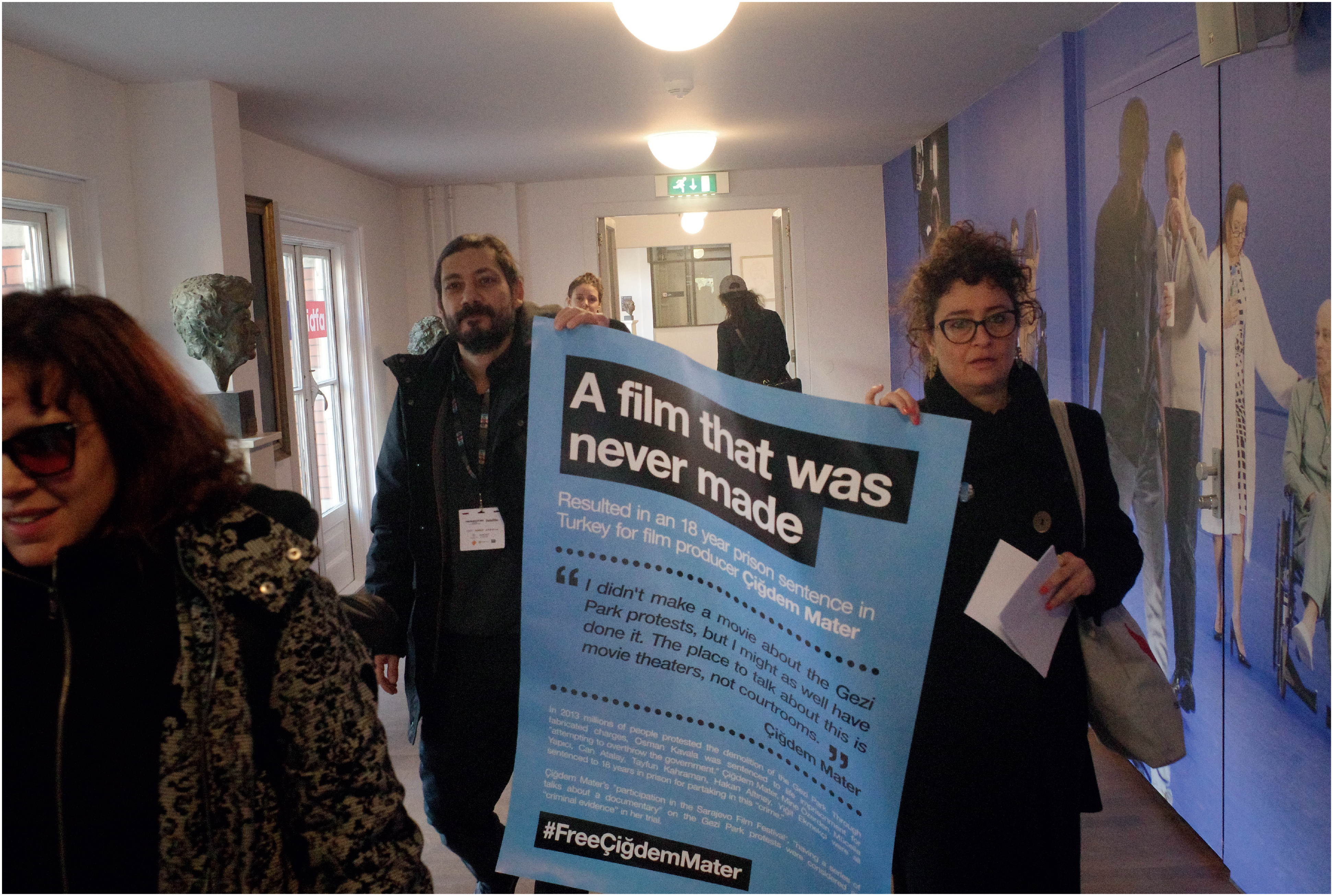
Firat Yücel and his colleague Senem Aytaç call for the freedom of persecuted filmmaker Çiğdem Mater
CREDIT: Erhan Arik
An event at the same festival half a decade ago marked the apotheosis of Turkish censorship. In April 2015, it cancelled the screening of the documentary Bakur. Filmmakers Cayan Demirel and Ertugrul Mavioglu spent months with Kurdish militants to document their lives. But before the screening, the Ministry of Culture intervened and argued that Bakur didn’t have a licence.
That censorship brought together directors whose films were scheduled to run at the festival. Twenty-two films were withdrawn. The closing ceremony was cancelled. The festival’s widely respected director, Azize Tan, who was at the helm of the event for nine years, spoke out against censorship in a press briefing. A few months after the kerfuffle, she resigned from her post. Jury members, film directors and critics joined a boycott. The Palme d’Or-winning director Nuri Bilge Ceylan, as well as staff of the film magazine Altyazı, were among the boycotters.
Firat Yücel, a founding editor of Altyazı, was in the Netherlands when Hold Still, produced by former Altyazı editor Enis Köstepen, received the festival’s top prize. Yücel and Köstepen were fellow students at Istanbul’s Bosphorus University, which boasts a long history of leftist activism, when they founded the magazine in 2001. Altyazı ceased print publication in 2019 (it continues as an online-only magazine), but Altyazı Fasikül: Free Cinema, a spinoff that focuses on freedom of expression in cinema, increasingly became the primary source of news for Turkey’s film communities as Erdoğan’s assault on culture intensified.
While editing Altyazı Fasikül, Yücel became an even more passionate anti-censorship activist and filmmaker. Altyazı Fasikül’s primary purpose, according to its website, is to increase the visibility of the works of filmmakers who face risks of government repression and censorship.
Yücel and his colleagues organise screenings of films by directors and collectives who are at risk, and try to ensure Altyazı Fasikül provides a safe platform for under-represented and censored filmmakers.
Last year, Yücel fell victim to censorship when he sent Translating Ulysses, a film he co-directed with Aylin Kuryel, to the International Istanbul Film Festival for consideration in its 2023 programme. Organisers told Yücel and Kuryel that while they liked the film, which tells the century-long suppression of the Kurdish language in Turkey, they couldn’t “show it under the current preelection conditions in Turkey”.
Yücel said the festival organisers were trying to minimise the risks. “They wielded their power of censorship in our case, calculating that they could relax it if the opposition triumphed in the May 2023 presidential elections.”
Yet Erdoğan won that election. Shortly afterwards, he attended an opening with the directors of the Istanbul Foundation for Culture and Arts (IKSV), which organises the festival. Cameras showed Erdoğan’s entourage joking and chatting away with the iKSV’s leaders.
For Yücel, cases of political censorship of films rooted in the self-interest of Turkish tycoons are nothing new. He knows about its persistence from his family. Yücel’s father was the legendary film actor Erkan Yücel, who starred in a flurry of masterpieces of Turkey’s political cinema, including Yilmaz Güney’s Anxiety (1974) and Erden Kiral’s On Fertile Lands (1980).
The latter film debuted a day after the military coup of 12 September 1980. It was screened for just one week before the military junta banned it. The Ministry of Culture at the time tried to stop the jury of a major film festival in Turkey from awarding the film its top prize.
When On Fertile Lands reached fame in Europe and won a prize in Paris, the film’s crew could not leave Turkey to receive the accolade. Their passports were confiscated. Finally, the prize jury travelled to Istanbul to present the award to Kiral, the film’s director. But Turkish intelligence officers trailed the film’s crew and blocked them from receiving it. The negative of On Fertile Lands then disappeared for years. (It re-emerged in the 2000s and a restored copy was screened in 2008.)
Yücel is proud of his father’s political legacy as a participant in some of the most aggressively banned productions in Turkey’s film history. Erkan Yücel was arrested multiple times, tortured in captivity and spent years in jail. His death in a car accident in 1985 traumatised Yücel. “I only came to appreciate his political legacy when I reached my 30s,” he said.
Yücel describes the generation who grew up after the 1980 coup as unwillingly depoliticised. He was no different. “I was raised in a way that protected me from politics,” he recalled. But at Bosphorus University, Yücel began appreciating his father’s practice. Films and politics, he saw, were not separate realms, and films need not be confined to cinemas. Instead, “they could be distributed to workers and the underprivileged through factories and college campuses”.
His father wanted political cinema to trespass boundaries. “He travelled through Kurdish cities in Anatolia. He stepped on tractors to stage plays. He was detained multiple times for these activities, yet he remained consistently unyielding.”
Yücel said these tactics inspired his democratic struggle. “I didn’t experience torture or imprisonment myself. But I approached filmmaking as something adjacent to political organising like my father did.”
Yücel began editing Altyazı in 2001. From that time to 2013, when thousands of anti-government protesters filled Turkey’s squares during the Occupy Gezi protests, Yücel watched the slow brewing of a culture of dissent.
First came “video activists” who documented protesters marching against the privatisation of public spaces or at rallies against the Iraq War. Then film buffs started organising. Many joined a grassroots movement to save Emek, a historic cinema in Istanbul. “The Emek is ours, Istanbul is ours!” was the collective’s slogan.
Yücel was one of the group’s most active participants. He appreciated the movement’s unorthodox structure. “We were marching not only against the destruction of the Emek theatre but also against discrimination toward LGBT+ individuals and against forces of gentrification and precarious working conditions. We marched with queer activists, feminists, socialists and anarchists.”
From the early-2000s to the mid-2010s, a flurry of directors made taboo-breaking films about Turkey’s history. Yeşim Ustaoğlu’s Journey to the Sun, Kazim Öz’s The Photograph and Ahu Öztürk’s Dust Cloth were part of what came to be known as “the new Turkish cinema”. The oppressed voices of Turkish history, from Kurdish activists and labour organisers to human rights defenders and feminists, found a place in these films.
Yücel points to Dust Cloth, about two Kurdish cleaning women working in Istanbul’s outskirts, which won prizes at Turkish festivals, as a particularly significant work. Seren Yüce’s Majority, meanwhile, explored the ideological blindness of Turkish middle classes about the Kurdish question.
In those years, Yücel said, they could freely praise such films in the pages of Altyazı, whose offices were located on the Bosphorus University campus. “Sometimes people would react to our references to the Kurdish massacres or the Armenian genocide, but that was about it.”
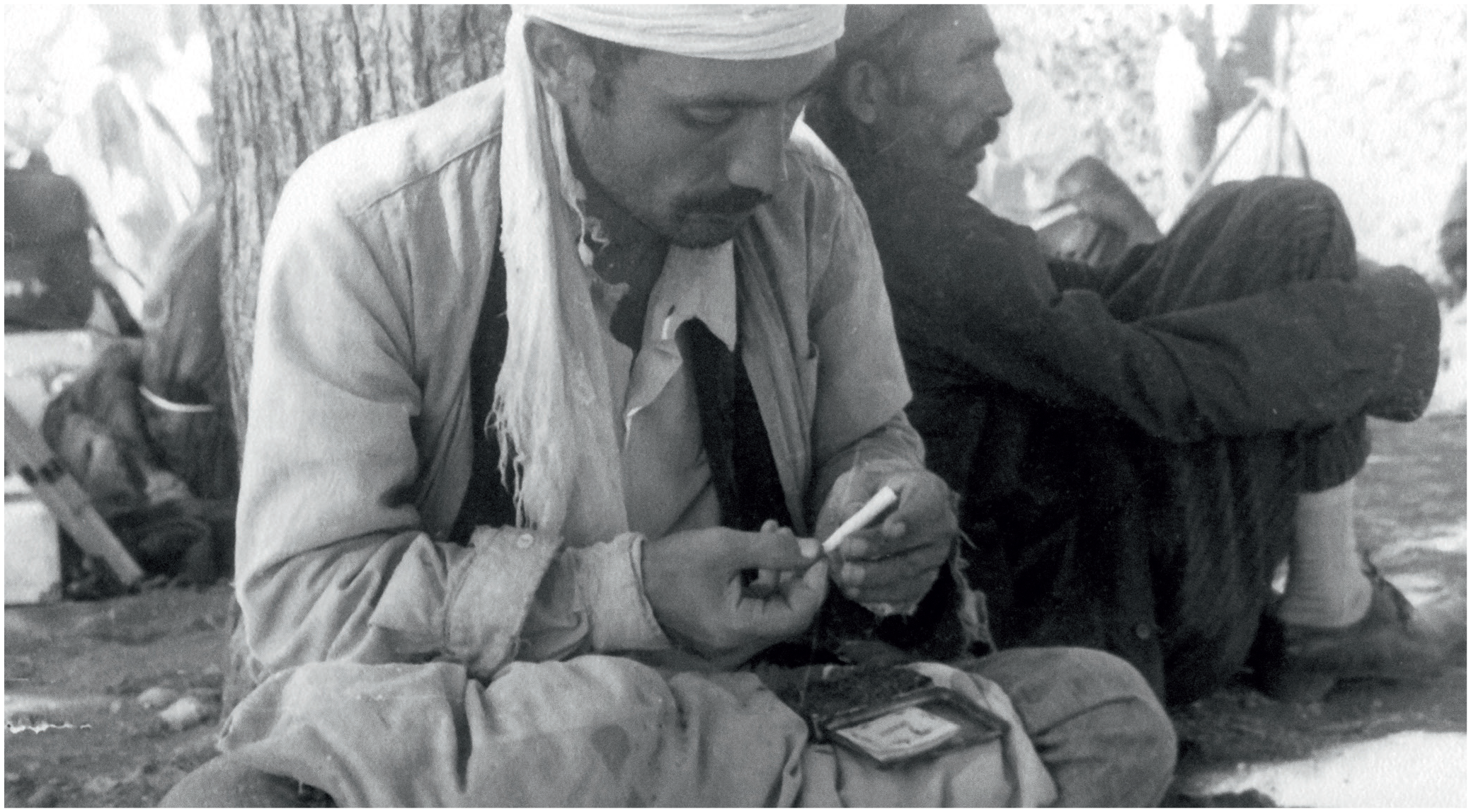
Erkan Yücel on the set of Anxiety, 1974
CREDIT: Altyazı Aylik, Sinema Dergisi
Yet, a decade later, things have changed dramatically. Naci Inci, a rector appointed by Erdoğan, has taken over Bosphorus University, fired its top lecturers, including the documentary filmmaker Can Candan, closed down progressive student clubs, and destroyed the college’s reputation as a home for Turkey’s leading filmmakers. (Ceylan is an alumnus.)
Then Çiğdem Mater, the producer of Dust Cloth and Majority, was put behind bars. Mater has been in Bakırköy Prison in Istanbul since 25 April 2022. She and another filmmaker, Mine Özerden, were convicted of “attempting to topple the Turkish government” in 2013’s Gezi protests and they were both sentenced to 18 years in prison.
The cases against Mater and Özerden began in 2015 when the government opened a case against the Taksim Solidarity, the initiative behind the Gezi events. The case expanded in 2017 when the philanthropist Osman Kavala was detained in an aeroplane at Istanbul’s Ataturk Airport. He was later sentenced to life in prison.
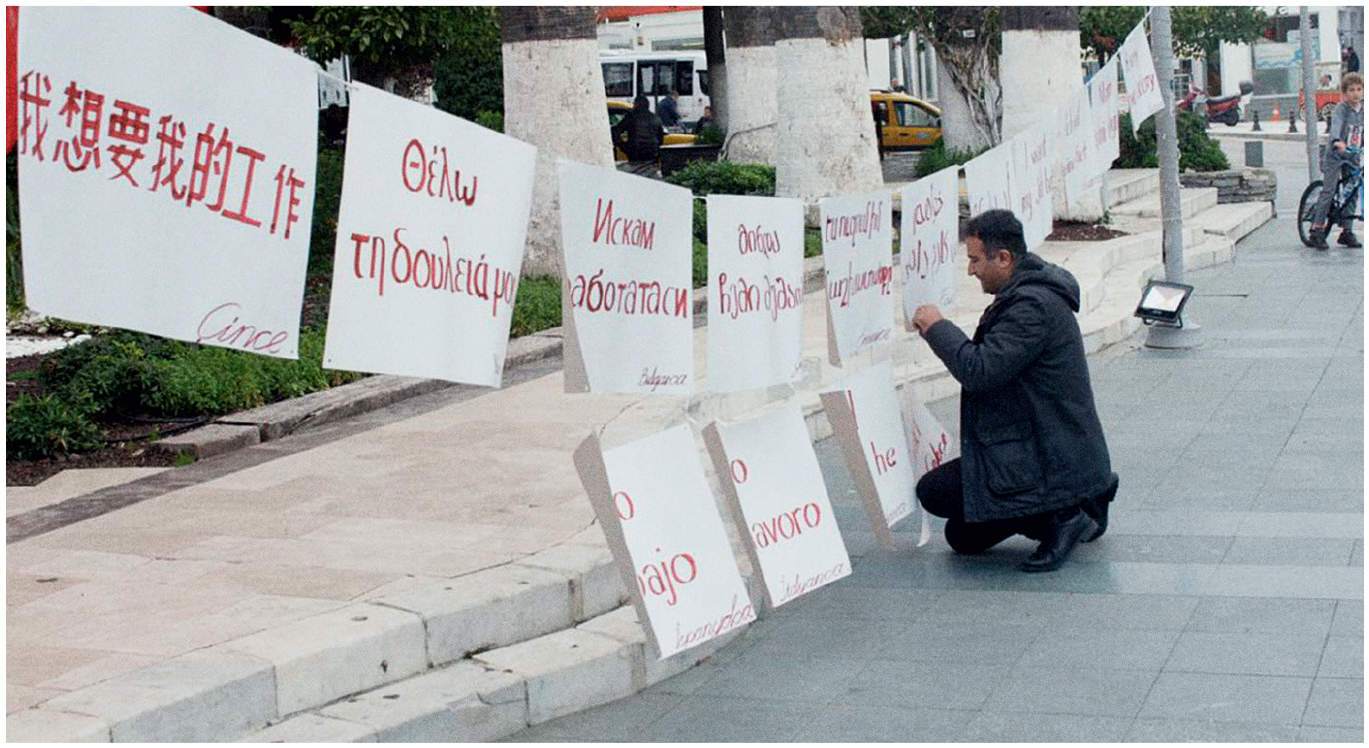
A still from the 2023 film Kanun Hükmü (The Decree). The film was banned from the Antalya Golden Orange Film Festival in Turkey
CREDIT: Ney Film / The Decree
Mater, meanwhile, was found guilty of “planning to make a film” about 2013’s Gezi protests. In an interview with the Turkish press, she said her plans came to nothing due to financial reasons. But unbeknown to her, her phone was tapped and police were recording her discussions with potential funders for the film.
In her court case, Mater tried to prove that she had, in fact, never made a film about Gezi. The prosecutor proclaimed that it was only because the Gezi protests failed that Mater couldn’t produce the film: the intention to produce the movie was sufficient for the 18-year prison sentence.
As of writing, five people remain in prison convicted of the Gezi case, and two are filmmakers.
“It’s an absurd case,” said Yücel. “If everyone who attended Gezi protests and filmed their experiences there joined forces, Mater could be released from prison.” He thinks the government showed its savvy while designing the Gezi case. “By prosecuting people from various world views, they ensured there could be no unified resistance to the case. They fragmented the opposition successfully.”
Another tactic employed by the government to further tar the name of Gezi activists took the form of propaganda films. In 2023, TRT, Turkey’s public broadcaster, released a limited series about Kavala titled Metamorphosis. Can Nergis plays the character of Teoman Bayramli, a fictionalised avatar of the philanthropist. The film’s script, penned by Mustafa Burak Dogu, portrays Kavala as an ex-communist who sold his soul to George Soros and other nefarious Western powers to stab the Turkish nation in the back.
Altyazı Fasikül described the TRT production as part of a smear campaign and scolded its attempt to “rewrite the personal history of Osman Kavala”, who has been imprisoned for nearly seven years despite the European Court of Human Rights calling for his release.
As the captivity of two leading producers continues, new cases concerning the film community emerge by the day. In the week I spoke to Yücel, the filmmaker Koray Kesik was detained, arrested, charged with being a member of a terrorist organisation, and later released. Nejla Demirci’s 2023 documentary Kanun Hükmü (The Decree), about a teacher and a doctor dismissed in the wake of the failed 2016 coup, was banned in Ankara and Istanbul and led to the cancellation of the Antalya Golden Orange Film Festival after its jury refused to stop its screening. That festival’s jury president said he was threatened with death if they refused to cancel the screening.
Yücel said the film community should be more active and productive, “because this is how fear operates”. He added: “If you give in to it once, your field of self-expression begins to shrink. You open this space for the government to limit you.”
After the opposition’s unprecedented electoral victory in March, there is hope. Yücel said he was cheered by the success of Hold Still at the Istanbul festival.
As for his practice, Yücel plans to continue interweaving filmmaking and film criticism. His films and writing will continue to search for the roots of Turkish autocracy in the country’s history while refusing to disregard current affairs.
“We want to expand the scope of our films to the grassroots, the academia and beyond. We’re using our networks to make sure our films reach wider audiences,” he said. In that objective, Yücel is undoubtedly walking in his father’s footsteps.