




Abstract

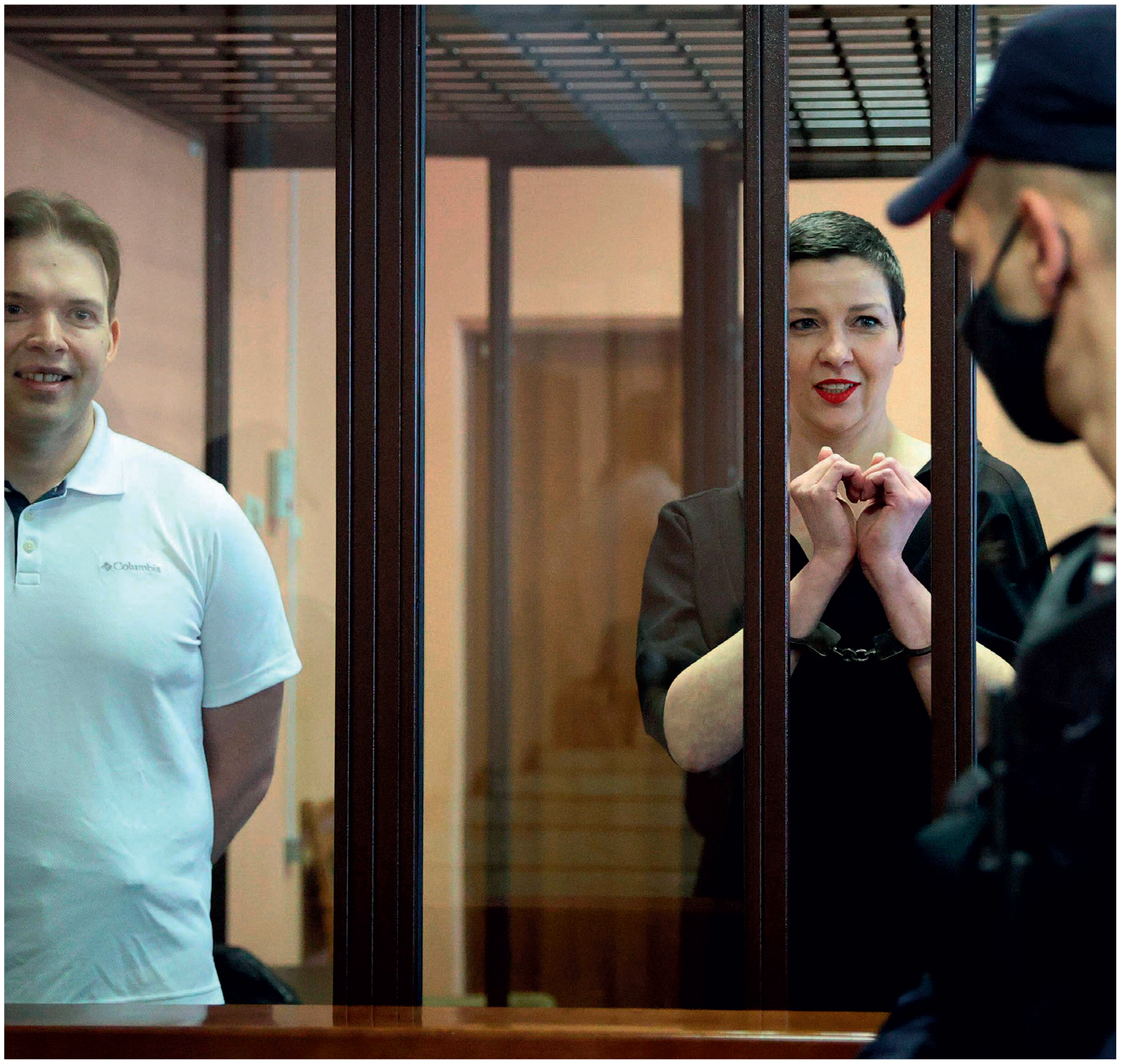
Belarus opposition activists Maria Kalesnikava (right) and Maksim Znak at a court hearing in Minsk in 2021. They have not been heard from for more than a year
CREDIT: (courtroom) Associated Press/Alamy ; (portrait) SOPA Images Ltd/Alamy
People with short sentences are coerced into writing letters to Belarus president Aliaksandr Lukashenka begging for a pardon.
For anyone coming from a democratic, free country, the stories of repression are confusing because, on paper, Belarus looks as if it might be similar to theirs.
Belarus has a constitution but in 2020, Lukashenka said: “Our constitution is not written for women.”
Belarus has laws, but as Lukashenka remarked: “Sometimes there’s no time for laws.”
Belarus calls itself a democracy, but in his address to protesting factory workers after the 2020 presidential election, Lukashenka declared: “Until you kill me, there will be no new elections.”
Lukashenka takes the peaceful resistance of the Belarusian people personally, viewing any citizen inclined towards democracy and freedom as an enemy. Politicians, journalists, analysts, activists, and human rights defenders are either sentenced to years in prison or forced into exile.
Tens of thousands of ordinary people have faced repression for actions such as participating in peaceful rallies in 2020, posting historical national symbols on social media (Lukashenka despises everything Belarusian about Belarusians), or for donating via Facebook to Belarusian military volunteers fighting for Ukraine. Everything is punished - just pick your poison.
The most troubling aspect of political imprisonment is when it’s not even possible to ascertain if some individuals are alive. How can this happen in Europe in 2024? Easily, it turns out.
Prisoners are denied basic rights based on the “damage” they have done to the regime and Lukashenka’s ego. They are cut off from legal support: no meetings with lawyers are allowed and prominent lawyers are disbarred. They are cut off from love as no phone calls or family visits are permitted. Parcels and letters often do not reach them.
They have no access to independent newspapers or TV in prison. Instead, they are forced to watch state propaganda channels that distort every bit of information. This is deprivation of contact with the outside world.
Many “politicals”, as political prisoners are often called, are not allowed to talk to other prisoners, especially if they spend weeks in punishment or solitary cells. It’s easy to spot them - their uniforms are marked with yellow tags.
Often, we hear about famous repressed Belarusians only when other prisoners have served their sentences, are evacuated from the country and share what they have seen.
The final step is to forbid any correspondence - the last key in this artfully orchestrated symphony of silence. The incommunicado mode.
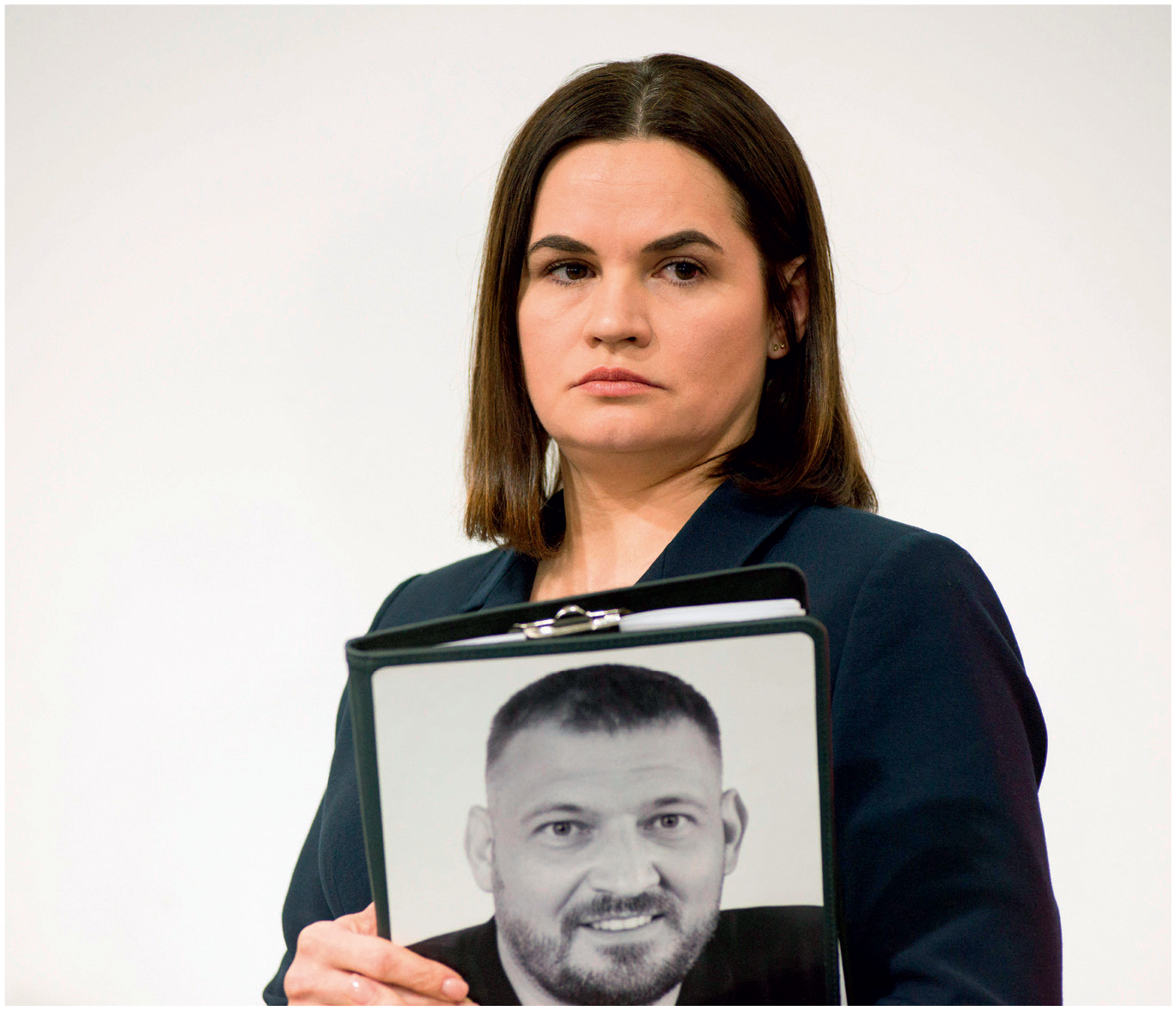
Blogger and political activist Siarhei Tsikhanouski, husband of Sviatlana Tsikhanouskaya, who stood against Lukashenka after the authorities refused to register him as a candidate in the 2020 elections, was sentenced to 19-and-a-half years in prison and has been in incommunicado for more than 570 days.
Musician and activist Maria Kalesnikava was sentenced to 11 years and has been in incommunicado for more than 590 days. Lawyer Maksim Znak was sentenced to 10 years and has been incommunicado for more than 600 days. The lack of news about them often compels us to ask: do we really know if they are alive?
Lukashenka practised the forced “disappearance” of his political opponents at the start of his dictatorial career. Politician Viktar Hanchar, businessman Anatol Krasouski, former interior minister Yury Zakharanka and journalist Dzmitry Zavadski all disappeared between 1999 and 2000 and are believed to have been killed on his orders. The scale of revenge is high, and now the opponents are literal hostages.
Belarus opposition leader Sviatlana Tsikhanouskaya holds a portrait of her husband, Siarhei Tsikhanouski during a press conference in Poland in 2024
Let me be direct. People are left in survival mode. But this does not mean we cannot do anything for the safety and freedom of these political prisoners. International pressure on the regime, in various forms, proves to be at least tangible and most stressful for the autocratic ruler in Minsk.
When there was a worldwide wave of rumours questioning Tsikhanouski’s condition, he was shown in rare prison footage. He had changed to the point where he was almost unrecognisable to his own wife, but we all saw him.
After Kalesnikava was moved from prison to intensive care for surgery, she was allowed a visit from her father while recovering. Propaganda didn’t hesitate to show her in the hospital, so the international “hysteria” asking “Where is our Masha?” could end. It was too loud, too annoying, too unnerving for the regime.
The narrative used against hostages is that they are forgotten - by the world, families and friends. This is never true.
But if we are not allowed to reach out to them with letters of support and postcards, we can continue talking about them.
We can share their inspiring stories on social media or publish their words or artwork - as Index does with the Letters from Lukashenka’s Prisoners project.
We can tell our friends about the situation in Belarus and write letters and postcards to all prisoners - including those being held incommunicado so the regime sees we haven’t forgotten them, so their jailers cannot lie to them, so censors in prison never have enough black ink to cross out our loud words of solidarity, so no one is left in silence.