




Abstract

Pathologists in Uganda are being stopped from uncovering the truth behind mysterious deaths, writes
What they do not understand is where the death is sudden.
The Ugandan state is known to be heavy-handed in dealing with citizens who belong to opposition political parties, and a “sudden” death is usually considered the “dirty job of the state”.
The implication is that the opposition politician (as they often are) has been eliminated through either physical violence or bio-chemical means. And pathologists are not always allowed to investigate properly.
Claims that poison is used as a way of dealing with dissent have become common in Uganda.
When Jacob Oulanyah, speaker of the 11th Parliament, died on 20 March 2022, his father, Nathan Okori, claimed that his son had been poisoned. The official cause of death, according to the Ugandan parliament, was multiple organ failure related to cancer.
Stella Nyanzi, one of president Yoweri Museveni’s most articulate critics, published a poetry collection on this subject that she provocatively entitled Eulogies of My Mouth: Poems for a Poisoned Uganda.
When Cerinah Nebanda, the opposition member of parliament representing the women of Butaleja District, died at the tender age of 24 on 14 December 2012, the entire country was astonished by the news since she was so young, and in very good health.
New Vision, a pro-ruling party daily newspaper, reported that a government chemist had found “cocaine, heroin, alcohol and several other chemicals” in her blood, gut and tissue samples.
Nebanda’s colleagues did not agree with these findings, so the speaker, Rebecca Alitwala Kadaga, sent the country’s most renowned and experienced forensic pathologist, Sylvester Onzivua, to South Africa with the samples to conduct a confirmatory autopsy.
On 18 December 2012, Onzivua was arrested at Entebbe airport and charged with abuse of office on the grounds that he was illegally and unlawfully in possession of the late parliamentarian’s body parts.
This disturbed Nebanda’s relatives and colleagues, who asked: “If the state had nothing to hide regarding what caused Honourable Nebanda’s death, why has it blocked Dr Onzivua from flying to Pretoria?”
Nebanda’s mother was unequivocal in her castigation of the state.
She told mourners: “The state knows who or what killed my daughter. This is why they arrested the pathologist that my daughter’s colleagues at the parliament had hired to seek a second opinion in South Africa.”
The country’s first lady, Janet Kataaha Museveni, responded by telling the mourners that Nebanda was not the regime’s biggest critic, so the state could not have done what it had been accused of.
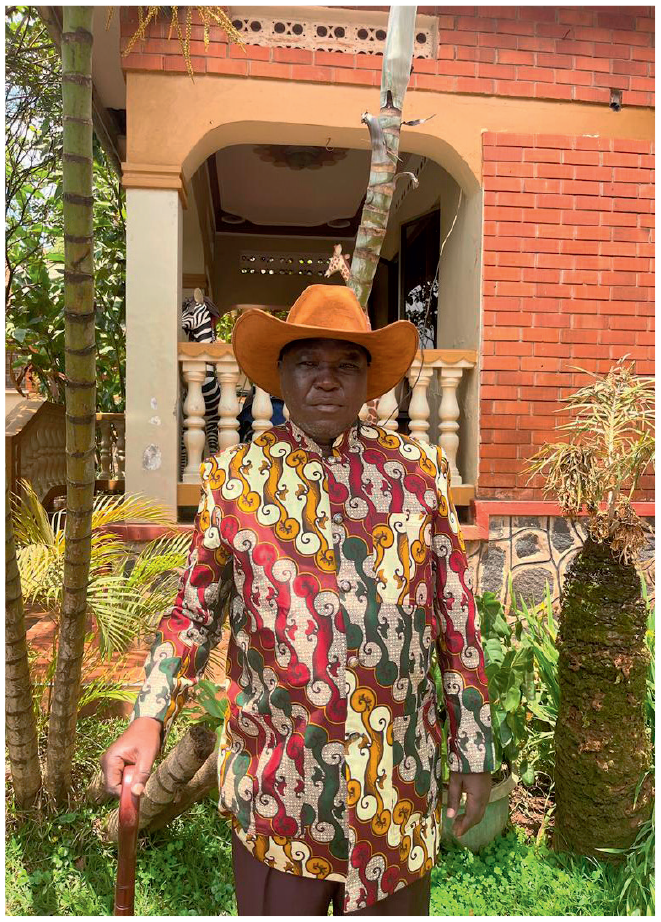
Dr Sylvester Onzivua was arrested before trying to perform an autopsy
Onzivua remained in police custody for two days, after which he was released on police bond (where an arrested person is released until the police complete their findings). After nine months, the courts threw the case out as the police did not have evidence that he had stolen the sample he was taking to South Africa. To allay fears that the state had a role in the death of Nebanda, the Ministry of Health claimed that it had done a confirmatory autopsy outside the country, in Israel, but people remained sceptical as there were questions the state could not convincingly answer.
First, why had it chosen to take the sample to Israel and not South Africa, the country where parliament had sent Onzivua? Second, why was the state now doing the confirmatory autopsy, yet it had hounded Onzivua for trying to do the same thing?
Finally, why was Onzivua not involved in carrying out the confirmatory test in Israel, since he was the one parliament had tasked to do the work?
The entire saga affected Onzivua’s work with his employer, the Ministry of Health, and Mulago National Referral Hospital, his workplace. Although he was the most senior, experienced and renowned pathologist in the country, his services were more or less dispensed with since he was not given new assignments.
“I was put on what Ugandans call kateebe,” he told Index, using the Luganda word for “little seat”, a phrase used in Uganda’s military to refer to officers who have not been given assignments.
“I continued receiving my salary, but I was not scheduled to carry out autopsies. You could say that my superiors at the Ministry of Health and at Mulago Hospital ostracised me because I was seen as serving interests antithetical to the ruling party.”
He added that his arrest had tainted his reputation, and said: “I was framed as an unethical and criminal person who had stolen the body parts belonging to a dead woman.”
The state had communicated a powerful message. If it could beat the best trained, most experienced and most renowned forensic pathologist in the country into a tight corner, what chance did the lesser-trained, lesser-experienced and lesser-known pathologists have?
When Onzivua turned 60, the mandatory retirement age in Uganda, in December 2023, he hung up his forensic tools. Although he was one of a very small team of pathologists in the country, he knew that he did not have a chance of getting a post-retirement contract since he was a marked man. The state had practically shut down his forensic laboratory.
Poison continues to be mentioned in several deaths in Uganda, but it is a subject that the state does not entertain. Onzivua knows why.
“All over the world, death is sensitive - especially if there are criminal or political overtones at stake. For this reason, the state does everything within its power to manage the narrative of the cause of death,” he said.
Several other high-profile people are rumoured to have died of poison, including Brigadier Noble Mayombo, who died in May 2007 while serving as permanent secretary of the Ministry of Defence and Veteran Affairs; the popular Muslim cleric Sheikh Nuhu Muzaata Batte, who died in December 2020; and Hussein Kyanjo, former member of parliament for Makindye West, who died in July 2023.
In 2015, David Sejusa, a general in the Uganda People’s Defence Forces, informed the nation that there was deep mistrust among members of the cabinet to the extent that people carried their own food and drink to meetings and state functions to avoid being poisoned. Media outlets including the Daily Monitor and the Observer quoted the general as saying: “We who are inside the army, inside cabinet, inside parliament - you cannot serve me tea and I take it.”
People set to work making coffins in Kampala, Uganda
CREDIT: (portrait) Sylvester Onzivua; (coffins) Joerg Boethling / Alamy

The state has learnt to manage the rumours better, even threatening to arrest those who utter the word “poison”.
But some dissidents manage to communicate the fear that they could be poisoned or murdered. One of these, Herbert Anderson Burora, former resident city commissioner for Rubaga Division in Kampala City, took to X in April after he was fired for condemning corruption in the ruling party that he served.
He wrote that if he were to die, people should “never believe that I died of a heart attack or multiple organ failure”, and that any accidents must be properly investigated.
“Heart attack or multiple organ failure” is how pathologists’ reports from government hospitals read. “A car or motor accident” is how police reports usually read when a dissident dies. Burora’s post critiques the falsification of both pathologists’ and police reports that is censorship as practised in Museveni’s government.