




Abstract

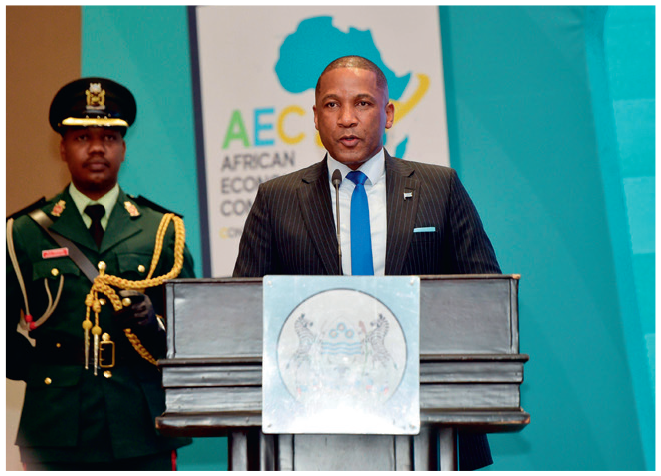
Boko speaks during the African Economic Conference in Gaborone, Botswana in November 2024
WHEN THE BUSHMEN were evicted from their ancestral lands in Botswana’s Central Kalahari Game Reserve in the 1990s, they turned to UK-based human rights group Survival International for help.
The Bushmen – also known as the San and the Basarwa – are Botswana’s Indigenous hunters and gatherers. Survival International, which campaigns for the rights of Indigenous and tribal people, was willing to fund a legal challenge to fight the group’s eviction, but there was one problem – the government was torturing the Bushmen and harassing those speaking on their behalf.
There were no takers for the Bushmen’s cause as people were afraid. However, a young human rights lawyer named Duma Gideon Boko stepped forward.
He sued the government on behalf of the tribe in a legal case that defined his career.
“The fact that Duma and his legal firm took on the Bushmen court case against a powerful government when other lawyers declined to work on it demonstrates his independence of mind and commitment to defending Indigenous rights,” Paula Zamorano Osorio, Survival International’s media and communications officer, told Index.
Survival International became involved in the court case at the request of the Bushmen and the group funded the work of the legal team, which consisted of Boko and UK barrister Gordon Bennett. At one point, Botswana’s government denied Bennett a visa, stopping him from travelling to Botswana and leaving Boko to fight the case alone.
But in a landmark decision on 13 December 2006, the Botswana High Court ruled that the government’s evictions were “unlawful and unconstitutional”, so the Bushmen had the right to return to their lands in the game reserve.
No one knew then that the young lawyer who had become a brave voice for justice would one day be elected Botswana’s president.
Born in 1969 in the small town of Mahalapye, Boko studied law at the University of Botswana, then went on to obtain a Master’s degree from Harvard Law School. He also studied for a diploma in human rights and humanitarian law from Lund University in Sweden.
He went on to establish a prestigious career and held many leadership positions that showed he was destined for greater things.
He became the country’s new leader on 1 November last year, with his seismic election victory bringing the 58-year rule of the Botswana Democratic Party (BDP) to an abrupt end. Boko leads the Umbrella for Democratic Change (UDC), a coalition of centre-left and left-wing political parties.
This is not his first foray into politics. Since 2010 he has been president of the Botswana National Front, a social democratic party and the main opposition until the 2024 election. He served as the country’s leader of the opposition from 2014 to 2019, and led the creation of the UDC.
Boko is also a former chairperson of the Law Society of Botswana and the Botswana Network of Ethics, Law and HIV/Aids, and a former president of the University of Botswana Student Representative Council.
One month after being elected, Boko showed that he had not forgotten about the plight of the Bushmen by allowing them to bury Pitseng Gaoberekwe – a member of the tribe who died in December 2021 – on their ancestral land in the Central Kalahari Reserve. The courts had previously barred the family from burying him there due to the forced displacement of the tribal group, and his body had been kept in a mortuary for more than two years.
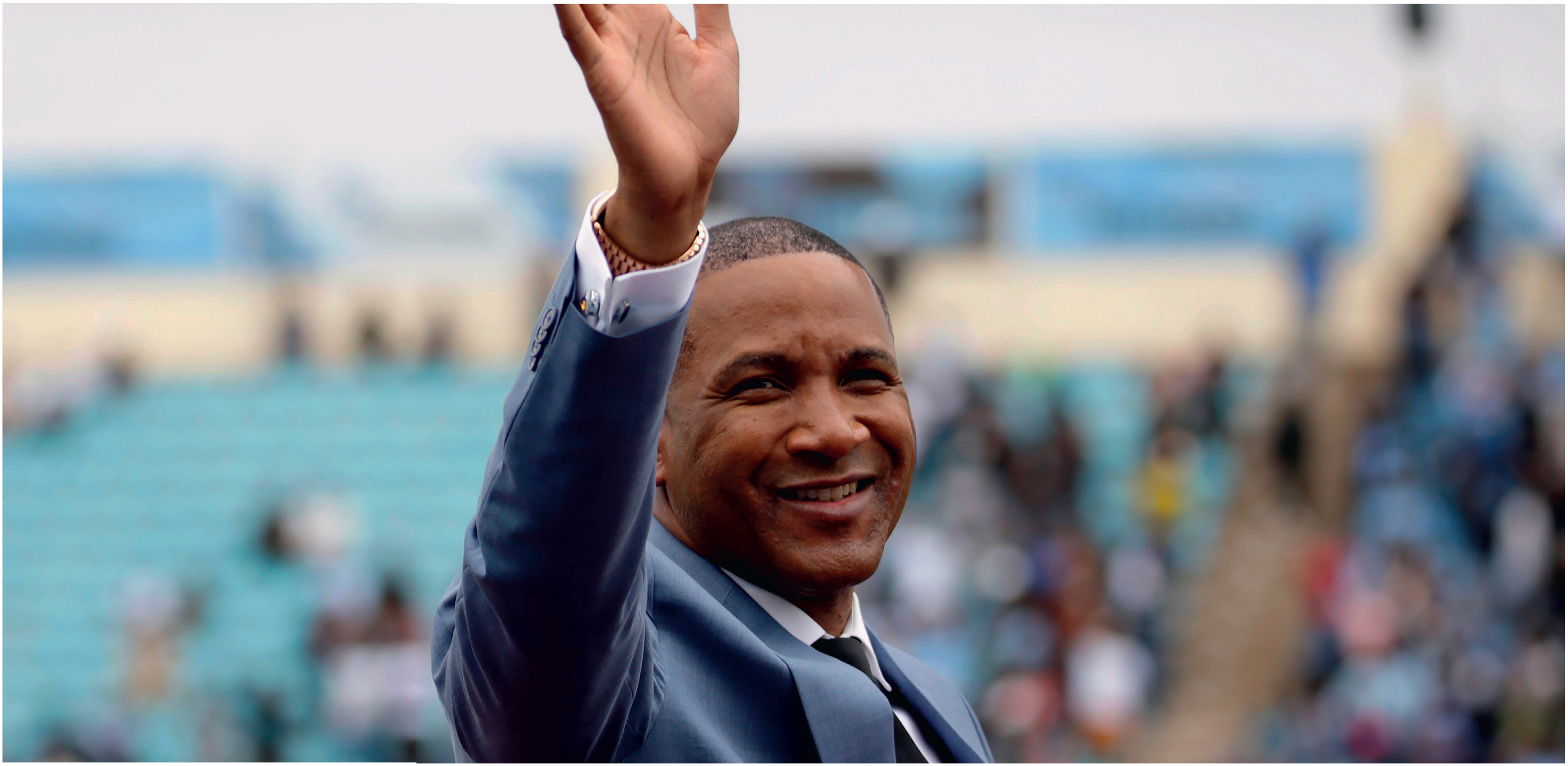
Duma Boko waves to crowds at his inauguration ceremony in Gaborone, Botswana on 8 November 2024
CREDIT: (main) Associated Press / Alamy; (inset) Tshekiso Tebalo / Xinhua / Alamy
Survival International’s Osorio said many sectors of Botswana’s society were hostile to the Bushmen who, as hunter gatherers, were regarded as inferior by the majority cattle-owners. Boko has been influential in reshaping public opinion so that they have started to be regarded as individuals with equal rights.
She added that Boko’s work on the case had created a lasting legacy for Bushmen and other minority groups in Botswana who have suffered decades of racism and discrimination from consecutive governments.
Another cause he has championed has been LGBTQ+ rights. Caine Youngman, a human rights activist who led the fight against the country’s ban on consensual same-sex relationships, told Index that Boko volunteered to represent him long before he became president. The pair have collaborated on human rights issues for the past 15 years.
“He has always had an interest in human rights, particularly for the LGBTQI community,” said Youngman. “Initially we had our first decriminalisation case, which was in my name – Caine Youngman v the State. We were seeking to do away with the penal code provisions that criminalised same-sex sexual behaviour.”
In a strategic move, the pair ended up withdrawing the case to deal with an “easier victory” first – a court challenge asking the government to register the Lesbians, Gays and Bisexuals of Botswana group, which they won in 2014 with a different lawyer.
“After the victory of registering the organisation, we used that to relaunch the decriminalisation case,” he added. They won the case in 2019 and the ruling was upheld in 2021 after a government appeal against it was dismissed.
On top of his work representing marginalised communities, Boko is also a free-speech crusader, according to Youngman. His law firm has offered free legal services to university students who speak truth to power.
“The University of Botswana has always had a strong student representative council, which most of the time has gone at loggerheads against the university administration or the Ministry of Health,” said Youngman.
He added that by offering free legal aid, Boko has helped to protect freedom of expression for students and has given them a platform to express themselves and challenge the powers that be.
Alice Mogwe, the president of the International Federation for Human Rights and director of the Botswana Centre for Human Rights, highlighted Boko’s credentials as an abolitionist who has taken on a number of death penalty cases over the years.
One client, Brandon Sampson, was on death row while awaiting the outcome of a Court of Appeal trial. The hearing in 2011 led to his death penalty being removed, and a 20-year jail term being imposed instead. He completed community service and was released in 2013, and is now “reportedly a productive member of society”, said Mogwe.
“Over the years, President Boko has expressed his opposition to the death penalty, including before the courts during his defence of those charged with a capital offence,” Mogwe told Index over email. “We look forward to serious consideration of the imposition of a moratorium on the death penalty, which will be in keeping with the human rights-based approach to governance espoused by the new government.
“We also look forward to a serious reflection of how to consciously apply contextualised human rights values in governance and [to] the economy.”
But how much of a “human rights-based approach” will Boko really take in his governing?
He pledged to do this during his election campaign, and his party’s manifesto backs up this ideology. It promises to usher in a new democratic constitution and herald far-reaching societal changes. Issues that Boko has spoken out on include increasing migrant rights – such as helping undocumented Zimbabweans become legal by granting them temporary work and residence permits – supporting young people, and raising basic pay.
The UDC manifesto reads: “The current constitution is built upon patriarchal, ethnic, cultural and age inequalities of the old society and has, over the 60 years of the BDP rule, simply reproduced these inequalities.
“Together with the people of Botswana, we will act to establish a body and mechanism within the confines of the law to set in motion a comprehensive review and public engagement (people-driven, participatory, inclusive and transparent) for a new constitution crafted to offer our nation an inclusive government system.”
It says that the new constitution will have checks and balances to fight corruption and curb abuses of power; provide impeachment articles for the head of state and a recall system for elected representatives; and provide for the direct election of the president and abolish the “automatic succession clause”. The succession clause means that if a president dies, resigns or ceases to hold office (outside of an election), the vice-president becomes president.
The manifesto also promises to “drastically reduce” the powers of the president by giving parliament or special organisations the responsibility of appointing people to senior government positions. It also pledges to reform the electoral system and establish an Independent Electoral Commission.
Only time will tell if Boko will stay the course on his human rights promises. But on 10 December last year – Human Rights Day – he said that his government was committed to placing human rights at the core of its policies, and he promised that injustices, such as those committed against the Basarwa people, would not be repeated: “In our human-rights-led government, no citizen will be undermined.”
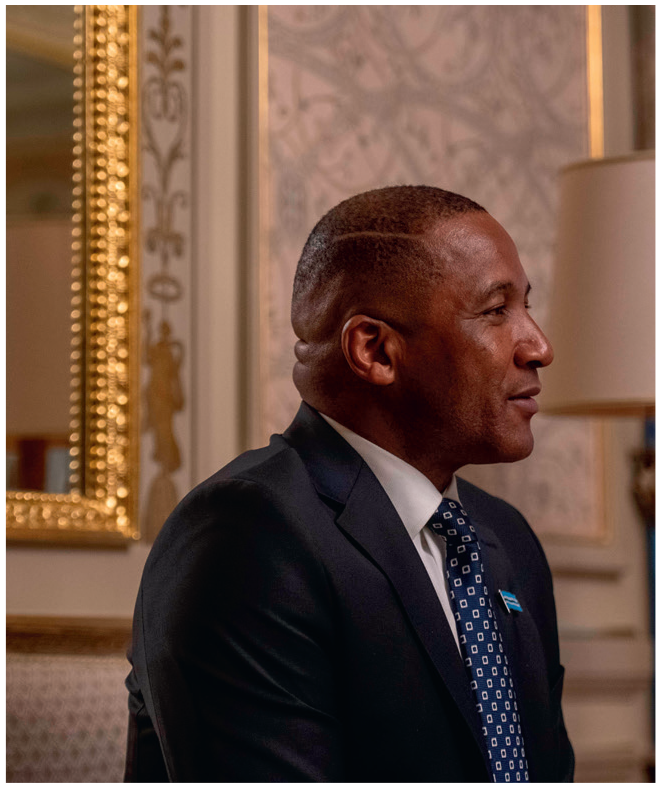
Duma Boko was sworn in as Botswana’s president on 1 November 2024, bringing the 58-year rule of the Botswana Democratic Party (BDP) to an abrupt end
CREDIT: Jonas Roosens / Belga News Agency / Alamy
Footnotes