




Abstract

Tunisia’s creative scene is pushing back against President Kais Saied’s control.
YASSINE ALOUINI, A young filmmaker, was visiting his hometown Kairouan in the centre of Tunisia, when he had the idea for his short film Décret 25.07. The inspiration came to him after he saw roughly 50 Black people fleeing the city on foot. It was late February 2023, three days before President Kais Saied made a speech claiming that irregular migration from sub-Saharan Africa was aimed at creating a “purely African country that has no affiliation to the Arab and Islamic nations”. The hateful speech unleashed a wave of violence against Black Africans.
Shocked by what he witnessed, Alouini remembers: “I imagined a decree creating a new job, that of ‘bounty hunters’, who would be financially compensated for assisting police in chasing irregular migrants.”
Within two hours, he had started writing the script for Décret 25.07. Its title clearly alludes to President Saied’s 25 July 2021 coup, which marked the shift to a highly authoritarian, presidential regime.
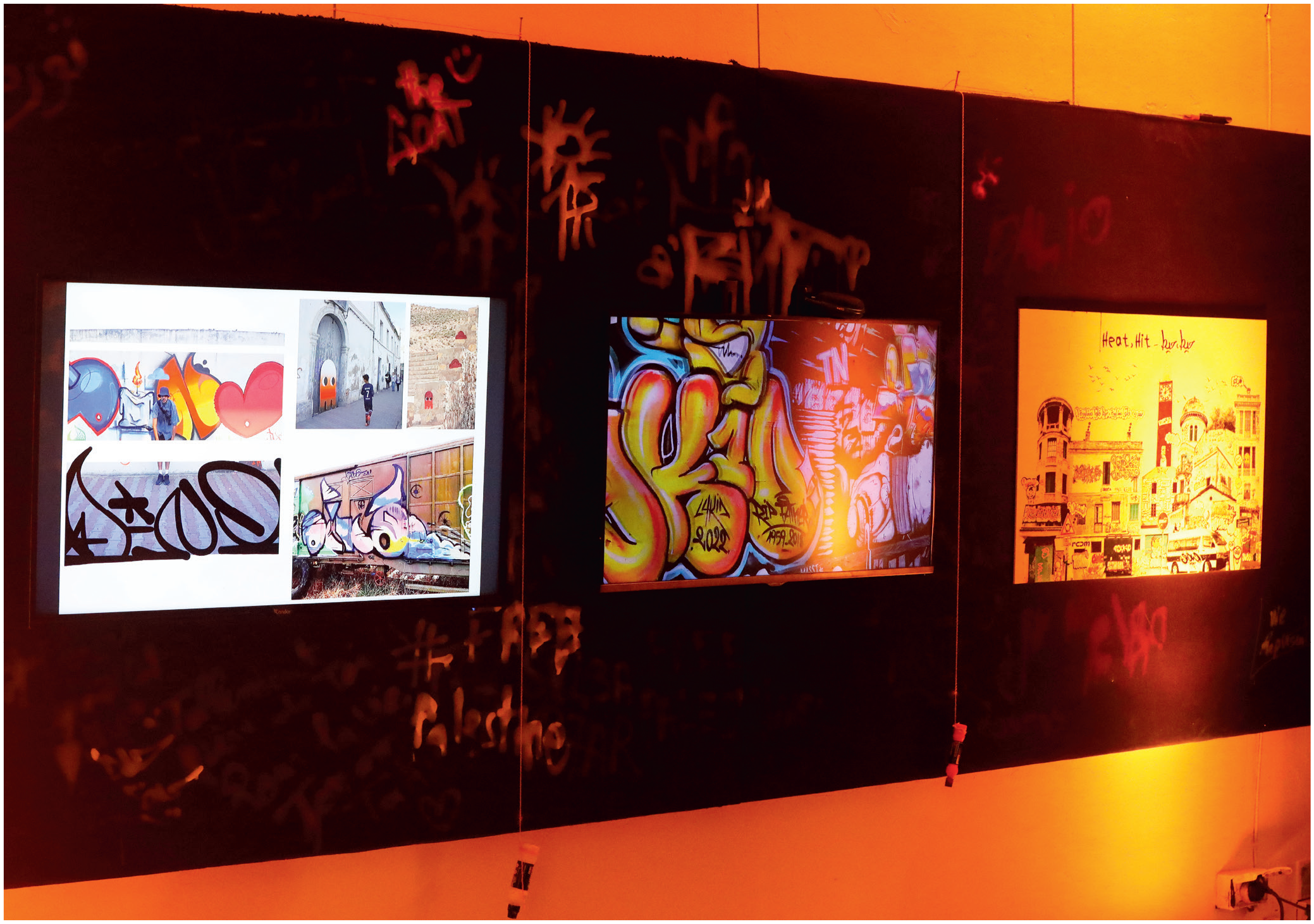
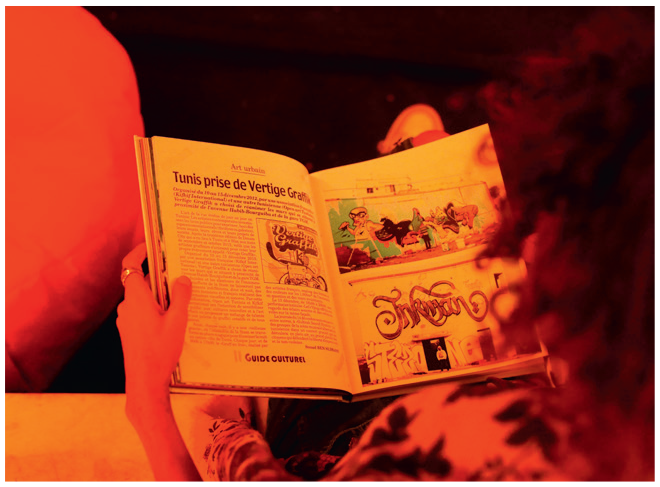
Heat Hit is the first graffiti archive in Tunisia, a scene that emerged after the Tunisian revolution
Set in 2025, in the midst of a worsening displacement crisis, the story set in Tunisia recounts the last night of an undocumented couple from the Ivory Coast en route to Europe. The president has recently issued a decree inviting citizens to collaborate with law enforcement in targeting migrants, and a group of bounty hunters decide to disrupt the young couple’s plans.
“Those who choose to leave their country do so because they’ve lost hope and are searching for a better life elsewhere,” Alouini said, rejecting the racist treatment Tunisians face in Europe, similar to the discrimination Sub-Saharan Africans experience in his homeland.
Black migrants have become a scapegoat for Tunisia’s intractable economic and social crisis. The president’s anti-migrant rhetoric and the surge in violent racism across the country have pushed more African nationals to flee and the North African state has emerged as a key transit point for sub-Saharan migrants and asylum seekers.
Alouini claimed he has “no limits” in tackling certain topics, regardless of whether they are sensitive, though he admitted that others in the artistic community cannot express themselves freely, fearing state censorship and jail time. He recalled the day when the film’s editor asked to have his name left off the credits, as they were piecing together scenes from Décret 25.07.
“We know we’re under some kind of dictatorship. I see how my colleagues are affected. Many no longer want to take risks,” Alouini said.
In his experience, most independent artists stay true to their views and bring them to life despite the lack of funding, limited opportunities and the challenges of operating under the growing authoritarian rule of President Saied. Alouini is confident that nothing will stop him from speaking his mind. He believes there are acts of resistance within Tunisia’s art space where creatives continue to work independently, each striving to do their best, and engaging in alternative forms of expression.
“No matter what, there will always be a vocal minority. That’s all we have left,” he said. “Since the 2011 revolution we can’t be silenced.”
Taking to the streets
Ameni Ghimagi is the co-producer of Heat Hit, the first graffiti archive in Tunisia. She works with Ilyes Louati, a young cultural entrepreneur. During her teens, Ghimagi was tagging walls, which her parents saw as an act of vandalism.
“The walls I grew up around as a teenager really stuck with me. I couldn’t paint graffiti but I always found it impressive,” she said.
Ghimagi told Index that Tunisia’s rich, dynamic street art scene emerged after the uprising that led to the fall of long-time dictator Zine al-Abidine Ben Ali in 2011, highlighting how walls covered in writings and drawings serve as a canvas for the country’s history.
She noted that traces of countless graffiti pieces are now hard to find, whether they were worn out by the weather, erased or covered up.
“80% of the murals that we catalogued no longer exist,” she said. “Heat Hit is more than just a beautiful compilation of artworks, it’s a project that pays tribute to the artists who are behind those walls so they’re not forgotten.”
She suggested that graffitists are often excluded from official discourse, dismissed and seen by the state as drifters.
Looking back at the outburst of artistic production during and after the Tunisian revolution, Ghimagi highlighted how urban art served as a means to make a statement, and reclaim the public space that had long been denied. Today, she hopes to help preserve this art and make it last in a country where creative talent abounds, but public venues for alternative forms of art remain scarce.
Reflecting on Tunisia’s shrinking civic space, where few dare to speak openly, Ghimagi urged artists to remain authentic and resist censorship.
“We must not forget [what] we’ve experienced before. We need to keep speaking up,” she insisted. “If we stay quiet, we will only allow anyone to restrict or deny us our freedoms.”
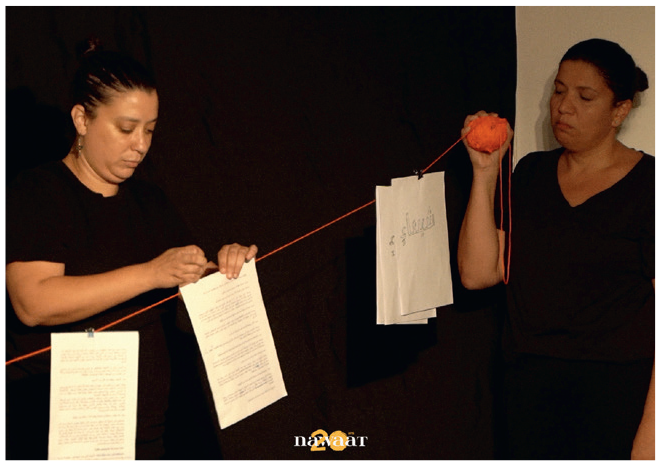
No Paradise Beneath Their Feet puts the taboo of non-motherhood on the Tunisian stage
CREDIT: Nawaat
Once considered a beacon of hope for democracy in the Arab region, Tunisia has seen significant democratic backsliding since Saied assumed full control in 2021. The autocratic president has tightened his grip on Tunisia’s institutions and enacted his own decree laws that severely limit freedom of expression. In the last two years, he has used the draconian Decree Law 54, which criminalises the spread of “false information”.
Dissenting voices are being repressed, with journalists, lawyers, political opponents, artists, dissidents and human rights defenders imprisoned.
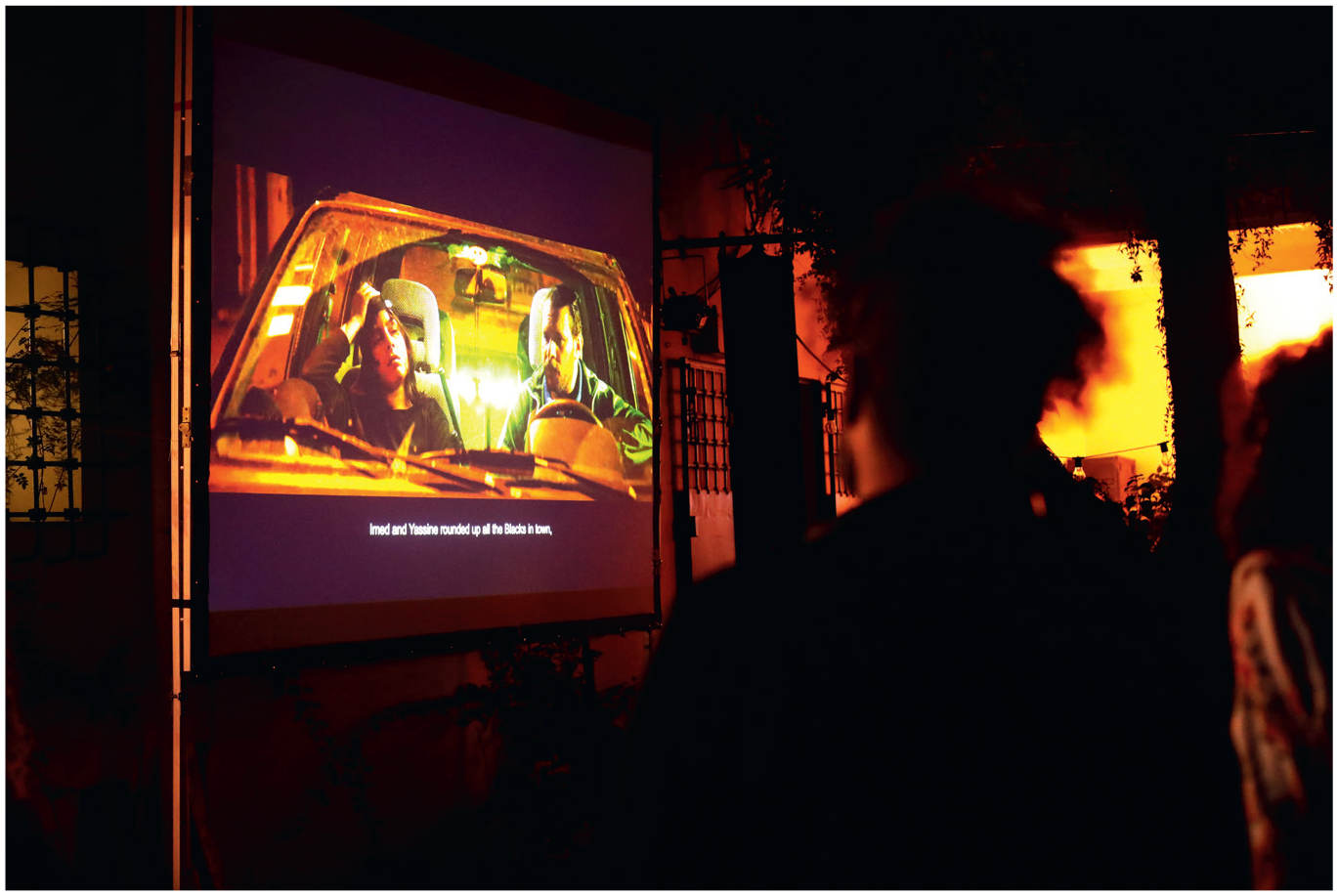
A screening of Décret 25.07, a film inspired by the violent fallout of President Kais Saied’s hateful rhetoric towards Black Africans
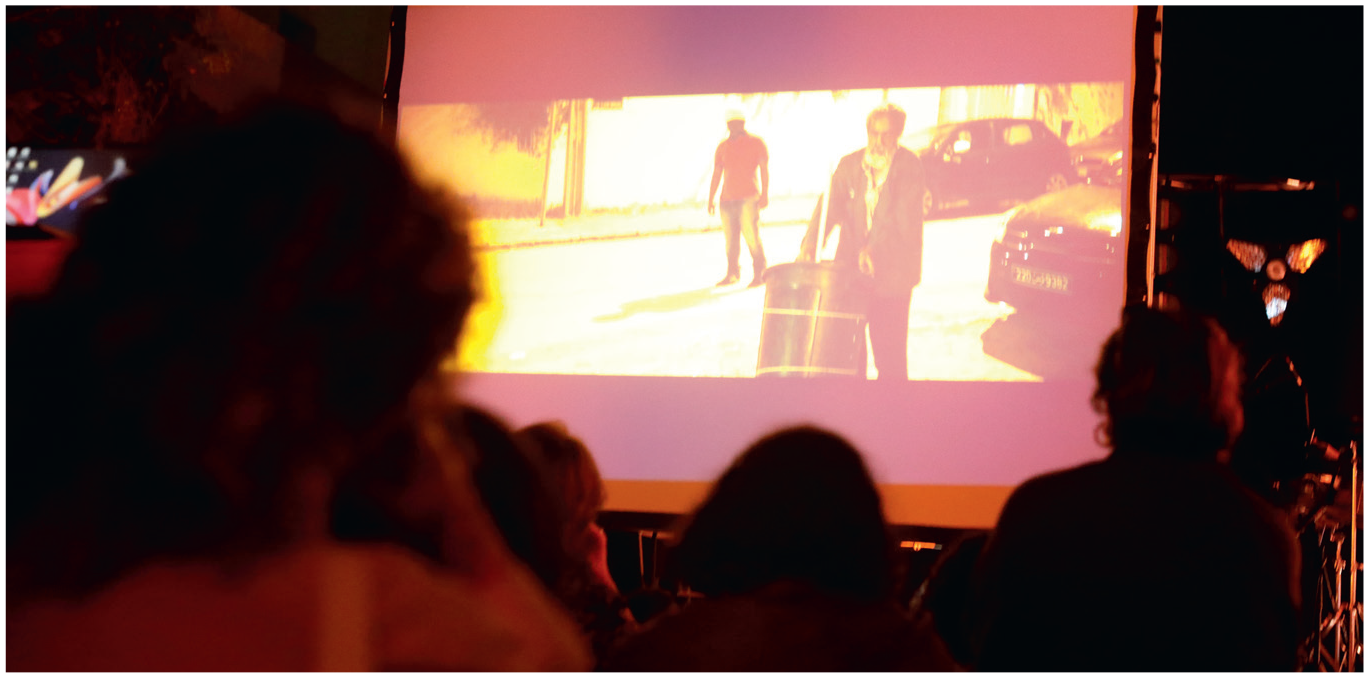
Putting taboos on stage
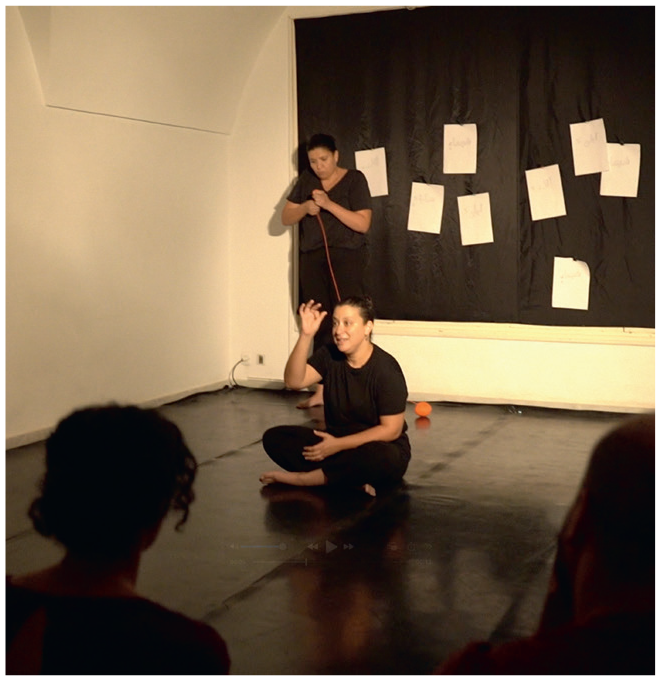
No Paradise Beneath Their Feet, a play by actor and theatre director Mouna Ben Haj Zekri and Egyptian researcher and performer Mai Choucri deals with the issue of non-motherhood, a subject few Tunisian women feel bold enough to discuss.
When her co-producer proposed the idea for the show, Ben Haj Zekri immediately connected with the topic, as a childless woman herself with “no paradise beneath her feet”.
Based on the testimonies of six women, the theatrical reading explores the experiences and emotions of both those who have chosen not to become mothers and those who have not been able to have children.
Since the early stages of the play’s pre-production, the two artists realised that non-motherhood is an unspoken, painful topic. For all the women they met, it was the first time they had talked about it.
No Paradise Beneath Their Feet takes a deep look into the realities of those who do not conform to motherhood and challenge the societal norm of childbearing.
“I discovered what it’s like for women undergoing medically assisted procreation. They cling to a fragile hope, facing high costs, no psychological assistance, and often lacking family support,” Ben Haj Zekri said.
She explored some difficult questions and debates within the theatrical piece: the rejection of egg freezing as part of a capitalist plan to delay motherhood; the difference between single mothers – who are in an unchosen, precarious situation – and solo mothers, who are in a privileged position of choice; the financial challenge of a woman raising a child on her own; the right of all women, regardless of their gender expression, to become mothers.
Ben Haj Zekri said that despite the odds, Tunisians continue to push boundaries in creative circles like cinema and theatre.
“Bans or restrictions won’t stop us,” she vowed. “What matters to me is that drama stays real, and as artists we stay as close as possible to our real-life experiences.”
Footnotes