




Abstract

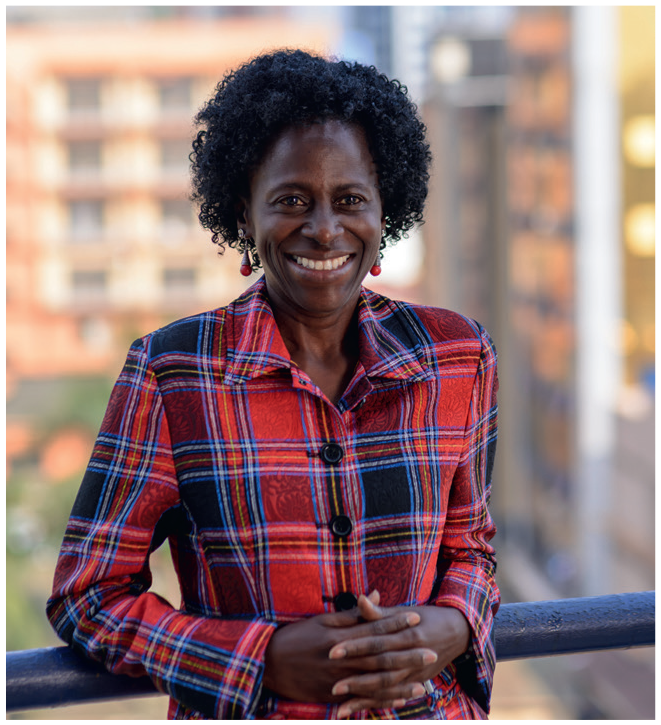
Olive Kobusingye is one of very few who have spoken out publicly about corruption within Ugandan healthcare
NEARLY EVERYBODY IS scared of talking about the mess in Uganda’s health sector. Several doctors and health officers gave me details of the tragic deterioration of the sector over the years, but none of them would speak on the record because they feared that they would be swiftly punished if they did.
In Uganda’s political landscape at the beginning of 2025, censorship in the health sector thrives. Everybody – including politicians who belong to the ruling party – has been silenced by the powerful family running the country: Gen Yoweri Kaguta Museveni, the president and commander-in-chief (who has been in power since 1986) and his son, Gen Muhoozi Kainerugaba, who has been the commander of the defence forces since March 2024.
These two broadcast the power they have from the rooftops. Time and again, Museveni has said he would crush his enemies (meaning his political opponents), while his son has informed the world that his wish is to behead opposition politician Robert Kyagulanyi Ssentamu (popularly known by his stage name Bobi Wine) and hang retired colonel Kizza Besigye, who was abducted in November 2024 from Kenya and has been imprisoned in Uganda ever since. Besigye was at one time Museveni’s personal doctor before becoming an opposition leader.
When members of parliament demanded that Kainerugaba appear before them to explain his controversial statements (usually made on X), he refused, declaring them clowns and threatening to arrest them. He has done all this with impunity, aware that nobody dare touch him.
It is common knowledge that Uganda’s health sector is in a sorry state following four decades of misrule. There is the theft of public funds; appointments and promotions of medical personnel based more on regional, ethnic and political affiliation than on merit; and the prioritisation of political projects over essential ones.
An issue underlined by those I spoke to was the difficulty in accessing facilities because of long distances between health centres, a lack of essential medicines and the high cost of medical services, and low doctor-patient and nurse-patient ratios of approximately one to 25,000 and one to 11,000 respectively. They also pointed out the lack of regulation of the pharmaceutical industry, leading to an increase in fake medicines, drugs being sold over the counter – including antibiotics – and the poor training of medical staff in under-staffed, ill-equipped and inefficiently-monitored universities and colleges.
Olive Kobusingye, a surgeon and researcher, explained the state of censorship in the health sector. She told me about the ways in which it manifests itself, how it imperils the provision of health services and the impact it has on Ugandans in general, particularly the marginalised ones who cannot afford to fly out of the country for specialised treatment the way ruling party politicians and senior civil servants do.
Kobusingye has published more than 80 articles in peer-reviewed journals and two books on Uganda, both documenting the heroism of ordinary Ugandans under Museveni.
She emphasised the climate of fear in which medical personnel work. She said they could not speak openly about glaring inadequacies, inefficiencies and inequalities in the health sector because they feared being punished – for example, by being disciplined, denied promotion or transferred to remote areas of the country.
“This fear leads to widespread self-censorship, which makes medical officers look on as the health sector deteriorates,” she said.
Because the government is not held accountable, many communities – especially those in rural areas – consider healthcare a privilege and not a right.
“For such marginalised communities, whatever bare minimum they get from the government, for instance a health centre that is poorly stocked and staffed, is good enough,” Kobusingye explained.
It is common knowledge in the country that any attempt to educate people about their rights is frustrated by the state, which then paints the educator in question as an agent provocateur. Such a person faces arrest on some trumped-up charge of fomenting trouble or engaging in hate speech, which is the new standard charge slapped on people who call out the government. This fear of arrest leaves the state narrative intact: that despite a few shortages here and there, there is no crisis in the health sector – everything is under control.
But there is a lot that demonstrates that all is not well. Consider the more than $397 million earmarked for building a hospital in Lubowa. It should be operational by now, but there is nothing to show for it. All efforts by parliament to access the construction site have been blocked, and it is no wonder that Kobusingye considers Uganda’s health sector a “deep black hole” with regard to how money is used.
“The myriad ways in which funds are spent means that we cannot know how much money has been spent on this or that aspect of the health sector,” she said.
Take the example of medical tourism – the practice of senior civil servants and political leaders (and their families) travelling abroad for healthcare.
“Its cost is unknown,” Kobusingye said. “While those who work and pay taxes … die for lack of the most basic care, [money is taken from] – the Ministry of Health, various other ministries, parliament and the State House – to meet the costs of travel, medication and upkeep of the select few in foreign hospitals.”
The high number of senior figures who have died in foreign countries while seeking medical care has put a spotlight on Uganda’s crumbling health infrastructure.
In 2022, Uganda’s speaker of parliament, Jacob Oulanyah, died in Seattle. Emmanuel Tumusiime-Mutebile, the governor of the Central Bank died in Nairobi in the same year. In March 2023, Kenneth Kakuru, justice of the Court of Appeal of Uganda, also died in Nairobi, and soon afterwards, Keith Muhakanizi, permanent secretary in the office of the prime minister, died in Milan.
Anybody who proposes that the government should improve the services at home to save on medical tourism is labelled as callous, as happened when the Ugandan diaspora in Seattle protested against the millions of dollars spent on Oulanyah. The chief justice of Uganda, Alfonse Owiny-Dollo, declared the protesters “wicked”.
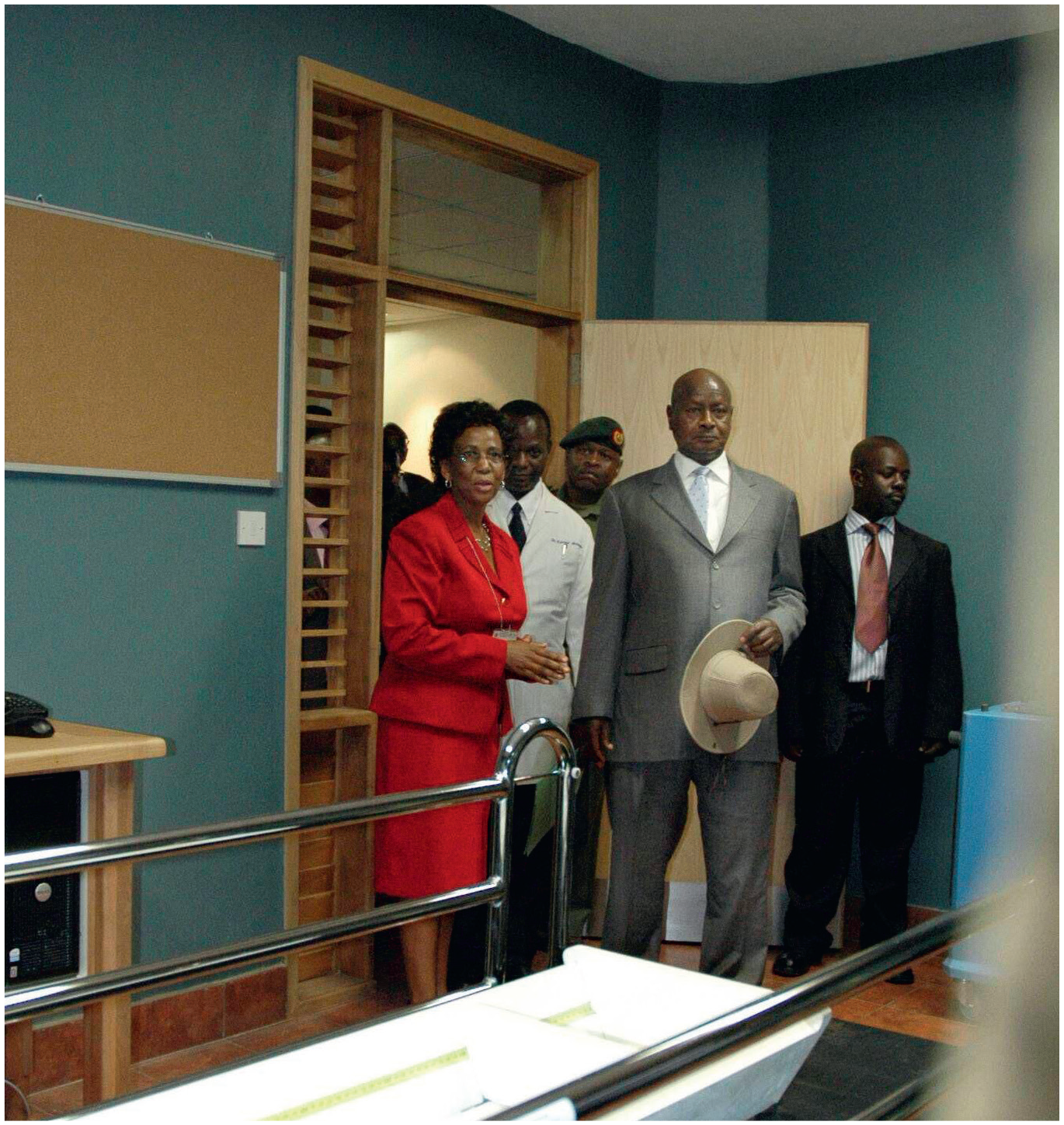
Ugandan President Yoweri Museveni at the opening of a hospital in Kampala in 2008. Censorship and fear have meant that the declining quality of healthcare in Ugandan hospitals goes under the radar
CREDIT: (Olive) Wyclif Nvule; (Museveni) Imago / Alamy
With such a judgment from the country’s top judge, what are the chances that censorship in the health sector can be fought?
Footnotes