




Abstract

Whilst president Recep Tayyip Erdoğan claims Turkey’s healthcare is flourishing, medics are paying the price for speaking out against false government claims or discriminatory policies, writes
Turkish President Erdoğan has bragged of the improvements his government made to healthcare – but health professionals tell a different story
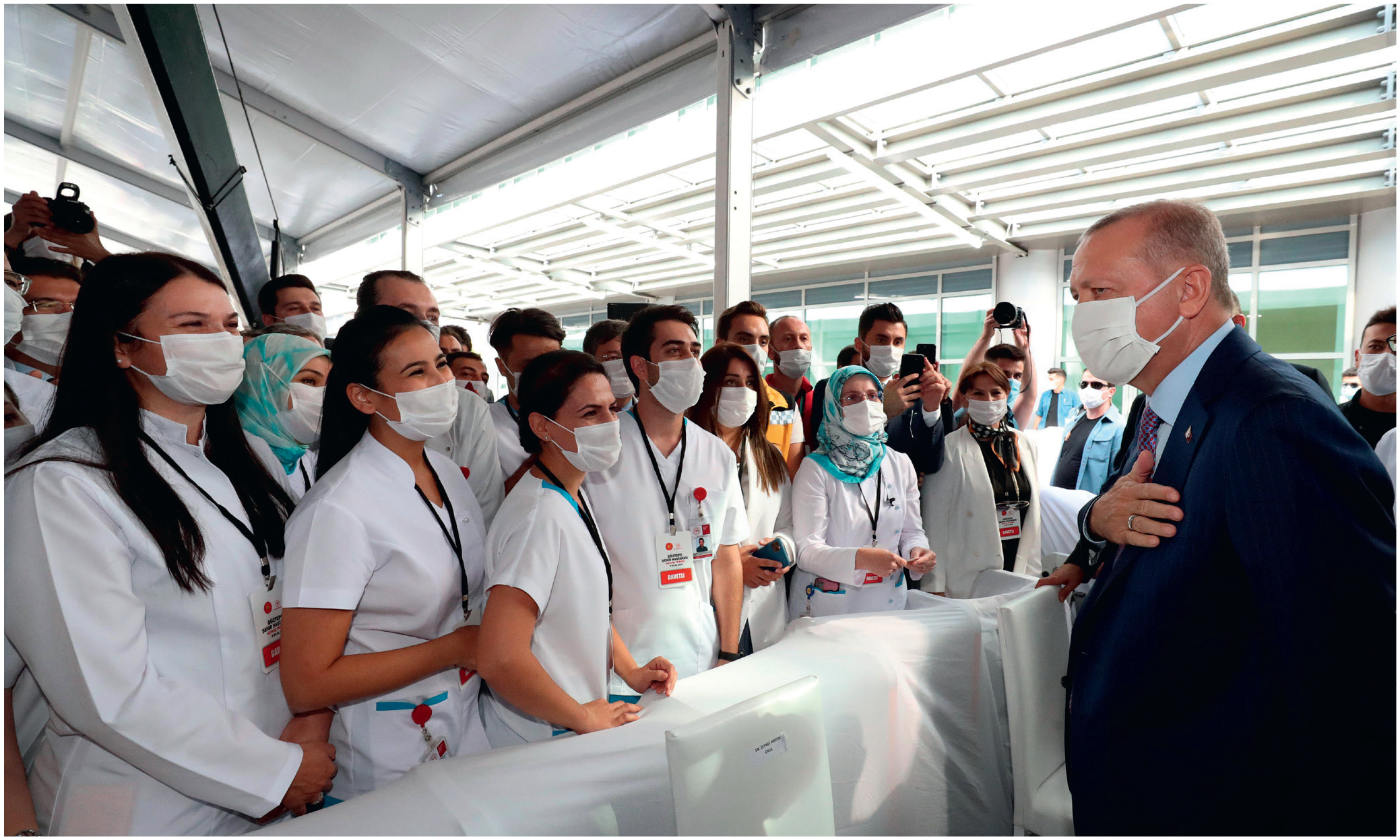
SINCE HIS JUSTICE and Development Party (AKP) ascended to power in 2002, Recep Tayyip Erdoğan has boasted about Turkey’s healthcare. Under his watch, the AKP introduced its Health Transformation Programme in 2003 – a flurry of reforms that aimed to improve the efficiency, quality and accessibility of health services.
The World Bank applauded these changes, concluding that “Turkey significantly improved the supply of services” between 2003 and 2013. Set up on a combination of national and private health insurance, the country’s healthcare is also affordable, with all residents and citizens able to access services for a small monthly premium the equivalent of about $20.
The success of the healthcare system meant it soon became a political tool in the hands of an increasingly authoritarian government. In election campaigns over the past decade, Erdoğan frequently showed footage of hospital queues from the 1990s. He boasted of having revived a healthcare system that, he warned, would collapse if the opposition ended his reign.
But for Turkey’s health professionals there is a different side to the story – medics complain of being overworked, underpaid and regularly subjected to abuse.
Roughly 88% of Turkey’s medics (100,000) are members of the Turkish Medical Association (TTB), which has branches in 54 provinces. The professional body and registered trade union monitors medical practitioners’ grievances and issues reports annually. For this reason, the government has continually attacked the TTB.
As medics dealt with the Covid-19 pandemic in September 2020, Devlet Bahçeli – whose Nationalist Movement Party (MHP) governs in a coalition with the AKP – called for the TTB to be shut down and for its leadership to be prosecuted. In 2023, an Istanbul court sentenced the union’s leader, Şebnem Korur Fincancı, to nearly three years in jail on charges of disseminating “terror organisation propaganda” – a move seen by human rights groups as an attempt to silence government criticism.
Even before the tenure of Fincancı, who is a highly-regarded human rights defender, TTB members have found themselves in trouble with the authorities.
In 2018, TTB’s central council warned that the violent clashes between Kurdish militants and Turkish security forces threatened public health. The union released a statement titled “War is a public health problem”, and Erdoğan subsequently made a speech calling the TTB “terrorist lovers” and deriding its anti-war rhetoric. He went on to investigate TTB members who had signed the statement and dismiss them from roles in the Ministry of Health.
In an interview with Index, Alpay Azap, who was elected TTB’s president in June 2024, said little had changed regarding the strife between his organisation and the government. “Whether people can freely speak their minds and point out shortcomings is a health issue,” he said. “Freedom of expression is essential to protect public health.”
Azap complained that warnings issued by TTB continued to be ignored due to “political considerations” and fears 2025 will be an even more challenging year. One development that has caused concern is Erdoğan’s declaration that 2025 will be the Year of the Family. Claiming that population growth was essential for the nation’s “survival”, the president laid out a series of policies in January aimed to support traditional family values, such as financial support for young couples, in a bid to reverse Turkey’s declining fertility rate. While some of these measures appear to offer benefits to some citizens, they marginalise others, with Erdoğan even referring to LGBTQ+ people as a “poison injected into the family institution”.
For Azap, this was also a clarion call for doctor bashing. “After this speech, if we make a statement as medics about protecting female health [through] family planning then the government will target us,” he said. “But we protect female health nevertheless. The government may have an agenda of its own and consider, for example, Turkey’s ageing population as a problem. But risking young women’s health to grow birth rates is unacceptable.”
There has also been intimidation of TTB members and other medical professionals who have raised concerns with the government or challenged its narrative, as seen during the pandemic.
“There were multiple court cases against our medics who published scientific data, especially during Covid-19,” Azap said. According to the TTB, the government threatened doctors who posted online about local virus outbreaks with criminal charges in an attempt to hide the extent of the pandemic’s spread.
Many doctors were threatened with prosecution. Among these were Özgür Deniz Değer, co-chair of the TTB’s branch in the eastern city of Van, who was charged for “creating fear and panic among the people”. The charges, which were later dropped, came after he posted on X (formerly Twitter) that he was uncertain about the government’s health worker pandemic death toll.
Kayıhan Pala, a professor of public health, also faced a disciplinary investigation for sharing his views on the numbers of reported cases in Bursa, and for accusing the government of understating cases and deaths.
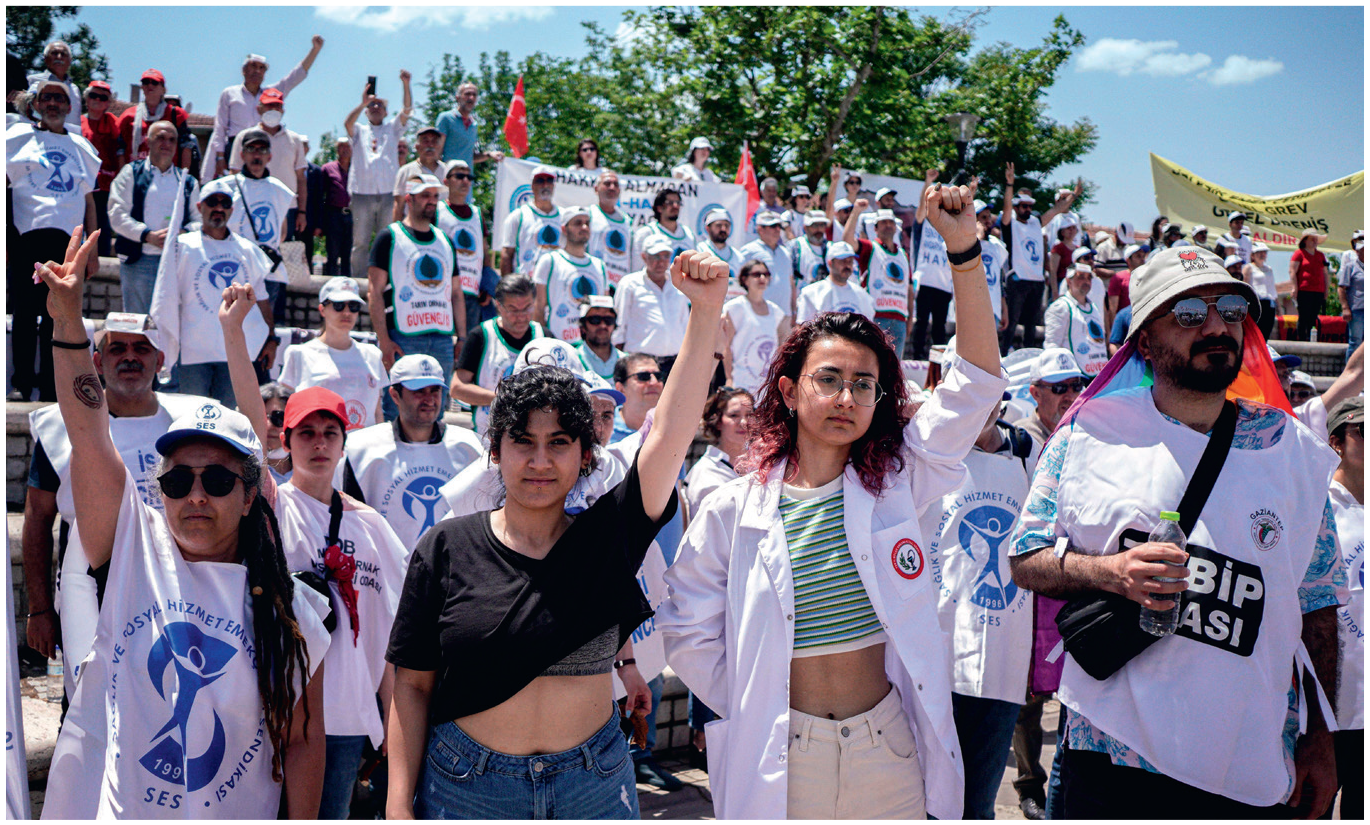
Members of the Turkish Medical Association (TTB) and other health professionals protest in Ankara against Erdoğan and the silencing of health workers
CREDIT: (Erdoğan) Xinhua / Alamy; (protest) Tunahan Turhan / SOPA Images / Sipa USA
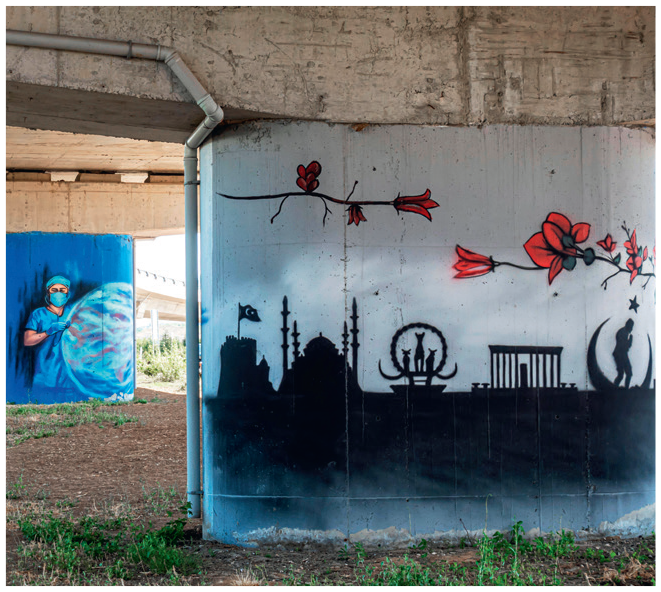
Murals in Ankara dedicated to medical workers in Turkey, created in solidarity with protests by the Turkish Medical Association (TTB)
Despite the risks, Azap says anonymity isn’t a tactic used by doctors when publishing sensitive data. “Medics would rather not articulate their views at all than articulate them covertly,” he said. “Most medics deal with economic difficulties, and I understand they can’t always speak out.”
The conflict between the union and the government is also due to workers’ rights issues. TTB has supported strike action over the past year, with family doctors staging walkouts for 13 days between October 2024 and January 2025 over untenable working conditions, requirements to see between 80 and 100 patients a day, and substandard medical centres.
The government is largely in control of the media narrative surrounding doctors, said Azap.
“This is the big problem in Turkey’s healthcare world: the lack of a free press, which allows the government to say what they like to the masses. Social media is the only means to make our voice heard,” he said.
Attacks in the media have sometimes led to violence. Psychiatrist Koray Başar is among those who have been physically attacked for their professional activities. Başar, a faculty member at the department of psychiatry at Hacettepe University, has received backlash for his work in the field of gender-affirming surgery.
In November 2021, the right-wing, government-aligned newspaper Milat published an article on Başar headlined “Stop the LGBT missionary doctor!”.
The article claimed Başar was “carrying out scandalous LGBT activities at Hacettepe University Hospital where he works”.
It said he was “organising conferences for trans women at the same hospital” and participating “in LGBT’s so-called pride marches”. Seven months after the article was published, Başar was attacked outside his home by two people. They beat him and demanded that he stop his work and LGBTQ+ advocacy.
A month later, a protest was staged by unions and healthcare professionals in solidarity with Başar outside the TTB’s building.
Başar told Index he had stopped expressing his views online since the attack. “I used to use Twitter and Instagram. Now, even if I share a picture of a flower, I receive threats,” he said. “Since my attack I can’t use social media. I also noticed how colleagues who haven’t been targeted like me refrain from using these platforms out of fear.”
The discourse in Turkey “emboldens violent acts and makes life very hard for anyone who opposes discrimination”, he said. “It now takes real courage to speak out.”
Access to gender-affirming surgeries has become increasingly challenging, exacerbated by the fact that doctors offering such procedures are becoming more and more stigmatised. “Even compared with the pre-pandemic era, the situation is worse today,” Başar said. “There have always been problems accessing sex-related health services as it is tough to reach psychiatrists who work in the field.”
Since being attacked in the media, Başar lost his visibility in the medical world. Before the pandemic, he would get invitations to talk about gender-affirming surgeries and hormone therapy – he no longer receives such invitations. He has also noticed that academics who used to write reports on gender affirmation procedures are now more reluctant to do so.
He fears that Erdoğan’s disingenuous so-called Year of the Family could bring more hostility towards LGBTQ+ communities and also worries that Turkey could move in the direction of Russia and Georgia, by banning gender-affirming surgeries altogether.
The rise in hostility towards marginalised groups is directly related to the strength of the networks available to support them, Başar believes. Because medical unions such as the TTB are increasingly ostracised, it means their members are less able to advocate for patients.
“What keeps people strong when they’re under discriminatory assault is this network of solidarity that protects them,” he said. “In Turkey, those networks themselves are under assault.”
Whilst Erdoğan sings the praises of Turkey’s healthcare system, the impact of his government’s negative attitude towards medical professionals could ultimately mean the country suffers. The risks that doctors face when they speak the truth, publicly support minority groups or publish forward-thinking academic papers means that many young people may now “think twice before applying for medical schools”, said Başar.
Footnotes