



Abstract
Recent U.S. cases of murders by children below age 11 have captured national headlines. A review of the literature reveals that little is known about this population of juvenile homicide offenders (JHOs). Most studies on juvenile murderers have used small clinical samples, focused on adolescents, and concentrated on male offenders. Studies that have used Supplementary Homicide Report (SHR) data have found significant gender differences among juveniles below 18 years arrested for murder. This study investigated gender differences among 226 juvenile murderers ages 6 through 10 involved in single-victim incidents using bivariate and multivariate statistical techniques. Consistent with previous research, bivariate analyses revealed gender differences with respect to the type of weapon used, age of the victim, relationship to the victim, and circumstances of the crime. Logistic regression analysis identified female JHOs as more likely to use a knife, kill a family member, and kill a victim below age 5, when compared with male JHOs. From these findings, profiles of young male and female JHOs can be drawn. The article concludes with a discussion of the study’s implications for prevention and treatment. The authors recommend that future research in gender differences among young children focus on examining psychological, neurological, and sociological variables not included in the SHR data set.
Keywords
Historically, media coverage has focused intensely on murders committed by young children. Such acts of violence employed at the hands of supposedly youthful innocents capture immediate public attention when they occur. The arrest of two 10-year-old boys for the abduction and murder of 2-year-old James Bulger in Britain, for example, made headline news around the globe (Foster, 1993). The airwaves were similarly dominated when 7- and 8-year-old boys in Chicago killed an 11-year-old girl to get her bicycle (“Case Puts Spotlight on Punishing,” 1998). More recent cases that made headline news, for example, include a 9-year-old New York girl who stabbed her playmate to death (Ball, 2005), an 8-year-old Arizona boy who killed his father and a male boarder in their home (Dougherty & O’Connor, 2008), and two Indian boys, ages 5 and 7, who told police that they had murdered a wanted criminal (“Children Kill Wanted Criminal in Pilibhit,” 2010).
Arrests for murder or nonnegligent homicide of children below age 11 averaged seven cases per year in the United States during the period 1976 through 2007 (see Fox & Swatt, 2009). Despite the interest these cases generate, academic investigations into this rare offender group have been limited (see Heckel & Shumaker, 2001). Research on young murderers, particularly those aged 10 and below, is largely restricted to case studies or case reports of isolated incidents of boys and girls involved in lethal violence. A majority of these case studies are dated and lack uniformity in the methods by which investigators collected information and observations about the participants.
Given the diversity of the accounts found in the case study literature, Cornell, Benedek, and Benedek (1989) argued that this body of research has clearly documented considerable heterogeneity among the youths who commit homicide, which should render any attempt to characterize the juvenile murderer as futile. Moreover, they argued that juvenile homicide is a social and legal category, not a scientific construct, and there is no scientific basis for assuming that homicide by youths should be the product of a unique set of factors.
Heckel and Shumaker (2001), in contrast, maintained that the predominance of studies with small samples may be the core reason why there is currently a diversity of opinion in the literature regarding the characteristics of younger children who kill. They noted that virtually no research had examined the striking differences in preteen male and female homicide rates. Their observations underscore the need for a study that responds to this significant gap in the literature. In response, the present research focuses exclusively on the youngest juvenile homicide offenders (JHOs) and utilizes a large sample to permit generalizable conclusions about young boys and girls who kill. The current study has two broad objectives: (a) to describe the characteristics of JHOs 10 years of age and younger arrested in the United States over a 32-year period and (b) to test for gender differences using bivariate and multivariate techniques.
Literature Review
Young children, particularly those aged 12 and below, are sometimes referred to in the literature as children, preteens, or preadolescents to differentiate them from teenagers or adolescents. Specific definitions are rarely given because most of these terms have no precise ages attached to them and human development varies by individual. However, human development experts distinguish among children (years from puberty), preadolescents (period right before the onset of puberty), and adolescents (the years associated with commencement of puberty). The age at which children enter puberty varies by individual but now typically begins at about age 10 to 12 years (Solomon, Berg, & Martin, 2011).
Research on young children and preadolescent murderers dates back more than 70 years (Bender, 1959; Bender & Curran, 1940). As noted, scientific inquiry has been confined primarily to case studies, often conducted within a clinical setting (Adam & Livingston, 1993; Adelson, 1972; Bender, 1959; Bernstein, 1981; Carek & Watson, 1964; Easson & Steinhilber, 1961; Mouridsen & Tolstrup, 1988; Mukaddes & Topcu, 2006; Paluszny & McNabb, 1975; Rowbotham, Stevenson, & Pegg, 2003; Sargent, 1962; Sereny, 1973; Tooley, 1975; Tucker & Cornwall, 1977; Wolff, Alexander, & Smith, 2000). Most of these reports detail individual and social history characteristics of the offenders. Some interesting inferences can be drawn from this research, which might guide future empirical endeavors that seek to elucidate the underlying causes of homicides committed by what are often depicted as “little boys” and “little girls.”
One particular finding, which may lead to the potential discovery of a risk factor once further research is conducted, is the presence of neurological disorders among young children and preadolescent murderers. In fact, a number of studies have found evidence of epilepsy in very young offenders (e.g., Bailey, 1996; Easson & Steinhilber, 1961; Mouridsen & Tolstrup, 1988; Mukaddes & Topcu, 2006). However, others have looked at youth at age 11 and found they were free of both major and minor epilepsy (Walsh-Brennan, 1977). Nevertheless, there might be something unique about the brain functioning of such youthful killers, which merits further inquiry.
Review of the clinical literature revealed only a few instances in which the child murderers were psychotic or otherwise seriously mentally ill (see Ewing, 1990). Petti and Davidman (1981), for example, conducted a study on nine children (ages 6-11) hospitalized for homicidal aggression. Although none of these children were diagnosed as psychotic, three were characterized as borderline psychotic. Petti and Davidman compared this group of homicidal children with a group of hospitalized nonhomicidal controls matched on age, sex, and full scale IQ. They found that homicidal children differed from their matched counterparts on locus of control. Homicidal children perceived themselves as significantly less in control of their lives than the matched controls.
Shumaker and McKee (2001) also concluded from their review of the literature that the vast majority of killings perpetrated by young children and preadolescents did not appear to be a product of mental illness but rather a combination of factors, including immaturity, infantile rage, impulsivity, and, in many cases, fortuity (Ewing, 1990). In light of the minimal evidence of serious mental disorder in the existing literature, Ewing (1990) suggested that there is good reason to expect that the young child and preadolescent murderer is psychologically disturbed and/or abused rather than seriously mentally ill. Duncan and Duncan (1971) posited seven risk factors for the involvement of young children in murder: (a) the intensity of a child’s hostile reactions, (b) the degree of control the child has over his or her impulses, (c) the child’s ability to formulate alternative solutions to difficult life situations, (d) the provocativeness of the intended victim, (e) the degree of helplessness of the intended victim, (f) the availability of weapons, and (g) a history of homicidal threats made by the would-be perpetrator (as cited in Heckel & Shumaker, 2001).
Perhaps the more obvious, detrimental factors affecting youthful murderers are environmental. For instance, disturbing home situations (e.g., parental abuse, family violence, spousal abuse, emotional abuse, and heavy drinking among parents) were found to be highly prevalent in the backgrounds of young homicide offenders (Bender, 1959; Carek & Watson, 1964; Heckel & Shumaker, 2001; Paluszny & McNabb, 1975; Sargent, 1962). Children growing up in turbulent home environments experience intense psychological pressure with little opportunity to release such pressure constructively, which can act as an instrumental factor in intrafamilial murder (Heckel & Shumaker, 2001; Shumaker & McKee, 2001). Such abusive and neglectful environments place a youth at risk of experiencing extreme, violent, and enduring trauma, which can adversely affect brain development (Heide & Solomon, 2006, 2009; Solomon & Heide, 1999). Of particular concern is the underdevelopment of the prefrontal cortex, which is the region of the brain that coordinates higher order functioning (e.g., reasoning, planning, and problem solving) and inhibitory controls (Heide & Solomon, 2006, 2009; Miller & Cohen, 2001).
Shumaker and Prinz (2000) reviewed the literature on JHOs aged 12 and below (“preteens”) and compared them with JHOs aged 13 and older (“teenagers”). They analyzed case reports from several publications to compare 11 preteens who committed murder or engaged in homicidally aggressive violence with 28 teenagers who killed or attempted to do so. Both groups had many individual risk factors and adverse family situations. Significant differences were found on 7 of the 18 variables examined. Younger JHOs were more likely to have had negative relationships with male caregivers and histories of lying, fire setting, and engaging in cruelty to other children. Older JHOs were more likely to have unhealthy sexual experiences and histories of truancy and ruminating about murder. Younger JHOs were more likely to have drowned or set fire to their victims, whereas older JHOs were more likely to have used a gun.
Shumaker and Prinz (2000) also made some observations from examining groundbreaking research conducted by psychiatrist Lauretta Bender (1959) who reported on her evaluations of 33 children aged 5 to 15 involved in homicidal violence. They noted that the weapons used by the 21 younger JHOs differed from those selected by the 12 older JHOs in Bender’s sample. The authors concluded from their literature review that some evidence suggested that differences exist in murders committed by young girls and boys. They called for further examination of differences between female and male preteen JHOs in future research efforts (Shumaker & Prinz, 2000).
Male and Female JHOs
Few clinical studies have been able to examine both male and female JHOs, largely because the samples did not have sufficient number of female JHOs to permit analyses. Although two recent clinical studies had sufficient numbers of female cases to permit analysis of the findings by gender (Roe-Sepowitz, 2009; Zagar, Isbell, Busch, & Hughes, 2009), these samples included JHOs up to age 18. Moreover, one of these studies included no cases younger than age 11 (Roe-Sepowitz, 2009); the other included few, if any, cases aged 10 and below (Zagar, Isbell, et al., 2009).
Some possible gender differences regarding very young child murderers can be extrapolated from the perusal of case studies. However, these suggestions must be viewed with extreme caution given that they are based on a modest array of case reports, the generalizability of which is unknown. Preadolescent girls were more likely to kill a younger sibling (Mukaddes & Topcu, 2006; Paluszny & McNabb, 1975; Sargent, 1962; Tooley, 1975). Although preadolescent boys were also likely to kill younger siblings (e.g., Adelson, 1972; Bender, 1959; Tooley, 1975), there was also evidence that they killed parents (Duncan & Duncan, 1971; Mouridsen & Tolstrup, 1988; Tucker & Cornwall, 1977) and strangers (Rowbotham et al., 2003; Wolff et al., 2000). Little evidence from the available literature suggested that girls were likely to kill parents or strangers. Indeed, in the majority of cases where very young children kill, the victims were most likely to be children younger than the offender (Ewing, 1990).
Previous efforts seeking to analyze large samples of JHOs have utilized Supplementary Homicide Report (SHR) data to assess gender differences among youths arrested for murder or nonnegligent homicide in the United States. These studies included juveniles up to and including age 17, who were arrested for murder. Similar to the case study literature, these studies also found juvenile girls in general were more likely to kill younger children and family members, whereas boys were more likely to kill adolescents and adults, and strangers (Heide, Roe-Sepowitz, Solomon, & Chan, in press; Heide, Solomon, Sellers, & Chan, 2011; Loper & Cornell, 1996; Rowley, Ewing, & Singer, 1987; Synder & Sigmund, 1999, 2006). In addition, these studies concluded that girls were more likely to use a knife or other personal weapon, whereas boys were more likely to use a gun. Other analyses using SHR data have found that female JHOs are more likely than their male counterparts to kill female victims and to be involved in conflict-related homicides (Heide et al., 2011; Heide et al., 2012; Loper & Cornell, 1996).
SHR analyses have also found that girls arrested for murder are less likely to have had codefendants than their male counterparts (Synder & Sickmund, 1999, 2006). A source of disagreement appears to surround the issue of whether girls use accomplices more than boys when they kill a family member (see Ewing, 1990; Heckel & Shumaker, 2001, Loper & Cornell, 1996; Rowley et al., 1987). A recent study of JHOs aged 7 through 17 that examined 30 years of arrest data found that girls were significantly more likely to use accomplices to kill family members than their male counterparts (Heide et al., 2012). No studies have examined whether younger children are more likely to use accomplices than older children in the killing of family members.
Recent research examined whether these gender differences held up when examined over the 32-year period, 1976 to 2007, within groups of younger (6-12) and older (13-17) JHOs. This study found that the gender differences remained significant within the two age groups with respect to offender gender and victim age, victim–offender relationship, victim gender, murder weapon, and homicide circumstance. Female JHOs in both the younger and older age groups were significantly more likely than their male counterparts to kill younger victims, particularly children below age 5, family members; and female victims. Girls in both age groups were more likely than boys to be involved in conflict-related homicides and to use knives, personal weapons, and asphyxiation. Boys in both age groups were significantly more likely than girls to kill victims aged 14 to 34, strangers, and male victims; to kill during the commission of another crime; and to use guns (Heide et al., 2011).
Need for Present Study of Young JHOs
To our knowledge, no study has used SHR data to examine young children below age 11 arrested for homicide. At this point, very little is known about the offender, offense, and victim correlates of this group. Given the long-standing recognition of the differences between younger children and older children, there is a pressing need for further research on young killers. Younger children, particularly those aged 10 and below, frequently do not fully understand the irreversibility and permanence of death. Mental health professionals have noted for more than 70 years that younger children often act impulsively without clear goals in mind (Bender, 1959; Bender & Curran, 1940; Cornell, 1989). They can be persuaded to engage in violent behavior by unstable, mentally ill, or unscrupulous parents (Sargent, 1962). When younger children kill, they often appear to be seriously disturbed or experiencing overwhelming conflict.
Older children, typically in their adolescent development, are faced with different challenges than younger children. Preteens and teenagers are trying to forge an identity and are more influenced by friends, role models, and the media than younger children. Although the brains of older children are not as fully developed as those of adults with respect to the higher cortical processes associated with thinking and judgment (Heide & Solomon, 2006), older children are typically much more capable of weighing alternative courses of action than their younger counterparts. However, their need to fit in with their peers and to test boundaries against adults can affect their ability to make good decisions. Children 11 years and older, in contrast to younger children, are more likely to kill in response to situational demands that they perceive to have been placed on them or because of the lifestyle that they have embraced (Bender, 1959; Heide, 1992, 1999; Sorrells, 1977; Zenoff & Zeints, 1979).
By isolating the youngest of JHOs from their older counterparts, the researchers aim to build on the knowledge gained by previous investigations. It is unknown whether gender differences found in prior research among JHOs will remain when examined in a much younger population. Until such an analysis is undertaken, profiles of young male and female JHO characteristics are undefined.
Method
The current study examines whether children, between the ages of 6 and 10 years, who are arrested for murder or nonnegligent homicide (the willful killing of a human being by another, hereafter referred to as murder or homicide), exhibit gender differences similar to those found in earlier findings from case studies and SHR data analyses. Children arrested at age 6 were included in the sample because the focus of this study is on expanding knowledge of gender differences and similarities among this rare offender group, not on issues of culpability and the likelihood of prosecution. Many states provide no minimum age for prosecution in juvenile court, allowing the juvenile court judge to determine jurisdiction based on case law and the competency of the child.
Under Common Law, there was an irrebuttable presumption that children below the age of seven lacked capacity to form criminal intent (Dix, 2010). However, one state, North Carolina, currently permits the prosecution in juvenile court of children as young as age 6 (Amnesty International USA, n.d.; Commission on Behavioral and Social Sciences and Education, 2001). Although juvenile offenders are tried in different ways and the age of majority is variable across the states, it is unlikely that jurisdictional policies or practices would influence whether a juvenile who kills another human being is arrested by police. During the period 1976 to 2007, 41 of the 50 states reported arresting juveniles between the ages of 6 and 10 for murder.
The Sample
The data for this study were obtained from the FBI’s SHR for the years 1976 to 2007 (see Fox & Swatt, 2009). The SHR supplies incident-level information on homicides committed in the United States with case-specific variables, including weapons used, situation of the offense, circumstances as well as demographic characteristics (race, gender, and age) of victims and perpetrators and the relationship between the two. These data are based on homicidal incidents reported to the FBI by participating law enforcement agencies within the United States. During the 32-year period under review, 44,088 juveniles aged 6 through 17 were arrested for murder or nonnegligent manslaughter. Of these, 234 (0.5%) were children between the ages of 6 and 10 years.
Analyses used all known arrests rather than imputed data (see Fox & Swatt, 2009) because of the high percentage of data available for the variables under examination for this population group. Cases with missing data were removed only from the specific analysis affected, typically resulting in the loss of only a few cases. The number of cases is reported in each of the tables. For example, data were available for 99% of offender’s gender (n = 233), 98% of offender’s race (n = 231), 99% of victim’s gender (n = 233), and 98% of victim’s race (n = 231).
As depicted in Table 1, nearly 88% of those arrested were male. Among those cases in which the offender race was known, almost 98% of young JHOs were Black (51.3%) or White (43.6%). Child murderers in this sample were more likely to kill male victims (61.5%) than female victims (38.5%). When victim race was available, roughly 97% of victims were either Black (50.4%) or White (46.2%).
Demographics Re: JHOs Under Age 11: Offender age, offender sex, offender race, victim sex, victim race, region and urban level in which offender resided, US Homicide Arrests, 1976-2007 (n = 234)
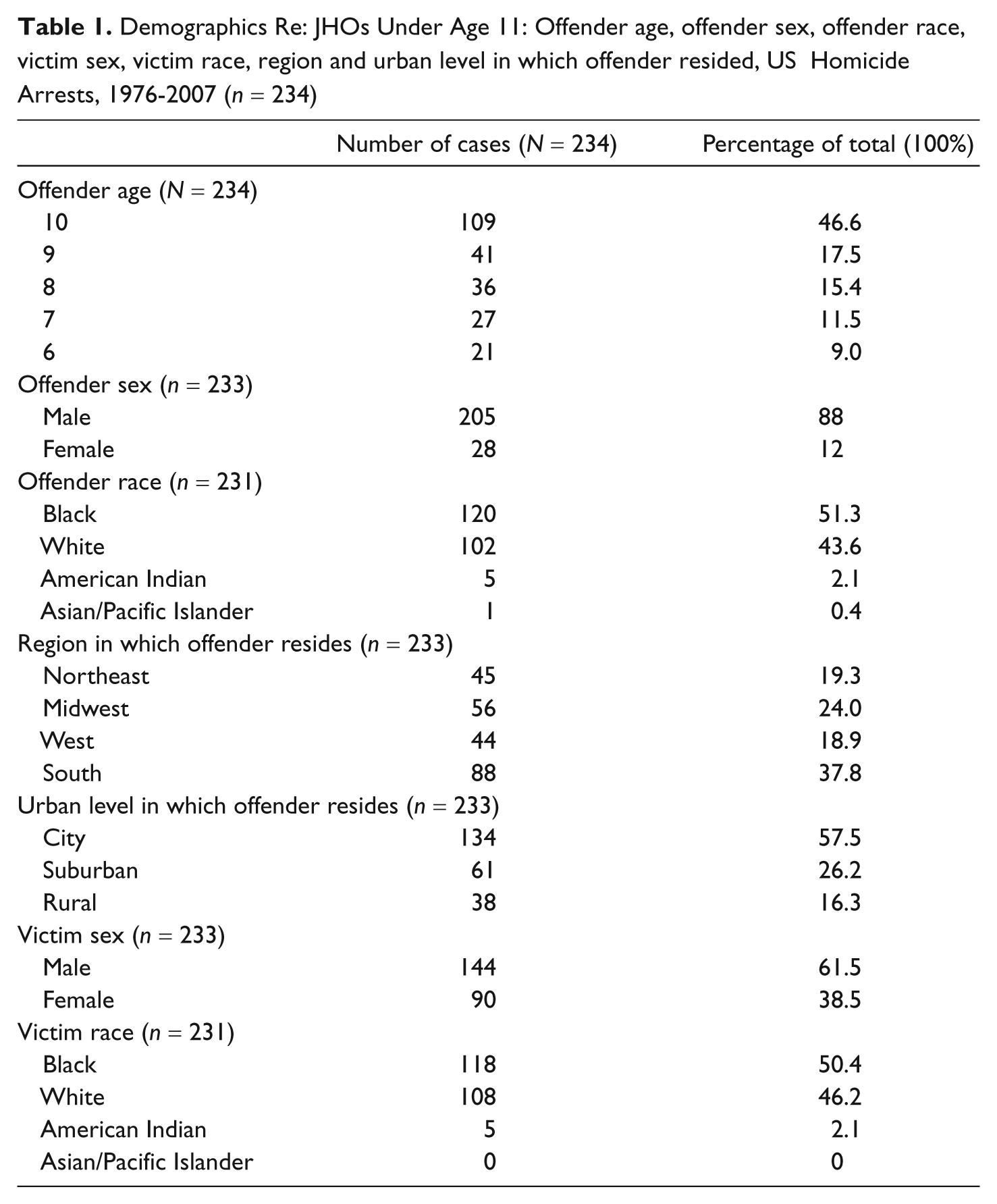
The percentages of offenders arrested increased positively with age. Nearly two thirds were 10-year-olds (46.6%) or 9-year-olds (17.5%), whereas just more than a quarter were 8-year-olds (15.4%) or 7-year-olds (11.5%). The remaining 9% were 6-year-olds. In terms of the region, more than 60% of young JHOs were arrested in the South (37.8%) or in the Midwest (24%). The rest were arrested in either the Northeast (19.3%) or the West (18.9%). More than half of young killers were arrested in cities (57.5%) and more than a quarter were arrested in suburban areas (26.2%). About one of seven young killers was arrested in rural (16.3%) areas.
Exclusion of Multiple-Victim Cases in Bivariate and Multivariate Analyses
The SHR database is ideally suited for analyses involving single-victim/single-offender homicide incidents because, assuming the data are recorded accurately by police, the database is able to correctly link a particular victim to his or her killer. However, due to its construction, the SHR database is unable to link more than one victim to an offender. Because of the linkage problem in multiple victim cases, bivariate and multivariate analyses were restricted to arrests of juveniles involved in killing one victim. During the 32-year period under review, 3% of JHOs (n = 7) were involved in the killing of more than one victim. These seven individuals, all of whom acted alone, were removed from further analyses. Incidents involving multiple offenders, unlike multiple victims, can be included in analyses provided care is taken in the reporting of results. In single-victim, multiple-offender situations, caution must be used in interpreting findings because victim data are inflated. Results should be stated in terms of the offenders, not in terms of the victims. Accordingly, tables in this manuscript are constructed and findings are reported in terms of offenders. For example, if three boys kill a stranger in an incident, the number of offenders involved is 3, whereas only one victim is killed. More than 97% of the 233 boys and girls (n = 226) arrested for murder from 1976 to 2007 were involved in the killing of one victim. Young JHOs involved in single-victim incidents were 4 times more likely to kill alone (78.1%) than with codefendants (18.9%). The number of JHOs included in the final sample was 226 and consisted of 182 JHOs who acted alone and 44 who acted with others.
Hypotheses Tested
Six hypotheses were derived from previous studies of juvenile murderers, which examined gender differences with respect to six variables (victim age, victim gender, weapons used, victim–offender relationship, use of codefendants, and homicide circumstance).
Hypothesis 1: Female JHOs will be more likely to kill younger victims than male JHOs.
Hypothesis 2: Female JHOs will be more likely to kill female victims than male JHOs.
Hypothesis 3: Female JHOs will be more likely to use knives and other weapons than male JHOs; male JHOs will be more likely than female JHOs to use guns.
Hypothesis 4: Female JHOs will be more likely to kill family members than male JHOs; male JHOs will be more likely to kill strangers.
Hypothesis 5: Female JHOs will be less likely to kill with codefendants than male JHOs.
Hypothesis 6: Female JHOs will be more likely to be involved in conflict-related homicides than male JHOs.
Chi-square analyses were calculated to assess whether gender differences existed on particular variables of interest. Statistical significance was set at the .05 level. Measures of association included Phi, Cramer’s V, Fisher’s Exact Test, and Yates correction for continuity, given the nominal nature of the variables. Bonferroni adjustments were used in each chi-square analysis to compare column proportions and adjust p values accordingly and are reported in the tables. The chi-square statistics and measures of association are presented in the tables. The results section reports whether the hypotheses were statistically significant and interprets the strength of the relationships. Beyond the hypotheses tested in the bivariate analyses, a multiple logistic regression was conducted to evaluate the gender effect when all variables of interest are included in the equation.
Bivariate Results
Victim’s Age by Offender Gender
Significant gender differences were found with respect to victim age. As shown in Table 2, young female offenders were 3 times more likely (28.6%) to kill an infant below age 1 than their male counterparts (7.6%). Similarly, female offenders were more than twice as likely (42.3%) to kill victims between the ages of 1 and 4 years old than male offenders (19.2%). More than a third (36.4%) of young male JHOs killed victims between 5 and 13 years old, compared with about one sixth (15.4%) of their female counterparts. Interestingly, no female JHOs were arrested for killing victims between the ages of 14 and 24 years old. In addition, there were only nine cases in which the victims were elderly (i.e., between the ages of 65 and 98), and all of these murders were committed by male JHOs.
Victim Age by Offender Gender (1976-2007)
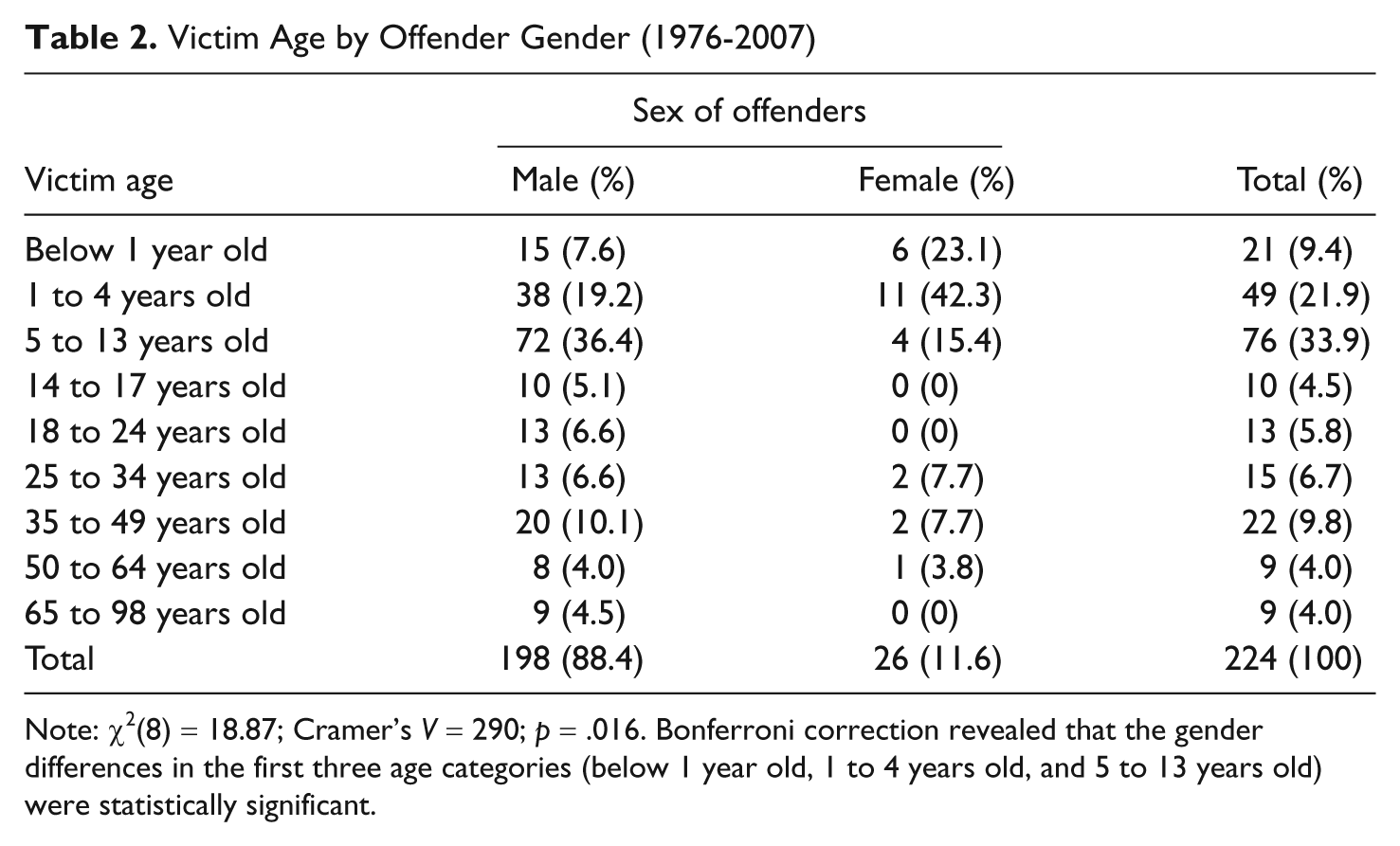
Note: χ2(8) = 18.87; Cramer’s V = 290; p = .016. Bonferroni correction revealed that the gender differences in the first three age categories (below 1 year old, 1 to 4 years old, and 5 to 13 years old) were statistically significant.
Victim Gender by Offender Gender
There were no significant gender differences in regard to victim sex. Male JHOs (63.8%, n = 127) and female JHOs (55.6%, n = 15) were more likely to kill male victims. Although female JHOs (44.4%, n = 12) were more likely than their male counterparts (36.2%, n = 72) to kill female victims, the differences did not reach statistical significance, χ2 Yates(1) = 0.386; φ = .055; p = .534 (Yates’s correction for continuity was used to reduce error in approximation).
Specific Weapon Types or Methods Used to Kill Victim by Sex of Offender
Male and female JHOs below age 11 differed significantly in the types of weapons or methods they used to kill their victims. As revealed in Table 3, despite the small number of cases involving girls, several findings stand out. More than half (54.4%) of male offenders used a gun, whereas only 1 of 6 female offenders used a firearm (16.7%). The most predominant method used by young girls (41.7%) was a personal weapon (e.g., hands, feet), a method seldom employed by young boys (11.9%). One of 5 girls, compared with roughly 1 of 10 boys, used a knife as their method of killing. Fire was the method of killing chosen by 15 young male offenders, whereas no female employed this method.
Type of Weapon (Itemized) by Offender Gender (1976-2007)
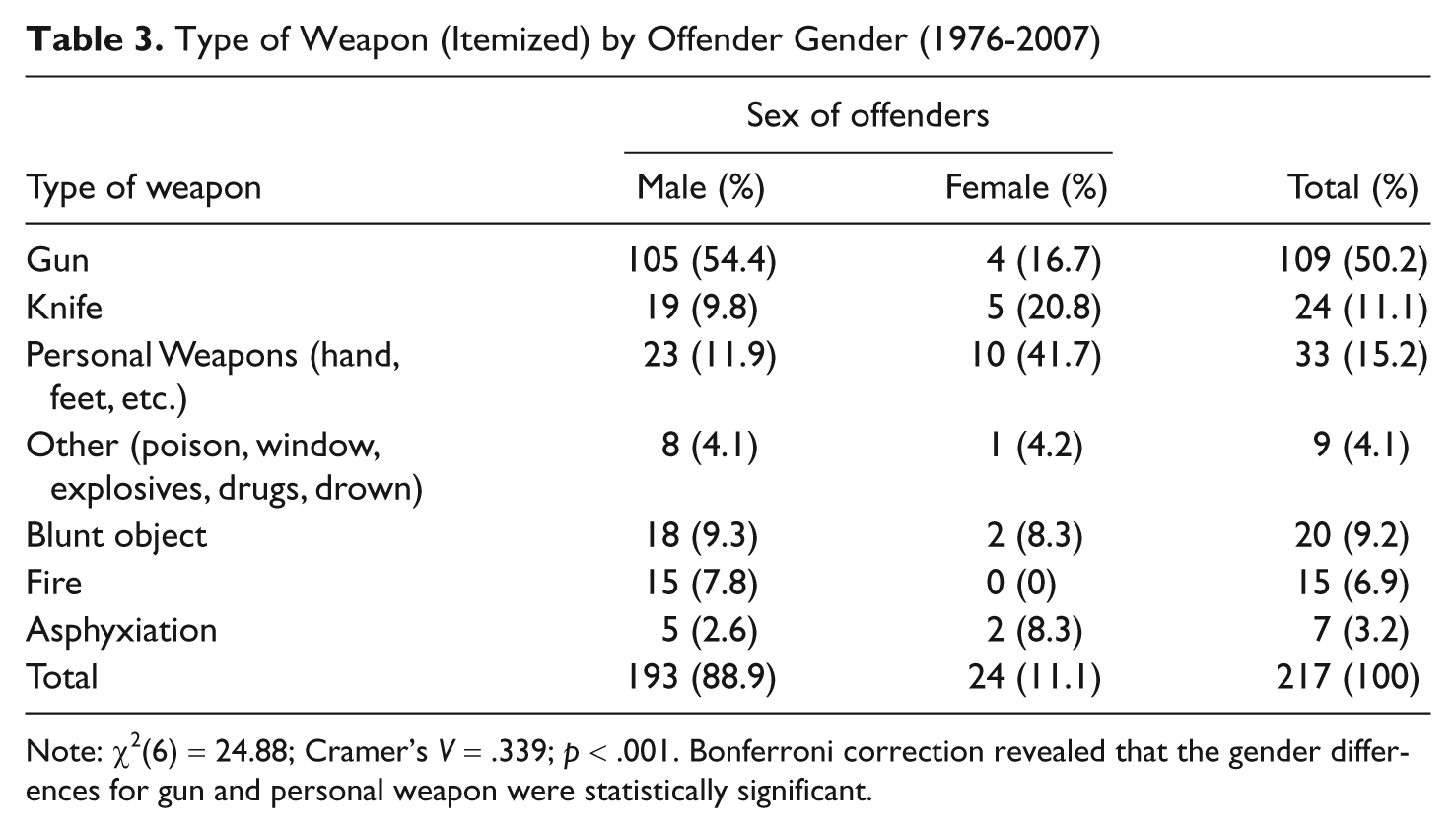
Note: χ2(6) = 24.88; Cramer’s V = .339; p < .001. Bonferroni correction revealed that the gender differences for gun and personal weapon were statistically significant.
Victim–Offender Relationship by Offender Gender
The SHR data had 29 relationship codes by which an offender’s relationship to the victim could be defined. However, only 12 (mother, father, brother, sister, in-law, stepfather, other family, neighbor, acquaintance, friend, other known, and stranger) of these codes applied to the young arrestees in our analyses. Other relationships, such as husband, wife, common-law spouse, ex-spouse, boyfriend, girlfriend, employee, employer, and homosexual relationship, were not found in this sample given the young age of these offenders. Thus, the available data on the relevant relationships were recoded into a new variable with three categories: (a) family (e.g., parents, stepparents, siblings, other family, etc.), (b) friend/acquaintance/other known (also, including neighbors), and (c) stranger. As depicted in Table 4, our analysis revealed statistically significant gender differences. Consistent with previous studies, almost two thirds (65.4%) of the preadolescent female offenders killed within the family in comparison with less than half (44.3%) of their male counterparts. More than two of five (43.9%) male JHOs killed a friend, acquaintance, neighbor, or other known person, compared with about one of three (34.9%) female offenders. The 24 instances in which the murder victim was a stranger all involved male offenders.
Victim–Offender Relationship by Offender Gender (1976-2007)
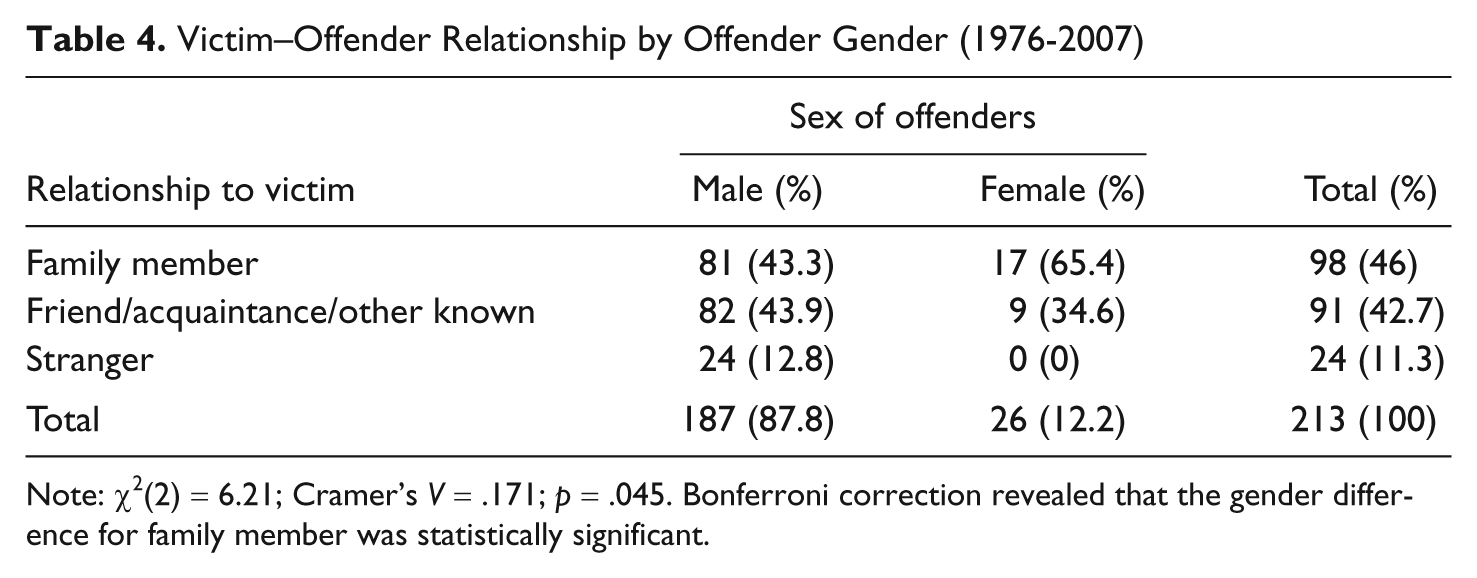
Note: χ2(2) = 6.21; Cramer’s V = .171; p = .045. Bonferroni correction revealed that the gender difference for family member was statistically significant.
Number of Offenders by Offender Gender
As mentioned above, there have been disagreements in the literature over whether preadolescent girls use accomplices more than boys (see Heckel & Shumaker, 2001). Some previous studies analyzing SHR data found that girls were less likely than boys to use accomplices (Heide et al., 2012; Snyder & Sickmund, 2000, 2007). Analysis revealed there were no statistically significant gender differences when assessing the use of accomplices, χ2(2) = 1.29, Cramer’s V = .075, p = .525. Approximately 80% of both young boys (79.9%) and girls (85.2%) acted alone. Of the 19.4% involving codefendants, half involved one other offender and the other half involved two or more additional offenders.
However, a closer look at the use of accomplices by both young boys and girls, taking into account the relationship to the victim, reveals some interesting findings. When we controlled for victim–offender relationship, females, as shown in Table 5, were more likely to have codefendants in the killing of family members. When assessing instances when the victim was a friend or acquaintance, we found that there were no significant gender differences regarding the use of accomplices, χ2(2) = 1.53, Cramer’s V = .130, p = .465. The relationship between offender gender and accomplice use could not be computed for strangers because no female JHOs in this sample killed a stranger.
Family Member Victim by Number of Offender(s) by Offender Gender (1976-2007)
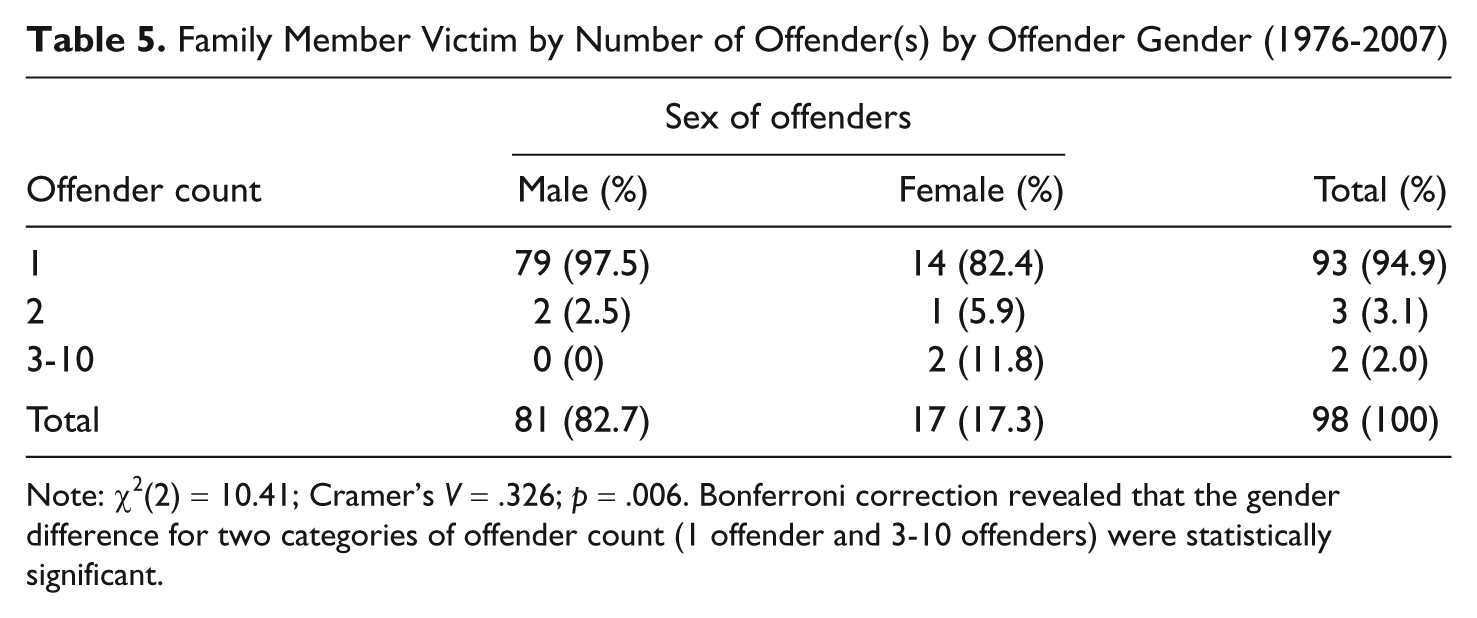
Note: χ2(2) = 10.41; Cramer’s V = .326; p = .006. Bonferroni correction revealed that the gender difference for two categories of offender count (1 offender and 3-10 offenders) were statistically significant.
Circumstance of the Offense by the Sex of the Offender
Consistent with previous studies, the FBI crime homicide circumstance codes were recoded into two of three types initially proposed by Cornell et al. (1989)—crime and conflict—to examine instrumental versus expressive motives by gender (Heide et al., 2012; Loper & Cornell, 1996). The two categories of the homicide circumstance variable were constructed as follows: (a) crime related (e.g., robbery, burglary, arson, other sex offense, narcotics, and other felony) and (b) conflict related (e.g., killed by babysitter, brawl over drugs, argument over money, other arguments, and youth gang–related killing).
The relationship between the homicide circumstance and the sex of the offender was significant. Table 6 reveals that, as expected, preadolescent male offenders were more likely to commit homicide under crime-related circumstances than their female counterparts. A total of 30% of young male JHOs killed in crime-related situations, whereas none of the female JHOs killed under these conditions. Although nearly 70% of male offenders killed as a result of conflict, all female JHOs murdered under circumstances involving conflict.
Circumstance by Offender Gender (1976-2007)

Note: χ2(1) = 4.95; φ = .207; p = .034. A Fisher’s exact test was used to account for the zero value in the female cell for crime-related homicides in this 2 × 2 matrix. Bonferroni correction revealed that the gender differences for both circumstances were statistically significant.
Examining individual circumstance categories showed some interesting results. Out of 31 crime-related cases, 15 (48.4%) were arsons and all but 1 of these arson-related homicides was committed by male offenders. Also, out of 84 conflict-related cases, 67 (79.8%) were classified as “other arguments” and 59 (88%) of those conflicts were committed by male offenders. In the case of youth gang–related killings, there were only two such instances and both were committed by 10-year-old boys.
Summary and Interpretation of Bivariate Results
Four of the six hypotheses investigating gender differences over the 32-year period under review were supported. These included those dealing with victim age, weapon used, victim–offender relationship, and homicide circumstance. Of note, some of the findings yielded relationships with quite strong effect sizes. Cohen (1988; as cited in Gravetter & Wallnau, 2008) proposed standards for interpreting Cramer’s V in chi-square analyses, which are applicable here. According to Cohen, when a cross-tabulation uses more than one degree of freedom (i.e., a matrix larger than 2 × 2), then the researcher should interpret a Cramer’s V coefficient of .35 or higher as a large effect size when there are two degrees of freedom (i.e., a 2 × 3 matrix) and interpret a Cramer’s V coefficient of .29 or higher as a large effect size when there are three degrees of freedom (i.e., a 2 × 4 matrix). When there are more than three degrees of freedom, any Cramer’s V coefficient at or above .29 should be interpreted as a large effect size. For instance, a chi-square with four degrees of freedom and a Cramer’s V of .29 is considered a large effect size. Conversely, a chi-square with only one degree of freedom must have a Cramer’s V of .50 to be considered a strong relationship. Given these standards for interpretation, the relationship between the sex of the offender and victim age, χ2(8) = 18.87, Cramer’s V = .290, p = .016, can be considered to have a large effect size. Thus, the finding that young female JHOs were more likely to kill younger victims than male JHOs is an important finding.
The relationship between the sex of the offender and the type of weapon, χ2(6) = 24.88, Cramer’s V = .339, p < 0.001, can also be considered to have a large effect size because it has six degrees of freedom and a Cramer’s V of .339. The finding that girls were more likely to use knives or other weapons to kill their victims, whereas boys were more likely to use guns, is another very meaningful result.
In contrast, the relationship between offender gender and the circumstance of the homicide yielded a moderate to large effect size, χ2(1) = 4.95, φ = .207, p = .034. Nevertheless, this finding yields support for our hypothesis that girls were more likely to be involved in conflict-related homicides, whereas boys were more likely to commit crime-related homicides.
When we evaluated the effect size between offender gender and the relationship the offender had to the victim, we found this relationship to be small and weak even though it was statistically significant, χ2(2) = 6.21, Cramer’s V = .171, p = .045. As predicted, however, girls were found to be more likely to kill family members than boys. Only boys in our sample killed strangers, providing support for our hypothesis that boys would be more likely to kill strangers, although statistical test could not be computed.
Multivariate Results
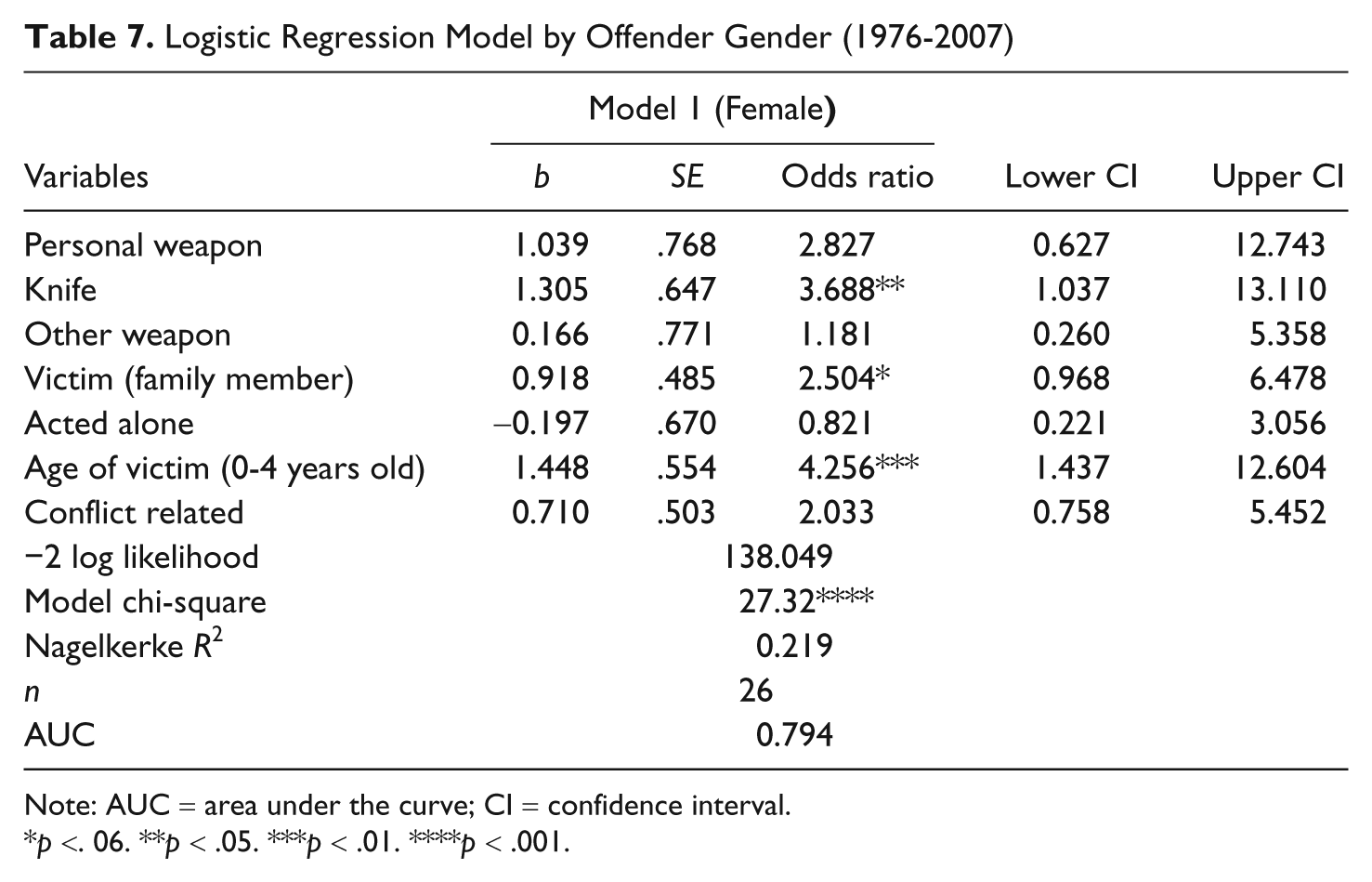
Logistic regression was employed to test the gender effect, while controlling for multiple variables simultaneously. The variables of interest were transformed from their original categorical codings and dichotomized (e.g., 0 = no, 1 = yes) to be utilized in this analysis. Gender served as the binary outcome variable (e.g., 0 = male, 1 = female). Given the previous bivariate analyses, particular independent variables were included, such as personal weapon, knife, other weapon type, victim was a family member, the offender acted alone, the age of the victim was below age 5, and the circumstance of the homicide was conflict related. Pearson correlations were calculated and results did not reveal any correlations at or above .70, suggesting no collinearity.
Table 7 presents the results of the logistic regression with the odds ratios when females are the predicted outcome. Of the seven variables in the logistic regression analysis, only two remained statistically significant (i.e., knife and age of victim below 5) and one (i.e., family member was victim) approached significance at the .06 level. Adjusted odds ratios were calculated, exp(B) – 1 × 100 = adjusted odds ratio, to report the percentage change in the odds for statistically significant effects. When the weapon used was a knife compared with other weapons, the odds that the offender was a female increased by 269%. When the victim was below the age of 5, the odds of the offender being a female, rather than a male, increased by roughly 326%. Finally, if the victim was a family member, then the odds of the offender being a female rather than a male were roughly 150% greater than when the victim was a nonfamily member (friend/acquaintance/other known or stranger). Regression model diagnostics revealed an area under the curve (AUC) value of 0.79, indicating that this model demonstrated an acceptable level of predictability, specificity, and sensitivity (see Kleinbaum & Klein, 2010).
Logistic Regression Model by Offender Gender (1976-2007)
Note: AUC = area under the curve; CI = confidence interval.
p <. 06. **p < .05. ***p < .01. ****p < .001.
Discussion and Conclusions
To our knowledge, this study is the first to examine the victim, offender, and offense correlates of young children arrested for murder in the United States using a large data set. The overwhelming majority (88%) of 6- to 10-year-old children arrested for murder or nonnegligent homicide were males. This study found that JHOs below age 11 were more likely to kill Black, male victims. Nearly a third of young JHOs were arrested for killing victims between the ages of 5 and 13 years old. In addition, close to 90% of young JHOs were arrested for killing family members (46%) or friends or acquaintances (42%). Only 11% of JHOs were arrested for killing strangers and all of these offenders were boys.
When considering offender characteristics, these young JHOs predominantly come from urban areas in the South or Midwest. Firearms (50%) were the most used type of weapon among this offender age group. Approximately 80% of the JHOs acted alone and nearly three quarters (73%) killed in conflict-related circumstances.
Significant Differences Between Young Male and Female JHOs
This research is also the first to scientifically investigate gender differences among child murderers aged 10 and below. This study found that offender gender was significantly related to victim age, weapon used, victim–offender relationship, and homicide circumstance. Our finding of no gender differences in the use of accomplices is inconsistent with the analyses that found that boys were more likely than girls to use accomplices. However, previous analyses included JHOs up to age 18 (Snyder & Sickmund, 2000, 2007), whereas our analyses included JHOs younger than 11 years old, an age group that comprised less than 1% of all juveniles arrested for murder during this period. Consistent with earlier SHR analyses, this study found that, when the effect of victim–offender relationship was controlled, girls were more likely to use accomplices than boys in killing family members (Heide et al., 2012; Rowley et al., 1989).
The multivariate logistic regression analysis yielded some interesting findings. Compared with males, female JHOs were 3.7 times more likely to use a knife as the weapon of choice in the homicide. In addition, female JHOs were approximately 4 times more likely to kill a victim below the age of 5 in comparison with male JHOs. Finally, female JHOs tended to be 2.5 times more likely to kill a family member than their male counterparts. These findings are consistent with the bivariate results and previous research that suggests that female JHOs tend to use weapons that require close contact to the victim, are more likely to kill younger children, and more likely to kill family members.
Profiles of Young Male and Female JHOs
With these findings, we are better able to sketch a profile of young boys who kill. Male JHOs between the ages of 6 and 10 years were more likely to use a firearm than any other weapon in the commission of a murder. One out of two boys, compared with one of six girls, used a gun to kill their victims. In addition, arson was clearly revealed to be a method of homicide more commonly employed by little boys. Boys in this sample tended to primarily kill individuals within the age range of 5 to 13 years old. Although boys had victims from all the represented age ranges, a unique finding was revealed when assessing the oldest age range. Elderly victims in this sample, between 65 and 98 years old, were all killed by male perpetrators. The majority of victims who were killed by young boys were family members, friends, or acquaintances. About one of eight victims of young boys killed strangers. A total of 70% of killings committed by boys were related to conflict. However, it is interesting to note that 30% of homicide circumstances for boys were related to crime, whereas no killings by little girls were associated with the commission of other crimes.
Similarly, we can construct a profile of young girls who kill. The most common weapon used by young female JHOs was a personal weapon, such as hands or feet. Girls were also more likely than boys to use a knife on their victim. Thus, young female JHOs appeared to engage in “up close” aggression when they committed murder. Young infants below age 1 and children between the ages of 1 and 4 were the most likely victims killed by females in this sample. On examining the relationship the offender had with the victim, little girls predominantly killed within the family. Given the increased likelihood of little girls using personal weapons and killing mainly family members, it is quite logical that these young female murderers were more involved in conflict-related circumstances prior to the homicide.
Importance of Findings and Their Implications
The findings of gender differences among the youngest killers is important because they indicate that even among the youngest offenders, those aged 6 to 10 years, there are significant differences between boys and girls with respect to victim and offense correlates. It is interesting to note that young JHOs are much more likely to adopt the patterns of their same-sex, adolescent counterparts than their opposite-sex playmates. Previous research, which used SHR data, also found that male juveniles through age 17 were more likely to use a firearm, whereas their female counterparts were more likely to use a knife or other personal weapon (Heide et al., 2011; Loper & Cornell, 1984, 1993; Rowley et al., 1987; Synder & Sigmund, 1999, 2006). How do young boys and girls learn to embrace gender roles that identify males with being more ready to use firearms, more aggressive toward strangers, and more willing to do battle with individuals close to their age and older? Are young female JHOs more likely than their male counterparts to kill younger victims because parents and guardians assume that, based on gender stereotypes, girls are innately more prepared to take care of younger children? Clearly, more research is needed to understand why gender differences persist when societal attitudes toward females and opportunities available for girls and women have expanded (Garbarino, 2006).
The case study research, although limited, is consistent with our finding that preadolescent girls were more likely to kill younger siblings, whereas boys displayed more evidence of killing strangers (see Adelson, 1972; Bender, 1959; Duncan & Duncan, 1971; Mouridsen & Tolstrup, 1988; Mukaddes & Topcu, 2006; Paluszny & McNabb, 1975; Rowbotham et al., 2003; Sargent, 1962; Tooley, 1975; Wolff et al., 2000). However, our study indicates that generalizing from case study research findings can be risky. Case study research suggested that girls were not involved in the killing of parents. We did indeed find one case of a young female JHO who killed a parent. Similar to the findings of previous clinical research, our results reveal that killings committed by girls appeared to be more conflict related, whereas boys were more involved in crime-related homicides (Campbell, 1993; Loper & Cornell, 1996; Roe-Sepowitz, 2009).
These gender differences, regardless of origin, have direct implications for intervention and prevention efforts, as discussed below. Young female JHOs were more likely to kill infants, children, and family members. This situation may be due to a lack of proper adult supervision, especially if the youth is forced to babysit siblings in the parents’ absence. Furthermore, intervention programs for young girls should focus on the development of coping strategies that will enable the child to resolve interpersonal conflicts prosocially rather than violently. Indeed, female JHOs in our sample engaged solely in homicides resulting from conflict-related situations. Thus, our results suggest, at least, preliminarily that family conflict must be taken more seriously and family counseling could serve as a preventive measure if sought soon after initial signs of violence are noticed among siblings and in parent–child interactions (Heide, 1992; Heide & Solomon, 2003).
Although young male JHOs also engaged in homicidal acts toward family members, unlike their female counterparts, they killed strangers. Perhaps these youthful boys were unable to identify with those whom they did not know and merely acquiesced with the group to prove “toughness” and maintain peer acceptance. Treatment efforts for boys should aim to develop empathic decision-making strategies among these youth so they see a potential victim as a person rather than someone in their way. Given that the young boys in this sample also frequently engaged in conflict-related homicides, interventions should also focus on teaching children to deal with negative feelings and resolve conflicts more effectively (see Hubner, 2005; Texas Youth Commission, 2006).
The fact that guns were primarily used by young male JHOs suggests that access to firearms is an issue. The use of guns to kill may be correlated with psychosocial deficits commonly displayed in children as well as weapon availability. Typically, the use of a firearm by a young child or preadolescent in the act of homicide is impulsive, usually follows an argument, may be less intentional, and more likely due to recklessness or negligence in the handling of the firearm (Ewing, 1990). Similar findings have been discussed in studies using National Incident Based Reporting System (NIBRS) data (see Walsh & Krienert, 2009). As a preventive measure, parents or guardians should ensure that firearms are secured and out of reach of children. Perhaps future gun control efforts should expand educational approaches that seek to inform existing and potential gun owners of proper safety and storage techniques via personal instruction.
Limitations and Future Research
Although this study is the largest effort to date to describe young boys and girls arrested for murder in the United States, there were several limitations of the data. For instance, there were no measures regarding mental health deficits or disorders affecting the murderer. Having such data available on a national sample could greatly improve our understanding of young children who kill. Another limitation was the lack of measures assessing psychological and cognitive maturity of the youthful offender. This information could likely help researchers develop better approaches in treatment and prevention. Finally, there were no measures tapping into the motivation of the killer. Without data regarding the child murderer’s motivation, the researcher is left to extrapolate such circumstances deductively from existing data, which may be incomplete or biased.
This study underscores the need for in-depth evaluations of large samples of young boys and girls who have committed homicide. Ideally, this research could be designed based on seminal work conducted with small samples of primarily male JHOs (see, for example, Lewis et al., 1985; Myers, Scott, Burgess, & Burgess, 1985) and more recent work using larger samples done by Loeber and Farrington, and Zagar and his colleagues (Loeber & Farrington, 2011; Zagar, Busch, Grove, & Hughes, 2009; Zagar & Zagar 2009). These evaluations can serve multiple purposes: (a) to understand the youth’s mind-set and mental state, (b) to treat the youth, and (c) to prevent future violent behavior. A growing body of literature suggests that even chronic, serious, and violent juvenile offenders can be treated effectively (Lipsey & Wilson, 1999; Lipsey, Wilson, & Cothern, 2002; Loeber & Farrington, 2011; Mulvey, 2011). The clinical literature has shown repeatedly that homicide offenders are typically victims before they become lawbreakers (Ewing, 1990; Heide, 1992, 2003; Heide & Solomon, 2006, 2009). Given these findings, we suggest that effective interventions seek comprehensive approaches whereby the youth is treated both as a victim and offender (see Hubner, 2005; Texas Youth Commission, 2006).
To be effective, interventions must be tailored for age. For these very young offenders, play therapy, role-play, and stories appear to be the most appropriate intervention methods. Psychodramatic role-plays can penetrate the youth’s defenses and begin the development of meaningful social attachments. Telling crime stories can engage the youth in expressing empathy for himself or herself, whereas taking the role of victim in role-plays engages the youth in empathic association for victims and others (Hubner, 2005; Texas Youth Commission, 2006). Eye movement desensitization and reprocessing (EMDR) is an effective treatment for young offenders who have experienced severe trauma (see Solomon & Heide, 2005; Solomon, Solomon, & Heide, 2009). In fact, EMDR may help the youth reach an adaptive resolution so he or she accepts personal responsibility, safety in the present, and the availability of choices in the future (Solomon et al., 2009). As noted by Zagar and colleagues, “Youth development and prevention of violence are two sides of the same policy issue” (Zagar, Busch, & Hughes, 2009, p. 279).
Footnotes
Authors’ Note
An earlier version of this paper was presented at the Academy of Criminal Justice Sciences, San Diego, CA, February 27, 2010. The authors would like to thank Dr. Wesley Jennings, University of South Florida, for his review and assistance with the regression analysis.
Declaration of Conflicting Interests
The authors declared no potential conflicts of interest with respect to the research, authorship, and/or publication of this article.
Funding
The authors received no financial support for the research, authorship, and/or publication of this article.