




Abstract
Human trafficking has only recently emerged at the forefront of policy reform, even in developed nations. Yet, heightened awareness of the issue has not translated into effective policy as the majority of nations have ineffective antitrafficking practices; many countries have failed to criminalize human trafficking, whereas others do not actively enforce statutes in place. By applying Black’s theory of law, this study offers a preliminary understanding into the variation of global prosecutorial efforts in human trafficking and adequacy of antitrafficking law. To isolate this relationship, the effects of trafficking markets are controlled. As with prior research, the study finds limited support for the theory. The article concludes with a discussion on the implications of the quantity of antitrafficking law and morphology association for policy development.
The trafficking in persons (TIP) is among the most lucrative and fastest growing forms of organized crime, whose profits are only surpassed by drug trafficking (Aronowitz, 2001; Schloenhardt, 1999). It is estimated that 700,000 victims are transported by force, fraud, or deception for the purpose of labor or sexual exploitation (Hoffman, 2002; Kangaspunta, 2003). Before the passage of legislation specific to human trafficking, the prosecution of these acts under antismuggling, forced labor, and sexual offense laws resulted in lenient sanctions that were unable to deter traffickers. The failure to sufficiently address the phenomenon, paired with a concern over human rights, spurred international efforts to develop antitrafficking legislation (Gallagher, 2006). Although not a new problem, these efforts have only recently become at the forefront of policy reform—even in developed nations. Since 2001, the United States has monitored global antitrafficking policy in the TIP Report, placing countries that inadequately address human trafficking under threat of sanction (U.S. Department of State, 2009). Despite these measures and increased awareness of the crime, the TIP Report has identified several countries where human trafficking remains legal (U.S. Department of State, 2009). A longitudinal assessment of the TIP Report also found that worldwide antitrafficking efforts, as measured by the U.S. government’s tier classification system, have remained fairly stable over the past decade (Wooditch, 2011). In recent years, considerable scholarly attention has been given to the identification of factors that drive the phenomenon, yet an understanding of why some countries draft and actively enforce human trafficking statutes, whereas others do not, remains a neglected area of study.
To bridge this gap, this research explores the use of Black’s (1976) theory of law, a general thesis on the behavior of law, to the problem of human trafficking. The theory has been subjected to several empirical tests, with the majority of studies finding mixed support for the thesis. Nevertheless, it is regarded as “the most important contribution ever made to the sociology of law” (Sherman, 1978, p. 11). This study uses Black’s theory of law, proposed in The Behavior of Law, as a medium to understand discrepancies in the development and enforcement of antitrafficking legislation.
Black’s Theory of Law
In The Behavior of Law, Donald Black (1976) presented a theory that explains the invocation or application of law as dependent on social structural variations in culture, morphology, organization, stratification, and social control. Each of the five aspects is quantifiable and has a constant relationship with law in every society: Culture is defined as “the symbolic aspect of social life” (Black, 1976, p. 61); morphology is the distribution of people in relation to one another; organization is recognized as the capacity for collective action for any group; stratification is the vertical aspect of social life, as in wealth or income inequality; and social control, as distinguished from governmental social control, is the normative aspect of social life. The quantity of law varies in relation to these propositions, seeing that “[a]n arrest is more law than a stop-and-frisk; a judgment is more law than a settlement out of court or no litigation at all” (Sherman, 1978, p. 12). As this theory is not specific to one type of law, there have been numerous applications in various contexts: the perception of offense severity (Hembroff, 1987), support for capital punishment (Borg, 1998), the application of provincial laws on the protection of women in China (Lu & Miethe, 2007), disparity in crack and cocaine dispositions (Chappell & Maggard, 2007), arrest and imprisonment rates (Lessan & Sheley, 1992), and police contacts (Doyle & Luckenbill, 1991), to name but a few.
There have been important developments to Black’s (1976) theory since its initial publication (see Black, 1993, 1995). Black (1976) argued in The Behavior of Law that his perspective explains macro-level processes, such as to groups, neighborhoods, and societies. More recently, he has insisted that the thesis is only intended to explain case-level variation. This unit of analysis has been deemed most appropriate to test the theory given that “microcosms overpersonalize everything, and macrocosms oversocietalize everything” (Black, 1995, p. 858). Despite this new conceptualization, researchers continue to test Black’s (1976) theory of law at the aggregate level (see Borg, 1998; Borg & Parker, 2001; Kuo, Longmire, Cuvelier, & Chang, 2010; Litwin, 2004; Lu & Miethe, 2007; Schulenberg, 2010). There are several reasons for this (Borg & Parker, 2001). First, a lack of case-level data often prevents the theory from being tested at such a detailed unit of analysis. The study of antitrafficking law is no exception. Second, it has been argued that aggregate-level data are representative of individuals living in that area. However, the possibility of an ecological fallacy needs to be considered a potential source of bias when making inferences about an individual based on aggregate-level data for a group. Borg and Parker (2001) argued in an application of Black’s (1976) theory to homicide clearance rates across the United States, “we do not propose to suggest that the structural features of the urban areas we examine explain why one individual, compared to another, mobilizes the law” (p. 438). Finally, researchers recognize a potential use in applying Black’s (1976) theory at higher units of analysis to understand macrosocial processes. As such, even if case-level data existed for those countries with antitrafficking statutes, how do you predict the quantity of law for those countries without antitrafficking legislation? Therefore, a macro-level assessment is an appropriate unit of analysis to provide insight into why countries fail to draft and enforce antitrafficking statutes.
Review of the Literature
Black’s (1976) thesis had undergone numerous empirical assessments, predominately at the micro level. For instance, Myers (1980) conducted a test of Black’s theory to explain trial disposition and sentence length using a sample of criminal defendants in Marion County, Indiana. The study uncovered “neither consistent nor strong support for Black’s specific hypotheses about the effects social direction and social location have on the behavior of law” (Myers, 1980, p. 851). Hembroff (1987) conducted household interviews in a small southern community to obtain perceptions of the seriousness of acts. This research found partial support for the theory, as the findings for the organization and stratification theoretical propositions were contrary to Black’s hypotheses. Mastrofski, Reisig, and McCluskey (2002), in an application of the theory to police discretion toward the public in Indianapolis and St. Petersburg, also found mixed support. Chappell and Maggard (2007) tested Black’s theory to explain disproportionate sanctions between crack cocaine and powder cocaine using a sample of drug offenders in New York City. There was general support for the culture and social control propositions, although data indicate associations in contrast to the theory’s expectations. At the micro level, these tests demonstrate inconsistent support for Black’s theory of law.
There have been fewer examinations of Black’s (1976) propositions at higher units of analysis. Gottfredson and Hindelang (1979) conducted the first test of the thesis in an examination of crime reported to the police from National Crime Survey data. This study uncovered limited support for the theory, instead finding that offense severity, rather than harm to the victim, was the strongest predictor of the quantity of criminal law. In response, Black (1979) questioned the reliability of the data source given its reliance on self-reported victimization and perceived seriousness. Lessan and Sheley (1992) used panel data to identify changes in the quantity of law over time using police expenditures, arrests, and incarceration rates across the United States. The study found partial support for the theory, as only the organization proposition was consistently related to law. Another finding, by contrast, was that culture, stratification, and social control were opposite to Black’s (1976) thesis. Borg and Parker (2001) applied the theory to explain variation in national homicide clearance rates and found support for the culture, stratification, and social control propositions. Braithwaite and Biles (1980) provided one of the first international assessments in an application of the theory of law to victimization in Australia, but the results of the study “refute most of the predictions which have been derived from Black’s The Behavior of Law” (p. 335). Similarly, Lu and Miethe (2007) conducted a review of laws enacted to protect women and children in China. The research found support for morphology, as measured by female workforce participation, in explaining quantity of law, yet the relationship between law and stratification was contrary to Black’s (1976) proposed hypotheses.
Methods
This research offers a preliminary understanding into the variation of global antitrafficking legislation by applying Black’s (1976) theory of law, as conceptualized in The Behavior of Law. As discussed, Black’s thesis discusses five quantifiable aspects of social life that affect the behavior of law. To test the theory, this study has selected measures to best operationalize the quantity of law and its theoretical propositions.
Dependent Variables
Quantity of law
In the United States, the Trafficking Victims Protection Act of 2000 (TVPA) was the first federal antitrafficking legislation, which employed a three-pronged approach—prosecution, protection, and prevention—to address the trafficking in persons (U.S. Government, 2000). Its primary purpose is to provide protection and assistance to trafficking victims and encourage international antitrafficking legislation. To engender global efforts, the TVPA set forth minimal standards in each of the three strategic areas that all nations are required to meet. As detailed annually in the TIP Report, the U.S. Department of State (2009) obtained information on compliance with these standards from embassies and consulates worldwide. Only counties with reliable and accurate statistics are contained in the report (N = 167). This study relies on data from the 2009 TIP Report to obtain measures of the quantity of antitrafficking law (U.S. Department of State, 2009). Two different variables will be used to capture multiple aspects of law due to the difficulty in selecting a single measure as a general indicator of law (Sherman, 1978).
First, adequacy of antitrafficking law was measured using the definition set forth by the TVPA. One requirement of the legislation is that governments prohibit all forms of the TIP. As each country must have specific antitrafficking legislation, the conviction of traffickers under antismuggling or sex crime statues fails to meet this definition of adequacy. For instance, although human trafficking may be prosecuted under prohibitions against slavery or prostitution, Botswana is considered to have inadequate antitrafficking legislation as it does not have laws specific to human trafficking. Another standard established by the TVPA is that each country must prescribe sufficiently stringent punishments commensurate with other grave crimes, such as rape or kidnapping, to deter and punish acts of trafficking. This threshold precludes countries that have prescribed proportionate sentences for severe forms of human trafficking, yet routinely suspend sanctions for traffickers. Bosnia and Herzegovina, for example, has prohibited the TIP through its criminal code and has prescribed sufficiently stringent penalties but consistently suspends sanctions for convicted traffickers, as 14 of the 34 traffickers convicted in 2008 received suspended sentences. This two-part criterion was used to dichotomize all countries into those with insufficient (N = 71) or sufficient antitrafficking laws (N = 96), coded as 0 and 1, respectively.
Second, the number of trafficking prosecutions detailed in the TIP Report for each county was totaled. Those countries without trafficking-specific legislation that prosecute traffickers under other types of law were included in the tally. The number of prosecutions will serve as an additional measure of law because nearly a quarter of countries with adequate antitrafficking legislation have no reported prosecutions of traffickers in the last year. In a similar respect, over half of countries with inadequate laws have more than one trafficking-related prosecution. In 2008, the United States has the highest number of overall prosecutions with 485, whereas 52 countries have 0 prosecutions. After accounting for the population of each country, Austria, Moldova, and Montenegro have the highest rates of prosecutions. To prevent the violation of the ordinary least squares regression linearity assumption, the bimodal distribution was transformed into those countries having at least one (N = 113) or no trafficking prosecutions (N = 52), coded as 1 and 0, respectively. The statistically insignificant association between the adequacy of antitrafficking law and the number of prosecutions indicates that the variables are distinct measures of law (λ = .082; p = .163).
Control Variables
Strength of trafficking market
It is believed that the quantity of antitrafficking law varies with the strength of the trafficking market. Prior literature suggests that migration movement may be explained by a push–pull factor model. Although the research in this area is limited, it is clear that push and pull forces are associated with the flow of trafficking victims from origin countries to destination countries. Push factors that drive migrants out of the country have been identified, such as government corruption, infant mortality, percentage of the population younger than 14, food production, population pressure, and conflict and social unrest (Bales, 2007). Often, countries with strong push factors are sources for victims, and traffickers exploit the migrant’s desire to migrate. Pull factors that forces driving a migrant to a country set the stage for a demand for trafficking victims in destination countries, to include the percentage of the population older than 60, government corruption, infant mortality, and energy consumption (Bales, 2007). The strength of these push and pull factors, in part, determines a country’s trafficking market—the supply and demand for trafficking victims.
Although this theoretical framework may explain migration patterns in general, legal or illegal, additional factors unique to human trafficking need to be considered to distinguish it from other forms of migration. For general migration, the migrant selects from “different ‘compensation packages’ in each of the possible countries of destination . . . wherein the various host countries compete for the available pool of migrants” (Borjas, 1988, p. 19). Part of this decision is to consider the restrictiveness of immigration policies and economic conditions to select a country wherein the best income opportunities exist. These migrants may gain entry to a county by either legal (e.g., a work or student visa) or illegal means (e.g., through the services of a smuggler). Trafficking victims may also rely on smugglers to enter the destination country; however, unlike other migrants, they are unknowingly forced into prostitution or labor to pay off their migratory debt. This is when human smuggling transforms into human trafficking. As a trafficker must maintain control of the scheme, women are more often victimized. Furthermore, given the inability to legally migrate, the pool of victims differs from those migrants discussed earlier. Another distinction from general migration is that the trafficker, rather than the migrant, uses a cost-benefit analysis to select a destination country that is optimal for the commercial exploitation of migrants (Wooditch, 2011). In sum, determinants of a trafficker’s host country selection and the push–pull model establish a country’s trafficking market.
It is hypothesized that the quantity of antitrafficking law will vary with the strength of the trafficking market, with destination countries having more law than origin countries. This assumption is based on three reasons. First, destination countries often have higher standards of living, which make them better able to develop and enforce antitrafficking legislation. Second, the prevalence of trafficking victims in destination countries would make a need for law regulating the problem more apparent than in origin countries. Third, there will also be more traffickers in destination countries; thus, these countries would be more likely to prosecute traffickers than host countries. In consequence, it is expected that the strength of a trafficking market will be positively correlated with quantity of law, and control variables will be used to isolate the relationship between Black’s (1976) theoretical propositions and antitrafficking law.
The incidence of reporting a country as an origin and destination for trafficking victims will be used, as measured by the United Nations Office of Drugs and Crime scale of 1 (very low) to 5 (very high; UNODC, 2006). This is a more accurate measure of trafficking market strength given that push and pull factors are a part of a theoretical framework used to explain the incidence of human trafficking, which may fail to account for all variation in trafficking rates. Although trafficking victims emigrate from origin countries to destination countries, the two classifications are not mutually exclusive given that the association between origin and destination markets is statistically insignificant. It must be noted that a casewise replacement was conducted for cases with missing data using the following push and pull factors identified by Bales (2007) as proxy measures: energy consumption, food production, infant mortality, percentage of the population older than 60, and public corruption. Data were taken from the United Nations statistical databases and Transparency International for the most recent year available. Although there is a greater degree of uncertainty than if the estimated values were observed that may threaten internal validity, it is preferable over mean imputation or listwise deletion in the regression analyses.
Independent Variables
Culture
Black (1976) suggested that culture varies directly with quantity of law, with a county that has more culture also having more law. A country that has only one language and major religious group, for example, will have less law in comparison with a diverse country with many beliefs. Culture represents all aspects of social life, such as “science, technology, religion, magic, and folklore” (Black, 1976, p. 61). This research will use a measure of religious heterogeneity and technology as indicators of culture. Data were obtained on the religious diversity of each country from the Central Intelligence Agency (2008), which listed the proportion of the population ascribing to all religious denominations. Then, these figures were used to compute a measure of religious heterogeneity, HR, using an entropy index:
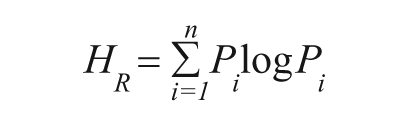
where Pi is the proportion of each country belonging to a major religious group (Theil, 1972). Those countries with an equal dispersion among M religions will have a higher index than those divided equally among M – 1 religions. Higher scores indicate countries with greater religious diversity, whereas a country with religious homogeneity will receive a score of 0. The indicators ranged from 0 to 1.92, with an average of 0.78 (SD = 0.47). Equatorial Guinea, Maldives, Mauritania, Saudi Arabia, and Somalia are considered to have religious homogeneity, all with an entropy index of 0. Among all countries, Ghana (1.88), Trinidad and Tobago (1.89), and Guyana (1.92) are the most heterogeneous. A trend for victims to be trafficked from origin countries to destination countries brings racial and ethnic diversity, as with migration patterns in general, which creates the expectation that developed countries are religiously heterogeneous.
Another element of culture is ideas concerning science and technology. As with a prior test of this theory, the number of patents in force will serve as a second measure of culture (see Lessan & Sheley, 1992). This variable is particularly relevant given that victims are often trafficked from underdeveloped to developed nations (Ejalu, 2006). The United States has the highest number of overall patents (1,474,028), whereas Belize has the lowest (1). The rate of patents per 1,000 persons was calculated to compare across cases, with the highest rates among Luxemburg (55.4), Switzerland (11.3), and Sweden (10.9), and the lowest rates in Azerbaijan, Ethiopia, and Yemen (less than 1 per 1,000 persons).
Morphology
Morphology is defined as the distribution of people in social life that varies with differentiation, relational distance, and radial location. Differentiation is defined as “a specialization of function across parts of a whole” (Black, 1976, p. 11), whereas relational distance is the extent to which people are integrated into society. The radial location describes the position of a person when compared with another in society, such as privileges, that is largely defined by the status of the individual such that “[a] working man has more of this status than an unemployed man” (Black, 1976, p. 48). Black (1976) noted that quantity of law increases as societies become less intimate. As a measure of relational distance, data were taken from the United Nations statistical databases on the total percentage of the population employed in a country. This figure ranged from a high of 83.2% in Burundi and Uganda to a low of 34.9% in Macedonia. Only 33 countries had an employment rate of less than 50% of the population.
As Black (1976) suggested that “patterns of participation define the integration of people into social life” (p. 48), a second measure of morphology will be used. Black hypothesizes that law varies directly with social integration, with more integrated societies having more law than those less integrated. In a similar test of Black’s theory of law, Lu and Miethe (2007) used female labor participation to operationalize morphology, as marginal groups that are less integrated into society have less law. To expand the measure of women’s rights and interests, this study relied on the gender-related development index (GDI), a composite measure of differences among genders in life expectancy, adult literacy, and earned income. From Black’s hypothesis, it is expected that countries where women are marginalized will view human trafficking as less serious than those with equality between sexes. Moreover, it is important to determine whether trafficking victims are treated unfairly in the legal system, given that the demographics of a victim may influence the case’s outcome (Gould, 2002). Lower scores on this measure, as with Sierra Leone and Central African Republic, indicate gender inequality. Although the relationship between employment rate and GDI is correlated, there is a weak association that will not pose a collinearity issue in the multivariate analyses.
Stratification
The quantity of law may be explained by stratification, the vertical distribution of social life. According to Black (1976), the more stratified a society, the more law it has. The Gini coefficient is a measure of dispersion commonly used to compute income distribution (Gini, 1921). A country with a score of 0 has total income equality, whereas higher scores indicate inequality in income distribution. The Gini Index, which was taken from the United Nations statistical databases for the most recent year available, revealed that Denmark (24.7) and Japan (24.9) have the lowest income distribution, and Namibia (70.7) and Lesotho (63.2) have the highest. As a measure of stratification, it is expected that countries with higher Gini coefficients will have more law.
Organization
The extent of community organization is viewed as the capacity for collective action, with the quantity of law being greater with more organizations, whether formal or informal, public or private. Black (1976) predicted that the likelihood of a lawsuit by an individual against a group decreases with organization; thus, organization provides immunity under the law. He states further that “the more organization per capita . . . the more law” (Black, 1976, p. 91), and those that are groupless are less likely to have factories, stores, schools, or hospitals. To measure organization in this study, data were obtained on the hospital beds per 10,000 persons (see also Lu & Miethe, 2007). Angola, Cambodia, and Senegal are believed to be the least organized with only one bed per 10,000, whereas Belarus and Japan are the most organized with 112 and 141 beds per 10,000 respectively. Although it is desirable to have multiple variables to operationalize the extent of organization, the limitations on the availability of data across the sample population preclude additional measures from being included.
Social control
Law serves as a means of control, but there are other aspects that regulate behavior independent of formal measures, such as the community and organizations. In addition Black (1976) noted that social control, apart from law, is quantifiable. He goes on to suggest that countries with more social control have less law. For instance, familial control is another type of social control discussed by Black, and the family often has more social control that make them less likely to use law as a means of control, such as with family disputes, than other groups in society. As Black notes, “family disputes are less likely to go to law than disputes of other kinds, and the stronger the family, the less likely this is” (p. 108). From this, it is inferred that countries with more familial control are less likely to resolve martial disputes in court (see also Kuo et al., 2010). Thus, this study will use the rate of women and men divorced as a measure of social control. With a rate of only 1.5, Bangladesh and Nepal have the lowest portion of overall female divorce rate, whereas Yemen (64.2) and Uganda (74.1) have the highest. In contrast, Bangladesh (0.4) has the lowest male divorce rate and Portugal (39.5) and Estonia (41.8) have the highest. There is a strong relationship between the two measures (r = .720; p < .001).
In addition, Black (1976) suggested that social control is “found wherever and whenever people hold each other to standards, explicitly or implicitly” (p. 105). Unlike formal means of control, a challenge is posed when measuring informal control mechanisms, especially at the macro level. An alternative measure used in a previous test of Black’s theory is the absence of governmental control (see Lessan & Sheley, 1992). When other normative aspects of a country are able to control its citizens, the quantity of law needed as a means to maintain acceptable behavior of those in society is diminished; therefore, law is weaker where other social control is stronger. The number of intentional homicides per 100,000 people, obtained from the Central Intelligence Agency (2008), served to measure the absence of social control. With less than one death per 100,000, Luxembourg had the lowest homicide rate. El Salvador (58), the Democratic Republic of Congo (54), and Cote D’Ivoire (46) had the highest rates of intentional homicide.
Hypotheses
The subsequent hypotheses on the association between antitrafficking laws and the independent variables may be derived by Black’s (1976) theoretical propositions:
Culture
Hypothesis 1a: As countries become more religiously heterogeneous, the quantity of antitrafficking law will increase.
Hypothesis 1b: As the rate of Internet users increases, the quantity of antitrafficking law will increase.
Hypothesis 1c: As the rate of patents in force increases, the quantity of antitrafficking law will increase.
Organization
Hypothesis 2: As the rate of hospital beds increases, the quantity of antitrafficking law will increase.
Morphology
Hypothesis 3a: As the employment rate increases, the quantity of antitrafficking law will increase.
Hypothesis 3b: As gender inequality deceases, the quantity of antitrafficking law will increase.
Stratification
Hypothesis 4: As income becomes more stratified, the quantity of antitrafficking law will increase.
Social control
Hypothesis 5a: As the divorce rate decreases, the quantity of antitrafficking law will increase.
Hypothesis 5b: As the rate of intentional homicides increases, the quantity of antitrafficking law will increase.
Analyses
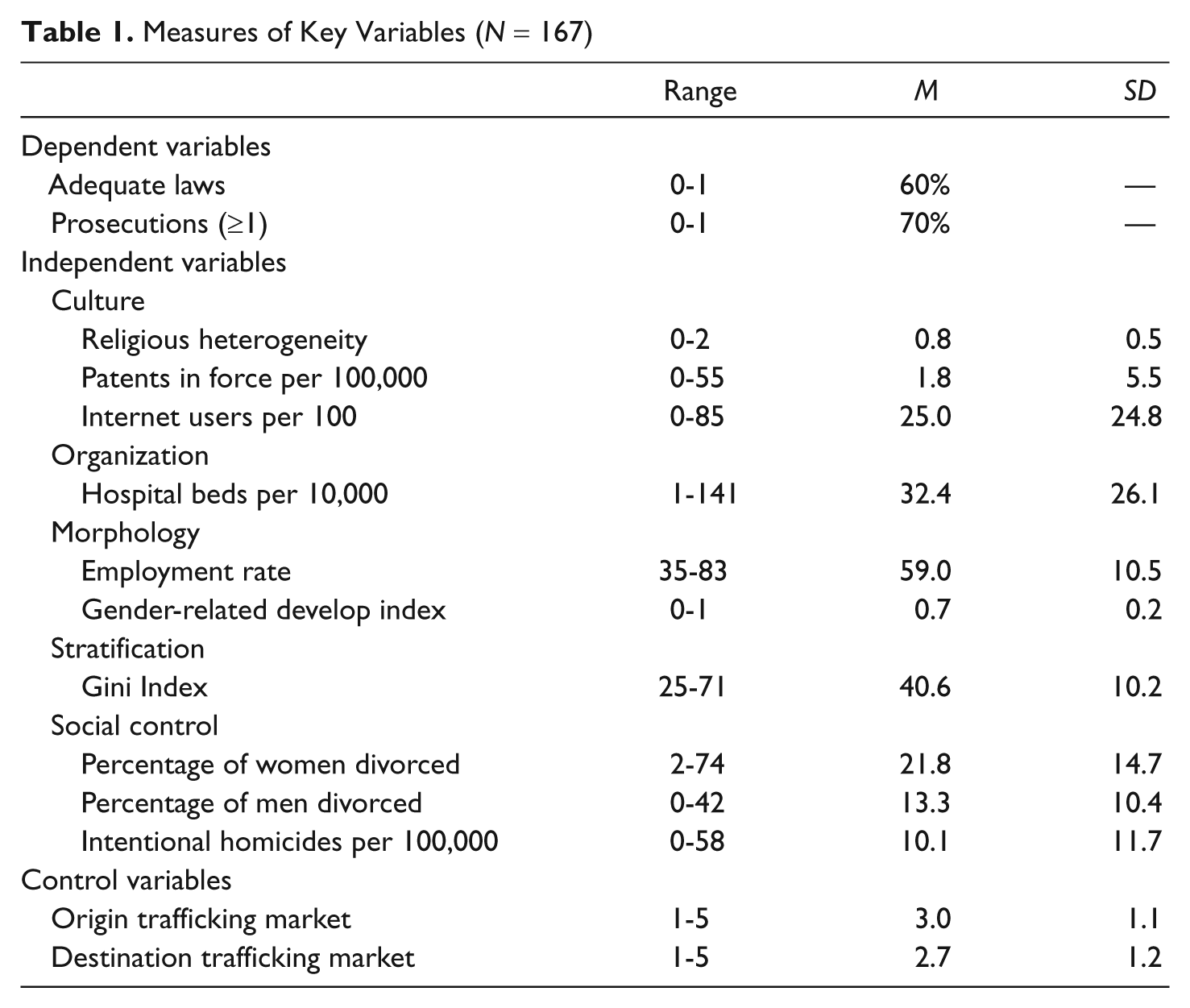
Several statistical techniques will be used to test the preceding hypotheses. The significant differences between each dependent variable and independent variables listed in Table 1 were investigated by t-tests at the .05 level. The adequacy of antitrafficking law in relationship to Black’s (1976) theoretical propositions was assessed. A statistical difference exists between statute adequacy and culture, as countries with sufficient laws have a greater rate of patents in force (t = −1.34; p < .05) and a higher portion of Internet users (t = −2.06; p < .05). These relationships are in the expected direction. The third measure of culture, religious heterogeneity, was statistically insignificant The adequacy of law is also related to social control; nations with sufficient statutes have a greater percentage of women divorced (t = −1.85; p < .05), yet a lower number of intentional homicides (t = 2.63; p < .01). The relationship between the number of trafficking prosecutions and each independent variable was examined next. Only one of the culture indicators is statistically associated with prosecutions, with a higher number of Internet users being associated with more trafficking prosecutions (t = −3.41; p < .05). As suggested by Black (1976), these countries are also more organized (t = −3.40; p < .01). Those nations with trafficking prosecutions are statistically more likely to have gender equality (t = 1.52; p < .01) and have a lower portion of the population employed (t = −4.43; p < .01).
Measures of Key Variables (N = 167)
In Table 2, binary logistic regression was used to investigate the five propositions in combination. As more than one measure was used to operationalize the constructs, a bivariate correlation analysis was conducted to remove the possibility of multicollinearity. As a result, the number of Internet users and divorced men was excluded from the analyses. In Model 1, Black’s (1976) propositions and trafficking market control variables were run against the adequacy of law measure. The results indicate that social control and organization of a country are predictors of the quality of antitrafficking law, yet the 95% confidence intervals (CIs) for the odds ratio include 1.0. In addition, the association between the adequacy of law measure and both the rate of hospital beds and percentage of women divorced is contrary to Black’s hypothesis. The t-tests revealed differences between culture measures by adequacy of laws, but these variables are no longer significant when acting in concert with other propositions. In Model 2, the same covariates were run using the number of trafficking prosecutions as the dependent variable. The decrease in the −2 log likelihood from the prior model indicates an increase in model specificity. As indicated by the odds ratio, the countries that actively prosecute traffickers are 126 times less likely to have inequality in achievement between men and women (95% CI = 2.47, 6447.04). This association is in the expected direction. No other independent variables reached statistical significance. A third model was conducted using the prosecution measure as the dependent variable and the law measure as a covariate to determine whether the existence of adequate antitrafficking statutes predict and explain the prosecution of traffickers. Several independent variables were excluded from the run due to multicollinearity. Although adequacy of law variable approached significance, the findings indicate that the existence of sufficient antitrafficking statutes fails to explain the criminal prosecution of traffickers.
Logistic Regression for the Effect of Black’s Theoretical Propositions on Quantity of Antitrafficking Law

Denotes significance at the .05 level.
Conclusions
Culture
The first hypothesis predicts that countries with religious heterogeneity will have a greater quantity of antitrafficking law. This assumption was unsupported. Of the three measures that operationalized culture, only the rate of Internet users and patents in force share a significant relationship with quantity of antitrafficking law. However, when entered into the regression models, the culture hypotheses are no longer unsupported. These patterns are especially unexpected given that culture plays a large part in trafficking markets. The lack of support for Black’s (1976) theory may be due to the problem of relying on select measures to operationalize culture across nations as it is difficult to measure various “cultural forms and a culture’s different dimensions and combine them to make a global comparative index” (Wong, 1995, p. 212). Therefore, future analyses need to use alternative measures of this proposition.
Organization
The next hypothesis predicts a positive relationship between organization and quantity of antitrafficking law, as measured by the rate of hospital beds. Although countries with trafficking prosecutions were statistically more likely to have a higher rate of hospital beds, the opposite relationship was found between this independent variable and adequacy of trafficking statutes. Those countries with sufficient laws had a statistically lower number of hospital beds at the .05 level, which is contrary to the proposed hypothesis. Similarly, the failure of the organization variable to predict the quantity of law may be due to the reliance on only a single measure to operationalize the proposition. Additional measures of organization should be included in future aggregate-level tests, such as the number of voluntary associations or the proportion of government expenditures in support of public organizations.
Morphology
Black (1976) posited that “an offense between marginal people is less serious than an offense between people more integrated into social life” (p. 49). In testing this proposition, the association between the behavior of law and employment rate in the bivariate analyses was opposite to Black’s thesis and lost significance in predicting quantity of law in the multivariate analyses. Both of these relationships contradict the hypotheses derived from Black’s propositions. Yet, in partial support of the morphology proposition, the research found that as the status of women increases, trafficking-related prosecutions also increase. Morphology was the strongest predictor of the quantity of antitrafficking law, and this relationship helps to explain why many nations fail to prosecute traffickers.
Stratification
By Black’s (1976) definition, stratification is the uneven distribution of material conditions, such as food and shelter. The following hypothesis was derived from this conceptualization: as income becomes more stratified, the quantity of antitrafficking law will increase. A common measure of stratification, the Gini Index, was used. The results indicate that Black’s proposition in regard to the association between stratification and the quantity of law was unsupported, both in the bivariate comparisons and multivariate analyses.
Social Control
Recall that Black (1976) suggested the lack of social control explains crime and delinquency. The analyses indicate that both social control measures, homicide and divorce rates, were predictors of the adequacy of antitrafficking laws, yet both associations were in the opposite direction than expected. More specifically, those countries with sufficient antitrafficking statutes have a statistically lower portion of intentional homicides than those with inadequate law. The observed association between quantity of law and portion of divorces was also in the opposite direction than expected: as the percentage of divorces increased, the quantity of antitrafficking law increased. Future research at lower units of analysis should include additional measures to operationalize alternative types of social control.
Discussion
Even though this research suggests that the quantity of antitrafficking law cannot be explained by all structural aspects of social life, as Black (1976) hypothesized, morphology and quantity of antitrafficking law is a significant finding. Gender inequality explained a large portion of the variation in human trafficking prosecutions but not for adequacy of antitrafficking law. This finding is indicative of symbolic politics as discussed by Barbara Stolz (2007). She has applied this concept to the TVPA, describing the policy as both instrumental (intended to produce a desired outcome) and expressive (a political act that is symbolic). More specifically, Stolz notes that “attention on the general public as the audience toward which political acts are directed and assumes that the audience’s perception of and/or reaction to the act is more important than its substance” (p. 312). Lu and Miethe (2007) also suggested that the legal protection of women in China was merely symbolic and questioned its enforcement. The results of this study also indicate that the symbolic politics framework may be applied to global antitrafficking legislation. It seems that antitrafficking laws in developing nations have progressed alongside developed nations, but the enforcement of laws that protect women and societal norms remain repressive. This nuance is of importance given that the United States assesses international antitrafficking efforts based on the development of antitrafficking statutes, with less concern over its enforcement.
There has been continued debate over various interpretations of human rights worldwide due to its juxtaposition with women’s rights in Third World societies (Bunch, 1990). Several schools of thought have emerged to explain and respond to repressive laws and norms. The Women and Development philosophy, for instance, calls for challenging the gender hierarchy given that some countries have granted immunity from discriminatory practices of customary law. The Women in Development paradigm, guided by the belief that inequity stems from customs and practices of social, political, and economic institutions, recognizes a “failure to regulate the area in question by prosecuting perpetrators, and advocates emphasize the state’s own direct or indirect participation in facilitation violations” (Nyamu, 2000, p. 391). These views are consistent with the findings of this study, as gender inequality is a predictor of trafficking prosecutions, rather than adequacy of trafficking law.
Even though a vague “notion of culture provides a convenient scapegoat for government institutions and obscures the state responsibility in redressing inequalities” (Nyamu, 2000, p. 401), compelling international countries to prosecute traffickers alone will have negligible impact on normative orders (Merry, 1988) that continue to place women at risk of being trafficked (Herzfeld, 2002; Miko, 2003). A reconciliation of cultural practices and human rights standards, although essential, is difficult given the cultural legitimization of gender hierarchy. To better serve these victims, some countries have taken a gendered approach in the formulation of trafficking legal standards (Inglis, 2001; Wooditch, DuPont-Morales, & Hummer, 2009). Efforts to reduce trafficking push factors need to also include a cross-cultural dialogue that aims to address the gender imbalance in Third World countries and to promote gender equality via antitrafficking aid. Victim assistance programs may facilitate human trafficking prosecutions by providing direct services to trafficking victims and building strong partnerships with law enforcement and prosecutors. Although this is imperative for all countries, it is especially important among countries with gender inequality.
Future research needs to explore antitrafficking law once case-level data become available. Yet, this may be impossible for those countries without adequate antitrafficking statutes or human trafficking prosecutions. Until then, efforts to promote gender equality and to encourage prosecutorial efforts through victim service providers will prevent human trafficking by reducing the pool of suitable victims and by increasing governmental control of trafficking-related acts.
Footnotes
Acknowledgements
The author would like to thank Dr. Jon B. Gould and the anonymous reviewers for their helpful suggestions.
Declaration of Conflicting Interests
The author declared no potential conflicts of interest with respect to the research, authorship, and/or publication of this article.
Funding
The author received no financial support for the research, authorship, and/or publication of this article.