




Abstract
Research evidence demonstrates that sex offender treatment programmes (SOTPs) can reduce the number of sex offenders who are reconvicted. However, there has been much less empirical research exploring the experiences and perspectives of the prison environment within which treatment takes place. This is important, particularly for sexual offenders, as they often face multiple stigmas in prison. This study used a mixed-methods approach to explore the experiences of prisoners and staff at a therapeutically orientated sexual offenders’ prison to understand whether the prison environment was conducive to rehabilitation. The quantitative strand of the research sampled prisoners (n = 112) and staff (n = 48) from a therapeutically orientated sex offenders prison. This strand highlighted that both prisoners and staff had positive attitudes toward offenders and high beliefs that offenders could change. Importantly, the climate was rated positively and, in particular, participants had very high ratings of “experienced safety.” The qualitative strand of the research consisted of semistructured interviews with prisoners (n = 15) and a range of prison staff (n = 16). The qualitative analysis revealed positive prisoner views toward staff relationships, with most participants articulating that the prison and its staff had contributed to positive change in prisoners. Crucially, the environment was perceived as safe and allowed prisoners “headspace” to work through problems and contemplate change. This research offers some support to the notion that context is important for sex offender rehabilitation.
Introduction
Research has demonstrated that sex offender treatment programmes (SOTPs) can reduce the number of sex offenders who are reconvicted (Hanson et al., 2002; Losel & Schmucker, 2005). Specifically, programmes that take a risk–need–responsivity approach have been found to be the most successful (Hanson, Morton, Helmus, & Hodgson, 2009). However, although there is now an established body of knowledge regarding sex offender treatment effectiveness, there has yet to be any significant attention paid to the environment/context in which treatment takes place (Ware, Frost, & Hoy, 2010). Research on the broader environment is limited, primarily focusing on “within treatment” climate (see Beech & Hamilton-Giachritsis, 2005; Beech & Scott Fordham, 1997). For example, findings from Beech and Hamilton-Giachritsis (2005) affirmed that a therapeutic climate was related to treatment outcome, with therapists’ attitudes and goals having an impact on treatment effectiveness.
However, there has been no systematic empirical research exploring the climate of the prison where such treatment takes place. Indeed, Woessner and Schwedler (2014) asserted that “few researchers have ventured to question whether therapeutic prisons actually provide a therapeutic climate” (p. 4). This is surprising, given the amount of research that has found that social and therapeutic climate influences a variety of clinical and organisational outcomes related to staff and patients in forensic mental health services (Tonkin et al., 2012; Willets, Mooney, & Blagden, 2014). It is also potentially important as the broader prison environment could either facilitate or interfere with treatment intervention. This is particularly relevant for sexual offenders as they face multiple stigmas in prison, occupy the lower rungs of the prison hierarchy, and experience hostility and anxiety on a daily basis (Schwaebe, 2005). For these reasons, Schwaebe (2005) stressed the need to understand the context of sexual offenders in prison and the context of their treatment to understand the limits of treatment gain in prison-based programmes. This broader environment is typically overlooked, despite research finding that status in prison is a factor in sex offender treatment refusal (Mann, Webster, Wakeling, & Keylock, 2013). A prison’s social environment has been found to be important for shaping behaviour and is central to the extent to which treatment gains are sustained and generalised (Ward, Day, Howells, & Birgden, 2004). If sexual offenders find themselves in prisons that are characterised by suspicion, hostility, and guardedness, this will impair treatment outcome and may make prisoners less likely to volunteer for programmes (Ward et al., 2004). Antitherapeutic prison environments have been found to negatively affect on treatment readiness and programme outcome (Schalast, Redies, Collins, Stacey, & Howells, 2008; Ward et al., 2004). Thus, the prison climate, whether therapeutic (or not), and the attitudes of staff (therapists, prison officers, and general staff) within the prison could play a pivotal role in the successful treatment and rehabilitation of offenders.
In many jurisdictions, sexual offenders are often isolated for their own protection due to the dangers they face. In England and Wales, this often means segregation onto “vulnerable prisoner units” (VPUs) or transfer to prisons that deal predominantly with sex offenders. However, even in specialised units, sex offenders still experience threats and fear from other prisoners and, at times, staff (see, for example, O’Donnell & Edgar, 1998). There is a clear international gap in the literature regarding sex offenders’ experiences of prison climate/environment. This is important as there are growing concerns that rehabilitative programmes and practice are being compromised by ineffective correctional environments, staff drift, organisational resistance, degree to which therapeutic integrity is maintained, and the quality of programme implementation (Day, Casey, Vess, & Huisy, 2012; Smith, Cullen, & Latessa, 2009).
Evidence from the therapeutic community (TC) literature highlights the importance of context and environment for offender rehabilitation. Jensen and Kane (2012) found that completing a TC had a significant effect on reducing the likelihood of rearrest for prisoners. Marshall (1997) conducted a large-scale evaluation of the effectiveness of TCs for sexual offenders. In his 4-year follow-up, he found that 18% of treated offenders (with two or more previous convictions for sexual offences) were reconvicted compared with 43% of untreated sexual offenders. Such environments have been found to also bolster treatment goals and targets and contribute to prosocial modelling. TCs have been found to have a positive effect on self-identity and enable prisoners to construct positive identities (Miller, Sees, & Brown, 2006); they improve quality of life for prisoners within the institution (Shefer, 2010), effect personality change, and prisoners are less likely to receive an adjudication within the prison (Newton, 1998). This has led some to argue that TCs, or at least environments that have an explicit therapeutic focus, are the ideal environments for “doing” sexual offender treatment (Ackerman, 2010; Ware, Frost, & Hoy, 2010).
Prison Climate and Potential Correlates of a Prison Climate
The definition of prison climate is, at times, ambiguous with some using terms like “culture” and “climate” interchangeably (Day et al., 2012). A good prison social climate can be characterised as being supportive, offering a safe environment and opportunities for personal growth and development (van der Helm, Stamms, & van der Laan, 2011). Schalast et al. (2008) proposed that a social and therapeutic climate is the extent to which the climate is perceived as supportive of therapy and therapeutic change. This incorporates whether mutual support is typically seen as characteristic of the prison environment and the level of tension, perceived threat of fear, aggression, and violence within the prison. We contend that a rehabilitative climate of a prison can be understood as the prison’s social climate coupled with the prison’s culture, philosophy, and fitness for purpose in relation to reducing reoffending. These critical aspects of a prison are likely to have a direct impact on the effectiveness of rehabilitative measures, behaviour, and personal change and consequently the effectiveness of the prison in reducing reoffending.
The climate of a prison is related to aspects of prison life. A key component for any prison climate would appear to be prisoner–staff relationships. For example, it has been argued that positive attitudes and beliefs about change in prison staff and prisoners are vital for fostering effective offender rehabilitation and promoting change in offending behaviour (see, for example, Hogue, 1993; Kjelsberg & Loos, 2008; Lea, Auburn, & Kibblewhite, 1999). This has been found to be important for sex offenders as positive attitudes by prison staff toward sex offenders have been found to facilitate and motivate offenders onto treatment (Kjelsberg & Loos, 2008; Lea et al., 1999). In Lea et al.’s (1999) study, they reported that professional attitudes were, at times, in conflict. The conflict stemmed from prison officers feeling pressured to form a bond with sex offenders as part of their professional duties, whilst suffering internal conflict because of personal “disgust” and “disapproval” of the criminal activities of these individuals. This incongruence could lead to more punitive attitudes and behaviours from prisoner officers, which can have deleterious impacts on treatment. Indeed, the general psychotherapeutic literature stresses the importance of meaningful relationships between therapist and patient and, in offender behaviour programmes, emphasis is placed on the responsivity issue of the therapeutic alliance. The therapeutic alliance is pivotal for effective treatment with a constructive relationship characterised by warmth, empathy, respect, rewarding behaviour, and genuineness (see, for example, Ackerman & Hilsenroth, 2003). Serran and Marshall (2010) found that therapists who are warm and empathic with men who sexually offend develop a more effective therapeutic relationship; they reported that this relationship could account for 20% to 30% of change in this client group. We argue that constructive relationships are critical, not just for therapists, but for all prison staff coming into contact with prisoners.
Given the potential impact climate and context could have on rehabilitative programmes, there is surprisingly little research on the experiences of sexual offenders in prison and how they perceive their environment despite this group making a significant proportion of the prison population (Ievins, 2013). The aim of this research is on exploring and investigating the therapeutic and rehabilitative climate of a therapeutically focused all-male sexual offenders prison from staff and prisoner perspectives. The research takes a case study approach, which is most useful when research wants to explore the richness of a phenomenon and the extensive context of that phenomenon (Yin, 2009). Indeed, deep exploration of even a single case can be more informative than knowing a little about 200 or 2,000 cases (Maruna & Matravers, 2007). The study will use a mixed-method approach; qualitative interviews will be implemented to understand staff and prisoner perspectives and experiences of the prison environment, whether participants believe that relationships in the prison are constructive and whether the environment allows for growth, change, and rehabilitation. Cochran, Mears, Bales, and Stewart (2012) emphasised the importance of prison experiences for understanding recidivism. The quantitative phase of the research will investigate the therapeutic climate of the prison, attitudes of participants toward sexual offenders, participants’ beliefs about change, and prisoners’ readiness for treatment. The main purpose of the research is to understand the context of sex offender treatment at this prison through investigating key aspects of the rehabilitative climate at the prison. This will be achieved by exploring the perspectives and experiences of the prison environment from staff and prisoners. The overarching research question for this study is as follows:
Attached to this are a number of research objectives.
to explore the rehabilitative and therapeutic climate of a therapeutically orientated sex offenders prison;
to investigate the experiences and perspectives of prisoners and staff on the purpose of the prison, its regime, climate, and opportunities for personal development;
to investigate any differences/divergences, both quantitatively and qualitatively, between staff and prisoners’ perceptions of the prison’s climate, attitudes toward offenders, and offender change; and
to explore theoretically important variables of a rehabilitative prison climate and explore associations between the different variables.
Method
Setting and Mixed-Methods Design
This study was conducted at one of Europe’s largest sex offender treatment prisons. The site was chosen for this exploratory research due to its focus on rehabilitative programmes, its specialisation in sex offender treatment, and because the prison only accommodates sexual offenders.
A mixed-methods design was implemented to explore the climate of the prison. A positive aspect of such an approach is that it offsets the weakness of both qualitative and quantitative methods and can provide rich and detailed data that would not be possible through either approach alone (Creswell & Clark, 2007). Specifically, this research used a convergent mixed-methods design to gain a more complete understanding of the research topic. The purpose of the convergent design is “to obtain different but complementary data on the same topic” to best understand the research problem (Morse, 1991, p. 122). This design is used when the researcher wants to triangulate the methods by directly comparing and contrasting quantitative statistical results with qualitative findings for corroboration and validation purposes (Creswell & Clark, 2007). A convergent mixed-methods design is pragmatic in the sense that it is orientated toward exploring and solving problems in the “real world”; such a position reiterates that epistemologically and ontologically quantitative and qualitative research share many commonalities (Feilzer, 2010). The approach is also best suited for exploring underresearched phenomena, as is the case in this research. The research decided against using sequential mixed-methods designs, that is, qualitative or quantitative phase followed by a quantitative or qualitative phase as the purpose was not to test or build on a previous research study. This research also did not want to privilege a particular methodological approach and instead wanted to converge quantitative and qualitative data to gain well-substantiated and cross-validated conclusions about the prison’s climate (Creswell & Clark, 2007). The convergent design is also efficient and well suited to research that may be time limited/pressured due to funding requirements (as was the case in this research) or other such restrictions (Creswell & Clark, 2007).
This research was implemented using two research strands, which were conducted simultaneously, as is common using the convergent approach. The two phases are detailed over the coming sections.
Qualitative Strand
Participants, Recruitment, and Sampling
In the qualitative strand, there was a total of 31 interviews including prisoner (n = 15 containing untreated n = 6 and treated n = 9 sex offenders) and staff (n = 16) interviews. It should be noted that a final sample of n = 31 is considered large in qualitative research (Willig, 2008). Prison staff participants were recruited through email, research posters, and presentations within staff briefings and participants were given contact details of the lead author if they were interested in taking part. 1 The final sample included senior management (n = 3), psychologist (n = 3), prison officer (n = 5), group therapist/trainee psychologist (n = 4), and prison librarian (n = 1). The final sample purposefully selected participants from varied job positions to capture the range and diversity of staff experience at the prison. Similarly, prisoners were recruited through posters and contact details left on all wings of the prison and snowball sampling. Participant information for prisoners is detailed in Table 1.
Prisoner Participant Information.

Semistructured interviews were conducted in the purpose-built interview rooms at the prison following ethical clearance. The interviews focused on the following areas and were broadly similar for both staff and prisoners.
Purpose of the prison, experience of prison life, relationships in the prison, and the regime;
Rehabilitative ideals/orientation of the prison; and
Opportunities for personal development and access to constructive outlets for prisoners.
As this research used in-depth interviews, steps were taken to minimise researcher bias. First, questions were open-ended and designed to be nondirective, allowing participants to describe their experience in their own words without the views of the researcher imposed on them. In addition, participants’ own words are used to describe the phenomena of this investigation (Phillips & Lindsay, 2011). To try and minimise selection bias, the research actively recruited a mix of offenders and prison staff and attempted to reach as many prisoners and staff within the prison as possible.
Qualitative Data Analysis
Data were analysed using thematic analysis, which is a method for identifying, analyzing, and reporting patterns and themes within the data. It aims to capture rich detail and interpret the range and diversity of experience within the data (Braun & Clarke, 2006). It differs from other qualitative methodological approaches as it is not tied to an explicit theoretical assumption or position. The thematic analysis has been described as a “contextualist method,” sitting between the two poles of constructionism and realism. This position thus acknowledges the ways individuals make meaning of their experience, and, in turn, the ways the broader social context impinges on those meanings, thus, the analysis is seen as reflecting “reality” (Braun & Clarke, 2006). This epistemological position was seen as important when triangulating data with the quantitative data. The analysis adhered to the principles of qualitative thematic analysis as outlined by Miles and Huberman (1994). Data analysis commenced with detailed readings of all the transcripts, then initial coding of emergent themes, through to a detailed sorting of initial patterns, through to isolating meaningful patterns, and interpreting those patterns (Miles & Huberman, 1994). The data were organised systematically and themes were identified and reviewed, with the final themes being representative of the participants. A type of interrater reliability was undertaken, with the analysis being “audited” (Lincoln & Guba, 1985 by the coauthors as well as an independent researcher to ensure the interpretations had validity.
Quantitative Strand
In the quantitative strand of the research, a total of 400 questionnaires were distributed to prisoners around the different wings of the prison and 112 were returned (28% response rate). The programme support volunteers (offenders who have completed an SOTP) agreed to distribute the questionnaires to prisoner participants. Questionnaires were hand delivered to prison staff in all wings of the prison. Completed questionnaires were anonymously returned to a designated box at the gate of the prison; this was decided as the best place to return questionnaires by the governor of the prison.
The final sample comprised prisoners (n = 112) and prison staff (n = 48). Prison staff and prisoners had to have a minimum of 6 months of being at the prison. The mean age for prisoners was 48.87 (SD = 14.15, range = 23-80) and the mean age for prison staff was 39.77 (SD = 12.02, range = 24-58). All participants had to have been at the prison for more than 6 months; the range of years at the prison was 2 to 18 years. Table 2 shows a breakdown of prisoner participants by offence and treatment.
Breakdown of Classification of Prisoners by Offence and Treatment.

Measures
Essen Climate Evaluation Schema (EssenCES)
This is a measure of social and therapeutic climate in forensic settings (Schalast et al., 2008). It consists of 17 items (15 items scored, 2 positively worded items not scored) and has been validated in forensic psychiatric and prison settings (see Day et al., 2012; Howells et al., 2009; Schalast et al., 2008). Participants indicate how much they agree with statements on a 5-point Likert-type scale range from 1 (not at all) to 5 (very much). The measure has a reliable three-factor structure, which consists of the subscales of Inmates’ Cohesion (e.g., The inmates care for each other), Experienced Safety (e.g., There are some really aggressive inmates in this unit), and Hold and Support (e.g., Staff take a personal interest in the progress of inmates). High scores indicate a positive social climate. The measure has been found in previous studies to have moderately strong internal consistency; Cronbach’s α = .79 to .87 for patients/prisoners, .73 to .78 for staff, and .78 to .86 for the total sample (see Day et al., 2012; Tonkin et al., 2012).
Attitudes Towards Sex Offenders (ATS)
This is a 32-item unidimensional scale (Hogue, 1993) for assessing attitudes toward sexual offenders. The scale has been used previously with community sample, sexual offenders, young offenders, prison officers, psychologists, and criminal justice professionals (Hogue, 1993; Kjelsberg & Loos, 2008). The scale repeatedly demonstrates good internal reliability rating, with alphas ranging from .85 to .95 (see Ferguson & Ireland, 2006; Nelson, et al., 2002;). Participants indicate how much they agree with statements on a 5-point Likert-type scale ranging from 1 (strongly disagree) to 5 (strongly agree). Higher scores on the ATS are indicative of more positive attitudes toward sexual offenders.
Individual Theories of Offending Behaviour (Self and Other)
These two measures were designed for this study and are amended versions of Dweck’s (2000) domain-specific implicit theories of intelligence and personality and Gerber and O’Connell’s (2012) implicit theory of crime and criminality (self and other). There were two versions of this scale administered to participants. The first version was the “implicit theory of offending behaviour (self),” which was concerned with prisoners’ beliefs in whether they could change their offending behaviour and was administered to prisoners only. The scale is a six-item measure and consists of items such as “My offending behaviour is a part of me that I can’t change very much.” Participants indicated how much they agreed with statements on a 6-point Likert-type scale from 1 (strongly agree) to 6 (strongly disagree). The internal consistency of the six items comprising the measure was computed using Cronbach’s alpha. The results showed the measure had good internal consistency (Cronbach’s α = .893).
The second version of the scale was essentially the same but amended to the “other” version so that prisoners and staff could rate the changeability of offending behaviour in prisoners generally. This six-item measure consisted of statements such as “Anybody can change their offending behaviour.” The internal consistency of the six items comprising the measure was computed using Cronbach’s alpha. The results showed the measure had good internal consistency (Cronbach’s α = .858).
Corrections Victoria Treatment Readiness Scale (CVTRS)
This is a 20-item measure designed to assess readiness for treatment in offenders and consists of four subscales (Attitudes and Motivation, Emotional Reactions, Offending Beliefs, and Efficacy; see Casey, Day, Howells, & Ward, 2007). Participants indicate how much they agree with statements on a 5-point Likert-type scale ranging from 1 (strongly disagree) to 5 (strongly agree). The measure and subscales have been found to yield acceptable to good levels of internal reliability ranging from α = .84 for the Attitudes and Motivation subscale, α = .79 for the Emotional Reactions subscale, α = .73 for the Offending Beliefs subscale, to α = .60 for the Efficacy subscale (Casey et al., 2007). The measure has been used previously for assessing treatment readiness in violent and sexual offenders and has also been found to be positively correlated with therapeutic engagement (Day et al., 2012).
Results
Qualitative Results
The prisoner and staff interviews were analysed together and revealed themes associated with the climate of the prison, experience of the prison, and relationships between staff and prisoners. 2 Table 3 presents the themes derived from the qualitative analysis. The superordinate themes will be discussed below.
Superordinate and Subordinate Themes From Prisoner and Staff Interviews.

Superordinate Theme 1: Purpose and direction
There was consensus from all participants, both staff and prisoner, as to the purpose of this prison. Every participant believed that the prison was about “rehabilitation” and reducing reoffending, given the focus on treatment programmes in the prison. Indeed, the focus on programmes gave the prison a clear identity with the prison regime orientated around that focus. Prisoner participants articulated that this was a prison you came to rehabilitate yourself and to change your way of thinking.
Extract 1: Prisoner Participant 11 It’s about rehabilitation and changing your beliefs erm changing and looking at your offending behaviour so when you get out you don’t repeat your mistakes. Programmes has taught me a hell of a lot about myself. These were life skills that I had ignored and erm I’ve changed now . . . Extract 2: Prison Staff Participant 16 I feel clear about what our objective is or what our objectives are and that what we are about really. I think we are very different to other prisons in that our sole purpose here is about helping people who are locked up here to address their offending and reasons for their offending . . . I think it’s important to have that level of purpose for a prison direction.
There was a unanimous belief among participants (both staff and prisoner) that the prison’s purpose was about rehabilitation, personal change, and participation in programmes. The ultimate aim then of the prison was to help the offenders not to reoffend in the future. The prison had direction, with both prisoners and staff aware of its purpose and aims. The purpose of the prison appeared to allow for purpose to be created in the prisoners, as they were clear why they were at the prison. Indeed many participants discussed the varied opportunities they had from work, education, leisure, and behavioural programmes. This allowed participants to have “meaningful” lives while at the prison, rather than wasteful ones where nothing constructive was done with their day.
Extract 3: Prisoner Participant 1 RSP: Feels as though you are doing something purposeful . . . there’s a purpose to it. I’m the only one in prison who is allowed to do X and it means a lot, it feels good that I can be trusted even though you’ve done the terrible things we trust you.
In Extract 3, the participant discusses how his job role within prison gives him a sense of purpose and how the trust allowed for a measure of self-validation in that he can be trusted and accepted. Embedded within participants’ narratives of purpose were narratives of change. They were not seen as irredeemable.
Extract 4: Prisoner Participant 11 I’ve changed loads since getting here, when I got here yeah I was bolshie, arrogant, but through being here, doing the courses I’ve changed . . . this officer was even saying to me how much I’ve changed and that when I first came in I was a bit like this and that and I was. It means a lot that he can see that, they can see how much I’ve changed. Extract 5: Prison Staff Participant 5 They’re human beings like us, yes they’ve committed an offence, but my starting point is that they’re human beings.
The relational dynamics of staff–prisoner interactions seemed an important aspect of this “direction.” Extract 4 highlights that although the participants’ feel as though they have changed, it is important to them that this change is recognised and reflected back to them. This is potentially very important particularly for sexual offenders who will experience high levels of shame and stigma (Blagden, Winder, Thorne, & Gregson, 2011). Thus, by having their behaviour positively validated allows for a revision to their self-image, which allows for more positive and fulfilling self-images to be adopted and which can galvanise the commitment to the personal change process. This points to the relational properties in the “self change” process (Mead, Hilton, & Curtis, 2001). Extract 5 demonstrates that prison staff interact with prisoners not with an eye to their difference, but instead with an eye to their similarity. They are “human beings” and this perception seemed to allow prison staff to cultivate constructive relationships with prisoners.
Extracts 4 and 5 also point to important aspects for offender rehabilitation, namely, attitudes and expectations of prison staff for prisoners. There is consistent research on the pygmalion effects and interpersonal expectancy effects on prisoner outcome (LeBel, Burnett, Maruna, & Bushway, 2008). Maruna et al. (2009) argued that the pygmalion effect (high expectation produces higher outcome) is important for offender rehabilitation; specifically, that self-change occurs not only through self-appraisals and attributions but also from the reactions and reflected appraisals of other. As Maruna et al. (2009) argued, “successful desistance from crime might involve the negotiation of a reformed identity through a process of pro-social labelling” (p. 51). It appeared from the interviews with staff and prisoners that both believed that prisoners could change. It appeared important to prisoner participants that personal change was recognisable, verifiable, and reflected back to them. It has been argued that without some form of external recognition of their reform many individuals may struggle to maintain crime desistance (Maruna et al., 2009).This was galvanised by their relationships with prison staff who did not interact with prisoners as “sex offenders” but as human beings. Here, the prison’s purpose and the beliefs of staff complemented each other and could be having a positive effect on the change process.
Superordinate Theme 2: Acclimatisation, viability, and safety
Prisoner participants spoke of being able to “exist” in this prison without fear of being harmed or denigrated. This was a new experience for most prisoner participants and often it took some time to acclimatise to this.
Extract 6: Prisoner Participant 8 The experience I have had in this prison is by far the best place you can be in, definitely out of the 3 I’ve been in . . . there’s more freedom, I’ve never had any problems, I don’t think there are many people who don’t make the most of the opportunities here.
There was a sense from the participants, as illustrated in Extract 6, that sex offenders at the prison felt that the environment was viable and that by and large they felt secure and safe in their environment. The majority of prisoner participants preferred the prison to other prisons they have experienced as they were not constantly living in fear, having to portray a different identity or “constantly having to look over their shoulder.” This links with findings from previous research, which highlights the importance of prison environment for sexual offenders (Schwaebe, 2005; Ware et al., 2010). Overwhelmingly, participants (treated and untreated prisoners and staff) in this study viewed the prison environment as positive, constructive, and importantly safe. The feeling of safety was an important and reoccurring theme; all participants felt safe in the prison and this was contributing to them being able to address other aspects of themselves (e.g., those related to their offending behaviour), which previously they did not have the “headspace” to deal with.
Extract 7: Prisoner Participant 7 You’re going from looking over your shoulder, fearful of being attacked like it was in X to just “morning,” it’s a big weight lifted off your shoulders being here . . . [as listeners] we give a talk on the induction wing and I say to them relax, you’re in safe hands here. Extract 8: Prisoner Participant 11 It doesn’t matter what you’ve done you’re accepted here and you accept people here . . .
This place gives you the headspace you need to think about things to work things through, and if you need that time to be alone, you’re given it.
All participants discussed how this prison cultivated an environment where sexual offenders felt safe and so they did not have to deal with the anxiety or threat of being “ousted” as a sexual offender. Extracts 7 and 8 illustrate how prisoner participants were able to “be” in the environment, as they were not constantly in fear. Feeling safe and having anxieties reduced gave participants additional “headspace” to think and reflect on the self and the self in transition (self in relation to past and future selves) and changes they want to make. This psychological space is important for prisoners and can help prisoners make sense of their current environment (Martel, 2006). B. Crewe (personal communication, November 2012) has suggested headspace in prison can allow offenders to reflect and discover that change is possible and desirable. Most participants discussed feeling “at ease” in the prison and that the environment was one that allowed for personal change. This appears a very important element for a rehabilitative climate for sexual offenders.
Extract 9: Prison Staff Participant 16 This isn’t scientific at all, so I apologise for this but when you’ve worked in a prison for years, you get a feel for them. You walk into a prison and you get a feel for it good, bad or whatever . . . so I think that the prison has a focus, everyone knows why they are here prisoners and staff know that, it gives the prison a level of stability and calmness. Extract 10: Prison Staff Participant 5 There’s a feel about this place, it feels nice, relatively relaxed, there’s something about this place on a sunny Friday afternoon, there’s an atmosphere about the place, there’s a lot of good work going on here and you know everyone is really really pulling together.
Extracts 9 and 10 give the prison an almost organic quality, which is solidified with the majority of staff and prisoners working together constructively. There was a sense the environment was construed as stable, which allowed for the prison to be experienced as consistent. This appeared important for mediating tensions within the prison; indeed, all participants discussed how there was very little in the way of bullying or violent disorder.
Superordinate Theme 3: Constructive and meaningful relationships
Almost all participants felt that the relationships in the prison, between both staff and prisoners, were constructive and positive. Only one participant (Participant 6) felt that the relationships between staff and prisoners were poor.
Extract 11: Prisoner Participant 1 RSP: I think they are really excellent here [staff–prisoner relationships] excellent erm they’re interested, you know, they’re interested in helping, they care, they want to help . . . they’re positive it is rare you’ll get a negative relationships with officers. IV: What makes them positive relationships? RSP: The honesty, the honesty, that all comes from you and the courses we’re doing, it spreads and the fact that we are able to talk freely about how we’re feeling, you know, and feeling that someone will care and not like it’s oh it’s a waste of time. Extract 12: Prisoner Participant 7 It comes down to respect, they treat us like human beings. I haven’t seen an officer here who thinks of me as just a number, that’s Mr. X, you’re not just a number here you’re a person and that’s the feeling you get.
The majority of participants felt that the staff and prisoner relationships were positive and that social interaction with officers made participants feel as though they were human beings. This is especially important for prisoners accommodating sexual offenders. One relational aspect between prisoners and staff that appears critical was that relationships were perceived as genuine. Staff were construed as being genuinely interested in prisoners’ lives and their problems. This appeared from participants’ narratives to go beyond superficial notions of “pleasant or nice” relationships, but instead seemed to be more constructive. Rogers (1951) outlined how genuineness in relationships can promote personal growth and development in individuals. Indeed, it may be that social interactions with prisoners could be considered testing grounds for future interaction with others. It is interesting to note that in Extract 11, relationships are described as “honest” and the participant explains how he can speak freely in this prison and someone will care and listen. Prison staff were also construed as helpful, in that if prisoners requested help they would try and accommodate. The majority of staff here seemed to be a cross between what has been termed “careerist” and “humanitarian” prison staff in that they have a positive commitment to rehabilitation and want to develop good relationships with prisoners (Scott, 2012).
Quantitative Results
This section of the results will focus on the quantitative results and will be split into two subsections (a) comparisons between prisoners and staff on the measures and (b) the relationships between the measures.
Descriptive and Univariate Analysis
EssenCES
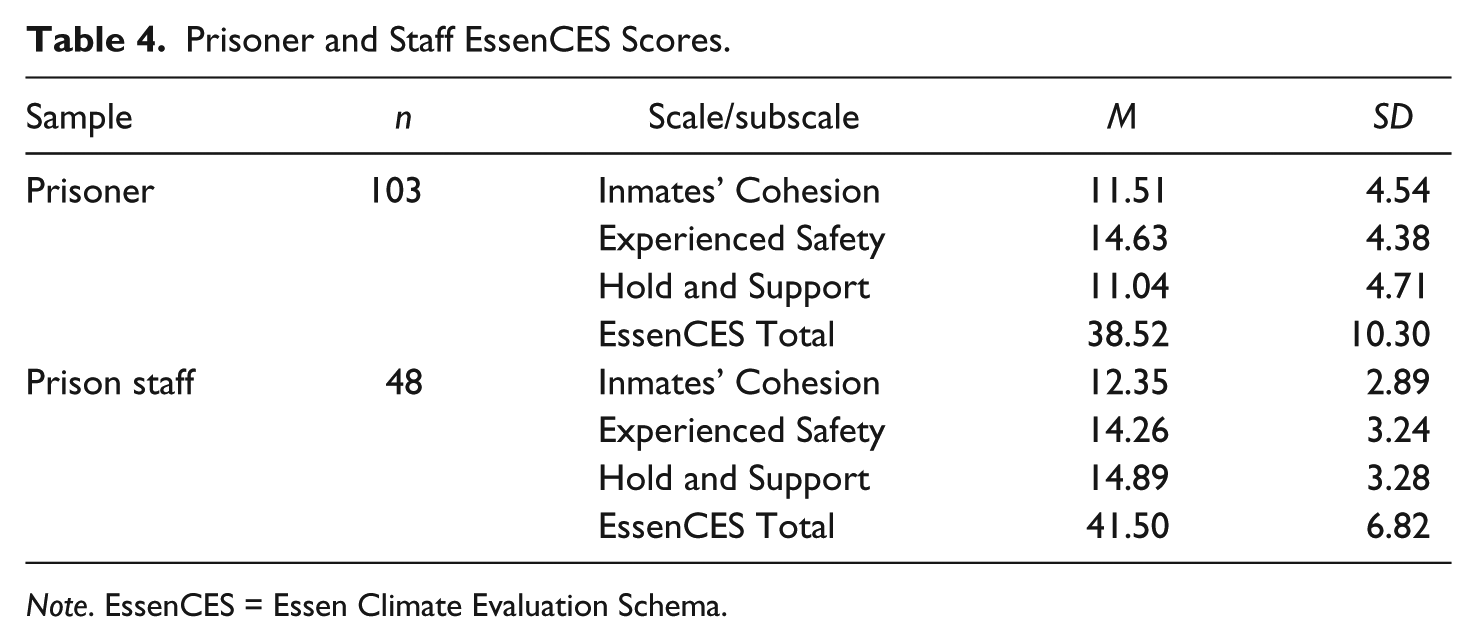
The descriptive statistics for the EssenCES (total) and the EssenCES subscale are presented in Table 4. The scoring of the EssenCES was calculated using the coding from the original author (Schalast, 2008).
Prisoner and Staff EssenCES Scores.
Note. EssenCES = Essen Climate Evaluation Schema.
The scores of Experienced Safety are considered very high, while prisoners’ views on Hold and Support, which is exclusively about relationships with staff, can be seen as average when compared with the statistical norms for the EssenCES (Schalast, 2010). Staff scored higher on the Inmate Cohesion (12.35 compared with 11.51) and Hold and Support (14.89 compared with 11.04) subscales while prisoners scored higher on the Experienced Safety subscale (14.26 compared with 14.63). A one-way between-groups MANOVA was performed to investigate the difference between staff and prisoners on therapeutic and social climate. The dependant variables were the EssenCES subscales Hold and Support, Inmate Cohesion, Experienced Safety, and also EssenCES Total. There was a statistically significant main effect between prisoners and staff on combined dependant variables, F(3, 145) = 10.50, p < .001; Wilks’s Lambda = .82;
Attitudes to Sex Offenders (ATS)
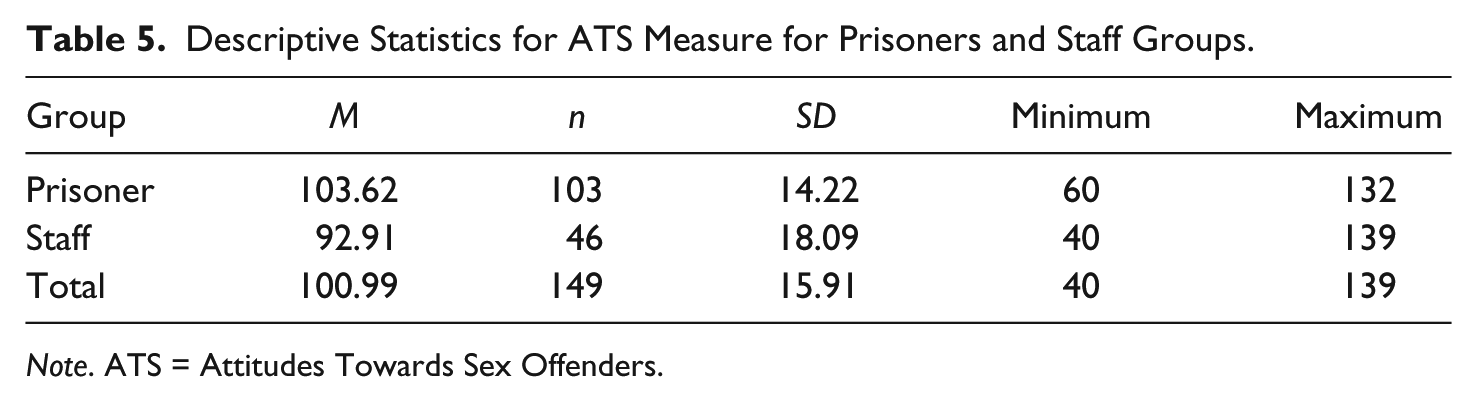
Descriptive statistics are shown in Table 5 for the 36-item ATS. Total scores were calculated using the coding from the original author (Hogue, 1993).
Descriptive Statistics for ATS Measure for Prisoners and Staff Groups.
Note. ATS = Attitudes Towards Sex Offenders.
An independent t test indicated that staff had significantly less positive ATS than prisoners, t(132) = 3.697, p < .001. However, these are again encouraging data as both prisoners and staff had very high scores and so positive attitudes toward sexual offenders. The ATS scores here are among the most positive that can be found in the literature. Given the therapeutic orientation of the prison, this is a positive finding as a therapeutic climate and constructive therapeutic work would be difficult without such views (Hogue, 1993; Lea et al., 1999).
Implicit Theories of Offending Behaviour Scale (ITOB-Other)
A total score for the ITOB scale was computed by adding the scores of the first three items together with the sum of Items 4, 5, and 6 after they had been reverse coded. The mean score for this scale was also computed by dividing the total score by six, and the descriptive statistics for these scores are presented below. Mean scores of around 5 or above demonstrate strong incremental beliefs regarding offending behaviour (Dweck, 2000). Table 6 shows the descriptive statistics for the ITOB (other) scale (both prisoners and staff).
Offending Behaviour Implicit Theories—Prisoner and Staff.
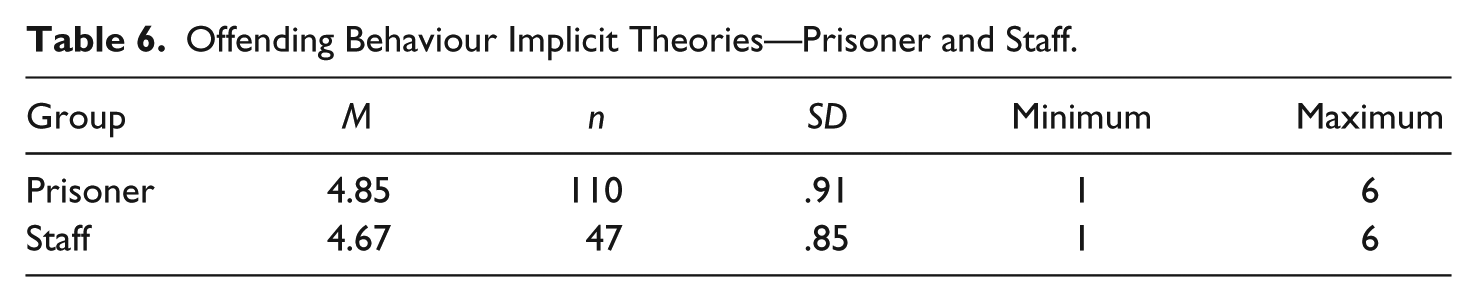
An independent t test was conducted between staff and prisoners’ scores on the ITOB scale. The results indicated that there were no significant differences between staff and prisoners’ ITOB t(91.98) = 1.685, ns. The analysis reveals that both staff and prisoners held beliefs that could be considered broadly incremental and suggests both groups believe offenders can change their ways.
ITOB (Self-Version)
A total score for ITOB (self) scale (prisoners only) was computed by adding the scores of the first three items together with the sum of Items 4, 5, and 6 after they had been reverse coded. The mean score for this scale was also computed by dividing the total score by six. The mean score on the ITOB (self) was 5.3 (SD = 0.70, range = 2.33-6). On average, participants view their offending behaviour as strongly incremental (changeable). This result demonstrates very high beliefs of change within prisoners in this sample.
CVTRS
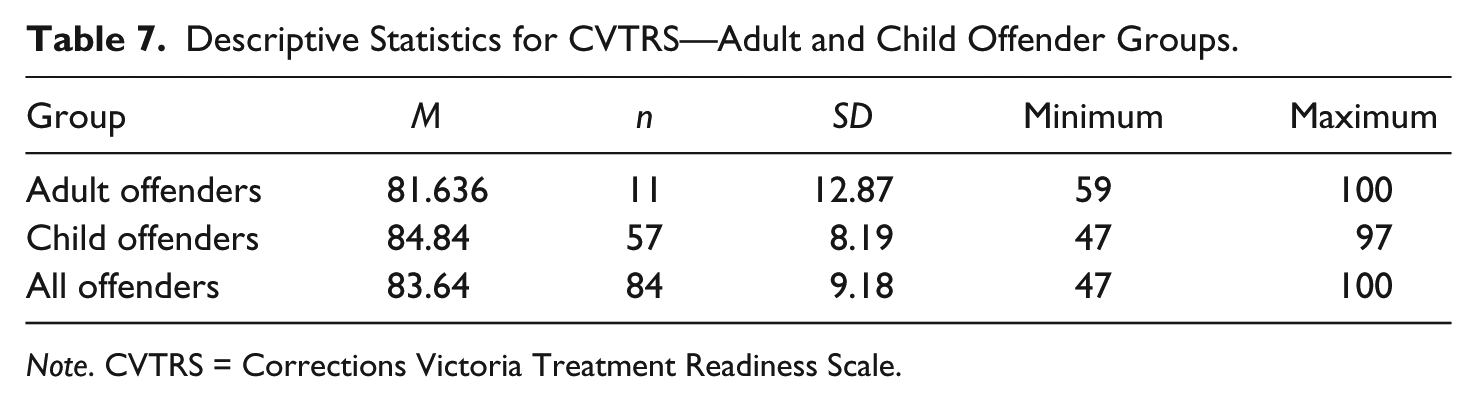
The descriptive statistics are shown below for the 20-item CVTRS scale, which was administered to prisoners only. Total scores were calculated using the coding from the original authors (see Casey et al., 2007). Casey et al. (2007) suggested that 72 indicates readiness for treatment and any score below that should indicate that the prisoner is not ready for treatment. Table 7 shows high scores for readiness for treatment.
Descriptive Statistics for CVTRS—Adult and Child Offender Groups.
Note. CVTRS = Corrections Victoria Treatment Readiness Scale.
Relationship between prison climate and the potential correlates of prison climate
This section aims to explore the relationships between the variables in more detail. The first aim was to explore the associations between the variables including EssenCES total and subscales, ATS, ITOB (self), ITOB (other), and CVTRS through correlational analysis (see Table 8).
Correlations Between EssenCES, EssenCES Subscales, ATS, ITOB, and CVTRS.
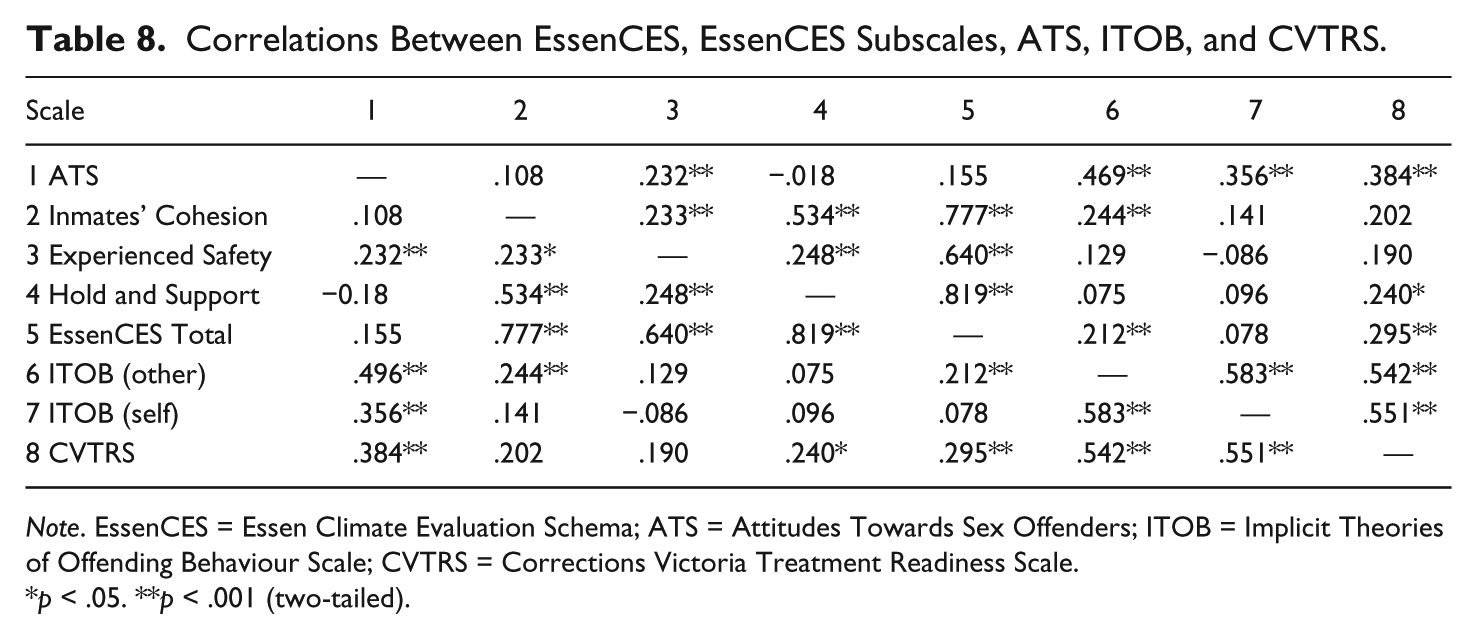
Note. EssenCES = Essen Climate Evaluation Schema; ATS = Attitudes Towards Sex Offenders; ITOB = Implicit Theories of Offending Behaviour Scale; CVTRS = Corrections Victoria Treatment Readiness Scale.
p < .05. **p < .001 (two-tailed).
A correlation of .10 represents a small effect, .30 a medium effect, and .50 a large effect (Cohen, 1988). It can be noted that therapeutic and social climate (EssenCES total) has small to moderate correlations with ITOB (other) and CVTRS, which demonstrates a trend for higher EssenCES scores and higher levels of beliefs about change in offending behaviour in prisoners and higher internal readiness. It is interesting, however, that internal beliefs about change (ITOB-self) is independent from prison climate as it had no significant relationships with the EssenCES or any EssenCES subscales. This may suggest that although this prison climate may help foster beliefs about change, it does not contribute to or effect internal beliefs about change. There is some support for this assertion as there is large correlation between CVTRS (readiness) and ITOB (self), a moderate correlation between the CVTRS and prison climate, but no relationship between prison climate and ITOB (self). ATS scale had a small to moderate correlation with experienced safety. It also had moderate correlations with beliefs about change in prisoners generally (ITOB-other), personal beliefs about change (ITOB-self), and with readiness for treatment and change. This suggests that more positive attitudes in sexual offenders are associated with greater beliefs that prisoners can change.
While there were too few linear relationships with the EssenCES to allow for further multivariate analysis, one interesting finding from the correlation matrix was the relationship between readiness for treatment, prisoners’ beliefs about change in their offending behaviour, and prison climate. To further investigate the relationships between these variables, a multiple regression was performed. Before the regression, preliminary analyses were conducted to ensure no violation of the assumptions of normality, linearity, multicollinearity, and homoscedasticity. The tolerance and variance inflation factor (VIF) were within recommended cutoffs for the regression analyses and so there was no violation of the multicollinearity assumption (Tabachnick & Fidell, 2007). A multiple linear regression was performed with CVTRS (readiness) as the dependant variable and (a) EssenCES total, (b) ATS total, (c) ITOB (self), and (iv) ITOB (other). The model was a good fit and accounted for 43% of the variance (R2 = .427) and the overall relationship was significant, F(4, 68) = 12.650, p < .001. All predictors are listed in Table 9, together with significance level.
Variables Entered Into Multiple Linear Regression to Predict CVTRS.
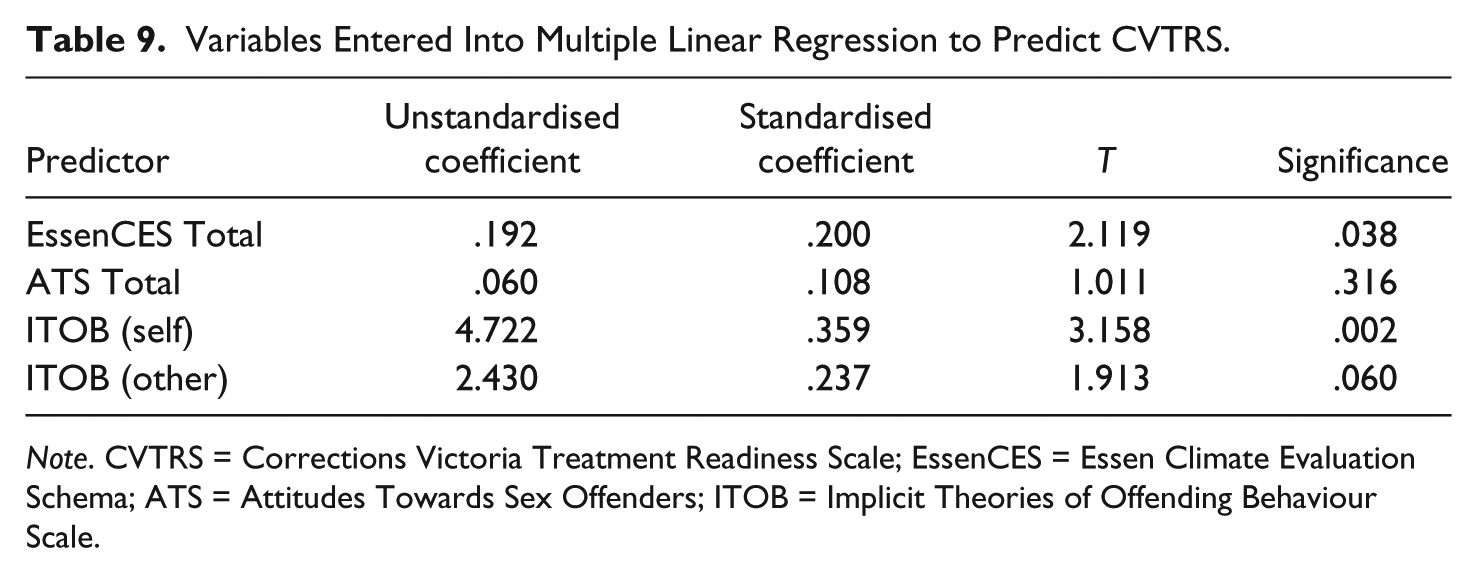
Note. CVTRS = Corrections Victoria Treatment Readiness Scale; EssenCES = Essen Climate Evaluation Schema; ATS = Attitudes Towards Sex Offenders; ITOB = Implicit Theories of Offending Behaviour Scale.
There were two predictors that were significant in this model, EssenCES total (β = .200, t = 2.119, p = .038) and ITOB (self; β = .359, t = 3.158, p = .002), which were both positively associated with treatment readiness. Both prison climate and ITOB (self) predict treatment readiness in this sample, although ITOB (self) recorded a higher beta value. This appears to support the assertion that prison climate helps to foster treatment readiness and readiness to change.
Discussion
This study used a mixed-methods design to understand the experiences of the prison climate/environment of a sexual offenders prison from both prisoner and staff perspectives. One of the main aims was to explore these perspectives and investigate whether the climate of this prison is conducive to rehabilitation. A further aim was to gain a deeper understanding of some of the contextual issues that could impact on sex offender treatment. Although there has been a great deal of research conducted that has examined the efficacy of treatment programmes, there has been far less research that has focused on the environment or climate where such programmes are delivered. A prison’s climate, particularly for a therapeutically orientated prison, is a potentially vital “responsivity” factor for an offender’s rehabilitation and so getting the treatment setting and staff characteristics right is crucial for establishing a climate conducive to rehabilitation (Birgden, 2004).
This research has found that both prisoners and staff believe that the climate of this prison is conducive to rehabilitation. One important aspect of this climate was prisoners “experienced safety,” which appeared important for allowing individuals the headspace to deal with their problems, engage in treatment programmes and also grow and develop in personally meaningful ways. Indeed this was a key theme from the qualitative and quantitative analysis in that prisoners’ did not feel threatened or anxious, but instead felt safe in their environment. The very high scores on the EssenCES subscale Experienced Safety by both prisoners and staff further bolster this point. This seems crucial as often sexual offenders feel threatened, anxious, and have to adapt their identities to survive prison (Schwaebe, 2005). Indeed, there are numerous limitations for correctional programmes delivering treatment in perceived unsafe environments to sexual offenders (see Schwaebe, 2005).
The study also found that both prisoners and staff held positive attitudes toward other sex offenders and beliefs that they could change. The ATS scores from both prison and staff are among the highest scores published (Hogue, 2009; Kjelsberg & Loos, 2008). Importantly, the ATS has been linked to therapeutic effectiveness and therapeutic alliance (Hogue, 2009), which is linked to positive treatment outcome (Serran, Fernandez, Marshall, & Mann, 2003). ATS have been found to predict views of punishment; thus, the high scores from staff in this study indicate that staff hold positive views of offender rehabilitation (Hogue, 2009; Kjelsberg & Loos, 2008). Relatedly, this research also found that beliefs about change (i.e., that offenders had the capacity to change) were associated with higher ATS scores. There was also an association between the ATS and “experienced safety.” These are important findings as previous research has found that the attitudes held by professionals toward sexual offenders can have a profound effect on their practice. Previous research has also found that prison officers have detached and more punitive attitudes toward prisoners; however, this was not the case in this prison (Dirkzwager & Kruttschnitt, 2012).
While analysis revealed a strong theme of “supportive and constructive relationships,” and positive ATS, this was not wholly supported by the EssenCES. The quantitative analysis found the relationships (on the EssenCES subscale Hold and Support) were average when compared with the normative data. Prison staff, however, rated prisoner–staff relationships highly. One possible reason may be that the items on the EssenCES do not fully reflect prisoners’ relationships with prison staff or, at least, were not capturing it fully. It may be that EssenCES items such as “staff know prisoners personal histories well,” may not reflect the full extent of staff–prisoner relationships, particularly in a sexual offenders prison, where offenders can be more guarded about disclosing personal history information. Indeed research suggests that prisoners desire constructive and positive relationships with prison staff based on supportive, affirming, fair, and respectful relationships (Bennett & Shuker, 2010). Such relationships have been considered “light” (as opposed to “heavy” or oppressive) and are characterised by prisoners feeling they are respected and feeling that prison staff are approachable, relaxed, and cooperative (Crewe, 2011). Another possibility is that prisoners may not be experiencing the quality of relationships to the degree staff believe. This difference may be causing some officers to be complacent when dealing with some prisoners. It should also be noted that prisoner participants in the qualitative phase were unanimous that staff relationships were positive and constructive.
However, the findings in this study suggest that this prison is experienced, by both staff and prisoner, as positive and it appeared that the prison helped to foster readiness for treatment and change, if not influence personal change dispositionally. The results found that prison climate predicted readiness for treatment and was correlated with beliefs that offenders can change. This result is particularly pertinent for prisons that have a focus on treatment interventions such as SOTPs. This quantitative finding was also supported in the qualitative phase of the research, which emphasised the prison’s facilitation in personal growth and development. However, a prison’s climate is not sufficient on its own to bring about change; it also requires the individual to “want to change” and this appears independent of prison climate. The premise that in order for personal change to occur there needs to be a combination of internal and external factors is well covered in the crime desistance literature (see Maruna, 2001, 2004). However, prisons that foster change or have offender change at their core may help promote positive practical identities in offenders, which have been linked to crime desistance (Göbbels, Ward, & Willis, 2012).
Overall, the results highlight that prisoners and staff at this prison believe that prisoners can change and that positive change is possible, though this was sometimes followed by the caveat that “people have to want to change.” The qualitative analysis revealed how participants had meaning and purpose within the prison. Research has found that finding meaning within prison and accepting positive experiences can help erode away some of the prisoner’s negative life experiences and allow for the development of new positive self-identities (see Perrin & Blagden, 2014). This is important for sexual offenders as they often experience multiple stigmas that can affect their personal change process (e.g., lead to treatment refusal; Mann et al., 2013; Schwaebe, 2005; Tewksbury, 2012). Furthermore, LeBel et al. (2008) found that self-identification and positive self-image were significant predictors of postprison outcomes.
Implications and Limitations
This study has highlighted the importance of context for sexual offender treatment and for sexual offenders’ experiences of prison. Indeed, sexual offenders in this study were clear that this environment allowed for feelings of safety, allowed them the headspace to contemplate change, and readiness for treatment. Although this prison is not a TC, it does parallel some of TCs philosophies and so perhaps is best construed as a “therapeutic prison” (Smith & Schweitzer, 2012). The prison has clear defined purpose, has a clear set of specific goals that are centred on reducing recidivism, fosters change, and provides constructive outlets for prisoners. In such prisons, rehabilitative programmes are not simply additions or “bolt-ons,” but instead rehabilitation is an integral part of the prison. Staff and prisoners will also have positive attitudes toward offenders and beliefs that they can change. This prison then gives an insight into the type of prison climate that is conductive for running sex offender programmes, though more research is needed.
However, although this research offers some support for the notion that context is important for sex offender rehabilitation (Ware et al., 2010), there is a need for a more systematic programme of research, as this research is only a first initial step. Future research should investigate different rehabilitative climates of multiple prisons to evaluate the different contexts of incarcerated sexual offenders. It should specifically explore the experience of sexual offenders in different prison settings, for example, those on vulnerable person wings and those in treatment focused and not treatment focused prisons. Research is needed to investigate whether such climates play a role in treatment outcome/success and whether they effect recidivism. Future research would also benefit from adopting a behavioural measure such as prison misconduct, prison rule breaking, given that prison misconduct is associated with recidivism (Cochran et al., 2012). It is not known whether a rehabilitative climate is better at reducing recidivism then other prison climates though the TC literature allows us some insight (see Shefer, 2010).
Clearly, this research is the first step in empirically investigating the experience of sexual offenders in prison and evaluating the climate of prisons that treat and manage sexual offenders. Indeed, although it is difficult to conclude with certainty from this research that context is important for sex offender treatment, the research does show that in this context staff and prisoners have very positive attitudes toward offenders, high beliefs that offenders can change, feel safe in their environment, with offenders motivated for treatment. However, there are a number of limitations to this research. First, the prison that is the focus of investigation is not the “norm” and most sexual offenders find themselves in mixed prisons and often segregated for their own protection. This makes generalising to other prisons difficult although this was not an aim of this research. A further limitation was a lack of a control group or adequate comparison; again, this was beyond the aims of this research, which was to explore and understand the climate of the prison as experienced by staff and prisoners. Future research should address this limitation
Conclusion
This research concludes that prisons, such as the one under investigation, which foster therapeutic and rehabilitative climate, can provide an environment that is perceived as safe and constructive and which can help facilitate change. Prisons that foster change or have offender change at their core may help promote positive practical identities and personal reform in offenders, which have been linked to crime desistance (Göbbels et al., 2012).
The rehabilitative climate for the sex offender’s prison in this study seemed to be one that was supportive of rehabilitation, had positive staff and prisoner attitudes, and allowed prisoners “headspace” to engage in rehabilitative measures. The findings here support the notion that prisoners found this prison environment to be safe and constructive, which contributed to prisoners developing positive cognitions around that experience. It may be that environments such as this prison are the most conducive for doing sexual offender treatment programmes and behavioural work (see Ware et al., 2010), though further research is needed to investigate this assertion.
Footnotes
Acknowledgements
The authors wish to thank Dr Ruth Mann, Lynn Saunders, Karen Thorne and the National Offender Management Service for their support of the research.
Declaration of Conflicting Interests
The author(s) declared no potential conflicts of interest with respect to the research, authorship, and/or publication of this article.
Funding
The author(s) disclosed receipt of the following financial support for the research, authorship, and/or publication of this article: This research was funded by the National Offender Management Service Contract RPU SW 1560-1