



Abstract
A growing body of research has examined the collateral effects of sex offender registration and notification (SORN), particularly those related to offenders’ social and economic reintegration into society. Although studies have examined public, offender, treatment provider, and other criminal justice perspectives on SORN’s collateral impacts, few have elicited the views of law enforcement (LE) professionals who have contact with registered offenders. This study presents results from a mixed method study examining LE perspectives on collateral consequences and effectiveness of SORN. Results indicate that, although overall LE concern regarding collateral impacts is limited, those who are most engaged in SORN-related duties are significantly more likely to indicate such concern, and also more likely to believe that SORN was an effective public safety tool. Importantly, respondents in states with larger registries expressed greater concern over collateral consequences, and less belief in SORN’s public safety efficacy. Implications for policy and practice are discussed.
Introduction
Over the past two decades, policies directed toward the community management of sex offenders have proliferated across the United States (Cohen & Jeglic, 2007). Central to these policy developments has been the expansion and enhancement of the nation’s systems of sex offender registration and notification (SORN), which are intended to inform the public about, and improve the ability of law enforcement, to monitor (e.g., unannounced house visits, electronic/computer monitoring) registered sex offenders (RSOs) living in the community, ensuring that RSOs comply with registration requirements (Harris, Lobanov-Rostovsky, & Levenson, 2010).
Research examining the impact of SORN on sex crimes and re-offense rates has been inconclusive. Whereas some studies have found little to no effect of SORN on sex crimes or sexual recidivism (Adkins, Huff, & Stageberg, 2000; Letourneau, Levenson, Bandyopadhyay, Sinha, & Armstrong, 2010; Tewksbury & Jennings, 2010; Zgoba, Witt, Dalessandro, & Veysey, 2008), others have found some reductions in sexual offenses or recidivism following SORN implementation (Barnoski, 2005; Duwe & Donnay, 2008; Prescott & Rockoff, 2011).
Beyond examining SORN’s effects on sexual offending, many studies have also examined possible collateral impacts of SORN policies on those required to register. Such studies have found that RSOs may face difficulty obtaining employment, difficulty maintaining stable housing, emotional distress, and lack of positive social support by virtue of their placement on the registry (e.g., Evans & Porter, 2015; Tewksbury, 2005; Tewksbury & Levenson, 2009; Tewksbury & Zgoba, 2010; Zevitz & Farkas, 2000). Studies have also suggested that RSO status can leave offenders open to victimization and vigilantism (Tewksbury & Levenson, 2009; Tewksbury & Zgoba, 2010), contribute to social isolation of the offender (Linden & Rockoff, 2008), and lead to threats/harassment and employment/financial hardships for family members (Comartin, Kernsmith, & Miles, 2010; Levenson & Tewksbury, 2009).
To date, most studies examining SORN’s collateral consequences have been based on surveys of RSOs (Tewksbury, 2005; Tewksbury & Lees, 2007; Mercado, Alvarez, & Levenson, 2008), their family members (Comartin, Kernsmith, & Miles, 2010; Levenson & Tewksbury, 2009), mental health/treatment providers (Harris, Walfield, Shields, & Letourneau, 2015; Levenson, Fortney, & Baker, 2010; Malesky & Keim, 2001), the public (Redlich, 2001), and students (Redlich, 2001). Although a limited number of studies have elicited the views of criminal justice professionals on these and related matters (Bailey & Sample, 2015; Mustaine, Tewksbury, Connor, & Payne, 2015; Zevitz & Farkas, 2000), very little is known about the perspectives of law enforcement officials. To our knowledge, only one study conducted in England and Wales has addressed the views of law enforcement in terms of sex offender management (Nash, 2016). This gap is particularly notable given the central role that police and sheriff agencies play in managing SORN systems, interacting with RSOs, and enforcing SORN compliance. The current study attempts to fill this gap in the literature, presenting an exploratory examination of law enforcement officials’ concern regarding SORN’s collateral effects on RSOs, and how levels of such concern relate to overall assessments of SORN’s impacts.
SORN
SORN policies and systems are ostensibly designed to improve community safety by providing the public and law enforcement with information about sex offenders living in their community. Through SORN’s registration provisions, those who are convicted of specified sexual offenses must provide information related to their address, employment, motor vehicles, Internet identifiers, and other forms of personal information to state and/or local law enforcement agencies, and must verify and update this information according to statutory requirements. This information may be used by law enforcement agencies for purposes of monitoring RSOs within their communities, investigating sex crimes, and coordinating with other criminal justice agencies. SORN’s notification provisions grant the community access to certain RSO information through a variety of mechanisms, including public registry websites, email, or social media notifications, flyers, and community meetings held by area law enforcement.
Although the practice of requiring sex offenders to register with law enforcement dates back to the 1940s, contemporary SORN policies in the United States have become particularly prominent since the 1990s (Logan, 2009). Although established and governed by state law, SORN systems’ evolution has been increasingly guided by federal action, beginning with the 1994 passage of the Jacob Wetterling Crimes Against Children and Sexually Violent Offender Registration Act (Wetterling Act), which set forth a general mandate for states to establish systems of sex offender registration. Over the following decade, several amendments to the Wetterling Act expanded federal requirements on states, including those related to public notification about sex offenders living in the community (Megan’s Law, 1996) and establishment of public Internet-based sex offender registry websites (Prosecutorial Remedies and Other Tools to End the Exploitation of Children Today Act of 2003 [PROTECT Act, 2003]).
In 2006, the passage of the Sex Offender Registration and Notification Act (SORNA), also known as Title I of the Adam Walsh Child Protection Act (AWA), repealed many of the Wetterling Act provisions. Intended to instill greater consistency across the nation’s SORN systems, the standards promulgated pursuant to the AWA set forth multiple requirements related to SORN system structure and operations, including those related to RSO classification, criteria for inclusion on the public registry, registration duration, frequency of mandated registry updates, and penalties for non-compliance with registration requirements (U.S. Department of Justice, 2008). Although states have varied considerably in their implementation of SORNA standards (Harris & Lobanov-Rostovsky, 2010), state-based legislative activity related to SORN reform has remained robust throughout the post-AWA era (National Conference of State Legislatures, 2015).
As of December 2015, the nation’s sex offender registries contained information on more than 843,000 RSOs, a rate of 270 per 100,000 population (National Center for Missing and Exploited Children [NCMEC], 2015). Although studies have found these figures to be somewhat inflated due to inclusion of RSOs who are incarcerated, deported, or counted on multiple state registries, as well as the inclusion of multiple aliases as unique offenders, estimates suggest that between 500,000 and 600,000 unique RSOs live within U.S. communities (Ackerman, Levenson, & Harris, 2012; Harris, Levenson, & Ackerman, 2014).
SORN Collateral Impacts
As noted in the “Introduction” section, RSOs may face numerous collateral impacts by virtue of their sex offender status. Some may be formally established through legal mandates, such as voter disenfranchisement, employment and housing restrictions, and deportation (Tewksbury, 2005), whereas others are informally imposed through mechanisms related to stigmatization and ostracism by members of the community.
Surveys of RSOs, their families, and treatment providers have identified several key domains of collateral impacts related to SORN. These include impacts on (a) RSO ability to maintain stable housing (Lasher & McGrath, 2012; Levenson & Cotter, 2005; Mercado et al., 2008; Tewksbury, 2005), (b) RSO maintenance of social supports and ability to establish social ties in the community (Comartin, Kernsmith, & Miles, 2010; Levenson & Cotter, 2005; Mercado et al., 2008; Tewksbury, 2005), (c) RSO ability to maintain stable employment (Lasher & McGrath, 2012; Levenson & Tewksbury, 2009; Mercado et al., 2008; Tewksbury, 2005), (d) RSO mental health and propensity to develop feelings of negativity and hopelessness (Levenson & Cotter, 2005; Tewksbury & Zgoba, 2010), and (e) the well-being and community connections of RSO family members (Comartin, Kernsmith, & Miles, 2010; Levenson, & Tewksbury, 2009). Explorations of the possible ramifications of these collateral consequences of SORN suggest that such impacts may extend beyond the individual RSO and their family, and may ultimately exacerbate the risk of re-offense, rather than mitigate such risk (Barnes, Dukes, Tewksbury, & De Troye, 2009; Evans & Porter, 2015; Levenson, Zgoba, & Tewksbury, 2007; Tewksbury & Connor, 2014; Tewksbury & Zgoba, 2010; Zevitz & Farkas, 2000).
Criminal Justice Personnel Views on Sex Offenders, SORN, and Collateral Impacts
Several studies have examined the attitudes and beliefs of law enforcement and other criminal justice professionals concerning sex offenders, as well as their perspectives and experiences related to sex offender policies, including SORN. Regarding general attitudes toward sex offenders, some survey data suggest that law enforcement officers who have less contact with sex offenders may be more likely to have negative attitudes and beliefs about sex offenders (Lea, Auburn, & Kibblewhite, 1999). In contrast, qualitative studies of parole officers in the United States (Bailey & Sample, 2015; Severson & Pettus-Davis, 2013) and sex offender managers in England and Wales (Nash, 2016) have found that increased contact may actually have the opposite effect, leading to more negative views of offenders. One officer from England noted, “How long can you do this job before it does your head in and before you cease to become objective and before you do get jaded by the monsters?” (Nash, 2016, p. 432). As one possible explanation for this phenomenon, officers were found to suffer from high levels of traumatization as a result of predominately working with sex offenders, which then affected their ability to properly supervise their caseload and separate their personal view from their professional roles and training (Severson & Pettus-Davis, 2013). When comparing law enforcement officers with other criminal justice professionals, researchers have found law enforcement had the most negative attitude toward sex offenders across correctional officers, probation officers, prosecutors, prison wardens, and community corrections professionals (Finn, 1997; Hogue, 1993; Mustaine et al., 2015). These studies have found that White criminal justice officials, criminal justice officials with less experience, those from Southern regions, those with less education, and those identifying as conservatives were more likely to have negative views of sex offenders
Regarding perspectives on the roles and functions of SORN systems, surveys conducted during the initial evolution of modern sex offender registries in the 1990s suggested that law enforcement officers considered sex offender registration to be an effective means of enhancing surveillance, improving investigations, and deterring future offending (Finn, 1997; Matson & Lieb, 1996; Nash, 2016). Criminal justice professionals have also been found to be more likely to support SORN, even without scientific evidence (Levenson et al., 2010; Mustaine et al., 2015). Relative to other criminal justice personnel though, law enforcement were less likely to believe notification was effective (Mustaine et al., 2015). Research on predictors of criminal justice officials’ attitudes and beliefs of SORN has included demographic variables, measures of professional experience, and their region. Similar to research on attitudes toward sex offenders, White criminal justice officials, those with less experience, and those from Southern regions were more likely to believe SORN is effective (Levenson et al., 2010; Mustaine et al., 2015).
Compared with research focusing on the views of law enforcement concerning SORN effectiveness and attitudes toward sex offenders, relatively little research has focused on law enforcement perspectives regarding the possible collateral effects of registration and notification. A survey conducted in the early formative days of community notification found some evidence that law enforcement professionals may be attuned to the difficulties sex offenders may face in their ability to find and hold a job, find a place to live, and reintegrate into society (Finn, 1997). Subsequent research, however, has suggested a more complex picture concerning awareness of, and concern for, collateral impacts. Based on a series of telephone interviews and survey of 21 public registry officers, Gaines (2006) found that respondents were generally unaware of whether SORN affects a sex offender’s ability to find employment, find housing, or maintain personal relationships. In a more recent examination, Mustaine and colleagues (2015) found that law enforcement officials who worked closely with offenders were found to be more likely to be aware of the collateral effects of SORN on offenders, although they did not necessarily express concern over these effects.
Current Study
Along with probation and parole professionals, law enforcement agencies and personnel serve as primary agents of social control of sex offenders in the community. In the context of understanding the implementation and public safety impacts of SORN systems, law enforcement professionals engaged in registry management and enforcement are particularly well situated to serve as key informants (Harris, Levenson, Lobanov-Rostovsky, & Walfield, 2016). Yet, despite this, there has been less attention given to the perspective of law enforcement relative to other criminal justice personnel (e.g., parole and community corrections personnel), and many studies that do include them are outdated given the evolution of SORN over the past decade. The “frontline” perspective obtained from law enforcement represents a vital viewpoint to ensure the effectiveness of policies and practices related to SORN. In this general context, the current study expands the literature on the collateral effects and perceived effectiveness of SORN by examining the perspective of law enforcement officials who directly work with SORN systems. By utilizing a mixed methods approach, this allows for a more sophisticated and greater understanding of the complexity of SORN by providing context to quantitative findings. The specific questions this study seeks to answer are as follows:
Considering the limited prior research addressing these questions, this study is primarily exploratory in nature. However, based on the literature described above, two specific hypotheses may be tested:
Method
Sampling and Data Collection
Study data were collected in two phases: (a) a series of semi-structured, in-person interviews conducted with law enforcement professionals between February and June 2014 (Phase 1); and (b) a national online survey of police and sheriff agencies conducted in the Spring of 2015 (Phase 2). Data collection and subject recruitment protocols for both phases were reviewed and approved by the University of Massachusetts Lowell’s Institutional Review Board prior to implementation.
Interview participants were drawn from a convenience sample of five U.S. states (California, Colorado, Florida, Massachusetts, and Rhode Island) and from two tribal jurisdictions (one based in the Pacific Northwest and one based in the Rocky Mountain region). Participants were recruited through multiple channels, with the majority of contacts facilitated by intermediary organizations including state public safety agencies and police chief associations. Interviews were conducted on an individual basis, with the exception of a two-person interview held with a pair of detectives in a Florida police department, and a five-person group interview held in Rhode Island with police officers and supervisors assigned to sex offender management duties in their respective jurisdictions. A total of 105 law enforcement personnel participated in the interviews, including representatives from 26 state, county, and law enforcement agencies, as well as two representatives from tribal law enforcement and one member of the U.S. Marshal Service. Of these, 101 agreed to have their comments audio recorded and transcribed for in-depth analysis.
The themes and concepts identified through analysis of the interview data formed the basis for development of a structured survey designed for nationwide deployment. The survey was administered through the services of Campbell Rinker, a marketing research and survey firm. Participants were invited to complete the survey via targeted email outreach, using a nationwide commercial list of 8,840 police chiefs and command staff and a list of 2,921 county sheriffs obtained from the National Sheriffs Association. Following initial outreach, prospective respondents were contacted through three waves of follow-up. The survey was open for 5 weeks between April and May of 2015.
The transmittal email included details on the survey scope and purpose, and a link to the survey. Respondents were informed that the survey was intended for completion by agency leadership (e.g., police chiefs and sheriffs), personnel involved in sex offender registration and management, and specialized personnel involved in sex crime investigations. The survey items presented to each respondent varied, with piping logic based on stated agency functions, respondent roles, and jurisdictional characteristics. Excluding “bounce backs” and invalid addresses, the survey was distributed to 9,472 email addresses. A total of 1,485 respondents consented to participate and proceeded to the survey, for an overall response rate of 15.7%. After accounting for missing data in some cases, this resulted in a final sample of 1,156 that is used for purposes of the present analysis.
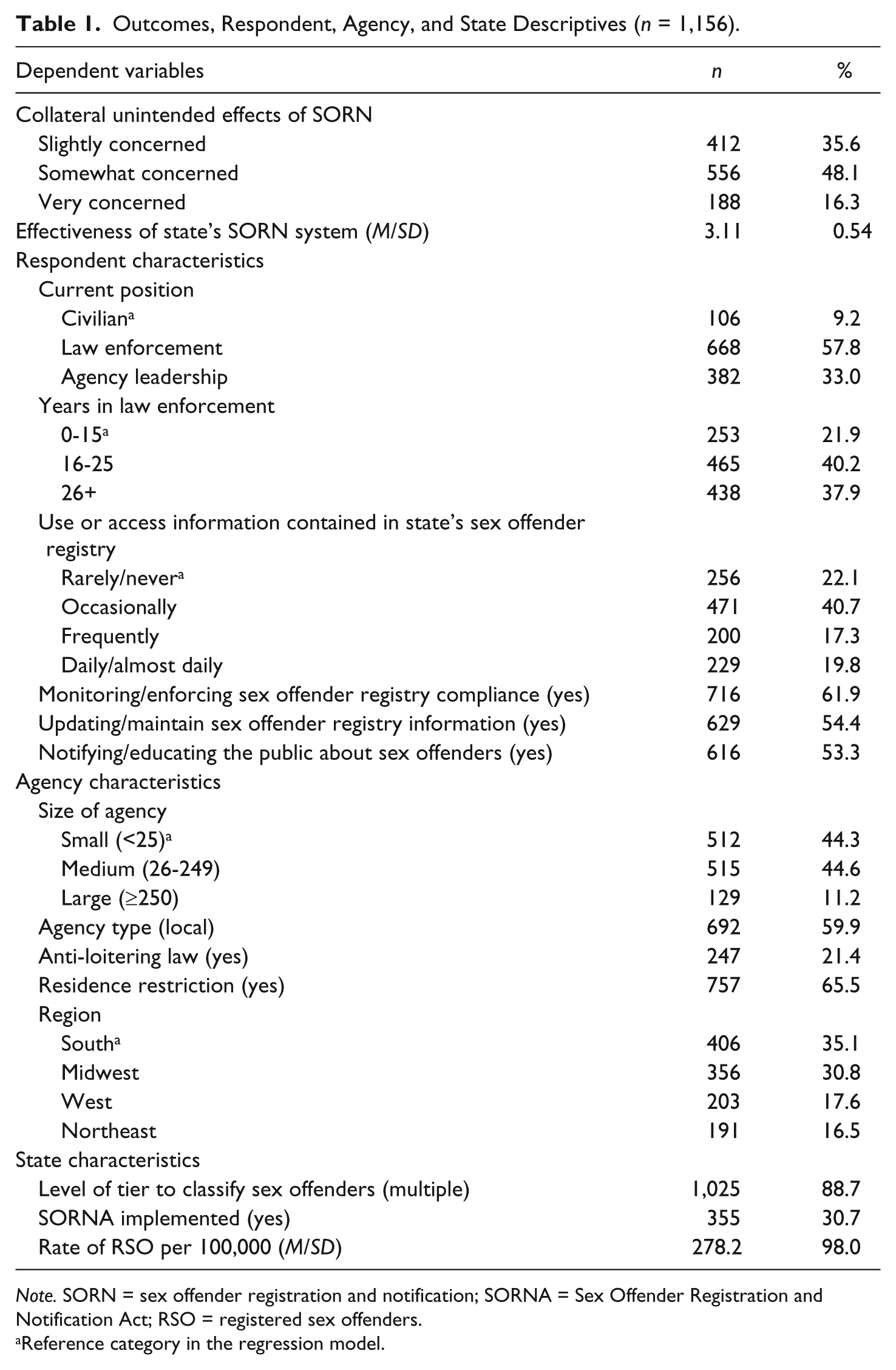
Survey sample descriptives are provided in Table 1 in our reporting of results. The final survey sample included representation from 49 states (all states with the exception of Hawaii), and from the District of Columbia. In the sample, 59.9% of law enforcement came from local police departments and 40.1% from county sheriffs. A majority of respondents were line-level commanders and staff (57.8%), followed by senior agency command staff (33.0%), with the remainder in a civilian position (9.2%).
Outcomes, Respondent, Agency, and State Descriptives (n = 1,156).
Note. SORN = sex offender registration and notification; SORNA = Sex Offender Registration and Notification Act; RSO = registered sex offenders.
Reference category in the regression model.
Survey Measures
Dependent variables
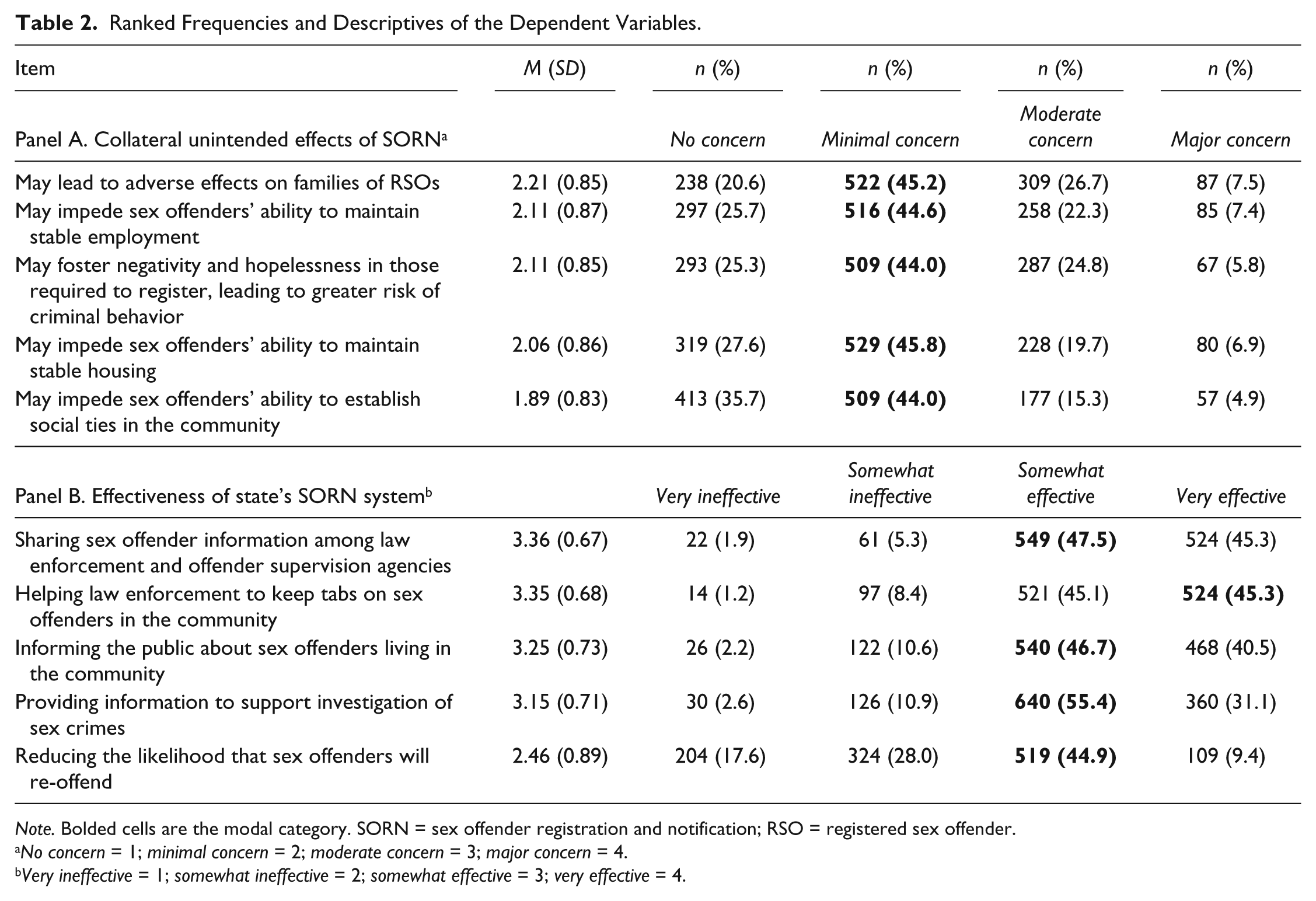
Two scale-based dependent variables were utilized in the current study—the first related to concern over collateral consequences and the second related to SORN’s perceived overall effectiveness. Scale items are summarized in Table 2, which appears in the “Results” section. For the collateral consequences scale, respondents were asked to indicate their level of concern over five types of effects, on a scale ranging from 1 (no concern) to 4 (major concern). Due to violations of normality, an ordered categorical variable was created: slightly concerned (1-1.9), somewhat concerned (2-2.9), and very concerned (3.0-4.0; see “Results” section for more information). For the perceived effectiveness scale, respondents were asked to assess the overall effectiveness of the state’s registration system in achieving its intended goals, based on five criteria established via the interviews, rating each criterion from 1 (very ineffective) to 4 (very effective). As the scale was normally distributed, the mean value was used.
Ranked Frequencies and Descriptives of the Dependent Variables.
Note. Bolded cells are the modal category. SORN = sex offender registration and notification; RSO = registered sex offender.
No concern = 1; minimal concern = 2; moderate concern = 3; major concern = 4.
Very ineffective = 1; somewhat ineffective = 2; somewhat effective = 3; very effective = 4.
Independent variables
The dependent measures were analyzed for relationships with a range of respondent and agency characteristics. Respondent characteristics included current position, based on three categories: civilian employee (reference category), line officers (line-level staff [e.g., patrol officer, detective] and line-level commanders and supervisors [e.g., command staff, detective supervisor]), and senior agency leadership (i.e., chiefs, sheriffs); law enforcement experience, based on an ordered categorical variable: 0 to 15 years, 16 to 25 years, and 25+ years; and a series of dichotomous dummy-coded measures based on whether respondents had performed the following functions: updated or maintained sex offender information, monitored and enforced sex offender registry compliance, and notified and/or educated the public about sex offenders. Measured as an ordered variable, state registry usage measures how often respondents use or access information contained in the state’s sex offender registry using the following categories: rarely, occasionally, frequently, or daily.
Agency characteristics included the size of the agency: small (less than 25; reference category), medium (26-250), large (251+); a binary measure of municipal police or county/sheriff 1 ; and two dichotomous dummy-coded measures based on whether their jurisdiction had a residence restriction at any level (i.e., county or state), or anti-loitering zones specific to sex offenders. Region identified where the agency was located based on U.S. Census categories (South [reference category], Northeast, Midwest, and West). State-level variables related to SORN included a dichotomous dummy-coded measure based on whether the state had substantially implemented the Adam Walsh Act 2 according to the Office of Sex Offender Sentencing, Monitoring, Apprehending, Registering, and Tracking (SMART Office), the rate of sex offenders per capita, 3 and a dichotomous measure based the state’s level of tiers for sex offender classification: single or multiple. 4
Survey analytic strategy
All data cleaning and analyses pertaining to the survey data were performed in R 3.2.3 (R Core Team, 2016). As the first dependent variable, collateral consequences, was categorical and ranked ordered, ordinal regression was utilized to predict concern for collateral consequences. This requires the parallel regression assumption, which assumes the independent variables’ coefficients are the same across the levels of the dependent variable; when violated, it suggests the covariate has a differential effect at varying levels of the scale (Peterson & Harrell, 1990). 5 According to the omnibus test, which utilizes a likelihoods ratio test (χ2 = 31.61, df = 7, p < .000), this assumption did not hold. Further testing indicated the majority of the independent variables met this criterion, allowing for a partial proportional odds model to be estimated, with three variables (state registry usage, size of agency, and agency type) allowed to freely vary across logit equations (Peterson & Harrell, 1990). The package “VGAM” version 1.0-1 was used to estimate the ordinal models (Yee, 2015). Due to the complexity of the model (i.e., an ordered categorical variable with a large number of categorical independent variables), an alpha of .10 is used to determine significance in the model. For the second dependent variable, effectiveness of SORN, ordinary least squares (OLS) regression was used. Stepwise regression was performed in two steps: first, all the variables from Model 1 were entered followed by the collateral consequences scale. As the state was influential in guiding SORNA’s implementation, we controlled for this and other variables measured at this level (i.e., region, rate of RSO, level of tier), requiring a multilevel model. However, as results were consistent concerning their significance, direction, and effect size compared with the estimated single-level models and there was little between-state variation, we present the full single-level models (Yee, 2015). 6
Results
Interview Data
Data from the 105 interviews conducted with law enforcement personnel included respondent assessments regarding the effectiveness of their SORN systems. In general, respondents consistently expressed the belief that SORN was effective in achieving its primary community safety goals, in spite of certain limitations such as those related to accuracy of SORN system data (both from the aspect of human data entry and information from the offender), workload, lack of public awareness and/or misunderstanding, and RSO transience. Exemplifying this, an officer from Florida noted,
In most cases I believe it’s worked very well. You know, of course, just like anything else there are cases where they either abscond or they give you false information and then you go into a tracking mode of locating them, but on the most part I do believe that it’s working very well in the state, or at least in our county.
Similarly, a detective from a large California agency observed,
I think our registration system itself is very efficient, umm, we’re challenged with a large number of registrants . . . and the number increases 2 to 4% every year so we always have more and more registrants, we have more and more requirements.
Although interview prompts did not ask specifically about collateral effects resulting from SORN, during the course of interviews, several themes related to the collateral impacts of SORN emerged. These themes centered mainly on the difficulty RSOs have with obtaining and maintaining housing and employment, as well as the general stress and negativity that can result from registration and community notification. Although respondents did not indicate that these difficulties were widespread or posed an insurmountable barrier to the reentry of RSOs, they did acknowledge the role that the registry could play in complicating the lives of RSOs. Importantly, even among the respondents who did express concern, all believed that SORN was still effective, suggesting these concerns do not affect their perception of SORN’s efficacy.
Several interview respondents indicated that they were aware that it was often difficult for RSOs to find housing and employment because of their listing on the registry. One law enforcement officer from Colorado suggested that the difficulty finding employment and housing could lead to issues with registration compliance, explaining,
For a lot of these guys it’s hard for them to find work, it’s hard for them to find a place to live, you don’t have a job, you don’t have money, you can’t find a place to live, what are you going to do? You’re going to disappear, you’re going to go underground and we’re not going to know where you are and that’s the situation we deal with frequently here in (local area), housing is a real problem. So I think some guys just disappear because they don’t have any other options, they go, they have to go homeless because nobody will rent them an apartment and then we lose track of them.
Another law enforcement officer in Colorado expressed similar sentiments, noting that individuals designated as Sexually Violent Predators (SVPs) are often unable to find housing, leading to homelessness:
It’s so limited to where they can live that they’re finding a hard place, most of them go homeless and then the community is outraged because we’re letting them register as homeless but there is no place for them to live. They, we had a couple of properties that used to let them live there but once that notification comes out, it’s public, it’s on the news, that kind of stuff, they decide that they don’t want them to live there anymore.
Law enforcement officers expressed similar concerns with employment, noting the collateral impact of SORN on the ability of offenders to find stable employment. A law enforcement officer in California explained that although RSOs often want to obtain employment, their status as a sex offender often precluded them from finding a job:
People that have the lesser crimes a chance to not be on Megan’s Law and deal with the stigma that surrounds it because sometimes that stigma is unfairly out there, that is the little sensitive side of me that’ll say there’s, there are guys that will come in here and they just want to work hard, they have their punishment and they have no problem coming in and registering and they do what they’re supposed to do but you know they go apply for a job and they do a background check and some jobs they can explain it away, some jobs they can’t or then you just get they move into a neighborhood and you just get people that look for them and it’s just this stigma that surrounds them, and it does make it difficult for them, I don’t know how to fix that because honestly I probably had those same opinions before I started interviewing them on a yearly basis, that where I said I guess I see a little bit more human side of them.
Law enforcement officers also expressed concern more generally for the difficulty RSOs face when dealing with the stress and stigmatization resulting from their registration. A law enforcement officer from Massachusetts noted that sex offenders often face increased difficulty reentering society because of the stigma associated with being a sex offender. He noted,
Certainly their life is a little tougher being a sex offender, nobody likes a sex offender, nobody wants to hire a sex offender, nobody wants a sex offender living next to them, it’s a very severe negative connotation, you know.
The stress and negativity experienced by RSOs was frequently linked with the stigma sex offenders face. An officer from California acknowledged the negative impact registration can have on sex offenders, but admitted that these consequences were a direct result of the offender’s behavior:
It’s [registration] a big impact on their lives, they hate it, they can’t hardly go anywhere without somebody knowing and it’s stressful for them, you know I kind of feel for them but bottom line they did what they did and are responsible for it, and that’s part of the deal, is their registration.
Another law enforcement officer from Colorado expressed similar concern over the stigma attached to being an RSO, addressing the issue of how offenders are supposed to be rehabilitated but they are not given the opportunities necessary for rehabilitation and reentry:
I caution, I also think about what kind of stigmatism that registry does to people, long-term. You know, these people, there’s some people who’ve made some very bad decisions, I get that. Some people have made some minorly [sic] bad decisions but there’s a great stigma that is attached to that registry long-term and I wonder, you know we try to rehabilitate people . . . you put them out on the street but they carry this stigma with them and how successful can they be in a lot of realms? I think that’s difficult and do you ever fix sex offenders? I think some you do, sure. Some you don’t, you know pedophiles, people who are truly in love with children, you don’t fix that. You can’t, no matter, you can control people’s actions but you can’t fix it, but now you’ve created a stigma where this guy’s a SVP and he’ll never get a good decent solid job and what do you expect.
In sum, interview data revealed that respondents overwhelmingly believed SORN was effective. The themes surrounding the collateral impacts of SORN found within the interview data revealed that in general, law enforcement personnel were similar to the public in that they did not express great concern for the possible collateral impacts of SORN. However, there was a small subset of law enforcement personnel who expressed concern for the collateral impacts faced by RSOs, suggesting that law enforcement officers who work with SORN systems are generally aware of and attuned to these issues. The survey, conducted in combination with the law enforcement personnel interviews, sheds greater light on the concern of law enforcement for collateral impacts and the individual- and agency-level factors that may influence this concern.
Survey Data
Table 1 presents an overview of the sample. Nearly one in three, 33.0%, held a senior leadership position within their agency, such as sheriff or chief of police. In addition, roughly 40.2% of respondents had between 16 and 25 years of law enforcement experience. When asked about how often they either used or accessed information contained on the state’s sex offender registry, a plurality (40.7%) indicated that they only used or accessed this information occasionally and a third used it either frequently or daily. When asked whether they had completed tasks related to SORN at one point during their career, 61.9% of law enforcement indicated they had monitored or enforced sex offender registry compliance, 54.4% had updated or maintained sex offender registry information, and 53.3% had notified or educated the public about sex offenders.
Roughly equal numbers of respondents worked at small and medium-sized agencies at the time of the survey (44.3% and 44.6%, respectively). Respondents were more likely to be from local agencies (59.9%), with the majority working at agencies in the South (35.1%) or Midwest (30.8%). Whereas two thirds (65.5%) worked in a jurisdiction with a residence restriction, only 21.4% had anti-loitering laws specific to sex offenders. In terms of SORN implementation, the majority of respondents worked in states utilizing a multiple tiered system to classify sex offenders (88.7%) and only 30.7% of respondents worked in states that had substantially implemented SORN according to the SMART office’s guidelines. States had an average rate of 278.2 sex offenders per 100,000 though there was significant variation (SD = 98.0).
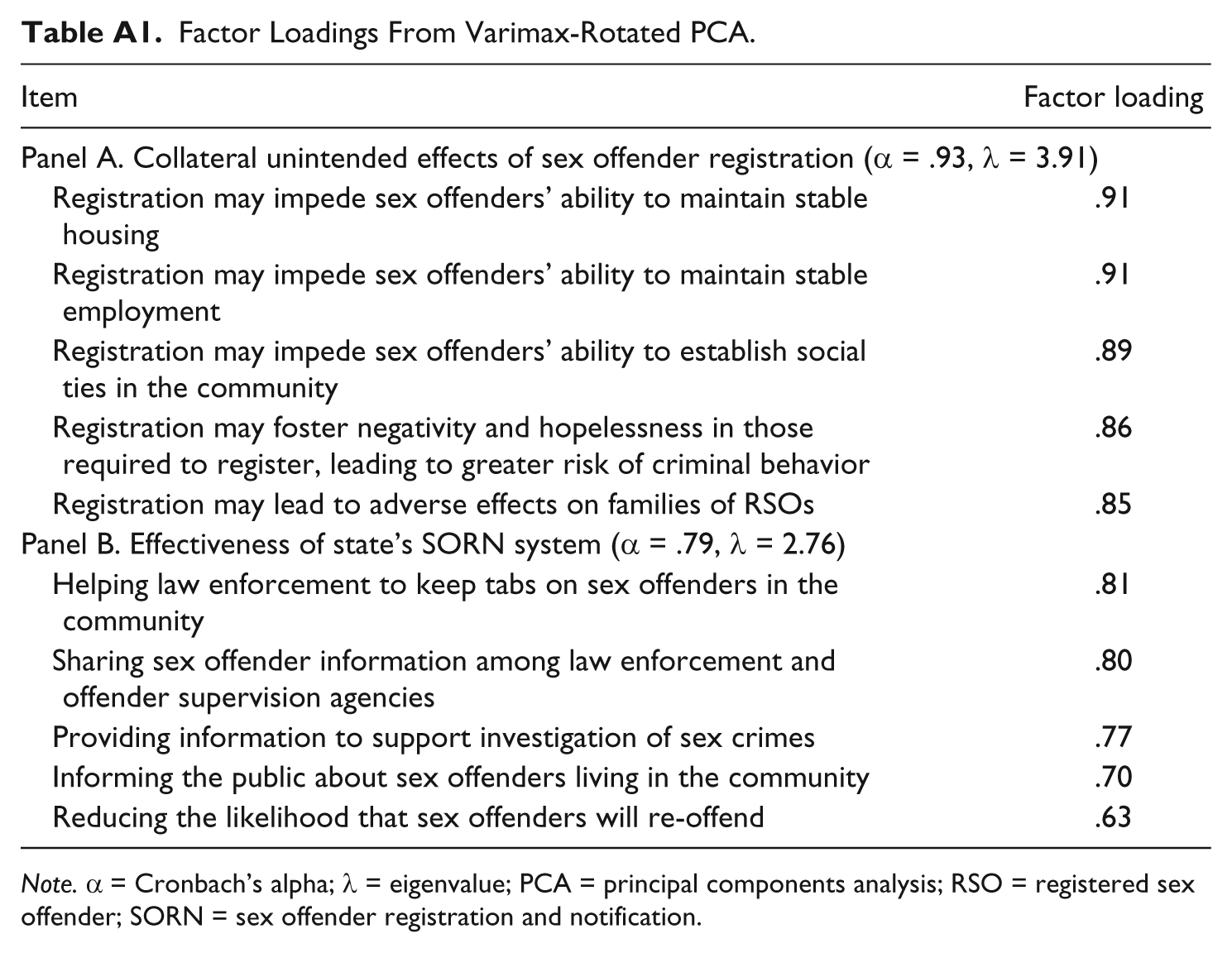
Descriptive statistics of the five items pertaining to the collateral unintended effects of SORN and the effectiveness of the state’s registration system used to create the dependent variables are presented in Table 2. The collateral consequences items measured the extent to which law enforcement expressed concern over the possibility that SORN could impede the ability of sex offenders to establish social ties, maintain stable housing or employment, foster negativity among offenders, or lead to adverse effects for families. Respondents generally had low levels of concern for the collateral consequences RSOs experience (M = 2.08, SD = 0.76). The scale had high item cohesion (α = .93), and principal components analysis (PCA) confirmed it represents a unidimensional construct (see the appendix for factor loadings). The item measuring the impact of SORN on the families of RSOs had the highest score (2.21), indicating that of the five items, law enforcement respondents expressed the greatest concern that SORN could lead to negative impacts on the family of RSOs. Respondents expressed the least concern over sex offenders’ ability to establish ties in the community, the only item with a score below two (M = 1.89, SD = 0.83). Overall, for each of the five items, the majority of respondents indicated that they had minimal or no concern for the impact of SORN on the possible collateral consequences for registrants; the mean score across the five items was 2.08 (SD = 0.76).
However, as common transformations (e.g., log) failed to normalize the data and the data were skewed, based on further analysis and visualization of the data, an ordered variable with three categories was created for the regression model: slightly concerned (1.0-1.9), somewhat concerned (2.0-2.9), and very concerned (≥3.0). Overall, nearly half of the respondents were somewhat concerned (48.1%) with a third slightly concerned (35.6%). Approximately, one in six respondents (16.3%) was very concerned with the collateral consequences.
The effectiveness items measured the extent to which law enforcement believed their SORN system was effective in sharing information between law enforcement, helping law enforcement track offenders, informing the public about offenders in their area, providing information for the investigation of sex crimes, and reducing the recidivism of RSOs. Respondents generally believed SORN was effective in achieving these goals (M = 3.11, SD = 0.54). The scale had acceptable item cohesion (α = .79), and PCA confirmed it represents a unidimensional construct (see the appendix for factor loadings). Specifically, respondents indicated SORN was most effective for law enforcement–related goals: sharing information among agencies (3.36) and keeping tabs on offenders in the community (3.35). Only one item, reducing the likelihood that sex offenders will re-offend, received a score below somewhat effective (M = 2.46; SD = 0.89), though this was still higher than each item in the collateral consequences scale (Table 2). Importantly, nearly half (45.6%) believed SORN was ineffective at reducing the likelihood of reoffending.
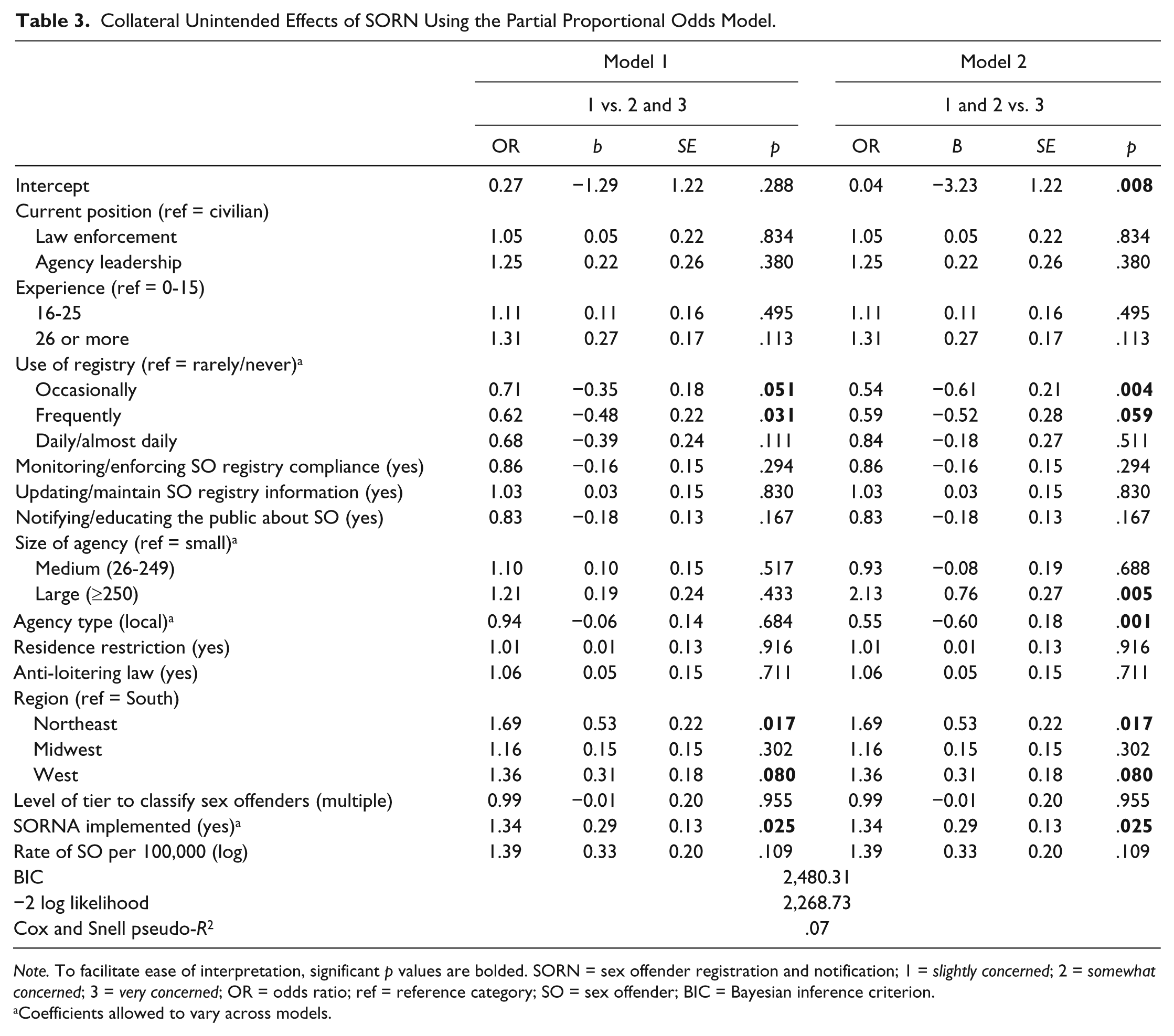
Table 3 presents results from the regression model predicting concern for collateral consequences of SORN. Model 1 utilizes respondents who were slightly concerned as the reference category in contrast to those who were somewhat and very concerned. Model 2 utilizes respondents who were slightly and somewhat concerned as the reference category relative to those who were very concerned. Results are interpreted similar to logistic regression, and odds ratios are presented for ease of interpretation.
Collateral Unintended Effects of SORN Using the Partial Proportional Odds Model.
Note. To facilitate ease of interpretation, significant p values are bolded. SORN = sex offender registration and notification; 1 = slightly concerned; 2 = somewhat concerned; 3 = very concerned; OR = odds ratio; ref = reference category; SO = sex offender; BIC = Bayesian inference criterion.
Coefficients allowed to vary across models.
A number of variables are significantly related to the level of concern for unintended consequences for sex offenders. Specifically, individuals who utilize the SORN registry occasionally or frequently exhibit less concern with the collateral consequences to sex offenders in contrast to those who rarely use it. Although the usage of the state’s registry was allowed to freely vary across the logits, results were similar in nature. In Model 1, those who used it occasionally and frequently in contrast to respondents who rarely access it were 29% and 38%, respectively, less likely to be concerned. This increased in Model 2 with those using it occasionally and frequently decreasing the odds by 46% and 41%, respectively. Surprisingly, the respondent’s position and whether or not they have done any of the three functions are not significantly related to their level of concern for collateral consequences in both models.
Relative to respondents in the South, those from the Northeast and West increased the odds by 69% and 36%. At the state level, respondents who worked in an agency within a state that had implemented SORNA according to SMART are more likely to be concerned, increasing their odds of concern for collateral consequences by 34%. However, the rate of RSO was not related to a respondent’s concern nor was the state’s tiers to classify RSOs. The largest effects relate to the size of the agency, with respondents from large agencies increasing the odds of concern by 213% in Model 2 though this is not significant in Model 1 (p = .433). In addition, respondents from a local agency exhibited less concern in Model 2 but again, this was not significant in Model 1 (p = .684).
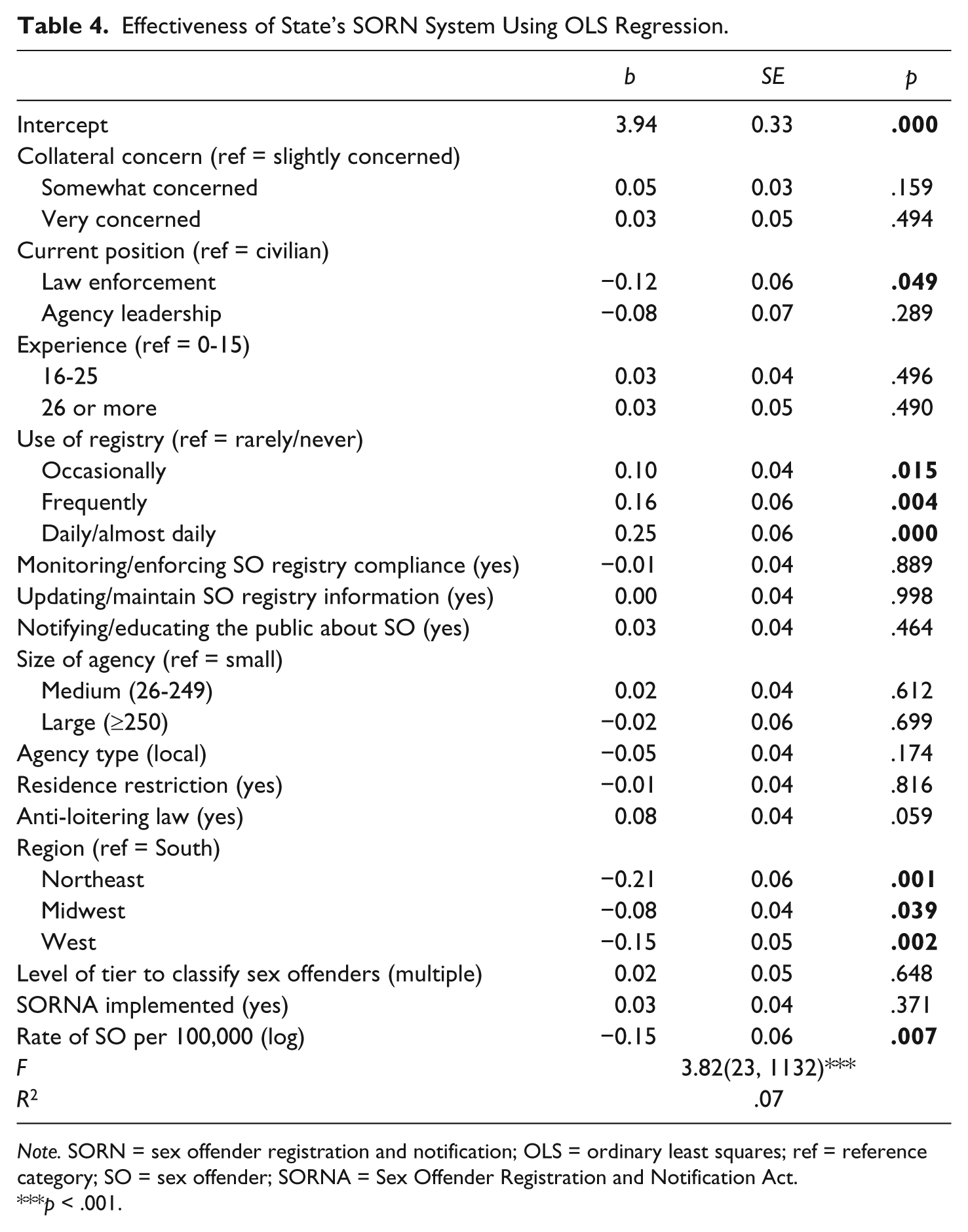
Table 4 presents the results from the regression model predicting perceived effectiveness of SORN using OLS regression. As the full model is nearly identical to the prior model in terms of the direction, effect size, and significance upon adding in the collateral consequences variable, only the full model is presented (F = 0.999, df = 2, p = .369). In other words, the respondent’s level of concern does not influence their perception of the effectiveness of their state’s SORN system, similar to the interview findings. There were, however, a number of similarities, yet also important differences. Specifically, the more respondents utilized the registry, the more likely they are to believe SORN is effective, whereas previously, using the registry more was associated with less concern over collateral impacts. Furthermore, law enforcement relative to civilians are less likely to believe SORN is effective, though this does not reach significance for those who hold a leadership role (p = .289). At the macro level, those who reside in a jurisdiction with anti-loitering laws are positively related to the effectiveness of SORN, though this was trending toward significance (p = .059). The rate of SO has the opposite effect with larger registries per capita seen as less effective. Model diagnostics (e.g., multicollinearity, non-normality) indicated a suitable fit.
Effectiveness of State’s SORN System Using OLS Regression.
Note. SORN = sex offender registration and notification; OLS = ordinary least squares; ref = reference category; SO = sex offender; SORNA = Sex Offender Registration and Notification Act.
p < .001.
Discussion
The present study evaluated the perspectives of law enforcement personnel regarding the levels of concern over collateral impacts of SORN on RSOs, as well as views on the general effectiveness of their state’s SORN system. Specifically, the study aimed to understand to what extent those who work directly with RSO are concerned with SORNs’ collateral impacts, what factors influence this concern, whether law enforcement views pertaining to the general effectiveness of SORN are related to their concern for collateral impacts, and what factors influence their view of the effectiveness of SORN. We employed a mixed methods approach, relying on semi-structured interviews with law enforcement personnel and a nationwide online survey of law enforcement and civilians who work with SORN in some capacity.
Interview results affirmed that some law enforcement officers working directly with RSOs acknowledge and are attuned to the reintegration challenges and difficulties that may be associated with sex offender registration. Law enforcement officers noted that RSOs had difficulty finding employment and stable housing, and often experienced increased stress resulting from the stigma attached to registration. Importantly, these respondents still generally believed SORN was effective in spite of these consequences. The knowledge that law enforcement officers who work directly with RSOs have about the experiences of RSOs may provide important information that can be used to prepare and train officers tasked with sex offender management. This preparation and training could be especially useful given that law enforcement officers are often the individuals RSOs interact with the most, and could play an important role in mitigating any unforeseen impacts for sex offenders resulting from registration.
Yet, although interview results seemed to suggest that many law enforcement personnel working with RSOs were aware of the collateral impacts of SORN, survey findings indicated relatively low overall levels of concern with collateral impacts, with the exception of some concern over the possible adverse effects on family members of RSOs. These results are consistent with survey research findings that law enforcement personnel hold generally negative views of sex offenders and believe that RSOs are responsible for any adverse effects of registration via retribution by the public by virtue of their offending behavior (Chaffin, 2008; Hogue, 1993; Mustaine et al., 2015).
Examining the predictors of concern over collateral consequences, a number of variables were found to be significantly related to levels of concern. Respondents in the Northeast and West were more likely to be concerned with the collateral consequences, in support of prior findings that law enforcement from Southern regions are more likely to hold negative views of offenders (Mustaine et al., 2015). This finding conforms to the overall findings of the study that as individuals work more directly with SORN, whether through sex offender management or public education, they are less likely to be concerned with collateral impacts. In addition, several variables were significantly related to SORN’s perceived public safety efficacy. Law enforcement officers in the Northeast and West were less likely to believe SORN is effective than those in the South, mirroring findings that southern law enforcement officers were more likely to believe notification is effective (Mustaine et al., 2015). Findings also suggest that as individuals use the system more, they are more likely to believe in its effectiveness.
Examining the relationships to jurisdictional characteristics, respondents in states with larger than average registries were more likely to be concerned with the unintended effects of SORN and less likely to believe it is effective. Nearly half of respondents indicated SORN would be ineffective in reducing recidivism when registries were larger, in line with research that larger registries with broad notification schemes were associated with a greater number of sex offenses (Prescott & Rockoff, 2011), further suggesting smaller registries may be more effective tools for law enforcement. This may be a result of the net-widening effect whereby more offenders are classified at the highest tier, thereby making identification and appropriate monitoring of the truly high risk sex offenders more difficult (Harris et al., 2010; Levenson et al., 2010; Zgoba et al., 2015). Research in Wisconsin found the increase in registry size had significant capital and labor costs, which may result in an overload of cases for those working with RSOs (Zevitz & Farkas, 2000), and could lead to concerns over the effectiveness of SORN. The increased effectiveness of smaller registries has been supported by studies in Minnesota and Washington, states with small registries that use empirically derived tools to assess offenders, finding reductions in recidivism after SORN implementation (Barnoski, 2005; Duwe & Donnay, 2008).
Results from the current study indicating that law enforcement officers generally believed SORN was effective for investigative purposes, but not necessarily for reducing the likelihood of offending, and an overall lack of concern for collateral impacts provide another example of the importance of this perspective when examining the utility of SORN. The differing opinions of law enforcement officers across agencies and regions in terms of the effectiveness of SORN and collateral impacts of registration suggest that examinations of SORN, which treat all state registries as the same, may be overlooking the role that region and agency plays in determining the efficacy of SORN within that specific location. These findings are especially salient given prior research indicating significant variation in the implementation of SORNA standards across states (Harris & Lobanov-Rostovsky, 2010).
The findings from this study have important implications for policy as well. Although respondents generally believed SORN was effective and had little concern for the unintended consequences it may impose on sex offenders, several findings do provide an important insight that can be used when implementing or updating current SORN policy. Findings that larger registries resulted in greater collateral impacts for RSOs suggest that awareness should be paid to the size of registries, and whether there is a point at which registries pose a threat to public safety. Some of the responses found in the interviews conducted with law enforcement personnel, and the overall lack of concern for the difficulty RSOs face, suggest that perhaps some type of sensitivity training should be provided to law enforcement charged with sex offender management to provide a more humanistic approach to registration. RSOs, like many other offenders returning to the community, face numerous difficulties reintegrating into society. These difficulties can sometimes be exaggerated as a result of their designation as a sex offender. Because law enforcement officers directly interact with RSOs and are often those most likely to address the difficulties offenders have with finding housing or employment, it would be beneficial for law enforcement to be trained to increase their awareness of and reaction to these collateral impacts.
Related to this, our findings underscore the challenges inherent in having law enforcement professional agencies perform roles related to ongoing offender supervision. Within our interview data, many compliance officers described their roles as residing outside of typical law enforcement agency functions, expressing the sentiment that “nobody here really understands what I do.” These beliefs were often accompanied by the perception that SORN has generated a form of “mission creep” by placing county and local law enforcement into monitoring roles typically managed through community corrections agencies.
Limitations
Several limitations of the current study warrant discussion. First, the sample used was purposive in nature, specifically targeting law enforcement officers who worked directly with SORN. Although this poses a limitation in terms of generalizability, the purpose of the current study was to examine the perspectives of law enforcement personnel who had direct experience with SORN and RSOs. By targeting this group of law enforcement, the study offers a deeper understanding of how effective those individuals tasked with implementing SORN believed the registry to be and their awareness and concern for collateral impacts.
Second, whereas past research indicated certain demographics (e.g., political views, gender, education) are significantly associated with concern for collateral impacts and perspectives on the effectiveness of SORN, these were not included in the survey instrument due to the overarching goals of the project. Future research might continue to examine the perspective of law enforcement officers on the collateral impact and effectiveness of SORN, relying on larger, more representative samples including demographic information. Despite this limitation, the current study did include agency- and state-level indicators in an attempt to more fully understand the complex perspectives of law enforcement personnel in regard to SORN. In addition, respondents were not queried about juvenile offenders relative to adult sex offenders. The distinction between juvenile and adult sex offenders should be explored in future research to determine the extent to which the age of the offender influences law enforcement concern for collateral impacts and perceived effectiveness of the registry.
Third, the low overall survey response rate (roughly 15%), although still larger than prior studies, is sub-optimal and may not be generalizable. Even with the low response rate, the current study featured a sufficiently large and varied cross-sectional sample. Finally, the scales used in the current study to measure law enforcement concern for collateral impacts and their views in terms of the overall effectiveness of SORN should be tested on other populations to determine how accurate they are at measuring respondent perspectives about these two concepts. Although their psychometric properties here were acceptable, their use may not be generalizable to other populations.
Conclusion
Despite these limitations, the current study provides the first national examination of law enforcement perspectives on the collateral impacts of SORN, and adds to the literature on law enforcement views of SORNs’ effectiveness. Future research examining the views of law enforcement about collateral impacts should focus more specifically on why they may exhibit greater concern for certain collateral impacts than others, and how their role in registry enforcement may influence this concern. In addition, this study adds to a growing literature that finds smaller and more targeted sex offender registries may be useful instruments of public safety, while their effectiveness and the potential for collateral impacts may expand as they increase in size and become less selective. Future research should further explore this finding, determining whether there is a tipping point at which registries are no longer effective, defeating the goals of SORN.
Footnotes
Appendix
Factor Loadings From Varimax-Rotated PCA.
| Item | Factor loading |
|---|---|
| Panel A. Collateral unintended effects of sex offender registration (α = .93, λ = 3.91) | |
| Registration may impede sex offenders’ ability to maintain stable housing | .91 |
| Registration may impede sex offenders’ ability to maintain stable employment | .91 |
| Registration may impede sex offenders’ ability to establish social ties in the community | .89 |
| Registration may foster negativity and hopelessness in those required to register, leading to greater risk of criminal behavior | .86 |
| Registration may lead to adverse effects on families of RSOs | .85 |
| Panel B. Effectiveness of state’s SORN system (α = .79, λ = 2.76) | |
| Helping law enforcement to keep tabs on sex offenders in the community | .81 |
| Sharing sex offender information among law enforcement and offender supervision agencies | .80 |
| Providing information to support investigation of sex crimes | .77 |
| Informing the public about sex offenders living in the community | .70 |
| Reducing the likelihood that sex offenders will re-offend | .63 |
Note. α = Cronbach’s alpha; λ = eigenvalue; PCA = principal components analysis; RSO = registered sex offender; SORN = sex offender registration and notification.
Authors’ Note
This work was supported by the National Institute of Justice, Office of Justice Programs, U.S. Department of Justice under Grant 2013-IJ-CX-0028. The opinions, findings, and conclusions or recommendations expressed in this publication are those of the authors and do not necessarily reflect those of the Department of Justice.
Declaration of Conflicting Interests
The author(s) declared no potential conflicts of interest with respect to the research, authorship, and/or publication of this article.
Funding
The author(s) disclosed receipt of the following financial support for the research, authorship, and/or publication of this article: This work was supported by the National Institute of Justice, Office of Justice Programs, U.S. Department of Justice under Grant 2013-IJ-CX-0028. The opinions, findings, and conclusions or recommendations expressed in this publication are those of the authors and do not necessarily reflect those of the Department of Justice.