




Abstract
Studies conducted worldwide indicate that near-lethal suicide attempts are common among incarcerated populations. However, little research attention has been focused on the Spanish prison population. To address this gap in the literature, data were drawn from a sample of men (N = 2,270) incarcerated in seven prisons in Spain. We compared sociodemographic, criminal/offense, health and mental health, and life events in prison variables between inmates who reported making near-lethal suicide attempts (n = 616) and those who did not (n = 1,654) during their current incarceration term. A series of binary and multiple logistic regression analyses indicated that a variety of variables were associated (p values < .001) with near-lethal suicide attempts, including prior-to-prison employment status, family members in prison, recidivist in prison, childhood trauma, work status in prison, and disciplinary infractions. Our study findings are discussed in light of developing more effective strategies and prevention interventions to reduce attempted suicide in the Spanish Prison System.
Each year approximately 800,000 people die from suicide and there are many more who attempt suicide (World Health Organization [WHO], 2012). In this article, we focus on events that have been defined as “near-lethal” suicide attempts. These events are characterized by the almost certainty that death would have occurred had the individual not received emergency medical or surgical intervention and those in which the individual used a method with a high likelihood of fatality and sustained an injury, regardless of severity (see, for example, Mercy et al., 2001). Importantly, regardless of precise (and not so precise) definitions, suicide remains a significant public health concern and a leading cause of death worldwide, among both the general (Nock et al., 2008) and prison populations (WHO, 2012). Moreover, a wealth of research confirms that suicide rates are elevated among incarcerated samples (Duthé, Hazard, Kensey, & Shon, 2013; Fazel, Grann, Kling, & Hawton, 2011; Smith, Wolford-Clevenger, Mandracchia, & Jahn, 2013; Steiner, Butler, & Ellison, 2014).
Estimated rates of suicide for prison populations far exceed those estimated for the general population (Fazel et al., 2011). For example, in England and Wales (Jenkins et al., 2005), rates of attempted suicide are almost six times higher among the prison population as compared with the general population; this is similar to data from Italy (Preti & Cascio, 2006), the United Kingdom (Pratt, Piper, Appleby, Webb, & Shaw, 2006), Canada (Laishes, 1997), and the United States (Van Orden et al., 2010). According to the Annual Penal Statistics, compiled by the Council of Europe, approximately 17% of all deaths in 2014 in the Spanish Prison System were suicides (Aebi, Tiago, Delgrande, & Burkhardt, 2015). This is in spite of the fact that the WHO reports that prison populations are cause for special concern because of the higher-than-average rates, as well as increased risk for persons with mental disorders and/or alcohol and/or substance use/abuse issues—a significant proportion of the imprisoned population.
According to official data from the Spanish Prison System (Spanish Prison System, 2007), however, approximately 9% of inmate deaths in Spanish prisons were attributed to suicide. Bedoya, Martínez-Carpio, Humet, Leal, and Lleopart (2009) reported that between 1990 and 2005, suicide was responsible for approximately 5% of the deaths in the Spanish prison population, with the majority of deceased Spaniards and relatively young (less than 40 years old). More recent research (García-Guerrero, Vera-Remartínez, & Planelles-Ramos, 2011), conducted in a single Spanish prison, provides general support for these figures.
Despite recent global interest in and the proliferation of suicide prevention and intervention efforts and programs in institutional corrections, rates of suicides in prison have been on the rise in Europe (Department of Health, 2012), the United States (U.S. Department of Health, 2012), and Asia (Ghanizadeh, Nouri, & Nabr, 2012). Thus, it appears there has been no corresponding reduction in the prevalence of this critical problem. Researchers from several different fields (e.g., forensic science, criminology, psychology, and psychiatry) have argued that high suicide rates among prison populations are a consequence of the higher prevalence of risk factors for suicide in this population both prior to and during incarceration (Fazel, Cartwright, Norman-Nott, & Hawton, 2008; Shaw, Baker, Hunt, Moloney, & Appleby, 2004).
A systematic review conducted by Fazel and colleagues (2008) concluded that suicide risk factors among prison populations varied by both demographic and crime-related factors. Significant predictors of suicide in the prison population included race/nationality, gender (male), marital status, single-cell/segregated housing, serving a life sentence, and being incarcerated for violent offense. Using national data from England, Fazel et al. (2008) found prison suicide to be significantly higher for inmates with the following demographic and crime-related characteristics: White, low education level, recidivist in prison, and being incarcerated for less than 1 month.
More recently, Hawton, Linsell, Adeniji, Sariaslan, and Fazel (2014) also reported several risk factors linked to self-harm and near-lethal suicide attempts among the prison population in England and Wales, including White ethnicity, sex (female), remand status, and violent offending. Research generally suggests (e.g., Humber, Piper, Appleby, & Shaw, 2011; Leese, Thomas, & Snow, 2006; Rivlin, Hawton, Marzano, & Fazel, 2013; Toman, Cochran, Cochran, & Bales, 2015; Valentine, Mears, & Bales, 2015) that particular inmate characteristics, along with the prison environment, may facilitate or exacerbate the risk of suicide attempts. We discuss several of these key factors in below.
Health Characteristics and Childhood Victimization
Extant research consistently reports that individuals with mental health disorders are at higher risk of suicide as compared with those without (see, for example, Chesney, Goodwin, & Fazel, 2014; Luoma, Martin, & Pearson, 2014). Similarly, according to the WHO (2012), in prison populations, inmates with mental health disorders reported higher rates of attempted suicide during incarceration than inmates without mental illnesses. Rivlin and colleagues (2013), in a case-control study, found that near-lethal suicide attempts in an incarcerated population were significantly higher for prisoners with more severe/serious mental health disorders (e.g., depression, anxiety). Generally, prison inmates exhibit higher rates of mental health disorders (Fazel & Seewald, 2012) as compared with the general population, with anxiety and depression disorders the most commonly identified disorders among inmates (Prison Reform Trust, 2015). In exploring the physical health and social factors that may elevate the risk of suicide in prison, prior studies report that physical illness (Meyer, Qiu, Chen, Larkin, & Altice, 2012), substance use/abuse problems (Humber et al., 2011; Rivlin et al., 2013; WHO, 2012), and poor social and family support (Rivlin et al., 2013) are significant predictors of near-lethal suicide attempts among incarcerated populations.
Histories of family conflict during childhood are also robust risk factors for near-lethal suicidal behavior across the life span, with research documenting associations between in-prison suicide attempts and familial discord, domestic violence, and familial stress (Dong, Chang, Zeng, & Simon, 2015; Haw, Hawton, Niedzwiedz, & Platt, 2013). This corresponds with data obtained from general population samples (Milner, Sveticic, & De Leo, 2012). However, only a handful of studies have been conducted among incarcerated populations that examine the association between family conflict and near-lethal suicide attempts. One such study, conducted by Sarchiapone and colleagues (2009) among 1,117 male prisoners in Italy, using the childhood trauma questionnaire, estimated that approximately 13% attempted suicide at some point in their lives. This study, as well as a few others, reported higher rates of suicide attempt among inmates with prior family conflict (e.g., emotional neglect, physical and sexual abuse) as compared with their imprisoned counterparts without family conflict (Jenkins et al., 2005; Rivlin et al., 2013; Verona, Hicks, & Patrick, 2005).
Prison Environment
Suicide, suicide attempts, and other instances of self-harm are not random events inside prisons (Liebling, 2006). In fact, a recent study indicates that characteristics of the prison setting itself may increase the risk of suicide (Rivlin et al., 2013). Leese and colleagues (2006) reported that access to activities such as work or education during incarceration, in England and Wales, is associated with reduced suicide risk, a finding supported by additional research in this area (Rivlin et al., 2013). Other ecological associations have also been linked with self-harm and suicide among incarcerated population, such as prison setting and characteristics.
Inmates are exposed to a number of adverse conditions that may place them at increased risk for suicide during incarceration. Qualitative research has identified several ecological characteristics of the prison environment, as well as individual factors, which increase vulnerability to suicide (and suicide attempts) in prison. These include physical and/or sexual violence risk, nonviolent victimization (e.g., theft victim; Blaauw, Arensman, Kraaij, Winkel, & Bout, 2002; Rivlin et al., 2013), and overcrowded conditions (Leese et al., 2006). According to the WHO (2012), near-lethal suicide attempts and completed suicides usually take place when, as a result of disciplinary infractions, inmates are isolated (single-cell or segregation) or when there are fewer prison staff (e.g., nights or weekends). The importance of isolation/segregation as a risk factor linked to near-lethal suicide attempts has been reported across prisons in several countries (Bonner, 2006; Hayes, 2006; Liebling, 2006; Rivlin et al., 2013).
Focus of the Current Research
Extant research indicates that near-lethal suicide attempts within prison populations are consistently associated with particular demographic and offending characteristics (Rivlin et al., 2013), physical and psychological characteristics (Fazel et al., 2008 ; Meyer et al., 2012), childhood family conflict (Sarchiapone et al., 2009), prison setting and environment (WHO, 2012), and victimization (Blaauw et al., 2002). However, very little is known about suicide behaviors—including near-lethal suicide attempts—and correlates of these events in Spain and Spanish prisons. Although we know that in-prison suicide and suicide attempts are prevalent among Western countries (Fazel et al., 2008) and the United States (Van Orden et al., 2010), suicide may manifest differently in the Spanish context. According to Huey Dye (2010), prison conditions (the deprivation model) such as prison victimization and violence, prison disturbances, single-cell housing, family visits, as well as inmate composition (the importation model) such as demographic, social, and psychological characteristics may predict prison suicide and/or self-harm and suicide-related behaviors (such as suicide attempts). Thus, we hypothesize that aspects of both the deprivation and importation models help examine correlates of and/or predict near-lethal suicide attempts during incarceration.
To our knowledge, our research explores, for the first time in Spain, the prevalence and correlates of near-lethal suicide attempts by male prisoners during incarceration. To investigate these important issues, the present study carefully compared key characteristics of male inmates who made near-lethal suicide attempts with those who did not during their current incarceration in the Spanish Prison System.
Method
Setting and Sample
The ethics committees of the Spanish Prison System and the University of Murcia reviewed the research and data collection protocol and permission was granted by both organizations. Data collection for our cross-sectional study was carried out in March and July 2014 in seven male prisons in Spain, selected primarily for their geographic proximity to the University of Murcia. Participating institutions included six minimum-security prisons (for general populations) and one medium-security prison; three of the minimum-security prisons also have specialized youth units for 18- to 25-year-old inmates. These seven institutions housed more than 5,000 inmates at the time of data collection. Inclusion criteria for inmate participation in the current research included (a) Spanish or French literacy, (b) imprisoned more than 6 months, and (c) held in general population (i.e., not classified as high-risk or special needs). Of the 5,000 inmates in these prisons, approximately 4,200 male inmates were deemed eligible to participate. Participation rates across these facilities, however, ranged from 44% to 67%, with a mean participation rate of 53%. The most common responses inmates gave for declining participation were “there was nothing to be gained from the current research” and “I am leaving prison soon.”
Self-Report Survey Administration
Recruitment letters, which provided study details, were delivered by prison staff, to all inmates eligible for participation. Following training in the use of the questionnaires employed in the current study, four individuals from the University of Murcia, experienced in working with prisoners, oversaw the administration of self-report questionnaires to inmate participants. The questionnaire was provided in Spanish, but also translated into French (to accommodate the language needs of the primarily French-speaking population from Marrakech). Upon obtaining written consent, the data collection took place in the prisons’ various common rooms (e.g., library, school classroom, etc.). The self-report surveys were administered in groups of 15 to 20 inmates and lasted approximately 45 min, although 33 inmates completed their surveys individually, in private rooms in the prison. To enhance privacy and assure confidentiality during data collection, prison staff members were not present during either the group or individual administration of surveys. All information on the key variables included in our analyses was obtained from the self-report questionnaires completed by the male inmate respondents.
Measures
Criteria Variable
Near-lethal suicide attempts
As indicated previously, we followed prior research (Kresnow et al., 2001) and defined respondents as near-lethal suicide attempt cases when they reported using methods associated with a reasonably high chance of death (e.g., use of a knife or gun, sustained an injury, and not receiving emergency medical intervention). A similar definition was adapted and also used in a recent series of studies conducted elsewhere (see Rivlin, Hawton, Marzano, & Fazel, 2010; Rivlin et al., 2013). By contrast, respondents who did not report these behaviors were categorized as non-near-lethal cases.
Predictive Variables
Sociodemographic variables
Information on the following demographic variables was collected and included in our analyses: respondent age (continuous, in years, beginning at age 18), age of first arrest (continuous, in years, beginning at age 14), number of times incarcerated (not including pretrial/other detentions, continuous variable starting at 1), marital status (0 = single, 1 = married), nationality (0 = Spaniard, 1 = foreign), educational attainment (0 = no education, 1 = at least compulsory education), employment status, prior to incarceration (0 = employed, 1 = unemployed), current serious financial problems (0 = yes, 1 = no), and, finally, whether any family member(s) is/are currently incarcerated (0 = yes, 1 = no).
Crime/offense history variables
Participants were asked to provide information on their current and past criminal background. More specifically, they were asked about the type of offense for which they were currently incarcerated (0 = violent offense, including sexual violence; 1 = property offense; 2 = drug-related offense), any prior imprisonment (0 = yes, 1 = no), their conviction status (0 = sentenced, 1 = remand), the length of current sentence (0 = up to 6 months, 1 = between 6 months and 1 year, 2 = between 1 and 4 years, 3 = more than 4 years), and current time spent in prison (0 = less than 1 year, 1 = more than 1 year).
Health and mental health variables
Inmate respondents were also asked about their physical/medical and mental health conditions. Specifically, these men were asked whether they were currently sick with Hepatitis C (0 = yes, 1 = no); HIV positive (0 = yes, 1 = no); a smoker (0 = yes, 1 = no); being treated for anxiety during current incarceration (0 = yes, 1 = no), being treated for depression during current incarceration (0 = yes, 1 = no), being treated for schizophrenia and/or bipolar disorder during current incarceration (0 = yes, 1 = no); and being treated for drug abuse during current incarceration (0 = yes, 1 = no). Inmate participants who responded affirmatively to any of the last four questions (i.e., the treatment-related questions) were categorized as receiving in-prison mental health treatment.
Childhood family conflict
Five dichotomous variables (0 = no, 1 = yes) were used to tap the past occurrence(s) of emotional abuse, neglect, parental substance/alcohol abuse, prematurely deceased parents, and divorced parents. Inmates who responded affirmatively to the presence of any of these conditions were coded as experiencing childhood trauma.
In-prison life events
To assess differences in key life events during incarceration between inmates who had made near-lethal suicide attempts and those who had not, we solicited additional information, again drawing from recent studies (Caravaca Sanchez, Romero, & Luna, 2015; Rivlin et al., 2013). Inmate participants were asked to provide information regarding whether or not they had experienced the following events or conditions during their current prison term: work in prison (0 = no, 1 = yes), study in prison (0 = no, 1 = yes), solitary confinement during current incarceration (0 = no, 1 = yes), received disciplinary infraction (0 = no, 1 = yes), external contact from family/friends via letters (0 = no, 1 = yes), telephone calls and/or visits since being in prison (0 = no, 1 = yes), threatened with violence (0 = no, 1 = yes), victim of property theft (0 = no, 1 = yes), and victim of verbal insult/intimidation by prison staff and/or other inmates (0 = no, 1 = yes).
Assessment Instruments
Questions regarding sociodemographic and offense/criminal history information were adapted from extant studies of the Spanish prison population (Caravaca Sánchez & Wolff, 2016; Sánchez, Luna, & Mundt, 2016). Information on mental health and substance use disorders was gathered using an adapted version of the instrument used in Wolff and Shi’s (2012) U.S. prison study, also used in prior research on incarcerated samples (Caravaca Sánchez & Wolff, 2016; Epperson et al., 2014). In the current study, the Cronbach’s alpha estimate of internal consistency was .82 for scores of the items measuring mental health and substance use disorders treatment during current incarceration.
Childhood traumatic experiences were measured using questions from the Childhood Trauma Questionnaire (CTQ) developed by Bernstein and colleagues (2003). The CTQ is composed of 28 items that assess histories of emotional, physical, and sexual abuse, exhibiting excellent reliability and internal consistency (Cronbach’s α = .93) in previous studies of prison samples (Cima, Smeets, & Jelicic, 2008). Cronbach’s alpha in this study was .81 for the five childhood (prior to age 18) traumatic experience questions.
Data Analysis
The exploration of data was conducted in two stages providing both descriptive and inferential analyses. First, the means (and standard deviations), percentages, and 95% confidence intervals (CIs) were computed to describe sample characteristics regarding near-lethal suicide attempts during the current incarceration term in addition to inmate participants’ sociodemographic, crime/offense, health and mental health, and in-prison life event characteristics. Additionally, binary logistic regression analyses were systematically (and separately) executed to compare near-lethal suicide attempts (n = 616) with non-near-lethal suicide attempts during current incarceration (n = 1,654) with respect to sociodemographic, crime/offense, health/mental health, and in-prison life events for each group. For continuous variables, independent-samples t tests were computed. Odds ratios (ORs) and 95% CIs of categorical variables were calculated to assess the strength of the association between the predictive variables and the criteria variable. Finally, multiple logistic regression was used to predict near-lethal suicide attempts in prison, applying simultaneous forced entry, with only the statistically significant predictive variables from the previous bivariate analyses retained in the final model. All analyses were conducted using SPSS version 20.
Results
Information from the final sample of 2,270 male inmates who completed the self-report questionnaires described above were included in the analyses. Descriptive results for the full sample, differentiated by inmates’ response to the criteria variable questions, are presented in Table 1. As shown in the table, male inmate respondents were, on average, about 36 years old. Results of t test indicate, however, that male inmates who had made near-lethal suicide attempts were both younger, on average, at the time of their first arrest (23.2 years vs. 26.4 years) and had been incarcerated more often than their non-near-lethal suicide attempt counterparts (5.35 times vs. 4.14 times, respectively). The majority of the male prisoner respondents had obtained some level of education, and had serious financial problems—none of the differences between the two groups, in these categories, was statistically significant. However, significant adjusted odds ratios (AORs) were found, between the two groups, for the following sociodemographics: marital status, nationality, employment status, and family member(s) in prison. More specifically, inmates who had made near-lethal suicide attempts were significantly different from their non-near-lethal counterparts in that a larger percentage were single (as opposed to married), Spaniard (as opposed to foreign), and unemployed prior to current prison term, and more than half reported a fellow family member in prison (as compared with only 38.1% of non-near-lethal inmate respondents).
Differences in Sociodemographic Variables Between Male Prison Inmates Who Made Near-Lethal Suicide Attempts Versus Those Who Did Not.
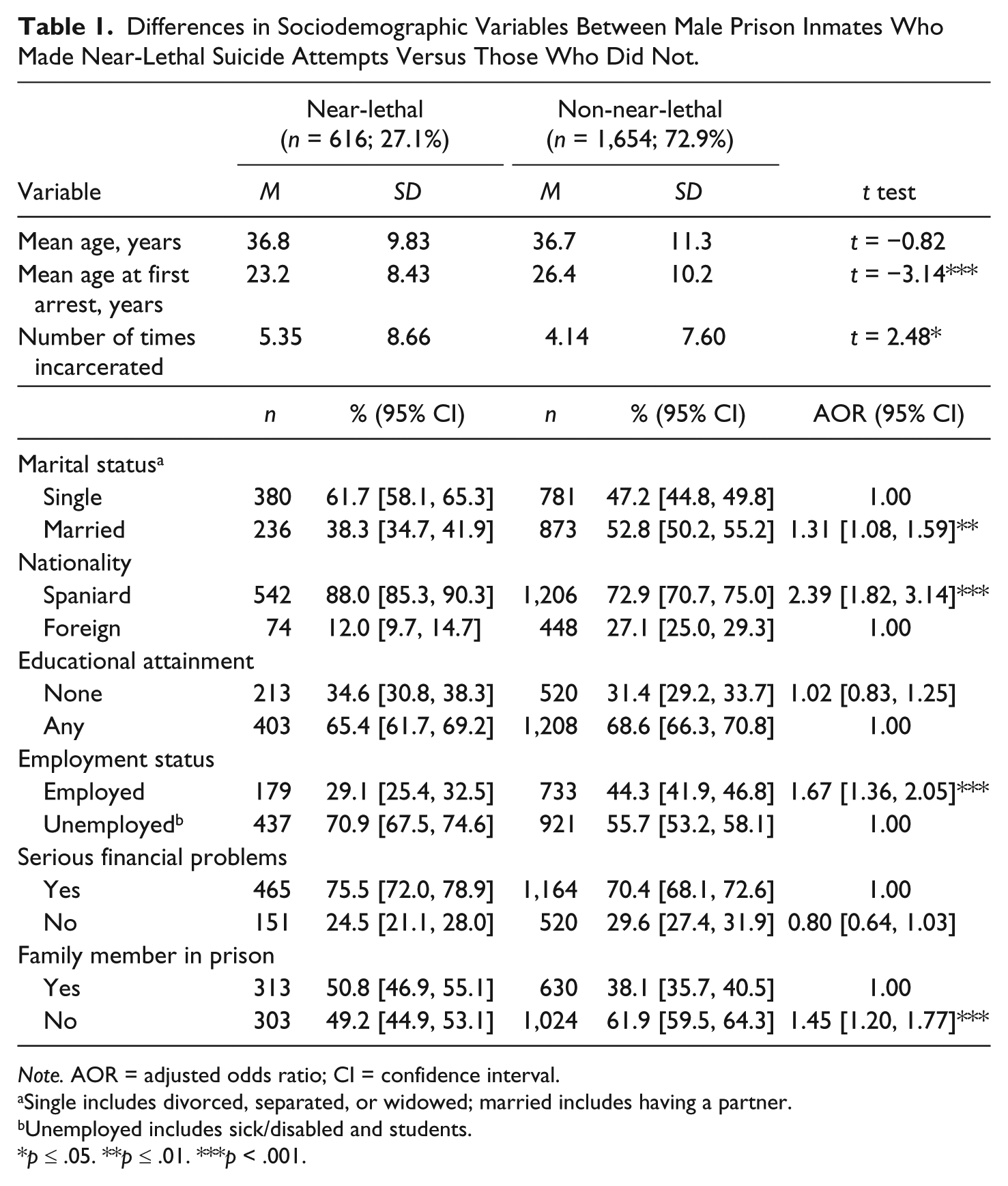
Note. AOR = adjusted odds ratio; CI = confidence interval.
Single includes divorced, separated, or widowed; married includes having a partner.
Unemployed includes sick/disabled and students.
p ≤ .05. **p ≤ .01. ***p < .001.
Table 2 reports the results of analyses of respondents’ crime/offense history characteristics, again differentiated by those who had made (a) near-lethal suicide attempt(s) versus those who had not. Inmates who had made near-lethal suicide attempts were statistically significantly more likely, than their non-near-lethal counterparts, and to have engaged in a property offense. These inmates were also much more likely to have been imprisoned previously, as compared with their non-near-lethal counterparts (57.8% and 40.1%, respectively; p < .001). None of the other crime/offense variables were statistically different between the two groups; greater percentages of both the near-lethal and non-near-lethal inmates were serving a sentence (as opposed to being remanded for custody) and the majority (approximately 60% of both groups) were sentenced to serve at least 1 year. Approximately half of each group had served less than 1 year on their current prison term (of course then, the other half of each group had served more than 1 year).
Logistic Regression Model Assessing Differences in Crime/Offense History Variables Between Male Prison Inmates Who Made Near-Lethal Suicide Attempts Versus Those Who Did Not.

Note. AOR = adjusted odds ratio; CI = confidence interval.
Omitted variable: Nonviolent crime.
Omitted variable: Nonproperty crime.
Omitted variable: Nondrug-related offense.
Applies to sentenced prisoners only (n = 1,424).
p ≤ .05. **p ≤ .01. ***p < .001.
Table 3 presents the results of the analysis of male inmate respondents’ reports of health/mental health characteristics, again differentiated by whether or not inmates had made (a) near-lethal suicide attempt(s). Quite a number of statistically significant differences were found in this analysis, between the two inmate groups. First, however, there appears to be no statistically significant differences among the two inmate respondent groups with regard to HIV illness (affecting roughly 7% of the near-lethal group and 3% of the non-near-lethal group) or three of the five childhood trauma indicators—neglect, parental divorce, and prematurely deceased parent(s).
Logistic Regression Model Assessing Differences in Health/Mental Health Variables Between Male Prison Inmates Who Made Near-Lethal Suicide Attempts Versus Those Who Did Not.

Note. AOR = adjusted odds ratio; CI = confidence interval.
Omitted variable: Not sick with Hepatitis C.
Omitted variable: Not sick with HIV.
Omitted variable: Nonsmoker.
Omitted variable: Not currently being treated for mental illness.
Omitted variable: No depression treatment.
Omitted variable: No anxiety treatment.
Omitted variable: No schizophrenia or bipolar treatment.
Omitted variable: No drug abuse treatment.
Omitted variable: No childhood trauma.
p ≤ .05. **p ≤ .01. ***p < .001.
Statistically significant differences were found between the two groups for Hepatitis C illness, smoking, all of the mental illness treatment measures (except anxiety disorders), and two of the childhood trauma indicators, as well as the any childhood trauma variable. More specifically, inmates who had made near-lethal suicide attempts were much more likely to be ill from Hepatitis C (19.3% vs. 8%; p = .013), more likely to smoke (84.4% vs. 72.5%; p = .011), and much more likely to be receiving, currently, in-prison, treatment for any/all mental illnesses (77.3% vs. 40.9%; p < .001)—depression, schizophrenia/bipolar, and/or drug abuse. Greater percentages of inmates who had made near-lethal suicide attempts also reported emotional abuse (29.4% vs. 13.6%; p = .004) and parental substance/alcohol abuse (27.6% vs. 15.1%; p = .035) during childhood than their non-near-lethal suicide attempt counterparts. Indeed, approximately 74% of male inmate respondents who reported near-lethal suicide attempts also reported any kind of childhood trauma versus 59% of respondents who had not made (a) near-lethal suicide attempt(s).
Table 4 presents the results for the comparison of in-prison life events between male inmates who made near-lethal suicide attempts and those who did not. Roughly 60% of both inmate groups reported studying while serving their current prison sentence; approximately 87% of both inmate groups reported external (to prison) family/friend contact; and a substantial minority of both groups reported being victims of theft while in prison—no statistically significant difference between the two groups were found for these three in-prison life event measures.
Logistic Regression Model Assessing Differences in In-Prison Life Events Between Male Prison Inmates Who Made Near-Lethal Suicide Attempts Versus Those Who Did Not.
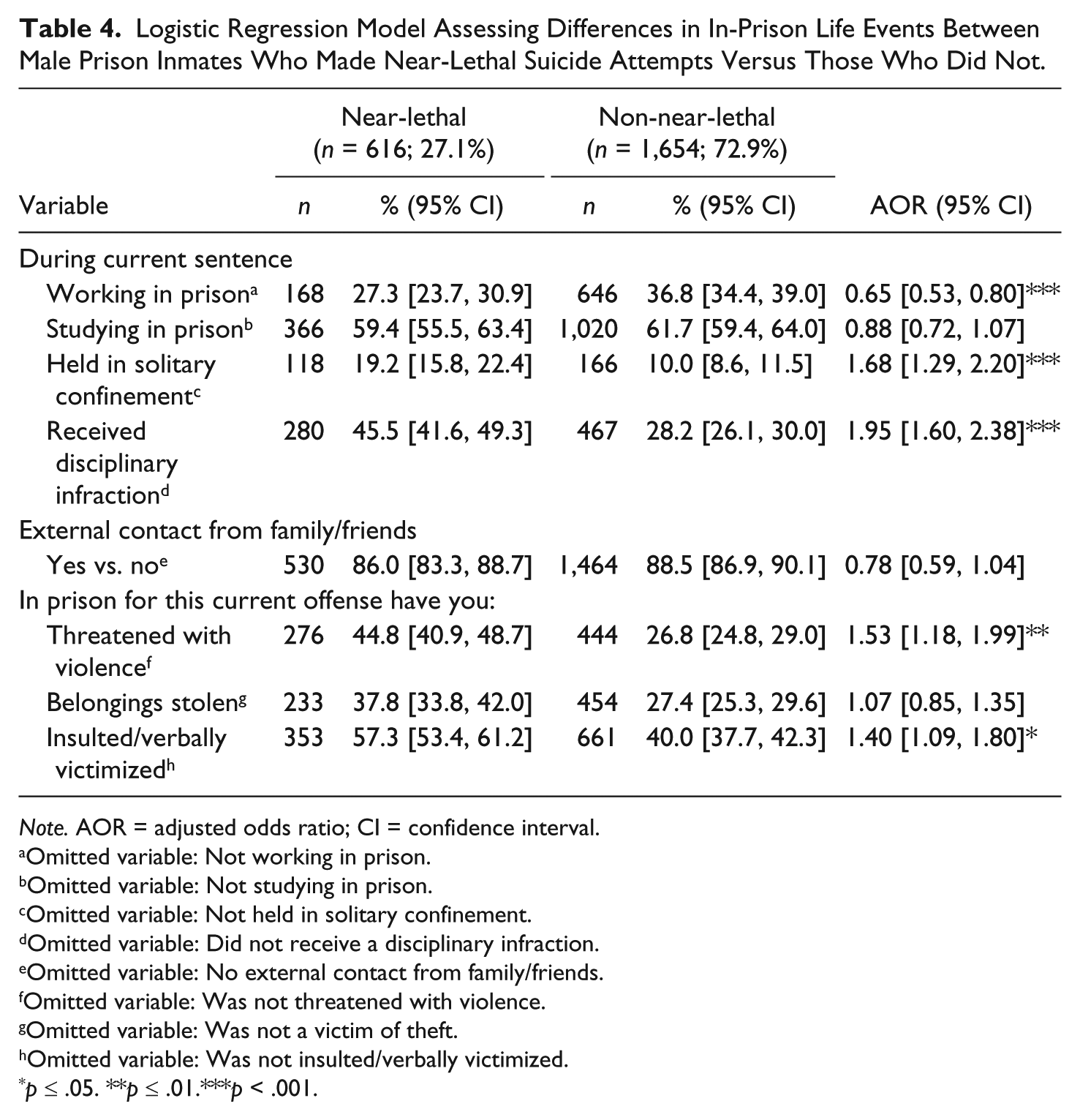
Note. AOR = adjusted odds ratio; CI = confidence interval.
Omitted variable: Not working in prison.
Omitted variable: Not studying in prison.
Omitted variable: Not held in solitary confinement.
Omitted variable: Did not receive a disciplinary infraction.
Omitted variable: No external contact from family/friends.
Omitted variable: Was not threatened with violence.
Omitted variable: Was not a victim of theft.
Omitted variable: Was not insulted/verbally victimized.
p ≤ .05. **p ≤ .01.***p < .001.
Statistically significant differences between the two groups, however, were found for in-prison work, solitary confinement, disciplinary infractions, threatened violence, and verbal victimization/insults. More specifically, greater percentages of inmates who had made near-lethal suicide attempts had been held in solitary confinement (19.2% vs. 10.0%; p < .001) and committed disciplinary infractions during their incarceration (45.5% vs. 28.2%; p < .001). These male inmate respondents also reported being subjected to far greater violent threats (44.8% vs. 26.8%; p = .004) and insults and verbal intimidation (57.3% vs. 40.0%; p = .021). By contrast, fewer inmates who had made near-lethal suicide attempts reported in-prison work than their non-near-lethal counterparts (27.3% and 36.8%, respectively; p < .001).
The fifth, and final, table (Table 5) presents results for the multivariate logistic regression analysis predicting near-lethal suicide attempts within our sample of male inmates—applying simultaneous forced entry of those key predictive variables that exerted statistically significant influence in the bivariate analyses discussed previously. Interestingly, while many of these variables continued to exert statistically significant influences on the criteria variable (near-lethal vs. no near-lethal suicide attempt in prison), some no longer did in the multivariate analysis.
Multiple Logistic Regression Model Predicting Near-Lethal Suicide Attempts Among Male Prison Inmate Respondents.
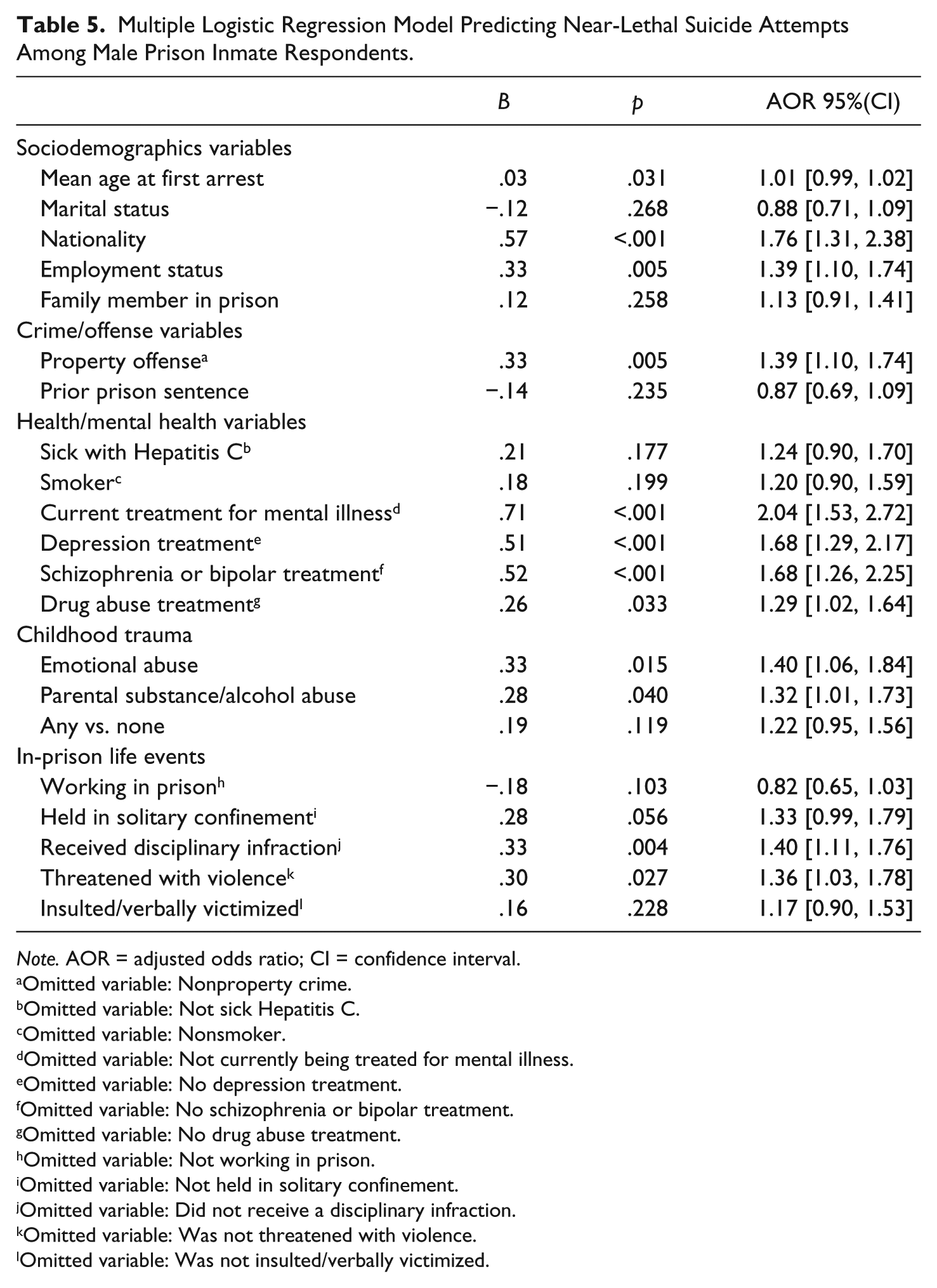
Note. AOR = adjusted odds ratio; CI = confidence interval.
Omitted variable: Nonproperty crime.
Omitted variable: Not sick Hepatitis C.
Omitted variable: Nonsmoker.
Omitted variable: Not currently being treated for mental illness.
Omitted variable: No depression treatment.
Omitted variable: No schizophrenia or bipolar treatment.
Omitted variable: No drug abuse treatment.
Omitted variable: Not working in prison.
Omitted variable: Not held in solitary confinement.
Omitted variable: Did not receive a disciplinary infraction.
Omitted variable: Was not threatened with violence.
Omitted variable: Was not insulted/verbally victimized.
More specifically, of our group of sociodemographic variables, the mean age of our male inmate respondents, at first arrest, continued to exert a statistically significant effect, as did nationality and employment status prior to prison (each a positive impact). Thus, male inmates who were a bit older at the time of their first arrest, Spaniards (as opposed to foreign), and those who were unemployed prior to incarceration were more likely to have reported (a) near-lethal suicide attempt(s). However, neither marital status nor having one/more family members in prison emerged as significant predictors of our criteria variable in the multivariate analysis. Inmates who reported a property crime (as opposed to a nonproperty crime) were also more likely to have reported (a) near-lethal suicide attempt(s). Moreover, many of the health/mental health variables continued to exert statistically significant effects on our criteria variable in this model, especially the treatment-oriented variables, including treatment overall and treatment for specified issues (depression, schizophrenia, or bipolar and drug abuse). Male inmate respondents reporting receiving any of these mental health/substance abuse treatments were much more likely, than their nontreatment-receiving counterparts, to have reported (a) near-lethal suicide attempt.
As indicated in the table, our “any” childhood trauma variable no longer exerts a statistically significant effect in the multivariate analyses. But, inmates’ reports of emotional abuse and parental substance/alcohol abuse remain positive predictors of reported near-lethal suicide attempts. Finally, several of the in-prison life events that were associated with the criteria variable in bivariate analyses remain significant predictors in this model. More specifically, inmates who reported being held in solitary confinement (approaching statistical significance at p = .056), those who committed disciplinary infractions (p = .004), and those who were threatened with violence (p = .027) were also more likely to report having made (a) near-lethal suicide attempt(s).
Overall, our descriptive, bivariate, and multivariate analytical results suggest, perhaps, that male inmates who have made near-lethal suicide attempts face the ills of prison—along with their own personal ills and issues—at a much greater disadvantage than other, less troubled inmates.
Discussion
The current study is the first, to our knowledge, to examine the prevalence and sociodemographic, crime/offense, health/mental health, and prison life correlates of near-lethal suicide attempts within a Spanish prison population. The prevalence of near-lethal suicide attempts was 27.5%, lower than previously reported prevalence rates among prison populations in Australia and the United Kingdom (Larney, Toson, Burns & Dolan, 2012; Rivlin, Fazel, Marzano, & Hawton, 2012) but higher than those reported in previous studies in U.S. prisons (Baillargeon et al., 2009). In concordance with our expectations and extant research literature (Hawton et al., 2014), the current findings indicate that many of the factors we considered emerged as significant correlates and predictors of near-lethal suicide attempts among males during incarceration.
In terms of sociodemographic factors, near-lethal suicide attempts were higher among inmates who were single and unemployed. These findings are in keeping with previous research on the influence of sociodemographic characteristics on suicidal behavior, both in prison samples (Fazel et al., 2008; Hawton et al., 2014) and in the general population (WHO, 2012). By contrast, we found no significant differences in near-lethal suicide attempts by gender (data on female inmates in Spanish prisons were removed from our current analyses for a variety of reasons, including especially, the small sample size), serious financial problems, or educational attainment, again consistent with previous studies (Rivlin et al., 2012). Regarding crime/offense factors and again consistent with previous reports (Fazel & Seewald, 2012), although we included a number of legal/crime/offense variables for examination, we found that only property-related offense and recidivism (measured as (a) prior prison term(s)) were important correlates; whereas others (Boduszek, Dhingra, & Debowska, 2016; Fazel & Seewald, 2012; Hawton et al., 2014; Rivlin et al., 2010, 2013) report a much wider range of crime/offense characteristics linked with suicidal behavior within the prison population, such as length of incarceration and legal status.
As apparent in the results, in-prison treatment for mental health/substance abuse disorders was common among the incarcerated male sample in the current research. Inmates who made near-lethal suicide attempts were more likely than inmates who had not to self-report treatment for mental illness during current incarceration, especially for depression, schizophrenia, or bipolar disorders. These findings are consistent with previous prison and community studies (Fazel & Seewald, 2012; Rivlin et al., 2010, 2013).
The current findings indicate that other family, social, and health factors—besides mental illness—are associated with near-lethal suicide attempts within the male prison population. More specifically, the presence of one/more family member(s) in prison, being sick with Hepatitis C, and being a smoker were all associated with near-lethal suicide attempts (but did not emerge as statically significant during the multivariate analysis). However, and contrary to previous studies on prison populations (Rivlin et al., 2013), contact with and from family and friends (e.g., phone calls or visits) was not a significant correlate.
In further keeping with the correctional literature (see, for example, DeLisi et al., 2010), we found that histories of childhood trauma—especially emotional abuse and parental substance/alcohol abuse—were strong correlates of near-lethal suicide attempts during current incarceration in this sample of male prisoners. Although recent studies suggests that childhood maltreatment and victimization are associated with adulthood suicidal ideation and attempts in the general population (Harford, Yi, & Grant, 2014; Miller, Esposito-Smythers, Weismoore, & Renshaw, 2013), this research is uncommon among incarcerated populations. Moreover, despite the fact that prisoners are at particularly high risk for suicidal behavior, due to higher levels of the acquired capability for suicide resulting from greater exposure to painful and provocative life events prior to, and during incarceration, such as childhood victimization (Smith et al., 2013), much more information is needed in this area for prison populations.
Finally, we also examined some key in-prison life events that might protect inmates and others that might correlate with near-lethal suicide attempts in prison. We found that committing disciplinary infractions correlated with the occurrence of near-lethal suicide attempts during incarceration for our male inmate respondents, contrary to previous research conducted within the English prison population (Rivlin et al., 2013). By contrast, results from our multivariate analysis did not indicate that working while in prison was a protective factor against near-lethal suicide attempts, contrary to prior research which has highlighted the importance of working in the prison environment as both an essential treatment tool for inmates with mental health disorders and to enhance social reintegration after release from prison (Galanek, 2013). Our primary hypothesis, that both the deprivation model (measured primarily as solitary confinement, disciplinary infractions or threats of violence) and the importation model (measured primarily as nationality, previous employment, or mental health disorders) of prison behaviors might predict near-lethal suicide attempts during incarceration, was generally supported.
Strength and Limitations
The major strengths of this study are that it included data on an important health/mental health-related issue from a substantial number of male inmates in seven prisons across Spain; thus, the findings likely have a high degree of generalizability to other incarcerated populations. The primary strength of our study, however, is that it is one of the first, if not the only, rigorous examination that explores the prevalence, key correlates, and predictors of near-lethal suicide attempts among male inmates in Spain.
Several limitations of the present study, however, should be noted. First, as with all prison research, comparisons to the general population must be made very carefully given that the sociodemographic characteristics of prisoners (both as individuals and at an aggregate level) are often much different than those in the general population, such as a higher prevalence rates of mental health disorders, childhood abuse, and so on (Baillargeon et al., 2009).
Second, almost half (47%) of the initial planned sample refused to participate in the study and it remains unclear to what extent our findings generalize beyond our participant population. To get a better grasp on this issue, we examined, briefly, official prison records and the demographics and offense/criminal history characteristics of our inmate respondents are quite similar to the information drawn, overall, from the seven prisons in terms of age (mean age 36.8 vs. 37.1 years), foreign inmates (23.1 vs. 23.2), serving a sentence for property offenses (43.0% vs. 38.7%), and previous incarcerations (44.1% vs. 46.3%). However, caution is certainly warranted in making generalizations from our results to the entire populations of the seven prisons from which we drew our sample and, indeed, to the entire Spanish Prison System.
Third, although previous studies among incarcerated samples have found a strong association between drug use and suicide (Haglund et al., 2014; Lim et al., 2012), similar to that found in the general population (Vijayakumar, Kumar, & Vijayakumar, 2011), in the present study, we examined only current in-prison treatment for drug abuse and were unable to explore the importance of substance use/abuse prior to or during incarceration. It is important to point out here, however, that, in the final, multivariate analysis of the data, in-prison treatment for drug abuse emerged as a significant predictor of (a) near-lethal suicide attempt(s)—lending further support to the tie between drug use and suicide-related behavior (e.g., near-lethal attempts).
Fourth, information for the variables examined in the current study was gathered exclusively through use of a self-report instrument and was not corroborated by clinical/official records of the prison system. Although self-report data are critically useful, especially when exploring a difficult population such as those incarcerated, it does carry with it the risk of participants not fully understanding the questions asked and/or participants, particularly inmate respondents, may—purposely or inadvertently—distort the information provided (Baltieri, 2014).
Finally, we used a cross-sectional research design in this study which precludes causal inference. Thus, future research on near-lethal suicide attempts (and/or other suicide-related behavior) in the Spanish Prison System should, to the degree possible, adopt a longitudinal design to provide more detailed information on the cause(s) of near-lethal suicide attempts during incarceration and, perhaps, upon release. Such studies would allow us to better identify any changes that may occur in prison population characteristics, during incarceration as well as upon release and the degree to which near-lethal suicide attempts increase or decrease after incarceration (Haglund et al., 2014). In fact, previous research (Bisnwanger et al., 2012) reported that most released inmates retain many of the risk factors associated with near-lethal suicide attempts, such as alcohol and drug use/abuse, unemployment, and homelessness.
Despite these limitations, the present study makes a solid contribution to the literature as it provides the first rigorous examination and exploration of the prevalence and correlates of near-lethal suicide attempts among male inmates during their incarceration in Spanish prisons.
Conclusions for Research, Practice, and Policy
Overall, our series of analyses provide strong support for the associations between near-lethal suicide attempts among our male inmate sample and a number of sociodemographic, crime/offense history, mental health, and in-prison life events. Overall, the current findings are consistent with numerous studies of prison populations in the United States (Baillargeon et al., 2009), the United Kingdom (Rivlin et al., 2012), Italy (Preti & Cascio, 2006), and Australia (Larney, Topp, Indig, O’Driscoll, & Greenberg, 2012), suggesting, perhaps, some generalizability of the correlates of suicide behavior—including near-lethal suicide attempts—among incarcerated populations worldwide. To our knowledge, the current research is the first to provide epidemiological data on the prevalence and key correlates of near-lethal suicide attempts among male inmates in the Spanish prison system. The significant proportion of participants who reported near-lethal suicide attempts highlights important policy implications necessary for the Spanish Prison System to adequately, appropriately, and proactively respond to the health and security needs of this at-risk incarcerated population.
Thus, the number of special units for holding, managing, and responding to inmates with mental health issues is far from sufficient. Additional mental health, psychological treatment, and, in particular, acute psychological treatment after near-lethal suicide attempts occur are needed. These critical services should be provided by mental health professionals and trained prison staff who should be part of any suicide prevention programming (Saunders, Hawton, Fortune, & Farrell, 2012). Importantly, despite the fact that our study indicates that inmates with mental health disorders (e.g., depression, anxiety, schizophrenia, or bipolar disorder) were almost twice as likely as those without to self-report near-lethal suicide attempts, and especially given the high prevalence of mental health disorders in the Spanish Prison System (Spanish Home Office Report, 2007), Spain currently has only two prison facilities dedicated to inmates with mental health illnesses (National Statistics Institute, 2015) with a total capacity of approximately 1,000 inmates.
The findings of the current research have important implications for harm reduction and suicide prevention in Spain and, perhaps, for other countries’ prison populations as well. First, however, more in-depth and comprehensive multiregional studies are needed across the Spanish prison population to further identify and verify the generalizability of the correlates of near-lethal suicide attempts. Second, an essential tool—to enhance near-lethal suicide attempts prevention—is properly trained prison staff. More specifically, correctional professionals must receive initial (preservice) and ongoing (inservice) suicide prevention training; training that focuses, especially, on those most vulnerable prisoners with numerous risk factors linked to suicidal behaviors. Despite the fact that in-prison life events have been examined in just a handful of studies (Fazel et al., 2008; Rivlin et al., 2013), additional consideration should be given to in-prison life characteristics, as we have observed a strong association between being held in solitary confinement (often as a consequence of committing disciplinary infractions) and suicide behaviors in prison. Hence, any promising prevention (and intervention) strategy should endeavor to eliminate the solitary confinement of this vulnerable imprisoned population.
Footnotes
Declaration of Conflicting Interests
The author(s) declared no potential conflicts of interest with respect to the research, authorship, and/or publication of this article.
Funding
The author(s) received no financial support for the research, authorship, and/or publication of this article.