



Abstract
In many criminal justice systems, there is a clear separation for juvenile and adult defendants. However, those in between, referred to as emerging young adult defendants (ages 18-25 years), are treated as adult defendants despite a growing recognition that emerging adulthood is a distinct period in the life course. The aim of this present study is to investigate the experiences and challenges faced by emerging young adult defendants (N = 25) in Hong Kong’s adult criminal justice process. Through in-depth semistructured interviews, it was found that emerging young adult defendants demonstrated a lack of understanding regarding their rights and the legal procedures, faced stress in being caught up in the criminal justice process, and were susceptible to influence by others, particularly family members, in making legal decisions. Implications and future directions of study are discussed.
Introduction
In many criminal justice systems, children and juvenile defendants are treated differently compared with adults. Since the late 19th to early 20th century, reformers sought to divert children and juveniles away from the adult criminal courts, and a separate juvenile justice system was created to deal with them separately (Hendrick, 2015). Empirical evidence demonstrates that juveniles possess a lower understanding of the justice process and are more susceptible to making adverse decisions, such as false confessions and false guilty pleas (Grisso, 1981; Kassin & Gudjonsson, 2004; Redlich, 2010). There are safeguards implemented in the juvenile justice system to protect juvenile defendants, and in many respects, juvenile courts and other legal personnel act as benevolent parents (Sanborn, 2001). The justice system makes a clear distinction between juveniles and adults. In the past two decades, however, there is a greater recognition that “emerging adulthood” (ages 18-25 years) is a distinct period in the life course (Arnett, 2000). Emerging young adults are treated as adult defendants in the eyes of the criminal justice system. There is recognition by criminologists about the distinct phase of emerging adulthood and there have been calls for the criminal justice system to do the same (Farrington, Loeber, & Howell, 2012) But criminology studies on emerging adults tend to concentrate on their criminal career trajectories and desistance (Fagan & Western, 2005; Piquero, Brame, Mazerolle, & Haapanen, 2002; Salvatore & Taniguchi, 2012). Little is known about how emerging young adults fare as they go through the adult criminal justice system, particularly in the adult criminal courts.
The purpose of this study is to explore the experiences and challenges of emerging young adult defendants who have been charged and processed in the Hong Kong adult criminal justice system. Arnett (2000, p. 470) noted that “ . . . emerging adulthood is a period of the life course that is culturally constructed, not universal and immutable.” Therefore, it is important to place this study in a cultural and legal context; in this case, Hong Kong. Through semistructured interviews, the findings of this study shed light on this neglected subgroup of defendants who are not eligible to be processed in the juvenile justice system but are seen by the state as adult defendants.
Separate Justice Systems
Previous studies, particularly from the psychology and law literature, highlight the disadvantages that juvenile defendants are more susceptible to as they go through the criminal justice process (Grisso, 1997; Kassin & Gudjonsson, 2004). Age was consistently found to be a determining factor in defendants’ understanding of criminal procedure. As defendants get older, from juveniles to young adults, and to adults, they are found to be more competent to stand trial (Cooper, 1997; Grisso et al., 2003) and possess a greater appreciation for their legal rights (Abramovitch, Peterson-Badali, & Rohan, 1995; Peterson-Badali & Abramovitch, 1992, 1993). Their lack of adjudicative competence is regarded as a major factor that makes younger defendants more vulnerable to various pressures of the criminal justice process, such as police interrogations (Feld, 2006).
In a widely cited study by Grisso and colleagues (2003), adolescents divided into three age groups (11-13 years old, 14-15 years old, and 16-17 years old) were compared with young adults (18-24 years old) with respect to their comprehension of court proceedings and their rights at trial. It was discovered that juveniles under the age of 15 years are much less likely than young adults (over 18 years old) to be considered as “competent defendants” (p. 356). Referencing empirical research in neuroscience, Monahan, Steinberg, and Piquero (2015) noted the difference between adolescence and adults in terms of brain functions and development, and calls for the criminal justice system to take into account the developmental immaturity of young offenders. There are important implications for the justice system as adolescents are perceived to be less culpable than adults when committing criminal offences and adolescents are widely considered to have a lower understanding of their rights and hence, lower adjudicative and procedural competence as they go through the criminal justice process.
Given the developmental features of adolescence, there are more protections for juvenile defendants in criminal justice systems including Hong Kong. 1 Adopting the same model in the Children Act (1908) in England, a separate Juvenile Court was established in Hong Kong, which was a crown colony at that time, through the Juvenile Offenders Ordinance (1932). The previous legal system of colonial Hong Kong was maintained under the “one country, two systems” framework even after Hong Kong’s handover back to the People’s Republic of China in 1997 ( Lo & Chui, 2012). The Juvenile Court in Hong Kong deals with juvenile defendants charged with criminal offences up to the age of 16 years (except for homicide). The age of criminal responsibility in Hong Kong started at 7 years old, and was raised to 10 in 2003 (Adorjan & Chui, 2013). Separate courts for children and youths were based on the parens patriae orientations of the welfare model. This is where the state acts as the parent and takes on the task in responding to poor parenting of delinquent youths, particularly those of lower socioeconomic background (Travers, 2012).
Although the Juvenile Court has equal status with the Magistrates’ Courts in Hong Kong, there are differences in how juvenile defendants are treated compared with their adult counterparts. 2 With respect to bail for instance, there is a strong presumption for bail for juvenile defendants. Even when bail is denied, as a rule, juvenile defendants are not detained with other adult defendants (s.6 Juvenile Offenders Ordinance (Cap. 226)). In Hong Kong, there is no separate building for the Juvenile Court. To maintain separation with adult proceedings, there is a minimum of a 1-hr gap between any hearings of the Juvenile Court and other sittings of court (s. 3D(2) Juvenile Offenders Ordinance).
In terms of court procedure, there are also extra protections for juveniles. For example, unlike adults’ courts which are generally open to the public, proceedings in the Juvenile Court are private. The courts can require the media not to publish the identities or any identifying information of the juvenile defendants (s.20A Juvenile Offenders Ordinance). Moreover, there is additional guidance and explanation given to juvenile defendants in court. Simple, and not stigmatizing, language is used to explain the nature of the offence and proceedings. For instance, juvenile defendants are not asked to plead guilty to a crime, only admit wrongdoing, and defendants are referred to by their family names to render the proceedings more relaxed (Upham, 2008).
For the sentencing of juvenile offenders, noncustodial sentences should be considered before imposing any custodial sentences ( HKSAR v. Lee Kwong Lap, 2002). Indeed, there are a lot more sentencing options for juveniles in Hong Kong. 3 There is still a strong welfare element with respect to the sentencing of juvenile offenders in present day Hong Kong, as the Juvenile Offenders Ordinance states, sentences should be decided “in the best interest of the child or young person” (s.8 Juvenile Offenders Ordinance; see also Cheng, Chui, & Ong, 2015; Lo, 2008). In both the extant literature and in the operation of the court system, the focus has been on the division between juveniles and adults without much attention paid to those in between.
Theoretical Framework: Emerging Adulthood
This group in between is referred to as emerging adults; emerging adulthood is a developmental stage conceptualized as the “preparatory stage [that] precedes young adulthood” (Tanner, 2006, p. 21). Emerging adults undergo a transitional and restructuring process to attain adult sufficiency: They depart from adolescence and gradually progress toward assuming the normative adult responsibilities (Arnett, 2000; Tanner, 2006). The concept of emerging adulthood stems from rapid and modernizing economic development. Early industrialization and the subsequent emergence of the knowledge-based economy have introduced drastic changes to the lives of young individuals (Arnett, 2000, 2007; Fussell & Furstenberg, 2005; Settersten & Ray, 2010). General improvements in economic conditions and the prevalence of higher education enable young people to undertake enduring adult responsibilities at a later stage (Arnett, 2007). Emerging young adults might still be pursuing postsecondary or college education in their early twenties. Instead of devoting lifelong commitment to a specific field or occupation, this group of young individuals can freely explore various life and career possibilities without the immediate need to earn a living for the family (Arnett, 2000). Arnett therefore introduced the concept of emerging adulthood to describe and to categorize this specific group of young individuals (aged 18-25 years). This group of emerging young adult is characterized by delayed engagement with important adult ramifications such as marriage and parenthood (Fussell & Furstenberg, 2005; Oppenheimer, 2003). In Hong Kong, the mean age of marriage of men and women increased from 29.1 and 26.2 in 1981 to 31.2 and 29.1 in 2015 respectively (Census and Statistics Department, 2015).
Debates have been undergoing as to the distinctiveness of emerging adulthood in being a separate developmental stage (Bynner, 2005). Extensive theoretical and empirical efforts have been sought to identify and explain the features of emerging adulthood. To the best of our knowledge, previous studies mostly concentrated on the general challenges emerging adults encounter (Arnett, 2000, 2003; Tanner, 2006). This study seeks to investigate the challenges faced by emerging adult defendants with reference to the specific context of the criminal justice process.
Getting caught up in the criminal justice process and adjusting to changing personal and societal expectations concurrently can be tough and challenging. With relatively little prior work and life experience, emerging adults often have high personal expectations of career, study, or outlook for life in general (Arnett, 2007). They struggle to adjust to the realities and new challenges of the real world and must learn to manage their own expectations realistically (Arnett, 2007; Furstenberg, 2015). Furthermore, upon entering emerging adulthood, emerging adults are expected to achieve self-governance and assume responsibility for their own actions at a societal level (Tanner, 2006). As identified by Tanner (2006), the relationship between the individual and society undergoes changes in emerging adulthood. Prior to emerging adulthood, the presence of restrains by parents, teachers, or other authoritative figures help young individuals to regulate their conduct and behavior (Tanner, 2006). When approaching adulthood, emerging adults no longer depend on the control by adults but are expected to become a self-directed independent law-abiding citizen. Facing criminal charges and possible conviction symbolize the failure to fulfil both personal and societal expectations in becoming an independent person and law-abiding citizen. The highly unpredictable sentence outcome imposes additional uncertainty amid unsettling self-exploration.
Lack of awareness and understanding regarding legal rules and procedures further exacerbates the challenges emerging young adult defendants face. In a study by Young (2009), it was found that undergraduate students had relied on pseudolegal reasoning or “lay jurisprudence” in determining legal issues. Students interpreted criminal rules and procedures with reference to the public normative understanding of the legal system. Emerging young adults, especially for those without any previous contact with the criminal system, may not have clear and accurate insight about the meanings and implications of legal rules and procedures. This is when the comments and advice by professionals or authoritative figures such as lawyers and parents become especially important and critical during emerging adult defendants’ experience through the criminal justice process. This is not to suggest that emerging young adults are submissive and deferred to other adults in any decision but advice by other adults however, continue to play an important role in emerging young adults’ decisions.
Parental influence continues to play a prominent role in emerging adults’ decision-making (Carlson, 2014; Tanner, 2006). According to Carlson (2014) and Creamer and Laughlin (2005), emerging adults turn to parental advice in various dimensions such as academic, career, and social relationships. Prior to becoming completely independent and separate from the family, emerging adults experience a recentering process in power and autonomy through negotiating with their families (Tanner, 2006). It is the transition bridging between adolescence and self-sufficiency in adulthood. In emerging adulthood, parents still provide material financial and emotional support to their children (Schoeni & Ross, 2005). The burden and responsibility of the parents does not cease to take place immediately after adolescence but has been prolonged and extended to emerging adulthood (Furstenberg, 2010). This shift in agency and dependency represents “a critical turning point” (Tanner, 2006, p. 48) in human development. Emerging adults gradually cease to depend on their family-of-origin and eventually orient toward eventual self-direction and independence (Blos, 1967; Shanahan, 2000). This entire process takes place within the larger context to maintain togetherness of the family; emerging adults must balance between independence and connectedness with the family (Bowen, 1976; Carlson, 2014; Minuchin, 1974; Tanner, 2006). Hence, in addition to the relevance of advice, emerging adults implement parental advice when they perceive parents as the legitimate authority with experiential wisdom (Carlson, 2014). When differences arise from making important legal decisions such as plea decisions or choice of legal representation, emerging adult defendants may struggle to balance between their own preferences and their families’ concerns.
Considering the emphasis on collective interest and obedience in Chinese culture, parental advice may even be more prevalent in Chinese societies such as Hong Kong. In the context of Chinese society, the general tendency in favoring the needs and goals of the family or community could be reflected in existing literature on emerging adulthood. According to Nelson, Badger, and Wu (2004), Chinese emerging adults consider developing greater consideration for others and being less self-oriented as some of the most crucial criteria in becoming an adult. The obligation to conform is also a common belief observed among Chinese emerging adults (Badger, Nelson, & Barry, 2006). Taken together, the cultural context of Chinese society on collective interest could possibly render Chinese emerging young adults more susceptible to the influence by others in the criminal justice process.
Hong Kong, being a British colony for nearly a century, is a Special Administrative Region under China’s sovereignty. Its unique historical background paved a way for its distinct “east meet west” culture. Previous literature ventured that Hong Kong, retaining the Chinese tradition and values, pertains to collectivism and the influence of Confucianism (Bond, 1986; Smith, Dugan, & Trompenaars, 1996). Notwithstanding, some studies found the opposite results (Hui, 1988; Hwang, Francesco, & Kessler, 2003). Scholars also identified the increased awareness on independence and autonomy with the group of post-1980s generation in Hong Kong (Adorjan & Ho, 2015). This does not mean traditional Chinese family values are irrelevant in the context of Hong Kong. Empirical evidence showed that Hong Kong people have high reciprocal filial piety (Yeh, Yi, Tsao, & Wan, 2013). The idea of filial piety and Confucianism, although weakening in terms of the impact and influence, still permeate through the society of Hong Kong. With the existing studies on Chinese society and Hong Kong, it is suggested that parental influence continued to play a role in shaping the decisions of emerging young adults.
Method
In-depth semistructured interviews were conducted with 25 young emerging adult defendants who had gone through the adult criminal justice process in Hong Kong. The rationale is that participants would be more open and speak in a candid manner in a conversational setting through qualitative interviewing and given the exploratory nature of this study, a qualitative approach is more appropriate.
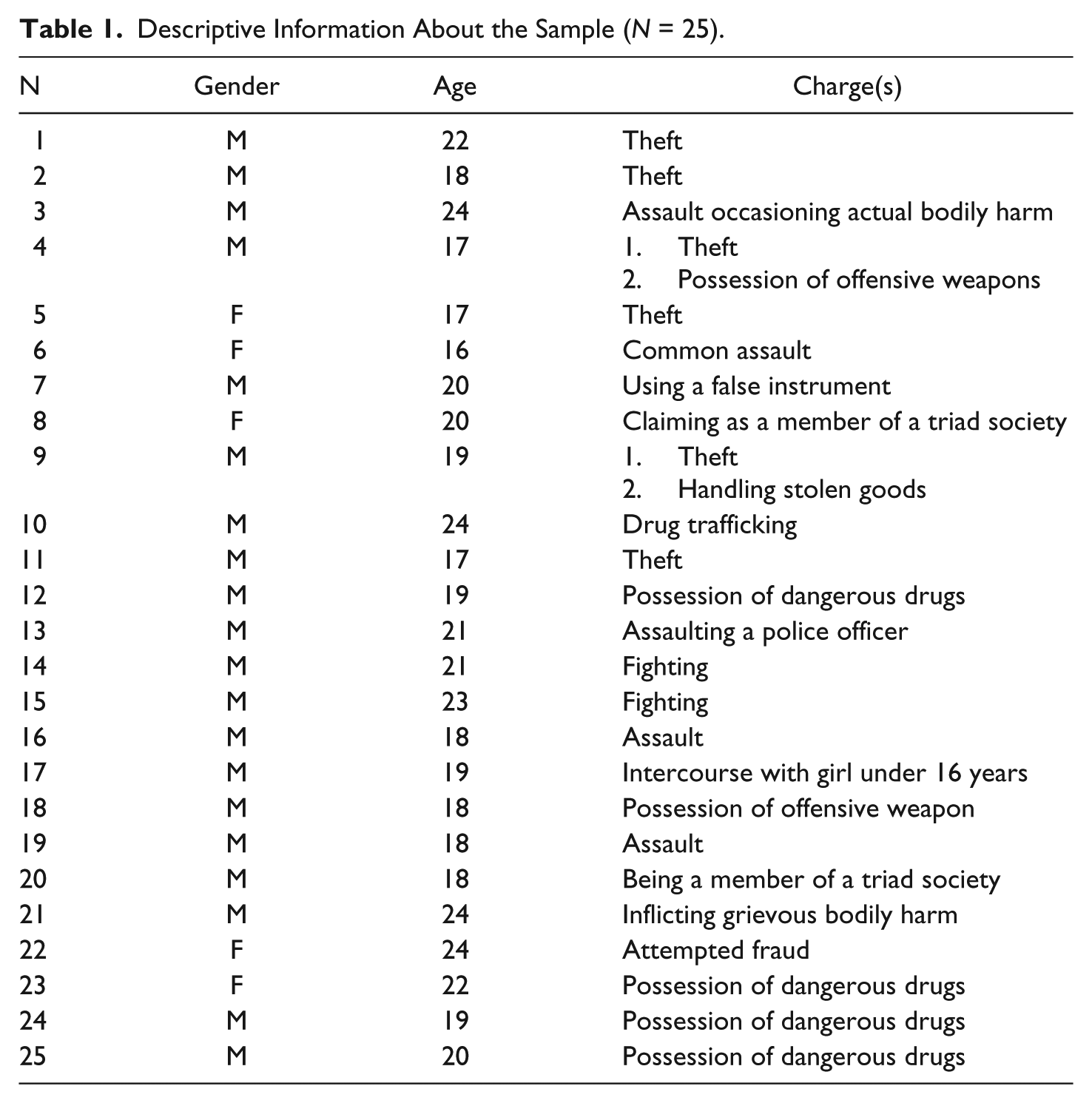
The participants were recruited with the help of various nongovernmental organizations in Hong Kong who work with defendants and young people generally. This study was derived from a larger study on defendants’ experience of plea decisions with a focus on defendants’ plea decision-making process and why they may have changed their pleas. However, the interviews with defendants, especially young emerging adults, revealed unique experiences that warranted further attention. A purposive sampling technique allowed for the targeting of young emerging adults who have experience with the adult criminal justice process. Prior to each interview, the objectives of the study were explained, and both verbal and written consent was obtained in accordance with the authors’ university’s research ethics standards. Each interview took place at a private location at one of the nongovernmental organizations and on average each interview lasted approximately 1 hr. The interviews were conducted in Cantonese, the primary dialect of the participants, and were subsequently translated into English. Each interview was audio-recorded and transcribed verbatim for thematic analysis. The theoretical framework was used to guide the coding of the themes that emerged from the interviews. To protect the identities of the participants, they will be referred to in the order in which they were interviewed such as N1, N2, and so on. Table 1 provides the descriptive statistics of the sample. The present study samples from emerging adults aged 16 to 25 years. Although Arnett (1997) conceptualized young people aged 18 to 25 years as emerging adults, this study considers four defendants aged 16 to 17 years. There are two reasons. The 16-year-old defendant is supposed to fall into the juvenile justice system, but because the case involved an adult codefendant she was brought into the adult court. The second reason is that the Juvenile Court in Hong Kong only hears cases for defendants up to the age of 16 years. Defendants aged 17 years and above are treated by the justice system as adults.
Descriptive Information About the Sample (N = 25).
Findings
Analysis of the interview transcripts generated three overarching themes: (a) lack of understanding regarding the criminal justice process by young emerging adult defendants; (b) stress in being caught up in the adult criminal justice process; and (c) influence of others in making decisions. The frequency of the themes is presented in Table 2.
Frequency Table of Challenges Faced by Emerging Young Adult Defendants .

Lack of Understanding
The participants showed a lack of understanding in three areas: lack of understanding regarding the meanings and implications of criminal procedures; availability of legal assistance; and the consequences of their actions.
Fifteen of the emerging adult defendants displayed a lack of understanding of the criminal procedure. They had difficulty understanding the complicated procedures that they were undergoing. Some of them regarded their lack of education attainment as a barrier in apprehending legal rules and procedures. Most of the emerging adult defendants completed secondary school only and ceased to undertake further education. For example, N3 expressed difficulty in understanding the procedures in the police station. It is clear from the interview that he saw himself lacking the capacity to understand relevant complex legal procedures: “To be honest, I may not be able to understand even if she (the lawyer) explains to me . . . I knew nothing and I may not be able to understand.”
Although some emerging adult defendants demonstrated better understanding of the procedures, their understanding remained either partial or misconceived. For most of the emerging adult defendants, they have not received or acquired any proper and formal legal training. It is not surprising that their understanding of legal procedures largely came from the media or popular legal dramas. Gaining his legal knowledge from television dramas, N25 revealed that he did not know much about the actual operations of the courts: “However, I do not know much or anything on the law. I watched from TV that I need to use some technical terms when speaking in the court.” 4
Some emerging adult defendants showed little understanding of their own charges and possible convictions. N4, being charged of theft and possession of an offensive weapon, showed little insight on the outcome of his case. He did not know that he was acquitted for both charges but was sent to drug treatment because of the positive urine test during remand. Recalling his experience, he had the following to say:
I didn’t know if I was convicted at that time, the Probation Officer did not tell me. I met the Probation Officer and signed some documents on the last date of the probation order. The officer told me that I was not being convicted in the first place. I was just sent there because of the drug test result.
Many emerging young adult defendants also demonstrated a lack of understanding of sentence discounts and the rights afforded to them. In Hong Kong, it is customary for the court to reduce a defendant’s sentence by one third if the defendant pleads guilty at the first available opportunity (Cross & Cheung, 2015). 5 Numerous respondents expressed that they did not know about the sentence discount, as N7 described: “No one told me about these (sentence discounts). I only knew these when I was in court. I had to respond to the judge in court without any preparation.”
One of the emerging adult defendants, N2 exhibited confusion in his experience in the police station. He showed little understanding of his legal rights and protection afforded to him as a defendant. He did not realize he had the right to remain silent. On the contrary, he saw himself obligated to assist the police in any means, as he revealed:
I did not know about what the procedures were. For example, what rights do I have when I was being arrested by the police. I didn’t know what I can say, or anything that I must do to assist the police.
Not only did N2 encounter difficulty in understanding his own legal rights, he did not know where to seek legal assistance, which is also a major challenge that six other emerging adult defendants faced. Unfortunately, quite a number of interviewees indicated that they had to rely on the Internet for legal information, which is by no means comprehensive and personalized.
They perceived legal assistance (e.g., hiring private lawyer) as a privilege to the rich and there is no other viable source for legal assistance. Some of the defendants have no knowledge on the government-funded lawyer scheme in the first place (Duty Lawyer Scheme). Sharing his experience, N2 had this to say:
I did not know where to find the duty lawyer or there is a duty lawyer in the first place. I also did not know there is legal aid. There are many things which I do not know. All these caused me to feel anxious . . . I have no such experience and don’t know who to ask. All my family members, relatives and friends do not have similar experience. I learnt it from nobody and I don’t know any organization that I can seek help from. Time is running quick and caused me to panic. It all caused me to feel worried.
Without knowing the availability of free or aided legal service, some emerging adult defendants chose to represent themselves, especially when the charges they face are not seen as particularly serious. Given the unfamiliarity with the legal system, it is challenging for emerging adult defendants to stand trial themselves. N24, for instance, chose to represent himself as he was unaware of the availability of government-funded lawyers in the first place: “At the second session of my hearing, I did not know how to find a duty lawyer. I had to represent myself and speak at court for myself.”
In addition to the lack of understanding of the procedures and their legal rights, six interviewees demonstrated little insight of their sentences. Oftentimes, they underestimated the consequence of their charges. N14, being charged with assault and possession of offensive weapon, realized the seriousness of the charges only after hiring a private lawyer:
At that time, I had never thought that it would be so serious and I would be put into prison . . . After my family hired a private lawyer for me, I was told that the case was actually very serious. It would be a serious offence for using offensive weapon to assault others. After knowing this information, I realized that I would be in a great trouble.
Furthermore, the underestimation of the sentence often comes from a third party, such as family or friends. In the interview, N8 shared his reason in pleading guilty at the first available opportunity. Underestimating the seriousness of the offence and sentence, N8 followed his supervisor’s comment and pleaded guilty to the offence for claiming to be a member of a triad society:
I didn’t know at that time. I did not realize a Facebook post would cause so much trouble . . . I thought the penalty would not be harsh.
Did you tell any other people about your case?
My supervisor of my work.
Did he give you any advice?
He said it would be settled easily. I thought it’s just a minor offence …
I did not think about the consequences.
It is apparent that emerging adult defendants lacked understanding throughout their experience in the adult criminal justice system. Specifically, they perceived little reliable and constant legal support. As a result, in the interviews, emerging adult defendants demonstrated constant frustration and stress arising from such lack of understanding. The second part of the analysis therefore explores the stress emerging adult defendants underwent during the criminal process.
Stress
Thirteen interviewees expressed feeling anxious about and stressful for being caught up in the criminal process. Similar to the argument put forward by Feeley (1979), being caught up in the criminal justice process is part of the punishment for defendants. N13, for instance, found the whole process complex and frightening; he often felt “exhausted and powerless.” He wanted the process to end as early as possible to resume his normal life. Similarly, N1 repeatedly recalled himself as feeling “frightened” and “scared.” Prior to his court appearance, N1 had to report to the police station periodically as a condition of his bail. He recollected his experience as follows:
I wished it to end as soon as possible because I did not want to withstand the high pressure. Every time when I had to report to the police, I kept thinking when the court hearing would be. When you have so much to think about, you cannot sleep and eat well. That’s why I wished to end it as soon as possible.
The stress and anxiety were particularly strong for emerging adult defendants who had been put into pretrial detention. Given the loss of freedom and restricted activity during detention, this group of emerging adult defendants experienced an early punishment prior to any determination of guilt. N14, who had been put into pretrial detention for 14 days, decided to plead guilty because she wanted to end the whole criminal process as early as possible (see also Cheng, 2013). She verbalized her sadness and desperation in a vivid way:
My heart was broken. I was like being banished to the deepest hell . . . my heart was just like a broken glass. I was really shocked. The judge put me on remand for 14 days without giving me any chance to speak. I could not accept this.
Being caught up in the criminal justice system itself is already distressing, emerging adult defendants must face potentially serious and unpredictable sentences, which imposed additional stress on them. Fourteen interviewees indicated that they felt powerless about their future. Many described they had experienced persistent fear while awaiting sentence. The source of worry mainly arose from the uncertainty about their future, and it had substantially interfered with the defendants’ normal life: “I was very anxious for that whole month because I was very worried. I was worried not only about what the punishment will be but how it will affect my future” (N1). Another emerging adult defendant stated, “A lot of time was spent on waiting and I was very nervous as I didn’t know what will happen next. I cannot live my normal life as I felt nervous about the next court hearing” (N4).
The stress in undergoing the criminal justice process is further aggravated by interacting with authoritative figures like judges and police officers. Many emerging young adult defendants have never been arrested or subjected to any court proceeding. Nine interviewees expressed feeling stressful when appearing before the court or communicating to the police face-to-face. N19 described how he felt in the courtroom: “It’s my time to be in the court and I felt very frightened because of the atmosphere there.” Indeed, the atmosphere and procedures of the courtroom can be daunting for defendants (see Carlen, 1976).
Another emerging adult defendant, N21, recalled his experience facing a charge on inflicting grievous bodily harm. He precisely identified and explained the perceived power imbalance between the court and defendants as the major source of his stress:
Can you tell me what made you to feel stressful?
The judge is sitting at a high place and can see everyone. It is like a symbol of authority to me.
Unlike the Juvenile Court where Magistrates provide additional guidance and assistance to the juvenile defendants, defendants in adult criminal justice system are not afforded with such measures. The setting, atmosphere, or dynamics itself already causes perception of fear and stress to emerging adult defendants in court.
Influence by Others in Legal Decisions
Sixteen out of 25 defendants indicated that others had influenced them in making legal decisions, particularly by family members. The influence can either be direct or indirect. Some of them made their plea decision due to the negative emotions exhibited by family members. Direct parental advice on defendants’ decisions were also found from our interviews.
Through exchanging with emerging adult defendants, the interviewers enquired about the reasons of the defendants’ plea decision. In particular, seven of them said that they decided to plead guilty because they did not want their families to undergo negative emotions anymore. N4 revealed that his case affected him as well as his mother. So he decided to plead guilty to bring an end to his mother’s suffering:
Every time I met my mum, I saw her crying. I wished to end this . . . I rarely saw her crying before. She cried a lot during that period. She cried each time she met me. I did not want to see her crying anymore. Her face looked older and older. Then I decided to plead guilty.
As emerging adult defendants are yet to become entirely independent, family members continue to play a crucial role in their lives. Family is a common and recurring theme brought up by emerging adult defendants. Very often, negative emotions displayed by family members led emerging young adult defendants to make decisions to fulfil their families’ expectations. N14 considered his family’s response and behavior as a reason for him to plead guilty when he was put into remand custody. He said:
I really care about their (his family) feeling. I knew that they would have a hard time to follow if I continued my decision to deny the charge . . . I lost my freedom and I could only see my family through a window. I knew that they were really sad. They had to wake up very early in the morning in order to visit me but the visit only lasted for around 20 minutes.
In addition, some family members would give direct advice as to how the emerging adult defendants should respond. For instance, when considering whether to hire a lawyer or not, their parents, being portrayed as experienced adults, would provide advice which directly influence the decisions of emerging adult defendants. There are times when the views between parents and emerging adult defendants might differ. Arguments and conflicts set in and cause further frustration. N10, for instance, expressed divergent views between him and his mother on whether to hire a lawyer:
I did not want my mother to hire a lawyer. I knew it clearly that I would be sent to prison.
You mean you did not ask for a lawyer. It’s your mum who told you she had found a lawyer for you?
Yes. I told her to give up. I had an argument with my mum. I started an argument with her when I was crying to her over the phone. I said it would be meaningless to hire a lawyer. I think my mum might want to give the best to me as I was her youngest son.
The above finding shows that family members played both a direct and indirect role in influencing emerging adult defendants’ decisions. Family members’ response and attitude to the defendants combined with stress and insufficient knowledge on the criminal justice system could be particularly challenging to emerging adult defendants in the stage of self-exploration.
Discussion
Emerging young adults has been recognized in the developmental psychology literature as a distinct life phase, but the experiences of emerging young adult defendants in the criminal justice process has been neglected by the criminal justice scholarship. The present study explored the challenges faced by emerging young adult defendants who were charged and brought through the Hong Kong adult criminal courts. Three interrelated areas of difficulties were found to be most notable. Emerging young adult defendants demonstrated a lack of understanding of the justice system, including inadequate knowledge of the procedures, the consequences of their actions, and their own legal rights. They also highlighted a lot of stress in being caught up in the criminal justice system along with uncertainty about their future, and stress in interacting with authority figures such as the police and the courts. Emerging young adults were also susceptible to influence by others, namely family members, in making legal decisions when such decisions should be made on their own. The lack of understanding combined with stress and both direct and indirect influence from others can lead emerging young adult defendants in making adverse decisions. The findings underline the challenges encountered by this subgroup of defendants.
Some European countries have made progressive changes in catering for this group of emerging young adults in the criminal justice system. In the Netherlands for instance, a young adult defendant (aged 18-22 years) may be tried as a juvenile if the court considers it appropriate. In Germany, all young adults (aged 18-21 years) are placed in the juvenile justice system, and the courts may sentence the young adult defendant as a juvenile after taking into consideration his or her level of maturity and psychological development (Ishida, 2015). In Hong Kong, there is some recognition of young adult defendants. Besides the various sentencing options and correctional facilities for different age groups outlined earlier, the law states that a convicted defendant over 16 years old but under the age of 21 years should not be sentenced to imprisonment unless that court is convinced that no other appropriate option is available. This does not apply to what is referred to as “excepted offences,” namely serious offences such as manslaughter, rape, drug trafficking, robbery, and indecent assault (s.109A Criminal Procedure Ordinance ).
Farrington and colleagues (2012, 2017) proposed that the minimum age for referral to adult court be increased or that special courts and correctional facilities be established for young adult defendants to focus more on rehabilitation rather than punishment against young adults, and even a “youth discount” in sentencing. Others argue for a more modest approach. Cauffman (2012) shared similar views in support for legal systems to recognize emerging adults but does not consider establishing a separate court for young adult defendants necessary. Prior and colleagues (2011) suggested that while the criminal justice system should take into account a defendant’s level of maturity, there are practical difficulties for legal professionals in accurately measuring how mature a defendant is.
As a starting point, it is important for criminal justice and legal professionals, such as court personnel, including judges and magistrates, defense lawyers, and legal clerks to be aware of the needs of emerging young adult defendants. For instance, more time should be spent on explaining legal rights, such as the right for defendants to make their decisions independently and voluntarily, to emerging young adult defendants. This is particularly acute in Hong Kong, where as noted, in Chinese societies where collectivism is emphasized and there remains a lot of deference to parents by children despite entering adulthood. Emerging young adults, as evident in this study, are prone to following the directives or influenced by family members with respect to legal matters. Emerging adulthood after all is a stage in life where individuals must learn to navigate between their own desires and family expectations (Tanner, 2006).
Expending more time to explain matters may be trying for the lower courts where they are often tasked with huge caseloads and long daily court lists and especially for publicly funded lawyers as well where there is limited time for them to meet with their clients (see Chui & Cheng, 2017). This differs from the Juvenile Court where the court takes more time to explain matters to juvenile defendants. Still, greater efforts should be made to ensure that due process rights are afforded and understood by everyone, including emerging young adults. The more that defendants feel that they have been treated in a procedurally fair manner by legal professionals, the more trust and confidence they will have towards the justice system, and they will be more willing to cooperate with the authorities (Chui & Cheng, 2017; Sprott & Greene, 2010; Sunshine & Tyler, 2003; Tyler & Huo, 2002).
Given its exploratory nature, there are limitations to this study, but at the same time the findings pave the way for future studies regarding the experiences of emerging young adult defendants in the criminal justice process. This study identified challenges of emerging young adult defendants through in-depth semistructured interviews. Questionnaires can be designed based on these themes to validate the findings for a broader sample of emerging young adult defendants. Relatedly, future studies should compare the views of emerging young adults with adult defendant regarding their understanding of the justice system, stress, and influence by others in their decision-making process. It may very well be the case that the dangers of false confessions and false guilty pleas being more susceptible to juvenile defendants as compared with adults equally applies to emerging young adult defendants as well. Furthermore, future studies should investigate the experiences of emerging young adult defendants in other jurisdictions. Emerging adulthood is culturally constructed (Arnett, 2000). It would be useful to determine which common challenges that emerging young adult defendants encounter and where they differ across different societies and legal systems.
Equality before the law and equal access to the justice system applies to everyone, including emerging young adults. Greater care must therefore be given to ensure that these defendants understand the procedures and the criminal charges that they are faced with. The proceedings should not be unduly stressful where the process itself becomes the punishment (Feeley, 1979). Moreover, if criminal justice and legal professionals regard emerging young adults as adults rather than juveniles, they need to do more to ensure that emerging young adult defendants are making their decisions independently as adults and as prescribed by law, and not because of directives from others such as their parents.
Footnotes
Acknowledgements
We would like to thank the following NGOs for their help in recruiting the interviewees: Kowloon City District Youth Outreaching Social Work Team, Kwai Tsing & Tsuen Wan Youth Outreaching Social Work Team, Kwun Tong District Youth Outreaching Social Work Team, Sham Shui Po District Youth Outreaching Social Work Team, Society for Community Organization, The Society of Rehabilitation and Crime Prevention, The Society for the Aid and Rehabilitation of Drug Abusers ( Adult Female Rehabilitation Centre), and Youth Outreach- Transitional Housing for Girls. We would also like to thank Margo Mok and Henry Leung for their excellent research assistance.
Declaration of Conflicting Interests
The author(s) declared no potential conflicts of interest with respect to the research, authorship, and/or publication of this article.
Funding
The author(s) disclosed receipt of the following financial support for the research, authorship, and/or publication of this article: This project was supported by a General Research Fund (GRF) funded by the Research Grants Council, University Grants Committee, Hong Kong (Project No. 14401214).