



Abstract
Researchers have found providing employment opportunities for ex-offenders through job training programs to be effective at reducing recidivism. Examining various community-based programs for ex-offenders can be beneficial as they may be able to provide more stable and consistent programming without relying on the justice system. This study examined employment outcomes of graduates with and without criminal histories (n = 617) from a community-based vocational training program. Results showed that ex-offender graduates obtained employment at equal rates to nonoffender graduates and received equal pay to their nonoffender counterparts. This could indicate that for the vocationally educated ex-offender, employment outcomes may be able to equal those of other job-searching individuals with similar backgrounds but without a criminal history. Community-based programs for ex-offenders may be able to provide effective programming to improve vocational attainment within this group, thereby potentially easing the burden on criminal justice institutions as the sole provider of offender rehabilitation.
A popular area of study in criminology and forensic psychology has been examining ex-offender employment, which has been associated with lower rates of recidivism and can be a significant predictor of success once an offender leaves prison (LePage, Lewis, Washington, Davis, & Glasgow, 2013; Maruna, 2001; Travis, 2005). Further postrelease reductions in recidivism occur if the means of employment are considered stable and satisfying to the individual (Visher, Winterfield, & Coggeshall, 2005). Employment aids in reducing recidivism by providing income and financial stability, identified by many ex-offenders as being the most important resource once they are released (Scott, 2010). Income enables ex-offenders to pay for rent, transportation, clothing, and other important items, which can affect their success reintegrating back into the community. Stable employment also increases self-esteem and confidence, promoting the formation of a new postrelease identity for an ex-offender that promotes a smoother prison-to-community transition (Graffam, Shinkfield, & Hardcastle, 2008; Visher, Debus-Sherrill, & Yahner, 2010). Larger community benefits of ex-offender employment include reduced crime and reincarceration rates, resulting in reduced costs for the correctional system (Lukies, Graffam, & Shinkfield, 2011).
Existing literature indicates that vocational training can increase an ex-offender’s likelihood of securing employment. However, vocational training programs are often accompanied by the caveat that training and education is at the mercy of the persons and companies willing to hire their graduates. In an attitudinal study on the employability of ex-offenders, Graffam et al. (2008) found that ex-offenders with some career training were rated by employers and employment service workers to be more likely to find employment than nonviolent single-conviction offenders, single-conviction drug offenders, and petty theft offenders. This may indicate that employers consider ex-offenders to possess a more attractive skill set, making them more willing to hire vocationally trained ex-offenders in the future; however, this is not guaranteed, and is a limitation to the Graffam et al. study.
Postrelease programs geared toward helping ex-offenders find employment have also begun appearing in the literature. LePage et al.’s (2013) study examined the About Face Program for military veteran ex-offenders, which included instruction on interview skills, how to present legal history in an interview, and resume building. After considering competitive employment at 3 and 6 months postcompletion, results demonstrated staff-led, group, vocational programs improved employment outcomes for the ex-offenders. These results, however, may not translate to nonveteran offenders, as veterans may present with their own unique barriers to employment (such as physical disabilities and trauma-related mental health concerns) and strengths as well (such as experience with teamwork, leadership, and discipline; Stone & Stone, 2015). Despite the positive results reported thus far, which support vocational training for ex-offenders, it is important to note that the impact of vocational education on ex-offenders is highly debated. Visher et al. (2005) performed a meta-analysis of eight community employment programs for ex-offenders and found no real reductions in recidivism across any of the eight programs. Bouffard, MacKenzie, and Hickman (2000) also noted that in an analysis of the Job Training Partnership Act program, results were largely not significant in determining if vocational training reduced recidivism.
The effectiveness of community-based and prison-based rehabilitation programs are frequently debated as well. Early research on prison-versus-community offender rehabilitation programming claimed that community-based programs would be costly and ineffective compared with programs offered within correctional institutions (Jackson, de Keijser, & Michon, 1995). However, realities of shrinking state appropriations and staff shortages now suggest that community-based programs may become a staple of successful outcomes (Vera Institute of Justice, 2013). Evidence is mixed regarding the effectiveness of exclusively community-based, postrelease employment programs for improving ex-offender outcomes (Tripodi, Kim, & Bender, 2010). Zhang, Roberts, and Callanan (2006) found positive results in their evaluation of the Preventing Parolee Crime Program, a service within the community for ex-offenders that provided drug treatment, employment placement services, and math, literacy, and vocational training. Other investigations have demonstrated similar positive effects of community-based programs (Graffam, Shinkfield, & Lavelle, 2014; Wikoff, Linhorst, & Morani, 2012).
Conversely however, Visher et al. (2005) performed a meta-analysis of eight community employment programs for ex-offenders and found no real reductions in recidivism across any of the eight programs. However, Bloom (2006) noted that a second meta-analysis of many of the same community employment programs concluded there was a modestly significant reduction in recidivism (Aos, Miller, & Drake, 2006). The discrepancy between meta-analyses using similar studies is puzzling. Unfortunately, the literature on prison-based programs successfully reducing recidivism is also disparate. According to Lipsey and Cullen (2007), no systematic synthesis of sanctioned vocational training has produced favorable effects on recidivism rates, and evidence at times points in the opposite direction. Due to a lack of consistent empirical support in prison-based or community-based programs, some researchers conclude that “ex-offender job placement interventions are not evidence-based in reducing recidivism” (Moses, 2012, p. 106).
Very few studies have examined outcomes other than recidivism (Lichtenberger, 2006). Because of this gap in other outcome measures, the literature provides very little information about specific components of effective programs or if other aspects of job employment (such as job stability or earning potential) contribute to long-term outcomes above and beyond just measuring program effectiveness. In one of the few studies to take a different approach, Fitzgerald, Chronister, Forrest, and Brown (2012) studied a counseling-employment intervention in which they measured ex-offenders on their feelings of self-efficacy, perceived problem-solving ability, and helpfulness. At the end of the intervention, feelings of efficacy, problem solving, and helpfulness increased, with the anticipation that the increase in these feelings would also increase the job search output and confidence of ex-offenders.
Lichtenberger (2006) examined earning and hiring records of ex-offenders released from Virginia correctional institutions to determine where the likelihood of stable employment would be greatest. The three highest employment fields for ex-offenders were construction, food services industry, and administrative support services, yet the author noted these positions were some of the lowest paying jobs by average quarterly earnings. In contrast, the highest earning averages were in the finance and insurance, healthcare, and information sectors, which also happened to be the three industries hiring the least amount of offenders, likely due to their need for higher education, licensing, certifications, and mandatory background checks. The author concluded on a somber note suggesting that although there could be ex-offender employment opportunities available, these options did not promise high or even median earnings and could not offer consistent stability or opportunities for advancement. Securing employment for ex-offenders continues to become increasingly complicated as they often lack work histories and job skills that could lead to employment acquisition and advancement (Morrissey, Ogle, & Lichtenberger, 2005; Visher et al., 2005).
As previously stated, many of the published studies regarding employment and ex-offenders use employment status as an independent variable to measure recidivism rates (Lichtenberger & Ogle, 2006). This is problematic because it becomes unclear if the null findings are due to fault in the programs themselves or because employment attainment fails to reduce recidivism (Bloom, 2006). Few studies focus on outcomes other than recidivism for these individuals, creating a gap in our understanding of the long-term outcomes for these individuals in terms of earning potential and employment stability. The present study is designed to fill gaps in our understanding of ex-offender employment outcomes, beginning first with measuring employment variables other than recidivism. A second issue with preexisting literature is that researchers use a wide variety of metrics within their studies. To our knowledge, no previous investigations of ex-offender employment outcomes have used a systematic, standardized way of measuring employment success in this group. The present investigation utilized the World Health Organization’s (WHO) International Classification of Functioning, Disability, and Health (ICF) to evaluate employment outcomes within program graduates. By using this systematic approach, any current findings can be more easily reproduced and generalized to other programs focused on ex-offender rehabilitation. Furthermore, it is critical to conceptualize employment in practical terms more meaningful to policy makers and practitioners and that can facilitate evaluation of “real-world” effects of service delivery (Bruyère, 2005). This study also complements minimal, but growing, literature on the effectiveness of community-based vocational training programs for ex-offenders.
Finally, this study seeks to compare ex-offender job attainment with that of a demographically similar nonoffender control group participating in the same training program. Few, if any, studies exploring ex-offender employment compare offender outcomes with those of nonoffender status. Having a criminal record may automatically put an individual at a disadvantage when applying for employment (Harley, 2014); however, this study seeks to examine that relationship within the context of added vocational education and also peripherally ask, “Can a program designed for nonoffenders also work for ex-offenders?” To be clear, the current study was not conceptualized or designed to serve as a program evaluation of the community-based vocational program. Rather, we were interested in how ex-offenders fared compared with a nonoffender group going through the same vocational training program and with very similar demographic characteristics.
The primary aims of this study are to examine employment outcomes between groups of nonoffenders and ex-offenders. Most specifically, examining the time in which it takes to find employment, and then also examining incidence of pay raises and determining whether differences exist between groups in job retention. As a secondary aim, examining the aforementioned employment outcomes were also completed between those with felony and misdemeanor crimes. These aims were in part derived from the paucity of literature comparing ex-offender outcomes with nonoffender outcomes, and comparing felony offender outcomes with misdemeanor outcomes. Literature covering the “ban the box” movement frequently addresses the question on several job applications asking to “Check here if you have been convicted of a felony” (Duwe & Clark, 2017; Von Bergen & Bressler, 2016). Such questions rarely ask about misdemeanor offenses. While a background check would ultimately produce a list of felony and misdemeanor offenses, initial job applications may only focus on felony offenses. We hypothesized that program completers with a criminal history would have poorer employment outcomes than program completers with no criminal history, and program completers with felony convictions were hypothesized to have poorer employment outcomes than program completers with only misdemeanor offenses.
Method
Program Database
The program evaluated in this study was a community job skills training program in a large urban center in the southern United States. The program was aimed at training disadvantaged job seekers through a combination of faith and vocational education. The service was available to all members of the community regardless of offender status or religious affiliation, providing opportunity for a comparison condition. The faith-based component of this program was secondary to the program’s ultimate goals of effective completion of job applications, successfully navigating job interviews, and searching the job market. Some participants are referred to the program through various churches and community agencies (including from probation and parole officers), but participation in this program is not mandatory (i.e., a condition of probation or parole). The 8-day program provided training in resume building, completing applications, interviewing, and finding employment among other relevant job skills over the course of 42 hr of training. Participants were followed intensively for 90 days following program completion for support during job searching, followed by a less intensive yearlong follow-up upon employment for encouragement, advice, and advancement coaching. The same curriculum is applied to program participants with and without criminal histories. Data collection and evaluation occurred through a de-identified client database provided by the program that included program graduation information, demographic details, offense information if applicable, and information regarding employment. Use of these data was approved by the primary authors’ institutional review board.
Dependent Measures
This study reflected Bruyère’s (2005) article on the WHO ICF to determine employment outcomes of these program graduates. The WHO ICF section d845 reflects four indicators of employment performance for adults: placement, retention, earnings, and skill attainment to assess real-world effects of service delivery (World Health Organization, 2001).
Researchers examined data on placement (being placed in jobs offering higher salaries and the time it took to find employment after program graduation), retention (being able to hold a job consistently for at least 1 year), and earnings (jobs resulting in higher pay increases). When measuring placement, retention, and earning variables, a program completer’s information would be updated any time he or she would report to the vocational program or complete a follow-up phone call with staff. Skill attainment could not be measured for this study as these data were not collected by the training program. Because the dependent variable relies on clients having the opportunity to possess a job for at least 1 year, no clients graduating from the program in the past year and a half were included in this study, allowing clients time to both secure and hold employment.
Participant Information
For this study, data were obtained for 1,715 participants. Of the data collected, 640 entries needed to be removed due to inconsistencies in offender status. In these cases, the participant’s data would indicate offender status, however, would then be listed as having no felony charges and no misdemeanor charges. After omitting data with unclear offense information, 1,075 participants remained for analysis. One hundred fifty-two participants were then omitted for failing to graduate from the program (14.1%), and 308 participants were excluded from outcome data analyses for failing to secure employment (28.4%). There was a significant difference in the proportion of ex-offenders and nonoffender graduates who were and were not able to obtain employment, χ2(1, N = 925) = 12.88, p < .001. Seventy-seven percent of those who found employment were ex-offenders, 66% of those who did not find employment (and were omitted for the primary analyses) were ex-offenders. For the purposes of outcome analyses, 617 remained. For demographic information on each of these groups, see Table 1.
Demographics of Study Participants.
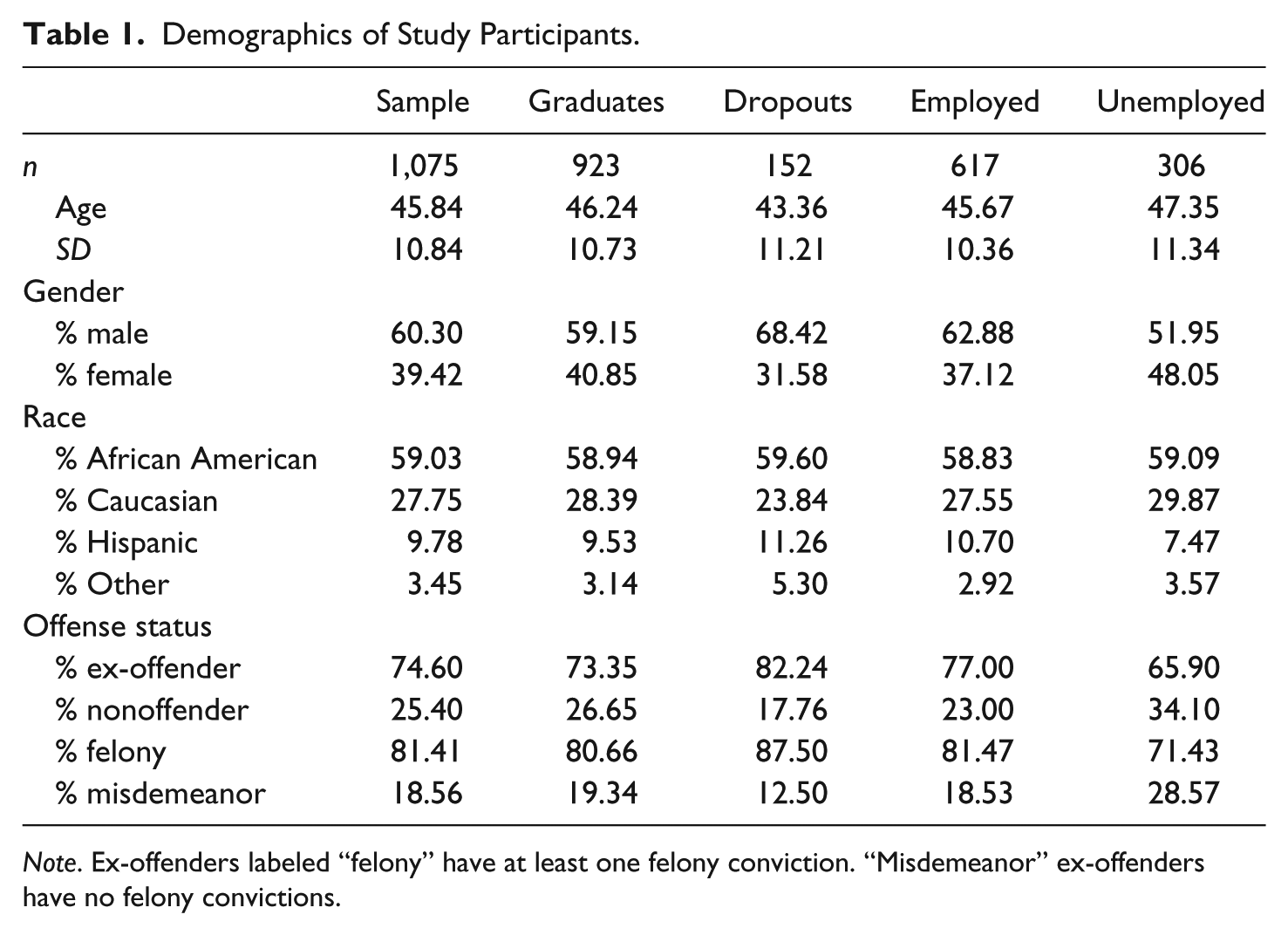
Note. Ex-offenders labeled “felony” have at least one felony conviction. “Misdemeanor” ex-offenders have no felony convictions.
Results
All analyses between groups controlled for variables of age, ethnicity, and gender (Bierens & Carvalho, 2011; Richardson & Flower, 2014; Thomas, 2014). The two groups of interest were significantly different in terms of time from graduation from the program, t(615) = −2.48, p = .013, indicating a need to control for this variable in appropriate statistical analyses.
Employment Outcomes of Ex-Offenders and Nonoffenders
Employment placement was measured two ways: by comparing the time it took to obtain employment and comparing the starting salaries of those with and without criminal histories. A multiple linear regression was calculated to predict time to employment based on conviction status, controlling for the aforementioned variables. A significant regression equation was found, F(5, 592) = 3.31, p = .006, with an R2 of .03. Gender was the only variable, however, that was found to predict time to employment in the model (p = .043) with males generally obtaining employment on average in 2.00 months (SD = 2.51) and women finding employment in 2.57 months (SD = 2.64). See Table 2 for regression coefficients. We also conducted a subsequent survival analysis using Cox regression to assess time to employment. Time to employment was grouped by intervals of 6 months to ease computation and interpretation. The proportional hazards assumption was assessed using a chi-square goodness-of-fit test, χ2(4, N = 596) = 4.04, p = .401, which suggested the assumption was satisfied (see Figure 1). In examining time to employment, there was no significant difference between ex-offenders and nonoffenders in the ability to predict obtainment of employment (hazard ratio [HR] = 0.90, 95% confidence interval [CI] = [0.7, 1.1]). After incorporating predictors of age, ethnicity, and gender, offender status continued to fail to predict whether or not employment would be obtained and was in fact overshadowed by the predictor variables. Ethnicity was found to be the strongest predictor of securing employment (HR = 1.18, 95% CI = [1.06, 1.31]), followed by gender (HR = 0.79, 95% CI = [0.66, 0.94]) and age (HR = 0.99, 95% CI = [0.98, 1.00]). To examine ethnicity more closely, the Caucasian participants were used as a reference group for dummy coding. Participants of Hispanic (HR = 1.38, 95% CI = [1.06, 1.81]) and other minority ethnicities (Asian, Native American, etc.; HR = 1.85, 95% CI = [1.11, 3.06]) were at the greatest risk of not obtaining employment among the ethnic groups. For analyses that examined differences in starting salaries, a multiple linear regression was conducted to predict starting salary based on offender status. A significant regression equation was found, F(5, 590) = 4.00, p = .001, with an R2 of .03. While conviction status was trending toward significance, gender most strongly predicted starting salary amount (p < .001) with men making an average of US$10.43/hour (SD = 4.64) and women making US$9.16/hour (SD = 2.71). See Table 3 for model coefficients.
Multiple Regression Coefficients for Ex-Offender and Nonoffender Outcome Statistics.
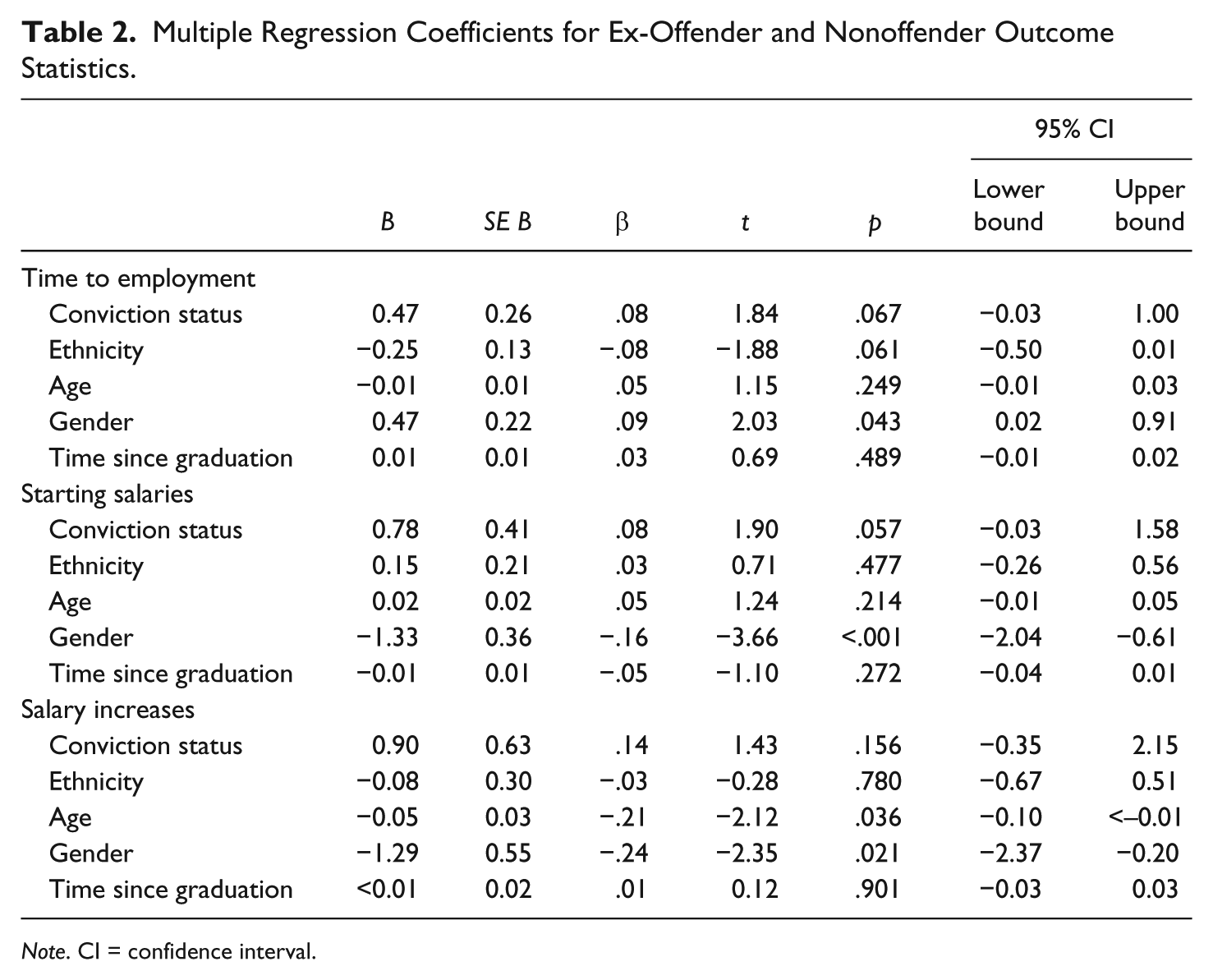
Note. CI = confidence interval.
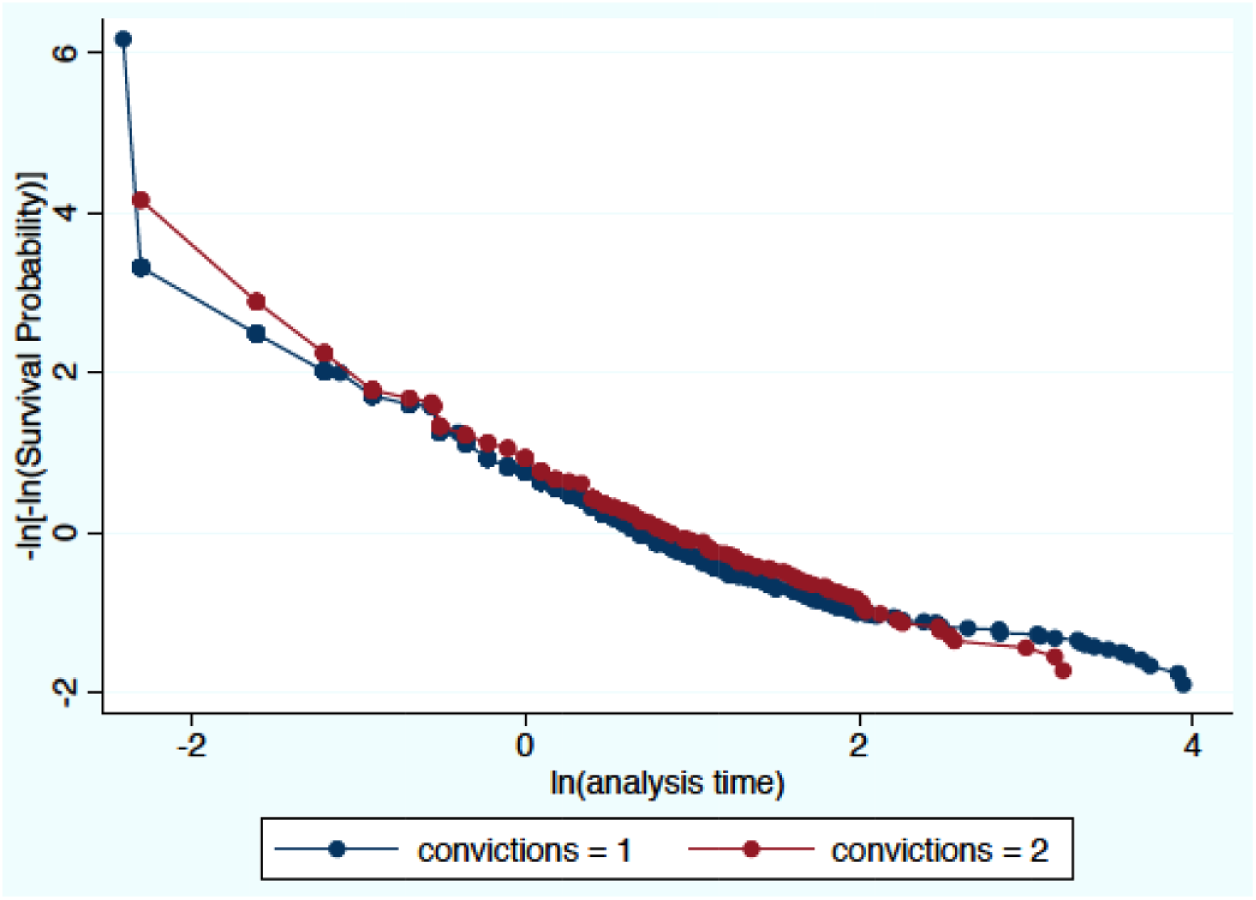
Graph of survival curves for test of proportional hazards assumption.
Cox Regression Statistics Comparing Time to Employment between Ex-Offender and Nonoffender Samples.
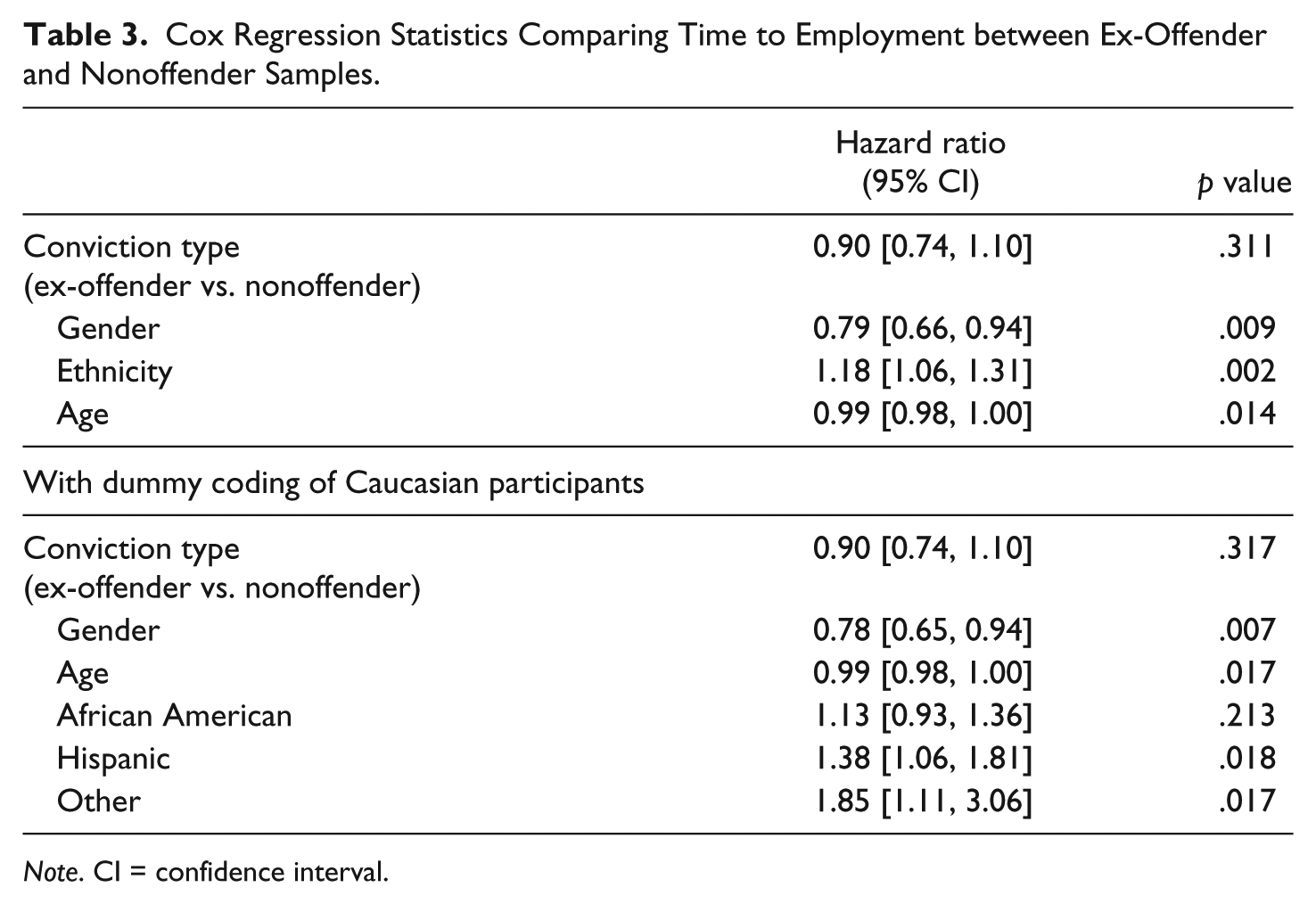
Note. CI = confidence interval.
The retention outcome was measured in the participants’ ability to maintain a single job for at least 1 year; 79.3% of ex-offenders and 79.7% of nonoffenders maintained employment for at least 1 year. To analyze the differences between those with and without a criminal history and their ability to maintain a job for 1 year (dichotomous: yes or no), a binomial logistic regression was performed and the model was not statistically significant, χ2(5) = 6.97, p = .223, Naglekerke’s R2 = .018. It is important to note that multicollinearity existed between the ethnic groups. To account for this in the analysis, the Caucasian group served as the reference group to compare all other minority groups with (African American, Hispanic, Other). See Table 4 for statistics and model coefficients.
Binomial Logistic Regression Coefficients for Ex-Offender and Nonoffender Outcome Statistics.

Note. CI = confidence interval.
Earnings outcomes were determined by examining differences between groups in their abilities to secure employment that allowed for a pay raise, and to compare the average amounts of the pay raises. A binomial logistic regression was performed to examine the ability to obtain a pay raise. The model was not statistically significant, χ2(7) = 4.81, p = .683, Nagelkerke’s R2 = .01, and 20.0% of ex-offenders and 15.9% of nonoffenders obtained pay raises. When comparing the mean increases in salaries among those individuals who did obtain a pay raise, a multiple linear regression was performed, and was not significant, F(5, 108) = 1.73, p = .133, with an R2 of .07. Ex-offenders obtained an average pay raise of US$2.60 (SD = 2.14) and nonoffenders obtained an average pay raise of US$3.08 (SD = 3.88). See Tables 2 and 4, for earning outcome statistics.
Employment outcomes of time to first job and starting salary were not significantly different between the two groups, nor were the ability of group members to hold a job for at least a year, the ability to obtain a pay raise, or the mean differences in amount of obtained pay raises. Instead, age, gender, and ethnicity may be stronger predictors of employment outcomes, rather than conviction status.
Employment Outcomes of Felony Offenders and Misdemeanor Offenders
To examine employment differences among those individuals with criminal histories, ex-offender participants were further split into two groups: those with at least one felony crime and those with only misdemeanor crimes.
When examining placement variables between felony and misdemeanor offenders, a multiple linear regression was used to determine whether significant differences existed in the time it took to acquire employment after program graduation. A significant regression equation was found, F(5, 454) = 2.66, p = .022, with an R2 of .03. Among these offenders, ethnicity was the only variable that predicted time to employment (p = .019), with “other” minority races (Asian, Native American) finding employment in approximately 1.17 months (SD = 1.43), Hispanic participants finding employment in 1.72 months (SD = 2.12), Caucasian participants finding employment in 2.29 months (SD = 2.84), and African American participants finding employment in 2.32 months (SD = 2.54). When comparing starting salaries between groups also using a multiple linear regression, the equation was again significant, F(5, 452) = 2.35, p = .040, with an R2 of .03; however, gender was the only significant predictor of obtaining a higher starting salary (p = .004) with men obtaining an average starting salary of US$10.24 (SD = 3.90) and women obtaining a salary of US$9.06 (SD = 2.79). See Table 5 for regression coefficients.
Multiple Regression Coefficients for Felony and Misdemeanor Offender Outcome Statistics.

Note. CI = confidence interval.
To measure employment retention, felony offenders and misdemeanor offenders were compared on their ability to hold a single job for at least 1 year. This variable was measured dichotomously (yes/no) and a binary logistic regression was conducted; 79.3% of felony offenders and 79.8% of misdemeanor offenders maintained employment for over 1 year. The difference was not significant, χ2(7) = 9.09, p = .246, Naglekerke’s R2 = .03. See Table 6 for logistic regression coefficients.
Binomial Logistic Regression Coefficients for Felony and Misdemeanor Offender Outcome Statistics.

Note. CI = confidence interval.
Earnings outcomes between these two groups was first examined by exploring differences in the groups’ abilities to obtain a pay raise while employed; pay raises were found in 19.7% of felony offenders and 19.3% of misdemeanor offenders. The comparisons were not significant, χ2(7) = 4.23, p = .754, Naglekerke’s R2 = .01. When comparing felony and misdemeanor offenders who received pay raises, felony offenders received pay raises of US$2.39 on average (SD = 1.536) and misdemeanor offenders also received pay raises of US$2.63 on average (SD = 2.420). A multiple linear regression yielded nonsignificant findings, F(5, 86) = 0.87, p = .502, with an R2 of .05. See Tables 5 and 6, respectively, for test statistics.
Overall, comparison of felony and misdemeanor offender groups showed both groups found employment at equal rates and were also given equal starting salaries and pay raises. There was also no difference in their abilities to maintain a single job for over 1 year. Again, ethnicity and gender may be stronger predictors of employment success than offense status.
Discussion
This study examined outcomes of ex-offenders and nonoffenders participating in a community-based vocational training program. We first hypothesized those program graduates with criminal histories would fare worse in their abilities to find and secure quality employment than those graduating from the program with no criminal record. This hypothesis was unsupported as both groups of program graduates were able to obtain employment at equal rates, starting salaries of equal amounts, obtain pay raises at equal rates and amounts, and had the same success in being able to hold employment for at least 1 year. We also conjectured a relationship between employment history and offense type (i.e., felony vs. misdemeanor-level crimes). Again, this hypothesis was not supported in that the individuals with felony or misdemeanor offenses did not differ on their employment placement, retention, and earnings. Surprisingly, the strongest predictors of positive employment outcomes were that of ethnicity, age, and gender and not of conviction status. While there has been well-documented patterns of wage disparities based on gender (Erosa, Fuster, & Restuccia, 2016), age (Baker, 2017), and ethnicity (Pager, Western, & Sugie, 2009), it was surprising that these variables predicted employment outcomes above and beyond that of conviction status.
The lack of significant predictive differences between ex-offender and nonoffender groups, and felony and misdemeanor groups, may support benefits of vocational training for justice-affiliated individuals. The program utilized in the current study was not specifically created to address the needs of ex-offenders although it was open and available to them if they chose to participate. Ex-offenders and nonoffenders alike who graduated from this program needed to demonstrate their commitment to finding employment by passing drug and alcohol screenings, securing stable housing, and committing to attending program orientations on all 8 days of program training. If a potential program participant could not meet these expectations, the individual was not allowed to graduate, but was instead directed to resources in the community and invited to return to complete the program once these issues had been addressed. As such, it seems likely that the equal employment outcomes between ex-offender and nonoffender, and felony and misdemeanor groups was secondary to substantial motivation on the part of all program graduates including these justice-involved individuals.
In the treatment literature, motivation is significantly and positively related to treatment gains (Kelly & Greene, 2014; Moore, Tambling, & Anderson, 2013). Obtaining employment, desisting from crime, and engaging in prosocial activities have been related to increased levels of motivation. In the case of the current study, a substantial level of positive motivation on the part of the ex-offender group could have allowed them to experience equal employment successes to those without a criminal record. Unfortunately, the retrospective nature of the present investigation prevented us from examining this possibility as employment motivation was not directly assessed by the vocational training program. However, indirect evidence of increased motivation within the ex-offender group comes from a previous investigation of this same vocational training program. This study suggested a higher level of motivation within ex-offenders as measured by the number of submitted employment applications and a shorter interval between graduation and initial employment (Formon, Schmidt, Maloney, Schiafo, & Schrantz, 2015). It is worth noting, however, that some of the motivation within Formon et al.’s study and the current study could have arisen from a need to find employment as part of a parole or probation requirement.
Related, it is possible ex-offenders may have been provided with employment resources and additional assistance via a correctional institution or probation officer. This may explain some of the success in ex-offender participants as probation and parole officers often are tasked with helping their clients find and maintain employment (Andersen & Wildeman, 2015). This possibility likely does not entirely account for the current findings as participants in the ex-offender group could have enrolled in the vocational training program at any point after their release. The program evaluated in the current study was also Christian faith based; however, it is unlikely that this component specifically explains the current null results. Investigations including exploratory studies and evidence-based evaluations have consistently shown that faith-based programs are no more effective than secular rehabilitation programs (Dodson, Cabage, & Klenowski, 2011; Johnson, Tompkins, & Webb, 2002). It is important to note, however, that research on faith-based offender rehabilitation programs is still in its infancy, and effectiveness of such programs may be dependent on the research methods used and how “faith-based” is operationalized (Mears, Roman, Wolff, & Buck, 2006).
The current findings paint a positive picture of the provision of community-based vocational training programs especially with regard to the motivated ex-offender, regardless of whether the motivation is intrinsic or extrinsic (i.e., through community supervision requirements). Little research exists on measuring ex-offender motivation and postrelease success outside of recidivism; however, some research suggests higher levels of motivation are associated with decreased recidivism (Olver, Stockdale, & Wormith, 2011) and increased prosocial involvement (Gallagher Dahl, Meagher, & Vander Velde, 2014). The present study complements these earlier results by indicating that with the proper training and tools, motivated ex-offenders may find job prospects equal to those of nonoffenders. Furthermore, present findings may demonstrate that not all employers automatically assign ex-offenders lower salaries or fewer pay raises than their nonoffender competition, and suggest these ex-offenders may be able to find employment at rates similar to their peers without criminal records but with similar education and skill characteristics.
Also, although prison-based vocational rehabilitation programs may reduce recidivism and improve outcomes for ex-offenders, financial constraints and staffing difficulties often impede implementation and limit the effectiveness of these programs. Over the years, cohorts of offenders have become gradually less skilled and experienced significant periods of unemployment and service utilization (Petersilia, 2011). The drop in service utilization has been attributed to the lack of services being provided within correctional institutions. Petersilia (2011) cited that in 2007, the state of California spent less than US$3,000 per inmate on rehabilitation programs and only approximately 50% of inmates were able to take part in rehabilitation programs. The Texas state prison system spends over 80% of its budget on incarcerating offenders and approximately 9% on diversion programs and special needs offenders (Texas Department of Criminal Justice, 2013). This drop in prison-based services is disturbing given the apparent benefit these services have for inmates. For example, Petersilia (2011) recounted the rise and fall of the Kansas prison system rehabilitation policy. In 2007, the prison system received funding to provide a multitude of programs for offenders including education, drug treatment, and secure housing, which dropped recidivism by 16%. A few years later, budget cuts prevented these programs from being offered to prisoners any longer and recidivism rates soon rose to preprogram levels (Petersilia, 2011).
However, findings of the current investigation, although limited to employment-related variables, suggest community-based programs may be an important link to make up the difference when state budgets shrink or programs get discontinued. Furthermore, the creation and funding of community-based programs may lower the overall costs associated with incarceration by reducing recidivism (Brown, Schwartz, & Boseley, 2012). This process of justice reinvestment has been implemented across several states and has allowed funds otherwise used for corrections to instead be utilized to improve community supervision, community crime prevention initiatives, and has also been found to reduce the caseload of community supervision officers (Brown et al., 2012).
To encourage communication of these findings, the study also incorporated the use of the WHO ICF. The WHO ICF was created as a means of interdisciplinary communication, primarily in response to research using profession-specific terminology (Norrefalk, 2003). With a more universal definition of “functioning,” it can be applied across populations and settings. In the case of this study, findings can be shared, recreated, and further discussed with other fields such as criminal justice, forensic psychology, and social work.
Limitations
Despite the promising findings from this research, a few important limitations should be noted. First, as the data collected by the program were never intended to be used for research purposes, we were restricted in the types of questions we could answer and the sophistication of the analyses we could perform. For example, although research indicates that mental illness affects upward of 50% of individuals involved in the criminal justice system (James & Glaze, 2006), information regarding mental health history was not available in the current data. This would be an important variable to evaluate in future research as data are lacking regarding the combined impact of mental illness and ex-offender status on employment outcomes. Despite this limitation, it should be noted that mental health need was not used as a rule out for participation in the current program although individuals who presented with untreated substance use problems were referred for treatment prior to participating in the program. Similarly, there is also a prevalence of traumatic brain injury found within the offender population (Durand et al., 2017); however, information on the prevalence of brain injury was not available within this current data set either. Related, while the vocational training program allowed participants to make use of job coaches and a resource library, there was no record within the data set of which participants utilized such services. Educational attainment, while present in the data set, was also unable to be used as the coding of this variable by the vocational training program was inconsistent and at times unclear.
Second, among the ex-offender group, variables detailing the severity or type of crimes and time spent incarcerated were also not collected. These parameters affect an individual’s ability to find employment (Schmitt & Warner, 2011) and would have been appropriate covariates to include in the analyses. Similarly, there were no available data on postgraduation education/skill attainment, or whether ex-offenders obtained any education or skills training while incarcerated, variables shown to influence ex-offender employment prospects (Lichtenberger & Ogle, 2006).
Third, the data may have been influenced among the ex-offender population by pressure from probation and parole officers. Whether or not ex-offenders within this sample were currently on parole or needed to meet employment-related probation requirements was not something researchers could ascertain from the data collected. Therefore, it is important to note that some of the success found within the employability of the ex-offender participants could have been driven by extrinsic motivation.
Fourth, as mentioned above, data used in the current investigation were not initially intended for research purposes. As a result, data entry and initial data collection were not standardized and errors and inaccuracies cannot be ruled out. Researchers made a concerted attempt to quality control data and to verify any inconsistencies in the database. For example, participants with unclear variables of interest were omitted from the study (e.g., participant would be listed as an offender, but would be listed as having no felony crimes and no misdemeanor crimes). Although it is possible that important information could be missing by leaving these individuals out from the data set, errors appeared random and did not appear to differ between the ex-offender and nonoffender groups. Thus, it is unlikely that systematic errors influenced the current findings.
Finally, although promising, these data do not necessarily paint a positive picture of the employment outcomes for all ex-offenders, but rather suggest that motivated ex-offenders may benefit equally when compared with other difficult-to-employ groups going through a community-based job training program. Thus, care should be taken not to overgeneralize the current findings to all ex-offender populations.
Conclusion
Current findings provide an interesting picture for ex-offenders and community-based rehabilitation programs in general. While a label of “ex-offender” may not have automatically disadvantaged employment-seeking participants in our study, what seemed to more strongly predict employment outcomes were out of the participants’ control (their age, gender, and ethnicity). That unexpected result aside, this study addressed a significant gap in the literature regarding offender rehabilitation. To our knowledge, no research has examined employment within the ex-offender population using dollar-and-cents values and other practical policy-related variables regarding employment outcomes and few studies have examined the effectiveness of community-based vocational rehabilitation programs with ex-offenders. Focusing on such outcomes will help policy makers, community leaders, and the ex-offenders themselves understand the benefits of community-based outcomes and emphasize the potential for success these programs may offer. Another strength of the current investigation is that measurement of employment outcomes was guided by the WHO’s ICF, which is a standardized, reproducible strategy for assessing service delivery that has not been widely used in studies of ex-offender employment. It is our hope that this investigation will encourage other researchers to use this approach in evaluations of prison- and community-based vocational training programs and in studies of ex-offender employment outcomes more generally. Through null findings, this study established that ex-offenders might have better than previously expected employment outcomes following their participation in a community-based training program, at least when focusing on the variable of having a criminal history. More importantly, these outcomes were observed following participation in a community-based training program, a type of program that has been championed by researchers as more and more prison budgets are cut, compromising the availability and quality of employment programs provided prerelease to offenders. Thus, they highlight the need for continued development of community-based programs to facilitate offender rehabilitation and promote positive prosocial gains following incarceration.
Footnotes
Declaration of Conflicting Interests
The author(s) declared no potential conflicts of interest with respect to the research, authorship, and/or publication of this article.
Funding
The author(s) received no financial support for the research, authorship, and/or publication of this article.