



Abstract
Research continues to highlight factors associated with developmental immaturity, including persistent delinquency. This article examines whether aspects of developmental immaturity, psychosocial maturity, and emotion regulation are responsive to therapeutic intervention. Fifty-seven female youth in secure residential juvenile justice facilities participated in a randomized controlled trial of the Juvenile Justice Anger Management (JJAM) Treatment for Girls, an intervention that targets skills relevant to psychosocial maturity, including problem-solving, coping, and emotion regulation. Participants in JJAM showed increases in temperance, providing evidence that intervention might stimulate psychosocial development. Implications for treatment, evaluation, and measurement of psychosocial maturity are discussed.
Research from the fields of neuroscience and cognitive, developmental, and forensic psychology has converged to highlight the important differences between adolescents and adults across multiple functional domains. Broadly, the concept of developmental maturity encompasses these observed differences in cognitive processing, emotion regulation, independent functioning, and decision making (Kemp, Goldstein, et al., 2017) and reflects adolescents’ particular psychosocial immaturity and still-emerging abilities to regulate emotions and impulses. Research in this area has examined and begun to define ways that juveniles differ from adults—including ways that adolescents differ in their culpability for delinquent and criminal behaviors—and to explain the long-observed increase in criminal and delinquent behaviors during adolescence. Specifically, research has demonstrated that low psychosocial maturity 1 (PSM) is associated with antisocial decision making (Cauffman & Steinberg, 2000) and with persistence in delinquent behavior (Monahan, Steinberg, Cauffman, & Mulvey, 2009). Emotion regulation, too, has been associated with likelihood of future arrest (Kemp, Thamotharan, et al., 2017). For this reason, psychosocial maturity and emotional regulation are important factors to consider in understanding adolescent risk—and are potential targets for interventions designed to reduce youth’s risks of offense and reoffense. Within the widely used risk–need–responsivity model (Andrews, Bonta, & Hoge, 1990), PSM may be a dynamic risk factor and potential “need” area to target with intervention. Increases in maturity are part of typical adolescent development over time (Monahan et al., 2009), but, to our knowledge, prior research has not examined whether this type of maturity can be bolstered through targeted intervention. The current study examined whether an 8-week targeted treatment intervention for anger management significantly impacted the PSM and emotion regulation skills of postadjudication adolescent girls in a residential treatment facility.
Psychosocial Maturity
PSM is conceptually comprised of three broad psychosocial factors, originally defined by Cauffman and Steinberg (1995). The first, responsibility, relates to the ability to function independently and make autonomous decisions. It encompasses traits of independence and general reliance on the self. The second, perspective, encompasses two related ideas—first, the ability to recognize both long- and short-term consequences of potential actions, and second, the ability to take on and recognize the viewpoints of another person and to recognize more than one perspective on a given situation or event. Finally, temperance relates to the ability to delay action and limit impulsivity, curbing immediate responses, and exhibiting self-control.
As is implied by the term maturity, PSM was originally conceptualized as a set of important psychosocial characteristics that develop over time as an individual matures and might explain how youth differ from adults in their decision making and subsequent culpability in the justice system (Cauffman & Steinberg, 2000; Steinberg & Cauffman, 1996). Early research demonstrated age differences in PSM (Cauffman & Steinberg, 2000). Cross-sectional research has continued to reveal age differences in all identified aspects of PSM. Modecki (2008) found that adolescents’ average responsibility and perspective was significantly lower than college-aged youth, young adults, and adults. After adolescence, responsibility and perspective appeared to be relatively stable. Temperance, however, appeared to continue to develop in the mid-20s. Adults exhibited significantly higher levels of temperance than adolescents, college-aged youth, and young adults (Modecki, 2008). These findings fit with evidence from neuroscience and brain anatomy that has revealed major structural and functional changes in the brain during adolescence (see Steinberg, 2014 for a review of relevant neuroscientific findings). These physiological changes appear to underlie and influence changes observed in PSM during adolescence and young adulthood.
Although PSM is associated with age, age is not necessarily indicative of PSM at the individual level. Individuals vary in their PSM and those differences predict decision making within an age level (Cauffman & Steinberg, 2000). When antisocial decision making was examined, it was PSM, not age, that predicted decisions. Individuals exhibiting more responsibility, perspective, and temperance were less likely to endorse antisocial decisions, and PSM was a stronger predictor of those decisions than age or gender (Cauffman & Steinberg, 2000).
Research has continued to confirm the importance of PSM in understanding antisocial decision making. In a study examining self-reported delinquent behavior in addition to hypothetical antisocial decision making, PSM predicted delinquent behavior beyond the effects of age, gender, education level, socioeconomic status, race, and self-reported antisocial decision making (Modecki, 2008). Although differences in PSM were not observed between boys in high school and boys adjudicated delinquent by the court, male youth reporting more delinquent behavior regardless of adjudication history scored significantly lower on measures of temperance and perspective than did boys reporting less delinquent behavior (Modecki, 2008). In addition, lower levels of PSM predicted low-level involvement in gang activity, and low temperance, in particular, was associated with gang leadership (Dmitrieva, Gibson, Steinberg, Piquero, & Fagan, 2014). Furthermore, youth whose delinquent and illegal behaviors decreased as they progressed from adolescence to young adulthood showed gains in psychosocial maturity (Monahan et al., 2009). Together, this research highlights the influence of PSM on youth’s decisions and delinquent behavior—and the relevance of low PSM as a potential risk factor that could be targeted for intervention.
Across the available research, temperance in particular continues to stand out as important to understanding adolescent behavior and risk. Males with serious offense histories who made gains over time in both the impulse control and suppression of anger aspects of temperance were more likely to desist from delinquent and illegal behaviors as they moved from adolescence into adulthood (Monahan et al., 2009). Temperance has also been associated with desistance from gang involvement (Sweeten, Pyrooz, & Piquero, 2013). These findings are consistent with more general research on the impulsivity aspect of temperance. High temperance scores indicate lower impulsivity and an ability to manage and control one’s actions and reactions. High impulsivity, implying lower temperance, has been associated with a greater likelihood to reoffend (Monahan et al., 2009) and generally established as an important factor in aggressive behavior (e.g., Fite, Goodnight, Bates, Dodge, & Petit, 2008). In fact, impulsivity has been suggested as the most important psychological factor to consider when predicting delinquency (Bechtold, Cavanagh, Shulman, & Cauffman, 2014) and is often included in risk assessment tools (e.g., the Structured Assessment of Violence Risk in Youth; Borum, Bartel, & Forth, 2002). As such, it is of particular interest as a target for intervention.
PSM and Gender
It is important to consider that much of the research on PSM, particularly research examining juvenile justice populations, has focused on males. Although the clear majority of justice-involved youth are male, girls now represent about 30% of juvenile arrests (Zahn et al., 2010). Arrest rates for girls increased for many years and now remain stable, while arrest rates for the same types of offenses have decreased for boys (Puzzanchera, 2014; Puzzanchera & Hockenberry, 2013; Snyder, 2008). Juvenile justice agencies and treatment providers have the difficult task of assessing and treating these girls with limited empirical information to serve as a guide. Research has indicated gender differences in juvenile justice–involved youth, such as higher rates of mental health diagnoses among girls (Teplin, Abram, McClelland, Dulcan, & Mericle, 2002).
The limited research examining gender and PSM suggests some potentially important differences. Generally, females have been observed to exhibit slightly, but significantly, higher levels of perspective and temperance but not responsibility (Cauffman & Steinberg, 2000). These differences are not so great as to limit the utility of PSM as a predictive risk factor (e.g., Modecki, 2008) but suggest that it may be important to examine gender differences in the relationship between the components of PSM and delinquency. Research examining gender differences in PSM tends to suffer from small female samples but has nonetheless demonstrated some potential differences in how psychosocial maturity influences girls’ and boys’ delinquent behavior. Cruise and colleagues (2008) found that perspective was associated with delinquency for boys but not girls. Temperance, however, was related to frequency of delinquent acts and nonviolent delinquency for both the genders. Specifically, youth lower in temperance reported more delinquent activity (Cruise et al., 2008). Although gender-specific research is limited, previous studies suggest that PSM is an important factor to consider for girls, as well as boys, in the justice system and that temperance may be a particularly important psychosocial factor to target.
Treating Immaturity
Given the research linking PSM to ongoing delinquent behavior and the persistence of delinquent behavior into adulthood, the question naturally follows whether psychosocial maturity can be treated or bolstered through targeted intervention. Gains in psychosocial maturity and changes in attitudes toward offending were associated with less offending in a large-scale prospective study of youth with serious offense histories. In their summary report, the authors noted a specific need for interventions to accelerate maturity in thinking (Mulvey, Schubert, & Piquero, 2014). However, no known research has examined this type of intervention, and it is unclear whether treatment can accelerate the acquisition of these skills that are generally acquired over a long period of development.
Development of PSM
In recent research, investigators have followed over time a group of male adolescents involved in the severe end of the juvenile justice system to examine individual-level changes in PSM. These male individuals exhibited growth in PSM over the 5-year period, with evidence of growth into the mid-20s, despite individual differences in PSM levels and rate of change (Monahan, Steinberg, Cauffman, & Mulvey, 2013). This research demonstrates that even a group of youth with serious offending histories exhibits development of PSM over time, with one exception—youth who reported persistently high levels of antisocial behavior did not show gains in PSM over the 5-year period (Monahan et al., 2009). Gains in temperance appeared to be uniquely important—youth who remained stable or whose temperance increased were significantly more likely to desist from delinquent behavior. The patterns were less clear for the components of responsibility and perspective (Monahan et al., 2009).
Research indicates that various factors influence the development of PSM—including environmental factors (Steinberg, Chung, & Little, 2004). Incarceration in a secure setting was associated with a temporary reduction in temperance and responsibility, whereas the total time of incarceration in a residential juvenile justice facility negatively impacted the development of psychosocial maturity in adolescent males, despite programming and therapeutic supports (Dmitrieva, Monahan, Cauffman, & Steinberg, 2012). Taken all together, the developmental nature of PSM is well supported. The question remains, could targeted intervention aid the development of PSM?
Emotion Regulation
As mentioned previously, the more recent conceptualization of PSM, referred to as developmental maturity, incorporated emotion regulation as an important component of adolescent development (Kemp, Goldstein, et al., 2017). As its name suggests, emotion regulation is the ability to shape and influence one’s emotional experience, including the ability to influence which emotions are experienced, how and when they are experienced, and to what degree they are expressed (Gross, 2014). Emotion regulation is thought to develop over the life span (Cole, 2014), and important changes and variations in emotion regulation have been observed during adolescence (e.g., Zimmerman & Iwanski, 2014).
The ability to effectively regulate emotion has been associated with a number of positive outcomes, including academic achievement and resilience (Cole, Michel, & Teti, 1994; Rawana, Flett, McPhie, Nguyen, & Norwood, 2014), while problems in emotion regulation have been associated with anger and psychopathology (Rawana et al., 2014; Sundermann & DePrince, 2015). Notably, maladaptive emotion regulation has been associated with substance use and impulsivity (Rawana et al., 2014), both known risk factors for involvement and recidivism in the juvenile justice system. Furthermore, emotion regulation has been identified as an independent, dynamic risk factor for arrest in adolescents (Kemp, Thamotharan, et al., 2017), and research indicates that treatment targeting emotion regulation may be effective in juvenile justice settings (Ford & Hawke, 2012). Given that emotion regulation is an important recent extension of the PSM theory and identified as a factor of developmental maturity, the current study included emotion regulation, along with the traditional PSM constructs, as a target for developmental change.
The Current Study
To our knowledge, no studies have yet tried to influence PSM directly within a juvenile justice population or examined the impact of a targeted clinical intervention on this broader conceptualization of development maturity. Research generally supports the effectiveness of therapeutic treatment in juvenile justice settings (Evans-Chase & Zhou, 2014), and cognitive behavioral interventions that provide skill-based treatment presented in a manner accessible to the population may be uniquely effective (Heilbrun et al., 2010). Time-limited treatments provided to justice-involved girls have been effective in reducing symptoms of anxiety and posttraumatic stress disorder (PTSD; Ford, Steinberg, Hawke, Levine, & Zhang, 2012), and participation in treatment for affect regulation in detention has been associated with significant reductions in disciplinary actions and seclusions while in detention (Ford & Hawke, 2012). Affect regulation is a skill related to temperance and impulsivity (i.e., generally controlling one’s actions and not acting without consideration), suggesting interventions may be able to influence these PSM factors. The current study examines whether a brief cognitive behavioral treatment can impact PSM and its composite factors.
The intervention used in the current study was the Juvenile Justice Anger Management (JJAM) Treatment for Girls. JJAM’s manualized treatment was designed to address the void of empirically supported anger management interventions for females in residential juvenile justice programs and to accommodate identified needs of the population, including below average IQ scores and verbal abilities and high rates of inattention (Goldstein, et al., 2013). The 16 session, cognitive behavioral intervention addresses anger and physical and relational aggression in an interactive and developmentally appropriate group format that has been found to reduce anger and aggression when compared to residential treatment as usual (Goldstein, et al., 2013; Goldstein, et al., in press).
Although not specifically designed to influence PSM, several aspects of the JJAM treatment are directly applicable to PSM. Through carefully focused psychoeducation and large amounts of structured time designated for skill acquisition, practice, and application to various situations, participants develop skills related to all three aspects of PSM. First, group sessions contain an ongoing theme of helping girls develop autonomy and effective communication skills to foster more adaptive responses to others’ anger and hostility. The JJAM treatment also emphasizes skills to avoid situational triggers for aggressive and problematic behaviors—and one’s personal responsibility for avoiding these triggers when feasible. Together, these skills that foster adaptive responding and avoidance of situational risk should promote responsibility. Second, JJAM fosters acquisition of specific skills that should promote the development of the two components of perspective: the ability to see short- and long-term consequences and the ability to recognize the perspectives of others. Throughout the intervention, girls repeatedly practice recognizing the consequences of their anger-related actions, identifying the perspective of others in anger-provoking situations, and implementing a set of structured problem-solving steps to help them attain their desired outcomes in a difficult situation. Third, with the heavy emphasis on mediating impulsivity and preventing immediate reactions to anger-provoking situations, JJAM directly targets skills related to temperance. Girls are taught specific skills to recognize anger (e.g., body awareness), delay responses (e.g., counting, taking a deep breath, delaying), and enhance self-control (e.g., positive self-talk) to calm down, de-escalate situations, and provide time to use JJAM’s problem-solving steps to determine preferred courses of action. The JJAM treatment was specifically designed to address emotion regulation by providing repeated opportunities for youth to practice anger management and aggression reduction skills while in states of emotional arousal. Although potentially controversial, the JJAM intervention induces mild anger and uncomfortable emotional states through structured group activities to provide opportunities for youth to practice new skills in situations that emotionally approximate those in which they might need to use these skills; this emotional parallel is thought to promote skill generalization from treatment to the real-life contexts in which anger management skills are of use (Smith, Lochman, & Daunic, 2005).
Given the links between the JJAM treatment’s targets of change and the underlying PSM and developmental maturity factors, we expected that JJAM participants would show greater gains in all three aspects of PSM (responsibility, perspective, and temperance) when compared with peers who did not participate in the JJAM treatment. In addition, we expected that treatment would improve girls’ emotion regulation abilities.
Method
Participants
The National Institute of Mental Health–funded randomized controlled trial of JJAM included 70 female youth from three residential juvenile justice facilities; two in New Jersey and one in Pennsylvania. A total of 75 girls initially enrolled in the study but five did not complete the pretest component due to early release from the facility (n = 3) or refusal (n = 2). Seventy youth completed pretesting, and of these, 57 completed all posttesting. Five were released or transferred before posttesting, and eight chose to withdraw (see Goldstein et al., in press for intent-to-treat analyses). Consistent with previous analyses of this data set, the current study includes 57 participants who completed the pre- and posttests.
Participants were between 14 and 20 years of age (M = 17.45, SD = 1.24) and reported race/ethnicity as follows: 63% Black or African American, 11% White, 3% Asian, and 23% more than one race—26% Hispanic. Girls at each facility were eligible for the study if they expressed interest in participating and did not display active psychotic symptoms, were not impaired by significant intellectual or developmental disabilities, spoke English, and had at least 90 days remaining in their sentence to provide enough time to complete the intervention and testing components of the study.
Procedures
Parental/guardian permission and youth assent were sought for youth under 18 years old who expressed interest in participating and met eligibility criteria; if guardians were not able to be reached, parental/guardian consent was waived, and youth were assented in the presence of a participant advocate (see Wolbransky, Goldstein, Giallella, & Heilbrun, 2013). Eligible youth ages 18 and older, who expressed interest in participating, provided consent. The university institutional review board approved this study.
Enrolled youth were assessed by trained research assistants in private rooms within the juvenile justice facilities. They completed a 4-hr pretest assessment battery, which included paper-and-pencil measures, a computer-based diagnostic test, and interview questions. After completing the pretreatment assessment, girls were randomly assigned to one of two conditions: (a) the JJAM treatment condition (N = 29), which included participation in the JJAM treatment plus participation in treatment-as-usual at the facility; or (b) the treatment-as-usual (TAU) only control condition (N = 28). JJAM treatment or the TAU control period began within 2 weeks of the initial assessment. Posttesting occurred within 2 weeks of completion of the treatment or control period and required approximately 3 hr. Follow-up testing was attempted 6 months later. Only 19 youth completed follow-up testing, and these youth were more likely to have remained at or returned to the juvenile justice facilities. Follow-up data are not presented here due to the small and, likely, biased nature of the follow-up sample.
Girls assigned to the JJAM treatment condition participated twice weekly in the 16-session, manualized group treatment. JJAM sessions are 90-min long and were held in the evenings, in private rooms within the juvenile justice facilities. The JJAM treatment includes in-session, hands-on activities and discussions, as well as structured homework assignments designed to encourage participants to practice JJAM’s therapeutic skills between sessions. For a more thorough description of the JJAM treatment’s content, format, and development process, see Goldstein et al., (2013). As specified in the JJAM manual, two group leaders facilitate each session; trained graduate students in a Clinical Psychology PhD program served as group leaders. Facilitators demonstrated excellent treatment adherence, and there were high ratings of treatment acceptability and homework completion (Goldstein et al., in press).
Measures
Demographics
Participants completed a demographic questionnaire that included age, race, and legal and social history.
Psychosocial maturity
Psychosocial maturity was measured using the conceptualization described by Cauffman and Steinberg (2000) and subsequently used in studies of PSM (e.g., Colwell et al., 2005; Cruise et al., 2008; Modecki, 2008).
Youth completed scales from the Psychosocial Maturity Inventory (PSMI Form D; Greenberger, Josselson, Knerr, & Knerr, 1974). The PSMI was designed to assess the construct of psychosocial maturity among adolescents and measures the construct across nine subscales. For the current study, participants completed the 30-item personal responsibility subscale, comprised of questions tapping Self-Reliance, Work Orientation, and Identity. For each item, participants responded on a 4-point scale (strongly agree to strongly disagree) on which higher scores indicate greater responsibility. Internal consistency was good in the current sample (α = .85-.89). Convergent and discriminant validity have been demonstrated in prior research (Cauffman & Steinberg, 2000; Cruise et al., 2008; Greenberger et al., 1974; Modecki, 2008; Monahan et al., 2013; Schubert, Mulvey, & Pitzer, 2016).
The Consideration of Future Consequences Scale (CFC; Strathman, Gleicher, Boninger, & Edwards, 1994) assesses the extent to which an individual considers the long-term consequences of actions and behaves in line with future outcomes in mind (Strathman et al., 1994). It is a 12-item instrument that measures the unidimensional consideration of future consequences construct (Hevey et al., 2010). Participants rated each statement on a 5-point scale (from extremely uncharacteristic [of me] to extremely characteristic [of me]). Internal consistency of the CFC has varied across studies (α = .42-.76) but has generally been considered adequate, and the measure is widely used (Cauffman & Steinberg, 2000; Cruise et al., 2008; Hevey et al., 2010; Strathman et al., 1994). Internal consistency in the current sample was low (α = .42-.50), which is consistent with some previous research (e.g., Cruise et al., 2008).
Finally, the Weinberger Adjustment Inventory (WAI; Weinberger, 1991) was designed to measure emotional adjustment and how individuals respond to stress. It has adolescent norms and has been used with youth in the juvenile justice system (Huckaby, Kohler, Garner, & Steiner, 1998; Weinberger, 1991). Participants completed the five-item Consideration of Others subscale (α = .81-.85) as one measure of perspective and 12 items from the Impulse Control (α = .81) and Suppression of Aggression (α = .84-.85) subscales to measure temperance. For each item, participants were asked to rate how they had usually been or felt over the “past year or more” on a 5-point scale (from almost never to almost always). Discriminant and predictive validity are good, and internal consistency and test–retest reliability are adequate (Feldman & Weinberger, 1994; Huckaby et al., 1998).
Scores were combined to create standardized responsibility, perspective, and temperance scores. The Personal Responsibility Scale of the PSMI was used to calculate responsibility. Perspective was calculated by combining scores on the CFC and the Consideration of Others subscale of the WAI (α= .64-.66). Temperance was calculated using the Impulse Control and Suppression of Anger subscales from the WAI (α = .87; see Cauffman & Steinberg, 2000 for detailed information on the calculation of PSM). For each aspect of PSM, a higher score indicates greater maturity.
Emotion regulation
The Cognitive Emotion Regulation Questionnaire (CERQ; Garnefski, Kraaij, & Spinhoven, 2002) was used to measure emotion regulation skills and, specifically, the use of cognitive strategies to manage distress. It is a 36-item self-report questionnaire that includes measures of Self-Blame, Other-Blame, Rumination, and Catastrophizing, which are combined to measure less-adaptive (i.e., negative) coping strategies. The scale also includes measures of Positive Refocusing, Planning, Positive Reappraisal, Putting into Perspective, and Acceptance that are combined to provide a measure of more-adaptive (i.e., positive) coping strategies to regulate emotions (Garnefski, Kraaij, & Spinhoven, 2001). Higher scores on each subscale indicate more use of that type of coping strategy. The CERQ has demonstrated good factorial validity and test–retest reliability (Garnefski & Kraaij, 2007; Garnefski et al., 2002). The CERQ had good internal consistency (αMoreAdpative = .92-.94, αLessAdaptive = .84-.87).
The Novaco Anger Scale and Provocation Inventory (NAS-PI; Novaco, 2003) assess anger across multiple areas, including cognitions, behaviors, and arousal related to anger, and generate a total anger score. For each of 60 items, each participant was asked to describe how true the statement was for her on a 3-point scale (never true, sometimes true, always true). The NAS-PI has been used with correctional populations, and it demonstrates high internal consistency (α = .74-.95), adequate test–retest reliability, and convergent and discriminant validity (Mills, Kroner, & Forth, 1998; Novaco, 2003). Scores on the NAS-PI are calculated as T-scores, and a score above 60 is considered high, signaling difficulty with the corresponding aspect of anger regulation. In the current study, this measure was used to compare treatment and control participants at baseline only.
Plan of analyses
Analyses were conducted in three steps. First, we used independent samples t tests to compare participants in the JJAM and TAU conditions on baseline differences in PSM and other identified characteristics (e.g., anger). Second, we used a mixed factorial multivariate analysis of variance (MANOVA), including the within-subjects factor of time and between-subjects factor of group, to examine time × group interactions on PSM (responsibility, perspective, and temperance) and emotion regulation (more- and less-adaptive strategies). Given the multiple outcomes of interest, MANOVAs allowed for full model testing, with examination of specific effects, to reduce Type 1 error. In the third stage of analyses, we used repeated-measures t tests to compare pre–post differences within groups. This post hoc testing was conducted if a significant interaction was observed between time and group. The minimum detectable effect size (effect size being standardized mean difference or the difference in the means divided by the pooled standard deviation) is 0.77 SD units, which is almost a large effect size in Cohen’s effect size taxonomy (0.8 SD; Cohen, 1988). Due to the small sample size, we were only able to detect large effect sizes.
Results
Mean values of key baseline characteristics (age, self-reported age at first arrest, and verbal IQ) did not differ significantly between girls in the JJAM treatment and TAU control conditions. Similarly, PSM, emotion regulation, and anger regulation scores did not differ significantly between groups (see Table 1).
Baseline Comparison of TAU and JJAM Participants.

Note. TAU = treatment-as-usual; JJAM = Juvenile Justice Anger Management; CI = confidence interval; NAS-PI = Novaco Anger Scale and Provocation Inventory; CERQ = Cognitive Emotion Regulation Questionnaire; PSM = Psychosocial Maturity.
A 2 (Time: pre, post) × 2 (Condition: JJAM, TAU) mixed factorial MANOVA was used to examine changes in PSM—F(3, 52) = 4.67, p = .006,
Analysis of Group by Time Interaction.
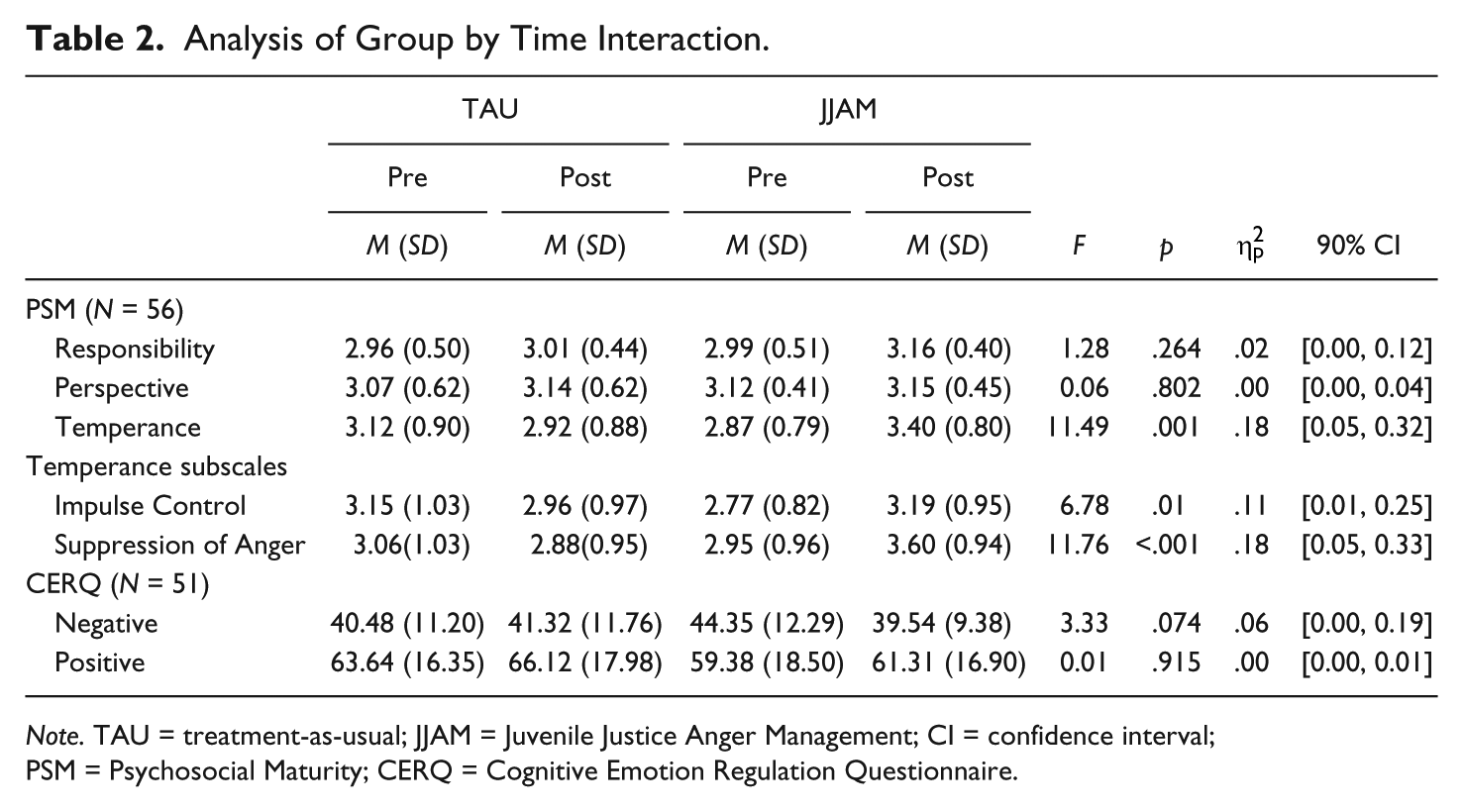
Note. TAU = treatment-as-usual; JJAM = Juvenile Justice Anger Management; CI = confidence interval; PSM = Psychosocial Maturity; CERQ = Cognitive Emotion Regulation Questionnaire.
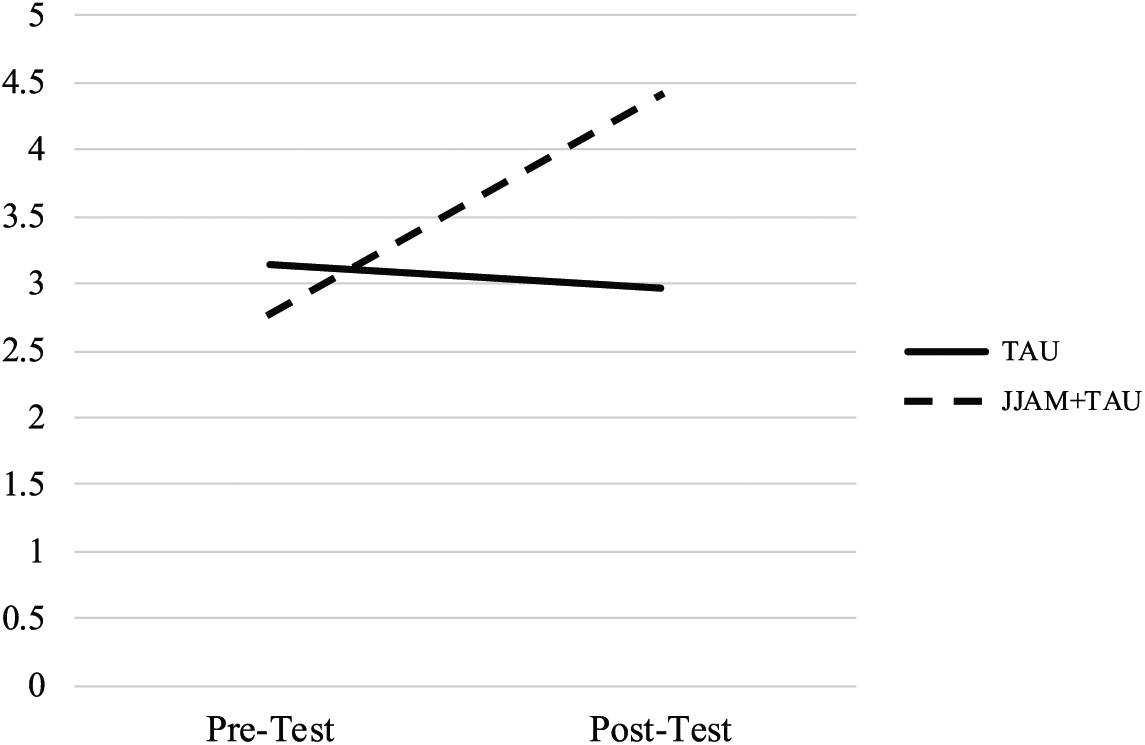
Significant condition by time interaction for impulse control scores.
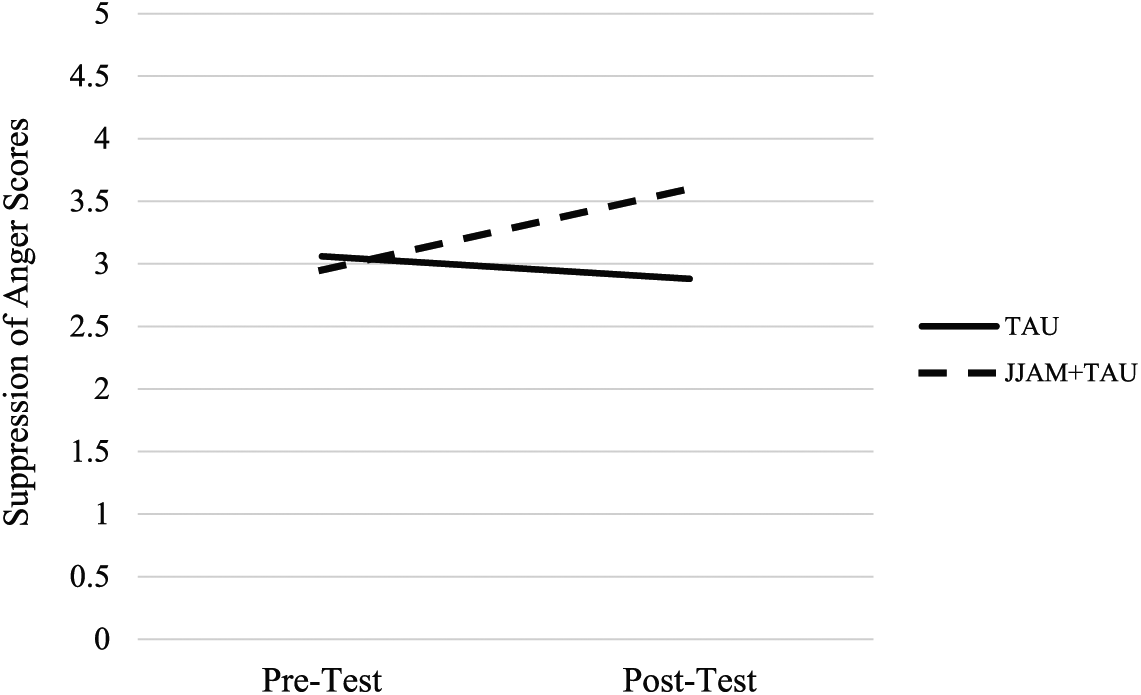
Significant condition by time interaction for suppression of anger scores.
For the emotion regulation measures, the 2 (Time: pre, post) × 2 (Condition: JJAM, TAU) mixed factorial MANOVA revealed no significant interaction between treatment and time—F(2, 48) = 1.80, p = .18,
Discussion
Recent research findings have repeatedly underscored the importance of PSM and its relationship to offending behaviors and antisocial decision making. Results of this randomized controlled trial suggest that at least one important component of maturity—temperance, which is associated with risk of future arrest—may be improved through intervention. After an 8-week, cognitive behavioral, anger management group intervention, the expected improvements in temperance, but not in perspective, were observed in a sample of girls placed in residential, postadjudication, juvenile justice facilities; girls who participated in the standard facility programming did not exhibit this improvement in temperance. The expected interaction of condition and time was not observed for responsibility, perspective, or cognitive emotion regulation. The current study furthers the existing literature by examining whether aspects of PSM may be responsive to brief, targeted intervention.
Consistent with prior research (e.g., Modecki, 2008; Mulvey et al., 2014; Cauffman & Steinberg, 2000), this study incorporated measures of impulsivity and suppression of aggression when examining temperance. Maturation in these psychosocial variables following participation in the JJAM treatment has implications for engagement in future antisocial behavior. Greater temperance has been associated with less delinquent activity, specifically for girls (Cruise et al., 2008). Seeking to change temperance through targeted interventions may reduce recidivism. Future research might examine whether community-based treatments addressing these psychosocial, developmental characteristics can serve to prevent involvement with the juvenile justice system.
The current study indicates that temperance may be a modifiable risk factor for future juvenile justice involvement and that the JJAM treatment may be promising mechanism for enhancing these psychosocial, developmental characteristics. The JJAM treatment teaches skills to limit impulsivity by delaying responses, engage in problem-solving to minimize response costs and maximize benefits, and enhance awareness of physiological arousal cues to promote recognition and regulation of strong emotions, particularly anger. In addition to interactive, didactic instruction, JJAM encourages repeated skills practice both in and out of group—and successfully uses individual and group reinforcement to promote skills practice. As Goldstein et al., (in press), girls completed 91% of JJAM homework assignments. Prior research suggests that skills practice in real-world settings, such as a residential juvenile justice facility, may facilitate the assimilation of skills into day-to-day use (Mazur, 2006).
The temperance subcomponent of Suppression of Anger was directly and repeatedly targeted within this anger management intervention. Not surprisingly, the largest effect size was seen for changes on this anger-specific subscale. Impulsivity, which was also targeted by skills in the intervention but limited to preventing anger-related aggressive responses, changed significantly, with a medium effect size observed. Importantly, this was not a targeted sampled of girls who sought or were referred to anger management treatment specifically. Girls in JJAM may or may not have felt anger was a significant issue for them personally and may not have been particularly oriented to noticing or increasing positive behaviors. Temperance may be a useful measure changes in this area, and future research will need to examine the ways in which targeted interventions can enhance this aspect of psychosocial development and its core components.
The expected changes in responsibility, perspective, and emotion regulation were not observed in the current study. It is important to note that this exploratory study was underpowered to observe changes with small to medium effect sizes. The changes that were observed in temperance indicate that future research should be conducted with larger sample sizes to further explore whether targeting PSM—and temperance specifically—in an intervention is associated with improved juvenile justice outcomes. It will be particularly important for future research to examine the effects of treatment on less-adaptive emotion regulation strategies with a much larger sample. Although not significant in the current study, JJAM participants appeared to demonstrate some of the desired change in the less-adaptive emotion regulation skills—a trend not observed in the control participants. No such trend was observed for the more-adaptive coping skills. In the future, if larger scale research confirms a reduction of less-adaptive cognitive coping skills without a corresponding increase in more-adaptive cognitive coping skills, different mechanisms than simply cognitive (e.g., reframing) or behavioral (e.g., walking away) skill development may be implicated. The JJAM treatment specifically emphasizes realistic appraisal of situations and constructive responses to anger, as opposed to mere positive reframing. This approach is taken purposely to openly acknowledge that participants sometimes have limited options (and limited power) in complex situations that are legitimately anger-provoking. As such, the JJAM treatment did emphasize one aspect of adaptive emotion regulation measured by the CERQ, Refocus on Planning, but not others such as Positive Reappraisal and Positive Refocusing. It remains a question for future research whether truly targeted intervention could change this type of adaptive emotion regulation.
It is also possible that participants were not particularly oriented to noticing or increasing positive (i.e., more adaptive) cognitive changes. Although participants expressed an interest and willingness to participate, inclusion criteria did not require that participants be referred for anger management specifically and may not have felt anger management was an issue for them specifically. The emotion regulation measures used in the current study focused on cognitive strategies that may or may not be key strategies for juvenile justice–involved girls. Future research will need to examine noncognitive emotion regulation processes as well. It is possible that measuring temperance allowed changes that did occur to be observed. Understanding the exact nature and extent of the observed changes will be an important goal for future research.
Limitations and Future Directions
The findings must be considered within the limitations of this RCT. The targeted intervention was tested on a small sample of adjudicated girls in three secure residential facilities. Compared with girls in the control condition, girls in the intervention condition received some extra attention during the JJAM sessions. Future research should examine psychosocial maturation outcomes with larger samples of male and female justice–involved youth and include an attention control condition. Research indicates temperance is also uniquely important in understanding and predicting the behaviors of justice-involved, adolescent males (e.g., Monahan et al., 2009), and it will be important to test the effect of treatment with this group. Further research is also needed to examine the effect of treatment in both secure and community-based settings—and whether changes in temperance, emotion regulation, and other psychosocial maturity variables might prevent recidivism. Similarly, future research should examine whether similar maturation in temperance, emotion regulation, and other PSM variables could be produced through intervention with adolescents in community populations—and whether this maturation would prevent lower level misbehavior. Of note, the observed changes followed a brief, 8-week intervention, and only short-term outcomes were observed; long-term follow-up is needed to examine whether this effect is maintained over time. Of note, this RCT examined the outcomes of an intervention designed specifically for anger management and aggression reduction—not for psychosocial maturation. In particular, the largest effect sizes were seen for a component of temperance, suppression of anger, which was directly and repeatedly targeted with this anger management intervention. Impulsivity, which evidenced change but only a medium effect size observed, was also targeted by skills in the intervention but limited to preventing anger-related impulsive responses. Larger effects may be produced if interventions are specifically designed to address psychosocial development and its component processes, including responsibility, perspective, and temperance.
Future research should also examine behavioral measures of change in psychosocial maturity, particularly temperance. The current study was limited to self-reports of PSM and related behaviors that could be influenced by a desirability bias. This is an important aspect to measure: PSM self-report has consistently demonstrated relationships with antisocial decision making and behaviors (e.g., Modecki, 2008), suggesting validity of this type of self-report. Furthermore, measures such as the WAI used to assess temperance have demonstrated better predictive utility for predicting offense behaviors than behavioral response inhibition tasks (Fine, Steinberg, Frick, & Cauffman, 2016). However, understanding how treatment impacts behaviors related to temperance, in particular, the limiting of impulsivity in real-world contexts, will be an important goal of future research.
Relatedly, future research should consider the measurement of PSM. As originally conceptualized, the selected measures were used to measure distinct PSM traits at a single time point and to allow for examination of the relationships between PSM and decision making and behavior. In contrast, the current study measures PSM at two time points, approximately 10 weeks apart. The level of sensitivity to change of each of the subscales and component measures is not yet well understood. It remains a question for future research whether all aspects of the current measurement of PSM are sensitive to change over relatively short periods of time. Despite these methodological limitations, results of this RCT suggest that at least some aspects of psychosocial maturity are sensitive to change through intervention, offering a promising area for future research that seeks to prevent recidivism and delinquent behaviors.
Finally, the extent to which PSM, as an entire construct, is useful in understanding female delinquent behavior remains a question. Although very few studies of girls involved in the juvenile justice system have been published, the available research suggests gender differences in the relationship between PSM and delinquency. If future research confirms the relative importance of temperance for girls—and the lack of influence of perspective or responsibility—effective intervention may be provided using established treatments impulse control and anger suppression, the core component of temperance. The current study suggests that it may be possible to meaningfully influence temperance with time-limited treatment.
Conclusion
Given the neurological basis of psychosocial development, there is a long-standing question of whether one can speed up maturation through intervention. This study suggests that this is a possibility. One specific aspect of psychosocial maturity—temperance—was enhanced through a brief intervention. Although this intervention was not designed to directly address PSM, the observed maturation in a psychosocial, developmental characteristic suggests that interventions can stimulate psychosocial maturation, opening a new area for intervention with at-risk adolescents. Future research is needed in multiple areas of psychosocial development, and neurological changes that accompany psychosocial maturation should be examined, but this RCT offers early-stage support for interventions for psychosocial development.
Specifically, the current study provides initial evidence that impulsivity and suppression of aggression may be influenced by a brief, targeted intervention. This is particularly important because previous research has indicated that temperance may be the most important factor to target within PSM, especially among girls. The limited available research on PSM with girls in the juvenile justice system indicated that temperance may be a particularly powerful risk factor for violent and nonviolent offending (Cruise et al., 2008) and that emotion regulation may play an important role in risk for arrest (Kemp, Thamotharan et al., 2017). As such, the results of this study have important implications for treatment, rehabilitation, and risk reduction. If low temperance and poor emotion regulation are associated with delinquent behavior, and the development of these psychosocial characteristics can be accelerated through targeted clinical intervention, then interventions designed to increase temperance and emotion regulation may help reduce recidivism and promote rehabilitation.
Footnotes
Declaration of Conflicting Interests
The author(s) declared no potential conflicts of interest with respect to the research, authorship, and/or publication of this article.
Funding
The author(s) disclosed receipt of the following financial support for the research, authorship, and/or publication of this article: The research was supported, in part, by Grant Number K23 MH 070400 from the National Institute of Mental Health.