



Abstract
The Attachment and Developmental Dynamic Systems Theory of Crime was tested on 206 male inmates. They completed measures tapping attachments, clinical issues, adverse childhood events, peer crime, and crime addictions. A significant path model was found, going from insecure parental attachments to adverse childhood events, and then on to the behavioral crime addiction and criminal peers scales. Peer crime was also predicted by insecure parent attachments and the crime addiction scale. Finally, the crime addiction, peer crime, and insecure parental attachment scales predicted frequencies of criminal behavior. The model also fit a sample of 239 female inmates. The notions of crime addiction, in this context of adverse events and insecure parental attachments, offered newer and more powerful explanations than previously offered by social learning theories on why some individuals are more likely to associate with peers engaging in criminal behavior, and also how these combine to predict degrees of criminal behavior. By moving beyond main effects models, it was found that a focus on systems of interactions was robust in theory and application. However, profile data from the Attachment and Clinical Issues Questionnaire showed that individual differences in Research Domain Criteria diagnoses are fundamental to treatment settings. Such approaches to reducing rates of recidivism and substance abuse should also enhance outcomes in many domains, including HIV prevention, costs to health care, and at the same time increase overall public safety.
Keywords
The purpose of this study was to test the Attachment and Developmental Dynamic Systems Theory of Crime (ADDSTOC) through path analysis, a form of structural equation modeling. ADDSTOC attempts to move beyond analyses of main effects toward a focus on tested interactions between variables, with a special emphasis on development (Mulvey, 2014). This theory places a central focus on interactions between childhood attachments, adverse childhood events (ACEs), addictions to criminal behaviors, and associations with peers who engage in criminal behavior. Because these interactions span multiple disciplines, including criminology, psychiatry, developmental psychology, and physiology, we begin with a simple, theoretical presentation of the model. The reader may consider following along the discussion by viewing Figure 1, which provides a graphical overview of the model. This discussion will be followed by a more specific outline of our predictions of the paths alongside their basis in previous literature
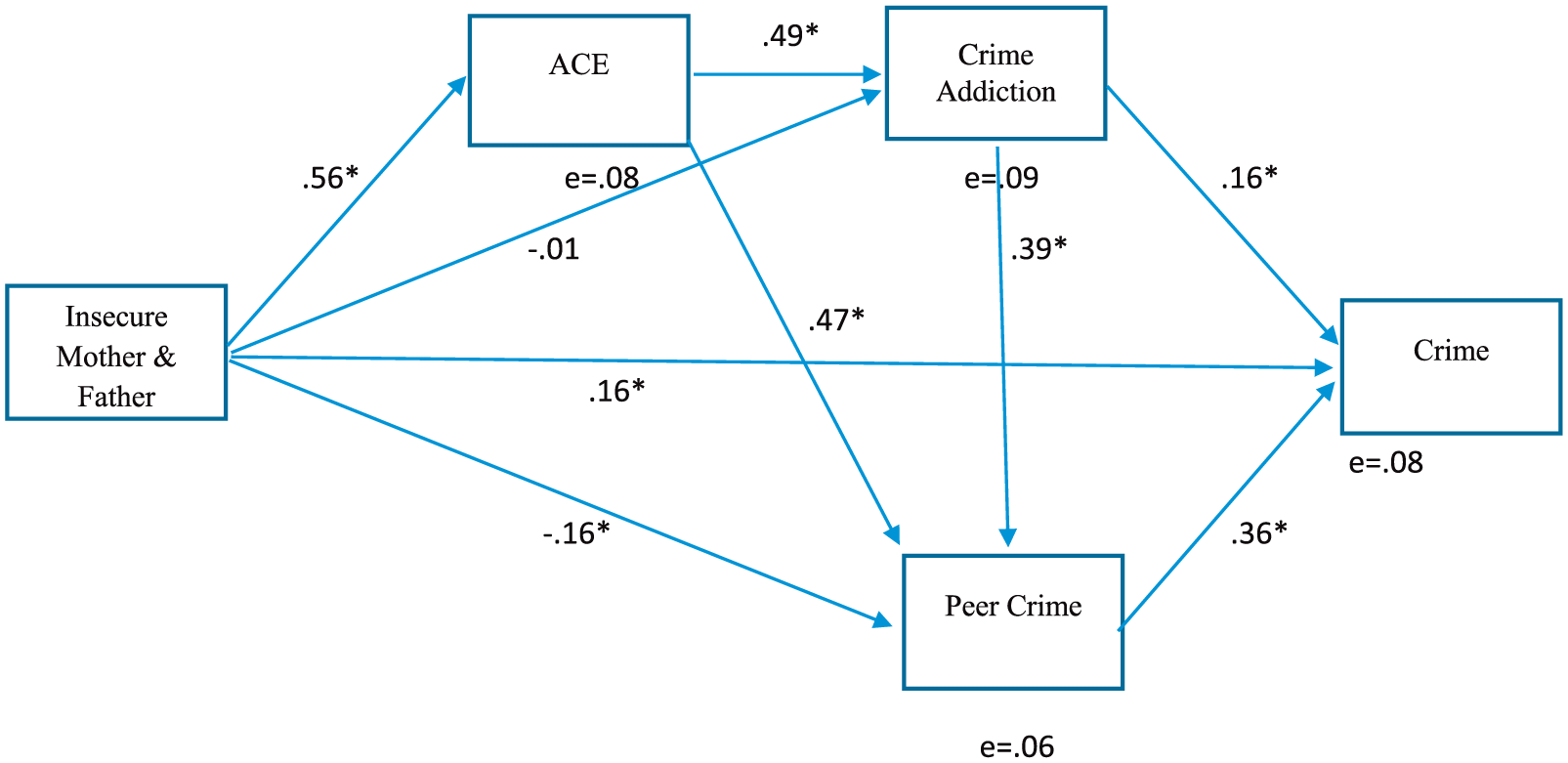
Standardized for PATH list mediational model for the ADDSTOC model of male criminal behavior.
In ADDSTOC, crime is considered in terms of its psychopathological development, with the identification of casual pathways that overlap with many of those involved in the development of several other psychological disorders (i.e., substance misuse, depression, personality disorders). As with these disorders, degrees of criminal behavior are partially explained by insecure parental attachments. For those not familiar with general attachment theory, it should first be noted that the present view of attachment deviates from classic relationship-based theories of crime in that it emphasizes the types of feelings and behaviors that are directed to parents and caretakers in infancy, and then to peers in childhood, and romantic interests and peers in adulthood, allowing for further specification beyond the classic secure/insecure attachment dichotomy. For example, individuals exhibiting avoidant attachment (a form of insecure attachment) to mother will react to stress by avoiding contact with her during times of stress. On the contrary, an individual exhibiting mixed/disorganized attachment (another form of insecure attachment) will engage in seemingly uncoordinated attachment behaviors toward that attachment figure when under distress, sometimes exhibiting excessive dependence and/or confusion toward attachment figures (“clinging”) and other times avoiding them completely. Attachment security is fundamental to healthy psychological development, as individuals depend upon secure relationships to develop effective interpersonal strategies for handling emotions and unpredictability.
In the absence of developing secure attachments, alternate strategies for dealing with negative affect and unpredictability are learned and ingrained as habit. Indeed, insecure attachments have also been found to be involved in poor compliance with authorities, poorer parental supervision and sensitivity, and poorer conscience development (Thompson, 2009; van IJzendoorn, 1997). Furthermore, because insecure attachments predict poorer “theory of mind,” or the ability to read the thoughts and feelings of self and others, they are theorized to have deleterious effects on social relations, peer acceptance, and the internal stress. In adulthood, these patterns or habits of cognition and behavior continue and are often manifested in the development of psychopathology and socially aberrant behaviors.
It should be noted that, independently, insecure attachments do not necessarily lead to later criminal behavior and psychopathology. ADDSTOC predicts that insecure attachments interact with childhood trauma in predicting criminal behavior. Here, we conceptualize trauma as existing on a quantitative scale such that frequency of exposure to adversity predicts later outcomes. We theorize that security of attachment can moderate this relationship, with secure attachments buffering the effects of trauma and insecure attachments exacerbating them.
Of course, many individuals experiencing frequent early trauma and insecure early attachments do not engage in criminal behavior. ADDSTOC theorizes that genetic predispositions conferring greater proclivity for feelings of power, prestige, and excitement associated with criminal behavior can be manifested or exacerbated by chaotic, stressful environments. A desire for these feelings as a compensatory mechanism of comfort in the absence of secure attachment may drive individuals with a baseline propensity for crime addiction toward behaviors that will produce these feelings.
ADDSTOC further emphasizes that peer relationships are a crucial consideration in the development of criminality. Insecurely attached individuals with baseline tendencies for seeking out external power and control associated with criminal behavior and who are exposed to stressful environments are theorized to seek the company of fellow delinquent peers. Here, it is theorized that engaging in behaviors with delinquent peers will increase or incubate these feelings of thrill and power. Integration into aberrant peer groups is further encouraged through the absence of existing secure relationships. In summary, predisposing attachment insecurity, stress, temperament, and peer relationships interact in a complex pathway to predict criminal behavior.
In addition, in line with theories of developmental psychopathology emphasizing equifinality and multifinality, ADDSTOC allows for a focus on individual differences in causal patterns and is in line with the relatively new Research Domain Criteria (RDoC) for diagnoses and interventions in psychiatry (Insel, 2013). RDoC is an innovative initiative supported by the National Institutes of Health (NIH) aimed at developing more accurate, personalized psychiatric diagnosis in terms of empirically established biological, psychological, and social domains. Through its development of unique individual Attachment and Clinical Issues Questionnaire (ACIQ) profiles (Lindberg & Thomas, 2011) alongside population-based statistical models, ADDSTOC allows for personalized study and treatment of criminals.
In summary, ADDSTOC integrates biological, psychological, and social influences in an interacting pathway in its prediction of criminal behavior. Although existing literature has addressed each of these factors in isolation, we argue that empirical validation of a complex, interacting system is essential for the robust conceptualization of the development of criminality, as each of these components is dependent upon the others in its predictive power. We now turn to our model’s specific hypothesized paths and their predicted interactions in the context of existing literature.
Hypothesis 1
ADDSTOC predicts that the path to criminality begins with insecure parental attachment processes and family relations. In contrast to traditional relationship-based criminality theories (Hirschi, 1969) that emphasize the strength of bonding, ADDSTOC focuses on types of parent-child relationships. In this attachment framework, insecurity refers to avoidant, ambivalent, preoccupied, or disorganized patterns of responding in times of stress or for affective sharing. It has been found that these different patterns of attachment correlate with different patterns of parenting and can specifically predict psychopathologies in adulthood (Cassidy & Shaver, 2008).
Converging evidence from criminal, developmental, and attachment theory strongly supports predictions that insecure parental attachments lead to criminal behaviors: (a) It has been demonstrated that attachments play an important role in the development of compliance to authorities and conscience development (Thompson, 2009; van IJzendoorn, 1997); (b) insecure attachment patterns discourage seeking of comfort from others when confronted with negative affect (Cassidy & Shaver, 2008); (c) insecure attachments predict the development of criminal behavior (Hirschi, 1969; Hoeve et al., 2012; Jonides, Borduin, Wagner, & Dopp, 2017; Lindberg, Fugett, & Lounder, 2014); (d) insecurely attached individuals often exhibit clinical issues also associated with crime (jealousy, abusiveness, anger, etc.) (Pasco Fearon, Bakermans Kranenburg, Van IJzendoorn, Lapsley, & Roisman, 2010; Pasco Fearon & Belsky, 2011) and encounter greater difficulty integrating into prosocial peer groups (Gifford-Smith, Dodge, Dishion, & McCord, 2005; Lindberg, Fugett, Adkins, & Cook, 2015; Lindberg et al., 2014); (e) insecure attachments negatively influence a child’s “theory of mind,” promoting ineffective interpretations of their own emotional and mental states, as well as those of others (Adshead, 2002; Coid, 1992; Deklyen & Greenberg, 2008; Fonagy et al., 1997; Hoffman, 2000 Janssen, Deković, & Bruinsma, (2014); (f) and Janssen, Weerman, and Eichelsheim (2017) have found that parental relations can directly and indirectly influence unstructured socialization (see also Hops, Andrews, Duncan, Duncan, & Tildesley, 2000); and, finally, (g) insecurely attached individuals are expected to be more vulnerable to childhood stressors as a result of their inability to consult secure bases during times of stress and for affective sharing (Lindberg, Fugett, & Thomas, 2012).
Although theories of criminology often identify temperament and other personality variables as the most important predictors of crime and relationships (Bonta & Andrews, 2017), evidence from attachment literature suggests that inherited temperament does not determine attachments (Groh, Pasco Fearon, van IJzendoorn, Bakermans-Kranenburg, & Roisman, 2016). Indeed, Propper et al. (2008) found that difficult temperaments in infancy are essentially reversed or inactivated by early secure attachments, possibly due to an environmentally induced interaction with inherited genotypes. ADDSTOC emphasizes reciprocal relations between genotypic predisposition and environment, suggesting two sensitive periods for attachment influences—one in early childhood, from 6 months of age to 4 years of age, and the second during adolescence (discussed in more detail below).
Hypothesis 2
In the next portion of this path, insecure parental attachments are predicted to lead to ACEs. We theorize that a child who turns away from parental secure bases in times of stress will be more prone to experiencing a range of stressors. Furthermore, this attachment strategy impairs the ability to handle stressors and exacerbates their deleterious effects. In support of this idea, it is well established that early exposures to stressful environments are robust predictors of the development of criminality (Hoeve et al., 2012; Lindberg et al., 2015; Moffitt & Caspi, 2006; Moffitt, 2005).
The role of adverse childhood environments in the development of criminality has been noted by general theories of crime (Agnew, 2005), and has been identified as an important predictor of criminal behavior (Lindberg et al., 2015) and addictions to substances (Lindberg & Zeid, 2017). Physiological evidence supports a potential link between childhood trauma and the expression of addictive phenotypes, such that trauma can interact with genetic predispositions to addiction to activate their phenotypic manifestation (Enoch, 2011; Unternaehrer et al., 2015; Xie, Korkmaz, Braun, & Bock, 2013).
Possible targets of these stress-gene interactions are regions involved in the development and regulation of the hypothalamic-pituitary-adrenal (HPA) axis and the brain’s mesocorticolimbic stress reactive and reward circuitry. In animal studies, early life stress has been linked with increased adult self-administration of drugs as well as altered HPA axis responses to stress (Sinha, 2001). The brain’s mesocorticolimbic system is thought to have evolved to attach reward value to biologically significant environmental stimuli, such as food intake and social interaction. Variations in mesocorticolimbic system dopaminergic functioning are associated with multiple classes of addiction as well as troubled social relationships. Baseline mesocorticolimbic functioning varies as a function of genotype and environmental factors so that participation in addictive behaviors, such as criminal behaviors and drug administration, more significantly predisposes some to the dopaminergic alterations associated with addiction. (See Lindberg and Zeid [2017] and Yacubian and Büchel [2009] for a more complete discussion.)
Hypothesis 3
Although risk taking is at the heart of many theories of crime (Zuckerberg, 2007), we argue that general notions of risk do not adequately address its role within an interacting pathway to criminal behavior. Here, we theorize that criminal behavior is a mechanism for achieving compensatory feelings of power, excitement, and control for individuals who exhibit baseline aberrations in reward system functioning and impaired social relationships (Belsky, 1999a, 1999b; Belsky & Pluess, 2009; Fearon, Bakermans-Kranenburg, IJzendoorn, Lapsley, & Roisman, 2010; Fearon & Belsky, 2011; Olsson et al., 2005). Thus, the inclination to resort to these behaviors is predicted to be most salient (a) in response to negative affect, when unable to obtain security from attachment figures (Fearon et al., 2010; Fearon & Belsky, 2011); and (b) in the presence of peers engaging in criminal behavior that elicits compensatory feelings of control and euphoria, a process that may correlate with the concept of “delinquency training” (Dishion, Spracklen, Andrews, & Patterson, 1996), but with a greater focus on the hedonic value of these interactions.
In line with biological models of addiction, it has been demonstrated that two critical periods for attachment formation coincide with periods of neural maturation—the first during infancy and early childhood and the second during adolescence and young adulthood (Lindberg & Zeid, 2017; Spear & Varlinskaya, 2010; Volkow, Baler, & Goldstein, 2011; Yacubian & Büchel, 2009). During early development, developing neural circuitry establishes long-term connections in response to social engagement and other environmental stimuli. Adolescent maturation is accompanied by a second wave of neural modification, during which synaptic structure and function is refined to more closely resemble adult functioning (Spear, 2000). The mechanisms responsible for this restructuring are sensitive to stress and addictive behavior, making the young brain uniquely vulnerable to these classes of stimuli in terms of the development of later psychopathology (Andersen & Teicher, 2009; Selemon, 2013).
To statistically account for a criminal addiction phenotype, Lindberg et al. (2015) proposed a “crime addiction scale,” designed to identify individuals who report intense feelings of power, craving, exhilaration, and fun in response to criminal urges similar to those reported with other behavioral addictions. Here, we predict that the neural additive effects of adverse childhood experiences will lead to greater vulnerability to the manifestation of the predisposition to engage in addictive criminal behaviors. Along these lines, it is important to note that alcohol and drugs are implicated in 78% of violent crimes and 83% of property crimes (CASA, 2010), and ADDSTOC argues that these robust relationships can be explained by the fact that they involve similar causal mechanisms. (See Lindberg and Zeid [2017] for a similar model and approach to substance abuse development.)
Hypothesis 4
Relations with delinquent peers are strongly associated with criminal behavior (Gifford-Smith et al., 2005; Haynie & Osgood, 2005; Kandel, 1978). According to ADDSTOC, three classes of variables are predicted to lead to greater associations with peers who engage in criminal activity: (a) insecure parental attachments, (b) ACEs, and (c) higher scores on the criminal addiction scale.
The first variable leading to delinquent peers, parental relations, has been long noted (Kandel, 1978). If parents exhibit avoidant or ambivalent responses to a child in times of stress or when they want to engage in affective sharing, the child’s feelings of insecurity (anxiety) will not be addressed by their parents, encouraging them to turn to other sources of comfort and security (Lindberg et al., 2015, 2014). The second variable leading to delinquent peers, adverse childhood environments, is hypothesized to encourage criminal peer relationships through the opportunity hypothesis (Haynie & Osgood, 2005), wherein residence in high-risk traumatic environments (low-SES [socioeconomic status], crime-prone neighborhoods, etc.) increases exposure to negative peer influences. Third, it is also predicted that children with inherited predispositions conferring greater sensitivity to addictive criminal behavior stimulation, acting in interaction with traumatic experiences and insecure attachments, are more likely to seek peer groups engaging in criminal behavior (TenEyck & Barnes, 2015).
Model Summary
To summarize, the interacting attachment, physiological, and life-course hypotheses encapsulated in ADDSTOC suggest that early insecure attachments, in conjunction with stressful environments and events, are the developmental precursors to adult criminal behavior. ACEs, interacting with insecure attachments, are predicted to exacerbate predisposition to crime addiction and encourage association with criminal peers. The complex interaction of these factors in a temporal pathway is hypothesized to significantly predict frequency of criminal behavior in adulthood. However, it is additionally predicted that personalized ACIQ profiles will demonstrate significant variation across individuals, so that consideration of these profiles will allow greater specificity than previously offered in this area of research and intervention.
The present study was designed to test the relative contributions of and interactions between these variables to the development of criminal behavior in an interacting pathway. It is predicted that this analysis will confirm the above hypothesized paths to criminality, moving beyond a “main effects” understanding of criminal behavior. Furthermore, the unique presentations of profiled individuals are theorized to more comprehensively account for individual differences fundamental to the development of RDoC for diagnoses of treatment issues underlying criminal behavior.
Method
Participants
Participants were 206 male inmates incarcerated at a state correctional facility. All participants were read a verbal consent, in which they were informed that study participation was voluntary. From a total number of 367 who were asked to participate, 117 chose not to participate, 32 discontinued participation or only partially completed the test battery, and 12 incorrectly completed answer forms.
Of the 206 scored protocols, 94% of participants identified as male, 2% as female, and 4% as other. Scored protocols of participants identifying as female or other were eliminated from analyses for the purpose of this study. A total of three participants reported their age as 17 to 21 years, 44 as 22 to 35 years old, 60 as 36 to 49 years, 25 as 50 to 65 years, and 74 (nearly 36%) were older than 66 years. The highest level of education was graduate school (4.5%), followed by college graduates (11.8%), some college (29.2%), high school graduates (34.7%), and 3 to 11 grade (19.8%). The sample consisted of four participants identifying as Hispanic, 28 participants identifying as African American, 12 participants identifying as Native American, 154 participants identifying as Caucasian, and five participants identifying as other.
Instruments
ACIQ
The ACIQ (Lindberg & Thomas, 2011) is a test battery containing 29 scales measuring attachment and related clinical issues. It includes scales measuring avoidant, anxious-resistant, codependent/preoccupied, disorganized, mixed, and secure attachments to mother, father, and partner. The instrument’s use of continuous scales allows for the elimination of issues associated with typologies. Furthermore, this formatting allows for the conceptualization of attachment as a multidimensional phenomenon nested in dynamic systems (Lindberg & Thomas, 2011). The ACIQ includes scales assessing relationships with peers, religious affiliation, family relationships, and sexuality. It incorporates several clinical scales, including Shame, Mistrust, Jealousy, Withdrawal, Control, Denial of Feelings, Anxiety, Anger, Perfectionism, Abusiveness, and Rumination. In addition, the ACIQ contains method malingering and response bias scales measuring faking good/bad and method violations, allowing for identification and control of participants who may purposefully under- or over-exaggerate symptoms (faking good/bad) or misunderstand/carelessly respond to questions (method violations) (Fugett, Thomas, & Lindberg, 2014).
In previous studies, the scales of the ACIQ have been shown to have an average coefficient alpha of .79 (Lindberg & Thomas, 2011). The coefficient alpha for this sample was .80. Factor analytic studies have shown that the ACIQ’s scales load on attachment figures and clinical issues rather than attachment styles, in contrast with the assumptions of traditional attachment theory (Lindberg & Thomas, 2011). The ACIQ contains the necessary malingering and response bias scales measuring faking good/bad and method violations and the scales are not unduly affected by social desirability (Fugett et al., 2014). Responses are placed on a 4-point Likert-type scale. The ACIQ has been found to predict the gold standard of attachment, “to whom one turns in times of stress,” and shows superior concurrent and discriminant validity relative to the Experiences in Close Relationships Questionnaire (Lindberg et al., 2012). It has also been offered as an RDoC for patients suffering from alcohol dependence (Lindberg et al., 2015). Furthermore, the ACIQ has successfully predicted the numbers of crimes committed by juvenile male offenders at a federal juvenile correctional facility (Lindberg et al., 2014), as well as the number of crimes reported by female inmates (Lindberg et al., 2015). Finally, it offers individual profiles that allow the integration of important individual differences into treatment.
It should be noted that the Avoidant and Ambivalent attachment scales of the ACIQ were combined to create measures of insecure parent and insecure partner relations. Other measures of insecurity, such as the Preoccupied attachment measures, poorly correlate with the Avoidant and Ambivalent scales, suggesting that their integration into a unified “insecure” attachment scale would reduce its statistical validity as a distinct predictor. (See Lindberg and Zeid [2017] for a detailed discussion of these measures.)
ACIQ respondents were provided with the following instructions regarding items measuring early life experiences:
Questions about your family, mother, and father refer to the family you grew up in. When answering questions about members of your family, think about who or what was true, typical, or most important while you were growing up (during the school age years).
The remaining scales refer to current or recent behaviors and feelings. For these, participants were provided the following instructions:
The word “partner” refers to your most important spouse, fiancé, steady date or a significant romantic interest in your life. If you are not currently involved in such a relationship, think about your most significant past partner and answer the questions with that relationship in mind. If you never had a steady or meaningful relationship in your life, leave the questions on partners blank.
The ACIQ has differentially identified distinct parent and partner attachments implicated in criminal behavior (Lindberg et al., 2015; Lindberg et al., 2012), posttraumatic stress disorder (PTSD) in veterans (Shura, Rutherford, Fugett, & Lindberg, 2015), and substance abusers (Lindberg et al., 2015; Lindberg & Zeid, 2017).
Adverse Childhood Experiences Questionnaire
The Adverse Childhood Experiences Questionnaire (ACE) contains several questions pertaining to adverse childhood experiences (recurrent physical abuse, emotional abuse, and sexual abuse, childhood neglect, parental mental illness, parental marital status, parental substance use, and parental incarceration). ACE scores have been shown to positively correlate with social, emotional, and cognitive impairments, as well as risky health behaviors (Anda et al., 2006; Felitti et al., 1998; Ford et al., 2011; Hillis, Anda, Felitti, & Marchbanks, 2010; Weiss & Wagner, 1998). Furthermore, number of “ACEs” has predicted degree of criminality (Friestad, 2012; Lindberg et al., 2015; Sharp, Peck, & Hartsfield, 2012). Test–retest reliabilities for the ACE have been found to be good (Ritacco & Suffla, 2012), and the weighted-kappa coefficient for the ACE total score (range = 0-8) was .64 (Ritacco & Suffla, 2012). For the purpose of this study, ACE questions were adapted to a Likert-type scale format, with responses ranging from never (1) to always (4). This adaption was theorized to increase the psychometric sensitivity of the different subscales of the ACE. The ACE’s coefficient alpha for this sample was .93.
Peer crime
Two questions from the Adolescent Problem Behavior Scale (Ary, Duncan, Duncan, & Hops, 1999) were used to measure Peer Crime influences in adolescence and answered on a 4-point Likert-type scale ranging from never (1) to always (4). These items were (a) My friends had problems with the law and (b) My friends committed criminal acts. The coefficient alpha for this subscale in this sample was .83.
Crime Addiction scale
The Crime Addiction items were designed to more specifically target the intensity of the power, thrills, and anticipated gains that one associates with their most frequent criminal behavior (Lindberg et al., 2015). The following four questions follow the question stem “When you were just beginning your most typical kind of crime,” (a) How much fun did you think you were going to have? (b) How exciting was it? (c) How much power did you feel? and (d) How much did you think you were going to gain? These questions test the “addictive crime” hypothesis, which posits that positive stimulation derived from criminal behavior is an addictive element of crime, and the degree to which a criminal feels positive reinforcement when contemplating these behaviors may predict degrees of desistance. The Crime Addiction Scales’ coefficient alpha for this sample was .91.
A number of additional questionnaires were administered, including the CAGE Questionnaire (Aertgeerts, Buntinx, Fevery, & Ansoms, 2000; Ewing, 1984). The CAGE Questionnaire consists of the following items: (1) Have you ever felt that you should Cut down on your drinking? (2) Have people Annoyed you by criticizing your drinking? (3) Have you ever felt bad or Guilty about your drinking? (4) Have you ever had a drink first thing in the morning to steady your nerves or to get rid of a hangover (Eye opener)? they also received the Brief Sensation Seeking Screening–4 (BSSS-4; Stephenson et al., 2007), and the Sensation Seeking–2 (SS-2; Stephenson, Hoyle, Palmgreen, & Slater, 2003) to be used in analyses for future studies evaluating hypotheses beyond the scope of this study.
Frequencies of crime
Because participant reports of committing murder and sexual offenses did not significantly correlate with reports of committing assault, robbery, fraud, and drugs, these offenses were not included in this measure. It is anecdotally reported by inmates that most do not feel comfortable disclosing participation in murder and sexual assault due to fear of retaliation or social exclusion. These crimes may also be expected to qualitatively differ from the other tested crimes due to their social implications, meaning that their combination would be psychometrically unsound. Thus, the summed scores of reported arrests for assault, robbery, fraud, and drugs served as the measure of degrees of criminality. (See Lindberg et al. [2015, 2014] for further discussions and utilization of this measure.)
Procedures
This study was approved by the Marshall University Institutional Review Board. In observation of state protocol, correctional facility officials were in control of participant recruitment and approval. All general population inmates were asked to participate. Due to institutional safety concerns, blocks of 50 participants were tested at a time. According to inmate reports, guards entered the cell block and instructed inmates to exit their cells and stand in line. The first 50 inmates in line were escorted to the testing area. The remainder were excluded from participation in the study. Therefore, a purely random selection process could not be conducted. Participating inmates were read the consent form at the testing area. Again, these methods of participant recruitment were not ideal in terms of minimizing response and selection bias, but they were necessary to ensure inmate safety and anonymity.
Participants were read each questionnaire item by a test proctor, and the first 10 questionnaire items were read twice. One to two proctors supervised inmates throughout testing to address inmate concerns and ensure compliance with instructions. Participants completed questionnaires on a computer-scored Scantron form. Scantrons were numbered for organizational purposes, and no identifying information was obtained. Testing periods lasted approximately 75 min per group.
Results
Using a SAS analytics program, a PROC CALIS procedure was conducted for mediational path analyses to determine the hypothesized causal effects among the following variables: insecure parental attachments (ACIQ Avoidant and Ambivalent mother and father attachment scales), ACE, Addiction to Crime, Peer Crime, and reported number of criminal arrests. Path analysis is a form of structural equation modeling that allows for the simultaneous test of all predicted relationships in a comprehensive theory (Byrne, 1998). In statistical terms, path modeling allows for the testing of main effects, interactions, and relationships between interactions. Here, this technique simultaneously tests all the ADDSTOC model predictions—allowing for a test of all interactions while controlling for the effects of all study variables. A distinct advantage of path analysis over simpler equation modeling is the ability to test the overall fit of the theoretical model to that of the observed correlations in initial data (Mertler & Vannatta, 2002), which were the focus of this study. With path analysis, if a model is not consistent with the empirical data, then it is classified as “miss-specified.” In terms of the present study, the exogenous variables were analyzed in terms of their ability to predict the number of crimes reports. In summary, this analysis tested for predicted paths in the interacting model described above. According to Kline (1998), the sample size in this study was medium (N between 100 and 200) and adequate for the use of path analysis for this model (Kline, 1998). The endogenous dependent variable in this model was the number of crimes reported. The overall model of predicted paths was a good fit: χ2(1) = 1.44, p = .23, goodness-of-fit index (GFI) = .99, root mean square error of approximation (RMSEA) estimate = .05. The exogenous variables accounted for 32% of the variance in the ACE, 23% of the variance in Crime Addiction, 54% of the variance in Peer Crime, and 29% of the variance in Reported Crime. Figure 1 presents a path diagram of these results with standardized estimates and significance marked. Correlations between the path variables and ACIQ scales are presented in Table 1.
Pearson Correlations Between Crime, Model Predictors, and ACIQ Scales (N = 173-205 per cell).
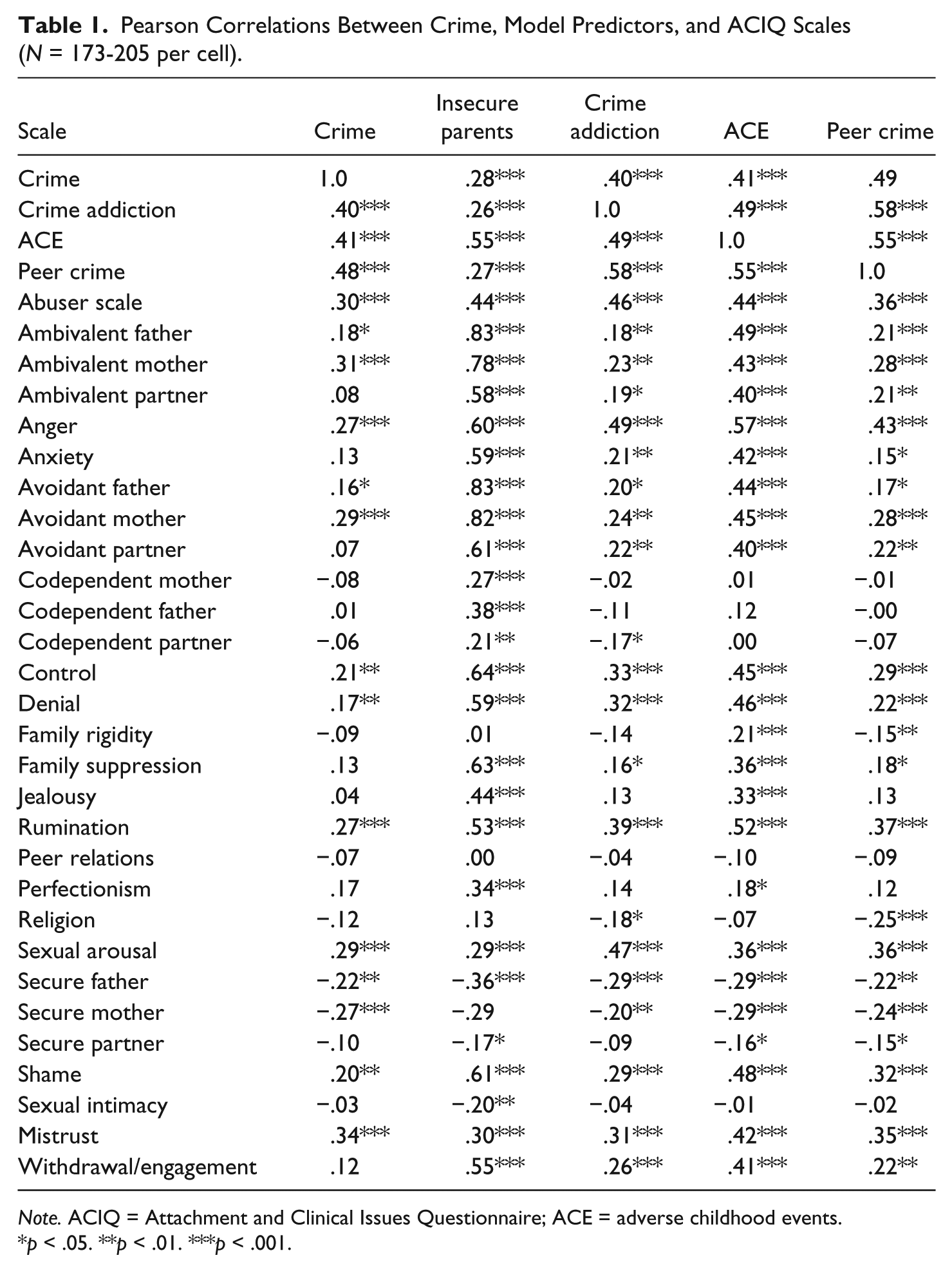
Note. ACIQ = Attachment and Clinical Issues Questionnaire; ACE = adverse childhood events.
p < .05. **p < .01. ***p < .001.
It should also be noted that the data of Lindberg et al. (2015) using a sample of 293 female offenders were tested with the ADDSTOC model. The model significantly predicted criminality in this larger sample of female offenders, χ2(1) = .06, p = .80, GFI = .99, RMSEA estimate = .00. Thus, the model is not sample, demographic, or gender-specific, suggesting it is statistically robust and generalizable. See Figure 2 for the path-model diagram associated with the female offender sample.
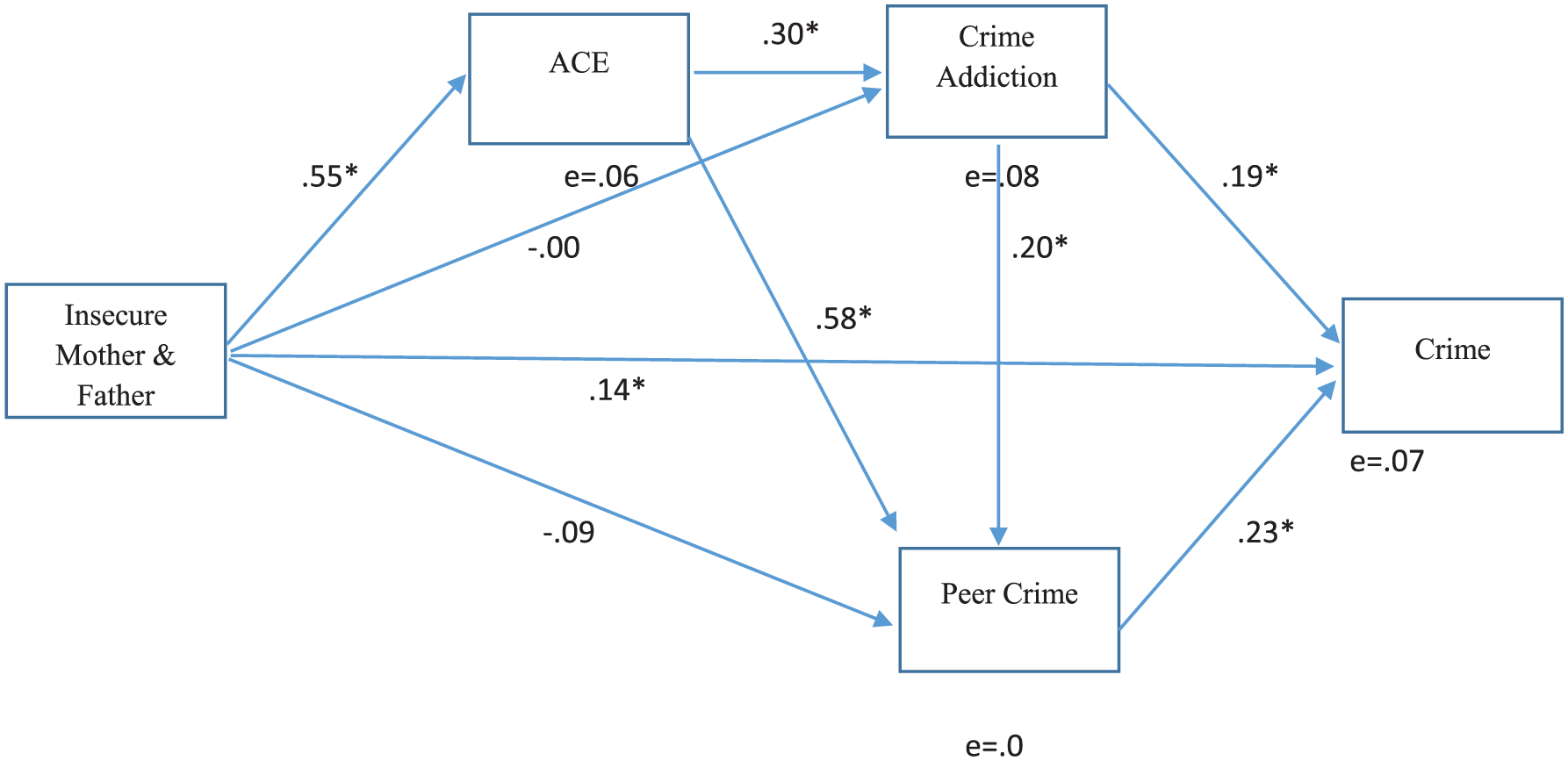
Standardized for PATH list mediational model for the ADDSTOC model of female criminal behavior from Lindberg et al. (2015).
Discussion
The predicted model for male criminal behavior was significant, accounting for 29% of the variance in total crimes reported. As the path model in Figure 1 depicts, insecure mother and father attachments predicted ACE, Peer Crime, and the Reported Crime measures. ACE predicted Crime Addiction and Peer Crime, which, together with insecure mother and father attachments, predicted criminal behavior. For the purpose of clarity, we separately discuss each element of the path. Importantly, however, this path should be conceptualized as an interacting model.
Insecure Parental Attachments
In line with traditional attachment theory, the significant ADDSTOC path model begins with insecure parent attachments, confirming findings of observational studies (van IJzendoorn et al., 1997) and meta-analyses of correlational studies (Hoeve et al., 2012). This is also consistent with the Janssen, Maja, and Bruinsma (2014, 2016) findings, showing both direct and buffering effects of parenting on crime. In this model, in addition to direct effects on crime, insecure parental attachments exhibited multiple, interacting functions in the pathways to crime through the ACEs and Peer Crime.
Table 1 displays correlations between the measured clinical issues and associated path elements. In this context, insecurity and clinical issues are theorized to amplify overall stress and further discourage affective sharing with others (Lindberg et al., 2012), priming these individuals to seek the thrills, excitement, and power gained from criminal activity in an attempt to restore a positive reward state (Koob, 2013). Although insecure attachments are often fundamental in development of psychopathologies, here, attachment is not conceptualized as a personality dimension. Rather, attachment functions in this path as a construct that is individual, context, and affect dependent, playing multiple roles in dynamic developmental systems in the pathway to crime.
ACE
A significant path from insecure attachments to ACEs (as measured by the ACE) was found (Hoeve et al., 2012). Insecure attachments were hypothesized to distance children from parents in times of stress, sensitizing them to trauma in childhood. Insecure attachments further exacerbate stressors by eliminating the potentially moderating protective effects of parental warmth, guidance, supervision, and emotional regulation. Subscales on the ACE include access to troubled peers, peer drug use, and poor parental supervision. Thus, it was expected that the ACE would have strong paths to peer influences, as predicted by biological models of addiction (Koob, 2013; Lindberg & Zeid, 2017). Based on the biological evidence discussed in the introduction (Enoch, 2010; Sina, 2001; Unternaehrer et al., 2015; Xie et al., 2013; Yacubian & Büchel, 2009), this scale is expected to predict crime addiction.
Crime Addiction
The present model regards criminal behavior as a mechanism for achieving feelings of power, excitement, and control for individuals who exhibit aberrant reward system functioning and impaired social relationships. A significant path from ACEs to the crime addiction scale was found, providing statistical support for earlier theories of trauma-activated predispositions for criminal behavior (Lindberg et al., 2015; Moffitt, 2005). We recognize that although distinct “criminality” genotypes are likely the results of complex and quantitative gene interactions, certain combinations of interacting exposures (i.e., insecure attachments, childhood adversity, peer crime influences) can activate a general addictive genotype to produce a specific addiction to crime when combined with the other variables in the path. Notably, whereas genomic association studies have identified genotypes that are associated with antisocial behavior (Bentley et al., 2013; Rautiainen et al., 2016; Tielbeek et al., 2017), we argue that most manifestations of the criminality tested here are the result of interactions between addictive genotypes and certain environments (as outlined in this model). Examples of environmentally activated susceptible genotypes have been noted in studies associating the influence of psychosocial factors with variations in physiological functioning. For instance, variants of the gene coding for neurotransmitter-metabolizing enzyme monoamine oxidase type-A (MAO-A) moderate the effect of maltreatment, such that maltreated children with variants conferring high levels of MAO-A expression or activity were less likely to develop antisocial problems, conduct disorders, and criminal behaviors (Caspi et al., 2002; Foley et al., 2004; Nilsson et al., 2006). On the contrary, variants of the MAO-A gene conferring low MAO activity also predict alcohol-use disorders in maltreated males, in line with the present broader notions of addictions put forth here.
Peer Influences
The results of the present study reinforce the conclusions of Haynie and Osgood (2005) on two types of peer influences on crime, as well as demonstrating a third. First, they converge on Janssen et al.’s (2014, 2016) findings that avoidant and ambivalent relations with parents predict aberrant peer influences. Second, trauma-based theories (ACE) predict that adverse ecosystems increase likelihood of affiliation with criminal peers, as supported by these results. Recall that the ACE contains subscales tapping access to troubled peers, peer drug use, and poor parental supervision. Thus, it was expected that the ACE would have strong paths to peer influences, providing greater precision to the opportunity hypothesis. The third contributor, newly demonstrated in these findings and by Lindberg et al. (2015), implicates inherited vulnerability to crime addiction, conceptualized here through the crime addiction scale, in the seeking of peer groups engaging in criminal behaviors to increase and incubate the hedonic values.
Individual Differences
To test the importance of individual differences, as predicted by dynamic systems theories’ emphases on equifinality (Cicchetti & Rogosch, 1996), the ACIQ profiles of those who scored highest on total number of crimes committed are presented in Figures 3 to 7. Note that each profile is based on the normalized data of Lindberg and Thomas (2011), a large control population with a mean of 100 and a standard deviation of 15. The numbers beside standard scores indicate percentile rank. The graphs are output from the ACIQ profile program and present individual scores on a scale with 95% confidence intervals marked. This individual graphic representation was designed to be easily read and interpreted by clinicians.
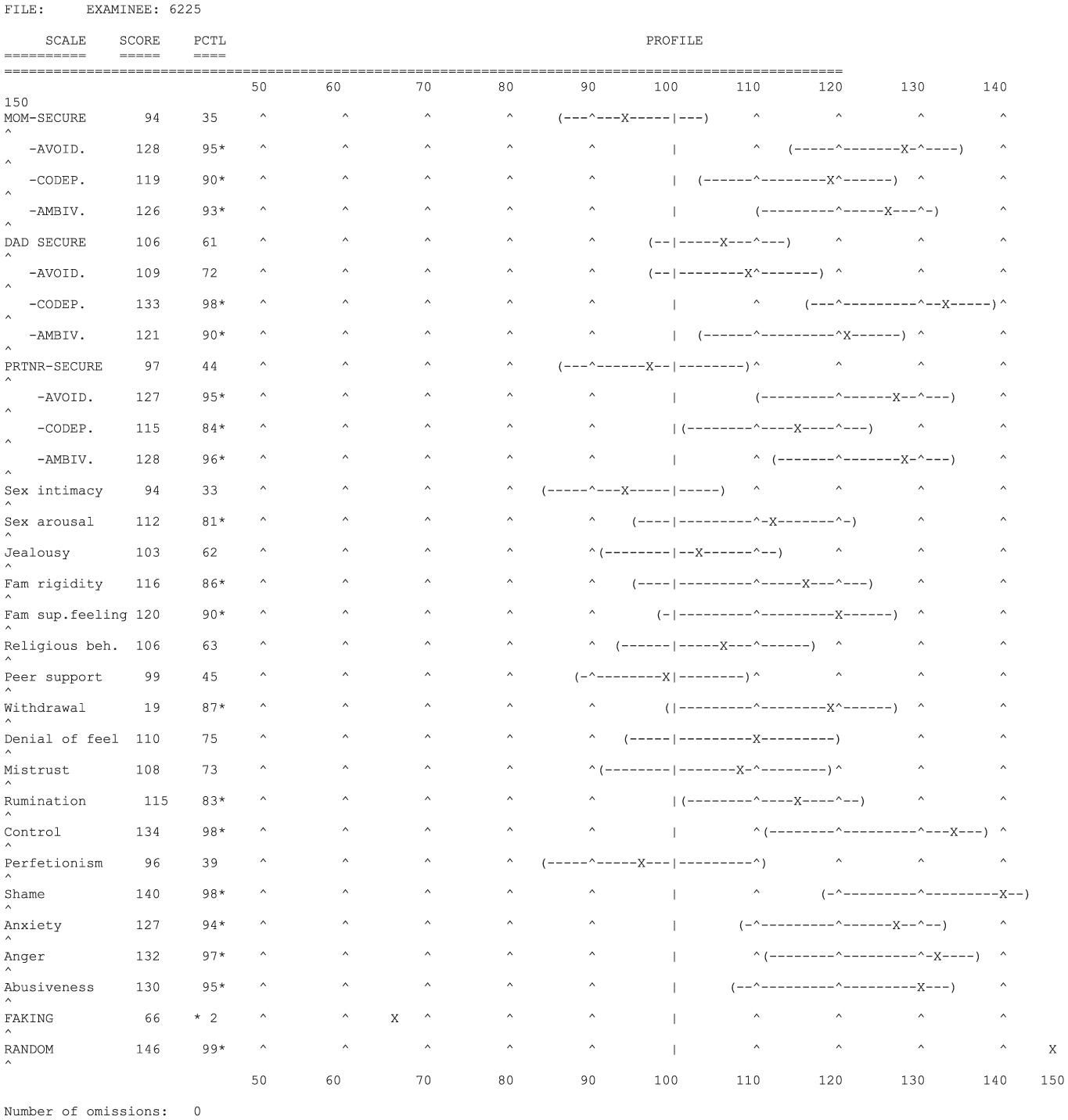
The profile scores for Inmate 6225 refer to standard scores where the mean is 100, and the standard deviation is 15.
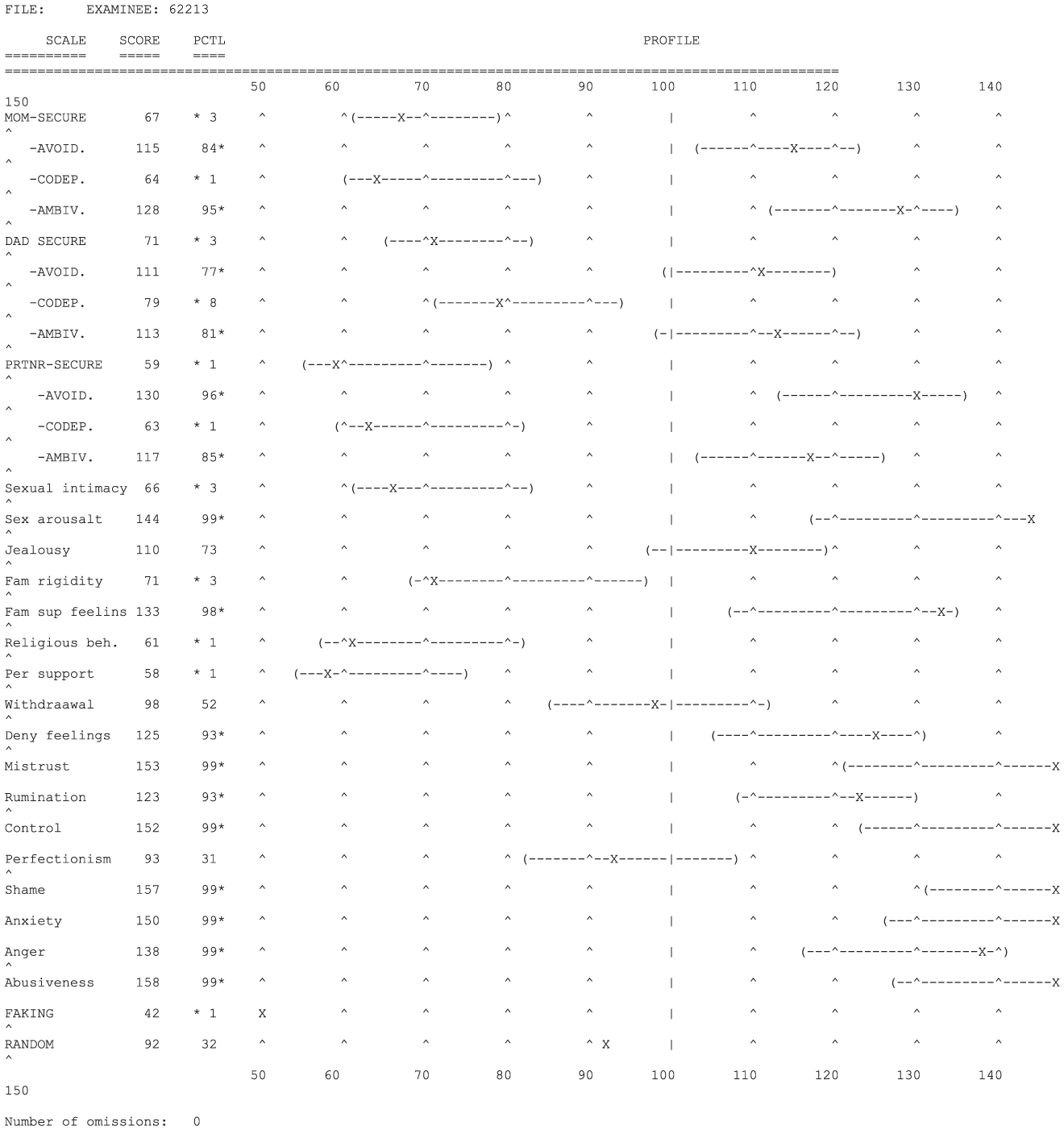
The profile scores for Inmate 62213 refer to standard scores where the mean is 100, and the standard deviation is 15.
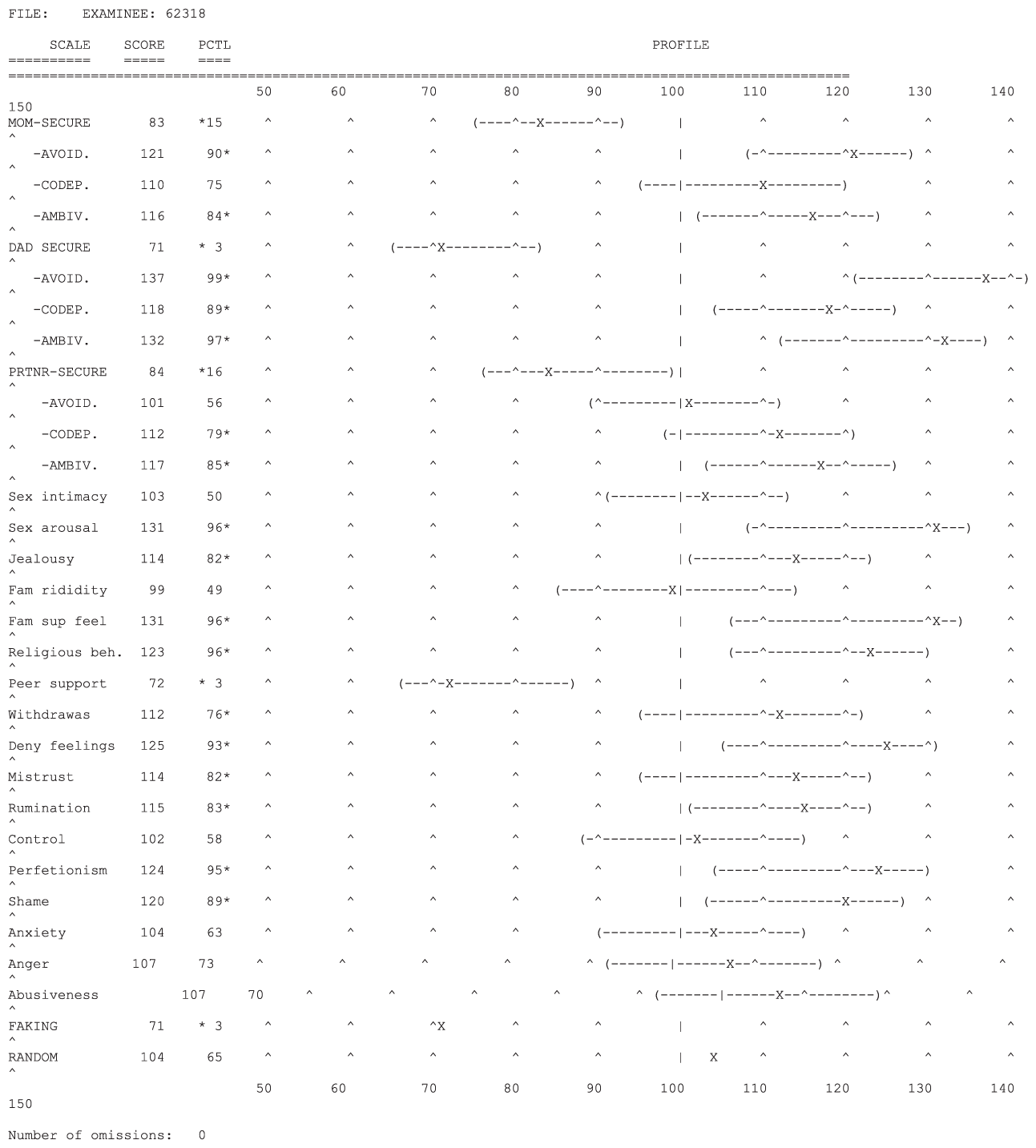
The profile scores for Inmate 62318 refer to standard scores where the mean is 100, and the standard deviation is 15.
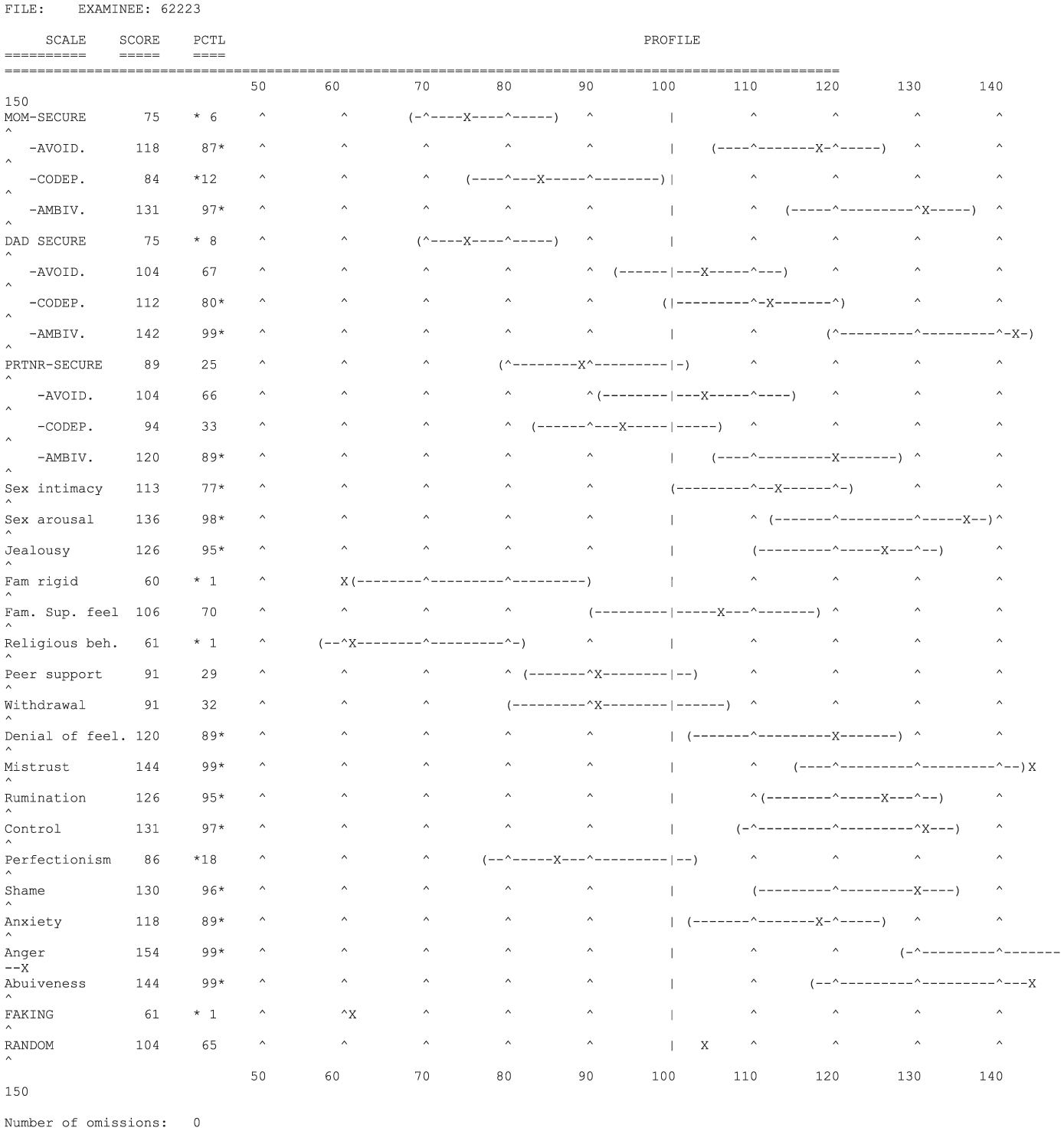
These profile scores for Inmate 62223 refer to standard scores where the mean is 100, and the standard deviation is 15.
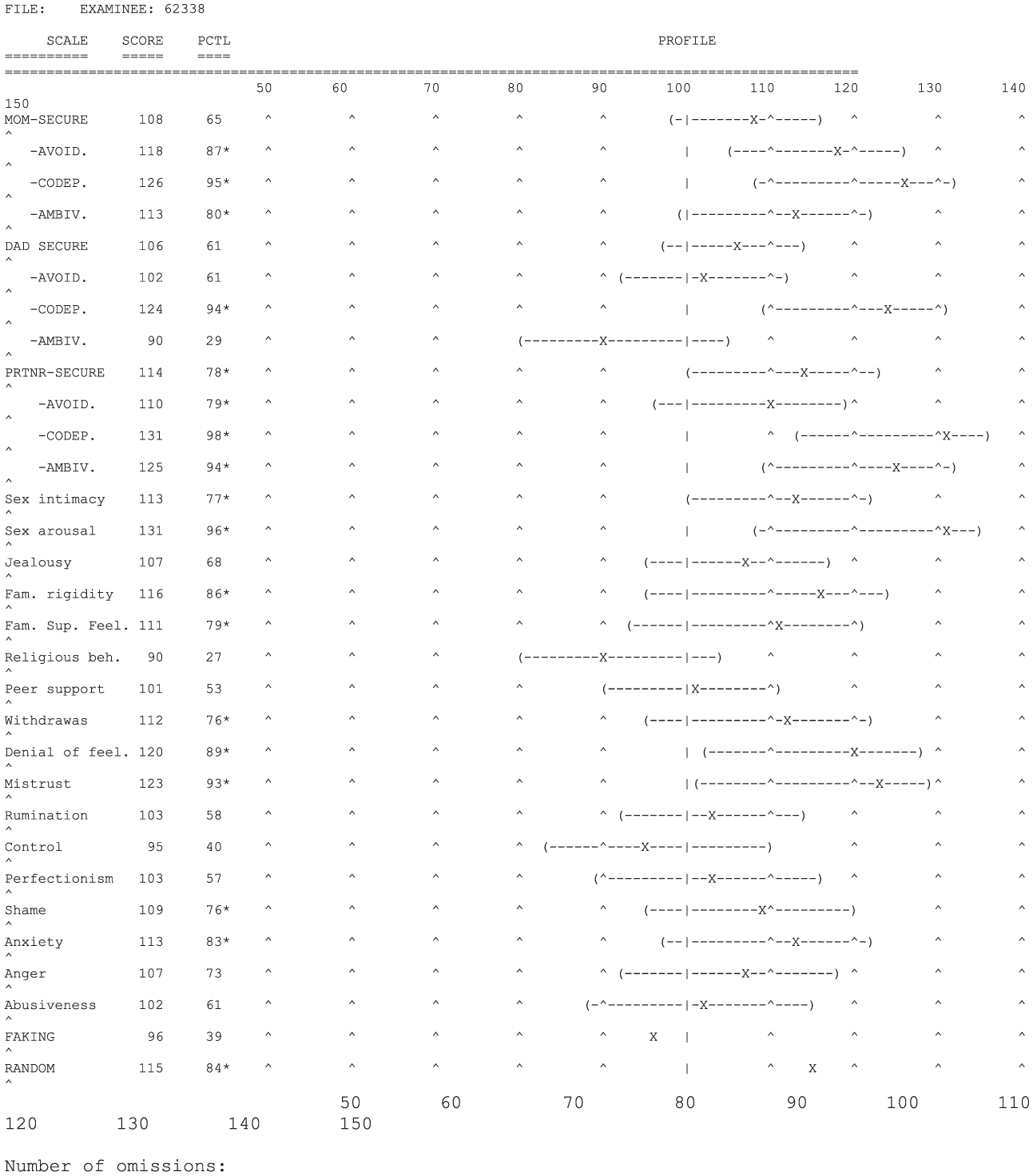
The profile scores for Inmate 62338 refer to standard scores where the mean is 100, and the standard deviation is 15.
The profile presented in Figure 3 did not conform to the ADDSTOC path-model results in that the inmate scored as “mixed” in attachments to mother, father, and partner, but the types of mixed disorganization seemed to be different between the mother and father. Attachments are classified as mixed when participants score a standard deviation or higher on two incompatible scales (Lindberg & Thomas, 2011). Mixed attachments have been implicated in cases of mental illness, anger, assault, and criminality (Lindberg et al., 2014; Lyons-Ruth & Jacobivtz, 2008). This inmate also scored a standard deviation above the mean on the Family Rigidity and Family Suppression of Feelings scales. Scoring above or below the mean by a standard deviation or greater has been used as an operational definition of “high” and “low” (Lindberg et al., 2015; Lindberg & Thomas, 2011). This individual also scored in the significant ranges for intervention on the clinical scales of Withdrawal, Rumination, Control, Shame, Anxiety, Anger, and Abusiveness.
In contrast to the above profile, the individual described in Figure 4 did not display a mixed attachment to mother, scoring high on the Avoidant and Ambivalent Attachment to Mother and Partner scales. Although this inmate scored over a standard deviation below the mean on the Sexual Intimacy scale, he scored highly on the Sexual Arousal scale. In contrast to Figure 4’s results, the individual described in Figure 5 scored a standard deviation below the mean on the Family Rigidity Scale. Other results of interest were low scores on Peer Relations and high scores on Denial, Mistrust, Rumination, Control, Shame, Anxiety, Anger, and Abusiveness.
The inmate described in Figure 5 was Avoidant and Ambivalent toward mother and father and Ambivalent toward partner, fitting the ADDSTOC model. This individual also scored highly on the scales of Sexual Arousal, Family Suppression of Feelings, Denial of Feelings, Rumination, Perfectionism, and Shame, with low scores on the Peer Support scale.
The individual described in Figure 6 was Avoidant and Ambivalent toward mother and ambivalent toward father and partner. Furthermore, he scored low on the Family Rigidity scale and highly on the Sexual Arousal, Denial of Feelings, Mistrust, Rumination, Shame, Anxiety, and Abusiveness scales.
In contrast to all the above individuals, the person described in Figure 7 scored as Codependent/Preoccupied to father and Mixed to partner and mother, with slight distinctions in the types of disorganization between mother and partner. The inmate’s high scores on the Codependent Attachment to Father scale was in direct opposition to the ADDSTOC significant path model. This individual also scored highly on the Sexual Arousal, Family Rigidity, Denial, and Mistrust scales.
In examining these results, it is evident that traditional attachment, personality, and criminology theories do not easily account for the individual differences in ACIQ-diagnosed treatment issues presented here. Although all the ACIQ profiles indicated insecure relationships, significant differences in types of attachment patterns and clinical treatment issues were found. Such significant individual differences have also been found in alcohol-dependent patients (Lindberg, Fugett, & Carter, 2015; Lindberg & Zeid, 2017), female inmates (Lindberg et al., 2015), and patients diagnosed with PTSD (Shura et al., 2015). Thus, in the context of interventions, even rigorous population-based models must be paired with attention to unique differences in attachments and clinical issues between individuals. We propose a model for this type of integration in the “Future Directions and Therapeutic Implications” section below.
Future Directions and Therapeutic Implications
In line with Lindberg et al.’s (2015, 2014) emphasis on equifinality, individual inmate profiles clearly demonstrated several unique developmental trajectories predicting adulthood criminality. Here, it was found that no individual profile perfectly matched another, and no individual perfectly conformed to group means. The importance of dealing with responsivity and individual differences has been emphasized in the work of several criminological researchers such as Andrews, Bonta, and Hoge (1990) and Andrews et al. (2011) in their Risk-Need-Responsivity (RNR) model of recidivism. The present approach extends these ideas and others (see the work of Hoogsteder et al., 2014; van der Stouwe, Asscher, Stams, Dekovic, & van der Laan, 2014) by utilizing ideographic as well as nomothetic variables. Our model and results suggest that attachment and clinical issues for each individual are additional critical foci of study and intervention. This approach aligns with the NIH’s move toward RDoC rather than only Diagnostic and Statistical Manual of Mental Disorders (DSM) (American Psychiatric Association, 2013) taxonomies in diagnoses, and should allow for more effective differential diagnoses with emphases on mechanisms of action and change (Insel, 2013).
Following these findings, we propose an ADDSTOC-based, individually tailored therapy plan for inmates upon release from incarceration. For this, we recommend mandated participation in ACIQ-based and crime addiction/substance abuse therapy modules for each of the ACIQ scales and additional addiction to crime and substance abuse modules as a condition of parole or probation. Modules would be uploaded to a Health Insurance Portability and Accountability Act (HIPAA)-approved secure website, and individuals scoring above or below a standard deviation on a scale would be required to complete daily assignments for the module accompanying that scale. Modules would be designed to address feelings, behaviors, and cognitions associated with each of their diagnosed issues. These daily exercises on the computerized modules would be integrated into the individual’s rehabilitation plan, which would involve regular sharing of module progress with a peer coach and three community support figures (i.e., approved family/friends, church members, recovery groups). In line with our path-model findings, this paradigm is predicted to effectively extract rehabilitating criminals from old ecosystems that enabled potentiated substance use and criminal behavior and introduce them into a new one in which they can learn new techniques for both negative and positive affective sharing in an environment of consistent social support (Jonides et al., 2017; Kirk, 2012; Sampson & Loeb, 2007). This approach also maximizes the “common factors” of success in interventions—emphases on several therapeutic alliances, high treatment dosage and duration, inclusion of significant others, emphasis on individual differences, and module work (Mee-Lee, McLellan, & Miller, 2010). (See Lindberg et al. [2015a] for a more complete description of suggested modules.) A method following these guidelines is predicted to increase the probability of therapeutic success in reducing both recidivism and relapse to addictive substances (Lindberg & Zeid, 2017).
Limitations
Despite the rigorous path-modeling techniques employed in the analysis of these data, they are correlational in nature, and causal links should be tested further in longitudinal designs. Furthermore, as Jeon (2015) has pointed out, although path analysis is a useful tool for analyzing multiple causalities, there are still several issues inherent in its assumptions. Most relevant here is the unidirectional causality assumption of path analyses. Reciprocal relationships between some of the variables could have contributed to the error variance. In addition, the relative weight of each of these paths within the entire model was not tested, and future work should address this idea through mediational analysis. These possibilities must be tested in future research opening several more lines of future inquiry. However, it is evident that the variables tested here interact within a single model to predict degrees of criminality, a complexity that older models of crime have not routinely tested. The nature of the testing conditions was an additional limitation to this design. Several participants exhibited irritated behavior during examination, possibly affecting the validity of their results and contributing to error variance. Other limitations included the fact that participants were selected from a protected population, and pure random sampling was not possible. Finally, the present model only applies to crimes such as assault, illicit drug use, fraud, and burglary and do not extend to “white collar” crimes (not considered here) or sex crimes and homicide.
Conclusion
Despite the above-noted limitations, the robust generalizability of the ADDSTOC model is supported by more limited structural modeling designs testing the influences of parents and peers on antisocial behavior (Cutrín, Gómez-Fraguela, & Luengo, 2015), as well as longitudinal designs predicting substance addiction (Dodge et al., 2009). The ADDSTOC model presented here significantly predicted criminality in larger sample of female offenders (Lindberg et al., 2015). Although the female offender findings in relation to this path model appear more robust, a direct comparison between these models will require simultaneous testing of male and female samples, a future direction for study. These findings confirm a significant link between each of the proposed pathways, providing, in conjunction with a focus on individual differences, a robust, comprehensive model of the development of criminality involving the interaction between predisposition to addiction, insecure parental attachments, trauma, and peer relationships. Although cross-sectional and longitudinal studies have identified the importance of these factors in predicting criminality, this is the first study to empirically test the crucial interaction of these variables in a complex model.
The ADDSTOC model was found to be a good fit in the prediction of the frequency of criminal behavior in male inmates. This model begins with insecure parental attachments, which significantly predict ACEs. Insecure parental attachments and ACEs both predicted associations with criminal peers, and ACEs predicted addiction to crime. Crime addiction also predicted stronger associations with criminal peers. Finally, insecure parental attachments, crime addiction, and peer crime predicted criminal behavior. From these findings, we conclude that comprehensive studies, focusing on interactions between variables as well as main effects in models of the development of criminal behavior, will be most successful in influencing interventions (Mulvey, 2014).
We additionally proposed a model for treating rehabilitating criminals based on our path-model findings as well as the presented individual data, for which broad treatment techniques are derived from population data, but specific treatment focuses are tailored to the individual. It is suggested that this RDoC approach to diagnosis will experience more success in reducing rates of recidivism and relapse to drugs.
Footnotes
Declaration of Conflicting Interests
The author(s) declared no potential conflicts of interest with respect to the research, authorship, and/or publication of this article.
Funding
The author(s) received no financial support for the research, authorship, and/or publication of this article.