




Abstract
Across the world, youth workers have been active in helping vulnerable youth groups. In Hong Kong, government-funded youth services are conducted by professional social workers to help vulnerable youths. This article adopted a case study approach to investigate a youth group who committed a murder. Nine murderers and two social workers were interviewed. It aims to uncover the structure and activities of the group and analyse the gang intervention prior to the murder to find out what had gone wrong and identify the lessons that social workers can learn from the murder. Four misconceptions in gang intervention have been identified. First, because of the Triad (Chinese-organised crime) affiliation, this is not just a group of deviant youths but a youth gang. Second, because it is a gang, the social workers should not group them but should instead degroup them to avoid contamination. Third, diagnosis is different from labelling. With the right diagnosis, services can be tailor-made to delabel them. Fourth, when the youths are diagnosed as a gang, outreach work instead of centre work should be provided—social workers should reach out to the gangland to uncover the youths’ gang participation and crime involvement.
Introduction
This case study originated from a murder in which a youth gang took turns torturing a 16-year-old gang member to death in Hong Kong. The gang decided to punish the victim after he advised a mentally retarded person who had been bullied by the gang to report the matter to the police. According to the court records, the offenders tortured the victim by various means that they learnt from movies and cartoons themed on Chinese Triad society. They punched the victim on his back and chest, followed by strikes with homemade kung-fu implements, an umbrella and a leather belt. They stabbed his hands while wedging his head between the legs of a stool. The victim was ordered to eat cigarette butts and apologise to everyone in the gang. The gang made up a Triad society poem in which all their nicknames were mentioned. They recited the poem and beat the victim when their names were pronounced. The beating continued until the victim fell unconscious. He died about an hour later. The next day, the gang met up again and placed the corpse in a cardboard box and sealed it with adhesive tape. The gangsters poured sulphuric acid over the corpse to conceal his identity and twice set him alight with paraffin. After they failed to burn the corpse completely, they put it in a rubbish bag and wrapped it in canvas. The canvas was then thrown into a larger bin, which was taken away by a rubbish truck.
In this case, 14 youth offenders were put on trial. Five of them were acquitted and nine (the interviewees in this study) were found guilty of murder, manslaughter, or serious assault. Because of the wicked and brutal killing involved, a government-commissioned research was conducted to find out the causes of the murder. The views of the murderers and their teachers, family members, and social workers were collected through focus interviews. It was discovered that the gang had been receiving social work services in a youth centre for a few months prior to the murder. This article aims to uncover the structure and activities of the youth gang and the gang intervention prior to the murder to find out what had gone wrong and identify the lessons that social workers can learn from the murder.
Literature Review
Gang Treatment Programmes: Suppression, Intervention, and Prevention
In cross-examination of the internal dynamics, experiences, and structural components of youth gangs, much of the delinquency, crime, and victimisation problems derived from a history of early delinquency, childhood abuse, and family neglect and violence experienced by individuals (Howell, 2003; Taylor, 2008; Thornberry, Krohn, Lizotte, Smith, & Tobin, 2003). Consequently, to reduce youth gang problems, programmes should address and deal with reducing these high-risk factors. Globally, various intervention models and programmes have been developed to redirect, transform, and prevent gang crime and violence (Goldstein & Huff, 1993; Huff, 2002; Klein, 1971; Loeber & Farrington, 1998; Spergel, 1995). However, suppression techniques, such as the Three Strikes law, zero tolerance policies, as well as psychiatric institutionalisation or boot camps, have been found to be counterproductive and ineffective in reducing or eliminating youth gangs because they bring clusters of delinquent individuals together (Borg & Dalla, 2005).
There is no single method or treatment programme that can single-handedly confront, identify, administer, and reduce gang affiliation and membership by itself. Rather, a comprehensive community-wide approach to the gang problem that involves community mobilisation, social intervention, provision of social opportunities, deterrence, suppression, and reintegration of incarcerated gang offenders back into the community have been recognised as being the most effective (Howell, 2003; Huff, 2002; Spergel, 1995). For instance, in the United States, the Comprehensive Strategy Framework is an effective method that is already in effect, which includes a combination of prevention, intervention, and suppression strategies within a community context (Borg & Dalla, 2005). The framework targets the strengths and weaknesses within the community, particularly social institutions such as schools, social services, and health and employment programme, and reinforces stronger relationships between resource agencies and the community. Moreover, the Gang Resistance Education and Training Programme has been offered across the country, in which 9-week educational sessions are arranged to teach the students about life skills, peer pressure, cultural sensitivity, drug awareness, as well as gang issues, to prevent and immunise vulnerable youths from future gang membership (Klein, 2007).
Youth workers across the world have been active in helping vulnerable youth groups. In England, detached youth workers are active in areas affected by youth riots, and they serve young people from separate White communities, Asian communities, and those with Muslim faith (Graeme, 2010). In Germany, mobile youth work is used to address the youth gang problem. Based on an outreach youth council concept, mobile youth work provides casework, street work (or outreach youth work), group work (or work with cliques), and community-based work (Specht, 2010). In Kenya, street work, group work, and individual aid are used to help the large number of street children. Social workers reach out to street children, interact with them, and work on the streets at night. Group work is organised for youth groups who stay in their bases (Okombo, 2010).
In Singapore, the Streetwise Programme is designed for youths aged between 13 and 19 years who have unwittingly drifted into gangs or secret societies, while giving them the option to leave their gangs in lieu of prosecution. If they join the programme, then their names will not be recorded in the registry of secret societies kept by the police. The 6-month developmental programme provides recreation, academic support, career guidance, supervision, and counselling for the youngsters and their significant family members (Choi & Lo, 2004). In Hong Kong, where youth bullying has been an alarming problem (Wong & Lo, 2002; Wong, Lok, Lo, & Ma, 2002), government-funded outreach social workers guide young people on street corners, in commercial centres, and housing estates (Choi & Lo, 2004). In Macau, outreach youth work services similar to those in Hong Kong are provided by the Community Youth Work Teams (Lo, Cheng, & Au, 2013).
Gang Cohesiveness and Delinquency
Serving youth in the gangland, outreach workers should be aware of gang structure and dynamics. Research has demonstrated that organisational features, such as regular meetings, codes of conduct, role differentiation, gang leadership, and initiation rituals, are related to higher levels of delinquent behaviours in youth gangs (Decker, Katz, & Webb, 2008; Klein, 2007). Gang researchers are divided into two camps on the issue of gang cohesiveness. One camp views the essence of a gang in terms of esprit de corps, solidarity, morale, and group awareness (Miller, 1958; Thrasher, 1963; Whyte, 1955), whereas the other camp suggests that gangs are near-groups (Yablonsky, 1962) or not cohesive groups (Patrick, 1973; Sanders, 2005). When a gang is cohesive, its members will identify strongly with the gang, and thus are influenced by its norms and subculture. The more cohesive the gang, the stronger the members’ gang identity. Gang cohesion leads to effective group control, which compels the members to follow socially unacceptable group norms, thus creating more incidences of law-breaking behaviour and further reinforcing gang identity. Therefore, group cohesiveness and delinquent norms facilitate higher levels of delinquent and aggressive behaviours in gang members (Howell, 2003; Thornberry et al., 2003).
If a gang is a near-group or noncohesive, then conventional group work intervention by social workers may impose a group-fulfilling prophecy as a result of their misconception of the gang dynamics. A gang intervention model should aim at the dissipation of gangs by undermining their cohesion rather than formalizing their structure (Klein, 1971; Yablonsky, 1962). Lo (1992) proposed a model comprising of (a) degroup to undermine gang cohesion, (b) group casework to aid individual gangster who needs counselling, and (c) group transformation that creates a new group identity by transforming fringe gangsters who are degrouped from gangs into sports clubs, arts clubs, volunteer service groups, and so on. These three approaches are not mutually exclusive but they do complement one another. Establishing good rapport, promoting rational thinking and democratic decision-making, and changing negative subcultural norms into positive norms help to transform gang identity into positive youth identities (Lee, Lo, & Wong, 1996).
Triad Influence on Youth Gangs in Hong Kong
Triad societies are criminal organisations. In Hong Kong, criminal activities organised by the Triads have been rampant. Although the Triads are no longer believed to be cohesive, they have become modernised, internationalised, and commercialised (Chu, 2000; Lo & Kwok, 2012). Besides secrecy, the guiding principles for all Triad members and activities are sworn brotherhood, loyalty to the gang, discipline, and obedience to the leader. Accordingly, some Triad values have developed, such as an eye for an eye; not taking advantage of other members; committing crime without fear; self-sacrifice for the gang; helping others in times of trouble; no backstabbing of other members; no talking to the police; settling conflict between members one on one, without weapons and with fair-play; no sexual relations with another member’s girlfriend or sister; and no fighting over females (Lo, 1993).
Unlike their counterparts in Chinatowns, where the connections between youth gangs and organised crime groups are conceptualized as associations between individuals in groups rather than as criminal conspiracies (Joe, 1994), Triad-sponsored youth gangs have been reported to be a problem in Hong Kong. Triads are known to often attract police attention at the lower levels of their activities where their involvement in criminal activity is primarily conducted through street youth gangs. It has been found that the majority of youth gangs, which are mainly active in working-class housing estates of Hong Kong, are associated with the Triads and that the survival of the Triads accelerates the formation of youth gangs in new towns (Hong Kong Federation of Youth Groups, 2000). Lo (2012) revealed that the Triads survive across different generations over time by means of a Dai Lo–Lan Tsai (protector–follower) line relationship. While the Triad Dai Lo protects the young people in the gang territory, the youths have to listen to the instructions of the Dai Lo, and they are therefore directly influenced by Triad norms and subculture. Through their involvement in youth gang subculture, the youths are likely to identify with Triad values and to engage in criminal activities. A process of Triadisation (Lo, 2012), or the cultural assimilation of young people through Triad criminal subculture, occurs whereby young people are socialised with Triad-oriented values in the gangs, thus strengthening their deviant and even law-breaking identity.
Method
This article adopted a case study approach because this method can derive in-depth understanding of the gang murder case within its real-world context. It relied on multiple sources of evidence, including court records, interviews with offenders, and interviews with social workers of a youth centre that the offenders frequented. The court records provided detailed information of the murder; the interviews with offenders provided information about the group dynamics and the youths’ behaviour; and the interviews with social workers provided information on the gang intervention to the youths prior to the murder.
All the nine convicted offenders were interviewed in jail on various issues. They comprised one female and eight male youths. Among them, two youths were identified as gang leaders, five youths as gang members (including one female), and the remaining two youths fulfilled the role of servant. At the time of the murder, the youths were aged between 14 and 17 years. During the interview, the respondents were aged between 17 and 20 years, and they were already serving their prison sentences. After the study was approved by the institutional ethics review committee, the research team sought informed consent from the youths or their guardian if they were not 18 years old. They were interviewed in jail by two interviewers, and each interview lasted for approximately 120 min. Given that the interviews took place in prisons, tape-recording was denied and interview notes were pencilled down. In order not to retraumatize the youths, they were not asked about the murder, but about the group and its group dynamics, including six major areas: (a) reasons for joining the group, (b) reasons for staying in the group, (c) daily group activities (legal and illegal), (d) group structure, (e) group norms, and (f) group members’ Triad affiliation. Semistructured interviewing technique was adopted.
The next set of 2-hr interviews was conducted on two social workers who worked with the youths who participated in the activities provided by a neighbourhood youth centre a few months prior to the murder. The social workers were interviewed in the youth centre, and prior consent was obtained. Through unstructured interviewing technique, they were asked about three major areas of intervention: (a) the kind of activities the young people attended in the youth centre, (b) the intervention plan with the group, and (c) the social workers’ perceptions of the youths.
The murder took place on May 14, 1997, and the interviews were conducted in 2000. The data had not been revealed publicly after the interviews because all the young people were below 21 years of age, the definition of adulthood in the criminal justice system of Hong Kong, and some of them were appealing against the sentence of life imprisonment. To avoid further damage to the young people and to prevent any possible impact on the appeal, the research data were sealed after the interviews. Through data mining, this case was uncovered 15 years later by one of the authors who was the principal investigator of the study. The objective is to help readers identify the lessons that we learnt from the (mis)intervention of social workers in working with the gang. As the number of interviews in the case study was very small, the principal investigator read through the interview transcripts himself for content analysis. Some discrepancy between the two groups of respondents in viewing whether the youth group was a gang was identified during the analysis. Such discrepancy, as the present article contends, led to inappropriate gang intervention as reported in this case study. The findings of both groups are reported in the next section.
Findings of the Interviews With the Youths
Reasons for Joining and Staying in the Gang
All the respondents except the female lived in the same neighbourhood. Friendship and avoiding boredom were the most significant motivations for the youths joining the gang. Schools and youth centres were the social settings where the youngsters knew each other and continued the relationships on a voluntary manner, but their interest in education declined after connecting with those who shared a similar lack of enthusiasm. Ironically, missing school left them with more freedom than they desired. So, to pass the time, they often socialised with other gang members. The interviewees admitted that they would hide at Leader A’s place when they bunked off school.
The only female respondent, YO-5, who was aged 14 years at the time of murder, came to meet this group of youths via a summer hiking event that was organised by the youth centre with the assistance from the youths who worked as volunteers. She committed the murder about 2 months after the hiking. She did not live in the same neighbourhood as the other gang members. She used to be in two youth groups, but after meeting this gang she had been meeting them more often than with the other youth group. She thought of the gang as a happy and close group of friends. She liked to stick with the gang because she felt happy, and the members treated her like she was one of them.
Membership in the youth gang had its advantages and disadvantages. For instance, gang participation widened the distance between the members and their parents, and members and their friends outside of the gang. Disapproval by parents led the youngsters to alienate themselves from their family. On the contrary, the youths gained “brothers and sisters” with similar interests as the rest of the gang and most respondents seemed happy with their newfound happiness. Assuming that the individuals did not excel academically, their already mediocre grades slipped further after joining the gang because they previously lacked interest in education and they found new sources of entertainment and self-enhancement. Some of the respondents were kicked out of school due to their lack of participation. Joining the youth gang had a negative impact on some of their moods and personalities. Although they felt less lonely, their moods were constantly grumpy, stressed, and short-tempered. They often took out their pessimistic emotions on someone else; fellow members, for example.
Identical to the reason for joining the gang, their justification for staying in the gang was due to the friendships and relationships that they had created with other members of the gang. They admitted that it would be awkward if they were to quit because contact among members within the neighbourhood was unavoidable. Despite that, if the members’ close companions chose to leave, then they said that they would do the same. With their future hanging by a thread, the remorseful youth only hoped that the murder and imprisonment would not generate too much damage on their futures. Many of them wished to continue their studies and find employment after release.
Group Activities
Like other adolescents, the youths engaged in leisure activities to pass time, such as playing basketball and volunteering at the youth centre. The youth centre was one of the places of gathering for the youths—They loitered outside the venue even when it was closed. Particular members were surprisingly passionate about voluntary work, especially Leader B, who also encouraged the others to take part in volunteering. When asked, he admitted that participating in volunteering would compensate for the sin he committed in crime. Group leisure activities and having mutual friends initiated the formation of social groups, but without supervision by parents and schools they were easily influenced by delinquent others and by those with a Triad affiliation. The participation levels of each member appeared to depend on the activity that the gang chose to do, some individuals did not take part if the activity was illegal or might cause harm. Furthermore, the members’ attachment to others only seemed to be made on a superficial level where they enjoyed the company of each other but would not converse about personal problems. Some of them admitted being unable to tell “friend from foe” among the group.
In particular, this youth gang took part in both legal, or “healthy activities,” and illegal acts. However, there was a fine line between the morality and immorality of the activities that they were taking part in; for example, selling illegitimate goods to make a living and breaking the law for the greater good or simply because it was the lesser of two evils. Distribution of illegal goods and substances was popular among the gang because half of the respondents were invited by the Triad protectors to sell smuggled cigarettes, illegal petrol, and drugs in return for easy money. In addition, it was not uncommon for fights to occur, especially when the members requested help against an opponent or when these frontline soldiers were ordered to beat people by the Triad protectors, who recruited teenagers from the gang to strengthen their power through Leader A (see Figure 1).
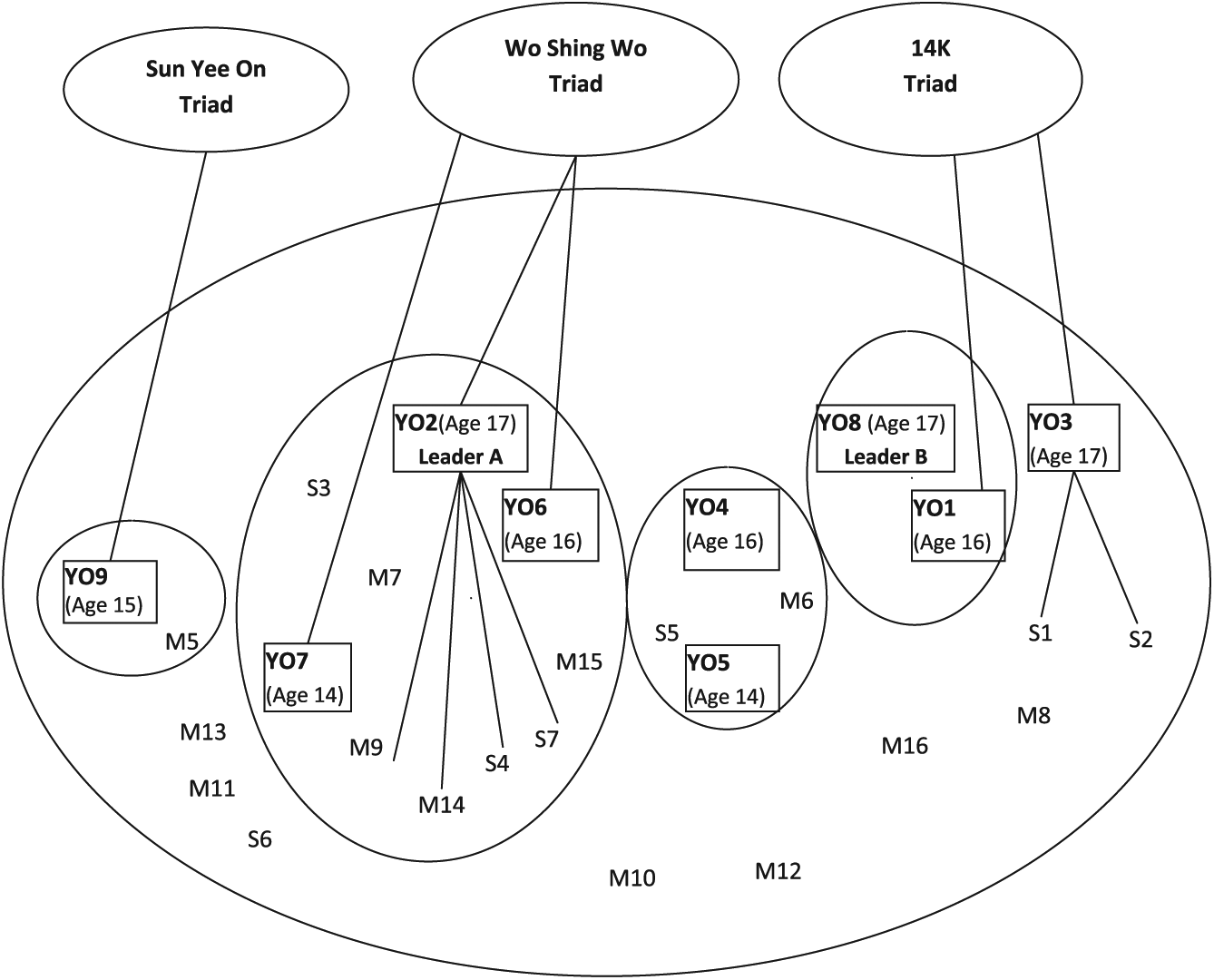
The gang structure and Triad affiliation.
Group Structure and Norms
Within the gang, there were a few subgroups, most of whom had known each other for longer or had a closer bond. There was an apparent gender difference in the gang, where there were fewer females than males; however, the total sum of individuals in the gang as perceived by the respondents was inconsistent. Perhaps it was due to the irregular participation by some members of the gang. Some stated that there were 20 members, whereas others believed that there were 30. Although the majority of the members were aged between 14 and 17 years, the youngest individuals affiliated with the gang were only 10 years old, and they were often relatives of active members of the gang. This happened because active members would bring their younger siblings; hence, the rest of the group’s lack of knowledge of the true size of the party. In addition, allowing younger siblings to attend gang activities caused a higher risk of falling in with the gang and eventually joining. If that was the case, then the youth gang would not discontinue, although some older siblings acknowledged that what they were doing was wrong.
The gang had two leaders of similar status. To be a leader is to have power. A gang’s ideal leader must possess certain qualities, including being trustworthy, mature, and knowing how to fight, but what appears to be the most important factor of a leader is his physique. Both leaders in the youth gang had the most power as opposed to the other members, and the leaders were not elected but appeared naturally. Essentially, only those with a large build or those good in fighting were able to obtain the status of a leader due to the association with ferociousness. Only powerhouses and people with the ability could be in charge. For example, Leader B was “mature,” “spoke with power,” “had personal principles,” was “determined,” and “good at basketball,” and “possessed a black belt in Taekwondo.” However, members with a small physique and a weak mind could only be followers, and they belonged to the category ah sei (servants). These members were reflected as weak and were susceptible to getting bullied. Thus, there seemed to be a clear power distribution within the gang.
In case of internal conflict, the members relied on their leaders to solve “trivial” problems, and the results were established democratically, although the leaders had most of a say. The most familiar norm was not to betray each other, and money was a matter that should not be dealt with within the gang. Furthermore, there were multiple rules when it came to females: “Females have priorities and will be helped first,” “they cannot reveal secrets to other people,” “when the boys are talking, the girls cannot cut in,” and “the girls will let their boyfriends decide.” The respondents implied that there was a gender hierarchy within the gang, females were assisted first but the males had more authority and power. Noncompliance with the norms led to negative results for the wrongdoer, such as being boycotted and beaten. In addition, it appeared that grudges would be held onto even after a deed had been committed; hence, the shallow friendship between some of the members.
Triad Affiliation
Within the gang, three notorious Triad groups were prominent: Sun Yee On, Wo Shing Wo, and 14K. Whether the members of the youth gang were a direct follower or merely associated with someone from one of the three, and despite some members’ affiliation to different Triads or none at all, they still continued to fraternise. Out of the 28 identified individuals aged 13 to 17 years in the youth gang, 17 were connected to a specific Triad group through a Dai Lo–Lan Tsai (protector–follower) line relationship (see Figure 1). First, two of the members, who formed a subgroup, were directly affiliated to Sun Yee On Triad. The second subgroup was the largest, and it contained some followers of Wo Shing Wo Triad, including seven Triad followers. Third, three of the members were associated with 14K Triad. Last, within or outside the five subgroups, 16 individual members did not follow any Triads.
Although some members did not follow a Dai Lo, they were still accepted members of the youth gang. Despite his lack of Triad affiliation, Leader B was acknowledged as one of the leaders of the group, which was an exception. He had a belief that following a Dai Lo only led to negative experiences and mental states, such as “feeling like trash.” However, in contrast, some respondents did admit that following a Dai Lo made one more “fierce and more in charge.” Yet, the majority of the gang associated themselves with a Triad group, mostly Wo Shing Wo Triad. Perhaps the decision to become a Lan Tsai was determined by one’s (in)adequate knowledge about a Triad’s criminal enterprise or because of underachievement at school; thus, following a Dai Lo compensated for this feeling of failure. The idea of freedom was subtle in the respondents’ accounts. It was suggested that nonfollowers had more independence than followers because they did not have to act in accordance to their Dai Lo’s command and were free to do as they wish. Fearing one’s Dai Lo also limited a follower’s freedom because the consequences might be severe. However, many of them followed a Dai Lo because of the protection that the Triad could offer—There were lots of gang fights in the gang territory and they felt secure when being protected.
Findings of Interviews With Social Workers
Through interviewing social workers of the youth centre where the youths often gathered, the researchers aimed to uncover three major aspects: social work activities, gang intervention, and social workers’ perceptions of the youths. The researcher found that the social workers recognised the youths as a group of healthy and energetic teens. There were three strategies in the intervention and activities provided. The first strategy was to channel their deviant energies to constructive means. The social workers organised the youths into a basketball team, which had regular practice sessions and games, so that their group cohesion could be established. The second strategy was to empower the youths through their participation in volunteer services. The youths volunteered in helping do some of the daily chores in the centre. In particular, they organised a summer hiking trip for other teenagers in the community (in which the female offender attended and met the gang for the first time). The workers hoped that the leadership and problem-solving skills of the youths could be enhanced through this event. The third strategy was to promote their sense of belonging and, therefore, their attachment to the centre. The youths were invited to help organise the youth centre’s open day, where some of the youths were involved as the master of ceremony and other celebrative tasks. Through these activities, the youths had established a spirited and active impression in the social workers’ minds, and hence they were granted a lot of opportunities to engage in the youth centre’s social and volunteer activities.
When we asked about the social workers’ perceptions of the youths, surprisingly, despite the youths’ frequent visits at the youth centre, the social workers failed to notice the youths’ Triad affiliations. During the interviews, when the researchers (after interviewing the youths in prison) named the youths as gangsters, the workers quickly responded, “Do not label the youths as gangsters; they are only a group of youths with minor deviant behaviour.” The social workers emphasised that the youths were just ordinary misbehaving adolescents. They were simply naughty but nonetheless lively and constructive in terms of volunteering at the youth centre. The workers refused to categorise the youths as a gang.
Discussion: Misconceptions in Intervention With Youth Gangs
In Hong Kong, government-funded youth services are conducted by professional social workers. Youth centre is a neighbourhood service centre for ordinary young people aged 6 to 24 years. Based on their needs, the centre provides guidance, counselling, support, socialisation, and developmental services. Leisure activities, interest groups, and volunteer programmes are also organised as a means of social intervention and community connection (Choi & Lo, 2004; Social Welfare Department, HKSAR Government, n.d.). With a membership system, young people can join the centre voluntarily. In this case study, four misconceptions in gang intervention with youth centre work have been identified. First, as some of them had Triad affiliation and active gang involvement, the youths were not just a group of deviant teenagers but were also a youth gang. Second, because this was a gang, the social workers should not group them but should instead degroup them to avoid contamination. Third, diagnosis is different from labelling. Without the correct diagnosis of this youth group, intervention will inevitably go wrong. With a correct diagnosis, services can be tailor-made to suit the youths’ specific needs and to delabel them. Fourth, when the youths are diagnosed as a gang, outreach social work instead of centre work should be provided. The social workers should reach out to the gangland to uncover their Triad affiliation and criminal involvement. These misconceptions will be discussed below.
In the field of gang intervention, the matter of categorising and identifying the problems of the gang youth is essential because it determines how an individual could be helped through effective service. In this case study, there was a misconception of the practice of diagnosis to be synonymous with the practice of labelling, resulting in the social workers failure to diagnose the youth group as a youth gang. In order not to label the youths, the social workers essentially acknowledged that the youths were not a high-risk group in need of a special gang intervention strategy. Rather, they targeted their specific youth needs, such as realizing their own strengths and life expectations, developing their life goal and career plan, and empowering them through volunteer services.
In social work practice, there is a distinct difference between the concept of diagnosing and labelling. Labelling refers to a social interactional process of attaching stigmatising remarks onto an individual, which in-turn carries heavy discriminatory or prejudicial consequences. The labelling process suggests that an individual’s primary deviation would lead to social penalty and further deviation to stronger penalty, social rejection, and even formal community sanction. Eventually, the individuals would strengthen their deviant conduct as a reaction to stigmatisation and ultimately accept their deviant status (Becker, 1963). In contrast, diagnosis is to identify the youths’ personal problem and the cause of the problem. With the correct diagnosis, social workers assign a correct label to the youths so that they can receive appropriate gang service, which includes the social workers’ specially designed programmes and activities to delabel the gang (see Figure 2).

Diagnosis of and intervention with delinquent youth groups.
As there is no universal consensus on the definition of youth gangs (Klein, 2007), the demarcation between deviant youths and youth gang is blurred. The murder triggered a government-commissioned inquiry in which a task force (Task Force, 2000) constructed a typology of deviant youths, youth gangs, and Triad criminal gangs (see Figure 3), and a diagnostic tool (see the appendix). Triad criminal gangs are organised criminal groups who constantly make use of young people to commit crime so as to waive their criminal liability. As such, they often recruit young people as new blood through youth gangs, which they control by Triad norms and subculture (Lo, 1993). Given that the Triads are professional criminals, they are the target of the police. Because youth gangs are linked with Triads and some members occasionally commit crime as instructed, they are the target of social workers. Deviant youths can be any ordinary youths who, even though do not have a Triad association, commit delinquency because of the storming transitional period in adolescence. They often engage in ordinary social activities but sometimes misbehave or break the law to face life frustrations or seek adventure to fulfil psychological needs (for a detail discussion of the typology, see Lo, 2012, p. 558). In the present study, most of the respondents exhibited deviant behaviours. Two thirds of the youths were affiliated with Triads (see Figure 1), and some had regularly engaged in criminal activities as instructed by Triads. Based on the diagnostic tool outlined in the appendix, the Task Force (2000) diagnosed the youth group in this case study as a youth gang. Training workshops were organised for social workers who worked with potential youth gangs.
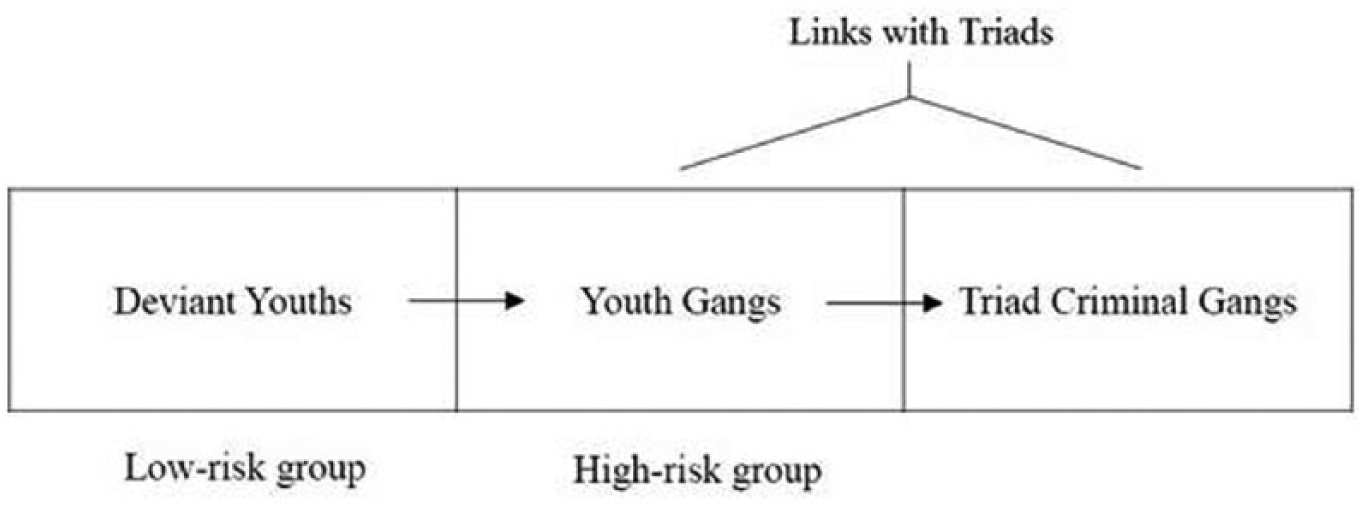
A typology of delinquent youth groups.
Another lesson that we learnt is about gang intervention: Youth centre is no panacea for a youth gang, and social workers should reach out to work in the gangland. The youths had been hanging out in the youth centre for a few months prior to the murder. The social workers were aware of their deviant behaviours but the only regular contact that they had with the social workers was at the youth centre. Without entry into the gang territory, they were oblivious to the youth gang’s affiliation with the Triads. The social workers did not understand other sides of the lives of the youths—the side that was deeply affected by their Triad connections. Although not all the members had the protection of Triads, most of them had. This Triad connection was not known to the social workers due to its secretive nature. The side that was known to the social workers was the normal and brighter side, during which the youths engage in volunteering, basketball games, and other social and recreational activities. However, it was nonetheless the mysterious darker side during which the youths engage in various illicit activities that posed a threat to themselves and the community. Such pattern is consistent with that of gangs reported in the literature. For instance, youth gangs in Chicago and London were involved in stealing, burglary, violence, and drug taking, and simultaneously actively engaged in sports such as football, basketball, and boxing (Sanders, 2005; Thrasher, 1963). Hence, without sufficient on-site knowledge, the social workers could not make a correct diagnosis or detect the Triad elements in the youths because of limited contact in situ in the gangland.
Outreach social work is not a precourt or court diversion programme (Lo, Maxwell, & Wong, 2006). Outreach workers’ intensive contacts with youth groups in the gangland are definitely not easy and simple. In the first place, sensitive observation and proactive relationship-building skills are required to understand their interactions and group dynamics. Substantial time is then required to reduce the youths’ suspicion and resistance, so that trustful relationships can be developed. To maintain the relationships, programmes are tailor-made to cater to their psychological needs and recreational interests (Wan, Chuk, & Chan, 2010; Working Group on Operational Manual of Co-ordinating Committee on Outreaching Social Work, 1988). Most importantly, to induce changes in the target youths, accurate assessment of the youth groups and the use of de-grouping and group transformation techniques (Lo, 1992, 1993; Spergel, 1995, p.251) are essential. The lack of intensive outreach in the case study had evidently undermined the social workers’ judgement of the risks faced by the youths, resulting in inappropriate intervention as discussed below.
The social workers’ original strategies were to channel the youths’ deviant energies to constructive means, empower them through participation in volunteer services, and promote their sense of belonging and attachment to the youth centre. They organised and promoted participation in volunteer programmes to enhance their self-esteem and self-efficacy (Lo, Cheng, Wong, Rochelle, & Kwok, 2011), as well as to develop interpersonal skills to prepare them to find a place in adult society. Although it was appropriate to encourage the youths to participate in the youth centre’s volunteer programme to help them overcome their delinquency, the present study found that the hiking that the youths volunteered to organise introduced an opportunity for the only female offender of the case study, who was once an innocent 14-year-old child, to be exposed to a group of gang youths. After befriending and increased social interactions with fellow gang members, it was only a mere 2 months after her association with these deviant peers that she participated in the homicide. The failure on the social workers’ part to recognise the Triad affiliation of some of the youth gang members caused contamination of other ordinary youths, such as this girl, in the neighbourhood as the youth gang continued to expand naturally via youth centre activities. Thus, it was absolutely necessary for the social workers to tailor-make specific volunteer programmes for the youths based on the correct diagnosis that it was a youth gang and not an ordinary deviant youth group (see Figure 3).
Gang culture is an attractive way to build relationships and identity for youths, but joining a youth gang introduces members to more deviant behaviour through association with delinquent peers (Howell, 2003; Thornberry et al., 2003). To avoid contamination of other youths by the gang, separating ordinary teenagers away from the gang youths should be of paramount importance in planning a community programme. Under this rationale, if the gang youths are to organise a volunteer service for the community, the service recipients should be adults, rather than teenagers, living in the neighbourhood. As such, the possibility of the teenagers being recruited into the gang and the susceptibility of Triad influences would be significantly reduced. The volunteer programmes provided to other target groups, such as adults and elderly people, could offer similar channels to empower the gang youths with skills and knowledge through learning to organise meaningful events for people in the neighbourhood (Tam, 2012), thereby minimizing the risk of what could be called deviancy training (Dodge, Dishion, & Lansford, 2006). For instance, the gang youths could organise a festive event in an elderly home such that they could sing and dance with the elderly during New Year holidays, or simply chat with them to share their stories. This volunteer event would promote mutual understanding between members of two generations. The elderly would see the constructive side of the youths, while the youths would see the suffering and resilience of their parents through interaction with the elderly.
Conclusion
This article differentiates deviant youth groups and youth gangs in Hong Kong. Because of the survival of Triad societies, Triad members will recruit young people through youth gangs so as to provide them with sufficient manpower. This provides new blood for organised crime and enables Triad societies to survive over time. Although not all gang youths are Triad members, the existence of some Triad-affiliated members in the gang has created a channel for the Triadisation of criminal values and behaviour (Lo, 2012). Engagement in delinquent acts predicts a future in youth gang subculture (Cloward & Ohlin, 1960) and, therefore, more involvement in the subculture means that more crimes committed and there is a higher risk of stigmatisation, which pushes individuals to pursue criminal paths due to weakened bonds between youths and social institutions (Thrasher, 1963). Therefore, social workers should aim to alter the gang dynamics and its relationship with Triad society.
Ignorant of the counter nature of the gang’s lifestyle, social workers may commit a mistake in granting a youth gang permission to organise events for other teenagers in the neighbourhood. These events may serve as pathways for new recruitment to the gang. The misinterpretation of the gang’s behaviour on the part of the social workers may contribute to the expansion of the youth gang in congested neighbourhoods, such as Hong Kong’s housing estates. The lack of proper intervention strategies, such as de-grouping (Yablonsky, 1962) and other suppression, treatment, and prevention activities (Goldstein & Huff, 1993; Huff, 2002; Klein, 1971; Loeber & Farrington, 1998; Spergel, 1995), further spurs the development of youth gangs in the community because students in their teen years are more vulnerable to similarly youth activities, such as volunteer services and sports activities. Without an early identification, correct diagnosis and proper preventive strategies from social workers, the spread of criminal elements among young people in the gangland becomes inevitable.
Findings of this study suggest that social work services for at-risk youth should be outreach in nature. Coincidentally, based on the Hong Kong experiences, outreach youth services have been formally established in different Asian cities since the early 2000s, such as the Community Youth Work Teams in Macau in 2004, the Youth Go in Singapore in 2010, and the Youth Zone in Guangzhou in 2016. The similarity among these four jurisdictions is that they all employ professionally trained social workers to run the outreach services. The International Conference on Outreach Work was held in Hong Kong in 2015, with the active participation of 219 Asian youth workers. Being the first outreach youth work conference in Asia, it specifically addressed issues related to Triad-sponsored youth gangs, violence, and female delinquency, signifying the generalizability of this working approach in Chinese communities.
Limitations of this article have to be noted. It reports data from only one murder case that happened two decades ago. However, as Flyvbjerg (2006) contended, a discipline without a large number of thoroughly executed case studies is a discipline without systematic production of exemplars, and that a discipline without exemplars is an ineffective one. In social science, a greater number of good case studies could help remedy this situation. (p.242)
To date, not many case studies on Triad society have been published because its covert nature presents many restrictions to the availability of reliable data. Even less is known about gang intervention with Triad youth gangs. By interviewing the gang youths and their social workers, this case study connects both subjects and adds the missing link on how social workers should work with Triad youth gangs.
Footnotes
Appendix
Declaration of Conflicting Interests
The author(s) declared no potential conflicts of interest with respect to the research, authorship, and/or publication of this article.
Funding
The author(s) disclosed receipt of the following financial support for the research, authorship, and/or publication of this article: The study is supported by RGC Reference CityU 11611815.